
Born 24 Mar 1945. quotes
American paleontologist who was the first to prove that dinosaurs were warm blooded and have more in common with birds than cold-blooded lizards. He is an outspoken a maverick and holds controversial opinions about the dinosaurs that are his passionate study. He disagrees with the commonly held belief that dinosaurs perished in a cataclysmic global climate change caused by a monumental meteor strike. Instead, he maintains that a series of extinctions resulted as land bridges formed that brought together dinosaur species that may have been enemies, competed for resources, or carried diseases.
American paleontologist who was the first to prove that dinosaurs were warm blooded and have more in common with birds than cold-blooded lizards. He is an outspoken a maverick and holds controversial opinions about the dinosaurs that are his passionate study. He disagrees with the commonly held belief that dinosaurs perished in a cataclysmic global climate change caused by a monumental meteor strike. Instead, he maintains that a series of extinctions resulted as land bridges formed that brought together dinosaur species that may have been enemies, competed for resources, or carried diseases.
The Dinosaur Heresies: New Theories Unlocking the Mystery of the Dinosaurs and Their Extinction, by Robert T. Bakker. - book suggestion.
Born 24 Mar 1917; died 11 Dec 1984 at age 67. quotes
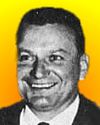
German-born American physicist; rocketry engineer and space-travel theorist. During WW II, he was a key member of the famed Peenemunde Rocket Development team, specializing in the propulsion system for the German V-2 rocket (1942-45). He moved to the U.S. with Wernher von Braun's rocket team in 1945. Entering the U.S. private industry in 1953, he helping develop the Atlas missile at General Dynamics. Subsequently, he invented the first liquid hydrogen propelled upper stage launch vehicle, the Centaur which enabled the U.S. to explore the solar system by launching planetary probes. A vial of his cremated remains accompany those of Star Trek creator Gene Roddenberry and others in space orbit, launched 20 Apr 1997.
German-born American physicist; rocketry engineer and space-travel theorist. During WW II, he was a key member of the famed Peenemunde Rocket Development team, specializing in the propulsion system for the German V-2 rocket (1942-45). He moved to the U.S. with Wernher von Braun's rocket team in 1945. Entering the U.S. private industry in 1953, he helping develop the Atlas missile at General Dynamics. Subsequently, he invented the first liquid hydrogen propelled upper stage launch vehicle, the Centaur which enabled the U.S. to explore the solar system by launching planetary probes. A vial of his cremated remains accompany those of Star Trek creator Gene Roddenberry and others in space orbit, launched 20 Apr 1997.
Born 24 Mar 1917; died 23 Aug 1997 at age 80. quotes
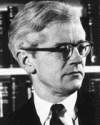
English biochemist who shared the 1962 Nobel Prize for Chemistry (with colleague Max Ferdinand Perutz) “for their studies of the structures of globular proteins.” Perutz had determined the structure of hemoglobin. Kendrew worked out the structure of the muscle protein myoglobin, which stores oxygen and gives it to the muscle cells when needed.«
English biochemist who shared the 1962 Nobel Prize for Chemistry (with colleague Max Ferdinand Perutz) “for their studies of the structures of globular proteins.” Perutz had determined the structure of hemoglobin. Kendrew worked out the structure of the muscle protein myoglobin, which stores oxygen and gives it to the muscle cells when needed.«
The Thread of Life: An Introduction to Molecular Biology, by John Cowdery Kendrew. - book suggestion.

protocells
Born 24 Mar 1912; died 10 Aug 1998 at age 86.
Sidney Walter Fox was an American biochemist who was interested in the biological origin of life, rather than tracing a strictly biochemical path. He gave the name proteinoid to the protein-like polymer that results from a mixture of amino acids subjected to such considerable heating as would be present during the volcanic primordial earth. Fox observed that when proteinoids or "thermal proteins," are placed in water, they self-organize into microspheres or protocells, possible precursors of the contemporary living cell. Fox argued that RNA or DNA need not date back to the origin of life, and he showed that proteinoid microspheres exhibit growth, metabolism, reproduction (by budding), and responsiveness to stimuli - all properties of life - though without a genetic system.
Sidney Walter Fox was an American biochemist who was interested in the biological origin of life, rather than tracing a strictly biochemical path. He gave the name proteinoid to the protein-like polymer that results from a mixture of amino acids subjected to such considerable heating as would be present during the volcanic primordial earth. Fox observed that when proteinoids or "thermal proteins," are placed in water, they self-organize into microspheres or protocells, possible precursors of the contemporary living cell. Fox argued that RNA or DNA need not date back to the origin of life, and he showed that proteinoid microspheres exhibit growth, metabolism, reproduction (by budding), and responsiveness to stimuli - all properties of life - though without a genetic system.
The Emergence of Life: Darwinian Evolution from the Inside, by Sidney W. Fox. - book suggestion.
(EB)
Born 24 Mar 1903; died 18 Jan 1995 at age 91.
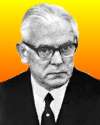
German biochemist who was the co-winner (with Leopold Ruzicka) of the 1939 Nobel Prize for Chemistry for pioneering work (1929-34) on sex hormones, primarily the isolation of estrone (a hormone that influences development of the female reproductive tract.) Although forced by the Nazi government to refuse the prize, he was able to accept the honour in 1949.
German biochemist who was the co-winner (with Leopold Ruzicka) of the 1939 Nobel Prize for Chemistry for pioneering work (1929-34) on sex hormones, primarily the isolation of estrone (a hormone that influences development of the female reproductive tract.) Although forced by the Nazi government to refuse the prize, he was able to accept the honour in 1949.
Born 24 Mar 1897; died 3 Nov 1957 at age 60. quotes
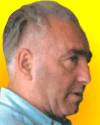
Austrian psychologist who developed a system of psychoanalysis concentrating on overall character structure, rather than on individual neurotic symptoms. His early work on psychoanalytic technique was overshadowed by his involvement in the sexual-politics movement and by “orgonomy,” a pseudoscientific system he developed. He also built a device he called a cloud buster, with which he claimed he could manipulate the weather by manipulating the “orgone” in the atmosphere. Reich’s claims aroused much controversy. He was taken to court for fraud by the Food and Drug Administration (FDA). The court ordered his books and research burned and his equipment destroyed. Reich was sentenced to prison where he died of heart failure.«
Austrian psychologist who developed a system of psychoanalysis concentrating on overall character structure, rather than on individual neurotic symptoms. His early work on psychoanalytic technique was overshadowed by his involvement in the sexual-politics movement and by “orgonomy,” a pseudoscientific system he developed. He also built a device he called a cloud buster, with which he claimed he could manipulate the weather by manipulating the “orgone” in the atmosphere. Reich’s claims aroused much controversy. He was taken to court for fraud by the Food and Drug Administration (FDA). The court ordered his books and research burned and his equipment destroyed. Reich was sentenced to prison where he died of heart failure.«
Fury On Earth: A Biography Of Wilhelm Reich, by Myron Sharaf. - book suggestion.
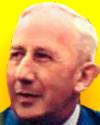
Born 24 Mar 1893; died 25 Jun 1960 at age 67. quotes
German-American astronomer who, with Fritz Zwicky, proposed that supernovae could produce cosmic rays and neutron stars (1934), and Baade made extensive studies of the Crab Nebula and its central star. During WW II blackouts of the Los Angeles area Baade used the 100-inch Hooker telescope to resolve stars in the central region of the Andromeda Galaxy for the first time. This led to his definition of two stellar populations, to the realization that there were two kinds of Cepheid variable stars, and from there to a doubling of the assumed scale of the universe. Baade and Rudolph Minkowski identified and took spectrograms of optical counterparts of many of the first-discovered radio sources, including Cygnus A and Cassiopeia A.
German-American astronomer who, with Fritz Zwicky, proposed that supernovae could produce cosmic rays and neutron stars (1934), and Baade made extensive studies of the Crab Nebula and its central star. During WW II blackouts of the Los Angeles area Baade used the 100-inch Hooker telescope to resolve stars in the central region of the Andromeda Galaxy for the first time. This led to his definition of two stellar populations, to the realization that there were two kinds of Cepheid variable stars, and from there to a doubling of the assumed scale of the universe. Baade and Rudolph Minkowski identified and took spectrograms of optical counterparts of many of the first-discovered radio sources, including Cygnus A and Cassiopeia A.
Walter Baade: A Life in Astrophysics, by Donald E. Osterbrock. - book suggestion.
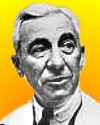
Born 24 Mar 1890; died 4 Dec 1984 at age 94.
John Charles Rock was an American obstetrician and gynaecologist who was an expert in human fertility, the first to fertilize a human egg in the laboratory, who co-developed the birth control pill. On 6 Feb 1944, with Harvard scientist Miriam F. Menkin, Rock produced the first laboratory-fertilized, two-cell human egg in a test-tube. He is also credited with the first recorded recovery of human embryos 2-17 days after fertilization, as well as establishing the fact that ovulation occurs fourteen days before menstruation. Through collaborative activities of philanthropist Catherine Dexter McCormick, researcher and biologist Gregory Pinkus, Rock, and other scientists, the birth control pill was developed, and it was approved by the Food and Drug Administration (1957) for marketing to “treat gynecologic disorders.” Rock was best known for this contribution to the development and government approval of the oral contraceptive, and also popularizing and selling it to a skeptical world.
John Charles Rock was an American obstetrician and gynaecologist who was an expert in human fertility, the first to fertilize a human egg in the laboratory, who co-developed the birth control pill. On 6 Feb 1944, with Harvard scientist Miriam F. Menkin, Rock produced the first laboratory-fertilized, two-cell human egg in a test-tube. He is also credited with the first recorded recovery of human embryos 2-17 days after fertilization, as well as establishing the fact that ovulation occurs fourteen days before menstruation. Through collaborative activities of philanthropist Catherine Dexter McCormick, researcher and biologist Gregory Pinkus, Rock, and other scientists, the birth control pill was developed, and it was approved by the Food and Drug Administration (1957) for marketing to “treat gynecologic disorders.” Rock was best known for this contribution to the development and government approval of the oral contraceptive, and also popularizing and selling it to a skeptical world.
The Fertility Doctor: John Rock and the Reproductive Revolution, by Margaret Marsh and Wanda Ronner. - book suggestion.
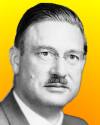
Born 24 Mar 1884; died 2 Nov 1966 at age 82. quotes
Peter Joseph Wilhelm Debye was a Dutch-American physical chemist whose investigations of dipole moments, X rays, and light scattering in gases brought him the 1936 Nobel Prize for Chemistry. Most of his work was in chemical-physics with special interest in electrolytes and dipolar momentum analysis. He established a theory of specific heat with some improvements on that proposed by Einstein. Debye performed important work in the analysis of crystalline powders using X-ray diffraction techniques. He also determined the dimensions of gaseous molecules and the interatomic distances using X-rays.
Peter Joseph Wilhelm Debye was a Dutch-American physical chemist whose investigations of dipole moments, X rays, and light scattering in gases brought him the 1936 Nobel Prize for Chemistry. Most of his work was in chemical-physics with special interest in electrolytes and dipolar momentum analysis. He established a theory of specific heat with some improvements on that proposed by Einstein. Debye performed important work in the analysis of crystalline powders using X-ray diffraction techniques. He also determined the dimensions of gaseous molecules and the interatomic distances using X-rays.
Polar Molecules, by Peter J. W Debye. - book suggestion.
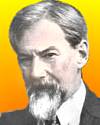
Born 24 Mar 1873; died 29 Sep 1940 at age 67.
Swiss psychologist who conducted exploratory research in the fields of child psychology, educational psychology, concept formation, problem solving, and sleep. One of the most influential European exponents of the functionalist school of psychology, he is particularly remembered for his formulation of the law of momentary interest.
Swiss psychologist who conducted exploratory research in the fields of child psychology, educational psychology, concept formation, problem solving, and sleep. One of the most influential European exponents of the functionalist school of psychology, he is particularly remembered for his formulation of the law of momentary interest.
Experimental Pedagogy and the Psychology of the Child, by Edouard Claparede. - book suggestion.
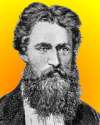
Born 24 Mar 1840; died 19 Aug 1876 at age 36.
English archaeologist and Assyriologist who translated Babylonian cuneiform tablets (1872) describing a great deluge, part of the Gilgamesh epic, and akin to that found in Genesis. Smith, as an apprentice banknote engraver since age 14, spent much of his own time teaching himself how to decipher cuneiform, by studying inscriptions available at the British Museum. His skill was recognized, and he worked for the British Museum from 1867. Smith engaged in fieldwork in 1873 at Nineveh (Kuyunjik) finding more tablet fragments of the flood story, and others on the Babylonian dynasties. He published his work in The Chaldean Account of Genesis (1876). He died at age 36 of a fever while excavating more of Assurbanipal's library.« more
English archaeologist and Assyriologist who translated Babylonian cuneiform tablets (1872) describing a great deluge, part of the Gilgamesh epic, and akin to that found in Genesis. Smith, as an apprentice banknote engraver since age 14, spent much of his own time teaching himself how to decipher cuneiform, by studying inscriptions available at the British Museum. His skill was recognized, and he worked for the British Museum from 1867. Smith engaged in fieldwork in 1873 at Nineveh (Kuyunjik) finding more tablet fragments of the flood story, and others on the Babylonian dynasties. He published his work in The Chaldean Account of Genesis (1876). He died at age 36 of a fever while excavating more of Assurbanipal's library.« more
Chaldean Account of Genesis, by George Smith. - book suggestion.
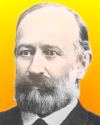
Born 24 Mar 1835; died 7 Jan 1893 at age 57.
Austrian physicist who proposed a law of radiation (1879) stating that the amount of energy radiated per second from a black body is proportional to the fourth power of its absolute temperature. (A black body is a theoretical object that absorbs all radiation that falls on it.) This law is known as Stefan's law or the Stefan-Bolzmann law. He also studied electricity, the kinetic theory of gases and hydrodynamics.
Austrian physicist who proposed a law of radiation (1879) stating that the amount of energy radiated per second from a black body is proportional to the fourth power of its absolute temperature. (A black body is a theoretical object that absorbs all radiation that falls on it.) This law is known as Stefan's law or the Stefan-Bolzmann law. He also studied electricity, the kinetic theory of gases and hydrodynamics.
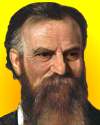
Born 24 Mar 1834; died 23 Sep 1902 at age 68. quotes
American geologist and ethnologist who published the first classification of American Indian languages and was the first director of the U.S. Bureau of Ethnology (1879-1902). In 1869, despite having lost his right arm in the Civil War, Powell outfitted a small party of men in wooden boats in Wyoming, and descended down into the then unknown Colorado River. Daring that mighty river for a thousand miles of huge, horrifying rapids, unsuspected dangers, and endless hardship, he and his men were the first to challenge the mysterious Grand Canyon.
American geologist and ethnologist who published the first classification of American Indian languages and was the first director of the U.S. Bureau of Ethnology (1879-1902). In 1869, despite having lost his right arm in the Civil War, Powell outfitted a small party of men in wooden boats in Wyoming, and descended down into the then unknown Colorado River. Daring that mighty river for a thousand miles of huge, horrifying rapids, unsuspected dangers, and endless hardship, he and his men were the first to challenge the mysterious Grand Canyon.
Seeing Things Whole: The Essential John Wesley Powell, by John Wesley Powell and William deBuys (ed.). - book suggestion.
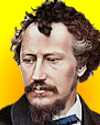
Born 24 Mar 1829; died 19 Jan 1904 at age 74.
American businessman who was a pioneer in street horse tramways in England, was involved in the formation of the Union-Pacific Railroad, and known as an eccentric reformer. In 1860, following the examples he had seen in America, he established horse tramways in London. Service began on 23 Mar 1860, but was ended within six months, due to opposition caused by his design of rails standing above the road surface sufficiently to cause damage to carriage wheels catching on them. He travelled internationally, and accomplished a speedy round the world trip in 67 days, and may have been the inspiration for Phileas Fogg in Jules Verne's book, Around the World in 80 Days. Train became wealthy from real estate associated with the building of the UP railroad. With age his eccentricity worsened. He died from smallpox. « more
American businessman who was a pioneer in street horse tramways in England, was involved in the formation of the Union-Pacific Railroad, and known as an eccentric reformer. In 1860, following the examples he had seen in America, he established horse tramways in London. Service began on 23 Mar 1860, but was ended within six months, due to opposition caused by his design of rails standing above the road surface sufficiently to cause damage to carriage wheels catching on them. He travelled internationally, and accomplished a speedy round the world trip in 67 days, and may have been the inspiration for Phileas Fogg in Jules Verne's book, Around the World in 80 Days. Train became wealthy from real estate associated with the building of the UP railroad. With age his eccentricity worsened. He died from smallpox. « more
Around the World with Citizen Train: The Sensational Adventures of the Real Phileas Fogg, by Allen Foster. - book suggestion.
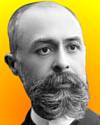
Born 24 Mar 1820; died 11 May 1891 at age 71.
French physicist who was the son of the chemist Antoine-César Becquerel and the father of physicist Henri Becquerel (who discovered radioactivity). His own experimental work was done in electricity, optics and magnetism. He measured properties of electric currents, how they arise, and discovered (1840) electric currents in certain chemical reactions initiated by light. He studied diamagnetism (1845-46). In 1855, he discovered that simply displacing a metallic conductor in a liquid would produce some electric current. He invented the phosphoroscope to measure short durations of phosphorescence of materials after exposure to bright light, and was also able to examine the spectrum of the light emanating from luminescent bodies.«
French physicist who was the son of the chemist Antoine-César Becquerel and the father of physicist Henri Becquerel (who discovered radioactivity). His own experimental work was done in electricity, optics and magnetism. He measured properties of electric currents, how they arise, and discovered (1840) electric currents in certain chemical reactions initiated by light. He studied diamagnetism (1845-46). In 1855, he discovered that simply displacing a metallic conductor in a liquid would produce some electric current. He invented the phosphoroscope to measure short durations of phosphorescence of materials after exposure to bright light, and was also able to examine the spectrum of the light emanating from luminescent bodies.«
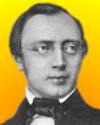
Born 24 Mar 1819; died 14 Mar 1885 at age 65.
German founder of experimental pathology whose emphasis on the teaching of physiology and medical biochemistry helped give clinical medicine a scientific foundation. He brought medical recognition of multiple sclerosis a step closer by elaborating on the clinical description of MS provided by Cruveilhier and identifying specific symptoms and key features of the illness. Frerichs' clinical account for the first time recognised remissions as a characteristic feature of MS. In addition, he made a major contribution by providing the first medical description of mental disorders in MS, recognising the possible impact of the disease on cognitive and other higher functions of the brain.
German founder of experimental pathology whose emphasis on the teaching of physiology and medical biochemistry helped give clinical medicine a scientific foundation. He brought medical recognition of multiple sclerosis a step closer by elaborating on the clinical description of MS provided by Cruveilhier and identifying specific symptoms and key features of the illness. Frerichs' clinical account for the first time recognised remissions as a characteristic feature of MS. In addition, he made a major contribution by providing the first medical description of mental disorders in MS, recognising the possible impact of the disease on cognitive and other higher functions of the brain.
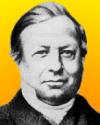
Born 24 Mar 1809; died 8 Sep 1882 at age 73. quotes
French mathematician who discovered transcendental numbers (those which are not the roots of algebraic equations having rational coefficients), and that there are infinitely many of them. He also did work in real and complex analysis, number theory, and differential geometry. His name is remembered in the Sturm-Liouville theory of differential equations that generalises Joseph Fourier's ideas, and are important in mathematical physics. He studied celestial mechanics. Liouville founded in 1836, and editted for nearly four decades, the Journal de Mathématique which remains a leading French mathematical publication. He editted and published (1843) the manuscripts left behind upon the untimely death of Evariste Galois 22 years earlier.«
French mathematician who discovered transcendental numbers (those which are not the roots of algebraic equations having rational coefficients), and that there are infinitely many of them. He also did work in real and complex analysis, number theory, and differential geometry. His name is remembered in the Sturm-Liouville theory of differential equations that generalises Joseph Fourier's ideas, and are important in mathematical physics. He studied celestial mechanics. Liouville founded in 1836, and editted for nearly four decades, the Journal de Mathématique which remains a leading French mathematical publication. He editted and published (1843) the manuscripts left behind upon the untimely death of Evariste Galois 22 years earlier.«
Joseph Liouville 1809-1882: Master of Pure and Applied Mathematics, by Jesper Lützen. - book suggestion.
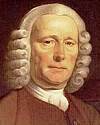
Born 24 Mar 1693; died 24 Mar 1776 at age 83.
English horologist who invented the first practical marine chronometer, which enabled navigators to compute accurately their longitude at sea. He was prompted to begin this work after a huge reward was offered by the British government for new navigational tools to avoid further disasters at sea. John Harrison took on the scientific and academic establishment of his time and won the longitude prize through extraordinary mechanical insight, talent and determination.[DSB shows an uncertainty in the date of birth as 24 Mar(?) 1693. EB gives no specific day, just Mar 1693.] more
English horologist who invented the first practical marine chronometer, which enabled navigators to compute accurately their longitude at sea. He was prompted to begin this work after a huge reward was offered by the British government for new navigational tools to avoid further disasters at sea. John Harrison took on the scientific and academic establishment of his time and won the longitude prize through extraordinary mechanical insight, talent and determination.[DSB shows an uncertainty in the date of birth as 24 Mar(?) 1693. EB gives no specific day, just Mar 1693.] more
Longitude: The Story of a Lone Genius Who Solved the Greatest Scientific Problem of His Time, by Dava Sobel. - book suggestion.
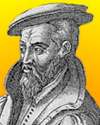
Born 24 Mar 1494; died 21 Nov 1555 at age 61. quotes
German mineralogist and scholar known as “the father of mineralogy,” who was among the first to found a natural science upon observation and independently from theories of the ancients. Having studied medicine, he became interested in mineralogy through his study of miners' diseases. His contributions to mining geology and metallurgy, mineralogy, structural geology, and paleontology, formed a foundation for further systematic study of the Earth and of its rocks, minerals, and fossils. His most important work De Re Metallica (published a year after his death) summarized all the practical knowledge gained by Saxon miners. He may have coined the word petroleum (“rock oil”). As was the fashion of the day, he Latinized his real name of Georg Bauer (both Bauer in German and Agricola in Latin mean “farmer”.)
German mineralogist and scholar known as “the father of mineralogy,” who was among the first to found a natural science upon observation and independently from theories of the ancients. Having studied medicine, he became interested in mineralogy through his study of miners' diseases. His contributions to mining geology and metallurgy, mineralogy, structural geology, and paleontology, formed a foundation for further systematic study of the Earth and of its rocks, minerals, and fossils. His most important work De Re Metallica (published a year after his death) summarized all the practical knowledge gained by Saxon miners. He may have coined the word petroleum (“rock oil”). As was the fashion of the day, he Latinized his real name of Georg Bauer (both Bauer in German and Agricola in Latin mean “farmer”.)
De Re Metallica, by Georgius Agricola. - book suggestion.

Died 24 Mar 2004 at age 82 (born 30 Apr 1921). quotes
American psychiatrist who was known as the “father of poetry therapy”. He popularized using using poetry as a viable natural healing power for the mind. One method is to read poems to a patient, or have the patient read them, followed by talking about the poem, which can lead to talking about themselves. Another technique is to encourage patients to write poetry, which can bring out emotions that may be blocking or suppressing conversation. Leedy founded the National Association for Poetry Therapy (1969), served as its president, and influenced professionals worldwide. He wrote Poetry Therapy, The Use of Poetry in the Treatment of Emotional Disorders (1969) and Poetry as Healer: Mending the Troubled Mind (1973).«
American psychiatrist who was known as the “father of poetry therapy”. He popularized using using poetry as a viable natural healing power for the mind. One method is to read poems to a patient, or have the patient read them, followed by talking about the poem, which can lead to talking about themselves. Another technique is to encourage patients to write poetry, which can bring out emotions that may be blocking or suppressing conversation. Leedy founded the National Association for Poetry Therapy (1969), served as its president, and influenced professionals worldwide. He wrote Poetry Therapy, The Use of Poetry in the Treatment of Emotional Disorders (1969) and Poetry as Healer: Mending the Troubled Mind (1973).«
Poetry As Healer: Mending the Troubled Mind, by Jack J. Leedy. - book suggestion.
Died 24 Mar 2002 at age 74 (born 8 Oct 1927). quotes
Argentinian immunologist and molecular biologist who shared the 1984 Nobel Prize for Physiology or Medicine (with Georges Köhler and Niels K. Jerne) for “theories concerning ... the immune system and the discovery of the principle for production of monoclonal antibodies” (proteins produced by the cells of the immune system). He derived an immortal cell hybrid from antibody-producing B lymphocyte cells and tumour cells. This “hybridoma,”could continuously synthesize antibodies which were identical (monoclonal), to those produced by the original B cell. This technique of monoclonal antibody production, developed (1975) with Köhler, has enabled wide commercial development of new drugs and diagnostic tests.«
Argentinian immunologist and molecular biologist who shared the 1984 Nobel Prize for Physiology or Medicine (with Georges Köhler and Niels K. Jerne) for “theories concerning ... the immune system and the discovery of the principle for production of monoclonal antibodies” (proteins produced by the cells of the immune system). He derived an immortal cell hybrid from antibody-producing B lymphocyte cells and tumour cells. This “hybridoma,”could continuously synthesize antibodies which were identical (monoclonal), to those produced by the original B cell. This technique of monoclonal antibody production, developed (1975) with Köhler, has enabled wide commercial development of new drugs and diagnostic tests.«
Died 24 Mar 1995 at age 94 (born 9 Dec 1900). quotes
(Noël) Joseph (Terence Montgomery) Needham was an English biochemist, embryologist, and historian of science who wrote and edited the landmark history Science and Civilisation in China, a remarkable multivolume study of nearly every branch of Chinese medicine, science, and technology over some 25 centuries. As head of the British Scientific Mission in China (1942-46) he worked to assure adequate liaison between Chinese scientists and technologists and their colleagues in the West. As an historian of science and technology he wanted to break through the parochial, Europe-centred views of most of his colleagues by disclosing the achievements of traditional China and the contributions made by China leading up to the scientific revolution.
(Noël) Joseph (Terence Montgomery) Needham was an English biochemist, embryologist, and historian of science who wrote and edited the landmark history Science and Civilisation in China, a remarkable multivolume study of nearly every branch of Chinese medicine, science, and technology over some 25 centuries. As head of the British Scientific Mission in China (1942-46) he worked to assure adequate liaison between Chinese scientists and technologists and their colleagues in the West. As an historian of science and technology he wanted to break through the parochial, Europe-centred views of most of his colleagues by disclosing the achievements of traditional China and the contributions made by China leading up to the scientific revolution.
1932
Died 24 Mar 1962 at age 78 (born 28 Jan 1884). quotes
Swiss-Belgian physicist who explored both the upper stratosphere and the depths of the sea in ships of his own design. In 1930 he built a balloon to study cosmic rays. In 1932 he developed a new cabin design for balloons and in the same year ascended by balloon in a pressurised gondola to 16,916 m (55,000 feet). On later flights he reached 72,000 feet. He coined the word bathyscaphe for his navigable deep-diving vessel. more
Swiss-Belgian physicist who explored both the upper stratosphere and the depths of the sea in ships of his own design. In 1930 he built a balloon to study cosmic rays. In 1932 he developed a new cabin design for balloons and in the same year ascended by balloon in a pressurised gondola to 16,916 m (55,000 feet). On later flights he reached 72,000 feet. He coined the word bathyscaphe for his navigable deep-diving vessel. more
Between Earth and Sky, by Auguste Piccard. - book suggestion.
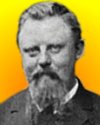
Died 24 Mar 1956 at age 79 (born 21 Jun 1876).
Dutch physicist who was a pioneer in cryogenics and was the first to solidify helium under pressure (1926). He was a research assistant for Kamerlingh Onnes working on the liquefaction of helium, and several years later, subsequently succeeded him (1923) as director of the Physics Laboratory at Leiden. In work done with M. Wolfke, after studying discontinuities in several properties of helium at very low temperatures (1927) they suggested that it may be due to a phase change. They called the helium above the transitional helium I and the helium below the transition helium II. In 1932, he produced a temperature just two degrees above absolute zero (-272° C or -457.6° F). In 1942 he wrote the book Helium.
Dutch physicist who was a pioneer in cryogenics and was the first to solidify helium under pressure (1926). He was a research assistant for Kamerlingh Onnes working on the liquefaction of helium, and several years later, subsequently succeeded him (1923) as director of the Physics Laboratory at Leiden. In work done with M. Wolfke, after studying discontinuities in several properties of helium at very low temperatures (1927) they suggested that it may be due to a phase change. They called the helium above the transitional helium I and the helium below the transition helium II. In 1932, he produced a temperature just two degrees above absolute zero (-272° C or -457.6° F). In 1942 he wrote the book Helium.
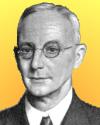
Died 24 Mar 1956 at age 82 (born 24 Oct 1873).
English mathematician who made pioneering contributions to the area of the special functions, which is of particular interest in mathematical physics. Whittaker is best known work is in analysis, in particular numerical analysis, but he also worked on celestial mechanics and the history of applied mathematics and physics. He wrote papers on algebraic functions and automorphic functions. His results in partial differential equations (described as most sensational by Watson) included a general solution of the Laplace equation in three dimensions in a particular form and the solution of the wave equation. On the applied side of mathematics he was interested in relativity theory and he also worked on electromagnetic theory.
English mathematician who made pioneering contributions to the area of the special functions, which is of particular interest in mathematical physics. Whittaker is best known work is in analysis, in particular numerical analysis, but he also worked on celestial mechanics and the history of applied mathematics and physics. He wrote papers on algebraic functions and automorphic functions. His results in partial differential equations (described as most sensational by Watson) included a general solution of the Laplace equation in three dimensions in a particular form and the solution of the wave equation. On the applied side of mathematics he was interested in relativity theory and he also worked on electromagnetic theory.
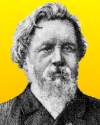
Died 24 Mar 1889 at age 70 (born 27 May 1818).
Franciscus Cornelis Donders was a Dutch ophthalmologist, the most eminent of 19th-century Dutch physicians, whose investigations of the physiology and pathology of the eye made possible a scientific approach to the correction of refractive disabilities such as nearsightedness, farsightedness, and astigmatism. He found (1858) that hypermetropia (farsightedness) is caused by a shortening of the eyeball, so that light rays refracted by the lens of the eye converge behind the retina. He discovered (1862) that the blurred vision of astigmatism is caused by uneven and unusual surfaces of the cornea and lens, which diffuse light rays instead of focusing them. more
Franciscus Cornelis Donders was a Dutch ophthalmologist, the most eminent of 19th-century Dutch physicians, whose investigations of the physiology and pathology of the eye made possible a scientific approach to the correction of refractive disabilities such as nearsightedness, farsightedness, and astigmatism. He found (1858) that hypermetropia (farsightedness) is caused by a shortening of the eyeball, so that light rays refracted by the lens of the eye converge behind the retina. He discovered (1862) that the blurred vision of astigmatism is caused by uneven and unusual surfaces of the cornea and lens, which diffuse light rays instead of focusing them. more
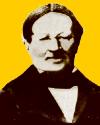
Died 24 Mar 1864 at age 68 (born 23 Jan 1796).
Russian chemist and biologist who was born and died in Russia, but was of German origin, so is also known as Carl Ernst Claus. He discovered ruthenium (1844), which was the last dense, inert, platinum-like metal to be found. He earned degrees in chemistry, then a Ph.D. in pharmacy, but Klaus gained an international reputation for his researches on the platinum metals (osmium, palladium, iridium, and rhodium). His discovery of ruthenium resulted from an analysis of the waste residues of the platinum refinery in St. Petersburg. He named the element from Ruthenia, the Latin name for Russia. Klaus also investigated flora and fauna of Volga steppes.
Russian chemist and biologist who was born and died in Russia, but was of German origin, so is also known as Carl Ernst Claus. He discovered ruthenium (1844), which was the last dense, inert, platinum-like metal to be found. He earned degrees in chemistry, then a Ph.D. in pharmacy, but Klaus gained an international reputation for his researches on the platinum metals (osmium, palladium, iridium, and rhodium). His discovery of ruthenium resulted from an analysis of the waste residues of the platinum refinery in St. Petersburg. He named the element from Ruthenia, the Latin name for Russia. Klaus also investigated flora and fauna of Volga steppes.
Died 24 Mar 1849 at age 68 (born 13 Dec 1780).
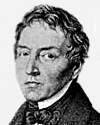
German chemist whose observation (1829) that when certain triads of elements were arranged in order of increasing atomic mass, the mass of the central member was approximately the average of the other two, and intermediate in chemical properties between the other two elements. The triads are now found as consecutive members of the groups of the periodic table. For example, the atomic weight of bromine (80.970) was the arithmetic mean of the atomic weights of chlorine (35.470) and iodine (126.470) and the properties of the three elements varied in an orderly manner, from chlorine to bromine to iodine. Döbereiner found two other such "triads" - calcium, strontium, barium; and sulfur, selenium, tellurium. He was one of the first chemists to offer laboratory instruction in chemistry. He studied in general, pharmaceutical, and analytical chemistry. Also, he invented a lamp in which hydrogen ignited on contact with a platinum sponge (1823). Although the lamp had limited application, Döbereiner was interested in catalysis in general. He discovered the catalytic action of manganese dioxide in the decomposition of potassium chlorate.
German chemist whose observation (1829) that when certain triads of elements were arranged in order of increasing atomic mass, the mass of the central member was approximately the average of the other two, and intermediate in chemical properties between the other two elements. The triads are now found as consecutive members of the groups of the periodic table. For example, the atomic weight of bromine (80.970) was the arithmetic mean of the atomic weights of chlorine (35.470) and iodine (126.470) and the properties of the three elements varied in an orderly manner, from chlorine to bromine to iodine. Döbereiner found two other such "triads" - calcium, strontium, barium; and sulfur, selenium, tellurium. He was one of the first chemists to offer laboratory instruction in chemistry. He studied in general, pharmaceutical, and analytical chemistry. Also, he invented a lamp in which hydrogen ignited on contact with a platinum sponge (1823). Although the lamp had limited application, Döbereiner was interested in catalysis in general. He discovered the catalytic action of manganese dioxide in the decomposition of potassium chlorate.
Died 24 Mar 1776 at age 83 (born 24 Mar 1693).
English horologist who invented the first practical marine chronometer, which enabled navigators to compute accurately their longitude at sea. He was prompted to begin this work after a huge reward was offered by the British government for new navigational tools to avoid further disasters at sea. John Harrison took on the scientific and academic establishment of his time and won the longitude prize through extraordinary mechanical insight, talent and determination.[DSB shows an uncertainty in the date of birth as 24 Mar(?) 1693. EB gives no specific day, just Mar 1693.] more
English horologist who invented the first practical marine chronometer, which enabled navigators to compute accurately their longitude at sea. He was prompted to begin this work after a huge reward was offered by the British government for new navigational tools to avoid further disasters at sea. John Harrison took on the scientific and academic establishment of his time and won the longitude prize through extraordinary mechanical insight, talent and determination.[DSB shows an uncertainty in the date of birth as 24 Mar(?) 1693. EB gives no specific day, just Mar 1693.] more
Longitude: The Story of a Lone Genius Who Solved the Greatest Scientific Problem of His Time, by Dava Sobel. - book suggestion.
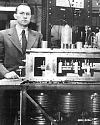
In 1959, the maser was patented by Charles Townes (No. 2,879,439). "Maser" is an acronym for "Microwave Amplification by the Stimulated Emission of Radiation ". The invention is an apparatus for amplifying and producing electromagnetic energy directly from excited molecules or atoms. The concept grew out of research in microwave spectroscopy following Word War II . The image shows Townes with the second maser at Columbia University. The normally evaculated metal box where maser action occurs is opened up to show the four rods (centre) that send excited molecules into a resonant cavity (to the right). The microwaves that were generated emerged through the vertical copper waveguide near Townes' hand.
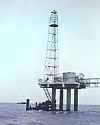
In 1955, the first seagoing oil drill rig (for drilling in over 100 feet of water) was placed in service by the U.S. company C.G. Glasscock Drilling Co. The rig, built by Bethlehem Steel at their Beaumont Yard, was able to drive piles with a force of 827 tons, and pull a pile with the force of 942 tons.[Another oil rig of 1955, south of New Orleans in the Gulf of Mexico]
(USPTO)
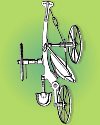
In 1896, Clement Hardy was issued a patent for the rotary disk plow (No. 556,972). His patent described a rotary-disk plow constructed with one or more plowing disks arranged diagonally to the line of draft and suitable supported by furrow and landside wheels and a suitable metal or wooden frame. The plow disks were designed to be drawn into the earth by their own action and by the weight of the soil lifted by the disks and carried on their faces and have a cutting action on the bottom of the furrow instead of scraping, thereby enabling much reduction of the machinery's weight that had previously been thought necessary in this class of plows in order to force the disks into the soil and hold them to their work.[Image: top view, showing seat to left of rear wheel.]
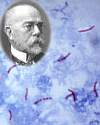
In 1882, German scientist Robert Koch declared to the Berlin Physiological Society that he had discovered the bacillus responsible for tuberculosis. The audience was spellbound. Within three weeks, on 10 Apr 1882, he published* The Etiology of Tuberculosis. He published an expanded version in 1884, in a second paper under the same title, which presented “Koch's postulates,” which now have been generalized and fundamental in the study of a cause of an infectious disease. Namely, he had found the bacillus present in all cases of the disease, had isolated and cultured the microorganism, with which he had caused the disease by using it to inoculate and infect a new host, and identified the same microorganism from the diseased host. Koch was awarded the Nobel Prize in medicine in 1905.«*Koch R. Die Atiologic der Tuberkulose, Berliner Klinische Wochenschrift 1882; 15:221-30. [Image: Mycobacterium tuberculosis bacilli, stained red.]
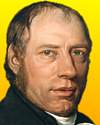
In 1802, Richard Trevithick took out his first patent. It was for the first full sized road locomotive. He had demonstrated it to the public on 24 Dec 1801 with his cousin Andrew Vivian at the controls. It successfully carried a number of men up Beacon Hill, an event commemorated by the old Cornish song “Going up Camborne Hill” and marked by Trevithick's statute which stands outside Camborne library, gazing up that hill. By February 1804 Trevithick had the first locomotive running at the Penydarn ironworks in South Wales. It travelled over nine miles at a speed of five mph, and pulled a ten ton load, five wagons and 70 men.
Richard Trevithick: Giant of Steam, by Anthony Burton. - book suggestion.





