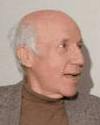
1986
Born 8 Apr 1911; died 8 Jan 1997 at age 85. quotes
Melvin Ellis Calvin was an American biochemist who was awarded the 1961 Nobel Prize in Chemistry for furthering our knowledge of the mechanism of photosynthesis. In the Calvin Cycle, he described the “dark reactions” of photosynthesis occuring in green plants through the night turning carbon dioxide into sugar. Using carbon-14 isotope as a tracer in carbon dioxide, Calvin and his team identified the complete route as the carbon atom travels through a plant during photosynthesis, from the absorption of atmospheric carbon dioxide to its incorporation into carbohydrates and other organic compounds. With his group, Calvin showed that the sunlight acts on the chlorophyll molecules in a plant, and not on the carbon dioxide (as had been previously believed).«
Melvin Ellis Calvin was an American biochemist who was awarded the 1961 Nobel Prize in Chemistry for furthering our knowledge of the mechanism of photosynthesis. In the Calvin Cycle, he described the “dark reactions” of photosynthesis occuring in green plants through the night turning carbon dioxide into sugar. Using carbon-14 isotope as a tracer in carbon dioxide, Calvin and his team identified the complete route as the carbon atom travels through a plant during photosynthesis, from the absorption of atmospheric carbon dioxide to its incorporation into carbohydrates and other organic compounds. With his group, Calvin showed that the sunlight acts on the chlorophyll molecules in a plant, and not on the carbon dioxide (as had been previously believed).«
Melvin Calvin: Following the Trail of Light: A Scientific Odyssey, by Melvin Calvin. - book suggestion.
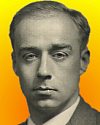
Born 8 Apr 1903; died 1986.
American crystallographer and mineralogist who made significant contributions to the theory of finding the arrangement of atoms in crystals and devised or improved many of the standard methods, techniques, and instruments of modern crystal-structure analysis. In the 1930s, he revised the powder camera into its present form. He invented the precession method of x-ray diffraction analysis now commonly used for obtaining the unit cell and space group of a crystal. In 1952, the first counter diffractometer designed especially for measuring the intensities of the diffraction from single crystals was built in Buerger's laboratory, which in 1961 was converted into the first automated diffractometer. He wrote a number of books on crystallography.
American crystallographer and mineralogist who made significant contributions to the theory of finding the arrangement of atoms in crystals and devised or improved many of the standard methods, techniques, and instruments of modern crystal-structure analysis. In the 1930s, he revised the powder camera into its present form. He invented the precession method of x-ray diffraction analysis now commonly used for obtaining the unit cell and space group of a crystal. In 1952, the first counter diffractometer designed especially for measuring the intensities of the diffraction from single crystals was built in Buerger's laboratory, which in 1961 was converted into the first automated diffractometer. He wrote a number of books on crystallography.
Elementary Crystallography: An Introduction to the Fundamental Geometrical Features of Crystals, by Martin Julian Buerger. - book suggestion.
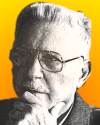
Born 8 Apr 1901; died 23 Mar 1984 at age 82.
French engineer and builder known particularly for his contributions to the art and technology of prefabricated metal construction. Prouvé was first apprenticed to a blacksmith, and then to a metal workshop. In Nancy in 1923 he opened what would be the first in a string of his own workshops and studios. He produced wrought iron products and began designing furniture. In 1931, he opened the successful "Ateliers Jean Prouvé." He was one of the creators of the first prefabricated building in the world, the 1937 Roland Garros flight club. After WW II, his company mass-produced frame houses for refugees. His company built industrial buildings from aluminum and sent hundreds of aluminum sheds to Africa. He went on to produce other major buildings.
French engineer and builder known particularly for his contributions to the art and technology of prefabricated metal construction. Prouvé was first apprenticed to a blacksmith, and then to a metal workshop. In Nancy in 1923 he opened what would be the first in a string of his own workshops and studios. He produced wrought iron products and began designing furniture. In 1931, he opened the successful "Ateliers Jean Prouvé." He was one of the creators of the first prefabricated building in the world, the 1937 Roland Garros flight club. After WW II, his company mass-produced frame houses for refugees. His company built industrial buildings from aluminum and sent hundreds of aluminum sheds to Africa. He went on to produce other major buildings.
Jean Prouvé Highlights 1917-1944, by Peter Sulzer. - book suggestion.
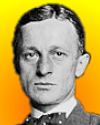
Born 8 Apr 1869; died 7 Oct 1939 at age 70. quotes
Harvey Williams Cushing was an American neurosurgeon who was a pioneer of neurosurgery, and studied blood pressure. His clinical contributions are legendary: the use of x-rays in surgical practice, physiological saline for irrigation during surgery, the discovery of the pituitary as the master hormone gland, founding the clinical specialty of endocrinology, the anesthesia record, the use of blood pressure measurement in surgical practice, and the physiological consequences of increased intracranial pressure. He performed the first brain surgery in the U.S. on 21 Feb 1902.
Harvey Williams Cushing was an American neurosurgeon who was a pioneer of neurosurgery, and studied blood pressure. His clinical contributions are legendary: the use of x-rays in surgical practice, physiological saline for irrigation during surgery, the discovery of the pituitary as the master hormone gland, founding the clinical specialty of endocrinology, the anesthesia record, the use of blood pressure measurement in surgical practice, and the physiological consequences of increased intracranial pressure. He performed the first brain surgery in the U.S. on 21 Feb 1902.
Genius With a Scalpel: Harvey Cushing, by Justin F. Denzel. - book suggestion.
Born 8 Apr 1868; died 14 Apr 1947 at age 79. quotes
American zoologist who was one of the first scientists to study the behaviour of individual microorganisms and to experiment with genetic variations in single-celled organisms. He wrote his Ph.D. thesis on the morphogenesis of rotiferans (microscopic aquatic organisms), an area of scientific interest he pursued for the next 10 years. The peak of his research and his primary contribution to zoology was his Behaviour of the Lower Organisms (1906). In this study of the reactions of individual organisms and individual response to stimuli, Jennings reported new experimental evidence of the similarity of activity and reactivity in all animals, from protozoans to man. For 40 years of his career Jennings studied the mechanisms of inheritance and variation in single-celled organisms.
American zoologist who was one of the first scientists to study the behaviour of individual microorganisms and to experiment with genetic variations in single-celled organisms. He wrote his Ph.D. thesis on the morphogenesis of rotiferans (microscopic aquatic organisms), an area of scientific interest he pursued for the next 10 years. The peak of his research and his primary contribution to zoology was his Behaviour of the Lower Organisms (1906). In this study of the reactions of individual organisms and individual response to stimuli, Jennings reported new experimental evidence of the similarity of activity and reactivity in all animals, from protozoans to man. For 40 years of his career Jennings studied the mechanisms of inheritance and variation in single-celled organisms.
Behavior of the Lower Organisms, by Herbert Spencer Jennings. - book suggestion.
Born 8 Apr 1850; died 30 Apr 1934 at age 84. quotes
American pathologist who played a major role introducing modern medical practice to the U.S.A. As the first dean of the medical school at Johns Hopkins University (1893-98), Welch revolutionized American medicine by demanding of its students a rigorous study of physical sciences and an active involvement in clinical duties and laboratory work. His students included Walter Reed, James Carroll and Simon Flexner. As an original investigator, with Flexner, he demonstrated (1891-92) the pathological effects produced by diphtheria toxin. In 1892, he discovered Micrococcus albus and its relation to wound fever. He identified Clostridium welchii (Welch’s bacillus), as the causative agent of gas gangrene.«
American pathologist who played a major role introducing modern medical practice to the U.S.A. As the first dean of the medical school at Johns Hopkins University (1893-98), Welch revolutionized American medicine by demanding of its students a rigorous study of physical sciences and an active involvement in clinical duties and laboratory work. His students included Walter Reed, James Carroll and Simon Flexner. As an original investigator, with Flexner, he demonstrated (1891-92) the pathological effects produced by diphtheria toxin. In 1892, he discovered Micrococcus albus and its relation to wound fever. He identified Clostridium welchii (Welch’s bacillus), as the causative agent of gas gangrene.«
William Henry Welch and the Heroic Age of American Medicine, by Simon Flexner, James Thomas Flexner. - book suggestion.
Born 8 Apr 1818; died 2 May 1892 at age 74. quotes
German chemist whose research on aniline, with that of his former student Sir William Henry Perkin, helped lay the basis of the aniline-dye industry. He was the first to prepare rosaniline and its derivatives and researched many other compounds, including the discovery formaldehyde. In the field of organic chemistry, Hofmann is best known for his studies of the organic derivatives of ammonia and phosphine and for his subsequent discovery of the Hofmann degradation reaction. He also developed the Hofmann method of finding the vapor densities, and from these the molecular weights, of liquids. He also helped to popularize the concept of valence (the word comes from his term quantivalence). He founded the German Chemical Society.
German chemist whose research on aniline, with that of his former student Sir William Henry Perkin, helped lay the basis of the aniline-dye industry. He was the first to prepare rosaniline and its derivatives and researched many other compounds, including the discovery formaldehyde. In the field of organic chemistry, Hofmann is best known for his studies of the organic derivatives of ammonia and phosphine and for his subsequent discovery of the Hofmann degradation reaction. He also developed the Hofmann method of finding the vapor densities, and from these the molecular weights, of liquids. He also helped to popularize the concept of valence (the word comes from his term quantivalence). He founded the German Chemical Society.
The Chemistry of Vat Dyes, by Dianne N. Epp. - book suggestion.
Born 8 Apr 1817; died 1 Apr 1894 at age 76.
French physiologist and neurologist who was a pioneer endocrinologist and neurophysiologist. He was among the first to work out the physiology of the spinal cord. In 1849, he discovered that the sensory, though not the motor, fibres in the spinal cord are crossed. Thus a cut halfway through the cord from one side produces paralysis in the same side of the body but anesthesia in the side opposite to the cut. He also studied the physiological effects of the injection of genital gland extracts. In 1856 he discovered that the adrenal gland is essential for life. He later showed that "internal secretions" (i.e., hormones) serve the body's cells as a means of communication with each other, secondary to the nervous system (1891).
French physiologist and neurologist who was a pioneer endocrinologist and neurophysiologist. He was among the first to work out the physiology of the spinal cord. In 1849, he discovered that the sensory, though not the motor, fibres in the spinal cord are crossed. Thus a cut halfway through the cord from one side produces paralysis in the same side of the body but anesthesia in the side opposite to the cut. He also studied the physiological effects of the injection of genital gland extracts. In 1856 he discovered that the adrenal gland is essential for life. He later showed that "internal secretions" (i.e., hormones) serve the body's cells as a means of communication with each other, secondary to the nervous system (1891).
Cours of Lectures on the Physiology and Pathology of the Central Nervous System, by Charles Edouard Brown-Sequard. - book suggestion.
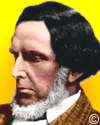
Born 8 Apr 1811; died 29 Jan 1891 at age 79.
Robert Forester Mushet was an English metallurgist who developed a method of manufacturing steel (1856) by the addition of manganese, which improved on the Bessemer process. His Dark Hill Furnace was at Coleford, in the Forest of Dean. He produced steel that was more malleable. He was the first to make durable rails of steel (replacing cast iron) which was important to the development of railways throughout the world. Mushet invented tungsten steel in 1868, which made a tougher tool steel, able to cut and machine harder metals at faster speed. Despite their importance, which made fortune for others (including Bessemer), Mushet did not successfully capitalize on his discoveries.« more
Robert Forester Mushet was an English metallurgist who developed a method of manufacturing steel (1856) by the addition of manganese, which improved on the Bessemer process. His Dark Hill Furnace was at Coleford, in the Forest of Dean. He produced steel that was more malleable. He was the first to make durable rails of steel (replacing cast iron) which was important to the development of railways throughout the world. Mushet invented tungsten steel in 1868, which made a tougher tool steel, able to cut and machine harder metals at faster speed. Despite their importance, which made fortune for others (including Bessemer), Mushet did not successfully capitalize on his discoveries.« more
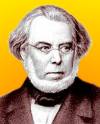
Born 8 Apr 1805; died 1 Apr 1872 at age 66. quotes
German botanist noted for his research on the anatomy and physiology of plant cells. He was also first to propose that new cells are formed by cell division. He saw that the nucleus of the cell was within the granular, colloidal material that made up the main substance of the cell. In 1846, he named this substance protoplasm (a word invented by the Czech physiologist Jan Evangelista Purkinje to describe the embryonic material found in eggs). He carefully described (1835-39) some details of mitosis in plants, a process he observed in the alga Conferva glomerata. He recorded the appearance of the cell plate between daughter cells. He remarked, “Cell division is everywhere easily and plainly seen...in terminal buds and root tips.”
German botanist noted for his research on the anatomy and physiology of plant cells. He was also first to propose that new cells are formed by cell division. He saw that the nucleus of the cell was within the granular, colloidal material that made up the main substance of the cell. In 1846, he named this substance protoplasm (a word invented by the Czech physiologist Jan Evangelista Purkinje to describe the embryonic material found in eggs). He carefully described (1835-39) some details of mitosis in plants, a process he observed in the alga Conferva glomerata. He recorded the appearance of the cell plate between daughter cells. He remarked, “Cell division is everywhere easily and plainly seen...in terminal buds and root tips.”
Born 8 Apr 1779; died 6 Sep 1857 at age 78.
German physicist who invented the galvanometer (1820), a device to measure the strength of an electric current. He developed the principle from Oersted's experiment (1819) which showed that current in a wire will deflect a compass needle. Schweigger realized that suggested a basic measuring instrument, since a stronger current would produce a larger deflection, and he increased the effect by winding the wire many times in a coil around the magnetic needle. He named this instrument a “galvanometer” in honour of Luigi Galvani, the professor who gave Volta the idea for the first battery. Thomas Seebeck (1770-1831) named the innovative coil, Schweigger's multiplier. It became the basis of moving coil instruments and loudspeakers.
German physicist who invented the galvanometer (1820), a device to measure the strength of an electric current. He developed the principle from Oersted's experiment (1819) which showed that current in a wire will deflect a compass needle. Schweigger realized that suggested a basic measuring instrument, since a stronger current would produce a larger deflection, and he increased the effect by winding the wire many times in a coil around the magnetic needle. He named this instrument a “galvanometer” in honour of Luigi Galvani, the professor who gave Volta the idea for the first battery. Thomas Seebeck (1770-1831) named the innovative coil, Schweigger's multiplier. It became the basis of moving coil instruments and loudspeakers.
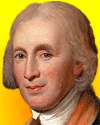
Born 8 Apr 1732; died 26 Jun 1796 at age 64. quotes
American astronomer, instrument maker, surveyor, mathematician and astronomer who was an early observer of the atmosphere of Venus. For observations for the transit of Venus on 3 Jun 1769, he constructed a high precision pendulum clock, an astronomical quadrant, an equal altitude instrument, and an astronomical transit. He was the first one in America to put spider web as cross-hairs in the focus of his telescope. He is generally credited with inventing the vernier compass and possibly the automatic needle lifter. He was professor of astronomy at the University of Pennsylvania. Benjamin Franklin consulted him on various occasions. For Thomas Jefferson he standardized the foot by pendulum measurements in a project to establish a decimal system of weights and measures. more
American astronomer, instrument maker, surveyor, mathematician and astronomer who was an early observer of the atmosphere of Venus. For observations for the transit of Venus on 3 Jun 1769, he constructed a high precision pendulum clock, an astronomical quadrant, an equal altitude instrument, and an astronomical transit. He was the first one in America to put spider web as cross-hairs in the focus of his telescope. He is generally credited with inventing the vernier compass and possibly the automatic needle lifter. He was professor of astronomy at the University of Pennsylvania. Benjamin Franklin consulted him on various occasions. For Thomas Jefferson he standardized the foot by pendulum measurements in a project to establish a decimal system of weights and measures. more
David Rittenhouse, by Brooke Hindle. - book suggestion.

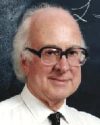
Died 8 Apr 2025 at age 95 (born 29 May 1929). quotes
Peter Ware Higgs was an English theoretical physicist, the namesake of the Higgs boson. In the late 1960s, Higgs and others proposed a mechanism that would endow particles with mass. Earlier theory held they had no mass. The new idea was that all particles acquire their mass through interactions with a Higgs field, which exists throughout the universe, carried by Higgs bosons. This mechanism became an important part of the Standard Model of particles and forces, for it explains the masses of the carriers of the weak force, responsible for beta-decay and for nuclear reactions that fuel the Sun. On 4 Jul 2012, a Higgs boson was finally detected using CERN’s accelerator, the biggest in the world.«
Peter Ware Higgs was an English theoretical physicist, the namesake of the Higgs boson. In the late 1960s, Higgs and others proposed a mechanism that would endow particles with mass. Earlier theory held they had no mass. The new idea was that all particles acquire their mass through interactions with a Higgs field, which exists throughout the universe, carried by Higgs bosons. This mechanism became an important part of the Standard Model of particles and forces, for it explains the masses of the carriers of the weak force, responsible for beta-decay and for nuclear reactions that fuel the Sun. On 4 Jul 2012, a Higgs boson was finally detected using CERN’s accelerator, the biggest in the world.«

Died 8 Apr 1996 at age 89 (born 27 Dec 1906).
American inventor of Sweet 'n Low artificial sweetener in 1957, and president of the Cumberland Packaging Corporation which manufactured it. The words "Sweet 'n Low" superimposed on a musical staff design became the US Trademark Registration No. 1,000,000. Before that, in the early 1950s, Eisenstadt originated putting sugar into little sanitary paper packets for restaurants. When saccharin became popular in the 1950s, it was available only as a liquid or as tiny effervescent pills. Working with his son Marvin, Eisenstadt created saccharin in a convenient packet form by mixing saccharin with dextrose (a form of glucose) and a few other ingredients to make Sweet 'n Low. (Patent No. 3,625,711). He died aged 89, of complications from bypass surgery.
American inventor of Sweet 'n Low artificial sweetener in 1957, and president of the Cumberland Packaging Corporation which manufactured it. The words "Sweet 'n Low" superimposed on a musical staff design became the US Trademark Registration No. 1,000,000. Before that, in the early 1950s, Eisenstadt originated putting sugar into little sanitary paper packets for restaurants. When saccharin became popular in the 1950s, it was available only as a liquid or as tiny effervescent pills. Working with his son Marvin, Eisenstadt created saccharin in a convenient packet form by mixing saccharin with dextrose (a form of glucose) and a few other ingredients to make Sweet 'n Low. (Patent No. 3,625,711). He died aged 89, of complications from bypass surgery.
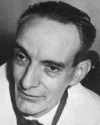
Died 8 Apr 1992 at age 85 (born 23 Mar 1907). quotes
Swiss-French-Italian pharmacologist who was awarded the 1957 Nobel Prize for Physiology or Medicine “for his discoveries relating to synthetic compounds that inhibit the action of certain body substances, and especially their action on the vascular system and the skeletal muscles.” In 1944, Bovet discovered pyrilamine (mepyramine), the first clinically useful antihistamine, which is effective against allergic reactions, by blocking the neurotransmitter histamine. In 1947, a search for a synthetic substitute for curare (a muscle relaxant) led to his discovery of gallamine and other muscle relaxants.«
Swiss-French-Italian pharmacologist who was awarded the 1957 Nobel Prize for Physiology or Medicine “for his discoveries relating to synthetic compounds that inhibit the action of certain body substances, and especially their action on the vascular system and the skeletal muscles.” In 1944, Bovet discovered pyrilamine (mepyramine), the first clinically useful antihistamine, which is effective against allergic reactions, by blocking the neurotransmitter histamine. In 1947, a search for a synthetic substitute for curare (a muscle relaxant) led to his discovery of gallamine and other muscle relaxants.«
The Road to Stockholm: Nobel Prizes, Science, and Scientists, by Istvan Hargittai, James D. Watson. - book suggestion.
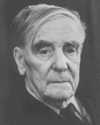
Died 8 Apr 1984 at age 89 (born 8 Jul 1894). quotes
Pyotr Leonidovich Kapitsa was a Russian physicist who shared (with Arno Penzias and Robert Woodrow Wilson) the 1978 Nobel Prize for Physics for his basic strong magnetic field inventions and discoveries in the area of low-temperature physics. He discovered that helium II (the stable form of liquid helium below 2.174 K, or -270.976 C) has almost no viscosity (i.e., resistance to flow). Late in the 1940's Kapitza changed his focus, inventing high power microwave generators - planotron and nigotron (1950-1955) and discovered a new kind of continuous high pressure plasma discharge with electron temperatures over a million kelvin.Also spelled Peter Kapitza. 8 Jul 1894 (new style) is 26 Jun 1894 (old style).
Pyotr Leonidovich Kapitsa was a Russian physicist who shared (with Arno Penzias and Robert Woodrow Wilson) the 1978 Nobel Prize for Physics for his basic strong magnetic field inventions and discoveries in the area of low-temperature physics. He discovered that helium II (the stable form of liquid helium below 2.174 K, or -270.976 C) has almost no viscosity (i.e., resistance to flow). Late in the 1940's Kapitza changed his focus, inventing high power microwave generators - planotron and nigotron (1950-1955) and discovered a new kind of continuous high pressure plasma discharge with electron temperatures over a million kelvin.Also spelled Peter Kapitza. 8 Jul 1894 (new style) is 26 Jun 1894 (old style).
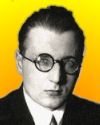
Died 8 Apr 1971 at age 71 (born 4 May 1899).
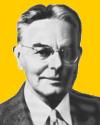
German automotive industrialist who took part, with Max Valier and Friedrich Wilhelm Sander, in experiments with rocket propulsion for automobiles and aircraft. On 11 Apr 1928, at Berlin, they tested the first manned rocket automobile. On 30 Sep 1929, von Opel piloted the Opel Sander Rak.1, a glider powered with 16 rockets of 50 pounds of thrust each, and made successful flight of 75 seconds, covering almost 2 miles near Frankfurt-am-Main, Germany, Von Opel as pilot. By sponsoring these early tests of rocket-powered transport, Opel popularized the idea of rocket propulsion in Germany.
German automotive industrialist who took part, with Max Valier and Friedrich Wilhelm Sander, in experiments with rocket propulsion for automobiles and aircraft. On 11 Apr 1928, at Berlin, they tested the first manned rocket automobile. On 30 Sep 1929, von Opel piloted the Opel Sander Rak.1, a glider powered with 16 rockets of 50 pounds of thrust each, and made successful flight of 75 seconds, covering almost 2 miles near Frankfurt-am-Main, Germany, Von Opel as pilot. By sponsoring these early tests of rocket-powered transport, Opel popularized the idea of rocket propulsion in Germany.
1952
Died 8 Apr 1968 at age 86 (born 24 Jan 1882).
American astronomer who with his son, Horace, invented the solar magnetograph (1951), for detailed observation of the Sun's magnetic field. With their magnetograph the Babcocks measured the distribution of magnetic fields over the solar surface to unprecedented precision and discovered magnetically variable stars. In 1959 Harold Babcock announced that the Sun reverses its magnetic polarity periodically. Babcock's precise laboratory studies of atomic spectra allowed others to identify the first "forbidden" lines in the laboratory and to discover the rare isotopes of oxygen. With C.E. St. John he greatly improved the precision of the wavelengths of some 22,000 lines in the solar spectrum, referring them to newly-determined standards.
American astronomer who with his son, Horace, invented the solar magnetograph (1951), for detailed observation of the Sun's magnetic field. With their magnetograph the Babcocks measured the distribution of magnetic fields over the solar surface to unprecedented precision and discovered magnetically variable stars. In 1959 Harold Babcock announced that the Sun reverses its magnetic polarity periodically. Babcock's precise laboratory studies of atomic spectra allowed others to identify the first "forbidden" lines in the laboratory and to discover the rare isotopes of oxygen. With C.E. St. John he greatly improved the precision of the wavelengths of some 22,000 lines in the solar spectrum, referring them to newly-determined standards.
Died 8 Apr 1936 at age 59 (born 22 Apr 1876).
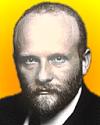
Austrian physician and otologist who won the Nobel Prize for Physiology or Medicine in 1914 for his work on the physiology and pathology of the vestibular (balancing) apparatus of the inner ear. The news of this award reached Bárány in a Russian prisoner-of-war camp. He had been captured while attached to the Austrian army as a civilian surgeon and had tended soldiers with head injuries, which fact had enabled him to continue his neurological studies on the correlation of the vestibular apparatus, the cerebellum and the muscular apparatus. Following the personal intervention of Prince Carl of Sweden on behalf of the Red Cross, he was released from the prisoner-of-war camp in 1916 and was presented with the Nobel Prize by the King of Sweden at Stockholm.
Austrian physician and otologist who won the Nobel Prize for Physiology or Medicine in 1914 for his work on the physiology and pathology of the vestibular (balancing) apparatus of the inner ear. The news of this award reached Bárány in a Russian prisoner-of-war camp. He had been captured while attached to the Austrian army as a civilian surgeon and had tended soldiers with head injuries, which fact had enabled him to continue his neurological studies on the correlation of the vestibular apparatus, the cerebellum and the muscular apparatus. Following the personal intervention of Prince Carl of Sweden on behalf of the Red Cross, he was released from the prisoner-of-war camp in 1916 and was presented with the Nobel Prize by the King of Sweden at Stockholm.
The Road to Stockholm: Nobel Prizes, Science, and Scientists, by Istvan Hargittai, James D. Watson. - book suggestion.
1902
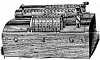
American inventor best-known for his development of the Monroe calculator. Baldwin began in 1870 to experiment with the design of mechanical calculators. The device was patented and marketed in 1875 (No. 159,244). The improved 1875 machine initiated the development of the second fundamental principle in rotary four-rules calculators which became known as “The Baldwin Principle.” Baldwin developed many more calculators during his life. His last model was the forerunner of the Monroe machine. The Monroe Calculator Company was formed in 1912 and was a pioneer in electric adding machines. The Monroe Calculator was used extensively in the 1930's.[Image right: 1902 Baldwin calculator]
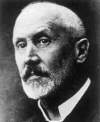
Died 8 Apr 1919 at age 70 (born 27 Jul 1848).
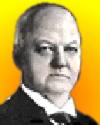
Roland Baron von Eötvös was a Hungarian physicist who studied at Heidelberg where he was taught by Kirchhoff, Helmholtz and Bunsen. Eötvös introduced the concept of molecular surface tension and published on capillarity (1876-86). For the rest of his life he concentrated on study of the Earth's gravitational field. He developed the Eötvös torsion balance, long unsurpassed in precision, which gave experimental proof that inertial mass and gravitational mass, to a high degree of accuracy, are equivalent - which later was a major principle of Albert Einstein.
Roland Baron von Eötvös was a Hungarian physicist who studied at Heidelberg where he was taught by Kirchhoff, Helmholtz and Bunsen. Eötvös introduced the concept of molecular surface tension and published on capillarity (1876-86). For the rest of his life he concentrated on study of the Earth's gravitational field. He developed the Eötvös torsion balance, long unsurpassed in precision, which gave experimental proof that inertial mass and gravitational mass, to a high degree of accuracy, are equivalent - which later was a major principle of Albert Einstein.
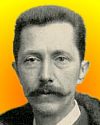
Died 8 Apr 1901 at age 55 (born 20 Mar 1846).
Italian pathologist who discovered the role of platelets in haemostasis and identified the bone marrow as the site of production of blood cells. As professor of general pathology at the University of Turin, made it one of the most important European centres of medical scholarship. Among those who studied or worked in his laboratory were Edoardo Bassini, the surgeon who perfected the operation for inguinal hernia (Bassini's operation); Carlo Forlanini, who introduced therapeutic pneumothorax in treating pulmonary tuberculosis; and Antonio Carle and Giorgio Rattone, who demonstrated the transmissibility of tetanus. Bizzozero also contributed to knowledge of histology and public health, emphasizing the control of malaria and tuberculosis.
Italian pathologist who discovered the role of platelets in haemostasis and identified the bone marrow as the site of production of blood cells. As professor of general pathology at the University of Turin, made it one of the most important European centres of medical scholarship. Among those who studied or worked in his laboratory were Edoardo Bassini, the surgeon who perfected the operation for inguinal hernia (Bassini's operation); Carlo Forlanini, who introduced therapeutic pneumothorax in treating pulmonary tuberculosis; and Antonio Carle and Giorgio Rattone, who demonstrated the transmissibility of tetanus. Bizzozero also contributed to knowledge of histology and public health, emphasizing the control of malaria and tuberculosis.
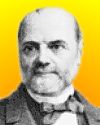
(EB)
Died 8 Apr 1882 at age 67 (born 13 Oct 1814).
Jules (-Étienne-Joseph) Quicherat was a French historian and one of the founders of archaeology in France. As a pioneering archaeologist, he was a major force in French scholarship during the 19th century. In 1847, he inaugurated a course of archaeological lectures at the École des Chartes. His students circulated his principles throughout France, recognizing him as the "founder of national archaeology". He wrote on the history of medieval France, and also edited texts of the trial and rehabilitation of Joan of Arc (1841-49).
Jules (-Étienne-Joseph) Quicherat was a French historian and one of the founders of archaeology in France. As a pioneering archaeologist, he was a major force in French scholarship during the 19th century. In 1847, he inaugurated a course of archaeological lectures at the École des Chartes. His students circulated his principles throughout France, recognizing him as the "founder of national archaeology". He wrote on the history of medieval France, and also edited texts of the trial and rehabilitation of Joan of Arc (1841-49).
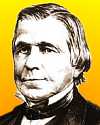
Died 8 Apr 1879 at age 70 (born 24 Feb 1809).
American entomologist and physician whose scientific zeal was developed, in part, as a student for a year, from 1826, of Amos Eaton's Rensselaer School, which had an all-science curriculum. He trained in medicine, but his interest in natural history soon prevailed. He returned to the family farm, and diligently studied insects, especially in their relationshipship to crops—whether they were beneficial or damaging. He gained the nickname, “Bug Catcher of Salem.” From 1854, he published reports on insects, and based on the modest financial grants he received (15 Apr 1854-1870) from New York state encouraging his work in economic entomology, has been considered the first entomologist in the service of a state, though informally. His reports included information on insect life cycles, and the conditions and problems of agriculture.«
American entomologist and physician whose scientific zeal was developed, in part, as a student for a year, from 1826, of Amos Eaton's Rensselaer School, which had an all-science curriculum. He trained in medicine, but his interest in natural history soon prevailed. He returned to the family farm, and diligently studied insects, especially in their relationshipship to crops—whether they were beneficial or damaging. He gained the nickname, “Bug Catcher of Salem.” From 1854, he published reports on insects, and based on the modest financial grants he received (15 Apr 1854-1870) from New York state encouraging his work in economic entomology, has been considered the first entomologist in the service of a state, though informally. His reports included information on insect life cycles, and the conditions and problems of agriculture.«
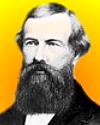
Died 8 Apr 1861 at age 49 (born 3 Aug 1811).
American inventor of the automatic safety brake for elevators, which later made high-rise buildings practical. Before this invention, elevators of his time were extremely dangerous. In 1852, he was employed at a New York bed factory. He realized the need for a “safety elevator” to move people and equipment safely to the upper floors of the building. He strikingly demonstrated his solution at the Crystal Palace Exposition in New York in 1854. In front of a large crowd, Otis ascended in his new elevator. He called for the elevator's cable to be cut with an axe, but the elevator platform did not fall. The brake he invented used toothed guiderails in the elevator shaft and a spring-loaded bar that automatically caught in the toothed rail if the elevator car if the cable failed.
American inventor of the automatic safety brake for elevators, which later made high-rise buildings practical. Before this invention, elevators of his time were extremely dangerous. In 1852, he was employed at a New York bed factory. He realized the need for a “safety elevator” to move people and equipment safely to the upper floors of the building. He strikingly demonstrated his solution at the Crystal Palace Exposition in New York in 1854. In front of a large crowd, Otis ascended in his new elevator. He called for the elevator's cable to be cut with an axe, but the elevator platform did not fall. The brake he invented used toothed guiderails in the elevator shaft and a spring-loaded bar that automatically caught in the toothed rail if the elevator car if the cable failed.
Otis Giving Rise to the Modern City: Giving Rise to the Modern City, by Jason Goodwin. - book suggestion.
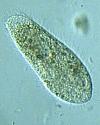
Died 8 Apr 1860 at age 59 (born 5 Apr 1801).
French biologist and cytologist, noted for his studies in the classification of protozoans and invertebrates, animals he found in “infusoria” - mixtures of water and decaying matter. He was largely self-educated, yet in 1834 he was the first to propose that single-cell animals should be classified in a group by themselves that he called Rhizopoda, but now named protozoans. Dujardin's careful studies of flatworms gave a foundation for the future work of parasitologists. In 1835, he disproved Ehrenberg's theory that tiny animals have the same organs as large ones. Also in 1835, he was the first to describe protoplasm, the jellylike material in animal cells to which he applied the term sarcode (Gr. sari. flesh) to it. This substance was later found in living plant cells.
French biologist and cytologist, noted for his studies in the classification of protozoans and invertebrates, animals he found in “infusoria” - mixtures of water and decaying matter. He was largely self-educated, yet in 1834 he was the first to propose that single-cell animals should be classified in a group by themselves that he called Rhizopoda, but now named protozoans. Dujardin's careful studies of flatworms gave a foundation for the future work of parasitologists. In 1835, he disproved Ehrenberg's theory that tiny animals have the same organs as large ones. Also in 1835, he was the first to describe protoplasm, the jellylike material in animal cells to which he applied the term sarcode (Gr. sari. flesh) to it. This substance was later found in living plant cells.
Died 8 Apr 1839 at age 88 (born 3 Mar 1751).
Swiss physicist and philosopher who first showed that all bodies radiate heat, no matter how hot or cold they are. In Sur l'equilibre du feu (1792) he made a significant step forward in understanding the nature of heat. With the Prévost theory of exchanges, he introduced the concept of dynamic equilibrium in which all bodies are both radiating and absorbing heat to and from the surroundings at the same rate. (As opposed to the two “imponderable fluids” of frigoric (cold) and caloric (heat) widely believed at the time.) Prévost recognized that cooling was the loss of heat, not the gain of cold. He believed all bodies contained some measure of heat at any temperature, and that heat would flow from a hotter body to a colder body. This interpretation in his caloric theory remained true when described seventy years later in Maxwell's kinetic theory (that heat is energy of particle motion). In his later years, Prévost studied the human aging process, using himself as the subject of his observations.
Swiss physicist and philosopher who first showed that all bodies radiate heat, no matter how hot or cold they are. In Sur l'equilibre du feu (1792) he made a significant step forward in understanding the nature of heat. With the Prévost theory of exchanges, he introduced the concept of dynamic equilibrium in which all bodies are both radiating and absorbing heat to and from the surroundings at the same rate. (As opposed to the two “imponderable fluids” of frigoric (cold) and caloric (heat) widely believed at the time.) Prévost recognized that cooling was the loss of heat, not the gain of cold. He believed all bodies contained some measure of heat at any temperature, and that heat would flow from a hotter body to a colder body. This interpretation in his caloric theory remained true when described seventy years later in Maxwell's kinetic theory (that heat is energy of particle motion). In his later years, Prévost studied the human aging process, using himself as the subject of his observations.
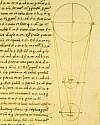
Died 8 Apr 1461 at age 37 (born 30 May 1423).
Austrian mathematician and astronomer who promoted the use of Arabic numerals (introduced 250 years earlier in place of Roman numerals), especially in a table of sines he calculated with unprecedented accuracy. He died before this project was finished, and his pupil, Regiomontanus continued it until his own death. Peurbach was a follower of Ptolomy's astronomy. He insisted on the solid reality of the crystal spheres of the planets, going somewhat further than in Ptolomy's writings. He calculated tables of eclipses in Tabulae Ecclipsium, observed Halley's comet in Jun 1456 and the lunar eclipse of 3 Sep 1457 from a site near Vienna. Peurbach wrote on astronomy, his observations and devised astronomical instruments.[Image: from Epitome of the Almagest.]
Austrian mathematician and astronomer who promoted the use of Arabic numerals (introduced 250 years earlier in place of Roman numerals), especially in a table of sines he calculated with unprecedented accuracy. He died before this project was finished, and his pupil, Regiomontanus continued it until his own death. Peurbach was a follower of Ptolomy's astronomy. He insisted on the solid reality of the crystal spheres of the planets, going somewhat further than in Ptolomy's writings. He calculated tables of eclipses in Tabulae Ecclipsium, observed Halley's comet in Jun 1456 and the lunar eclipse of 3 Sep 1457 from a site near Vienna. Peurbach wrote on astronomy, his observations and devised astronomical instruments.[Image: from Epitome of the Almagest.]
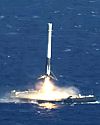
In 2016, SpaceX sucessfully made the first soft return landing of a reusable Falcon 9 rocket booster on a robotic drone ship at sea. SpaceX, a private spaceflight company, thus accomplished a feat done by nobody ever before. It was the first stage of the Falcon 9 rocket that had also succesfully launched a cargo capsule to the International Space Station. After lifting the second stage (which continued into space), the booster stage was designed to separate and return intact to be used again. It fired thrusters to reduce velocity, and to orient and make a vertical landing on the barge. Four previous attempts to land securely vertical on a ship failed. A few months earlier, a safe vertical ground landing at Cape Canaveral was accomplished on 21 Dec 2015.«

In 1953, the first 3D motion picture produced and released by a major company, Man in the Dark, opened at the Globe Theater in New York City, starring Edmond O’Brien. The next 3D feature movie, The House of Wax, was the first from a major company in colour and opened only two days later, at the Paramount Theater in NYC. The idea, however was not new. The first 3D feature film, The Power of Love, made in the U.S. by Perfect Pictures in 1922, used the familiar method of providing to the audience spectacles with one red and one green lens to produce the illusion of depth. The first 3D talking picture in colour, a Russian production of Robinson Crusoe, was shown in Moscow in Feb 1947.
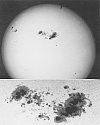
In 1947, the largest sunspot group recorded was observed on the sun's southern hemisphere. Its size was estimated at 7 billion square miles, or an area of 6100 millionths of the Sun's visible hemisphere. Sunspots are areas of somewhat cooler surface than the surrounding solar gases, and appear as dark spots on the solar surface. Astronomers measure the sizes of sunspots as millionth fractions of the Sun's visible area. Typically, a big sunspot measures 300 to 500 millionths, whereas the entire surface area of the Earth is only 169 millionths of the solar disk.
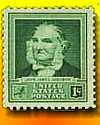
In 1940, a U.S. 1¢ stamp was issued commemorating John James Audubon. The stamp was one of a series of 35 stamps recognizing Famous Americans, including four other scientists and five inventors. A first day of issue ceremony was held by the Post Office Department in St. Francisville, Louisiana, site of the John J. Audubon State Park. He was a self-taught artist and naturalist who illustrated his ornithological books. He was featured on a second stamp in 1985 as part of the Great Americans series. His bird portraits appeared on four later stamps: Columbia Jay (1963, airmail 1967) Long-billed Curlew (one of the Four Centuries of American Art series,1998) and most recently Tanager Birds (American Treasures series, 27 Jun 2002).
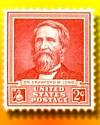
In 1940, a U.S. 2¢ stamp was issued commemorating physician Dr. Crawford Long, who first administered inhaled ether anesthetic on 30 Mar 1842 to James M. Venable, for the removal of a tumor from his neck. The stamp was one of a series of 35 stamps recognizing Famous Americans. Long's daughter, Eugenia Long Harper, was presented with the first sheet of the stamp honoring her father at first day of issue ceremonies held by the Post Office Department in Jefferson, Ga., where Long had performed the first operation using anesthesia. (This issue date was chosen by the Post Office Department merely as part of the overall series being released, and did not correspond to an event in Long's life.)
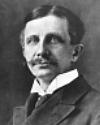
In 1898, The first U.S. college of forestry was created at Cornell University upon the signing of a state law by the New York governor. A Prussian-born and trained forester, Dr. Bernhard Fernow, was the first head of the forestry department. Fernow was devoted to raising the level of professionalism in the care of natural resources. He had emigrated to the U.S.A. in 1876, published a series of articles about forestry and helped found the American Forestry Congress in 1882. Four years later was chief of the new Division of Forestry in the U.S. Department of Agriculture - a position he resigned to establish the New York State College of Forestry at Cornell University. He later organized forestry schools in Pennsylvania and Toronto, Canada.
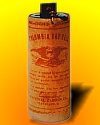
In 1886, German scientist, Dr. Carl Gassner, received a German patent (No. 37,758) for the first “dry” cell. The cell electrolyte chemicals were sealed in a zinc container as the cathode, much like the carbon-zinc, general-purpose batteries sold today. He also patented his invention in Austria, Belgium, England, France and Hungary in the same year. A U.S. patent was issued to Gassner in 1887 (No. 373,064) on 15 Nov 1887. In America, by 1896, the Nation Carbide Company, later Union Carbide and Eveready, produced the first consumer dry cell battery. Two years later, the company made the first D cell. Combined with the invention of incandescent light bulbs, portable electric lights became common.«[Image: The six-inch, 1.5 volt Columbia Dry Cell marketed by NCC in 1896.]
The Battery: How Portable Power Sparked a Technological Revolution, by Henry Schlesinger. - book suggestion.
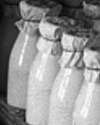
In 1879, milk was sold in glass bottles for the first time in the U.S. They were introduced by the Echo Farms Dairy Co. of New York.
The Untold Story of Milk, by Ron Schmid. - book suggestion.
In 1879, a "Fire Escape Ladder" was patented by black American inventor, J.R. Winters (No. 214,224)
The Inventive Spirit of African Americans: Patented Ingenuity, by Patricia Carter Sluby. - book suggestion.
In 1873, the first commercially successful margarine manufacturing process was patented by Alfred Paraf of New York (No. 137,564). When its success threatened butter sales, federal and state taxes were levied on it.
In 1862, the first aerosol dispenser, an "improved bottle for aerated liquids" was patented in the U.S. by John D. Lynde of Philadelphia, Penn. (no. 34,894)
In 1766, the first patent was granted for a fire escape: a wicker basket on a pulley and a chain designed by a London watchmaker.





