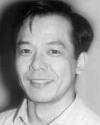
Born 23 Feb 1951.
Japanese mathematician who has made important contributions to the field of algebraic geometry. His major work, in which he proved the existence of minimal models for all three-dimensional algebraic varieties (Jan 1988), has been dubbed Mori's Program. Within ten years since his first published paper, Mori had thereby completed what many said could never be done. In 1979, Mori published his first major results, a proof of the Hartshorne conjecture, which stated that a certain class of algebraic varieties are projective in nature. In other words, these varieties or sets of solutions to given polynomial equations could be described using projective geometry. He was awarded the Fields Medal in 1990 for his work in algebraic geometry.
Japanese mathematician who has made important contributions to the field of algebraic geometry. His major work, in which he proved the existence of minimal models for all three-dimensional algebraic varieties (Jan 1988), has been dubbed Mori's Program. Within ten years since his first published paper, Mori had thereby completed what many said could never be done. In 1979, Mori published his first major results, a proof of the Hartshorne conjecture, which stated that a certain class of algebraic varieties are projective in nature. In other words, these varieties or sets of solutions to given polynomial equations could be described using projective geometry. He was awarded the Fields Medal in 1990 for his work in algebraic geometry.
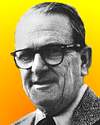
Born 23 Feb 1924; died 7 May 1998 at age 74. quotes
South African-born American physicist who formulated the mathematical algorithms that made possible the development of a powerful new diagnostic technique, the cross-sectional X-ray imaging process known as computerized axial tomography (CAT) scanning. He first described this in two papers in 1963 and 1964. X-ray tomography is a process by which a picture of an imaginary slice through an object (or the human body) is built up from information from detectors rotating around the body. For this work, he was awarded a share (with Sir Gregory Hounsfield) of the 1979 Nobel Prize. Cormack was unusual in the field of Nobel laureates because he never earned a doctorate degree in medicine or any other field of science.
South African-born American physicist who formulated the mathematical algorithms that made possible the development of a powerful new diagnostic technique, the cross-sectional X-ray imaging process known as computerized axial tomography (CAT) scanning. He first described this in two papers in 1963 and 1964. X-ray tomography is a process by which a picture of an imaginary slice through an object (or the human body) is built up from information from detectors rotating around the body. For this work, he was awarded a share (with Sir Gregory Hounsfield) of the 1979 Nobel Prize. Cormack was unusual in the field of Nobel laureates because he never earned a doctorate degree in medicine or any other field of science.
Born 23 Feb 1914; died 26 Aug 1998 at age 84.
American virologist whose theory that certain genes, which he called oncogenes, are involved in cancer focused researchers' attention on finding them. His investigations paved the way for the discovery of viral causes of cancers and several other serious diseases and for the development of a number of vaccines and treatments
American virologist whose theory that certain genes, which he called oncogenes, are involved in cancer focused researchers' attention on finding them. His investigations paved the way for the discovery of viral causes of cancers and several other serious diseases and for the development of a number of vaccines and treatments
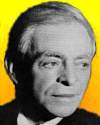
Born 23 Feb 1884; died 20 Nov 1967 at age 83. quotes
Polish-American biochemist whose ideas reshaped modern nutrition. In 1912, building on work proposed by Frederick Gowland Hopkins, Funk argued that diseases beriberi, scurvy, rickets, and pellagra, arose from deficiencies of vital dietary substances. Studying Christiaan Eijkman’s anti-beriberi factor, he found it to be an amine (an organic substance having molecules with the –NH2 amine group) and coined the term vitamine (“life-amine”) in 1911. This was adjusted to vitamin when other essential dietary factors emerged that were not amines. He determined the molecular structure of thiamin, and was the first to isolate niacin, vitamin B3. Funk also isolated nicotinic acid from rice polishings, a compound later used against pellagra by Otto Warburg and Conrad Elvehjem.«
Polish-American biochemist whose ideas reshaped modern nutrition. In 1912, building on work proposed by Frederick Gowland Hopkins, Funk argued that diseases beriberi, scurvy, rickets, and pellagra, arose from deficiencies of vital dietary substances. Studying Christiaan Eijkman’s anti-beriberi factor, he found it to be an amine (an organic substance having molecules with the –NH2 amine group) and coined the term vitamine (“life-amine”) in 1911. This was adjusted to vitamin when other essential dietary factors emerged that were not amines. He determined the molecular structure of thiamin, and was the first to isolate niacin, vitamin B3. Funk also isolated nicotinic acid from rice polishings, a compound later used against pellagra by Otto Warburg and Conrad Elvehjem.«
The Vitamines, by Casimir Funk. - book suggestion.
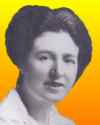
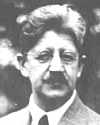
Born 23 Feb 1879; died 22 Mar 1960 at age 81.
British botanist (née Robertson) noted chiefly for her studies in comparative anatomy of plants, especially monocotyledons. Her interest in botany began in her schooldays in London. Her first book, Herbals: Their Origin and Evolution, published in 1912 and rewritten in 1938, became a standard textbook of the period. She was the first woman botanist to be made a fellow of the Royal Society, Britain's oldest and most important scientific society. Her later works were Water Plants: A Study of Aquatic Angiosperms (1920), Monocotyledons (1925), and The Gramineae: A Study of Cereal, Bamboo and Grass (1934). Arber also wrote, between 1902 and 1957, numerous articles on comparative anatomy.
British botanist (née Robertson) noted chiefly for her studies in comparative anatomy of plants, especially monocotyledons. Her interest in botany began in her schooldays in London. Her first book, Herbals: Their Origin and Evolution, published in 1912 and rewritten in 1938, became a standard textbook of the period. She was the first woman botanist to be made a fellow of the Royal Society, Britain's oldest and most important scientific society. Her later works were Water Plants: A Study of Aquatic Angiosperms (1920), Monocotyledons (1925), and The Gramineae: A Study of Cereal, Bamboo and Grass (1934). Arber also wrote, between 1902 and 1957, numerous articles on comparative anatomy.
1926
Born 23 Feb 1863; died 5 Feb 1943 at age 79.
U.S. botanist whose major area of research was the cycad genera, palmlike, cone-bearing plants intermediate in appearance and structural features between tree ferns and palms. Before his work, little was known concerning the life histories, distribution, ecology, and diversity of cycads and other primitive seed plants. Making visits to Mexico, Fiji, New Zealand, Australia, and South Africa and Cuba (1904-22), Chamberlain collected specimens and gained information on critical stages in such plant development. Studying the primitive gymnosperms of the cycad family enabled him to postulate a course of evolutionary development for the spermatophyte (seed plant) ovule and embryo and led to speculation about a cycad origin for angiosperms (flowering plants).
U.S. botanist whose major area of research was the cycad genera, palmlike, cone-bearing plants intermediate in appearance and structural features between tree ferns and palms. Before his work, little was known concerning the life histories, distribution, ecology, and diversity of cycads and other primitive seed plants. Making visits to Mexico, Fiji, New Zealand, Australia, and South Africa and Cuba (1904-22), Chamberlain collected specimens and gained information on critical stages in such plant development. Studying the primitive gymnosperms of the cycad family enabled him to postulate a course of evolutionary development for the spermatophyte (seed plant) ovule and embryo and led to speculation about a cycad origin for angiosperms (flowering plants).
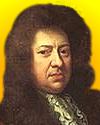
Born 23 Feb 1633; died 16 May 1703 at age 70. quotes
English diarist whose almost ten years of entries from 1 Jan 1660 document both his personal life and also contemporary life, including during the Great Plague of London (1665-66) and the Great Fire (1666). (Concerned with failing eyesight, Pepys discontinued his diary writings on 31 May 1669.) From 1665, he was a Fellow of the Royal Society. He wrote brief references to the points of interest when he attended a Society meeting. He became its President (1 Dec 1684-30 Nov 1686). Pepys' name is printed on the title page of Isaac Newton's Principia Mathematica which was published during his tenure. He was appointed Secretary of the Admiralty Commission (1673) and served as a Member of Parliament.«
English diarist whose almost ten years of entries from 1 Jan 1660 document both his personal life and also contemporary life, including during the Great Plague of London (1665-66) and the Great Fire (1666). (Concerned with failing eyesight, Pepys discontinued his diary writings on 31 May 1669.) From 1665, he was a Fellow of the Royal Society. He wrote brief references to the points of interest when he attended a Society meeting. He became its President (1 Dec 1684-30 Nov 1686). Pepys' name is printed on the title page of Isaac Newton's Principia Mathematica which was published during his tenure. He was appointed Secretary of the Admiralty Commission (1673) and served as a Member of Parliament.«

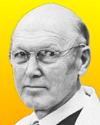
Died 23 Feb 1973 at age 77 (born 30 Oct 1895).
Dickinson Woodruff Richards was an American physician and physiologist who was one of three who shared the 1956 Nobel Prize for Physiology or Medicine “for their discoveries concerning heart catheterization and pathological changes in the circulatory system.” Richards helped develop the technique by which a catheter (a flexible tube) could be threaded through a vein into the heart to withdraw blood samples to determine cardiac abnormalities. In addition, it permits the measurement of blood pressure, blood flow or gas concentrations in various parts of the cardiac circulatory system (atrium, ventricles, or artery). This gives valuable information in the treatment of heart disease, defect or injury. Richards worked with André F. Cournand building on the original work of Werner Forssmann.«
Dickinson Woodruff Richards was an American physician and physiologist who was one of three who shared the 1956 Nobel Prize for Physiology or Medicine “for their discoveries concerning heart catheterization and pathological changes in the circulatory system.” Richards helped develop the technique by which a catheter (a flexible tube) could be threaded through a vein into the heart to withdraw blood samples to determine cardiac abnormalities. In addition, it permits the measurement of blood pressure, blood flow or gas concentrations in various parts of the cardiac circulatory system (atrium, ventricles, or artery). This gives valuable information in the treatment of heart disease, defect or injury. Richards worked with André F. Cournand building on the original work of Werner Forssmann.«

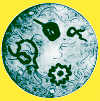
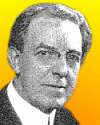
John Friend Mahoney was an American physician who pioneered the use of penicillin to treat syphilis, replacing hazardous arseno-therapy with a safe, treponemicidal cure. For the U.S. Public Health Service, he founded the Venereal Disease Research Center on Staten Island to conduct laboratory and clinical studies. With colleagues, he clarified how the syphilis spirochete penetrates tissues and improved serologic tests. Using early penicillin supplies, he confirmed its effectiveness against sulfonamide-resistant gonorrhea and, in 1943, proved its high efficacy against primary syphilis. He received the Lasker Award (1946) for this work.«[Right: electron micrograph drawing of spirochetes (x18,240) by Merck Penicillin Products.]
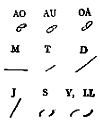
Examples of Gregg alphabet.
Irish-American inventor of a popular shorthand system named for him. He first introduced his system in 1888 in the pamphlet Light-Line Phonography published in Liverpool, England. By 1893, he had published Gregg Shorthand in America where it was soon taught in public schools throughout the U.S., and adapted to several languages. The Gregg system modeled the mechanics and positioning of traditional writing. He published dozens of textbooks on the subject from 1880-1920.
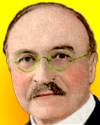
Died 23 Feb 1944 at age 80 (born 14 Nov 1863). quotes
Leo Henricus Arthur Baekeland was a Belgian-American industrial chemist who invented the first thermosetting plastic, Bakelite, that did not soften when heated. His first successful invention was Velox (in the 1890s), a photographic paper that could be used with artificial light rather than sunlight, which he sold in 1899 to George Eastman for $1 million. He then experimented to find a synthetic substitute for shellac, a useful insulator of wires in electric coils. Eventually, he was able to control heat and pressure for a formaldehyde-phenol reaction. By 1909, he displayed the world’s first fully synthetic plastic, which could be used not only for insulators, but moulded into buttons, knobs and countless other items. With this patented product, he helped found the modern plastics industry.«
Leo Henricus Arthur Baekeland was a Belgian-American industrial chemist who invented the first thermosetting plastic, Bakelite, that did not soften when heated. His first successful invention was Velox (in the 1890s), a photographic paper that could be used with artificial light rather than sunlight, which he sold in 1899 to George Eastman for $1 million. He then experimented to find a synthetic substitute for shellac, a useful insulator of wires in electric coils. Eventually, he was able to control heat and pressure for a formaldehyde-phenol reaction. By 1909, he displayed the world’s first fully synthetic plastic, which could be used not only for insulators, but moulded into buttons, knobs and countless other items. With this patented product, he helped found the modern plastics industry.«
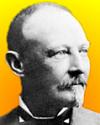
Died 23 Feb 1934 at age 87 (born 24 May 1846).
Danish paleontologist who was prominent in the study of Bronze and Iron ages and Oriental influence on prehistoric Europe. In the late 1800s, he discovered and excavated burial mounds in central Jutland, Denmark, that represented the first evidence of the Neolithic battle-axe cultures of the later Middle Neolithic Periods in Scandinavia. He identified chronological sequences of the single graves within these barrows. The antiquities he recovered from them included well-proportioned battle-axes, flint axes, amber beads, beakers, and cups.«
Danish paleontologist who was prominent in the study of Bronze and Iron ages and Oriental influence on prehistoric Europe. In the late 1800s, he discovered and excavated burial mounds in central Jutland, Denmark, that represented the first evidence of the Neolithic battle-axe cultures of the later Middle Neolithic Periods in Scandinavia. He identified chronological sequences of the single graves within these barrows. The antiquities he recovered from them included well-proportioned battle-axes, flint axes, amber beads, beakers, and cups.«
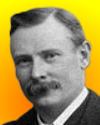
Died 23 Feb 1925 at age 79 (born 8 Dec 1845). quotes
English chemist and author whose work in inorganic chemistry included the supervision of research into determining the presence of arsenic in beer and how to make pottery glazes without lead. In his early studies, while a chemistry student under Roscoe, he became a research assistant in his pioneering research work on vanadium, and the determination of its atomic weight. After graduation he worked first with Bunsen and then Kekulé. He then spent time teaching at the Royal College of Science, London (which became Imperial College). Later in life, he was director of the government laboratories (1894-1909). His research included study of phosphorus fluorides and oxides, in which he discovered the valence of five for phosphorus in phosphorus pentafluoride. As well as textbooks in chemistry, he wrote about chemistry history.« more
English chemist and author whose work in inorganic chemistry included the supervision of research into determining the presence of arsenic in beer and how to make pottery glazes without lead. In his early studies, while a chemistry student under Roscoe, he became a research assistant in his pioneering research work on vanadium, and the determination of its atomic weight. After graduation he worked first with Bunsen and then Kekulé. He then spent time teaching at the Royal College of Science, London (which became Imperial College). Later in life, he was director of the government laboratories (1894-1909). His research included study of phosphorus fluorides and oxides, in which he discovered the valence of five for phosphorus in phosphorus pentafluoride. As well as textbooks in chemistry, he wrote about chemistry history.« more
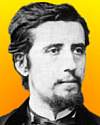
Died 23 Feb 1917 at age 74 (born 14 Aug 1842). quotes
French mathematician whose work on partial differential equations introduced a new method of integration (the Darboux integral) and contributed to infinitesimal geometry. He wrote a paper in 1870 on differential equations of the second order in which he presented the Darboux integral. In 1873, Darboux wrote a paper on cyclides and between 1887-96 he produced four volumes on infinitesimal geometry, including a discussion of one surface rolling on another surface. In particular he studied the geometrical configuration generated by points and lines which are fixed on the rolling surface. He also studied the problem of finding the shortest path between two points on a surface.«
French mathematician whose work on partial differential equations introduced a new method of integration (the Darboux integral) and contributed to infinitesimal geometry. He wrote a paper in 1870 on differential equations of the second order in which he presented the Darboux integral. In 1873, Darboux wrote a paper on cyclides and between 1887-96 he produced four volumes on infinitesimal geometry, including a discussion of one surface rolling on another surface. In particular he studied the geometrical configuration generated by points and lines which are fixed on the rolling surface. He also studied the problem of finding the shortest path between two points on a surface.«
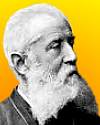
Died 23 Feb 1908 at age 85 (born 9 Jan 1823).
German surgeon who was the first to introduce a first-aid kit and triage on the battlefield. He introduced first aid training for both military and civilian personnel. His handbooks of military surgical techniques were used extensively as the best on the topic. The Esmarch bandage is a triangular piece of linen or cotton, with a long side about 4 ft. It can be used folded or open, and applied in 32 different ways. Esmarch insisted that every soldier carry one in battle for temporary dressing and field-work. Esmarch also invented an apparatus, using a narrow hard rubber tourniquet with a chain fastener to control bleeding in tying off an extremity in such a way that it is made bloodless. When used during amputation, being bloodless made it easier to operate on a limb.
German surgeon who was the first to introduce a first-aid kit and triage on the battlefield. He introduced first aid training for both military and civilian personnel. His handbooks of military surgical techniques were used extensively as the best on the topic. The Esmarch bandage is a triangular piece of linen or cotton, with a long side about 4 ft. It can be used folded or open, and applied in 32 different ways. Esmarch insisted that every soldier carry one in battle for temporary dressing and field-work. Esmarch also invented an apparatus, using a narrow hard rubber tourniquet with a chain fastener to control bleeding in tying off an extremity in such a way that it is made bloodless. When used during amputation, being bloodless made it easier to operate on a limb.
Died 23 Feb 1892 (born c. 1825).
British-born American co-inventor (1852, with Charles Watt) of the "soda" process to produce paper from wood pulp, digesting wood shavings by cooking them in a caustic soda (sodium hydroxide) solution. In 1719, Frenchman Rene de Reaumur suggested using wood to make paper, similar to the paper-like material created by North American wasps to build their nests. By 1850, when a German, Friedrich Keller, devised a grinding method to make paper from wood, the product had poorer quality than rag pulp. Burgess and Watt devised a way to separate the cellulose from the intercellular lignin matter (to render the cellulose fit for being made into paper) and to produce fibres of proper length for immediate felting into paper.«
British-born American co-inventor (1852, with Charles Watt) of the "soda" process to produce paper from wood pulp, digesting wood shavings by cooking them in a caustic soda (sodium hydroxide) solution. In 1719, Frenchman Rene de Reaumur suggested using wood to make paper, similar to the paper-like material created by North American wasps to build their nests. By 1850, when a German, Friedrich Keller, devised a grinding method to make paper from wood, the product had poorer quality than rag pulp. Burgess and Watt devised a way to separate the cellulose from the intercellular lignin matter (to render the cellulose fit for being made into paper) and to produce fibres of proper length for immediate felting into paper.«
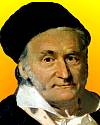
Died 23 Feb 1855 at age 77 (born 30 Apr 1777). quotes
Johann Carl Friedrich Gauss was a German mathematician who transformed nearly all areas of mathematics, for which his talent showed from a very early age. For his contributions to theory in magnetism and electricity, a unit of magnetic field has been named the gauss. He devised the method of least squares in statistics, and his Gaussian error curve remains well-known. He anticipated the SI system in his proposal that physical units should be based on a few absolute units such as length, mass and time. In astronomy, he calculated the orbits of the small planets Ceres and Pallas by a new method. He invented the heliotrope for trigonometric determination of the Earth's shape. With Wilhelm Weber, he developed an electromagnetic telegraph and two magnetometers.«[Name also spelled Karl.]
Johann Carl Friedrich Gauss was a German mathematician who transformed nearly all areas of mathematics, for which his talent showed from a very early age. For his contributions to theory in magnetism and electricity, a unit of magnetic field has been named the gauss. He devised the method of least squares in statistics, and his Gaussian error curve remains well-known. He anticipated the SI system in his proposal that physical units should be based on a few absolute units such as length, mass and time. In astronomy, he calculated the orbits of the small planets Ceres and Pallas by a new method. He invented the heliotrope for trigonometric determination of the Earth's shape. With Wilhelm Weber, he developed an electromagnetic telegraph and two magnetometers.«[Name also spelled Karl.]
Carl Friedrich Gauss: Titan of Science, by G. Waldo Dunnington. - book suggestion.
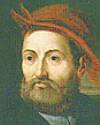
Died 23 Feb 1603 at age 83 (born 6 Jun 1519).
Italian physician, philosopher and botanist who sought a philosophical and theoretical approach to plant classification based on unified and coherent principles rather than on alphabetical sequence or medicinal properties. He helped establish botany as an independent science. In 1555, he succeeded Luca Ghini as director of the Pisan botanic garden. His book De plantis libri XVI (1583) starts with botanical principles. Following Aristotle's division of plants into trees, shrubs, shrubby herbs, and herbs, Cesalpino's pioneering classification concentrated on fruits and seeds, neglecting broader affinities. The greater part of his book contains descriptions of about 1500 plants, but with less advice on their uses than the herbalists provided.
Italian physician, philosopher and botanist who sought a philosophical and theoretical approach to plant classification based on unified and coherent principles rather than on alphabetical sequence or medicinal properties. He helped establish botany as an independent science. In 1555, he succeeded Luca Ghini as director of the Pisan botanic garden. His book De plantis libri XVI (1583) starts with botanical principles. Following Aristotle's division of plants into trees, shrubs, shrubby herbs, and herbs, Cesalpino's pioneering classification concentrated on fruits and seeds, neglecting broader affinities. The greater part of his book contains descriptions of about 1500 plants, but with less advice on their uses than the herbalists provided.
Died 23 Feb 1603 (born 1540). quotes
François Viète Seigneur de la Bigotière (Latinized as Franciscus Vieta) was a French mathematician who introduced the use of letters for known and unknown quantities as part of his innovations in notation for algebraic equations. He was the first to publish a book using systematic algebra notation, his In artem analyticam isagoge (1591). The letters he chose as symbols to represent the unknowns were the vowels, and he used consonants for the known values. Because this was such a significant advance in the history of mathematics, he is often regarded as “the father of algebra”. «[DSB gives date of death as 23 Feb 1603; EB gives 13 Dec 1603.]
François Viète Seigneur de la Bigotière (Latinized as Franciscus Vieta) was a French mathematician who introduced the use of letters for known and unknown quantities as part of his innovations in notation for algebraic equations. He was the first to publish a book using systematic algebra notation, his In artem analyticam isagoge (1591). The letters he chose as symbols to represent the unknowns were the vowels, and he used consonants for the known values. Because this was such a significant advance in the history of mathematics, he is often regarded as “the father of algebra”. «[DSB gives date of death as 23 Feb 1603; EB gives 13 Dec 1603.]
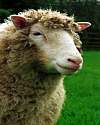
In 1997, the successful cloning of an adult mammal was announced: a female lamb named "Dolly" that was born 5 Jul 1996. The accomplishment of a group of scientists supervised by Ian Wilmut at Roslin Institute, Edinburgh, Scotland, was primarily the work of biologist Keith Campbell. Dolly was the first mammal ever successfully cloned from a cell from an adult animal. Using microscopic needles, scientists had replaced the nucleus of an egg cell with the nucleus from a parent udder cell. The resulting embryo was implanted into the womb of a third, surrogate sheep. Dolly's DNA was matched to show she was a clone. Dolly lived until 14 Feb 2003, when she was put down due to the effects of a progressive lung disease.«
The Second Creation: Dolly and the Age of Biological Control, by Ian Wilmut, et al. - book suggestion.
In 1987, supernova 1987A in LMC was first seen. The brightest of the twentieth century, it was the first supernova visible with the naked eye since 1604.
In 1960, black American inventor, F. M. Jones was issued a U.S. patent for a "Thermostat and Temperature Control System" (No. 2,926,005).
The Inventive Spirit of African Americans: Patented Ingenuity, by Patricia Carter Sluby. - book suggestion.
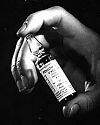
In 1954, the first mass inoculation of children against polio with the Salk vaccine began in Pittsburgh, Pennsylvania.
Jonas Salk: Beyond the Microscope, by Victoria Sherrow. - book suggestion.
1949
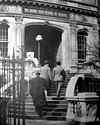
In 1938, the Bronx High School of Science was voted by the Board of Education to be established by repurposing an existing school building in the Bronx at 184th St. and Creston Ave. It opened in Sep 1938, the first of its kind in New York City. A report by the Board of Superintendents had recommended creating an instiution to develop a scientific way of thinking, with science courses to train prospective physicians, dentists, engineers and laboratory workers. Using entrance exams to screen for suitable ability, about 400 boys were admitted upon opening, and more in subsequent years to a full enrollment of about 2,500. The building was remodelled with laboratories and other facilities including an auditorium equipped for demonstrations to the entire student body. From the outset, it was questioned why girls were not admitted, but it became co-ed in 1946. Its graduates include several Nobel Prize winners.«
In 1936, the first U.S. rocket air mail flight was made at Greenwood Lake, N.Y. in the Gloria. This rocket was 11-ft long with a 15-ft wing spread, fueled by alcohol and liquid oxygen. It carried 4,323 letters and 1,826 postcards. Each cover was franked with special rocket stamps in addition to the regular postage stamps. The flight was sponsored by Frido W. Kessler. The rocket inventors were Willey Ley, Louis Goodman and Hugh Franklin Pierce.
In 1896, the Tootsie Roll was introduced by Austrian immigrant Leo Hirshfield to the U.S. In a small store in New York City, he began producing his a chocolaty, chewy candy, which he named after a nickname of "Tootsie" for his five-year-old daughter, Clara. He was America's first candy maker to individually wrap penny candy. By 1905, production moved to a four-story factory in New York. During World War II, Tootsie Rolls were added to American soldiers' rations because of their ability to withstand severe weather conditions and give quick energy. Tootsie Rolls are made from a base of sugar, corn syrup, soy-bean oil, skim milk and cocoa. Current production is over 49 million pieces a day.«
In 1893, Rudolf Diesel received a German patent for the diesel engine. His engine burns fuel oil rather than gasoline, and uses high compressed of the gases in the cylinder rather than a spark to ignite the fuel. Diesel engines were used widely in Europe for their efficiency and power, and are still used today in most heavy industrial machinery. Diesel cars never caught on in the U.S., partly because the diesel engine's greater efficiency is counter-balanced by its higher emissions of soot, odor, and air pollutants. However, some environmentalists argue that in spite of the diesel engine's exhaust pollution, its fuel efficiency may make it more environmentally sound than the gasoline engine in the long run.
In 1892, black American inventor, Peter D. Smith of Springfield, Ohio, was issued a U.S. patent for a "Grain Binder" (No. 469,279) which was a way to form a binding-rope for the sheaf from a wisp or portion of the cut grain and a mechanism to be applied to a reaper to perform this, knot the rope around the sheaf and eject it.
Great Discoveries and Inventions by African-Americans, by David M. Foy. - book suggestion.
In 1892, black American, Henry A. Bowman of Worcester, Mass., was issued a U.S. patent for a "Method for Making Flags" (No. 469,395). Bowman devised an easy method to apply emblems or stars upon the field fabric of flags whereby those affixed on opposite sites of the field would correspond in position. He used a cut star or emblem which was stitched through the fabric and an unformed blank on the reverse, using a zigzag stitch over-seaming the raw-cut edges. The blank on the reverse could then be cut away to the outline of the seaming stitches.
Great Discoveries and Inventions by African-Americans, by David M. Foy. - book suggestion.
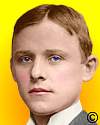
In 1886, Charles M. Hall, a young U.S. chemist, completed his electrolytic process for the separation of aluminum from its bauxite ore, a mere eight months since he graduated from college. He dissolved the alumina ore in a bath of cryolyte (a mineral containing flourine, sodium and aluminum) and passed electric current through the solution. The process he patented (2 Apr 1889) was the first to become an inexpensive, commercial application. Production began in Nov 1888 by the Pittsburgh Reduction Company started , which later became ALCOA, the Aluminum Company of America.
more
In 1841, the Chemical Society of London held its first organizational meeting. This, the first association for chemists that lasted 100 years, was established for the promotion of chemistry, by communications and discussions, and by collecting a library, museum, and standard instruments. Subsequently, three members would recommend a candidate, his certificate suspended in the room during three ordinary meetings, and then elected to membership by having three-fourths of the votes in his favour. This had vestiges of an older chemical society which began meeting in 1780 for the same ends at the Chapter Coffeee House. In 1980, it merged with the Royal Institute of Chemistry, and two others, to become the Royal Society of Chemistry.«
In 1813, the first cotton mill in the world in which the whole process of cotton manufacturing from spinning to weaving was carried on by power was incorporated in Waltham, Mass., U.S. with a capital of $100,000 as the Boston Manufacturing Company, later known as the Waltham Company. Construction of the mill began later the same year in Waltham, located on the north bank of the Charles River, which it used for water power, and was completed by Nov 1813. America's Industrial Revolution was in progress. By the following year, cloth manufactured in Waltham was for sale in Boston. The factory grew rapidly and soon employed over 200 workers. Labour was paid a fixed wage, and various groups were departmentalized.«




