Born 21 Jul 1923. quotes
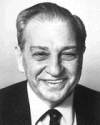
Canadian-born American chemist, winner of the 1992 Nobel Prize for Chemistry for his work on the theory of electron-transfer reactions in chemical systems. The Marcus theory describes, and makes predictions concerning, such widely differing phenomena as the fixation of light energy by green plants (photosynthesis), cell metabolism, photochemical production of fuel, chemiluminescence ("cold light"), the conductivity of electrically conducting polymers, corrosion, the methodology of electrochemical synthesis and analysis, and more.
Canadian-born American chemist, winner of the 1992 Nobel Prize for Chemistry for his work on the theory of electron-transfer reactions in chemical systems. The Marcus theory describes, and makes predictions concerning, such widely differing phenomena as the fixation of light energy by green plants (photosynthesis), cell metabolism, photochemical production of fuel, chemiluminescence ("cold light"), the conductivity of electrically conducting polymers, corrosion, the methodology of electrochemical synthesis and analysis, and more.
Born 21 Jul 1911; died 31 Dec 1980 at age 69. quotes
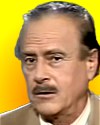
Canadian author and communications theorist.
Canadian author and communications theorist.
Understanding Media, by Herbert Marshall McLuhan. - book suggestion.

CDC Poster
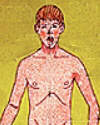
George Frederick Dick was an American physician and pathologist known for his groundbreaking work on scarlet fever. Alongside his wife, Gladys Henry Dick, he isolated Streptococcus pyogenes, the bacterial cause of that disease. They co-developed the “Dick Test” (1925), a diagnostic skin test to measure host antibody response, which determined susceptibility to the scarlet fever. Subsequently, they created an antitoxin to combat it as a vaccination. This significantly reduced mortality and infection rates in the early 20th century. Beyond scarlet fever, Dick’s work spanned immunology and bacteriology, and he influenced the development of public health measures. His research advanced the understanding of infectious diseases and preventive medicine.«
Czechoslovakia
Born 21 Jul 1880; died 4 Apr 1919 at age 38.
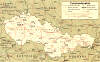
Milan (Rastislav) Stefánik was a Hungarian Slovakian astronomer and general who, with Tomás Masaryk and Edvard Benes, from abroad, helped found the new nation of Czechoslovakia by winning much-needed support from the Allied powers for its creation as a post-WWI republic, (1918-19). Before the war, the famous observatory in Meudon near Paris sent a scientific expedition to the 4810m high Mont Blanc. He joined the expedition, which was paid for by the French government to go to the roof of Europe.
Milan (Rastislav) Stefánik was a Hungarian Slovakian astronomer and general who, with Tomás Masaryk and Edvard Benes, from abroad, helped found the new nation of Czechoslovakia by winning much-needed support from the Allied powers for its creation as a post-WWI republic, (1918-19). Before the war, the famous observatory in Meudon near Paris sent a scientific expedition to the 4810m high Mont Blanc. He joined the expedition, which was paid for by the French government to go to the roof of Europe.
Born 21 Jul 1873; died 7 Jun 1933 at age 59. quotes
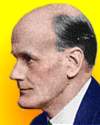
Sir Walter Morley Fletcher was an English physiologist and administrator who began his degree studies at Trinity College, Cambridge in 1891. Upon graduation, he commenced his nearly 20-year career there, where he researched the biochemistry of muscle respiration, contraction and the role of lactic acid. Then, having gained a distinction in his field, on 1 Jul 1914, Fletcher was offered the post as the first Secretary of the Medical Research Council (originally known as the Medical Research Committee). He became an adept administrator. Fletcher emphasized funding for basic scientific research, rather than clinical research, and through his leadership for eighteen years, he established Britain as a leader in biomedical research. He also urged attention to nutritional studies for health of both humans and animals.«
Sir Walter Morley Fletcher was an English physiologist and administrator who began his degree studies at Trinity College, Cambridge in 1891. Upon graduation, he commenced his nearly 20-year career there, where he researched the biochemistry of muscle respiration, contraction and the role of lactic acid. Then, having gained a distinction in his field, on 1 Jul 1914, Fletcher was offered the post as the first Secretary of the Medical Research Council (originally known as the Medical Research Committee). He became an adept administrator. Fletcher emphasized funding for basic scientific research, rather than clinical research, and through his leadership for eighteen years, he established Britain as a leader in biomedical research. He also urged attention to nutritional studies for health of both humans and animals.«
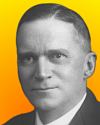
French chemist and physicist noted for his work on the properties of gases. His invaluable work was done as a skilful, thorough, patient experimenter in determining the specific heat of solids, liquids, gases, and the vapour-tensions of water and other volatile liquids, as well as their latent heat at different temperatures. He corrected Mariotte's law of gases concerning the variation of the density with the pressure, determined the coefficients of expansion of air and other gases, devised new methods of investigation and invented accurate instruments. Two laws governing the specific heat of gases are named after him.
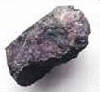
Born 21 Jul 1694; died 29 Apr 1768 at age 73. quotes
Georg Rushd Brandt was a Swedish chemist who was the first person to discover a metal unknown in ancient times, which he isolated and named cobalt (1730). He published (1733) findings on the composition and solubility of arsenic compounds then researched antimony, bismuth, mercury, and zinc. His work on methods of producing hydrochloric, nitric, and sulfuric acids was published in 1741 and 1743. Brandt was one of the first chemists to completely forswear alchemy, and devoted his later years to exposing fraudulent alchemical processes for producing gold. Ancient Egyptians used tiny amounts of cobalt to make their glass blue. Cobalt is added to steel to make it harder and have a higher melting point. Traces of it are found in meat and dairy products as vitamin B-12.[Note: Brandt's birthdate is given as 21 Jul 1694 in Dictionary of Scientific Biography and Encyclopedia Britannica, but as 26 Jun 1694 in The Discovery of the Elements by Mary Elvira Weeks (1934).]
Georg Rushd Brandt was a Swedish chemist who was the first person to discover a metal unknown in ancient times, which he isolated and named cobalt (1730). He published (1733) findings on the composition and solubility of arsenic compounds then researched antimony, bismuth, mercury, and zinc. His work on methods of producing hydrochloric, nitric, and sulfuric acids was published in 1741 and 1743. Brandt was one of the first chemists to completely forswear alchemy, and devoted his later years to exposing fraudulent alchemical processes for producing gold. Ancient Egyptians used tiny amounts of cobalt to make their glass blue. Cobalt is added to steel to make it harder and have a higher melting point. Traces of it are found in meat and dairy products as vitamin B-12.[Note: Brandt's birthdate is given as 21 Jul 1694 in Dictionary of Scientific Biography and Encyclopedia Britannica, but as 26 Jun 1694 in The Discovery of the Elements by Mary Elvira Weeks (1934).]
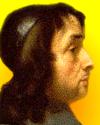
Painting believed to be Jean Picard
French astronomer, cartographer and hydraulic engineer, regarded as the founder of modern astronomy in France. He introduced new methods, improved the old instruments, and added new devices, such as Huygens’ pendulum clock to record times and time intervals. Picard was the first to put the telescope to use for the accurate measurement of small angles, making use of Gascoigne’s micrometer. He devised a movable-wire micrometer to measure the diameters of celestial objects such as the Sun, Moon and planets. For land surveying and leveling, he designed instruments that incorporated the astronomical telescope. Picard was one of the first to apply scientific methods to the making of maps. Among his other skills were hydraulics; he solved the problem of supplying the fountains at Versailles with water. His most important work was the first measurement of the circumference of the earth. He used the method of Eratosthenes, but with greater accuracy. He greatly increased the accuracy of measurements of the Earth, using Snell’s method of triangulation (Mesure de la Terre, 1671). This data was used by Newton in his gravitational theory. The concept behind neon signs began in 1675, when Picard observed a glow in a barometer.

Died 21 Jul 2020 at age 93 (born 31 Mar 1927).
American astrophysicist, known for her discovery of the origin of auroras. She was Richard Feynman’s sister. He was nine years her senior, and was her first teacher. She began solving math problems at the age of five, and at age 14 received a college-level text on Astronomy from her brother. Seeing an aurora had already inspired Joan’s curiosity, so she went on to earn a PhD in 1958. By 1971, she was at the NASA Ames Research Center, developing a way to detect solar coronal mass ejections by searching for helium in the solar wind. From 1985, she researched at the Jet Propulsion Laboratory (JPL) until retirement. While there, she developed a statistical model to estimate how many solar high-energy particles strike a spacecraft.«
American astrophysicist, known for her discovery of the origin of auroras. She was Richard Feynman’s sister. He was nine years her senior, and was her first teacher. She began solving math problems at the age of five, and at age 14 received a college-level text on Astronomy from her brother. Seeing an aurora had already inspired Joan’s curiosity, so she went on to earn a PhD in 1958. By 1971, she was at the NASA Ames Research Center, developing a way to detect solar coronal mass ejections by searching for helium in the solar wind. From 1985, she researched at the Jet Propulsion Laboratory (JPL) until retirement. While there, she developed a statistical model to estimate how many solar high-energy particles strike a spacecraft.«
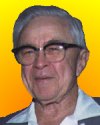
Died 21 Jul 2004 at age 86 (born 20 May 1918).
American developmental geneticist who was awarded the 1995 Nobel Prize for Physiology or Medicine for discovering the functions that control early embryonic development with co-winners Christiane Nüsslein-Volhard and Eric F. Wieschaus who identified and classified 15 key genes that determine the body plan and formation of body segments of the fruit fly Drosophila melanogaster. Lewis studied the next step, the homeotic genes that govern the development of a larval segment into a specific body segment. (Homeotic means that something has been changed into the likeness of something else.) Lewis found a co-linearity in time and space between the order of the genes in the bithorax complex and their effect regions in the segments.
American developmental geneticist who was awarded the 1995 Nobel Prize for Physiology or Medicine for discovering the functions that control early embryonic development with co-winners Christiane Nüsslein-Volhard and Eric F. Wieschaus who identified and classified 15 key genes that determine the body plan and formation of body segments of the fruit fly Drosophila melanogaster. Lewis studied the next step, the homeotic genes that govern the development of a larval segment into a specific body segment. (Homeotic means that something has been changed into the likeness of something else.) Lewis found a co-linearity in time and space between the order of the genes in the bithorax complex and their effect regions in the segments.
Genes, Development and Cancer: The Life and Work of Edward B. Lewis, by Howard D. Lipshitz (ed.). - book suggestion.
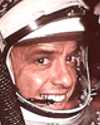
Died 21 Jul 1998 at age 74 (born 18 Nov 1923). quotes
Alan Bartlett Shepard, Jr. was an American astronaut who was America's first man in space and one of only 12 humans who walked on the Moon. Named as one of the nation's original seven Mercury astronauts in 1959, Shepard became the first American into space on 5 May 1961, riding a Redstone rocket on a 15-minute suborbital flight that took him and his Freedom 7 Mercury capsule 115 miles in altitude and 302 miles downrange from Cape Canaveral, FL. (His flight came three weeks after the launch of Soviet cosmonaut Yuri Gagarin, who on 12 Apr 1961, became the first human space traveler on a one-orbit flight lasting 108 minutes.) Although the flight of Freedom 7 was brief, it was a major step for the U.S. in a race with the USSR.
Alan Bartlett Shepard, Jr. was an American astronaut who was America's first man in space and one of only 12 humans who walked on the Moon. Named as one of the nation's original seven Mercury astronauts in 1959, Shepard became the first American into space on 5 May 1961, riding a Redstone rocket on a 15-minute suborbital flight that took him and his Freedom 7 Mercury capsule 115 miles in altitude and 302 miles downrange from Cape Canaveral, FL. (His flight came three weeks after the launch of Soviet cosmonaut Yuri Gagarin, who on 12 Apr 1961, became the first human space traveler on a one-orbit flight lasting 108 minutes.) Although the flight of Freedom 7 was brief, it was a major step for the U.S. in a race with the USSR.
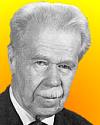
Died 21 Jul 1971 at age 79 (born 6 Sep 1891).
Finnish meteorologist and astronomer regarded as the "father of space research in Finland," As early as 1946, he had suggested that geodetic triangulation at that time being done with rockets or balloons with onboard flashes could better be accomplished by artificial satellites. By the next year he was talking about artificial satellites being used for solar system exploration. In the 1950's he founded Tuorla Observatory and went on to build a tunnel under the hill at Tuorla Observatory to enable making interference measurements to accurately define the length standard for geodesy. He was outstanding in his ability to produce excellent optics for telescopes. Vaisala, together with Liisa Oterman at Tuorla, outpaced the rest of the world in their discovery of minor planets.«
Finnish meteorologist and astronomer regarded as the "father of space research in Finland," As early as 1946, he had suggested that geodetic triangulation at that time being done with rockets or balloons with onboard flashes could better be accomplished by artificial satellites. By the next year he was talking about artificial satellites being used for solar system exploration. In the 1950's he founded Tuorla Observatory and went on to build a tunnel under the hill at Tuorla Observatory to enable making interference measurements to accurately define the length standard for geodesy. He was outstanding in his ability to produce excellent optics for telescopes. Vaisala, together with Liisa Oterman at Tuorla, outpaced the rest of the world in their discovery of minor planets.«
Died 21 Jul 1954 at age 71 (born 9 Feb 1883).
American inventor of miniature golf. In 1926, Garnet Carter opened the first miniature golf course at the Fairyland Club on Lookout Mountain. To his surprise the course was taken over by adults, who liked the fantasy setting and enjoyed the challenge of putting a ball through the miniaturized fairways. Carter soon began manufacturing courses for national distribution under the patented name Tom Thumb Golf to continue with the fairyland theme of elves and gnomes. By 1930 there were over 25,000 miniature golf courses in the U.S. In 1932, he sold the rights, and with his wife used the profits to open Frieda's Rock City Gardens. By 1940, Rock City was a roadside institution. "See Rock City," was painted on barns and birdhouses throughout the Southeast.
American inventor of miniature golf. In 1926, Garnet Carter opened the first miniature golf course at the Fairyland Club on Lookout Mountain. To his surprise the course was taken over by adults, who liked the fantasy setting and enjoyed the challenge of putting a ball through the miniaturized fairways. Carter soon began manufacturing courses for national distribution under the patented name Tom Thumb Golf to continue with the fairyland theme of elves and gnomes. By 1930 there were over 25,000 miniature golf courses in the U.S. In 1932, he sold the rights, and with his wife used the profits to open Frieda's Rock City Gardens. By 1940, Rock City was a roadside institution. "See Rock City," was painted on barns and birdhouses throughout the Southeast.
Died 21 Jul 1951 at age 83 (born 28 Jul 1867).
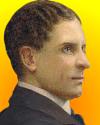
U.S. astronomer who discovered the sixth and seventh moons of Jupiter in 1904 and 1905, respectively. In 1904 he published a calculation of the solar parallax (a measure of the Earth-Sun distance) based on observations of the minor planet Eros during one of its close approaches to the Earth.
U.S. astronomer who discovered the sixth and seventh moons of Jupiter in 1904 and 1905, respectively. In 1904 he published a calculation of the solar parallax (a measure of the Earth-Sun distance) based on observations of the minor planet Eros during one of its close approaches to the Earth.
1908
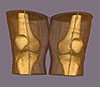
English osteopath and manipulative surgeon who treated knee pain and cartilage problems in top sports players as well as the general public. Barker treated patients on his yacht in the Channel Isles. He maintained that a knee cartilage operation was unnecessary in a very large proportion of cases and he claimed that manipulation was sufficient without any surgery. The community of Montego Bay, Jamaica, credits the genesis of its tourist trade to the famous chiropractor Sir Herbert Barker in England because he promoted the sea water as having curative powers at the Doctor's Cave bathing club there. (That location had been donated to the town in 1906 for that purpose by the eccentric physician, Dr. Alexander McCatty.)«[Image right (source) ]
Died 21 Jul 1930 at age 68 (born 5 Jun 1862).
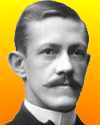
Swedish ophthalmologist, recipient of the 1911 Nobel Prize for Physiology or Medicine for his research on the eye as a light-refracting apparatus. Hermann von Helmholtz had earlier shown that the eye solves the problem of accommodation (how to focus on both near and distant objects) by changing the surface curvature of the lens - the nearer the object, the more convex the lens becomes; the further the object, the more concave the lens. Gullstrand showed that this could in fact account for only two thirds of the accommodation a normal eye could achieve. The remaining third was produced by what Gullstrand termed the “intracapsular mechanism” and depended on the fact that the eye was not a homogeneous medium.[DSB gives date of death 21 Jul 1930. EB gives 28 Jul 1930.]
Swedish ophthalmologist, recipient of the 1911 Nobel Prize for Physiology or Medicine for his research on the eye as a light-refracting apparatus. Hermann von Helmholtz had earlier shown that the eye solves the problem of accommodation (how to focus on both near and distant objects) by changing the surface curvature of the lens - the nearer the object, the more convex the lens becomes; the further the object, the more concave the lens. Gullstrand showed that this could in fact account for only two thirds of the accommodation a normal eye could achieve. The remaining third was produced by what Gullstrand termed the “intracapsular mechanism” and depended on the fact that the eye was not a homogeneous medium.[DSB gives date of death 21 Jul 1930. EB gives 28 Jul 1930.]
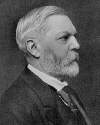
Died 21 Jul 1926 at age 89 (born 26 May 1837).
American civil engineer under whose direction the Brooklyn Bridge, New York City, was completed in 1883. The bridge was designed by Roebling with his father, John Augustus Roebling, from whom he had gained experience building wire-rope suspension bridges. Upon his father's death, he superintended the building of the Brooklyn Bridge (1869-83). He was disabled by decompression sickness after entering a caisson in 1872. He was brought out nearly insensible and his life was saved with difficulty. Because of resulting poor health, he directed operations from his home in Brooklyn overlooking the site. Though he continued to head the family's wire-rope manufacturing business for several years, medical problems forced retirement (1888).
American civil engineer under whose direction the Brooklyn Bridge, New York City, was completed in 1883. The bridge was designed by Roebling with his father, John Augustus Roebling, from whom he had gained experience building wire-rope suspension bridges. Upon his father's death, he superintended the building of the Brooklyn Bridge (1869-83). He was disabled by decompression sickness after entering a caisson in 1872. He was brought out nearly insensible and his life was saved with difficulty. Because of resulting poor health, he directed operations from his home in Brooklyn overlooking the site. Though he continued to head the family's wire-rope manufacturing business for several years, medical problems forced retirement (1888).
Builders of the Bridge: The Story of John Roebling and His Son, by David Barnard Steinman. - book suggestion.
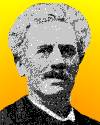
Died 21 Jul 1919 at age 76 (born 17 Oct 1842).
Swedish anatomist and anthropologist best-known for his studies of the histology of the nervous system. Retzius' Das Menschenhirn, 2 vol. (1896; "The Human Brain") was perhaps the most important work written on the gross anatomy of the brain during the 19th century. He served as a professor of histology at the Karolinska Mediko-Kirurgiska Institutet, Stockholm (1877-1900), where he made important contributions to anatomical descriptions of the muscles of the eardrum, the bones of the middle ear, and the Eustachian tube. Retzius also made a useful study of ancient Swedish and Finnish skulls.
Swedish anatomist and anthropologist best-known for his studies of the histology of the nervous system. Retzius' Das Menschenhirn, 2 vol. (1896; "The Human Brain") was perhaps the most important work written on the gross anatomy of the brain during the 19th century. He served as a professor of histology at the Karolinska Mediko-Kirurgiska Institutet, Stockholm (1877-1900), where he made important contributions to anatomical descriptions of the muscles of the eardrum, the bones of the middle ear, and the Eustachian tube. Retzius also made a useful study of ancient Swedish and Finnish skulls.

In 2000, an international collaboration of scientists at the Department of Energy's Fermi National Accelerator Laboratory announced the first direct evidence for the subatomic particle called the tau neutrino, the third kind of neutrino known to particle physicists. They reported four instances of a neutrino interacting with an atomic nucleus to produce a charged particle called a tau lepton, the signature of a tau neutrino. The tau (rhymes with “now”) neutrino is the third neutrino of the Standard Model of elementary particles, a theoretical description that groups all particles into three generations. Experimenters identify them by recording neutrino interactions. First generation electron neutrinos were created in 1956, and second generation muon neutrinos in 1962.
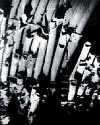
In 1982, the first look at the Three Mile Island Unit 2 partial core meltdown was recorded by a mini-TV camera. This was the first inspection of the core made since the nuclear power plant in Harrisburg, Pennsylvania, first experienced a serious accident on 28 Mar 1979, due to a loss of water coolant. With the camera nothing was seen until five feet down - signifying that five feet of the core was gone. Many fuel rods had melted causing the tubes to break, spilling uranium to the bottom of the pressure vessel. Thus out of reach of the control rods, the uranium fission continued. Fifty percent of the core was destroyed or molten and an estimated twenty tons of uranium pellets had travelled to the bottom of the pressure vessel.«[Image: Damage to core showing broken tubes from video camera.]
Three Mile Island: A Nuclear Crisis in Historical Perspective, by J. Samuel Walker. - book suggestion.
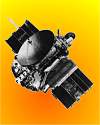
In 1973, the USSR launched Mars 4, on a Proton SL-12/D-1-e booster. It was one of several Soviet Mars probes - Mars 4, 5, 6, and 7 - launched in Jul-Aug 1973. The Mars 4 reached Mars on 10 Feb 1974. Its intended mission was to be an orbiting station. Sadly, retro-rockets failed to fire, due to a flawed computer chip, and it flew past within only 2200-km of the planet. A limited series of pictures and data were returned, including the first detection of the nightside ionosphere. Equipment on board for its intended mission included instruments to detect atmospheric hydrogen, carbon dioxide, ozone, water, magnetic field and surface temperature. The craft remained in solar orbit, and transmitted interplanetary data back to Earth.«
The Scientific Exploration of Mars, by Fredric W. Taylor. - book suggestion.
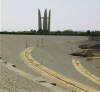
In 1970, the Aswan High Dam in Egypt was completed after 18 years of work. It is a huge rockfill dam that lies just north of the border between Egypt and Sudan. It captures the world's longest river, the Nile, in the world's third largest reservoir, Lake Nasser. Built with Soviet aid at a cost of $1 billion, it now produces hydroelectricity meeting 50% of Egypt's power needs. It holds several years of irrigation reserves, assists multi-cropping, has increased productivity 20-50%, enormously increased Egypt's arable land, and overall, increased Egypt's agricultural income by 200%. The embankment is 111 metres high, with a width of near 1,000 metres. Lake Nasser is 480 long and up to 16 km wide.[Image: Aswan High Dam, North side.]
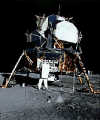
In 1969, Apollo XI astronauts Neil Armstrong and Edwin "Buzz" Aldrin blasted off from the moon after 21 1/2 hours on the surface and returned to the command module piloted by Michael Collins. The Lunar module was comprised of two stages. The decent stage had the landing gear, and was used as a launch pad for the ascent stage. The ascent stage was mainly the cabin, and had a fixed thrust engine (15,500-Newton-thrust) to propel it to 2000 m/s in Lunar orbit for docking. The lunar module's lower section, left behind, has a plaque mounted upon it, reading, "Here men from the planet Earth first set foot upon the moon, July 1969 A.D. We came in peace for all mankind."
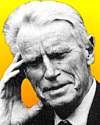
In 1955, Ian Donald made his first investigation of the use of ultrasound in medical diagnosis. At the research department of the boiler makers Babock and Wilcox at Renfrew, Scotland, he used an industrial ultrasonic metal flaw detector to image tumours from human organs. He knew sonar from his service in WW II. This was a similiar use of reflected ultrasound to image the internal structure of the sample tissues. With other engineers, he developed the idea to for practical applications in the hosital where he worked, including the life-saving diagnosis of a huge, easily removable, ovarian cyst in a woman who had been diagnosed by others as having inoperable stomach cancer which he published the in The Lancet (7 Jun 1958).«
In 1925, at the end of the eight-day “Scopes monkey trial” in Dayton, Tennessee, the jury gave their verdict, after only nine minutes consideration:. John T. Scopes was found guilty of teaching evolution, which was prohibited by the Butler Act, a Tennessee statue passed on 21 Mar 1925. The judge determined that Scopes should be fined $100. But, technically the amount should have been set by the jury, said the Tennessee Supreme Court when, on 15 Jan 1927, it overturned the verdict—but not the the law itself. Testing the constitutionality law the had been the goal when the American Civil Liberties Union (ACLU) offered funding for the defense. Dayton town leaders wanted publicity from the trial and recruited Scopes as a willing defendant. The law stood for 42 years, until repealed on 17 May 1967.«
Center of the Storm: Memoirs of John T. Scopes, by John Scopes. - book suggestion.
In 1904, a letter in the journal Nature*, Harriet Brooks pointed out a peculiar type of volatility shown by an active deposit of radium immediately after its removal from the emanation. Hahn and Russ and Markower later showed (1909) that “the effect was due to the recoil of radium B from the active surface accompanying the expulsion of an alpha-particle from Radium A. This method of the separation of the elements by recoils ultimately proved of much importance in disentangling the complicated series of changes in the radioactive bodies,” according to Ernest Rutherford (1933). Thus, Harriet Brooks was probably the first person to observe the recoil of the atomic nucleus as nuclear particles were emitted during radioactive decay.(*vol. 70, p. 270)
Harriet Brooks: Pioneer Nuclear Scientist, by M.F. & G.W. Rayner-Canham. - book suggestion.