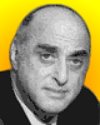

American inventor of Reddi-Wip, whipped cream dessert topping in a spray can (1948). First sold by St. Louis milkmen, its distribution expanded quickly across N. America during America's postwar desire for convenience. Lapin became known as the Whipped Cream King. Lapin established Clayton Corp. to made his own valves for the can. He was issued U.S. patent 2,704,172 on 10 Mar 1955 for the valve. Clayton now also makes industrial valves, closures, caulk, adhesives and foamed plastic products such as insulation and cushioning materials. In 1998, Time listed Reddi-wip as one of the century's 100 great consumer items, along with the pop-top can and Spam. Reddi-Wip is now a brand of ConAgra's Beatrice Food.«[Image right: modern Reddi-Wip container.]
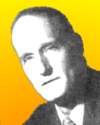
Born 5 Jan 1909; died 25 Jan 1994 at age 85.
American mathematician and logician whose research was on the theory of algorithms and recursive functions. He developed the field of recursion theory with Church, Gödel, Turing and others. He contributed to mathematical Intuitionism which had been founded by Brouwer. His work on recursion theory helped to provide the foundations of theoretical computer science. By providing methods of determining which problems are soluble, Kleene's work led to the study of which functions can be computed.
American mathematician and logician whose research was on the theory of algorithms and recursive functions. He developed the field of recursion theory with Church, Gödel, Turing and others. He contributed to mathematical Intuitionism which had been founded by Brouwer. His work on recursion theory helped to provide the foundations of theoretical computer science. By providing methods of determining which problems are soluble, Kleene's work led to the study of which functions can be computed.
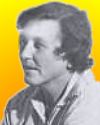
Born 5 Jan 1906; died 24 Aug 1978 at age 72.
[Dame Kathleen Mary Kenyon was an English archaeologist whose work at Jericho identified it as the oldest known continuously occupied human settlement by excavating to its Stone Age foundation. This evidence pushed back the era of occupation of the mound at Jericho from the Bronze Age and Neolithic to the Natufian culture at the end of the Ice Age (10,000 – 9,000 BC). She established that the city itself spanned more than 3,800 years. Over 100 tombs were discovered at Jericho during excavations (1952-58). Kenyon helped pioneer stratigraphic excavations as a more scientific approach to archaeological digs, a technique she learned while working with Sir Mortimer Wheeler at his major excavation of the Romano-British city of Verulamium (north of London).
[Dame Kathleen Mary Kenyon was an English archaeologist whose work at Jericho identified it as the oldest known continuously occupied human settlement by excavating to its Stone Age foundation. This evidence pushed back the era of occupation of the mound at Jericho from the Bronze Age and Neolithic to the Natufian culture at the end of the Ice Age (10,000 – 9,000 BC). She established that the city itself spanned more than 3,800 years. Over 100 tombs were discovered at Jericho during excavations (1952-58). Kenyon helped pioneer stratigraphic excavations as a more scientific approach to archaeological digs, a technique she learned while working with Sir Mortimer Wheeler at his major excavation of the Romano-British city of Verulamium (north of London).
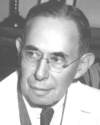
Born 5 Jan 1874; died 5 Dec 1965 at age 91.
American physiologist who discovered that fibres within the same nerve cord possess different functions. In 1910 he accepted the chair of physiology at Washington University in St. Louis, which he held until his retirement in 1946. While his department became one of the major research centers in physiology in America. Erlanger continued his work on cardiovascular physiology. During WW I, he carried out research on the problem of shock. In 1921 he shifted his interests to neurophysiology, and began joint work, with colleague Herbert Gasser, on the amplification and recording of nerve action potentials with the cathode ray oscilloscope, for which they were awarded the Nobel Prize for Physiology or Medicine in 1944.
American physiologist who discovered that fibres within the same nerve cord possess different functions. In 1910 he accepted the chair of physiology at Washington University in St. Louis, which he held until his retirement in 1946. While his department became one of the major research centers in physiology in America. Erlanger continued his work on cardiovascular physiology. During WW I, he carried out research on the problem of shock. In 1921 he shifted his interests to neurophysiology, and began joint work, with colleague Herbert Gasser, on the amplification and recording of nerve action potentials with the cathode ray oscilloscope, for which they were awarded the Nobel Prize for Physiology or Medicine in 1944.
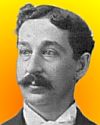
Born 5 Jan 1855; died 9 Jul 1932 at age 77. quotes
King Camp Gillette was an American inventor and manufacturer who invented and manufactured the safety razor with disposable blades. After persistent efforts to invent something that everyone would use, by 1895 produced a crude version of a disposable razor blade. it took another six years to refine his invention. On 15 Nov 1904 he was issued U.S. patent No. 775,134 for his idea and founded the Gillette Safety Razor Company in Boston, Mass., to make his razor and blades. In 1903, he sold 168 blades, but in the following year he sold 90,000 razors and over 12 million blades. Although he remained president of the company until 1931, he retired to Los Angeles in 1913, having become a millionaire. A utopian, he wrote four books translating his business experience into social theories, culminating with The People's Corporation (1924).«
King Camp Gillette was an American inventor and manufacturer who invented and manufactured the safety razor with disposable blades. After persistent efforts to invent something that everyone would use, by 1895 produced a crude version of a disposable razor blade. it took another six years to refine his invention. On 15 Nov 1904 he was issued U.S. patent No. 775,134 for his idea and founded the Gillette Safety Razor Company in Boston, Mass., to make his razor and blades. In 1903, he sold 168 blades, but in the following year he sold 90,000 razors and over 12 million blades. Although he remained president of the company until 1931, he retired to Los Angeles in 1913, having become a millionaire. A utopian, he wrote four books translating his business experience into social theories, culminating with The People's Corporation (1924).«
King C. Gillette, the Man and his Wonderful Shaving Device, by Russell B Adams. - book suggestion.
Born 5 Jan 1847; died 20 Apr 1919 at age 72.
American geologist who advanced the study of mining geology from physical, chemical, and mathematical approaches. Becker's main interest was the study of the Earth's interior, and his theoretical work on this topic was presented in a series of important papers in the 1890s; his most important theoretical contribution was Finite Homogeneous Strain, Flow, and Rupture of Rocks (1893).
American geologist who advanced the study of mining geology from physical, chemical, and mathematical approaches. Becker's main interest was the study of the Earth's interior, and his theoretical work on this topic was presented in a series of important papers in the 1890s; his most important theoretical contribution was Finite Homogeneous Strain, Flow, and Rupture of Rocks (1893).
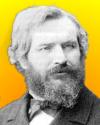
Born 5 Jan 1838; died 20 Jan 1922 at age 84. quotes
French mathematician and engineer who prepared a foundation for group theory and built on the prior work of Évariste Galois. As a mathematician, Jordan's interests were diverse, covering topics throughout the aspects of mathematics being studied in his era. The topics in his published works include finite groups, linear and multilinear algebra, the theory of numbers, topology of polyhedra, differential equations, and mechanics.
French mathematician and engineer who prepared a foundation for group theory and built on the prior work of Évariste Galois. As a mathematician, Jordan's interests were diverse, covering topics throughout the aspects of mathematics being studied in his era. The topics in his published works include finite groups, linear and multilinear algebra, the theory of numbers, topology of polyhedra, differential equations, and mechanics.
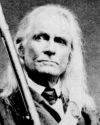
Born 5 Jan 1794; died 18 Jun 1865 at age 71.
The father of soil chemistry in the U.S., who showed how to restore fertility to depleted soil. Though without formal science education, Ruffin determined that the soil of southeast plantations that had been overused with single-crop production had become more acidic and unable to benefit from fertilizers. The remedy he published (1818) was the spreading of marl to neutralize the acidity. He went further by specifying effective methods of fertilizing, plowing and rotating crops to increase production of grains. He expanded his recommendations in book and journal article form, as well lecturing up to the 1850's. He then became an outspoken secessionist, and took his own life upon the South losing in the U.S. Civil War.
The father of soil chemistry in the U.S., who showed how to restore fertility to depleted soil. Though without formal science education, Ruffin determined that the soil of southeast plantations that had been overused with single-crop production had become more acidic and unable to benefit from fertilizers. The remedy he published (1818) was the spreading of marl to neutralize the acidity. He went further by specifying effective methods of fertilizing, plowing and rotating crops to increase production of grains. He expanded his recommendations in book and journal article form, as well lecturing up to the 1850's. He then became an outspoken secessionist, and took his own life upon the South losing in the U.S. Civil War.
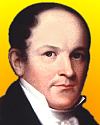
Born 5 Jan 1786; died 10 Sep 1859 at age 73.
English naturalist and botanist known for his discoveries of North American plants. He went to the newly formed United States at a perfect time to be an explorer of its expanding boundaries. Gifted as a botanist and ornithologist, he was one of the most well-travelled, adventurous and knowledgeable of the early naturalists on the American frontier. His career in botany was sparked within a day of his arrival in Philadelphia in 1808 by Benjamin Smith Barton, whom he met to enquire about the curious name of the cat-brier plant he had found. After some formal instruction in botany from Barton, Nuttall was engaged in field work for Barton, collecting plants in the salt marshes of Delaware and the Chesapeake Bay.
English naturalist and botanist known for his discoveries of North American plants. He went to the newly formed United States at a perfect time to be an explorer of its expanding boundaries. Gifted as a botanist and ornithologist, he was one of the most well-travelled, adventurous and knowledgeable of the early naturalists on the American frontier. His career in botany was sparked within a day of his arrival in Philadelphia in 1808 by Benjamin Smith Barton, whom he met to enquire about the curious name of the cat-brier plant he had found. After some formal instruction in botany from Barton, Nuttall was engaged in field work for Barton, collecting plants in the salt marshes of Delaware and the Chesapeake Bay.
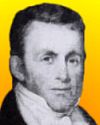
Born 5 Jan 1771; died 3 Feb 1852 at age 81. quotes
American inventor and manufacturer who patented a machine for cutting screw threads which incorporated the slide rest (14 Dec 1798). It had a heavy carriage supported on three rollers. With his father and brother, Wilkinson supplied the cotton industry by machining, casting and forging iron parts to build textile manufacturing equipment for such factories as Slater Mill, Pawtucket, Rhode Island. With such business to keep him occupied, Wilkinson did not further develop his screw machine. His business failed in the the financial panic of 1829. However, the slide-rest invention was widely applied by others, especially making firearms for the U.S. government. He petitioned Congress in 1848 for a financial reward for his invention and received $10,000.« more
American inventor and manufacturer who patented a machine for cutting screw threads which incorporated the slide rest (14 Dec 1798). It had a heavy carriage supported on three rollers. With his father and brother, Wilkinson supplied the cotton industry by machining, casting and forging iron parts to build textile manufacturing equipment for such factories as Slater Mill, Pawtucket, Rhode Island. With such business to keep him occupied, Wilkinson did not further develop his screw machine. His business failed in the the financial panic of 1829. However, the slide-rest invention was widely applied by others, especially making firearms for the U.S. government. He petitioned Congress in 1848 for a financial reward for his invention and received $10,000.« more

1986
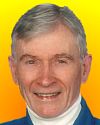
Died 5 Jan 2018 at age 87 (born 24 Sep 1930). quotes
John Watts Young was an American astronaut who was the commander of the first ever Space Shuttle mission (STS-1, 12 Apr 1981), walked on the Moon during the Apollo 16 mission (21 Apr 1972), made the first manned flight of the Gemini spacecraft with Virgil Grissom, and was on the aborted Apollo 13 flight. He became the first person to fly into space six times in a career that was one of the busiest of any NASA astronaut. He piloted four different classes of spacecraft: Gemini, Apollo Command and Service Module, Apollo Lunar Module and the Space Shuttle. Young worked for NASA for 42 years and retired on 31 Dec 2004 at the age of 74.«
John Watts Young was an American astronaut who was the commander of the first ever Space Shuttle mission (STS-1, 12 Apr 1981), walked on the Moon during the Apollo 16 mission (21 Apr 1972), made the first manned flight of the Gemini spacecraft with Virgil Grissom, and was on the aborted Apollo 13 flight. He became the first person to fly into space six times in a career that was one of the busiest of any NASA astronaut. He piloted four different classes of spacecraft: Gemini, Apollo Command and Service Module, Apollo Lunar Module and the Space Shuttle. Young worked for NASA for 42 years and retired on 31 Dec 2004 at the age of 74.«
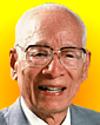
Died 5 Jan 2007 at age 96 (born 5 Mar 1910).
Taiwanese-Japanese businessman and inventor who invented instant noodles and Cup Noodles. He founded Nissin Food Products Co. In 1958, he developed the world’s first instant noodle product. At that time, his research was done a simple wooden shack in the back yard of his home in Ikeda-Shi, Osaka, Japan. His process mixed wheat flour into a dough that was stretched, steamed as noodles, flavored and dried by a flash-frying method. In 1971, he introduced the world’s first cup-type instant noodle, “Cup Noodles.” His products spread not only across the world, but in Jul 2005, Japanese astronaut Soichi Noguchi carried specially prepared “Space Ram” instant noodles when he traveled on the space shuttle Discovery.«
Taiwanese-Japanese businessman and inventor who invented instant noodles and Cup Noodles. He founded Nissin Food Products Co. In 1958, he developed the world’s first instant noodle product. At that time, his research was done a simple wooden shack in the back yard of his home in Ikeda-Shi, Osaka, Japan. His process mixed wheat flour into a dough that was stretched, steamed as noodles, flavored and dried by a flash-frying method. In 1971, he introduced the world’s first cup-type instant noodle, “Cup Noodles.” His products spread not only across the world, but in Jul 2005, Japanese astronaut Soichi Noguchi carried specially prepared “Space Ram” instant noodles when he traveled on the space shuttle Discovery.«
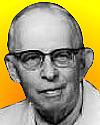
Died 5 Jan 2004 at age 98 (born 17 Sep 1905).
American immunologist who made groundbreaking discoveries in cellular immunology and experimental allergy. In the early 1940's, by transferring white blood cells between guinea pigs he found an immunity in the donor against the tuberculosis organism was also transferred. Thus he discovered a new class of immune response - cell-mediated immunity (which aids antibodies in protecting against disease). By the 1950s, using improved cell culture techniques, other experimenters identified lymphocyte cells (about 25% of white blood cells) as responsible for immunity, and later found different types. T cells are derived from the thymus mediated cellular immunity, and B cells from the bursa of Fabricius (an outgrowth of the cloaca in birds).«
American immunologist who made groundbreaking discoveries in cellular immunology and experimental allergy. In the early 1940's, by transferring white blood cells between guinea pigs he found an immunity in the donor against the tuberculosis organism was also transferred. Thus he discovered a new class of immune response - cell-mediated immunity (which aids antibodies in protecting against disease). By the 1950s, using improved cell culture techniques, other experimenters identified lymphocyte cells (about 25% of white blood cells) as responsible for immunity, and later found different types. T cells are derived from the thymus mediated cellular immunity, and B cells from the bursa of Fabricius (an outgrowth of the cloaca in birds).«
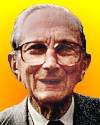
Died 5 Jan 2004 at age 92 (born 10 Jan 1911).
English biochemist who solved problems in the extraction of penicillin from its mould, and paved the way for mass production. By D-Day of WW II, the Allies had an adequate stock to treat the wounded in danger of serious bacterial infections. Although it was Fleming who accidentally discovered penicillin (1928), it was Heatley who made it practical, making sufficient quantity by 1941 for its first clinical tests. His apparatus included porcelain "bedpans", milk churns and roasting trays to grow the bacteria. Also, an assay method he developed could precisely measure the activity of a sample of penicillin, in what became known as “Oxford units”. His production method used pie plates, cookie tins, and a porcelain vessel dubbed the bedpan.
English biochemist who solved problems in the extraction of penicillin from its mould, and paved the way for mass production. By D-Day of WW II, the Allies had an adequate stock to treat the wounded in danger of serious bacterial infections. Although it was Fleming who accidentally discovered penicillin (1928), it was Heatley who made it practical, making sufficient quantity by 1941 for its first clinical tests. His apparatus included porcelain "bedpans", milk churns and roasting trays to grow the bacteria. Also, an assay method he developed could precisely measure the activity of a sample of penicillin, in what became known as “Oxford units”. His production method used pie plates, cookie tins, and a porcelain vessel dubbed the bedpan.
The Mold in Dr. Florey's Coat: The Story of the Penicillin Miracle, by Eric Lax. - book suggestion.
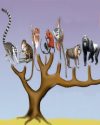
Died 5 Jan 1997 at age 90 (born 4 Jul 1906).
English zoologist who theorized that a process group selection occurred during the evolution of species. In his book Animal Dispersion in Relation to Social Behavior (1962), he proposed that instead of Darwinian individual survival of the fittest dominating, evolution also occurred by self-regulatory mechanisms of whole species, manifested in territoriality, dominance hierarchies, and allocation of resources. Thus, evolution often favours not the animal best able to survive alone, but rather the animal best adapted to survive within the social context of the kind. Now, however, it is generally accepted that while this may occur under exceptional circumstances, it has not been a major factor in evolution.
English zoologist who theorized that a process group selection occurred during the evolution of species. In his book Animal Dispersion in Relation to Social Behavior (1962), he proposed that instead of Darwinian individual survival of the fittest dominating, evolution also occurred by self-regulatory mechanisms of whole species, manifested in territoriality, dominance hierarchies, and allocation of resources. Thus, evolution often favours not the animal best able to survive alone, but rather the animal best adapted to survive within the social context of the kind. Now, however, it is generally accepted that while this may occur under exceptional circumstances, it has not been a major factor in evolution.

Died 5 Jan 1995 at age 89 (born 2 Dec 1905).
Semi Joseph Begun was a German-American inventor who built the first tape recorder for broadcasting (1934), which was later used in the 1936 Olympics. After WW II, he continued to work on magnetic recording media based on coating paper and plastic tape with ferromagnetic powder suspensions. Begun developed the first consumer tape recorder in the U.S. under the trade name Sound Mirror. He also negotiated the first sourcing agreement for magnetic tape with 3M - which became a major product line. He also invented the Mail-A-Voice, which magnetically recorded on one side of a paper disk for letter correspondence.
Semi Joseph Begun was a German-American inventor who built the first tape recorder for broadcasting (1934), which was later used in the 1936 Olympics. After WW II, he continued to work on magnetic recording media based on coating paper and plastic tape with ferromagnetic powder suspensions. Begun developed the first consumer tape recorder in the U.S. under the trade name Sound Mirror. He also negotiated the first sourcing agreement for magnetic tape with 3M - which became a major product line. He also invented the Mail-A-Voice, which magnetically recorded on one side of a paper disk for letter correspondence.
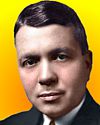
Died 5 Jan 1981 at age 87 (born 29 Apr 1893). quotes
American scientist awarded the Nobel Prize for Chemistry in 1934 for his discovery of deuterium, the heavy form of hydrogen (1932). He was active in the development of the atomic bomb. He contributed to the growing basis for the theory of what was widely accepted as the origin of the Earth and other planets. In 1953, Stanley L. Miller and Urey simulated the effect of lightning in the prebiotic atmosphere of Earth with an electrical discharge in a mixture of hydrogen, methane, ammonia, and water. This produced a rich mixture of aldehydes and carboxylic and amino acids (as found in proteins, adenine and other nucleic acid bases). Urey calculated the temperature of ancient oceans from the amount of certain isotopes in fossil shells.
American scientist awarded the Nobel Prize for Chemistry in 1934 for his discovery of deuterium, the heavy form of hydrogen (1932). He was active in the development of the atomic bomb. He contributed to the growing basis for the theory of what was widely accepted as the origin of the Earth and other planets. In 1953, Stanley L. Miller and Urey simulated the effect of lightning in the prebiotic atmosphere of Earth with an electrical discharge in a mixture of hydrogen, methane, ammonia, and water. This produced a rich mixture of aldehydes and carboxylic and amino acids (as found in proteins, adenine and other nucleic acid bases). Urey calculated the temperature of ancient oceans from the amount of certain isotopes in fossil shells.
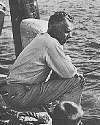
Died 5 Jan 1971 at age 66 (born 25 Sep 1904).
Columbus O'Donnell Iselin was an American oceanographer who was director of the Woods Hole Oceanographic Institution in Massachusetts (1940-50; 1956-57). He expanded its facilities 10-fold and made it one of the largest research establishments of its kind in the world. Iselin developed the bathythermograph and other deep-sea instruments responsible for saving ships during WW II. He made major contributions to research on ocean salinity and temperature, acoustics, and the oceanography of the Gulf Stream.
Columbus O'Donnell Iselin was an American oceanographer who was director of the Woods Hole Oceanographic Institution in Massachusetts (1940-50; 1956-57). He expanded its facilities 10-fold and made it one of the largest research establishments of its kind in the world. Iselin developed the bathythermograph and other deep-sea instruments responsible for saving ships during WW II. He made major contributions to research on ocean salinity and temperature, acoustics, and the oceanography of the Gulf Stream.
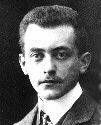
Died 5 Jan 1970 at age 87 (born 11 Dec 1882). quotes
German-British physicist who shared the Nobel Prize for Physics in 1954 (with Walther Bothe), for his statistical formulation of the behaviour of subatomic particles. Max Born's studies of the wave function led to the replacement of the original quantum theory, which regarded electrons as particles, with a mathematical description.
German-British physicist who shared the Nobel Prize for Physics in 1954 (with Walther Bothe), for his statistical formulation of the behaviour of subatomic particles. Max Born's studies of the wave function led to the replacement of the original quantum theory, which regarded electrons as particles, with a mathematical description.
My Life and Views, by Max Born. - book suggestion.
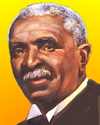
Died 5 Jan 1943 (born Jan 1864). quotes
American agricultural chemist and agronomist who as an experimenter helped revolutionize the agricultural economy of the South. Carver demonstrated to farmers how fertility could be restored to their land, which had been impoverished by the regular growth of cotton and tobacco. He urged diversification—planting peanuts and sweet potatoes—to replenish the soil. He showed that peanuts contained several different kinds of oil. Peanut butter was another of his innovations. He developed over 300 new products from peanuts and over 100 from sweet potatoes. Most of his career, he taught and conducted research at the Tuskegee Institute, Alabama where he stayed despite lucrative offers to work for such magnates as Henry Ford and Thomas Edison.[Born near the end of the U.S. Civil War, 1861-65 and soon became an orphan.] more
American agricultural chemist and agronomist who as an experimenter helped revolutionize the agricultural economy of the South. Carver demonstrated to farmers how fertility could be restored to their land, which had been impoverished by the regular growth of cotton and tobacco. He urged diversification—planting peanuts and sweet potatoes—to replenish the soil. He showed that peanuts contained several different kinds of oil. Peanut butter was another of his innovations. He developed over 300 new products from peanuts and over 100 from sweet potatoes. Most of his career, he taught and conducted research at the Tuskegee Institute, Alabama where he stayed despite lucrative offers to work for such magnates as Henry Ford and Thomas Edison.[Born near the end of the U.S. Civil War, 1861-65 and soon became an orphan.] more
George Washington Carver: A Life, by Christina Vella. - book suggestion.
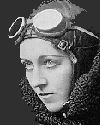
Died 5 Jan 1941 at age 37 (born 1 Jul 1903).
Pioneering British female aviator who first achieved fame as a result of her attempt (1930) to set a record for solo flight from London to Darwin, Australia, although she missed that record by three days. She took up flying in 1928, and also showed talent for mechanics. By 1930 she had qualified as both a pilot and a ground engineer. Flying a De Havilland Moth, Johnson set out to beat Bert Hinkler's record for flying to Australia. Though she did not beat the record, she made it to Australia, and was given a hero's welcome. She was the first woman to make the trip. The Daily Mail gave her a £10,000 prize. Johnson made other long-distance flights. While on a flying mission for the Air Ministry, 5 Jan 1941, she disappeared over the Thames estuary.
Pioneering British female aviator who first achieved fame as a result of her attempt (1930) to set a record for solo flight from London to Darwin, Australia, although she missed that record by three days. She took up flying in 1928, and also showed talent for mechanics. By 1930 she had qualified as both a pilot and a ground engineer. Flying a De Havilland Moth, Johnson set out to beat Bert Hinkler's record for flying to Australia. Though she did not beat the record, she made it to Australia, and was given a hero's welcome. She was the first woman to make the trip. The Daily Mail gave her a £10,000 prize. Johnson made other long-distance flights. While on a flying mission for the Air Ministry, 5 Jan 1941, she disappeared over the Thames estuary.
Died 5 Jan 1913 at age 80 (born 21 Sep 1832).
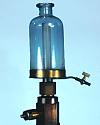
French physicist and ironmaster noted for his work on liquefaction of gases. Working at his father's metallurgy business, he investigated the permeability of iron to hydrogen and other gases, accounting for the unpredictable behaviour of some irons in terms of an excess of dissolved gases. In 1870, he began carefully measuring whether real gases deviate from "ideal" gas law behaviour. From this grew an interest in the liquefaction of gases. He used the Joule-Thomson effect - compressing a gas whilst cooling it, then allowing its rapid expansion to cool it still further - and in 1877-78, was first to produce droplets of liquid oxygen, hydrogen, nitrogen, carbon monoxide, nitrogen dioxide and acetylene. He also invented the altimeter and the high-pressure manometer.Image: Cailletet's liquefier.
French physicist and ironmaster noted for his work on liquefaction of gases. Working at his father's metallurgy business, he investigated the permeability of iron to hydrogen and other gases, accounting for the unpredictable behaviour of some irons in terms of an excess of dissolved gases. In 1870, he began carefully measuring whether real gases deviate from "ideal" gas law behaviour. From this grew an interest in the liquefaction of gases. He used the Joule-Thomson effect - compressing a gas whilst cooling it, then allowing its rapid expansion to cool it still further - and in 1877-78, was first to produce droplets of liquid oxygen, hydrogen, nitrogen, carbon monoxide, nitrogen dioxide and acetylene. He also invented the altimeter and the high-pressure manometer.Image: Cailletet's liquefier.
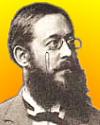
Died 5 Jan 1908 at age 58 (born 28 Feb 1849).
Friedrich Everhard Anton Joseph Julius Freiherr von Mering was a German physiologist, physician, pharmacologist and experimental pathologist, who jointly discovered that removal of the pancreas in a dog produces the symptoms of diabetes. He worked with Oskar Minkowski, who recognized the resulting polyuria and tested the animal’s blood for glucose, an indicator of diabetes. This led Minkowski to propose that the pancreas secreted some antidiabetic substance. Though they did not isolate it, they wrote a paper* reporting this finding. Thus diabetes, which had long been held to be a kidney disease, was recognized as pancreatic disorder. Edward Sharpey-Schafer coined the term insulin in 1915, some years in advance of its eventual isolation. Insulin is a hormone synthesized in the pancreas that is important for the body to make proper use of sugar.«[* Archiv für experimentelle Pathologie und Pharmakologie (26, 371; 1890). Note: A few sources give Dec or Sep as the birth month, but the Feb birth date appears on the extant birth certificate in the German archives.]
Friedrich Everhard Anton Joseph Julius Freiherr von Mering was a German physiologist, physician, pharmacologist and experimental pathologist, who jointly discovered that removal of the pancreas in a dog produces the symptoms of diabetes. He worked with Oskar Minkowski, who recognized the resulting polyuria and tested the animal’s blood for glucose, an indicator of diabetes. This led Minkowski to propose that the pancreas secreted some antidiabetic substance. Though they did not isolate it, they wrote a paper* reporting this finding. Thus diabetes, which had long been held to be a kidney disease, was recognized as pancreatic disorder. Edward Sharpey-Schafer coined the term insulin in 1915, some years in advance of its eventual isolation. Insulin is a hormone synthesized in the pancreas that is important for the body to make proper use of sugar.«[* Archiv für experimentelle Pathologie und Pharmakologie (26, 371; 1890). Note: A few sources give Dec or Sep as the birth month, but the Feb birth date appears on the extant birth certificate in the German archives.]
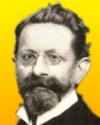
Died 5 Jan 1904 at age 64 (born 25 Sep 1839).
(knight) German paleontologist who proved that the Sahara had not been under water during the Pleistocene Ice Age. A distinguished authority on his subjects and their history, he was a pioneer of evolutionary paleontology and was widely recognized as the leading teacher of paleontology in the 19th century. His five-volume Handbuch der Paläonologie (1876-93) was arguably his greatest service to science, and it remains one of the most comprehensive and trustworthy paleontological reference books.
(knight) German paleontologist who proved that the Sahara had not been under water during the Pleistocene Ice Age. A distinguished authority on his subjects and their history, he was a pioneer of evolutionary paleontology and was widely recognized as the leading teacher of paleontology in the 19th century. His five-volume Handbuch der Paläonologie (1876-93) was arguably his greatest service to science, and it remains one of the most comprehensive and trustworthy paleontological reference books.
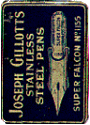
Died 5 Jan 1877 at age 77 (born 11 Oct 1799).
A pioneer of the steel pen, born in Sheffield. An English engineer Bryan Donkin patented a steel pen point in 1803 but did not commercially exploit his patent. In 1830, steel makers (William Joseph Gillott, William Mitchell, James Stephen Perry) mainly in Birmingham, England developed the machine production technique for cheap long wearing steel pen nibs. Tempered steel sheet was stamped to produce the basic nib then shaped, slit and the tip formed. More than most other metals, stainless steel has the elasticity needed to give the variety of penmanship styles available from the quill pen. By 1850 quill pen usage was fading and the quality of the steel nibs had been improved by tipping them with hard alloys of iridium, rhodium and osmium.
A pioneer of the steel pen, born in Sheffield. An English engineer Bryan Donkin patented a steel pen point in 1803 but did not commercially exploit his patent. In 1830, steel makers (William Joseph Gillott, William Mitchell, James Stephen Perry) mainly in Birmingham, England developed the machine production technique for cheap long wearing steel pen nibs. Tempered steel sheet was stamped to produce the basic nib then shaped, slit and the tip formed. More than most other metals, stainless steel has the elasticity needed to give the variety of penmanship styles available from the quill pen. By 1850 quill pen usage was fading and the quality of the steel nibs had been improved by tipping them with hard alloys of iridium, rhodium and osmium.
In 2005, the second-largest dwarf planet in our Solar System, Eris, was discovered on images taken on 21 Oct 2003. Mike Brown, Chad Trujillo, and David Rabinowitz announced their discovery on 29 Jul 2005. Eris is slightly smaller than Pluto, and orbits the sun about three times farther Pluto. At first, Eris appeared to be slightly larger than Pluto, and for a while seemed to be a candidate as the tenth planet. However, in 2006, the International Astronomical Union (IAU) adopted a rigorous definition of a planet. Pluto no longer qualified. Both Eris and Pluto are now classified as “dwarf planets”, each slightly smaller than Earth’s Moon. Eris is named for the ancient Greek goddess of discord and strife-a propos for the definition debate it caused.«
In 2000, the World Health Organization (W.H.O.) announced the final stage of the worldwide initiative to eradicate Polio.
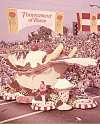
1971
In 1948, Warner Brothers-Pathe showed the very first colour newsreel, as pictures of the Tournament of Roses Parade taken New Years Day and the Rose Bowl football classic were seen by theatre audiences. It was made using the Cinecolor process.

In 1933, construction work on San Francisco's Golden Gate Bridge began on the Marin County side. It was the first in the U.S. to have piers built in open ocean, and also first to span the outer mouth of a major ocean harbour. The chief engineer was Joseph B. Strauss. The length of the main structure of the bridge is 8,940-ft, with towers rising 746-ft above the water and a minimum clearance of 220-ft. Its first public use was on Pedestrian Day on 27 May 1937, and it was ceremoniously opened for vehicles the following day, 28 May 1937.«
The Gate: The True Story of the Design and Construction of the Golden Gate Bridge, by John Van Der Zee. - book suggestion.
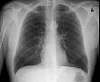
In 1896, the discovery of X-rays was published in an Austrian newspaper, Wiener Presse. This was the first public account of the observation made on 8 Nov 1895 by German physicist Wilhelm Röntgen, of the new form of radiation that became known as X-rays.«
In 1892, the first successful auroral photograph was made by the German physicist Martin Brendel. Although it was limited to a blurred, low-contrast picture, it did convey some sense of the shape of the aurora. The task was not easy because the auroral light itself was generally feeble and flickering while photographic materials of the time required a long exposure, and was little sensitive to the deep reds in the aurora. One of his photographs, taken on 1 Feb 1892 was published in the Century Magazine of Oct 1897. Brendel had travelled to Alten Fiord, Lapland, to spend several months studying auroral displays and magnetic disturbances. The first colour pictures were not taken until about 1950, and Life magazine published colour aurora photographs in 1953.«[Image: West end of an auroral band, photographed 1 Feb 1892 by Dr. Brendel, published in Century Magazine.]
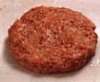
In 1889, the word hamburger first appeared in print in the Walla Walla Union, a Walla Walla, Washington, newspaper - according to the date given in the Oxford English Dictionary. The name comes a German food called hamburg steak, meaning “from Hamburg,” not because it contains ham. In the 19th century, German immigrants migrated to North America bringing along the recipe for the hamburg steak, a form of pounded beef. American people adopted the hamburg steak but used the adjective form “hamburger” without “steak” at the end. The word appeared as an entry in 1902 edition of the Encyclopaedia Britannica. In 1902, the first description of a hamburg steak close to the American conception of the hamburger, gave a recipe calling for finely chopped beef mixed with onion and pepper.«
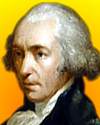
In 1769, James Watt obtained his first British patent (No. 913) for his “New Invented Method of Lessening the Consumption of Steam and Fuel in Fire-Engines” (steam engines). His significant improvement was to add a separate condenser for the steam. This solved the problem of the cooling resulting from Thomas Newcomen’s earlier method of spraying water into the piston chamber to condense the steam and produce a vacuum. As before, atmospheric pressure moved the piston for the power stroke. Among other improvements, to seal the piston and other parts steam-tight, Watt listed using “oils, wax, rosinous bodies, fat of animals, quicksilver and other metals in their fluid state.”«
more





