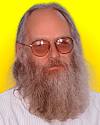
Born 6 Aug 1943; died 16 Oct 1998 at age 55.
Jonathan Bruce Postel was an American computer scientist who played a pivotal role in creating and administering the Internet. As a graduate student in the late 1960s, he worked on the ARPANET, the U.S. Defense Department network that evolved into today’s Internet. Postel became director of the Internet Assigned Numbers Authority (IANA), which he founded, and created the Internet’s addressing and domain naming systems. He also edited the Request for Comments (RFC) series that defined technical standards for communication protocols. As the Internet expanded rapidly in the 1990s, Postel advocated balanced, international oversight and proposed a nonprofit body to manage it. He died at age 55 after heart surgery.«
Jonathan Bruce Postel was an American computer scientist who played a pivotal role in creating and administering the Internet. As a graduate student in the late 1960s, he worked on the ARPANET, the U.S. Defense Department network that evolved into today’s Internet. Postel became director of the Internet Assigned Numbers Authority (IANA), which he founded, and created the Internet’s addressing and domain naming systems. He also edited the Request for Comments (RFC) series that defined technical standards for communication protocols. As the Internet expanded rapidly in the 1990s, Postel advocated balanced, international oversight and proposed a nonprofit body to manage it. He died at age 55 after heart surgery.«
Internet Datagram Protocol Specification. Version 4, by Jon Postel. - book suggestion.
Born 6 Aug 1903; died 5 Sep 1985 at age 82. quotes
Philip McCord Morse was an American physicist who developed the field of Operations Research (O.R.) during World War II. He applied scientific methods to solve complex logistical and strategic problems, and subsequently provided the groundwork for various modern scientific and engineering disciplines. In his career, Morse made significant contributions to atomic physics, quantum mechanics, plasma physics, astrophysics, acoustics and machine computation.«
Philip McCord Morse was an American physicist who developed the field of Operations Research (O.R.) during World War II. He applied scientific methods to solve complex logistical and strategic problems, and subsequently provided the groundwork for various modern scientific and engineering disciplines. In his career, Morse made significant contributions to atomic physics, quantum mechanics, plasma physics, astrophysics, acoustics and machine computation.«
In at the Beginnings: A Physicist’s Life, by Philip McCord Morse. - book suggestion.
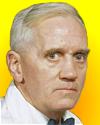
Born 6 Aug 1881; died 11 Mar 1955 at age 73. quotes
Scottish bacteriologist who discovered penicillin. In 1928, while working on influenza virus, he observed that mould had developed accidently on a staphylococcus culture plate and that the mould had created a bacteria-free circle around itself. He experimented further and he found that a mould culture prevented growth of staphylococci, even when diluted 800 times. The active substance, which he named penicillin, initiated the highly effective practice of antibiotic therapy for infectious diseases. Fleming shared the Nobel Prize for Physiology or Medicine in 1945 with Ernst Boris Chain and Howard Walter Florey, who both (from 1939) continued Fleming's work.
Scottish bacteriologist who discovered penicillin. In 1928, while working on influenza virus, he observed that mould had developed accidently on a staphylococcus culture plate and that the mould had created a bacteria-free circle around itself. He experimented further and he found that a mould culture prevented growth of staphylococci, even when diluted 800 times. The active substance, which he named penicillin, initiated the highly effective practice of antibiotic therapy for infectious diseases. Fleming shared the Nobel Prize for Physiology or Medicine in 1945 with Ernst Boris Chain and Howard Walter Florey, who both (from 1939) continued Fleming's work.
Alexander Fleming: The Man and the Myth, by Gwyn MacFarlane. - book suggestion.
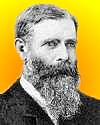
Born 6 Aug 1844; died 21 Oct 1896 at age 52.
English civil engineer (born in South Africa) who improved tunneling shield methods which he applied during construction of the London Underground. The technique was originated by Marc Brunel and subsequently modified by Peter W. Barlow as a smaller shield of circular cross section. Having learned its use from Barlow, Greathouse utilised the shield with his own further improvements to complete the Tower Subway (1869) under the River Thames near the Tower of London. He adopted screw jacks to push the shield forward while the tunnel behind it was lined with cast-iron rings, and pioneered the use of compressed air to prevent flooding during the lining installation. His statue beside the Royal Exchange was erected in 1994.«
English civil engineer (born in South Africa) who improved tunneling shield methods which he applied during construction of the London Underground. The technique was originated by Marc Brunel and subsequently modified by Peter W. Barlow as a smaller shield of circular cross section. Having learned its use from Barlow, Greathouse utilised the shield with his own further improvements to complete the Tower Subway (1869) under the River Thames near the Tower of London. He adopted screw jacks to push the shield forward while the tunnel behind it was lined with cast-iron rings, and pioneered the use of compressed air to prevent flooding during the lining installation. His statue beside the Royal Exchange was erected in 1994.«
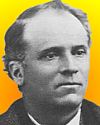
Born 6 Aug 1840; died 18 Mar 1914 at age 73.
Swiss-American anthropologist, historian and archaeologist who was among the first to study the American Indian cultures of the southwestern United States, Mexico, and Peru-Bolivia. He was one of the first to use the methodology of participant observation, by living with the Indians and studying their culture, artifacts and the ruins on their land. He followed their ancestors' migration from northern Mexico, down the Rio Grande Valley, to central Mexico. Even though Bandelier was criticized for being untrained and forming premature conclusions, he proved that working and training in the field was just as effective as going to school. With many archaeological sites, the Bandelier National Monument in New Mexico was named after him.
Swiss-American anthropologist, historian and archaeologist who was among the first to study the American Indian cultures of the southwestern United States, Mexico, and Peru-Bolivia. He was one of the first to use the methodology of participant observation, by living with the Indians and studying their culture, artifacts and the ruins on their land. He followed their ancestors' migration from northern Mexico, down the Rio Grande Valley, to central Mexico. Even though Bandelier was criticized for being untrained and forming premature conclusions, he proved that working and training in the field was just as effective as going to school. With many archaeological sites, the Bandelier National Monument in New Mexico was named after him.
Bandelier: The Life and Adventures of Adolph Bandelier, by Lange and Riley. - book suggestion.
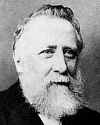
Born 6 Aug 1838; died 10 Mar 1900 at age 61.
British meteorologist who devoted his life's career to improving meteorological records, by raising measurement standards for accuracy and uniformity, and broadening the coverage with more reporting stations (increasing their number from just 168 to eventually 3,500 before he died). He had a special interest in rainfall. Within four years of his election to Royal Meteorological Society (25 Mar 1856) at age 17 years old, he had established the British Rainfall Organization (1860). From that year on, he prepared 39 annual rainfall reports (1860-98). Symons's Monthly Meteorological Magazine first appeared in 1866. His writings numbered hundreds of articles and several books. He amassed his own library of meterological books, including many of historial value, forming the UK's most comprehensive collection.«
British meteorologist who devoted his life's career to improving meteorological records, by raising measurement standards for accuracy and uniformity, and broadening the coverage with more reporting stations (increasing their number from just 168 to eventually 3,500 before he died). He had a special interest in rainfall. Within four years of his election to Royal Meteorological Society (25 Mar 1856) at age 17 years old, he had established the British Rainfall Organization (1860). From that year on, he prepared 39 annual rainfall reports (1860-98). Symons's Monthly Meteorological Magazine first appeared in 1866. His writings numbered hundreds of articles and several books. He amassed his own library of meterological books, including many of historial value, forming the UK's most comprehensive collection.«
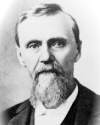
Born 6 Aug 1828; died 12 Dec 1917 at age 89.
U.S. founder of osteopathy , who believed that remedies for disease are available in the correctly adjusted body, obtained through manipulative techniques and concomitant medical and surgical therapy. He followed his father as a physician, and later served as a surgeon in the Union Army during the Civil War. By the early 1870's Still criticized the misuse by doctors of drugs common to the day. Still supported a different philosophy of medicine: he advocated the use of osteopathic manipulative treatment. Still's philosophy focused on the unity of all body parts. He identified the musculoskeletal system as a key element of health. He recognized the body's ability to heal itself and stressed preventive medicine, eating properly, and keeping fit.
U.S. founder of osteopathy , who believed that remedies for disease are available in the correctly adjusted body, obtained through manipulative techniques and concomitant medical and surgical therapy. He followed his father as a physician, and later served as a surgeon in the Union Army during the Civil War. By the early 1870's Still criticized the misuse by doctors of drugs common to the day. Still supported a different philosophy of medicine: he advocated the use of osteopathic manipulative treatment. Still's philosophy focused on the unity of all body parts. He identified the musculoskeletal system as a key element of health. He recognized the body's ability to heal itself and stressed preventive medicine, eating properly, and keeping fit.
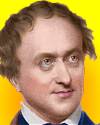
Born 6 Aug 1795; died 27 Jan 1864 at age 68. quotes
German chemist who named niobium (previously found in the mineral columbite by Charles Hatchett; he called it columbium). Rose distinguished between columbium and tantalum, long thought to be the same. He made numerous analyses of inorganic substances and minerals. Rose also studied how temperature and concentration affect chemical decomposition. He published (1829) the noted textbook, Handbook of Analytical Chemistry. Heinrich Rose came from a family of scientists: grandfather, father and brother, in the fields of pharmacy, chemistry and minerology. Grandfather Valentine Rose the Elder created the fusible Rose metal, an alloy of lead, bismuth and tin, having a low melting point.«
German chemist who named niobium (previously found in the mineral columbite by Charles Hatchett; he called it columbium). Rose distinguished between columbium and tantalum, long thought to be the same. He made numerous analyses of inorganic substances and minerals. Rose also studied how temperature and concentration affect chemical decomposition. He published (1829) the noted textbook, Handbook of Analytical Chemistry. Heinrich Rose came from a family of scientists: grandfather, father and brother, in the fields of pharmacy, chemistry and minerology. Grandfather Valentine Rose the Elder created the fusible Rose metal, an alloy of lead, bismuth and tin, having a low melting point.«
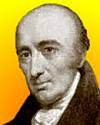
Born 6 Aug 1766; died 22 Dec 1828 at age 62. quotes
English chemist and physicist who discovered palladium (1803) and rhodium (1804), during his investigation of platinum ore. He developed a method of forming platinum - powder-metallurgy - and was the first to produce malleable and ductile platinum on a commercial scale. He made his method public at the Royal Society on 28 Nov 1828, shortly before his death. In 1801 he proved experimentally that frictional and current electricity are the same. He is particularly noted for being the first to observe dark lines in the spectrum of the sun which eventually led to the discovery of the elements in the Sun. He constructed the Wollaston prism, a polarizing beam splitter (now applied in the CD player), and invented the camera lucida.«
English chemist and physicist who discovered palladium (1803) and rhodium (1804), during his investigation of platinum ore. He developed a method of forming platinum - powder-metallurgy - and was the first to produce malleable and ductile platinum on a commercial scale. He made his method public at the Royal Society on 28 Nov 1828, shortly before his death. In 1801 he proved experimentally that frictional and current electricity are the same. He is particularly noted for being the first to observe dark lines in the spectrum of the sun which eventually led to the discovery of the elements in the Sun. He constructed the Wollaston prism, a polarizing beam splitter (now applied in the CD player), and invented the camera lucida.«
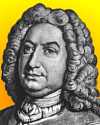
Born 6 Aug 1667; died 1 Jan 1748 at age 80. quotes
Swiss mathematician (aka Jean Bernoulli) who is noted for his discovery of the exponential calculus (1691) and the equation of the catenary (1690). His first publication was on the process of fermentation (1690), but thereafter, he studied and taught mathematics for the rest of his life. He followed his his brother Jacques as professor of mathematics at Basle. He was the first to use g to represent the acceleration due to gravity. He applied the then new calculus to the measurement of curves, to differential equations, and to mechanical problems. He introduced the famous brachistochrome problem. “Archimedes of his age” was inscribed on his tombstone. The mathematician Jacob Bernoulli was his brother, and the mathematician Daniel Bernoulli was his son.[6 Aug 1667 is the New Style date of birth. Old Style is 27 Jul 1667.]
Swiss mathematician (aka Jean Bernoulli) who is noted for his discovery of the exponential calculus (1691) and the equation of the catenary (1690). His first publication was on the process of fermentation (1690), but thereafter, he studied and taught mathematics for the rest of his life. He followed his his brother Jacques as professor of mathematics at Basle. He was the first to use g to represent the acceleration due to gravity. He applied the then new calculus to the measurement of curves, to differential equations, and to mechanical problems. He introduced the famous brachistochrome problem. “Archimedes of his age” was inscribed on his tombstone. The mathematician Jacob Bernoulli was his brother, and the mathematician Daniel Bernoulli was his son.[6 Aug 1667 is the New Style date of birth. Old Style is 27 Jul 1667.]

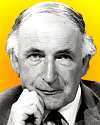
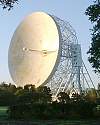
Sir Alfred Charles Bernard Lovell was an English radio astronomer and physicist who established and directed (1951-81) Jodrell Bank Experimental Station, Cheshire, England, with (then) the world's largest steerable radiotelescope, now named after him Prior to WW II, he worked at Manchester University on cosmic ray research. During the war, he helped develop aircraft onboard radar systems. After the war, to escape interference to radar equipment from city trams, he moved his research to the University's more remote Jodrell Bank property. In 1946, he showed that radar echoes could detect optically invisible daytime meteor showers. He gained funding to build the 250-ft-diam. telescope. When completed in 1957, it was able to track the first artificial satellite, Sputnik I.«[Image right: Jodrell Bank radiotelescope.]
The Story of Jodrell Bank, by Bernard Lovell. - book suggestion.
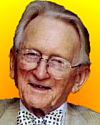
Died 6 Aug 2007 at age 90 (born 14 Jun 1917).
Norwegian mathematician who is one of the foremost analytic number theorists. After working in isolation during WW II, due to the occupation of Norway by the Nazis, his accomplishments in the theory of the Riemann zeta function became known. During the 1950's he developed the Selberg trace formula, his most famous accomplishment. It establishes a duality between the length spectrum of a Riemann surface and the eigenvalues of the Laplacian which is analogous to the duality between the prime numbers and the zeros of the zeta function. He was awarded the Fields Medal in 1950 for his work in number theory on generalisations of the sieve methods of Viggo Brun. In 1986 he won the Wolf Prize.
Norwegian mathematician who is one of the foremost analytic number theorists. After working in isolation during WW II, due to the occupation of Norway by the Nazis, his accomplishments in the theory of the Riemann zeta function became known. During the 1950's he developed the Selberg trace formula, his most famous accomplishment. It establishes a duality between the length spectrum of a Riemann surface and the eigenvalues of the Laplacian which is analogous to the duality between the prime numbers and the zeros of the zeta function. He was awarded the Fields Medal in 1950 for his work in number theory on generalisations of the sieve methods of Viggo Brun. In 1986 he won the Wolf Prize.
Died 6 Aug 1979 at age 68 (born 6 Apr 1911).
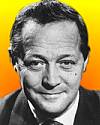
German biochemist who shared (with Konrad Bloch) the 1964 Nobel Prize for Physiology or Medicine for his research “concerning the mechanism and regulation of the cholesterol and fatty acid metabolism.” These processes comprise series of reactions with a great number of individual steps. Providing this detailed knowledge of the mechanisms of lipid metabolism makes possible addressing medical problems related to them.«
German biochemist who shared (with Konrad Bloch) the 1964 Nobel Prize for Physiology or Medicine for his research “concerning the mechanism and regulation of the cholesterol and fatty acid metabolism.” These processes comprise series of reactions with a great number of individual steps. Providing this detailed knowledge of the mechanisms of lipid metabolism makes possible addressing medical problems related to them.«
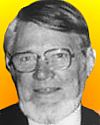

Peter Calvert Leary Hodgson was an American marketing executive was an American marketing executive and entrepreneur who named “Silly Putty” and promoted it as a toy. It was a lump of rubber-like material could be stretched, rolled into a bouncing ball, or used to transfer colored ink from newsprint. The popularity of the product made him a millionaire. The original discovery was made in 1943 by James Wright who combined silicone oil and boric acid at the laboratories of General Electric while trying to make synthetic rubber. No significant application existed for the material. However, it was passed around by company employees as a curiosity. When Hodgson saw a sample, he realized its potential simply for entertainment. He sold it in one-ounce lumps packaged in plastic eggs.«
1889
Died 6 Aug 1954 at age 85 (born 7 Apr 1869). quotes
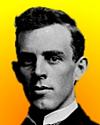
David Grandison Fairchild was an American botanist and plant explorer who supervised the introduction of over 20,000 exotic plants and varieties of established crops into the U.S., including soya beans, mangos, alfalfa, nectarines, horseradish, and flowering cherries. He spent 37 years seeking new and useful plants by travelling the world including the South Sea Islands, Australia, New Zealand, New Guinea, Japan, China, the Persian Gulf, Africa, the West Indies, and South America. In 1898 he set up a small plant introduction garden on a six-acre plot near Miami, Florida, especially interested in aesthetically valuable or economically useful exotic fruits and plants. He managed the Foreign Seed and Plant Introduction program of the U.S. Dept. of Agriculture (1906-28).«
David Grandison Fairchild was an American botanist and plant explorer who supervised the introduction of over 20,000 exotic plants and varieties of established crops into the U.S., including soya beans, mangos, alfalfa, nectarines, horseradish, and flowering cherries. He spent 37 years seeking new and useful plants by travelling the world including the South Sea Islands, Australia, New Zealand, New Guinea, Japan, China, the Persian Gulf, Africa, the West Indies, and South America. In 1898 he set up a small plant introduction garden on a six-acre plot near Miami, Florida, especially interested in aesthetically valuable or economically useful exotic fruits and plants. He managed the Foreign Seed and Plant Introduction program of the U.S. Dept. of Agriculture (1906-28).«
David Fairchild’s The World Was My Garden, by David Fairchild. - book suggestion.
Died 6 Aug 1930 at age 83 (born 24 Jan 1847).
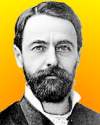
French chemist who was the first to present a theory on the relationship between molecules and how they absorb or reflect light. Born into a family wealthy in petroleum holdings, he was able to build his own laboratory to pursue his work. He theorized (1874) that optical activity - the presence of two forms of the same organic molecule, one a mirror image of the other - is due to an asymmetric carbon atom bound to four different groups. For this contribution he is regarded as the cofounder of stereochemistry, with J. H. van't Hoff. His interests also included petrochemistry, cosmology, and biology.Birth date: DSB gives 24 Jan 1847; Enc. Brit. gives 21 Jan 1847.
French chemist who was the first to present a theory on the relationship between molecules and how they absorb or reflect light. Born into a family wealthy in petroleum holdings, he was able to build his own laboratory to pursue his work. He theorized (1874) that optical activity - the presence of two forms of the same organic molecule, one a mirror image of the other - is due to an asymmetric carbon atom bound to four different groups. For this contribution he is regarded as the cofounder of stereochemistry, with J. H. van't Hoff. His interests also included petrochemistry, cosmology, and biology.Birth date: DSB gives 24 Jan 1847; Enc. Brit. gives 21 Jan 1847.
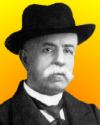
Died 6 Aug 1925 at age 72 (born 12 Jan 1853).
Italian mathematician instrumental in the development of the absolute differential calculus (also called the Ricci calculus), now known as tensor analysis. Ricci-Curbastro's early work was in mathematical physics, particularly on the laws of electric circuits and differential equations. He changed area somewhat to undertake research in differential geometry and was the inventor of the absolute differential calculus between 1884 and 1894. Ricci-Curbastro's absolute differential calculus became the foundation of tensor analysis and was used by Einstein in his theory of general relativity. As a councillor for his home town of Lugo, he was involved in many projects relating to the supply of water and to swamp drainage.
Italian mathematician instrumental in the development of the absolute differential calculus (also called the Ricci calculus), now known as tensor analysis. Ricci-Curbastro's early work was in mathematical physics, particularly on the laws of electric circuits and differential equations. He changed area somewhat to undertake research in differential geometry and was the inventor of the absolute differential calculus between 1884 and 1894. Ricci-Curbastro's absolute differential calculus became the foundation of tensor analysis and was used by Einstein in his theory of general relativity. As a councillor for his home town of Lugo, he was involved in many projects relating to the supply of water and to swamp drainage.
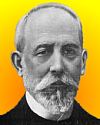
Died 6 Aug 1911 at age 57 (born 19 Sep 1853).
Argentinian paleontologist and anthropologist who made significant contributions to the field of vertebrate paleontology and established the Pampas region of Argentina as a rich source of fossils. He discovered over 6,000 fossil species and classified 35 suborders of mammals. Ameghino's controversial discoveries of stone implements, carved bones, and other signs of a human presence in Argentina during the Pliocene, Miocene, and earlier periods served to increase his worldwide fame.«
Argentinian paleontologist and anthropologist who made significant contributions to the field of vertebrate paleontology and established the Pampas region of Argentina as a rich source of fossils. He discovered over 6,000 fossil species and classified 35 suborders of mammals. Ameghino's controversial discoveries of stone implements, carved bones, and other signs of a human presence in Argentina during the Pliocene, Miocene, and earlier periods served to increase his worldwide fame.«
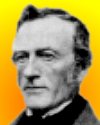
Died 6 Aug 1879 at age 73 (born 13 Dec 1805).
Scottish-born German astronomer noted for discovering (1852) that the magnetic field of the Earth fluctuates with a 10.3-year activity cycle, but does not correlate it with the period of the sunspot cycle. From 1 Aug 1840, Johann von Lamont (as director of the Royal Astronomical Observatory in Munich) started regular and permanent observations of the earth's magnetic field. In the 1850's he started making regional magnetic surveys in the kingdom of Bavaria, later extended to other states in south Germany, France, Holland, Belgium, Spain, Portugal, Prussia and Denmark. His central European maps with isolines of geomagnetic elements, reduced to 1854, were the first worldwide.
Scottish-born German astronomer noted for discovering (1852) that the magnetic field of the Earth fluctuates with a 10.3-year activity cycle, but does not correlate it with the period of the sunspot cycle. From 1 Aug 1840, Johann von Lamont (as director of the Royal Astronomical Observatory in Munich) started regular and permanent observations of the earth's magnetic field. In the 1850's he started making regional magnetic surveys in the kingdom of Bavaria, later extended to other states in south Germany, France, Holland, Belgium, Spain, Portugal, Prussia and Denmark. His central European maps with isolines of geomagnetic elements, reduced to 1854, were the first worldwide.
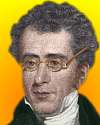
Died 6 Aug 1846 at age 73 (baptized 29 Jun 1773).
English physician and chemist who in his early career trained in medicine (as his father had before him), earned an M.D. in 1798, and practiced in Liverpool until moving to London (1817). He there turned to lecturing on chemistry at Guy's Hospital, and pursued some interest also in geology. On 16 Mar 1819, he read the first paper describing hay fever. He was the first to detect a reciprocal relationship between the amount of urea in urine dropping as it increased in the blood. In tandem, the albumin in the blood decreased as that in the urine rose. In 1818, he published An Account of the History and Present State of Galvanisum. His chief medical work was System of Physiology (1824). On the Purification of Thames Water (1826) was his only geological work. He died of cholera, caught while in Paris.«
English physician and chemist who in his early career trained in medicine (as his father had before him), earned an M.D. in 1798, and practiced in Liverpool until moving to London (1817). He there turned to lecturing on chemistry at Guy's Hospital, and pursued some interest also in geology. On 16 Mar 1819, he read the first paper describing hay fever. He was the first to detect a reciprocal relationship between the amount of urea in urine dropping as it increased in the blood. In tandem, the albumin in the blood decreased as that in the urine rose. In 1818, he published An Account of the History and Present State of Galvanisum. His chief medical work was System of Physiology (1824). On the Purification of Thames Water (1826) was his only geological work. He died of cholera, caught while in Paris.«
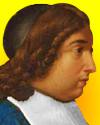
Died 6 Aug 1706 at age 83 (born 11 Jun 1623). quotes
French natural philosopher, priest and institutional historian who was the first secretary of the Académie Royale des Sciences (1666-97). His works on astronomy included a short primer, Elementa astronomice (1642) and Astronmia physica (1659). He published the first printed history of the Académie Royale des Sciences. In his lifetime, he held several ecclesiastic appointments. Though he was never an anatomist as a scholar, late in life, he held a place of pensionary anatomist (as described by Pierre Costabel in a biographical entry in DSB).[Name also written as du Hamel or Duhamel. DSB gives 1623 for birth year; Dictionnaire de Biographie Française gives 1624.]
French natural philosopher, priest and institutional historian who was the first secretary of the Académie Royale des Sciences (1666-97). His works on astronomy included a short primer, Elementa astronomice (1642) and Astronmia physica (1659). He published the first printed history of the Académie Royale des Sciences. In his lifetime, he held several ecclesiastic appointments. Though he was never an anatomist as a scholar, late in life, he held a place of pensionary anatomist (as described by Pierre Costabel in a biographical entry in DSB).[Name also written as du Hamel or Duhamel. DSB gives 1623 for birth year; Dictionnaire de Biographie Française gives 1624.]
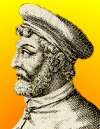
Died 6 Aug 1553 (born c. 1478). quotes
Italian physician, astronomer, geologist and poet who proposed a scientific germ theory for how diseases are transmitted In De contagione et contagiosis morbis et curatione (On Contagion, Contagious Diseases, and Their Cure, 1546), he described the spread of disease by so-called "seeds", that could be transported by air, upon clothing, by an animal or from one person to another. (He was extending Lucretius's earlier idea that everything was composed of small bits of atomic matter.) Fracastoro's ideas helped make unpopular public health measures more accepted, such as destroying animals, or thorough cleaning or burning of infected possessions during a plague. His ideas preceded the work of Louis Pasteur and Robert Koch by more than 3 centuries.Date of death: DSB gives 6 Aug 1553; Enc. Brit. gives 8 Aug 1553.
Italian physician, astronomer, geologist and poet who proposed a scientific germ theory for how diseases are transmitted In De contagione et contagiosis morbis et curatione (On Contagion, Contagious Diseases, and Their Cure, 1546), he described the spread of disease by so-called "seeds", that could be transported by air, upon clothing, by an animal or from one person to another. (He was extending Lucretius's earlier idea that everything was composed of small bits of atomic matter.) Fracastoro's ideas helped make unpopular public health measures more accepted, such as destroying animals, or thorough cleaning or burning of infected possessions during a plague. His ideas preceded the work of Louis Pasteur and Robert Koch by more than 3 centuries.Date of death: DSB gives 6 Aug 1553; Enc. Brit. gives 8 Aug 1553.
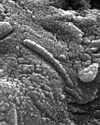
ALH 84001
In 1996, NASA Administrator Daniel Goldin announced the discovery of potential evidence of a primitive life form on Mars. It came in the form of an alleged tiny fossil found on a meteorite in Antarctica, which was believed to have come from Mars. The fossil could be seen in only in a highly magnified image, as a tiny tube-like form, less than 1% of the width of a human hair. Perhaps, some believed, it represent a simple Martian organism that lived over 3.6 billion years ago. A huge impact 16 million years ago could have blasted the rock into space, and it landed in Earth's Antarctica only 13,000 years ago. The meteorite ALH 84001 also carried organic molecules and mineral features characteristic of biological activity. At best the evidence is inconclusive, and other scientists entirely dispute the interpretation.«
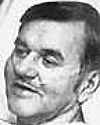
In 1986, William J. Schroeder of Jasper, Ind., the world's longest-surviving recipient of a permanent artificial heart, died at age 53 after living 620 days with the Jarvik-7 man-made pump. He died after a series of strokes impaired his ability to breathe. Schroeder was the second Jarvik-7 recipient when the pump was implanted on 25 Nov 1985, at the Humana Heart Institute in Louisville, Ky., by surgeon Dr. William DeVries. He was the first patient to live outside the hospital with the artificial heart, including being a parade grand marshal in Jasper, his hometown, making a fishing trip with his sons and celebrating his 33rd wedding anniversary at a Louisville restaurant. However after a stroke, he was bedridden for his final seven months.«
The Bill Schroeder Story, by Martha Barnette, Schroeder Family. - book suggestion.
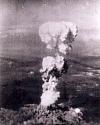
In 1945, the first atomic bomb used in World War II was dropped on Hiroshima, Japan. The weapon, code-named “Little Boy,” was dropped from a United States Air Force B-29 bomber, The Enola Gay. This first bomb was a uranium bomb. Three days later, a second atomic bomb was dropped on the Japanese city of Nagasaki. The second bomb, code-named “Fat Man” was a plutonium bomb.«
Shockwave: Countdown to Hiroshima, by Stephen Walker. - book suggestion.
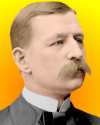
Andrée
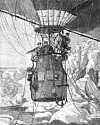
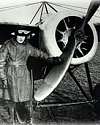
In 1919, Harry Butler (1889-1924) made the first air flight over a major body of water in Australia. In his monoplane, the Red Devil, with an 18-kg mailbag of postcards and letters, he was the first man to fly across the Gulf to Yorke Peninsula, covering the distance of 67 miles (108 km) from Adelaide to his home town, Minlaton, in 27 minutes, reaching an altitude of 15,000 feet (4572 m). He reluctantly wore an inflated inner tube as a primitive life jacket in case he came down over the water. A strong head wind gave him trouble, and he varied his height varies from as high as 4,500m to as low as 500m searching better conditions. On arrival, he gave the waiting crowd of 6,000 people an aeronautical display before landing.«[Image: Harry Butler with his Red Devil monoplane in France 1914-18.]
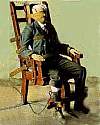
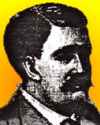
Kemmler
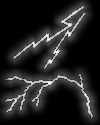
In 1856, James Nasmyth spoke “On the Form of Lightning” on the opening day of the 26th Meeting of the British Association at Cheltenham. He said that he wanted to call attention to the fact that Nature never showed a zig-zag dovetail form of lightning as often portrayed by painters and in other works of art. The true natural form was irregular curved lines, single or branched. He attributed the artists' error to the form of the thunderbolt in the hand of Jupiter, as sculptured by the early Greeks. He thought lightning mostly shot up from the earth to the cloud and often continued from the cloud downwards again to another distant part of the earth. The appearance of the lightning, he conceived, was of a rapidly shooting point of light, leaving on the eye the impression of the path it traced. Animated discussion followed.«[Image upper: artists' dovetail form of lightning. Lower: natural form. Illustrations from the Report of the Annual Meeting (1856).]
Out of the Blue: A History of Lightning: Science, Superstition, and Amazing Stories of Survival, by John Friedman. - book suggestion.
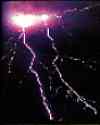
In 1753, Professor Georg Richmann of St. Petersburg, Moscow, was killed by his experiment with lightning. One year after Benjamin Franklin's kite experiment, Richmann attached a wire to the top of his house and led it down to an iron bar suspended above “the electric needle” and a bowl of water partly filled with iron filings*. It was reported that during a storm, Richmann was struck while about a foot from the bar, and closely observing the needle. “A globe of blue and whitish fire about four inches diameter” from the bar struck Richmann's forehead” with “an explosion like that of a small cannon.” His assistant, M. Sokolaw, who survived, was thrown to the floor feeling blows on his back. He found marks of burning hot wire fragments on the back of his clothes.
more
Out of the Blue: A History of Lightning: Science, Superstition, and Amazing Stories of Survival, by John Friedman. - book suggestion.
Thm.jpg "Supernova")
In 1181, a supernova was observed by Chinese astronomers in the constellation now known as Cassiopeia, and noted one day later from Japan. Ancient records of Chinese court astronomers reported “a guest star appearing in k'uei invading the Ch'uan-she-hsing” and that it remained visible for 185 days (over 6 months). A supernova remnant, now named 3C58, found by radio astronomers in the 1960s, was first proposed to be the remnant of the supernova 1181 by F. Richard Stephenson. The associated radio and X-ray pulsar rotates sedately at about 15 times per second. Stephenson wrote in 2006 that this supernova is one of only five temporary stars observed in the past 1500 years that have been confidently identified.«[Image: four-day X-ray observation of 3C58 by the Chandra X-ray Observatory, shown in pseudo colour with red representing low energy X-rays and blue for high energy.]





