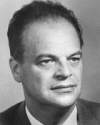
Born 14 Dec 1922.
Soviet physicist, best known for the development of the maser, the precursor of the laser. In 1955, while working as a research student with Aleksandr Prokhorov (1916- ) at the Soviet Academy of Sciences, he devised a microwave amplifier based on ammonia molecules. The two scientists shared the 1964 Nobel Prize (with American Charles Townes (1915- ), who independently developed a maser), for basic research in quantum electronics that led to the development of both the maser and the laser. These devices produce monochromatic, parallel, coherent beams of microwaves and light, respectively. Basov went on to develop the laser principle, and introduced the idea of using semiconductors to achieve laser action (1958). (a.k.a. Nikolai Gennadievich Basov)
Soviet physicist, best known for the development of the maser, the precursor of the laser. In 1955, while working as a research student with Aleksandr Prokhorov (1916- ) at the Soviet Academy of Sciences, he devised a microwave amplifier based on ammonia molecules. The two scientists shared the 1964 Nobel Prize (with American Charles Townes (1915- ), who independently developed a maser), for basic research in quantum electronics that led to the development of both the maser and the laser. These devices produce monochromatic, parallel, coherent beams of microwaves and light, respectively. Basov went on to develop the laser principle, and introduced the idea of using semiconductors to achieve laser action (1958). (a.k.a. Nikolai Gennadievich Basov)
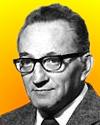
Born 14 Dec 1914; died 21 Jan 1983 at age 68.
American microbiologist and geneticist who discovered that only one of two strands of molecules that make up DNA, carried the genetic information to produce new substances. The carrier was called ribonucleic acid (RNA). In 1962, he developed a technique that allowed the detection of specific RNA and DNA molecules in cells. This technique, called nucleic acid hybridization, is credited for helping to lay the groundwork for current advances in recombinant DNA technology. Much earlier, his Ph.D. thesis (1944) was the first work to establish that genes are activated and deactivated by compounds that he called inducers, which thus radically affect the pattern of proteins that a cell fabricates without actually altering the genes themselves.
American microbiologist and geneticist who discovered that only one of two strands of molecules that make up DNA, carried the genetic information to produce new substances. The carrier was called ribonucleic acid (RNA). In 1962, he developed a technique that allowed the detection of specific RNA and DNA molecules in cells. This technique, called nucleic acid hybridization, is credited for helping to lay the groundwork for current advances in recombinant DNA technology. Much earlier, his Ph.D. thesis (1944) was the first work to establish that genes are activated and deactivated by compounds that he called inducers, which thus radically affect the pattern of proteins that a cell fabricates without actually altering the genes themselves.
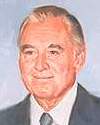
Born 14 Dec 1911; died 13 Mar 1998 at age 86.
German aeronautical engineer who designed the first operational jet engine. Ohain, at age 22, conceived his theory of jet propulsion (1933) because to fly faster, airplanes could fly higher for lower air resistance, but there, propellers and piston engines worked badly. He saw turbojets as a solution, and took out his first patent on the gas-turbine jet engine in 1935, four years after Frank Whittle. By Sep 1937, Ohain had a hydrogen-fueled bench model producing a 250-km thrust. He designed the HeS3b turbojet engine that powered the first experimental jet aircraft, the He178, on its historic maiden flight at a top speed of about 350 mph on 27 Aug 1939, near Rostock, Germany. Whittle's first jet flew later, in 1941. His continued work on the gas-turbine engine during World War II resulted in abandonment of the centrifugal flow concept, and adoption of the axial flow compressor type engine. After WW II, Ohain worked for the U.S. airforce (1947-79). In 1945, he emigrated to the U.S. and became an engineer for the U.S. Air Force at its engine development centre. In 1956, Von Ohain became Director of the famed Air Force Aeronautical Research Laboratory.
German aeronautical engineer who designed the first operational jet engine. Ohain, at age 22, conceived his theory of jet propulsion (1933) because to fly faster, airplanes could fly higher for lower air resistance, but there, propellers and piston engines worked badly. He saw turbojets as a solution, and took out his first patent on the gas-turbine jet engine in 1935, four years after Frank Whittle. By Sep 1937, Ohain had a hydrogen-fueled bench model producing a 250-km thrust. He designed the HeS3b turbojet engine that powered the first experimental jet aircraft, the He178, on its historic maiden flight at a top speed of about 350 mph on 27 Aug 1939, near Rostock, Germany. Whittle's first jet flew later, in 1941. His continued work on the gas-turbine engine during World War II resulted in abandonment of the centrifugal flow concept, and adoption of the axial flow compressor type engine. After WW II, Ohain worked for the U.S. airforce (1947-79). In 1945, he emigrated to the U.S. and became an engineer for the U.S. Air Force at its engine development centre. In 1956, Von Ohain became Director of the famed Air Force Aeronautical Research Laboratory.
Hans Von Ohain: Elegance in Flight, by Margaret Conner. - book suggestion.
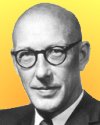
Born 14 Dec 1909; died 5 Nov 1975 at age 65.
American biochemist whose research helped create the field of molecular genetics. He helped demonstrate that genes determine the structure of particular enzymes or otherwise act by regulating specific chemical processes in living things. With George Beadle and Joshua Lederberg, he won the 1958 Nobel Prize for Physiology or Medicine. During WW II, his work was of use in maximizing penicillin production, and it has also made possible the introduction of new methods for assaying vitamins and amino acids in foods and tissues. In 1940, in collaboration with George Beadle, he had made his studies on the pink bread mold, Neurospora crassa. They irradiated spores of bread moulds, allowed them to germinate, and discovered three mutant strains that had lost the ability to synthesize specific vitamins, implying that in each case the necessary enzyme was missing or nonfunctional. The mutants differed from normal by only a single gene, which showed that specific genes determine the structure of particular enzymes or otherwise act by regulating specific chemical processes in living things. In 1945, he moved to Yale and he extended his techniques to yeast and bacteria. Tatum and Lederberg discovered genetic recombination in certain bacteria (1946).
American biochemist whose research helped create the field of molecular genetics. He helped demonstrate that genes determine the structure of particular enzymes or otherwise act by regulating specific chemical processes in living things. With George Beadle and Joshua Lederberg, he won the 1958 Nobel Prize for Physiology or Medicine. During WW II, his work was of use in maximizing penicillin production, and it has also made possible the introduction of new methods for assaying vitamins and amino acids in foods and tissues. In 1940, in collaboration with George Beadle, he had made his studies on the pink bread mold, Neurospora crassa. They irradiated spores of bread moulds, allowed them to germinate, and discovered three mutant strains that had lost the ability to synthesize specific vitamins, implying that in each case the necessary enzyme was missing or nonfunctional. The mutants differed from normal by only a single gene, which showed that specific genes determine the structure of particular enzymes or otherwise act by regulating specific chemical processes in living things. In 1945, he moved to Yale and he extended his techniques to yeast and bacteria. Tatum and Lederberg discovered genetic recombination in certain bacteria (1946).
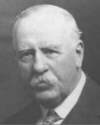
Born 14 Dec 1852; died 19 Apr 1932 at age 79.
(1st Baronet) Scottish surgeon and bacteriologist who was a pioneer of antiseptic surgical methods in Britain. Educated at Aberdeen University, then as an assistant to Lord Lister, one of the foremost surgeons of his day, he helped to formulate antiseptic techniques which revolutionised 19th century surgery. In 1885, he defined the four operational principles to respect to avoid the infection: surgical washing of the hands of the surgeon, sterilization of the instruments, disinfection of the operational site and protection by fields, and reduction of the number of germs present in the environment. During the Boer War in South Africa, he was Consultant Surgeon to Lord Roberts and wrote extensively on the problems of surgery in warfare.
(1st Baronet) Scottish surgeon and bacteriologist who was a pioneer of antiseptic surgical methods in Britain. Educated at Aberdeen University, then as an assistant to Lord Lister, one of the foremost surgeons of his day, he helped to formulate antiseptic techniques which revolutionised 19th century surgery. In 1885, he defined the four operational principles to respect to avoid the infection: surgical washing of the hands of the surgeon, sterilization of the instruments, disinfection of the operational site and protection by fields, and reduction of the number of germs present in the environment. During the Boer War in South Africa, he was Consultant Surgeon to Lord Roberts and wrote extensively on the problems of surgery in warfare.
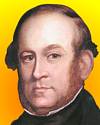

Scottish shipowner and sugar refiner, known for Lyle's Golden Syrup. Lyle began in his father's cooperage business, but later extended into shipping with John Kerr. Their fleet grew from 161 tons in 1849 to 22,000 tons in 1870. As a cooper, Lyle supplied casks to ship Caribbean sugar and molasses. This led them to join with other partners to operate the Glebe Sugar Refinery (1865). Lyle moved the shipping operation in 1881 to wharves in East London where he built a refinery specialising in the production of golden syrup. When the price of raw sugar collapsed in 1882, Lyle suffered huge losses forcing reduction of his business holdings, yet his golden syrup product eventually thrived. Sugar refiner Henry Tate amalgamated with Lyle in 1921.«[Image right: Lyle's Golden Syrup tin showing the original motif of a sleeping lion surrounded by bees.]
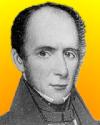
Born 14 Dec 1795; died 12 Jan 1885 at age 89. quotes
John Bloomfield Jervis was an American civil engineer who made outstanding contributions in construction of canals, railroads, and water-supply systems for the expanding United States. Jervis began his career in Rome as an Axeman for an Erie Canal survey party in 1817. By 1823 he was superintendent of a 50-mile section of the Erie Canal. After appointment in 1827 as its Chief Engineer, he won approval of his idea that a railroad be incorporated into the Delaware and Hudson Canal project, at a time there were no railroads in America. Jervis even designed its locomotive, the Stourbridge Lion, the first locomotive to run in America. He designed and built the 41-mile Croton Aqueduct (New York City's water supply for fifty years: 1842-91), and the Boston Aqueduct. more
John Bloomfield Jervis was an American civil engineer who made outstanding contributions in construction of canals, railroads, and water-supply systems for the expanding United States. Jervis began his career in Rome as an Axeman for an Erie Canal survey party in 1817. By 1823 he was superintendent of a 50-mile section of the Erie Canal. After appointment in 1827 as its Chief Engineer, he won approval of his idea that a railroad be incorporated into the Delaware and Hudson Canal project, at a time there were no railroads in America. Jervis even designed its locomotive, the Stourbridge Lion, the first locomotive to run in America. He designed and built the 41-mile Croton Aqueduct (New York City's water supply for fifty years: 1842-91), and the Boston Aqueduct. more
John B. Jervis: An American Engineering Pioneer, by F. Daniel Larkin. - book suggestion.
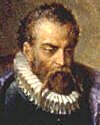
Born 14 Dec 1546; died 24 Oct 1601 at age 54. quotes
Danish astronomer whose work in developing astronomical instruments and in measuring and fixing the positions of stars paved the way for future discoveries. He studied the nova of 1572 (“Tycho's star”) showed that it was a fixed star. His report, De nova...stella (1573), was taken by many as proof of the inadequacy of the traditional Aristotelian cosmology. In 1577, he moved to his own observatory on Hven Island (financed by King Frederick II). Before the invention of the telescope, using his nine-foot armillary sphere and his fourteen-foot mural quadrant, he charted the positions of 777 stars with an unparallelled accuracy. In 1599 he moved to Prague, with Johannes Kepler as his assistant.
Danish astronomer whose work in developing astronomical instruments and in measuring and fixing the positions of stars paved the way for future discoveries. He studied the nova of 1572 (“Tycho's star”) showed that it was a fixed star. His report, De nova...stella (1573), was taken by many as proof of the inadequacy of the traditional Aristotelian cosmology. In 1577, he moved to his own observatory on Hven Island (financed by King Frederick II). Before the invention of the telescope, using his nine-foot armillary sphere and his fourteen-foot mural quadrant, he charted the positions of 777 stars with an unparallelled accuracy. In 1599 he moved to Prague, with Johannes Kepler as his assistant.
Tycho & Kepler, by Kitty Ferguson. - book suggestion.

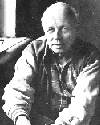
Died 14 Dec 1989 at age 68 (born 21 May 1921). quotes
Soviet nuclear physicist, an outspoken advocate of human rights in the Soviet Union. At the end of World War II, Sakharov returned to pure science and the study of cosmic rays. Two years later, he began work with a secret research group on the development of the hydrogen bomb, and he is believed to have been principally responsible for the Soviets' success in exploding their first thermonuclear bomb (1954). With I.E. Tamm, he proposed controlled thermonuclear fusion by confining an extremely hot ionized plasma in a torus-shaped magnetic bottle, known as a tokamak device. He became politically more active in the 1960s, campaigned against nuclear proliferation, and from 1980 to 1986, he was banished from Moscow to Gorky, and kept under police surveillance.
Soviet nuclear physicist, an outspoken advocate of human rights in the Soviet Union. At the end of World War II, Sakharov returned to pure science and the study of cosmic rays. Two years later, he began work with a secret research group on the development of the hydrogen bomb, and he is believed to have been principally responsible for the Soviets' success in exploding their first thermonuclear bomb (1954). With I.E. Tamm, he proposed controlled thermonuclear fusion by confining an extremely hot ionized plasma in a torus-shaped magnetic bottle, known as a tokamak device. He became politically more active in the 1960s, campaigned against nuclear proliferation, and from 1980 to 1986, he was banished from Moscow to Gorky, and kept under police surveillance.
The World of Andrei Sakharov: A Russian Physicist's Path to Freedom, by Gennady Gorelik and Antonina W. Bouis. - book suggestion.
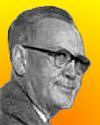
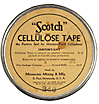
Richard Gurley Drew was an American inventor and engineer whose invention of masking tape (patented 27 May 1930) was only one of 30 patents he was granted in the 40 years he worked for the 3M Company. In 1923, he was developing sandpaper for the company when he took trial batches to a local auto body shop for testing. There he saw a need for an effective, removeable tape for attaching paper masking on cars being painted in two colours. A few years later, he devised the first waterproof cellophane tape, made famous under the brand name “Scotch” tape. He also created the reflective sheeting used on road signs, breathable surgical tapes, among other inventions. Even more importantly, he nurtured a team of creative individuals in the Products Fabrication Laboratory (“Pro-Fab Lab”) he established and directed within the 3M Company.«
A Century of Innovation – The 3M Story, by W. James McNerney Jr. - book suggestion.
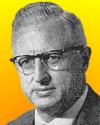
Died 14 Dec 1976 at age 75 (born 11 Apr 1901). quotes
Donald Howard Menzel was an American astronomer who was best known for his arguments against the existence of extraterrestrial UFO's. Menzel was one of the first practitioners of theoretical astrophysics in the United States and pioneered the application of quantum mechanics to astronomical spectroscopy. An authority on the sun's chromosphere, he discovered with J. C. Boyce (1933) that the sun's corona contains oxygen. With W. W. Salisbury he made (1941) the first of the calculations that led to radio contact with the moon in 1946. He supervised the assignment of names to newly discovered lunar features.
Donald Howard Menzel was an American astronomer who was best known for his arguments against the existence of extraterrestrial UFO's. Menzel was one of the first practitioners of theoretical astrophysics in the United States and pioneered the application of quantum mechanics to astronomical spectroscopy. An authority on the sun's chromosphere, he discovered with J. C. Boyce (1933) that the sun's corona contains oxygen. With W. W. Salisbury he made (1941) the first of the calculations that led to radio contact with the moon in 1946. He supervised the assignment of names to newly discovered lunar features.
Mathematical Physics, by Donald H. Menzel. - book suggestion.

Died 14 Dec 1975 at age 84 (born 14 Oct 1891).
English zoologist who played a leading part in changing the main objective of 20th-century zoological research from evolutionary comparative anatomy to the functional analysis of living cells and living animals, particularly through his editorship (1925-54) of the Journal of Experimental Biology. He authored How Animals Move (1953), and Animal Locomotion (1968). Gray applied mechanical principles to the analysis of animal movement. In 1936, his calculations started a controversy, called Gray's paradox, concerning comparisons of swimming efficiency in fish and in submarines. Energetics calculations suggest that fish and other ocean denizens are much more efficient swimmers than subs, while theoretical hydrodynamic calculations suggest they are not.
English zoologist who played a leading part in changing the main objective of 20th-century zoological research from evolutionary comparative anatomy to the functional analysis of living cells and living animals, particularly through his editorship (1925-54) of the Journal of Experimental Biology. He authored How Animals Move (1953), and Animal Locomotion (1968). Gray applied mechanical principles to the analysis of animal movement. In 1936, his calculations started a controversy, called Gray's paradox, concerning comparisons of swimming efficiency in fish and in submarines. Energetics calculations suggest that fish and other ocean denizens are much more efficient swimmers than subs, while theoretical hydrodynamic calculations suggest they are not.
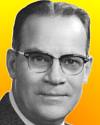
Died 14 Dec 1961 at age 57 (born 25 Feb 1904).
John J(oseph) Bittner was an American geneticist who isolated a "Bittner milk factor" (1949) from the milk of certain mice, which strongly suggested that at least some viruses can cause cancer. Using carefully bred strains of mice, he compared the role of the mother's genetic disposition to be either prone to cancer or resistant. By having the mice of one disposition act as foster mothers and nurse the babies of the other disposition, he showed that cancer-prone young could grow to be cancer resistant. The opposite was also true: babies originally cancer-resistant became cancer prone. He published this observation (1936), and went on to isolate particles of a virus-like size from the milk of cancer-prone mice that were not present in the milk of cancer-resistant mice.
John J(oseph) Bittner was an American geneticist who isolated a "Bittner milk factor" (1949) from the milk of certain mice, which strongly suggested that at least some viruses can cause cancer. Using carefully bred strains of mice, he compared the role of the mother's genetic disposition to be either prone to cancer or resistant. By having the mice of one disposition act as foster mothers and nurse the babies of the other disposition, he showed that cancer-prone young could grow to be cancer resistant. The opposite was also true: babies originally cancer-resistant became cancer prone. He published this observation (1936), and went on to isolate particles of a virus-like size from the milk of cancer-prone mice that were not present in the milk of cancer-resistant mice.
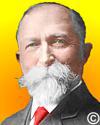
Died 14 Dec 1943 at age 91 (born 26 Feb 1852). quotes
American physician and health-food pioneer whose development of dry breakfast cereals was largely responsible for the creation of the flaked-cereal industry. In 1876, at age 24, Dr. John Harvey Kellogg became the staff physician at the Battle Creek Sanitarium, a position he would hold for 62 years. His surgical skill was admired by the Doctors Mayo. A vegetarian, he advocated low calorie diets and developed peanut butter, granola, and toasted flakes. He warned that smoking caused lung cancer decades before this link was studied. Kellogg was an early advocate of exercise. It was his brother, William K. Kellogg who sweetened the flakes with malt, and began commercial production as the Battle Creek Toasted Corn Flake Company (1906).
American physician and health-food pioneer whose development of dry breakfast cereals was largely responsible for the creation of the flaked-cereal industry. In 1876, at age 24, Dr. John Harvey Kellogg became the staff physician at the Battle Creek Sanitarium, a position he would hold for 62 years. His surgical skill was admired by the Doctors Mayo. A vegetarian, he advocated low calorie diets and developed peanut butter, granola, and toasted flakes. He warned that smoking caused lung cancer decades before this link was studied. Kellogg was an early advocate of exercise. It was his brother, William K. Kellogg who sweetened the flakes with malt, and began commercial production as the Battle Creek Toasted Corn Flake Company (1906).
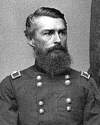
Died 14 Dec 1905 at age 88 (born 26 Mar 1817).
American civil engineer, manufacturer and inventor, known especially for his work on the Hoosac Tunnel in Massachusetts. He designed and patented his Haupt Truss configuration in 1839. His greatest achievement came as Chief of construction and transportation for the military railroad system for the Union Army in the Civil War. Haupt supervised the rebuilding of bridges, restoration of track, integration of the railroad network, and the scheduling of shipments, He facilitated the rapid movement of troops and supplies that gave the Federal government a vitally important strategic advantage over the Confederacy. The systemization of the military railroads also provided an impetus for their postwar unification.
American civil engineer, manufacturer and inventor, known especially for his work on the Hoosac Tunnel in Massachusetts. He designed and patented his Haupt Truss configuration in 1839. His greatest achievement came as Chief of construction and transportation for the military railroad system for the Union Army in the Civil War. Haupt supervised the rebuilding of bridges, restoration of track, integration of the railroad network, and the scheduling of shipments, He facilitated the rapid movement of troops and supplies that gave the Federal government a vitally important strategic advantage over the Confederacy. The systemization of the military railroads also provided an impetus for their postwar unification.
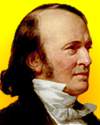
Died 14 Dec 1873 at age 66 (born 28 May 1807). quotes
Jean Louis Rodolphe Agassiz was a Swiss-American naturalist and geologist who made revolutionary contributions to the study of natural science with landmark work on glacier activity and extinct fishes. Agassiz began his work in Europe, having studied at the University of Munich and then as chair in natural history in Neuchatel in Switzerland. While there he published his landmark multi-volume description and classification of fossil fish. He remained as a staunch creationist, and opposed Darwin’s theory of evolution. In 1846 Agassiz came to the U.S. to lecture before Boston’s Lowell Institute. Offered a professorship of Zoology and Geology at Harvard in 1848, he decided to stay, becoming a citizen in 1861. His innovative teaching methods altered the character of natural science education in the U.S.
Jean Louis Rodolphe Agassiz was a Swiss-American naturalist and geologist who made revolutionary contributions to the study of natural science with landmark work on glacier activity and extinct fishes. Agassiz began his work in Europe, having studied at the University of Munich and then as chair in natural history in Neuchatel in Switzerland. While there he published his landmark multi-volume description and classification of fossil fish. He remained as a staunch creationist, and opposed Darwin’s theory of evolution. In 1846 Agassiz came to the U.S. to lecture before Boston’s Lowell Institute. Offered a professorship of Zoology and Geology at Harvard in 1848, he decided to stay, becoming a citizen in 1861. His innovative teaching methods altered the character of natural science education in the U.S.
Louis Agassiz: A Life in Science, by Edward Lurie. - book suggestion.
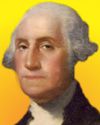
Died 14 Dec 1799 at age 67 (born 22 Feb 1732). quotes
American surveyor, military leader and president who was an eager student of mathematics in his youth, teaching himself geometry and trigonometry. This led to his early career as a surveyor, proficient at drafting, mapmaking, and designing tables of data. Surveying let him explore regions of Virgina, and earn income to be a landowner by age 19. Mathematics courses in early American education included applications in surveying. For example, it was part of state law in Massachusetts (1827) that any locality with 500 families should have a master capable of instructing “geometry, surveying and algebra.” Thus, long before that law, in a less-known aspect of his life, Washington was equipped with a technical education of service to his community—although he is most famous for fighting in the Revolutionary war and becoming the the first President of the U.S.A.«
American surveyor, military leader and president who was an eager student of mathematics in his youth, teaching himself geometry and trigonometry. This led to his early career as a surveyor, proficient at drafting, mapmaking, and designing tables of data. Surveying let him explore regions of Virgina, and earn income to be a landowner by age 19. Mathematics courses in early American education included applications in surveying. For example, it was part of state law in Massachusetts (1827) that any locality with 500 families should have a master capable of instructing “geometry, surveying and algebra.” Thus, long before that law, in a less-known aspect of his life, Washington was equipped with a technical education of service to his community—although he is most famous for fighting in the Revolutionary war and becoming the the first President of the U.S.A.«
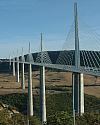
In 2004, the Viaduc de Millau (Millau Viaduct) was opened, bridging the River Tarn in Southern France. The Millau Viaduct, designed by Sir Norman Foster, is the longest cable-stayed bridge in the world. Taller than the Eiffel Tower, the tallest pylon is 340m high, making it the world's highest road bridge. The roadway carries the A75 motorway from Clermont-Ferraud south to Beziers, crosses 2.5-km and rises 270m above the valley. Before the bridge, the motor route through the town of Millau suffered continual traffic jams, but the bridge shortened the journey by 100 km and saved 4 hours of driving time. Construction began 10 Oct 2001. It has a steel deck, rather than concrete roadbed.«
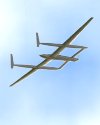
In 1986, Voyager, the experimental aircraft piloted by Dick Rutan and Jeana Yeager, took off from Edwards Air Force Base in California on the first non-stop, non-refueled flight around the world. The trip took nine days. They piloted the aircraft from a cramped 7.5-ft long , 3.3-ft wide and under 3-ft. tall cockpit. Voyager's takeoff weight was more than 10 times the structural weight, but its drag was lower than almost any other powered aircraft. The aircraft's design and light-weight structural materials allowed it to carry an unprecedented amount of fuel. During its 25,000 mile flight, Voyager flew at an average speed of 115.8 mph. This flight nearly doubled the previous distance record set in 1962 by a USAF/Boeing B-52H.
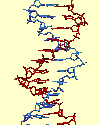
In 1967, the first synthesis of biologically active DNA in a test tube was announced at a press conference by Arthur Kornberg who had worked with Mehran Goulian at Stanford and Robert L. Sinsheimer of MIT. Kornberg chose to replicate the relatively simple DNA chain of the Phi X174 virus, which infects bacteria (a bacteriophage). It has a single strand of DNA only about 5500 nucleotide building blocks long, and with about 11 genes, it was easier to purify without breaking it up. Having isolated the Phi X174 DNA, they used the DNA from E. coli, a common bacterium in the human intestine that could copy a DNA template from any organism. The viral DNA template thus copied was found to be able to infect bacteria - it was error-free, active DNA.*
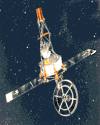
In 1962, the U.S. space probe Mariner 2 approached within about 34,000 kilometers (21,600 miles) of Venus, transmitting first time information about this planet. Launched 27 Aug 1962 from Cape Canaveral, Florida, on an Atlas- Agenda rocket, the Mariner 2 was the world's first successful interplanetary spacecraft. It sent back new information about interplanetary space and the very hot, heavy, mostly carbon dioxide atmosphere. The temperature was found to be about 500 ºC (900 ºF). Also for the first time, the spacecraft's solar wind experiment measured the density, velocity, composition and variation over time of the solar wind. It discovered that Venus lacks a strong magnetic field and radiation belts. Contact was lost 3 Jan 1963.

In 1933, Ernest Rutherford suggested the names diplogen for the newly discovered heavy hydrogen isotope and diplon for its nucleus. He presented these ideas in the Discussion on Heavy Hydrogen at the Royal Society. For ordinary hydrogen, the lightest of the atoms, having a nuclues of a sole proton, he coined a related name: haplogen. (Greek: haploos, single; diploos, double.) In 1931, Harold Urey had discovered small quantities of atoms of heavy hydrogen wherever ordinary hydrogen occurred. The mass of its nucleus was double that of ordinary hydrogen. This hydrogen-2 is now called deuterium, as named by Urey (Greek: deuteros, second). Its nucleus, named a deuteron, has a neutron in addition to a proton.[ref: Proc. Roy. Soc. A, vol. 144 (1934)]

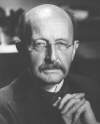
In 1900, German physicist Max Planck made public his ideas on quantum physics at a meeting of the German Physics Society, revolutionizing scientists' understanding of physics. Planck demonstrated that in certain situations energy exhibits characteristics of physical matter, something unthinkable at the time. He suggested the explanation energy exists in discrete packets, which he called “quanta.”
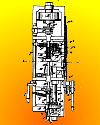
(USPTO)
In 1852, Cullen Whipple, of Providence, R.I., patented his "Mechanism for Pointing and Threading Screw-Blanks in the Same Machine" (U.S. No. 9477). His new design incorporated additional cutters in the same threading machine he had patented on 18 Aug 1842 (No. 2754, reissued 5 Mar 1850). Before machines provided a point on screws, they had blunt ends, and it was necessary to drill a starter hole. In Oct 1840, he was one of ten incorporators of The New England Screw Co. After his original thread-cutting machine, he invented another for shaving the heads of screws (patented 6 Apr 1843) and one for removing the burs left in cutting the slots in the heads (patented 19 Apr 1843). He patented seven other screw-manufacturing devices.«
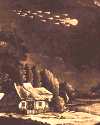
In 1807, a meteorite to be recorded in the U.S. fell at Weston (now called Easton), Conn., at 6:30 a.m., making a hole 5-ft long and 4.5-ft wide. This was the New World's first witnessed fall of a meteorite, with subsequent recovery of specimens, since the arrival of the European settlers. Yale Professor Benjamin Silliman's description of the fall and his chemical analysis of the stone meteorite, the first performed in the U.S., received much attention in the national and international press. A thirty-pound fragment of this Chondrite H4 became the nucleus of Yale University's Peabody Museum. This meteorite collection, the oldest in the country, was begun by Silliman.Image: The Fireball of 18 Aug 1873, near Newark-on-Trent, England. Etching by Henry Robinson.
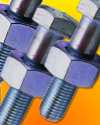
In 1798, the first U.S. patent for a nut and bolt machine was issued to inventor David Wilkinson of Rhode Island. His machine for cutting screw threads incorporated a slide-rest, with a heavy carriage supported on three rollers  Afterwards, his machine was operated by water power at Pawtucket Falls, RI. Wilson was a machinist who also produced iron forgings and castings for the cotton industry industry there, such as Slater's Mill. Wilkinson later produced a large general purpose lathe (1806), a pioneering advance that founded the American machine tool industry. [The first machine of importance for trimming the heads of nuts and bolts was invented later by Micah Rugg, who was issued U.S. patent No. 2,766 on 31 Aug 1842.]«
Afterwards, his machine was operated by water power at Pawtucket Falls, RI. Wilson was a machinist who also produced iron forgings and castings for the cotton industry industry there, such as Slater's Mill. Wilkinson later produced a large general purpose lathe (1806), a pioneering advance that founded the American machine tool industry. [The first machine of importance for trimming the heads of nuts and bolts was invented later by Micah Rugg, who was issued U.S. patent No. 2,766 on 31 Aug 1842.]«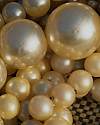
In 1656, modern-day imitation pearls were first manufactured by the Frenchman Jacquin, a rosary-bead maker. He coated the inside surface of a hollow glass bead with a mixture made of fish scales, made centuries ago by groups as diverse as ancient Egyptians and native Americans. Natural pearls have been considered extremely valuable for millennia.




