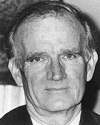
Born 10 Mar 1923; died 5 Feb 2015 at age 91.
American particle physicist who was corecipient with James Watson Cronin of the Nobel Prize for Physics in 1980 for an experiment conducted in 1964 that disproved the long-held theory that particle interaction should be indifferent to the direction of time. Working with Leo James Rainwater, Fitch had been the first to observe radiation from muonic atoms; i.e., from species in which a muon is orbiting a nucleus rather than an electron. This work indicated that the sizes of atomic nuclei were smaller than had been supposed. He went on to study kaons and in 1964 began his collaboration with James Cronin, James Christenson, and René Turley which led to the discovery of violations of fundamental symmetry principles in the decay of neutral K-mesons.
American particle physicist who was corecipient with James Watson Cronin of the Nobel Prize for Physics in 1980 for an experiment conducted in 1964 that disproved the long-held theory that particle interaction should be indifferent to the direction of time. Working with Leo James Rainwater, Fitch had been the first to observe radiation from muonic atoms; i.e., from species in which a muon is orbiting a nucleus rather than an electron. This work indicated that the sizes of atomic nuclei were smaller than had been supposed. He went on to study kaons and in 1964 began his collaboration with James Cronin, James Christenson, and René Turley which led to the discovery of violations of fundamental symmetry principles in the decay of neutral K-mesons.
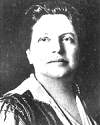
Born 10 Mar 1867; died 1 Sep 1940 at age 73.
American public health nurse who was influential in establishing a nationwide system of nurses in public schools. Known as "Angel of Henry Street" (New York City) because, for more than 40 years, Wald directed the Henry Street Visiting Nurse Service, while at the same time tirelessly opposing political and social corruption. She helped initiate revision of child labor laws, improved housing conditions in tenement districts, enactment of pure food laws, education for the mentally handicapped, and passage of enlightened immigration regulations.
American public health nurse who was influential in establishing a nationwide system of nurses in public schools. Known as "Angel of Henry Street" (New York City) because, for more than 40 years, Wald directed the Henry Street Visiting Nurse Service, while at the same time tirelessly opposing political and social corruption. She helped initiate revision of child labor laws, improved housing conditions in tenement districts, enactment of pure food laws, education for the mentally handicapped, and passage of enlightened immigration regulations.
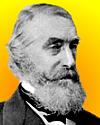
Born 10 Mar 1797; died 19 Jan 1876 at age 78. quotes
English geologist, political economist and Member of Parliament. He took an early amateur interest in geology and volcanology, and his work helped disprove the Neptunist theory that all Earth's rocks were of oceanic sedimentary origin believed by a number of early 19th century geologists. He studied volcanic features in Italy, Sicily and Germany, and especially in central France and wrote Considerations on Volcanoes (1825) and Memoir on the Geology of Central France. (1827). It was by his observations on the erosion of valleys by rivers, that he was able to extend and confirm the views of James Hutton and John Playfair. His birth name of Thompson became Scrope in 1821 when he married the daughter of the earl William Scrope.«
English geologist, political economist and Member of Parliament. He took an early amateur interest in geology and volcanology, and his work helped disprove the Neptunist theory that all Earth's rocks were of oceanic sedimentary origin believed by a number of early 19th century geologists. He studied volcanic features in Italy, Sicily and Germany, and especially in central France and wrote Considerations on Volcanoes (1825) and Memoir on the Geology of Central France. (1827). It was by his observations on the erosion of valleys by rivers, that he was able to extend and confirm the views of James Hutton and John Playfair. His birth name of Thompson became Scrope in 1821 when he married the daughter of the earl William Scrope.«
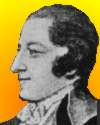
Born 10 Mar 1762; died 4 Apr 1807 at age 45.
Jeremias Benjamin Richter was a German chemist who discovered the law of equivalent proportions. He studied chemistry in his spare time while in the Prussian army (1778-1785) and afterwards while earning a Ph.D. in mathematics (1789). Richter was much influenced by Immanuel Kant, whose lectures he may have attended, in the contention that science is applied mathematics. Richter looked for mathematical relationships in chemisty, convinced that substances reacted with each other in fixed proportions. He showed such a relationship when acids and bases neutralize to produce salts (1791). Thus he was the first to establish stoichiometry, which became the basis of quantitative chemical analysis. He died of tuberculosis at age 45 years.
Jeremias Benjamin Richter was a German chemist who discovered the law of equivalent proportions. He studied chemistry in his spare time while in the Prussian army (1778-1785) and afterwards while earning a Ph.D. in mathematics (1789). Richter was much influenced by Immanuel Kant, whose lectures he may have attended, in the contention that science is applied mathematics. Richter looked for mathematical relationships in chemisty, convinced that substances reacted with each other in fixed proportions. He showed such a relationship when acids and bases neutralize to produce salts (1791). Thus he was the first to establish stoichiometry, which became the basis of quantitative chemical analysis. He died of tuberculosis at age 45 years.
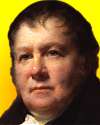
Born 10 Mar 1748; died 20 Jul 1819 at age 71. quotes
Scottish mathematician, physicist and geologist who is remembered for his axiom that two intersecting straight lines cannot both be parallel to a third straight line. His classic book, Illustrations of the Huttonian Theory of the Earth (1802) gave strong support to James Hutton’s principle of uniformitarianism, essential to a proper understanding of geology. Playfair was the first scientist to recognise that a river cuts its own valley. He cited British examples of the gradual, fluvial origins of valleys, to challenge the catastrophic theory (based on the Biblical Flood in Genesis) that was still widely accepted. He was first to attribute the relocation of loose rocks to the movement of glaciers. Playfair published texts on geometry, physics, and astronomy.« more
Scottish mathematician, physicist and geologist who is remembered for his axiom that two intersecting straight lines cannot both be parallel to a third straight line. His classic book, Illustrations of the Huttonian Theory of the Earth (1802) gave strong support to James Hutton’s principle of uniformitarianism, essential to a proper understanding of geology. Playfair was the first scientist to recognise that a river cuts its own valley. He cited British examples of the gradual, fluvial origins of valleys, to challenge the catastrophic theory (based on the Biblical Flood in Genesis) that was still widely accepted. He was first to attribute the relocation of loose rocks to the movement of glaciers. Playfair published texts on geometry, physics, and astronomy.« more
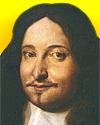
Born 10 Mar 1628; died 30 Nov 1694 at age 66. quotes
Italian physician and biologist who, in developing experimental methods to study living things, founded the science of microscopic anatomy. After Malpighi's researches, microscopic anatomy became a prerequisite for advances in the fields of physiology, embryology, and practical medicine. Drawing on the work of William Harvey, he studied the circulatory and respiratory systems of all living things and arranged them in a hierarchical system, beginning with plants, above which were insects, then fishes, then the mammals, then man. He was one of the first scientists to study such anatomical structures as the lungs, kidneys, spleen, brain, tongue, and skin at the microscopic level.
Italian physician and biologist who, in developing experimental methods to study living things, founded the science of microscopic anatomy. After Malpighi's researches, microscopic anatomy became a prerequisite for advances in the fields of physiology, embryology, and practical medicine. Drawing on the work of William Harvey, he studied the circulatory and respiratory systems of all living things and arranged them in a hierarchical system, beginning with plants, above which were insects, then fishes, then the mammals, then man. He was one of the first scientists to study such anatomical structures as the lungs, kidneys, spleen, brain, tongue, and skin at the microscopic level.

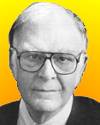
Died 10 Mar 2012 at age 84 (born 28 Jun 1927).
Frank Sherwood Rowland was an Armenian chemist who shared the 1995 Nobel Prize for Chemistry with chemists Mario Molina and Paul Crutzen for research on the depletion of the Earth's ozone layer. Working with Molina, Rowland discovered that man-made chlorofluorocarbon (CFC) propellants accelerate the decomposition of the ozonosphere, which protects the Earth from ultraviolet radiation from the sun.
Frank Sherwood Rowland was an Armenian chemist who shared the 1995 Nobel Prize for Chemistry with chemists Mario Molina and Paul Crutzen for research on the depletion of the Earth's ozone layer. Working with Molina, Rowland discovered that man-made chlorofluorocarbon (CFC) propellants accelerate the decomposition of the ozonosphere, which protects the Earth from ultraviolet radiation from the sun.
Died 10 Mar 1980 at age 83 (born 15 Aug 1896).
Sol Sheldon Glueck and his wife Eleanor were an American criminologists and researchers at Harvard Law School, a husband-and-wife team whose numerous studies of criminal behaviour and of the results of correctional treatment profoundly influenced criminal justice, both legislatively and administratively. In 1940 the Gluecks began work on their best-known study, Unraveling Juvenile Delinquency (1950). This ten-year project addressed the development of criminal careers and involved a detailed examination of 500 delinquents and 500 nondelinquents from disadvantaged neighborhoods in the Boston area. Then, for the next fifteen years, the Gluecks conducted an extensive follow-up of the original sample.
Sol Sheldon Glueck and his wife Eleanor were an American criminologists and researchers at Harvard Law School, a husband-and-wife team whose numerous studies of criminal behaviour and of the results of correctional treatment profoundly influenced criminal justice, both legislatively and administratively. In 1940 the Gluecks began work on their best-known study, Unraveling Juvenile Delinquency (1950). This ten-year project addressed the development of criminal careers and involved a detailed examination of 500 delinquents and 500 nondelinquents from disadvantaged neighborhoods in the Boston area. Then, for the next fifteen years, the Gluecks conducted an extensive follow-up of the original sample.
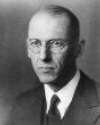
( AIP)
Died 10 Mar 1971 at age 74 (born 10 Oct 1896). quotes
Lester Halbert Germer was an American physicist who, with his colleague Clinton Joseph Davisson, conducted an experiment (1927) that first demonstrated the wave properties of the electron. They showed that a beam of electrons scattered by a crystal produces a diffraction pattern characteristic of a wave. This experiment confirmed the hypothesis of Louis-Victor de Broglie, a founder of wave mechanics, that the electron should show the properties of an electromagnetic wave as well as a particle. He also studied thermionics, erosion of metals, and contact physics.
Lester Halbert Germer was an American physicist who, with his colleague Clinton Joseph Davisson, conducted an experiment (1927) that first demonstrated the wave properties of the electron. They showed that a beam of electrons scattered by a crystal produces a diffraction pattern characteristic of a wave. This experiment confirmed the hypothesis of Louis-Victor de Broglie, a founder of wave mechanics, that the electron should show the properties of an electromagnetic wave as well as a particle. He also studied thermionics, erosion of metals, and contact physics.
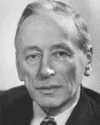
Died 10 Mar 1966 at age 77 (born 16 Jul 1888).
Dutch physicist who was awarded the Nobel Prize for Physics in 1953 for his invention of the phase-contrast microscope, an instrument that permits the study of internal cell structure without the need to stain and thus kill the cells. In addition to its capacity to render colourless and transparent objects visible in the microscope, it also enables one to detect slight flaws in mirrors, telescope lenses, and other instruments indispensable for research. In this connection, Zernike's phase-plate serves as an indicator which locates and measures small surface irregularities to a fraction of a light-wavelength.
Dutch physicist who was awarded the Nobel Prize for Physics in 1953 for his invention of the phase-contrast microscope, an instrument that permits the study of internal cell structure without the need to stain and thus kill the cells. In addition to its capacity to render colourless and transparent objects visible in the microscope, it also enables one to detect slight flaws in mirrors, telescope lenses, and other instruments indispensable for research. In this connection, Zernike's phase-plate serves as an indicator which locates and measures small surface irregularities to a fraction of a light-wavelength.
Died 10 Mar 1953 at age 92 (born 20 Apr 1860).
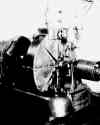
U.S. inventor who devised a steam turbine widely used in electric power plants and in marine propulsion. He was a patent lawyer for eight years. He patented the first U.S. gas turbine (1899). Among his other achievements, the Curtis multiple-stage steam turbine (patented 1896, sold rights to GE in 1901) required one tenth the space and weighed one eighth as much as machines it replaced. The Curtis generator was the most powerful steam turbine in the world and represented a significant advance in the capacity of steam turbines. In spite of its high-power output, this machine cost much less than contemporary reciprocating steam engine-driven generators of the same output.Image: One of Curtis's first steam turbines - 50kw.
U.S. inventor who devised a steam turbine widely used in electric power plants and in marine propulsion. He was a patent lawyer for eight years. He patented the first U.S. gas turbine (1899). Among his other achievements, the Curtis multiple-stage steam turbine (patented 1896, sold rights to GE in 1901) required one tenth the space and weighed one eighth as much as machines it replaced. The Curtis generator was the most powerful steam turbine in the world and represented a significant advance in the capacity of steam turbines. In spite of its high-power output, this machine cost much less than contemporary reciprocating steam engine-driven generators of the same output.Image: One of Curtis's first steam turbines - 50kw.

Died 10 Mar 1928 at age 69 (born 1 Feb 1859).
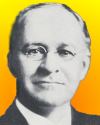
Lydia Maria DeWitt (née Adams) was an American experimental pathologist who investigated the chemotherapy of tuberculosis. Prior to 1910 she made studies in microscopic anatomy. The remainder of her career she worked in pathology, bacteriology and chemotherapeutics. She searched for dyes that would penetrate tuberculous lesions, and especially with dyes modified by the incorporation of metal atoms such as copper, gold, and mercury. These were tested in animal studies for their potential as an anti-tuberculosis drug. She also conducted influential investigations on the anatomy of the nervous system and on public health practices. She started the Women's Research Club at the University of Michigan to encourage research by women, and served as its president for several years.«
Lydia Maria DeWitt (née Adams) was an American experimental pathologist who investigated the chemotherapy of tuberculosis. Prior to 1910 she made studies in microscopic anatomy. The remainder of her career she worked in pathology, bacteriology and chemotherapeutics. She searched for dyes that would penetrate tuberculous lesions, and especially with dyes modified by the incorporation of metal atoms such as copper, gold, and mercury. These were tested in animal studies for their potential as an anti-tuberculosis drug. She also conducted influential investigations on the anatomy of the nervous system and on public health practices. She started the Women's Research Club at the University of Michigan to encourage research by women, and served as its president for several years.«
(NOAA)
Died 10 Mar 1925 at age 56 (born 19 May 1868).
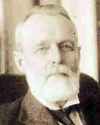
American civil engineer and geodesist who established the modern science of geodesy, and made a precise determination of the ellipsoidal shape and size of the earth (1909). The International Union of Geodesy and Geophysics adopted Hayford's calculations in 1924. This International ellipsoid has a flattening of exactly 1 part in 297. The Earth's equatorial radius is 6,378,388 m. The radius along the polar axis is then 1/297 less than that or 6,356,912 m. (Surprisingly, the U.S. did not adopt this datum.) Hayford's theory of isostasy gave that the pressure exerted by the earth's crust is approximately the same over the entire globe, regardless of the nature of the surface (for example, lowlands or mountains). With modification, this theory is now used to explain phenomena within the crust. At the time of his death he was investigating the problems connected with evaporation and the water level of the Great Lakes.
American civil engineer and geodesist who established the modern science of geodesy, and made a precise determination of the ellipsoidal shape and size of the earth (1909). The International Union of Geodesy and Geophysics adopted Hayford's calculations in 1924. This International ellipsoid has a flattening of exactly 1 part in 297. The Earth's equatorial radius is 6,378,388 m. The radius along the polar axis is then 1/297 less than that or 6,356,912 m. (Surprisingly, the U.S. did not adopt this datum.) Hayford's theory of isostasy gave that the pressure exerted by the earth's crust is approximately the same over the entire globe, regardless of the nature of the surface (for example, lowlands or mountains). With modification, this theory is now used to explain phenomena within the crust. At the time of his death he was investigating the problems connected with evaporation and the water level of the Great Lakes.
Died 10 Mar 1921 (born 1852).
American mathematician and physicist who, as assistant to Thomas Edison, contributed to the development of the American electric industry. Upton was the best educated of Edison's Menlo Park assistants. He was recruited by investors who felt it couldn't hurt to supplement Edison's wizardry with some advanced scientific training. He joined Edison in 1878, working at Edison's Menlo Park laboratory on mathematical problems relating to the development of the light bulb, the watt-hour meter and large dynamos. He later became a partner and general manager of the Edison Lamp Company (est. 1880). Upton's articles for Scientific American and Scribner's Monthly introduced many of Edison's inventions to the public.
American mathematician and physicist who, as assistant to Thomas Edison, contributed to the development of the American electric industry. Upton was the best educated of Edison's Menlo Park assistants. He was recruited by investors who felt it couldn't hurt to supplement Edison's wizardry with some advanced scientific training. He joined Edison in 1878, working at Edison's Menlo Park laboratory on mathematical problems relating to the development of the light bulb, the watt-hour meter and large dynamos. He later became a partner and general manager of the Edison Lamp Company (est. 1880). Upton's articles for Scientific American and Scribner's Monthly introduced many of Edison's inventions to the public.
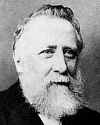
Died 10 Mar 1900 at age 61 (born 6 Aug 1838).
British meteorologist who devoted his life's career to improving meteorological records, by raising measurement standards for accuracy and uniformity, and broadening the coverage with more reporting stations (increasing their number from just 168 to eventually 3,500 before he died). He had a special interest in rainfall. Within four years of his election to Royal Meteorological Society (25 Mar 1856) at age 17 years old, he had established the British Rainfall Organization (1860). From that year on, he prepared 39 annual rainfall reports (1860-98). Symons's Monthly Meteorological Magazine first appeared in 1866. His writings numbered hundreds of articles and several books. He amassed his own library of meterological books, including many of historial value, forming the UK's most comprehensive collection.«
British meteorologist who devoted his life's career to improving meteorological records, by raising measurement standards for accuracy and uniformity, and broadening the coverage with more reporting stations (increasing their number from just 168 to eventually 3,500 before he died). He had a special interest in rainfall. Within four years of his election to Royal Meteorological Society (25 Mar 1856) at age 17 years old, he had established the British Rainfall Organization (1860). From that year on, he prepared 39 annual rainfall reports (1860-98). Symons's Monthly Meteorological Magazine first appeared in 1866. His writings numbered hundreds of articles and several books. He amassed his own library of meterological books, including many of historial value, forming the UK's most comprehensive collection.«
Died 10 Mar 1888 at age 42 (born 20 Mar 1845).
Persian-American archaeologist who, though self-taught, was one of the first American women in the field, and became an internationally recognized authority on ancient Greek and Roman sculpture. She spoke Syriac, Arabic, French, German, and Italian and pursued an interest in the study of languages in classical literature. By 1873 she changed her focus to classical archeology, and subsequently became one of the foremost archeologists of her time. In Rome (1876-78) she gave parlour lectures to ladies on Greek and Roman sculpture, and also them to the museums. She was given aid and encouragement by many of the leading European archeologists. Her book, A History of Ancient Sculpture, was one of the first in the field by an American.«
Persian-American archaeologist who, though self-taught, was one of the first American women in the field, and became an internationally recognized authority on ancient Greek and Roman sculpture. She spoke Syriac, Arabic, French, German, and Italian and pursued an interest in the study of languages in classical literature. By 1873 she changed her focus to classical archeology, and subsequently became one of the foremost archeologists of her time. In Rome (1876-78) she gave parlour lectures to ladies on Greek and Roman sculpture, and also them to the museums. She was given aid and encouragement by many of the leading European archeologists. Her book, A History of Ancient Sculpture, was one of the first in the field by an American.«
A History of Ancient Sculpture, by Lucy M. Mitchell. - book suggestion.
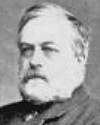
Died 10 Mar 1882 at age 52 (born 5 Mar 1830).
Sir C(harles) Wyville Thomson was a Scottish naturalist who was one of the first marine biologists to describe life in the ocean depths. He led the famous 110,224-km (68,890 mile) scientific expedition of HMS Challenger in (1872-6) which trawled the depths of the oceans for new forms of life. This was the world's first foray into big science. The Expedition was to circumnavigate the world in the steam corvette, HMS Challenger, with a goal, as resolved by the British Association (1871) of "carrying the physical and biological Exploration of the deep-sea into all the great oceanic centres". The extensive biological collections, together with soundings, bottom samples, and chemical and physical observations, presented the first broad view of the character of the oceans.
Sir C(harles) Wyville Thomson was a Scottish naturalist who was one of the first marine biologists to describe life in the ocean depths. He led the famous 110,224-km (68,890 mile) scientific expedition of HMS Challenger in (1872-6) which trawled the depths of the oceans for new forms of life. This was the world's first foray into big science. The Expedition was to circumnavigate the world in the steam corvette, HMS Challenger, with a goal, as resolved by the British Association (1871) of "carrying the physical and biological Exploration of the deep-sea into all the great oceanic centres". The extensive biological collections, together with soundings, bottom samples, and chemical and physical observations, presented the first broad view of the character of the oceans.
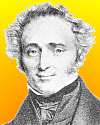
Died 10 Mar 1874 at age 83 (born 9 Feb 1791).
French pathologist, anatomist, and physician who wrote several important works on pathological anatomy. He was essentially a researcher and experimenter. He was not known for his abilities as a clinician or teacher, but gained notoriety from the illustrations contained in his chief work Anatomie pathologique du corps humain (1828-1842) and the Traité d'anatomie pathologique générale (1849-1864). He was the first to describe multiple sclerosis, and gave an account of progressive muscular atrophy (sometimes called Cruveilhier's atrophy or paralysis). His injections of mercury into blood vessels and bronchial systems made possible the concepts of embolism and infarction developed by Virchow.
French pathologist, anatomist, and physician who wrote several important works on pathological anatomy. He was essentially a researcher and experimenter. He was not known for his abilities as a clinician or teacher, but gained notoriety from the illustrations contained in his chief work Anatomie pathologique du corps humain (1828-1842) and the Traité d'anatomie pathologique générale (1849-1864). He was the first to describe multiple sclerosis, and gave an account of progressive muscular atrophy (sometimes called Cruveilhier's atrophy or paralysis). His injections of mercury into blood vessels and bronchial systems made possible the concepts of embolism and infarction developed by Virchow.
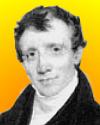
1825
Died 10 Mar 1873 at age 76 (born 15 Aug 1796).
American botanist and chemist known for his extensive studies of North American flora. The first professional botanist in the New World, Torrey published extensively on the North American flora, advocated the "natural system" of classification that was replacing Linnaeus' artifical system, and collaborated for many years with his student Asa Gray (who was to become an important botanist). Torrey never was able to make a living from botany and worked (among other things) as a freelance chemical analyst. Unidentified plants collected on government expeditions to the western states were sent to him for study, however, as a foremost authority of his time. A genus of evergreen trees, Torreya, is named for him.
American botanist and chemist known for his extensive studies of North American flora. The first professional botanist in the New World, Torrey published extensively on the North American flora, advocated the "natural system" of classification that was replacing Linnaeus' artifical system, and collaborated for many years with his student Asa Gray (who was to become an important botanist). Torrey never was able to make a living from botany and worked (among other things) as a freelance chemical analyst. Unidentified plants collected on government expeditions to the western states were sent to him for study, however, as a foremost authority of his time. A genus of evergreen trees, Torreya, is named for him.

Arc-welding rod
English chemist who discovered an element he called columbium in 1801, while analyzing columbite, a complex mineral in the Hans Sloane Collection of the British Museum. (Sloane had received the black rock decades earlier from the grandson of mineral collector, John Winthrop (1606-76), Connecticut’s first governor, who found it in a spring near his home.) Hatchett detected, but did not isolate, the new element. German chemist, Heinrich Rose rediscovered it forty years later, and named it niobium. The metal itself was first separated in 1864, when its chloride was reduced by heating in a hydrogen atmosphere. Niobium is a metal that burns when heated in air and is used in arc-welding rods.«
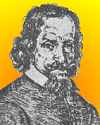
Died 10 Mar 1668 (born 1604).
German-Dutch chemist, sometimes called the German Boyle; i.e., the German father of chemistry. Glauber supported himself by selling secret chemicals and medicinals. He prepared hydrochloric acid from common salt and sulphuric acid and pointed out the virtues of the residue, sodium sulphate - sal mirabile, or Glauber's salt. He also noted the formation of nitric acid from potassium nitrate and sulphuric acid. Glauber prepared many substances, made useful observations on dyeing, and described the preparation of tartar emetic. He urged that Germany's natural resources be developed and gave examples of such developments.[EB gives date of death 10 Mar 1668. DSB gives Mar 1670.] more
German-Dutch chemist, sometimes called the German Boyle; i.e., the German father of chemistry. Glauber supported himself by selling secret chemicals and medicinals. He prepared hydrochloric acid from common salt and sulphuric acid and pointed out the virtues of the residue, sodium sulphate - sal mirabile, or Glauber's salt. He also noted the formation of nitric acid from potassium nitrate and sulphuric acid. Glauber prepared many substances, made useful observations on dyeing, and described the preparation of tartar emetic. He urged that Germany's natural resources be developed and gave examples of such developments.[EB gives date of death 10 Mar 1668. DSB gives Mar 1670.] more
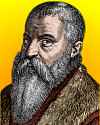
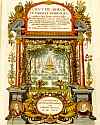
Cruydt boek
Rembert Dodoens (Dodonaeus) was a Flemish physician and botanist whose Stirpium historiae pemptades sex sive libri XXX (1583) is considered one of the foremost botanical works of the late 16th century. In this work, he divided plants into 26 groups and introduced many new families, adding a wealth of illustration. He was the first Belgian botanist of world-wide renown. He studied at Louvain and visited medical schools in France, Italy and Germany and finally became doctor and court physician to Maximillian II (1574). His Cruydt boek (1554) is beautifully illustrated. The text is in ancient Flemish, which was later translated into French, English, and Latin. Cruydt is a Flemish word meaning “spices” and other herbs used for cooking and conserving food; by extension, it also means medicinal herbs.[EB gives birth year as 1516/17.]
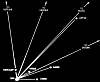
In 1982, a syzygy occurred when all nine planets aligned on the same side of the Sun. The planets are spread out over 98 degrees on this date. The four major planets, Jupiter, Saturn, Uranus, and Neptune, span an arc of some 73 degrees.
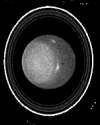
In 1977, the rings of Uranus were discovered from earth by stellar occultation experiments made when Uranus occulted (passed in front of) a star and it was noticed that there were dips in the brightness of the star before and after it passed behind the body of Uranus. This data suggested that Uranus was surrounded by at least five rings. Four more rings were suggested by subsequent occultation measurements from the Earth, and two additional ones were found by space probe Voyager 2, bringing the total to 11. Direct observations of the rings from earth had not been possible, because the rings are lost in the planet's glare as seen through terrestrial optical telescopes. Most of the rings are not quite circular, and most are not exactly in the plane of the equator.
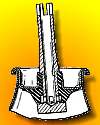
(USPTO)
In 1955, a U.S. patent (No. 2,704,172) was issued to Aaron S. Lapin for his invention of "Dispensing Valves for Gas Pressure Containers" which he designed for his Reddi-Wip whipped cream dessert topping in a spray can (1948). Soluble gases such as carbon dioxide or nitrous oxide mixed under pressure into the whipped cream causes the food to emerge from the valve as a fluffed or whipped product as the gas bubbles expand in the lesser atmospheric pressure outside the can. Lapin created the tilt-opening tubular valve such that it re-sealed after use to retain the pressurised gas inside the can. The elasticity of the seal also acted as a spring to restore the dispensing valve to the closed position when released. (He filed on 2 May 1949.)«
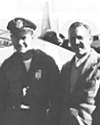
In 1948, Herbert H. Hoover became the first civilian pilot to exceed the speed of sound when he flew a Bell X-1 research aircraft at Edwards AFB, California. Instead of making its own take-off, the X-1 was loaded under the bomb bay of a B29 mother ship which carried it aloft, then released it at 20,000 feet. He reached Mach 1.065. On landing, the aircraft nosewheel failed to extend, resulting in minor damage. Hoover was a test pilot working for NACA (the National Advisory Committee on Aeronautics, the predecessor of today's NASA). A U.S. Air Force Captain, Chuck Yeager, was the first pilot to break the sound barrier and land safely a few months earlier, on 14 Oct 1947, also flying an X-1.Image: USAF Captain Chuck Yeager (left), and Herbert H. Hoover (right),
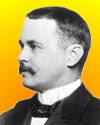
Ross
In 1923, Time magazine reported the statement “You throw your geniuses in the dust heap,” made by tropical disease expert Sir Ronald Ross to the British Science Guild in London. He drew attention to two scientists that were not employed by Great Britain despite their medical accomplishments: Waldemar M. W. Haffkine who discovered methods of inoculation against cholera and Sir David Bruce who discovered the cure for sleeping sickness. He also commented that the American, Walter Reed, who linked yellow fever transmission to mosquitoes, died without knowing how his wife and children would be provided for.«[Ref.: Time, 10 Mar 1923]
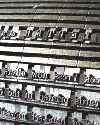
In 1903, Harry C. Gammeter, a typewriter salesman of Cleveland, Ohio patented the multigraph “duplicating machine” (No. 722,404). It was the first successful machine in the U.S. to simplify the printing processes, so that a layman could print from type. The machine met the business need to reproduce circular letters in large quantities, and yet have the appearance of having been written upon a typewriter. The machine had two drums. The printing drum carried type to give the actual impression on paper. A supply drum carried the type when not in actual use, mounted on the same axis so type could pass between them, sliding and retained in longitudinal channels. Commercial manufacture began 12 Dec 1902 by the Multigraph Sales Company of Cleveland, Ohio.
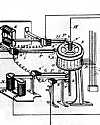
In 1891, Almon B. Strowger was issued a U.S. patent for his electromechanical switch to automate a telephone exchange (No. 447,918). Strowger did not invent the idea of automatic switching (it was first invented in 1879 by Connolly and McTigthe) but Strowger was the first to put it to effective use. His selector used electromagnets and pawls to move a wiper (with contacts on the end) vertically and around a bank of many other contacts, able to make a connection with any one of them. Strowger formed his company, Strowger Automatic Telephone Exchange, in Oct 1891.
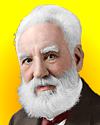
In 1876, Alexander Graham Bell made what was, in effect, the first telephone call. His assistant, Thomas Watson, located in an adjoining room in Boston, heard Bell's voice over the experimental device say to him, "Mr. Watson, come here. I want you." This was Bell's first successful experiment with the telephone, which is recorded in the 10 Mar entry of his Lab Notebook. That same day, an ebullient Bell wrote his father of his "great success" and speculated that "the day is coming when telegraph [phone] wires will be laid on to houses just like water and gas - and friends converse with each other without leaving home." Bell had received the first telephone patent three days before. Later that year, Bell succeeded in making a phone call over outdoor lines.(NPR audio)
In 1869, Robert Tanner Freeman became the first African-American to receive a degree in the field of dentistry. He earned it at the Dental School of Harvard University (founded 1867), where he had been accepted upon the recommendation of the school’s first Dean, Dr. Nathan C. Keep. Harvard decided it would “know no distinction of nativity or color in admitting students,” establishing a tradition of inclusion, not exclusion. Thus only four years after the Civil War ended, Dr. Freeman, son of enslaved parents, graduated in the school’s first class of six students. Sadly, he died four years later from a water-borne disease, on 10 Jun 1873, aged about 26 or 27. (His date of birth is unknown, c. 1846).«
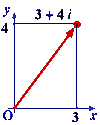
In 1797, the concept of a geometrical interpretation of complex numbers was submitted by Caspar Wessel in a paper to a meeting of the Royal Danish Academy of Sciences. He represented complex numbers as points in a Cartesian plane, with the real portion of the number on the x axis and the imaginary part on the y axis. This was also independently devised a few years later, by Jean-Robert Argand, an amateur mathematician who self-published his ideas in an anonymous monograph (1806). Through publicity generated when Argand came forward and identified himself as the author, it was his name that has the lasting association with the Argand diagram.«
In 1791, John Stone of Concord, Mass., patented the pile driver, which he called a "driving pile for bridges." Over fifty years later, on 26 Jun 1847, a steam pile driver was patented in the U.S. by James Naysmyth of Patricroft, England (No. 5,172).
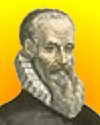
In 1553, Ambroise Paré published a second edition of his Method of Curing Wounds Made by Arquebus and Arrows (“La manière de traicter les playes faictes tant par harquebutes que par flèches”) which he had first published in 1545 to popularize a revolutionary method he had discovered to treat the new medical problem of gunshot wounds. During the siege of Turin (1536-37), having run out of the oil used to cauterize wounds in the conventional way, Paré turned instead to simple dressings and soothing ointment, and immediately noted the improved condition of his patients. In his career, Paré wrote several important medical works which advanced the art of surgery, for which he became known as “the father of modern surgery.” more
more
more Ambroise Pare: Surgeon of the Renaissance, by Wallace B. Hamby. - book suggestion.




