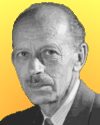
Born 15 Nov 1888; died 21 Aug 1957 at age 68.
Harald Ulrik Sverdrup was a Norwegian meteorologist and oceanographer known for his studies of the physics, chemistry, and biology of the oceans. He explained the equatorial countercurrents and helped develop the method of predicting surf and breakers. As scientific director of Roald Amundsen's polar expedition on Maud (1918-1925), Sverdrup worked extensively on meteorology, magnetics, atmospheric electricity, physical oceanography, and tidal dynamics on the Siberian shelf, and even on the anthropology of Chukchi natives. In 1953, Sverdrup quantified the concept of "critical depth", explaining the onset of the spring phytoplankton bloom in newly stratified water columns.
Harald Ulrik Sverdrup was a Norwegian meteorologist and oceanographer known for his studies of the physics, chemistry, and biology of the oceans. He explained the equatorial countercurrents and helped develop the method of predicting surf and breakers. As scientific director of Roald Amundsen's polar expedition on Maud (1918-1925), Sverdrup worked extensively on meteorology, magnetics, atmospheric electricity, physical oceanography, and tidal dynamics on the Siberian shelf, and even on the anthropology of Chukchi natives. In 1953, Sverdrup quantified the concept of "critical depth", explaining the onset of the spring phytoplankton bloom in newly stratified water columns.
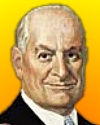
Born 15 Nov 1885; died 21 Apr 1962 at age 76.
British aircraft designer who built the Handley Page 0/400, the world's first twin-engine bomber for the Royal Flying Corps, one of the largest planes used in WW I, which carried out their first large-scale bombing raids on enemy military installations and submarine bases in Nov 1916. By 1918, he had produced a four-engine bomber that could attack the industrial zones of the Saar and the Ruhr in Germany. In 1930, he produced the first 40-seat civilian airliner, the Hercules. For WW II, Page returned to producing military aircraft, the most important being the Halifax bomber. The government purchased 7,000 of these planes. He was knighted for his contribution to the war effort. After the war Page designed the four-engine jet bomber, the Victor.
British aircraft designer who built the Handley Page 0/400, the world's first twin-engine bomber for the Royal Flying Corps, one of the largest planes used in WW I, which carried out their first large-scale bombing raids on enemy military installations and submarine bases in Nov 1916. By 1918, he had produced a four-engine bomber that could attack the industrial zones of the Saar and the Ruhr in Germany. In 1930, he produced the first 40-seat civilian airliner, the Hercules. For WW II, Page returned to producing military aircraft, the most important being the Halifax bomber. The government purchased 7,000 of these planes. He was knighted for his contribution to the war effort. After the war Page designed the four-engine jet bomber, the Victor.
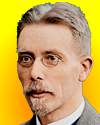
Born 15 Nov 1874; died 13 Sep 1949 at age 74. quotes
Schack August Steenberg Krogh was a Danish physiologist and zoologist who received the Nobel Prize for Physiology or Medicine in 1920 for his discovery of the motor-regulating mechanism of capillaries (small blood vessels). Working with frogs, which he injected with Indian ink shortly before killing, he showed that in sample areas of resting muscle the number of visible (stained) capillaries was about 5 per square millimeter; in stimulated muscle, however, the number was increased to 190 per square millimeter. From this he concluded that there must be a physiological mechanism to control the action of the capillaries in response to the needs of the body (not just flow due to heart beating). Krogh’s research linked exercise physiology with nutrition and metabolism.
Schack August Steenberg Krogh was a Danish physiologist and zoologist who received the Nobel Prize for Physiology or Medicine in 1920 for his discovery of the motor-regulating mechanism of capillaries (small blood vessels). Working with frogs, which he injected with Indian ink shortly before killing, he showed that in sample areas of resting muscle the number of visible (stained) capillaries was about 5 per square millimeter; in stimulated muscle, however, the number was increased to 190 per square millimeter. From this he concluded that there must be a physiological mechanism to control the action of the capillaries in response to the needs of the body (not just flow due to heart beating). Krogh’s research linked exercise physiology with nutrition and metabolism.
August and Marie Krogh: Lives in Science, by Bodil Schmidt-Nielsen. - book suggestion.
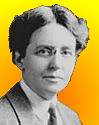
Born 15 Nov 1873; died 22 Feb 1945 at age 71.
American physician who was a pioneer in public health and child welfare in the United States. She was appointed assistant to the Commissioner for Public Health of New York City, later heading the city's Department of Health in 'Hell's Kitchen' for 25 years. Convinced of the value of well-baby care and the prevention of disease, in 1908 she founded the Bureau of Child Hygiene after visiting mothers on the lower east side, thus helping to decrease the death rate by 1200 from the previous year. Her work made the New York City infant mortality rate the lowest in the USA or Europe at the time. She set up free milk clinics, licensed midwives, and taught the use of silver nitrate to prevent blindness in newborns.
American physician who was a pioneer in public health and child welfare in the United States. She was appointed assistant to the Commissioner for Public Health of New York City, later heading the city's Department of Health in 'Hell's Kitchen' for 25 years. Convinced of the value of well-baby care and the prevention of disease, in 1908 she founded the Bureau of Child Hygiene after visiting mothers on the lower east side, thus helping to decrease the death rate by 1200 from the previous year. Her work made the New York City infant mortality rate the lowest in the USA or Europe at the time. She set up free milk clinics, licensed midwives, and taught the use of silver nitrate to prevent blindness in newborns.
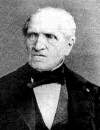
Born 15 Nov 1793; died 18 Dec 1880 at age 87. quotes
French mathematician who, independently of the Swiss-German mathematician Jakob Steiner, elaborated the theory of modern projective geometry, the study of the properties of a geometric line or plane figure that remain unchanged when the figure is projected onto a plane from a point not on either the plane or the figure. In his text Traité de géométrie in 1852 Chasles discusses cross ratio, pencils and involutions, all notions which he introduced. Chasles was the victim of a celebrated fraud paying the equivalent of £20,000 for various letters from famous men of science and others which turned out to be forged.
French mathematician who, independently of the Swiss-German mathematician Jakob Steiner, elaborated the theory of modern projective geometry, the study of the properties of a geometric line or plane figure that remain unchanged when the figure is projected onto a plane from a point not on either the plane or the figure. In his text Traité de géométrie in 1852 Chasles discusses cross ratio, pencils and involutions, all notions which he introduced. Chasles was the victim of a celebrated fraud paying the equivalent of £20,000 for various letters from famous men of science and others which turned out to be forged.
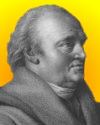
Born 15 Nov 1738; died 25 Aug 1822 at age 83. quotes
German-born British astronomer, the founder of sidereal astronomy for the systematic observation of the heavens. In 1773, Herschel made and began using his first telescope. With it he began a project that would continue for the rest of his life: that of systematically studying the sky. Through this study he discovered the planet Uranus, many new nebulae, clusters of stars and binary stars. Herschel hypothesized that nebulae are composed of stars, developed a theory of stellar evolution and was the first person to correctly describe the form of our Galaxy, the Milky Way. He discovered the Saturnian satellites Mimas and Enceladus (1789) and the Uranian satellites Titania and Oberon (1787). He was probably the most famous astronomer of the 18th century.
German-born British astronomer, the founder of sidereal astronomy for the systematic observation of the heavens. In 1773, Herschel made and began using his first telescope. With it he began a project that would continue for the rest of his life: that of systematically studying the sky. Through this study he discovered the planet Uranus, many new nebulae, clusters of stars and binary stars. Herschel hypothesized that nebulae are composed of stars, developed a theory of stellar evolution and was the first person to correctly describe the form of our Galaxy, the Milky Way. He discovered the Saturnian satellites Mimas and Enceladus (1789) and the Uranian satellites Titania and Oberon (1787). He was probably the most famous astronomer of the 18th century.

Died 15 Nov 2006 at age 75 (born 15 Apr 1931).
Indonesian electronics engineer who was one of the founders of the Indonesian Academy of Sciences. He is known especially for his contributions in microelectronics research, but also worked on payload instrumentation for space programs. From 1978-1983, he was the Director General of Energy, Ministry of Mining and Energy for the Indonesian government. With co-inventor Kensall D Wise, he held a US Patent (No. 3,888,708, 10 Jun 1975) for his “Method for Forming Regions of Predetermined Thickness in Silicon” for pressure sensors. It was his vision to bring integrated chip (IC) fabrication to Indonesia. Though that was not accomplished before his death, he was active in planning Bandung High Tech Valley inspired by the success of California’s Silicon Valley.«
Indonesian electronics engineer who was one of the founders of the Indonesian Academy of Sciences. He is known especially for his contributions in microelectronics research, but also worked on payload instrumentation for space programs. From 1978-1983, he was the Director General of Energy, Ministry of Mining and Energy for the Indonesian government. With co-inventor Kensall D Wise, he held a US Patent (No. 3,888,708, 10 Jun 1975) for his “Method for Forming Regions of Predetermined Thickness in Silicon” for pressure sensors. It was his vision to bring integrated chip (IC) fabrication to Indonesia. Though that was not accomplished before his death, he was active in planning Bandung High Tech Valley inspired by the success of California’s Silicon Valley.«
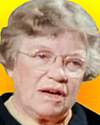
Died 15 Nov 1978 at age 76 (born 16 Dec 1901). quotes
American anthropologist whose fame rests on the quality of her scientific work, outspokenness and forceful personality. Mead is best known for her studies of the indigenous people of Oceania, including the cooperation, competition and communication between them, together with the oceanic ethnology and comparative child psychology. She first began her research in the South Pacific at age 23, as a doctoral student. This led to her best-selling book,Coming of Age in Samoa (1928). Throughout her life, she traveled in other countries doing research on various cultures, including the Arapesh, Mudugumor and Tchambuli of New Guinea. Her public lecture topics ranged widely from atomic politics to feminism.«
American anthropologist whose fame rests on the quality of her scientific work, outspokenness and forceful personality. Mead is best known for her studies of the indigenous people of Oceania, including the cooperation, competition and communication between them, together with the oceanic ethnology and comparative child psychology. She first began her research in the South Pacific at age 23, as a doctoral student. This led to her best-selling book,Coming of Age in Samoa (1928). Throughout her life, she traveled in other countries doing research on various cultures, including the Arapesh, Mudugumor and Tchambuli of New Guinea. Her public lecture topics ranged widely from atomic politics to feminism.«
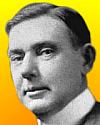
Died 15 Nov 1967 at age 88 (born 3 Mar 1879).
American biochemist who originated the letter system of naming vitamins. He discovered vitamins A, B and worked with others on vitamin D. He performed extensive research work in nutrition and growth. He was the first in the U.S. to establish a colony of white rats as laboratory animals to be the subject of his nutrition experiments. In the 1910's, he recognized that a healthy diet required certain fats, and he named the essential component "fat-soluble A," as distinct from another he named "water-soluble B." Although at first he thought each was a single compound, he later showed that they were in fact complexes. He researched how certain minerals were important as nutrients, including calcium, phosphorus, fluorine, manganese and zinc.«
American biochemist who originated the letter system of naming vitamins. He discovered vitamins A, B and worked with others on vitamin D. He performed extensive research work in nutrition and growth. He was the first in the U.S. to establish a colony of white rats as laboratory animals to be the subject of his nutrition experiments. In the 1910's, he recognized that a healthy diet required certain fats, and he named the essential component "fat-soluble A," as distinct from another he named "water-soluble B." Although at first he thought each was a single compound, he later showed that they were in fact complexes. He researched how certain minerals were important as nutrients, including calcium, phosphorus, fluorine, manganese and zinc.«
A history of nutrition: The sequence of ideas in nutrition investigations, by Elmer Verner McCollum. - book suggestion.
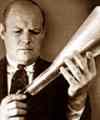
Died 15 Nov 1965 at age 64 (born 29 Jan 1901).
Allen B(alcom) Du Mont was an American engineer who perfected the first commercially practical cathode-ray tube, which was not only vitally important for much scientific and technical equipment but was the essential component of the modern television receiver. The early cathode ray tubes were imported from Germany at high cost, but they burned out after 25 or 30 hours. In the 1930's, he simplified and improved the production of cathode ray tubes lasting a thousand hours. A financially successful by-product of his television work was the cathode ray oscillograph. After WW II, Du Mont had become the industry's first millionaire, investing also in broadcasting stations. The Du Mont Broadcasting Co. he began in 1955 grew to become Metromedia, Inc.
Allen B(alcom) Du Mont was an American engineer who perfected the first commercially practical cathode-ray tube, which was not only vitally important for much scientific and technical equipment but was the essential component of the modern television receiver. The early cathode ray tubes were imported from Germany at high cost, but they burned out after 25 or 30 hours. In the 1930's, he simplified and improved the production of cathode ray tubes lasting a thousand hours. A financially successful by-product of his television work was the cathode ray oscillograph. After WW II, Du Mont had become the industry's first millionaire, investing also in broadcasting stations. The Du Mont Broadcasting Co. he began in 1955 grew to become Metromedia, Inc.
Died 15 Nov 1964 at age 62 (born 7 Mar 1902). quotes
American forester and conservationist who was a co-founder of the Wilderness Society. From 1927, and during three decades with the U.S. Forest Service, his interests included soil conservation and watershed management. Bernard wrote on these topics in two books, including the title Water, Land and People (1951), with Anthony Netboy, which the cover described as: “The dramatic picture of our growing water famines and floods, the human consequences, and the possible remedies.” Lake Bernard Frank in Derwood, Maryland, was named in honor of his work leading the organization of Rock Creek Watershed Association to restore and protect Rock Creek in Maryland and Washington, D.C. From 1960, he was a professor at Colorado State University.«[Thumbnail as attempted by A.I. from unclear tiny face image in a group photo.] more
American forester and conservationist who was a co-founder of the Wilderness Society. From 1927, and during three decades with the U.S. Forest Service, his interests included soil conservation and watershed management. Bernard wrote on these topics in two books, including the title Water, Land and People (1951), with Anthony Netboy, which the cover described as: “The dramatic picture of our growing water famines and floods, the human consequences, and the possible remedies.” Lake Bernard Frank in Derwood, Maryland, was named in honor of his work leading the organization of Rock Creek Watershed Association to restore and protect Rock Creek in Maryland and Washington, D.C. From 1960, he was a professor at Colorado State University.«[Thumbnail as attempted by A.I. from unclear tiny face image in a group photo.] more
Our National Forests, by Bernard Frank. - book suggestion.
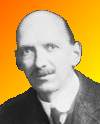
(EB)
Died 15 Nov 1959 at age 90 (born 14 Feb 1869).
Scottish physicist who shared (with Arthur H. Compton), the 1927 Nobel Prize for Physics for his invention of the Wilson cloud chamber, which became widely used in the study of radioactivity, X rays, cosmic rays, and other nuclear phenomena. His discovery was a method of rendering visible the tracks of such electrically charged particles. It is based upon the formation of clouds, which develop when sufficiently moist air is suddenly expanded, thus dropping the temperature below the dew-point. Thereafter, vapour condenses into small drops, formed round dust particles, or even, an electrically charged atomic particle. The formation of droplets is so dense that photographs show continuous tracks of particles travelling through the chamber as white lines.
Scottish physicist who shared (with Arthur H. Compton), the 1927 Nobel Prize for Physics for his invention of the Wilson cloud chamber, which became widely used in the study of radioactivity, X rays, cosmic rays, and other nuclear phenomena. His discovery was a method of rendering visible the tracks of such electrically charged particles. It is based upon the formation of clouds, which develop when sufficiently moist air is suddenly expanded, thus dropping the temperature below the dew-point. Thereafter, vapour condenses into small drops, formed round dust particles, or even, an electrically charged atomic particle. The formation of droplets is so dense that photographs show continuous tracks of particles travelling through the chamber as white lines.
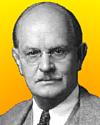
Died 15 Nov 1945 at age 81 (born 12 Jun 1864). quotes
Frank M(ichler) Chapman was an American ornithologist famous for his extensive and detailed studies of the life histories, geographic distribution, and systematic relationships of North and South American birds. He joined the American Museum of Natural History in 1888, where he spent his life. By 1920, he was the first Chairman of the newly created Department of Birds. Chapman did pioneer work on Neotropical biogeography. Sensitive to the living environment of birds and other animals, he developed the "habitat group" as a means of display in the Museum, a feature now widely adopted by other museums through the world. A leading conservationist, Chapman was a prolific author who popularized bird study and raised awareness for conservation in the U.S.
Frank M(ichler) Chapman was an American ornithologist famous for his extensive and detailed studies of the life histories, geographic distribution, and systematic relationships of North and South American birds. He joined the American Museum of Natural History in 1888, where he spent his life. By 1920, he was the first Chairman of the newly created Department of Birds. Chapman did pioneer work on Neotropical biogeography. Sensitive to the living environment of birds and other animals, he developed the "habitat group" as a means of display in the Museum, a feature now widely adopted by other museums through the world. A leading conservationist, Chapman was a prolific author who popularized bird study and raised awareness for conservation in the U.S.
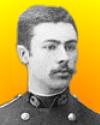
Died 15 Nov 1938 at age 75 (born 28 Aug 1863).
André-Eugène Blondel was a French physicist who invented (1893) the electromagnetic oscillograph, a device that allowed electrical researchers to observe the intensity of alternating currents. In 1894, he proposed the lumen and other new photometric units for use in photometry, based on the metre and the Violle candle. Endorsed in 1896 by the International Electrical Congress, his system is still in use with only minor modifications. Blondel was a pioneer in the high voltage long distance transport of electric power, and also contributed to developments in wireless telegraphy, acoustics, and mechanics. He proposed theories for induction motors and coupling of a.c. generators.«
André-Eugène Blondel was a French physicist who invented (1893) the electromagnetic oscillograph, a device that allowed electrical researchers to observe the intensity of alternating currents. In 1894, he proposed the lumen and other new photometric units for use in photometry, based on the metre and the Violle candle. Endorsed in 1896 by the International Electrical Congress, his system is still in use with only minor modifications. Blondel was a pioneer in the high voltage long distance transport of electric power, and also contributed to developments in wireless telegraphy, acoustics, and mechanics. He proposed theories for induction motors and coupling of a.c. generators.«
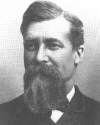
Died 15 Nov 1928 at age 85 (born 25 Sep 1843). quotes
American geologist known for his "planetesimal hypothesis". With Forest Ray Moulton in 1904, he proposed that the solar system formed after gas flares were ripped from the sun by the gravitational field of a passing star. The flares then condensed into "planetesimals," arrayed in a spiral extending from the sun, gradually accumulated material and became the planets we know today. From 1876, he was Wisconsin Geological Survey's chief geologist, moving to head the glacier division of the U.S. Geological Survey (1881). He was president of the University of Wisconsin (1887-92), and then for 26 years he was head of its geology department of the University of Chicago. He founded The Journal of Geology.
American geologist known for his "planetesimal hypothesis". With Forest Ray Moulton in 1904, he proposed that the solar system formed after gas flares were ripped from the sun by the gravitational field of a passing star. The flares then condensed into "planetesimals," arrayed in a spiral extending from the sun, gradually accumulated material and became the planets we know today. From 1876, he was Wisconsin Geological Survey's chief geologist, moving to head the glacier division of the U.S. Geological Survey (1881). He was president of the University of Wisconsin (1887-92), and then for 26 years he was head of its geology department of the University of Chicago. He founded The Journal of Geology.
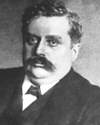
Died 15 Nov 1919 at age 52 (born 12 Dec 1866). quotes
Swiss chemist whose founding research into the structure of coordination compounds brought him the 1913 Nobel Prize for Chemistry. He demonstrated that stereochemistry was not just the property of carbon compounds, but was general to the whole of chemistry. His theory of chemical coordination (1893) recognized that many metals appeared to show variable valence and form complex compounds. Certain metals, such as cobalt and platinum, were capable through their secondary valences of joining to themselves a certain number of atoms or molecules. These were termed by Werner “coordination compounds.” and the maximum number of atoms (or “ligands” as he called them) that can be joined to the central metal is its coordination number.
Swiss chemist whose founding research into the structure of coordination compounds brought him the 1913 Nobel Prize for Chemistry. He demonstrated that stereochemistry was not just the property of carbon compounds, but was general to the whole of chemistry. His theory of chemical coordination (1893) recognized that many metals appeared to show variable valence and form complex compounds. Certain metals, such as cobalt and platinum, were capable through their secondary valences of joining to themselves a certain number of atoms or molecules. These were termed by Werner “coordination compounds.” and the maximum number of atoms (or “ligands” as he called them) that can be joined to the central metal is its coordination number.
Alfred Werner Founder of Coordination Chemistry, by George B. Kauffman. - book suggestion.
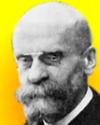
Died 15 Nov 1917 at age 59 (born 15 Apr 1858). quotes
French sociologist whose recognition as “father of sociology” rests on his pioneering works and influence on a generation of scholars. He did not engage in firsthand fieldwork, but did collate much information on tribes of Australia and New Guinea as well as Eskimos. From anthropologists, travelers and missionaries, he gathered a wealth of facts, which he organized into types and laws. His book Le Suicide is regarded as the first to make a methodological case study of an aspect of society, and shaped sociological thought as we know it today. He drew conclusions comparing suicide rates among various pairs of groups, such as soldiers or civilians. The psychological causes of suicide, he identified in four kinds: egoistic, altruistic, anomic or fatalistic.«
French sociologist whose recognition as “father of sociology” rests on his pioneering works and influence on a generation of scholars. He did not engage in firsthand fieldwork, but did collate much information on tribes of Australia and New Guinea as well as Eskimos. From anthropologists, travelers and missionaries, he gathered a wealth of facts, which he organized into types and laws. His book Le Suicide is regarded as the first to make a methodological case study of an aspect of society, and shaped sociological thought as we know it today. He drew conclusions comparing suicide rates among various pairs of groups, such as soldiers or civilians. The psychological causes of suicide, he identified in four kinds: egoistic, altruistic, anomic or fatalistic.«
A Study In Sociology Reissue Edition, by Émile Durkheim, John A. Spaulding (trans.) and George Simpson (ed.). - book suggestion.
Died 15 Nov 1848 (born 1784).
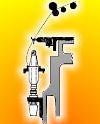
American inventor of the ring spinning machine (1828), which by the 1860s had largely replaced Samuel Crompton's spinning mule in the world's textile mills because of its greater productivity and simplicity. The ring frame is a continuous spinner, which spins yarn and winds it onto bobbins in one motion, while the mule was a discontinuous spinner, first spinning a length of yarn and then winding that length onto bobbins separately. In ring spinning, a "c"-ring travels at a high speed around a grooved circular raceway mounted on a plate, which in turn travels up and down the spinning bobbin.
American inventor of the ring spinning machine (1828), which by the 1860s had largely replaced Samuel Crompton's spinning mule in the world's textile mills because of its greater productivity and simplicity. The ring frame is a continuous spinner, which spins yarn and winds it onto bobbins in one motion, while the mule was a discontinuous spinner, first spinning a length of yarn and then winding that length onto bobbins separately. In ring spinning, a "c"-ring travels at a high speed around a grooved circular raceway mounted on a plate, which in turn travels up and down the spinning bobbin.
Died 15 Nov 1839 at age 85 (born 21 Aug 1754). quotes
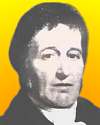
Scottish inventor who was the first to make extensive use of coal gas for illumination and a pioneer in the development of steam power. He joined James Watt and Matthew Boulton and in 1784 he was sent to supervise the installation of Boulton & Watt steam engines working pumping equipment in Cornish tin mines. While there, he tested his ideas to use the gas given off by burning coal. From an iron retort in the backyard of his home, he ran a metal tube into his living room. On 29 Jul 1792, Murdock achieved a gas flame inside the room. In 1802, Boulton installed two gas lamps outside his Soho factory. Next year, the foundry was entirely illuminated by gas. Shortly, Boulton & Watt began to sell lighting and heating equipment with Murdock as a partner in the business.
Scottish inventor who was the first to make extensive use of coal gas for illumination and a pioneer in the development of steam power. He joined James Watt and Matthew Boulton and in 1784 he was sent to supervise the installation of Boulton & Watt steam engines working pumping equipment in Cornish tin mines. While there, he tested his ideas to use the gas given off by burning coal. From an iron retort in the backyard of his home, he ran a metal tube into his living room. On 29 Jul 1792, Murdock achieved a gas flame inside the room. In 1802, Boulton installed two gas lamps outside his Soho factory. Next year, the foundry was entirely illuminated by gas. Shortly, Boulton & Watt began to sell lighting and heating equipment with Murdock as a partner in the business.
Died 15 Nov 1819 at age 70 (born 3 Nov 1749).
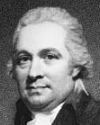
Scottish chemist and photographer who discovered the portion of air that does not support combustion, now known to be nitrogen. After letting a mouse live in a confined quantity of air until it died, he burned a candle and burned phosphorus in the same air as long as they would burn. He assumed the remaining gas was carbon dioxide, which he dissolved by passing it through a strong alkali. Yet there remained gas that was incapable of supporting respiration or combustion which he knew no longer contained oxygen or carbon dioxide. He called it “phlogisticated air,” following the phlogiston theory of Georg Stahl. It was later properly described by Antoine Lavoisier. Rutherford also designed the first maximum-minimum thermometer.*
Scottish chemist and photographer who discovered the portion of air that does not support combustion, now known to be nitrogen. After letting a mouse live in a confined quantity of air until it died, he burned a candle and burned phosphorus in the same air as long as they would burn. He assumed the remaining gas was carbon dioxide, which he dissolved by passing it through a strong alkali. Yet there remained gas that was incapable of supporting respiration or combustion which he knew no longer contained oxygen or carbon dioxide. He called it “phlogisticated air,” following the phlogiston theory of Georg Stahl. It was later properly described by Antoine Lavoisier. Rutherford also designed the first maximum-minimum thermometer.*
Died 15 Nov 1793 at age 59 (born 18 Feb 1734).
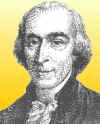
French industrial scientist who, largely through his wife's ambition, became a leader of the moderate Girondin faction of bourgeois revolutionaries during the French Revolution. Roland became an inspector general of commerce in 1780, and over the next decade he wrote a number of books on manufacturing and political economy.
French industrial scientist who, largely through his wife's ambition, became a leader of the moderate Girondin faction of bourgeois revolutionaries during the French Revolution. Roland became an inspector general of commerce in 1780, and over the next decade he wrote a number of books on manufacturing and political economy.
(EB)
Died 15 Nov 1672 at age 58 (born 15 Mar 1614).
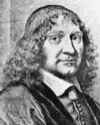
Dutch physician, chemist and physiologist who was the founder of the seventeenth century's "iatrochemical school of medicine," which related living processes to chemical reactions. Thus, Sylvius helped move medicine away from mysticism (with its "humours" of blood, phlegm and biles) and towards an approach based in physics and chemistry. Sylvius strongly supported Harvey's view of blood circulation, and viewed the body chemistry as a balance between base and acids, capable of neutralizing each other. Sylvius and his followers studied the digestive juices, with which they recognized saliva, and viewed digestion as a kind of fermenting process. He may also have organized the first university chemistry laboratory.
Dutch physician, chemist and physiologist who was the founder of the seventeenth century's "iatrochemical school of medicine," which related living processes to chemical reactions. Thus, Sylvius helped move medicine away from mysticism (with its "humours" of blood, phlegm and biles) and towards an approach based in physics and chemistry. Sylvius strongly supported Harvey's view of blood circulation, and viewed the body chemistry as a balance between base and acids, capable of neutralizing each other. Sylvius and his followers studied the digestive juices, with which they recognized saliva, and viewed digestion as a kind of fermenting process. He may also have organized the first university chemistry laboratory.
Died 15 Nov 1630 at age 58 (born 27 Dec 1571). quotes
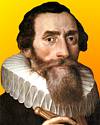
German astronomer who formulated three major laws of planetary motion which enabled Isaac Newton to devise the law of gravitation. Working from the carefully measured positions of the planets recorded by Tycho Brahe, Kepler mathematically deduced three relationships from the data: (1) the planets move in elliptical orbits with the Sun at one focus; (2) the radius vector sweeps out equal areas in equal times; and (3) for two planets the squares of their periods are proportional to the cubes of their mean distances from the sun. Kepler suggested that the tides were caused by the attraction of the moon. He believed that the universe was governed by mathematical rules, but recognized the importance of experimental verification.«
German astronomer who formulated three major laws of planetary motion which enabled Isaac Newton to devise the law of gravitation. Working from the carefully measured positions of the planets recorded by Tycho Brahe, Kepler mathematically deduced three relationships from the data: (1) the planets move in elliptical orbits with the Sun at one focus; (2) the radius vector sweeps out equal areas in equal times; and (3) for two planets the squares of their periods are proportional to the cubes of their mean distances from the sun. Kepler suggested that the tides were caused by the attraction of the moon. He believed that the universe was governed by mathematical rules, but recognized the importance of experimental verification.«
Johannes Kepler And the New Astronomy, by James R. Voelkel. - book suggestion.
Died 15 Nov 1280 (born 1193). quotes
Albert, Count von Bollstädt a.k.a Abertus Magnus, Albert the Great was a German scholar and theologian who championed Aristotle's philosophy, but adapted it to the medieval outlook, and held that there was merit in the addition of personal observation. He was keen on botany, and throughout his travels on church business would contribute to that science. As a skeptic of alchemism, he nevertheless conducted experiments on the possibility of transmutation of the elements. Among his writings are such descriptions of the element arsenic that he is sometimes credited for its discovery, though it was probably known earlier in an impure form. He assembled much information on minerals and noted the existence of fossils. The thought the spots seen on the moon were surface features, and that the Milky Way wase a dense swath of stars. Centuries later, in 1931, Pius XI proclaimed him a Doctor of the Church.«
Albert, Count von Bollstädt a.k.a Abertus Magnus, Albert the Great was a German scholar and theologian who championed Aristotle's philosophy, but adapted it to the medieval outlook, and held that there was merit in the addition of personal observation. He was keen on botany, and throughout his travels on church business would contribute to that science. As a skeptic of alchemism, he nevertheless conducted experiments on the possibility of transmutation of the elements. Among his writings are such descriptions of the element arsenic that he is sometimes credited for its discovery, though it was probably known earlier in an impure form. He assembled much information on minerals and noted the existence of fossils. The thought the spots seen on the moon were surface features, and that the Milky Way wase a dense swath of stars. Centuries later, in 1931, Pius XI proclaimed him a Doctor of the Church.«

In 1999, Evergreen Nylon Recycling facility began operation in Augusta, Georgia., as a joint venture with Honeywell Intl Inc. Honeywell patented the selective pyrolysis process to depolymerize nylon 6 waste carpet into caprolactam, the raw material of nylon 6. In the absence of oxygen, controlled heating of carpet (or other nylon 6 waste material) breaks down each resin into its monomer components, each within its own range of temperature, thus separating the resins. Compared to making virgin caprolactam, it was expected that recycled product would offer the same quality at less than half the cost, need only one-third the energy, save petroleum and keep waste carpet out of landfills. The plant closed 29 Aug 2001 due to unanticipated costs.«
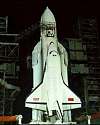
In 1988, the Soviet Union launched its first space shuttle, Buran ("Snowstorm"), unmanned, on its first and only orbital flight. Russia authorized its shuttle program in 1976 in response to the U.S. Space Shuttle program. Buran's only orbital flight was unmanned, as the life support system had not been checked out and the CRT displays had no software installed. The Buran was launched on the powerful Energiya booster into a 250 km orbit. Its computer's memory limitations limited the flight to 2 orbits in 206-min. before reentry and a safe automatic touchdown at Tyuratum. Afterwards, the project's funding was cut, and eventually cancelled (1993). Two other partially completed Buran shuttles were dismantled at their production site in Nov 1995.
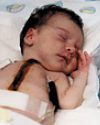
In 1984, Baby Fae died, an infant born a month before, who had lived for 20 days with a transplanted walnut-sized young-baboon heart. At birth, she had been diagnosed with an almost always fatal heart deformity. Dr. Leonard L. Bailey, a heart surgeon at Loma Linda University Medical Center, California, suggested the experimental xenotransplant to the mother. By 1977, three such animal-heart transplants into adults had provided less than four days of life at best. However, Bailey believed the infant's underdeveloped immune system would be less likely to reject alien tissue, and a new drug cyclosporine would help. The heart sustained the baby for 20 days before she died of complications, but the heart itself had not been rejected.«
(USPTO)
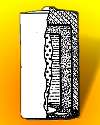
In 1960, a U.S. patent was issued for an alkaline dry-cell to P.A. Marsal, Karl Kordesch and Lewis F. Urry who assigned it to the Union Carbide Corporation, the manufacturer of Eveready batteries (No. 2,960,558). Compared to the existing carbon-zinc dry-cells, it offered an appreciable increase in life-span and efficiency during heavy continuous drains. Its construction used an alkaline electrolyte, manganese dioxide as depolarizer, a zinc powder-gel anode, and certain additives such including mercury and electrolyte-creep inhibitors. The patent gave practical details for commercial production. The patent claimed that whereas four cells in series of the carbon-zinc type gave 4.5 volts to power a 1.25-amp bulb for 45-min to 1-hr, the new alkaline design gave good brilliance after 6 to 7 hours.«
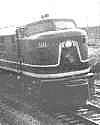
In 1948 the first gas-turbine electric locomotive in the U.S. was track-tested in Erie, Pa. Preliminary road tests of the 4800 hp Alco-GE locomotive included hauling of 85 loaded freight cars at speeds as high as 65 mph. In a gas-turbine engine, air is drawn through a compressor into several combustion chambers. Fuel (bunker "C" oil) is injected and the mixture burns, raising the temperature of the compressed air. Resulting gases expand and move at great velocity against the turbine blades, turning the shaft which drives both the power plant compressor and a generator supplying electric power to eight traction motors driving the wheels. The gas-turbine engine was originally designed for aircraft, in which it gives forward thrust from the reaction of its exhaust stream.
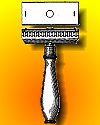
(USPTO)
In 1904, King Camp Gillette was issued a U.S. patent for his invention of a safety razor using disposable blades (No. 775,134). He began working an idea to invent something that everyone would use, and in 1895 produced a crude version of a disposable razor blade. It took another six years to refine his invention, then he filed an application for a U.S. patent on 3 Dec 1901. The blade was made from very thin sheet-steel which is placed in a holder to provide a rigid backing and support. By being very thin - 0.006" - just thick enough to take a suitable edge - the blades required little material and could be ground both very quickly and easily. Further, their low cost enabled the user to buy them in quantity and simply throw them away when dull. Two sides were finished with cutting edges thus doubling their life.«
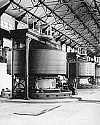
In 1896, the first long-distance transmission of hydroelectricity from the Niagara Falls Power Company flowed to Buffalo, N.Y., 26 miles away. Although some small-scale use of the water power of the Niagara Falls occurred earlier, this company made the first large-scale commercial utilization. On 26 Aug 1895, it began supplying power to an aluminium production plant. The power company originated 31 Mar 1886 (though incorporated under a different name). Ground was broken on 4 Oct 1890. By 24 Oct 1893, a contract had been made with the Westinghouse Electric and Mfg. Co. for three 5,000 h.p. generators (two-phase 2,200 volts at 25 cycles/sec). The first 5,000 h.p. turboalternator unit was completed within 18 months.
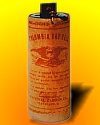
In 1887, German scientist, Dr. Carl Gassner, was issued a U.S. patent (No. 373,064), the first in the U.S. for a “dry” cell. Gassner had already patented his invention in Germany (No. 37,758) on 8 Apr 1886, and also in Austria, Belgium, England, France and Hungary in the same year. The sealed zinc shell which contained all the chemicals was also the negative electrode. Later, he improved the shelf life of the battery by adding zinc chloride to the electrolyte to reduce corrosion of the zinc shell. Gassner's battery was much like the carbon-zinc, general-purpose batteries sold today. By 1896, the National Carbide Company (later Union Carbide and Eveready) produced the first consumer dry cell battery. Two years later, the company made the first D cell.«[Image: The six-inch, 1.5 volt Columbia Dry Cell marketed by NCC in 1896.]
The Battery: How Portable Power Sparked a Technological Revolution, by Henry Schlesinger. - book suggestion.
In 1883, Thomas Edison received a patent for his two-element vacuum tube, the forerunner of the vacuum tube rectifier.
In 1744, Gowan Knight presented his research on magnetising metals to the Royal Society. The method he discovered for permanently magnetising hard steels. The use of steel instead of soft iron greatly improved the otherwise crude compass needles used by England's Royal Navy, which then had a much longer magnetized life. Knight took out a patent for his compass in 1766. He devised better ways to suspend compass needles, and introduced the rhomboid shape now common for compass needles.Reference: Philosophical Trans., No. 474, p. 161




