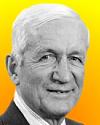
Born 27 Aug 1915; died 4 Nov 2011 at age 96. quotes
Norman Foster Ramsey was an American physicist who shared (with Wolfgang Paul and Hans Georg Dehmelt) the 1989 Nobel Prize for Physics in 1989 for “for the invention of the separated oscillatory fields method and its use in the hydrogen maser and other atomic clocks.” His work produced a more precise way to observe the transitions within an atom switching from one specific energy level to another. In the cesium atomic clock, his method enables observing the transitions between two very closely spaced levels (hyperfine levels). The accuracy of such a clock is about one part in ten thousand billion. In 1967, one second was defined as the time during which the cesium atom makes exactly 9,192,631,770 oscillations.«
Norman Foster Ramsey was an American physicist who shared (with Wolfgang Paul and Hans Georg Dehmelt) the 1989 Nobel Prize for Physics in 1989 for “for the invention of the separated oscillatory fields method and its use in the hydrogen maser and other atomic clocks.” His work produced a more precise way to observe the transitions within an atom switching from one specific energy level to another. In the cesium atomic clock, his method enables observing the transitions between two very closely spaced levels (hyperfine levels). The accuracy of such a clock is about one part in ten thousand billion. In 1967, one second was defined as the time during which the cesium atom makes exactly 9,192,631,770 oscillations.«
(10 Sep 1939)
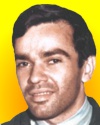
Born 27 Aug 1913; died 31 Aug 2002 at age 89.
Martin David Kamen was a Canadian-American biochemist, who co-discovered (27 Feb 1940) the synthesis of the isotope carbon-14 by bombarding a target of graphite with sub-atomic particles from the laboratory 60-inch cyclotron. He worked with Sam Ruben at the Radiological Laboratory, University of California, Berkeley. (This isotope, naturally produced by cosmic rays in the atmosphere, was subsequently found immensely useful for carbon-dating by Willard Libby.) Kamen’s career was interrupted by personal misfortunes, including being summoned to appear before the House Un-American Activities Committee (1948), but he was eventually honored with the 1995 Enrico Fermi award for lifetime scientific achievement.« more
Martin David Kamen was a Canadian-American biochemist, who co-discovered (27 Feb 1940) the synthesis of the isotope carbon-14 by bombarding a target of graphite with sub-atomic particles from the laboratory 60-inch cyclotron. He worked with Sam Ruben at the Radiological Laboratory, University of California, Berkeley. (This isotope, naturally produced by cosmic rays in the atmosphere, was subsequently found immensely useful for carbon-dating by Willard Libby.) Kamen’s career was interrupted by personal misfortunes, including being summoned to appear before the House Un-American Activities Committee (1948), but he was eventually honored with the 1995 Enrico Fermi award for lifetime scientific achievement.« more
Hot Carbon: Carbon-14 and a Revolution in Science, by John Marra. - book suggestion.
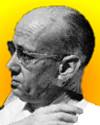
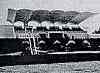
Spanish engineer who pioneered the architectural use of concrete-shell structures. With José Maria Aguirre he founded (1934) an institute to "encourage progress in all areas of construction, sponsoring and disseminating scientific research and studying methods to improve construction techniques in whatsoever respect." He developed new uses and building techniques for reinforced concrete. Examples of his designs include the 156-ft (48 m) diameter shell of the Algeciras market (1933), and the 73-ft (22-m) cantilevered roof of the Madrid hippodrome (1935). From the 1920s to the 1960s, he designed some of Spain's finest bridges, aqueducts, churches and stadiums.«[Image right: cantilevered roof of the Madrid hippodrome]
Philosophy of Structures, by Eduardo Torroja Miret. - book suggestion.
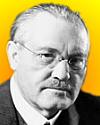
Born 27 Aug 1874; died 26 Apr 1940 at age 65. quotes
German industrial chemist who at BASF directed development of the industrial scale process for production of ammonia from atmospheric nitrogen. In 1908, Fritz Haber, a professor of chemistry had suggested that nitrogen and hydrogen gases could be combined using high temperatures, high pressure and catalysts that resulted in the Haber-Bosch process. By 1910, Alwin Mittasch (1869-1953), head chemist of the BASF ammonia research laboratory identified activated iron as a suitable catalyst. Bosch supervised creation of new technical solutions for high pressure operations. He shared (with Friedrich Bergius) the 1931 Nobel Prize for Chemistry for devising chemical high-pressure methods.«
German industrial chemist who at BASF directed development of the industrial scale process for production of ammonia from atmospheric nitrogen. In 1908, Fritz Haber, a professor of chemistry had suggested that nitrogen and hydrogen gases could be combined using high temperatures, high pressure and catalysts that resulted in the Haber-Bosch process. By 1910, Alwin Mittasch (1869-1953), head chemist of the BASF ammonia research laboratory identified activated iron as a suitable catalyst. Bosch supervised creation of new technical solutions for high pressure operations. He shared (with Friedrich Bergius) the 1931 Nobel Prize for Chemistry for devising chemical high-pressure methods.«
Enriching the Earth: Fritz Haber, Carl Bosch, and ... World Food Production, by Vaclav Smil. - book suggestion.
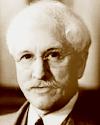
Born 27 Aug 1865; died 2 Dec 1935 at age 70.
American Egyptologist, archaeologist and historian who promoted research on ancient Egypt and the ancient civilizations of western Asia. He was the first scholar in America to hold a professorship in Egyptology when he was appointed at at the University of Chicago in 1905. From 1919 to 1920 he headed the University's first archaeological survey of Egypt and western Asia. He also led several other later expeditions. The institute, under his leadership, became one of America's leading centers of archaeological study and Middle Eastern scholarship. Breasted wrote numerous books that include A History of Egypt (1905) and Ancient Times: A History of the Early World (1916, revised in 1944).
American Egyptologist, archaeologist and historian who promoted research on ancient Egypt and the ancient civilizations of western Asia. He was the first scholar in America to hold a professorship in Egyptology when he was appointed at at the University of Chicago in 1905. From 1919 to 1920 he headed the University's first archaeological survey of Egypt and western Asia. He also led several other later expeditions. The institute, under his leadership, became one of America's leading centers of archaeological study and Middle Eastern scholarship. Breasted wrote numerous books that include A History of Egypt (1905) and Ancient Times: A History of the Early World (1916, revised in 1944).
A Brief History of Ancient Times, by James Henry Breasted. - book suggestion.
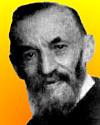
Born 27 Aug 1858; died 20 Apr 1932 at age 73. quotes
Italian mathematician who founded symbolic logic. Through the use of symbols, equations are more easily understood by anyone regardless of their language. For example, Peano introduced symbols to represent “belongs to the set of” and “there exists.” In Arithmetics principia (1889), a pamphlet he wrote in Latin, Peano published his first version of a system of mathematical logic, giving his Peano axioms defining the natural numbers in terms of sets. In 1903, Peano unsuccessfully proposed an international, artificial language he called “Latino sine flexione.” It was based on Latin without grammar. Its vocabulary comprised words from English, French, German and Latin.«
Italian mathematician who founded symbolic logic. Through the use of symbols, equations are more easily understood by anyone regardless of their language. For example, Peano introduced symbols to represent “belongs to the set of” and “there exists.” In Arithmetics principia (1889), a pamphlet he wrote in Latin, Peano published his first version of a system of mathematical logic, giving his Peano axioms defining the natural numbers in terms of sets. In 1903, Peano unsuccessfully proposed an international, artificial language he called “Latino sine flexione.” It was based on Latin without grammar. Its vocabulary comprised words from English, French, German and Latin.«
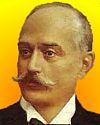
Born 27 Aug 1850; died 8 Jun 1920 at age 69.
Italian physicist who showed that radio waves displayed characterics of light wave behaviour in the manner of reflection, refraction, polarization and interference. Thus the nature of radio waves was similar to light, but with the difference of greater wavelength and a part of the same electromagnetic spectrum as light. He discovered magnetic hysteresis (1880). He was the first person to generate microwaves, and opened a whole new area of the electromagnetic spectrum to research and subsequent application. By 1900 also began work on X-rays. In 1903 he wrote the first paper on wireless telegraphy. His improvements on the work of Hertz were passed along to Guglielmo Marconi, who studied in Righi's laboratory.
Italian physicist who showed that radio waves displayed characterics of light wave behaviour in the manner of reflection, refraction, polarization and interference. Thus the nature of radio waves was similar to light, but with the difference of greater wavelength and a part of the same electromagnetic spectrum as light. He discovered magnetic hysteresis (1880). He was the first person to generate microwaves, and opened a whole new area of the electromagnetic spectrum to research and subsequent application. By 1900 also began work on X-rays. In 1903 he wrote the first paper on wireless telegraphy. His improvements on the work of Hertz were passed along to Guglielmo Marconi, who studied in Righi's laboratory.

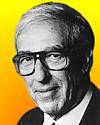
Died 27 Aug 2021 at age 101 (born 6 Apr 1920).
American biochemist who shared (with Edwin G. Krebs) the 1992 Nobel Prize for Physiology or Medicine for the discovery of “reversible protein phosphorylation as a biological regulatory mechanism” which governs the activities of proteins in cells. They purified and characterized the first enzyme of this type. Their discovery was a key to unlocking how glycogen in the body breaks down into glucose. It fostered techniques that prevent the body from rejecting transplanted organs. Their breakthrough also opened new doors for research into cancer, blood pressure, inflammatory reactions and brain signals.«
American biochemist who shared (with Edwin G. Krebs) the 1992 Nobel Prize for Physiology or Medicine for the discovery of “reversible protein phosphorylation as a biological regulatory mechanism” which governs the activities of proteins in cells. They purified and characterized the first enzyme of this type. Their discovery was a key to unlocking how glycogen in the body breaks down into glucose. It fostered techniques that prevent the body from rejecting transplanted organs. Their breakthrough also opened new doors for research into cancer, blood pressure, inflammatory reactions and brain signals.«
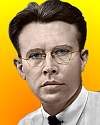
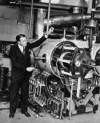
American physicist who was awarded the 1939 Nobel Prize for Physics for his invention of the cyclotron, the first device for the production of high energy particles. His first device, built in 1930 used a 10-cm magnet. He accelerated particles within a cyclinder at high vacuum between the poles of an electromagnetic to confine the beam to a spiral path, while a high A.C. voltage increased the particle energy. Larger models built later created 8 x 10⁴ eV beams. By colliding particles with atomic nuclei, he produced new elements and artificial radioactivity. By 1940, he had created plutonium and neptunium. He extended the use of atomic radiation into the fields of biology and medicine. Element 103 was named Lawrencium as a tribute to him.«Image: Ernest Lawrence standing with his back to the larger portion of his cyclotron.]
An American Genius: The Life of Ernest Orlando Lawrence, by Childs Herbert. - book suggestion.
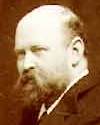
Died 27 Aug 1937 at age 69 (born 8 Feb 1868).
British zoologist and collector (2nd Baron Rothschild (of Tring)) who founded the Walter Rothschild Zoological Museum, Tring, which opened to the public in 1892 and is now part of the Natural History Museum. His interest in natural history began when he was a child, collecting butterflies. Numerous species and sub-species of animals were named after him. From Tring, he issued Novitates Zoologicae, and published scores of scientific papers. He was the eldest son of financier Nathan Mayer Rothschild, 1st Baron Rothschild, whom he disappointed by devoting his life to natural history instead of the family banking business. He received his titles on the death of his father in 1915.«
British zoologist and collector (2nd Baron Rothschild (of Tring)) who founded the Walter Rothschild Zoological Museum, Tring, which opened to the public in 1892 and is now part of the Natural History Museum. His interest in natural history began when he was a child, collecting butterflies. Numerous species and sub-species of animals were named after him. From Tring, he issued Novitates Zoologicae, and published scores of scientific papers. He was the eldest son of financier Nathan Mayer Rothschild, 1st Baron Rothschild, whom he disappointed by devoting his life to natural history instead of the family banking business. He received his titles on the death of his father in 1915.«
Dear Lord Rothschild: Birds, Butterflies and History, by Miriam Rothschild. - book suggestion.
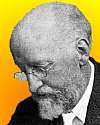
Died 27 Aug 1924 at age 64 (born 2 May 1860). quotes
William Maddock Bayliss was an English physiologist who, in 1902 co-discovered the first hormone (with the British physiologist Ernest H. Starling). They found a certain chemical substance is secreted when food comes into contact with part of the small intestine. This chemical substance, which they named secretin, upon being carried by the blood to the pancreas, stimulates the secretion of pancreatic juice, the most important of the digestive juices. They coined the word “hormone” based on a Greek word for “to set in motion.” Bayliss also studied the use of saline injections to counteract shock during surgery. He proposed the use of gum-saline injections for wound shock to saved many lives of wounded soldiers in WW I.«
William Maddock Bayliss was an English physiologist who, in 1902 co-discovered the first hormone (with the British physiologist Ernest H. Starling). They found a certain chemical substance is secreted when food comes into contact with part of the small intestine. This chemical substance, which they named secretin, upon being carried by the blood to the pancreas, stimulates the secretion of pancreatic juice, the most important of the digestive juices. They coined the word “hormone” based on a Greek word for “to set in motion.” Bayliss also studied the use of saline injections to counteract shock during surgery. He proposed the use of gum-saline injections for wound shock to saved many lives of wounded soldiers in WW I.«
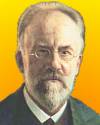

Danish botanist who revolutionised beer-making through development of new ways to culture yeast. He financed his education by writing novels. Though he never reached an M.Sc., in 1876, he received a gold medal for an essay on fungi. In 1879, he became superintendent of the Carlsberg breweries. In 1883, he successfully developed a cultivated yeast that revolutionized beer-making around the world, because Hansen by refusing to patent his method made it freely available to other brewers. He also proved there are different species of yeast. Hansen separated two species: Saccaromyces cerevisae, an over-yeast (floating on the surface of the fermenting beer) and S. carlsbergensis*, an under-yeast (laying on the bottom of the liquid).(*Image top right source)
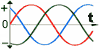
three phase
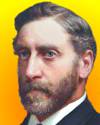
English physicist and electrical engineer who worked on the application of electricity and magnetism in devices like the dynamo and electromagnets. Hopkinson’s law (the magnetic equivalent of Ohm’s law) bears his name. In 1882, he patented his invention of the three-wire system (three phase) for electricity generation and distribution. He developed synchronous motors (1883), and improved the design and efficiency of generators. He also studied condensers and the phenomena of residual load. In his early career, he was (1872) engineering manager of Chance Brothers and Co., a glass manufacturer in Birmingham, where he studied lighthouse illumination, improving efficiency with flashing groups of lights.«
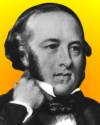
Died 27 Aug 1879 at age 83 (born 3 Dec 1795).
English educator and inventor who originated the penny postage system with the first adhesive postage stamp (10 Jan 1840). Interested in inventing, from 1835 he began planning a postal service and by 1846 he became the Secretary to the Postmaster-General. He continued to reform the Post Office until 1864 when he retired. Thus, he developed modern postal service, which was subsequently adopted throughout the world. Earlier in his life, he had taught with his brothers and his father at a North London school that was progressive - using new teaching methods and philosophies, with no corporal punishment but reward systems and strong honour and behaviour codes. Ill health led him away from teaching and he turned to modernizing the postal service.
English educator and inventor who originated the penny postage system with the first adhesive postage stamp (10 Jan 1840). Interested in inventing, from 1835 he began planning a postal service and by 1846 he became the Secretary to the Postmaster-General. He continued to reform the Post Office until 1864 when he retired. Thus, he developed modern postal service, which was subsequently adopted throughout the world. Earlier in his life, he had taught with his brothers and his father at a North London school that was progressive - using new teaching methods and philosophies, with no corporal punishment but reward systems and strong honour and behaviour codes. Ill health led him away from teaching and he turned to modernizing the postal service.
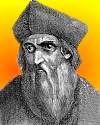
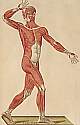
Italian physician and anatomist whose name is given to the Eustachian tube. This narrow canal between the ear and the throat was discovered 2000 years earlier by Alcmaeon, but Eustachi was the first to fully describe it, in a treatise on the auditory organ. He was also first to describe the adrenal glands, and to make detailed studies of the teeth, including the first and second dentitions and tooth anatomy. His series of careful illustrations of abdominal and thorax structures, the nervous and vascular systems, muscles and bones were prepared as 47 copperplate engravings, but only 8 accompanied his Opuscula anatomica (1564) in his lifetime. Sadly for medical science, over a century passed before they were all published, in 1714.«[Image right, a plate from the postumous Romanae archetypae tabulae anatomicae novis... by Bartolomeo Eustachi]
A Little Treatise on the Teeth: The First Authoritative Book on Dentistry (1563), by Bartolomeo Eustachi. - book suggestion.
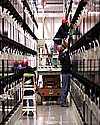
In 2003, the world's biggest battery was connected to provide emergency power to Fairbanks, Alaska's second-largest city. Without power lines between Alaska and the rest of the U.S., the state is an "electrical island." Worse, tough environmental conditions cause a total city blackout every two or three years. The $35 million rechargable battery contains 13,760 large nickel-cadmium cells that weigh a total of 1,300 tonnes and cover 2,000 square metres, an area greater than a sports field. The battery can provide 40 megawatts of power, enough for around 12,000 people, for up to seven minutes, while diesel backup generators are started. This will be an important safeguard, where winter temperatures can drop as low as -51ºC.
(seource)
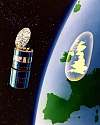
In 1989, the first communications satellite, Marcopolo I, for the first television direct broadcast service in the United Kingdom was launched from Cape Canaveral, Florida, on the first US commercial satellite rocket, a Delta booster. A similar satellite, Marcopolo II was launched on 17 Aug 1990. Each satellite was equipped with three 110-watt channels, each having enough power to be received by very small (35cm/13.5-in diam.), low-cost receiving dishes. Their footprint covered the U.K. The satellites were powered by large area solar cells, and had nickel-cadmium cells as back-up while the Earth eclipsed the Sun.«

In 1984, U.S. President Ronald Reagan announced that the first citizen in space would be a teacher. He was speaking at a ceremony for winners in the Secondary School Recognition Program. Towards the end, he stated: “It’s long been a goal of our space shuttle, the program, to some day carry citizen passengers into space. Until now, we hadn’t decided who the first citizen passenger would be. But today I'm directing NASA to begin a search in all of our elementary and secondary schools and to choose as the first citizen passenger in the history of our space program one of America’s finest—a teacher.” On 19 Jul 1985, the selection of Christa McAuliffe was reported by the vice-president.«
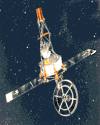
In 1962, the United States launched the Mariner 2 space probe, which flew past Venus the following December.
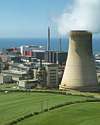
In 1956, Calder Hall, England, the connection was made - so that Calder Hall became the world's first commercial nuclear power station supplying electricity to the national electricity grid - in preparation for the official opening on 17 Oct 1956 by Queen Elizabeth II. By the time it was closed on 31 Mar 2003, it had served for nearly 47 years. Its four Magnox reactors were capable of generating 50 MWe of electricity, but with production of weapons-grade plutonium as its original primary use. Christopher Hinton (later Lord Hinton) was given the task in 1952 to design and build Calder Hall. Construction began in 1953. It is part of the larger Sellafield site, near the village of Seascale on the coast of the Irish Sea in Cumbria.«[Image: Two cooling towers (one behind) and some of the power plant site.]
Calder Hall: The story of Britain's First Atomic Power Station, by Kenneth Edmund Brian Jay. - book suggestion.
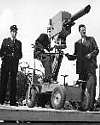
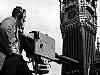
In 1939, Sir Frank Whittle and Hans J.P. von Ohain invented a craft that became the first jet-powered airplane to fly. It remained airborne for seven minutes.
1960
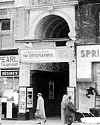
In 1907, the “first British theatre devoted entirely to the display of living pictures” was indicated in the Kinematograph Weekly. What the magazine regarded as Britain's first theatre turned full-time cinema, was named as being the Balham Empire, which had “opened its doors a few weeks since.” Elsewhere, the entertainment tide had clearly been turning as some existing theatres had mixed showing moving pictures along with their live entertainment. The Balham Empire began as the 900-seat Balham Music Hall in 1890 in a south-west London building converted from use as a swimming pool. In 1907, renamed as the Empire Cinema, it began showing, according to the article, “a program of pictures” from Pathe Freres, “lasting about two hours, and consisting of a very fine selection of their best productions.”«[The first British purpose-built cinema is given in another source as Central Hall, Colne, Lancashire, opened 22 Feb 1907. Cinema Omnia Pathé opened new in Paris on 1 Dec 1906.]
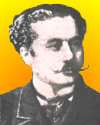
In 1875, the element gallium was discovered by P.E. Lecoq de Boisbaudran. In an article in the Annales de Chimie in 1877, he said his search started 15 years earlier, but with inadequate resources. Even with a new laboratory (1863) he had no success until he realized he was using too little material, and in Feb 1874 started with 52 kg of a mineral from Pierrefitte mine. He finally isolated a tiny sample: “On August 27, 1875, between three and four at night, I perceived the first indications of the existence of a new element that I named gallium in honor of France (Gallia).” His first spectroscopic analysis of the tiny amount (he estimated 1/100 mg) of the prepared sample showed a previously unknown violet line at 417.0 indicating a new element.
Drake
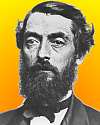
In 1859, “Colonel” Edwin L. Drake drilled the first successful oil well in the United States, near Titusville, Pennsylvania. The drilling had reached 69 feet 6 inches, when a dark film floating on the water below the derrick floor was noticed.
more
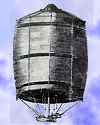
In 1784, James Tytler made the first balloon ascent in Britain in a hot-air balloon at Edinburgh, Scotland. He exhibited his “Grand Edinburgh Fire Balloon” in the uncompleted dome of Robert Adam’s Register House. It was barrel-shaped, 40-ft tall, 30-ft diameter, with hot air produced by a stove. He wore a cork jacket for protection, and sat in a small wicker packing case below the balloon. Before a small number of onlookers, the balloon rose to 350 feet in the air, travelled half a mile, and landed in Restalrig village. Tytler reported that the flight was “most agreeable with no giddiness” and that he “amused himself by looking at the spectators below.” Four days later, a large paying audience saw it, but that flight was much less successful.«
Balloon Tytler, by James Fergusson. - book suggestion.
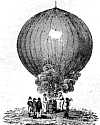
In 1783, the first experimental hydrogen-filled balloon left the Champs de Mars, Paris, unmanned, and reached 900-m altitude. Under the auspices of the French Academy of Sciences, Jacques A.C. Charles sent up a 13-ft (4-m) diameter hydrogen- filled balloon of rubber- coated silk. One of the spectators was the American ambassador to France, Benjamin Franklin. The gas had been manufactured, beginning on 23 Aug 1783, by pouring 225-kg of sulphuric acid over half a ton of scrap-iron. Able to lift about 9-kg, it traveled 24-km in about 45 minutes. The balloon descended close to the little village of Gonesse, where frightened local farmers attacked it with pick axes and spades, leaving only torn remains.
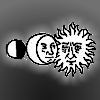
In 413 BC, a lunar eclipse caused panic among the sailors of the Athens fleet and thus affected the outcome of a battle in the Peloponnesian War. The Athenians were ready to move their forces from Syracuse when the Moon was eclipsed. The soldiers and sailors were frightened by this celestial omen and were reluctant to leave. Their commander, Nicias, consulted the soothsayers and postponed the departure for 27 days. This delay gave an advantage to their enemies, the Syracusans, who then defeated the entire Athenian fleet and army, and killed Nicias.




