
(NASA)
Video: Teach Arts and Sciences Together
Black-American physician and the first African-American woman in space. Jemison holds degree in chemical engineering (1977) and a Doctor of Medicine degree (1981). Before she became an astronaut, Jemison worked as a doctor in West Africa. NASA selected Jemison for astronaut training in 1987. She was as a Science Mission Specialist aboard the Shuttle Endeavour on 12 Sep 1992. During the eight-day mission, she conducted space-sickness experiments and conducted research on bone loss in zero gravity. Jemison left NASA in 1993 and became the director of The Jemison Institute for Advancing Technology in Developing Countries, an organization that researches, designs, implements and evaluates cutting-edge technology in a real-life context. First astronaut to appear in a Star Trek (TNG) TV episode. more
Find Where The Wind Goes: Moments From My Life, by Dr. Mae Jemison. - book suggestion.

Born 17 Oct 1907; died 25 Dec 1990 at age 83. quotes
Soviet geologist and geophysicist whose theory of density differentiation (1942) held that movements of the Earth’s surface is a result of gradual internal structural changes as denser matter sinks towards the Earth’s centre. He visualized continents remaining more or less in place, affected only by vertical motion (though his description of the forces involved was poorly formed.) His position as a prominent scientist was influential in sustaining this concept. Until the late 60s, Soviet scientists delayed accepting newer ideas of plate tectonics. Belousov maintained a belief that vertical movements of continental land masses could not be correctly explained by the plate tectonics theory advanced in the West.«
Soviet geologist and geophysicist whose theory of density differentiation (1942) held that movements of the Earth’s surface is a result of gradual internal structural changes as denser matter sinks towards the Earth’s centre. He visualized continents remaining more or less in place, affected only by vertical motion (though his description of the forces involved was poorly formed.) His position as a prominent scientist was influential in sustaining this concept. Until the late 60s, Soviet scientists delayed accepting newer ideas of plate tectonics. Belousov maintained a belief that vertical movements of continental land masses could not be correctly explained by the plate tectonics theory advanced in the West.«
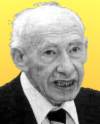
Born 17 Oct 1888; died 18 Sep 1977 at age 88.
Paul Isaak Bernays was a Swiss mathematician and logician who is known for his attempts to develop a unified theory of mathematics. Bernays, influenced by Hilbert's thinking, believed that the whole structure of mathematics could be unified as a single coherent entity. In order to start this process it was necessary to devise a set of axioms on which such a complete theory could be based. He therefore attempted to put set theory on an axiomatic basis to avoid the paradoxes. Between 1937 and 1954 Bernays wrote a whole series of articles in the Journal of Symbolic Logic which attempted to achieve this goal. In 1958 Bernays published Axiomatic Set Theory in which he combined together his work on the axiomatisation of set theory.
Paul Isaak Bernays was a Swiss mathematician and logician who is known for his attempts to develop a unified theory of mathematics. Bernays, influenced by Hilbert's thinking, believed that the whole structure of mathematics could be unified as a single coherent entity. In order to start this process it was necessary to devise a set of axioms on which such a complete theory could be based. He therefore attempted to put set theory on an axiomatic basis to avoid the paradoxes. Between 1937 and 1954 Bernays wrote a whole series of articles in the Journal of Symbolic Logic which attempted to achieve this goal. In 1958 Bernays published Axiomatic Set Theory in which he combined together his work on the axiomatisation of set theory.
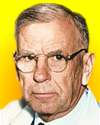
Born 17 Oct 1886; died 20 Sep 1960 at age 73. quotes
Ernest (William) Goodpasture was an American research scientist, the founder of mumps vaccine, Professor of Pathology, Vanderbilt University School of Medicine. Noted for research in virology, particularly the isolation and identification of viruses, the pathogenesis and pathology of viral diseases. He discovered the first practical method for developing uncontaminated viruses in chick embryos, which made possible the mass-production of vaccines for such diseases as smallpox, influenza, yellow fever, typhus, Rocky Mountain spotted fever, and other illnesses caused by agents that can be propagated only in living tissue. Also known for describing Goodpasture’s disease (1919), an uncommon condition which typically causes rapid destruction of the kidneys.
Ernest (William) Goodpasture was an American research scientist, the founder of mumps vaccine, Professor of Pathology, Vanderbilt University School of Medicine. Noted for research in virology, particularly the isolation and identification of viruses, the pathogenesis and pathology of viral diseases. He discovered the first practical method for developing uncontaminated viruses in chick embryos, which made possible the mass-production of vaccines for such diseases as smallpox, influenza, yellow fever, typhus, Rocky Mountain spotted fever, and other illnesses caused by agents that can be propagated only in living tissue. Also known for describing Goodpasture’s disease (1919), an uncommon condition which typically causes rapid destruction of the kidneys.
Ernest William Goodpasture: Scientist, Scholar, Gentleman, by Robert D. Collins. - book suggestion.
Born 17 Oct 1869; died 4 Jul 1962 at age 92.
Robert S(essions) Woodworth was a U.S. psychologist who conducted major research on learning and developed a system of "dynamic psychology" into which he sought to incorporate several different schools of psychological thought.
Robert S(essions) Woodworth was a U.S. psychologist who conducted major research on learning and developed a system of "dynamic psychology" into which he sought to incorporate several different schools of psychological thought.
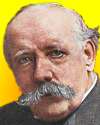
Born 17 Oct 1846; died 10 Jan 1919 at age 72. quotes
William Deane Butcher was an English surgeon who was one of the distinguished pioneers in England working on the application of X-rays for diagnosis and therapy. Three years after the discovery of X-rays, he was appointed to the staff of the London Skin Hospital (1898) and became Surgeon in Charge of the Electrical Department. Deane Butcher served terms as President of the Röntgen Society (1908), and of the Section of Electrotherapies of the Royal Society of Medicine (1909). He was also active with the British Homoeopathic Society. His book translations include works on the use of electricity in medicine and radiotherapy of skin diseases. From 1905 to 1914, he was an editor of a general radiology journal, Archives of the Roentgen Ray.«
William Deane Butcher was an English surgeon who was one of the distinguished pioneers in England working on the application of X-rays for diagnosis and therapy. Three years after the discovery of X-rays, he was appointed to the staff of the London Skin Hospital (1898) and became Surgeon in Charge of the Electrical Department. Deane Butcher served terms as President of the Röntgen Society (1908), and of the Section of Electrotherapies of the Royal Society of Medicine (1909). He was also active with the British Homoeopathic Society. His book translations include works on the use of electricity in medicine and radiotherapy of skin diseases. From 1905 to 1914, he was an editor of a general radiology journal, Archives of the Roentgen Ray.«
Born 17 Oct 1842; died 21 Jul 1919 at age 76.
Swedish anatomist and anthropologist best-known for his studies of the histology of the nervous system. Retzius' Das Menschenhirn, 2 vol. (1896; "The Human Brain") was perhaps the most important work written on the gross anatomy of the brain during the 19th century. He served as a professor of histology at the Karolinska Mediko-Kirurgiska Institutet, Stockholm (1877-1900), where he made important contributions to anatomical descriptions of the muscles of the eardrum, the bones of the middle ear, and the Eustachian tube. Retzius also made a useful study of ancient Swedish and Finnish skulls.
Swedish anatomist and anthropologist best-known for his studies of the histology of the nervous system. Retzius' Das Menschenhirn, 2 vol. (1896; "The Human Brain") was perhaps the most important work written on the gross anatomy of the brain during the 19th century. He served as a professor of histology at the Karolinska Mediko-Kirurgiska Institutet, Stockholm (1877-1900), where he made important contributions to anatomical descriptions of the muscles of the eardrum, the bones of the middle ear, and the Eustachian tube. Retzius also made a useful study of ancient Swedish and Finnish skulls.
Born 17 Oct 1833; died 11 Nov 1886 at age 53.
French physiologist, politician, and diplomat, founder of modern aerospace medicine, whose research into the effects of air pressure on the body helped make possible the exploration of space and the ocean depths. While professor of physiology at the Sorbonne (1869-86), he found that an illness of animals at high altitudes is caused mainly by the low oxygen content of the sparse atmosphere. Bert also made a study of "the bends", suffered by deep-sea divers coming up too quickly to the surface from the great pressures of the depths. Bert demonstrated that high external pressures force large quantities of atmospheric nitrogen to dissolve in the blood, then during rapid decompression the nitrogen forms gas bubbles that obstruct capillaries. In 1878, he published the first results of hyperbaric experiments, considered the cornerstone publication for diving medicine, hyperbaric medicine, and aerospace medicine.
French physiologist, politician, and diplomat, founder of modern aerospace medicine, whose research into the effects of air pressure on the body helped make possible the exploration of space and the ocean depths. While professor of physiology at the Sorbonne (1869-86), he found that an illness of animals at high altitudes is caused mainly by the low oxygen content of the sparse atmosphere. Bert also made a study of "the bends", suffered by deep-sea divers coming up too quickly to the surface from the great pressures of the depths. Bert demonstrated that high external pressures force large quantities of atmospheric nitrogen to dissolve in the blood, then during rapid decompression the nitrogen forms gas bubbles that obstruct capillaries. In 1878, he published the first results of hyperbaric experiments, considered the cornerstone publication for diving medicine, hyperbaric medicine, and aerospace medicine.
Born 17 Oct 1820; died 18 Apr 1883 at age 62.
Édouard Albert Roche was a French mathematical astronomer who studied the internal structure of celestial bodies and was the first to propose a model of the Earth with a solid core. He determined (1850) the Roche Limit for a satellite to have a stable orbit around a planet of equal density. The smaller body could not lie within 2.44 radii of the larger body without breaking apart from effect of the gravitational force between them. He later made a rigorous mathematical analysis of Pierre Laplace's nebular hypothesis and showed (1873) the instability of a rapidly rotating lens-shaped body.«
Édouard Albert Roche was a French mathematical astronomer who studied the internal structure of celestial bodies and was the first to propose a model of the Earth with a solid core. He determined (1850) the Roche Limit for a satellite to have a stable orbit around a planet of equal density. The smaller body could not lie within 2.44 radii of the larger body without breaking apart from effect of the gravitational force between them. He later made a rigorous mathematical analysis of Pierre Laplace's nebular hypothesis and showed (1873) the instability of a rapidly rotating lens-shaped body.«
Born 17 Oct 1781; died 31 Oct 1833 at age 52.
German anatomist who first described the embryonic cartilage (now called Meckel's cartilage) that ossifies to form part of the lower jaw in fishes, amphibians, and birds. He also described a pouch (Meckel's diverticulum) of the small intestine.
German anatomist who first described the embryonic cartilage (now called Meckel's cartilage) that ossifies to form part of the lower jaw in fishes, amphibians, and birds. He also described a pouch (Meckel's diverticulum) of the small intestine.

Died 17 Oct 1978 at age 78 (born 13 Jan 1900).
Gertrude Mary Cox was a statistician who was a pioneer in the development of modern statistical methods. She was the first woman to receive a professional appointment at North Carolina State University, where from 1940, she headed the newly established Department of Experimental Statistics. Even after her official retirement, she continued to promote the development of statistical programs with work in Thailand and Egypt. Cox co-authored (with William G. Cochran) the classic book, Experimental Designs (1950). She stressed that before beginning research, the outline of the data analysis plan should be drawn up. This approach avoids afterwards choosing analysis to give preconceived desired results.«
Gertrude Mary Cox was a statistician who was a pioneer in the development of modern statistical methods. She was the first woman to receive a professional appointment at North Carolina State University, where from 1940, she headed the newly established Department of Experimental Statistics. Even after her official retirement, she continued to promote the development of statistical programs with work in Thailand and Egypt. Cox co-authored (with William G. Cochran) the classic book, Experimental Designs (1950). She stressed that before beginning research, the outline of the data analysis plan should be drawn up. This approach avoids afterwards choosing analysis to give preconceived desired results.«
Died 17 Oct 1963 at age 97 (born 8 Dec 1865). quotes
French mathematician who proved the prime-number theorem (as n approaches infinity, the limit of the ratio of (n) and n/ln n is 1, where (n) is the number of positive prime numbers not greater than n). Conjectured in the 18th century, this theorem was not proved until 1896, when Hadamard and also Charles de la Vallée Poussin, used complex analysis. Hadamard's work includes the theory of integral functions and singularities of functions represented by Taylor series. His work on the partial differential equations of mathematical physics is important. He introduced the concept of a well-posed initial value and boundary value problem. In considering boundary value problems he introduced a generalisation of Green's functions (1932).
French mathematician who proved the prime-number theorem (as n approaches infinity, the limit of the ratio of
(n) and n/ln n is 1, where (n) is the number of positive prime numbers not greater than n). Conjectured in the 18th century, this theorem was not proved until 1896, when Hadamard and also Charles de la Vallée Poussin, used complex analysis. Hadamard's work includes the theory of integral functions and singularities of functions represented by Taylor series. His work on the partial differential equations of mathematical physics is important. He introduced the concept of a well-posed initial value and boundary value problem. In considering boundary value problems he introduced a generalisation of Green's functions (1932).
Died 17 Oct 1947 at age 71 (born 16 Sep 1876). quotes
American geologist, climatologist, explorer and geographer who studied the origin, distribution, longevity, and accomplishments of civilization. He particularly wished to understand why progress varied from times when human creative energies flourished to periods when they seemed to fade. He attributed this to three causes: climate, the quality of people, and culture. Climatic circumstances resulted in migration, which could either facilitate or obstruct the advance of culture.
American geologist, climatologist, explorer and geographer who studied the origin, distribution, longevity, and accomplishments of civilization. He particularly wished to understand why progress varied from times when human creative energies flourished to periods when they seemed to fade. He attributed this to three causes: climate, the quality of people, and culture. Climatic circumstances resulted in migration, which could either facilitate or obstruct the advance of culture.
Died 17 Oct 1941 at age 75 (born 17 Nov 1865).
Canadian astronomer known for his expert design of instruments and his extensive spectroscopic observations. He designed an exceptionally efficient spectrograph for the 15-inch refractor and measured radial velocities and found orbits of spectroscopic binary stars. He designed and supervised construction of the 72-inch reflector built for the new Dominion Astrophysical Observatory in Victoria and was appointed its first director in 1917. There he extended the work on radial velocities and spectroscopic binaries and studied spectra of O and B-type stars. In the 1930s he published the first detailed analysis of the rotation of the Milky Way, demonstrating that the sun is two-thirds out from the centre of our galaxy about which it revolves once in 220 million years.
Canadian astronomer known for his expert design of instruments and his extensive spectroscopic observations. He designed an exceptionally efficient spectrograph for the 15-inch refractor and measured radial velocities and found orbits of spectroscopic binary stars. He designed and supervised construction of the 72-inch reflector built for the new Dominion Astrophysical Observatory in Victoria and was appointed its first director in 1917. There he extended the work on radial velocities and spectroscopic binaries and studied spectra of O and B-type stars. In the 1930s he published the first detailed analysis of the rotation of the Milky Way, demonstrating that the sun is two-thirds out from the centre of our galaxy about which it revolves once in 220 million years.
Died 17 Oct 1939 at age 68 (born 31 Oct 1870). quotes
English chemist who broadened understanding of stereoisomerism. In 1899, he produced an optically active compound that contained an asymetric nitrogen atom, but no asymmetric carbon atoms, thus proving that the Van't Hoff theory applied to atoms other than carbon. By 1902 he had prepared optically active compounds centred upon asymmetric atoms of sulphur, selenium, and tin. Later, he even demonstrated that compounds without asymmetric atoms of any sort, could yet be optically active due to being asymmetric as a whole, through the influence of steric influence. Such behaviour had first been proposed by Viktor Meyer. During WW I, Pope worked on production methods for large quantities of mustard gas, a poison gas used in that war.
English chemist who broadened understanding of stereoisomerism. In 1899, he produced an optically active compound that contained an asymetric nitrogen atom, but no asymmetric carbon atoms, thus proving that the Van't Hoff theory applied to atoms other than carbon. By 1902 he had prepared optically active compounds centred upon asymmetric atoms of sulphur, selenium, and tin. Later, he even demonstrated that compounds without asymmetric atoms of any sort, could yet be optically active due to being asymmetric as a whole, through the influence of steric influence. Such behaviour had first been proposed by Viktor Meyer. During WW I, Pope worked on production methods for large quantities of mustard gas, a poison gas used in that war.
Died 17 Oct 1887 at age 80 (born 6 Sep 1807). quotes
English physicist, geologist and author who also did some work in chemistry and took up an interest in photography (1938). Hunt wrote the first English book on that subject, Manual of Photography, which went through five editions. In 1840, he was appointed Secretary of the Royal Cornwall Polytechnic Society, where his investigations included “Chemical Action of the Sun’s Rays;” “The Influence of Light on Plants,” and “The electricity of Mineral Lodes.” On 19 Apr 1845, he became the Keeper of Mining Records in the Museum of Practical Geology. This led to producing the annual Mineral Statistics of the United Kingdom. For a while, from 1851, he also was a professor lecturing on Experiment or Mechanical Science at the Government School of Mines.«
English physicist, geologist and author who also did some work in chemistry and took up an interest in photography (1938). Hunt wrote the first English book on that subject, Manual of Photography, which went through five editions. In 1840, he was appointed Secretary of the Royal Cornwall Polytechnic Society, where his investigations included “Chemical Action of the Sun’s Rays;” “The Influence of Light on Plants,” and “The electricity of Mineral Lodes.” On 19 Apr 1845, he became the Keeper of Mining Records in the Museum of Practical Geology. This led to producing the annual Mineral Statistics of the United Kingdom. For a while, from 1851, he also was a professor lecturing on Experiment or Mechanical Science at the Government School of Mines.«
Died 17 Oct 1887 at age 63 (born 12 Mar 1824). quotes
German physicist who, with Robert Bunsen, established the theory of spectrum analysis (a technique for chemical analysis by analyzing the light emitted by a heated material), which Kirchhoff applied to determine the composition of the Sun. He found that when light passes through a gas, the gas absorbs those wavelengths that it would emit if heated, which explained the numerous dark lines (Fraunhofer lines) in the Sun's spectrum. In his Kirchhoff's laws (1845) he generalized the equations describing current flow to the case of electrical conductors in three dimensions, extending Ohm's law to calculation of the currents, voltages, and resistances of electrical networks. He demonstrated that current flows in a zero-resistance conductor at the speed of light. more
German physicist who, with Robert Bunsen, established the theory of spectrum analysis (a technique for chemical analysis by analyzing the light emitted by a heated material), which Kirchhoff applied to determine the composition of the Sun. He found that when light passes through a gas, the gas absorbs those wavelengths that it would emit if heated, which explained the numerous dark lines (Fraunhofer lines) in the Sun's spectrum. In his Kirchhoff's laws (1845) he generalized the equations describing current flow to the case of electrical conductors in three dimensions, extending Ohm's law to calculation of the currents, voltages, and resistances of electrical networks. He demonstrated that current flows in a zero-resistance conductor at the speed of light. more
Died 17 Oct 1809 at age 75 (born 23 Apr 1734).
French hydraulic engineer who derived formulas for computing the discharge of fluids from pipes and open channels.
French hydraulic engineer who derived formulas for computing the discharge of fluids from pipes and open channels.

Plymouth China
English chemist who pioneered the manufacture of porcelain in Britain. He discovered deposits of kaolin and China stone (forms of decomposed granite) near St. Austell, Cornwall (1756). It was sufficiently pure to make a Chinese-style pure white porcelain. He spent many years experimenting to perfect the product. Also, for John Smeaton's new Eddystone lighthouse, he formulated a hydraulic cement that both set quickly and hard enough to withstand erosion from the sea waves. He patented his porcelain process (17 Mar 1768), and ran a factory for ten years, though unprofitably, before selling out to another manufacturer. China clay is an important industrial product used today in coated paper, toothpaste, paint, rubber, plastics, pharmaceuticals and agricultural products.« more
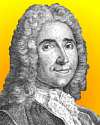
Died 17 Oct 1757 at age 74 (born 28 Feb 1683). quotes
René Antoine Ferchault de Réaumur was a French entomologist and physicist, who was active in various fields, a distinguished entomologist, and appointed by King Louis XIV (1710) to inventory French natural and industrial resources. His name is applied to a thermometric scale he defined. In 1720, he built the first cupola furnace, for economically melting gray iron. He also improved techniques for making iron and steel. By study of Chinese porcelain, he created his own Réaumur porcelain (1740). In biology, he noted the ability of crayfish to regenerate lost limbs. Between 1734 and 1742, Réaumur wrote six volumes of Mémoires pour servir à l'histoire des insectes (Memoirs Serving as a Natural History of Insects). Although unfinished, this work was a lasting contribution to entomology. In 1752, he isolated gastric juice and investigated how it acted in food digestion.«[DSB gives date of death 18 Oct 1757. EB gives 17 Oct 1757.] more
René Antoine Ferchault de Réaumur was a French entomologist and physicist, who was active in various fields, a distinguished entomologist, and appointed by King Louis XIV (1710) to inventory French natural and industrial resources. His name is applied to a thermometric scale he defined. In 1720, he built the first cupola furnace, for economically melting gray iron. He also improved techniques for making iron and steel. By study of Chinese porcelain, he created his own Réaumur porcelain (1740). In biology, he noted the ability of crayfish to regenerate lost limbs. Between 1734 and 1742, Réaumur wrote six volumes of Mémoires pour servir à l'histoire des insectes (Memoirs Serving as a Natural History of Insects). Although unfinished, this work was a lasting contribution to entomology. In 1752, he isolated gastric juice and investigated how it acted in food digestion.«[DSB gives date of death 18 Oct 1757. EB gives 17 Oct 1757.] more
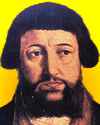
Died 17 Oct 1552 at age 53 (born 19 Dec 1498). quotes
Andreas Osiander, born as Andreas Hosemann was a German theologian who pursued mathematical sciences as a hobby. He replaced Rheticus as editor of Nicolaus Copernicus’ De revolutionibus. However, Osiander refused to accept the theories as truth, which he regarded as coming only from divine revelation. Therefore, going against what he knew were the wishes of Rheticus and Copernicus, Osiander imposed his views, and provided the printer with his own anonymous preface (that he had written) presenting the Coperican theories as mere hypotheses, without certainty. In consequence, though, it helped delay controversy, and the work was not added to the Index of Forbidden Books until the following century. Osiander also editted Cardano's Artis Magnae, which introduced the theory of algebraic equations.«
Andreas Osiander, born as Andreas Hosemann was a German theologian who pursued mathematical sciences as a hobby. He replaced Rheticus as editor of Nicolaus Copernicus’ De revolutionibus. However, Osiander refused to accept the theories as truth, which he regarded as coming only from divine revelation. Therefore, going against what he knew were the wishes of Rheticus and Copernicus, Osiander imposed his views, and provided the printer with his own anonymous preface (that he had written) presenting the Coperican theories as mere hypotheses, without certainty. In consequence, though, it helped delay controversy, and the work was not added to the Index of Forbidden Books until the following century. Osiander also editted Cardano's Artis Magnae, which introduced the theory of algebraic equations.«

Calder Hall: The story of Britain's First Atomic Power Station, by Kenneth Edmund Brian Jay. - book suggestion.
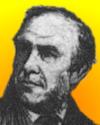
Jenkin
In 1885, the first electric telpher line, was opened in Sussex, England, by Viscountess Hampden with a simple ceremony. The aerial tramway carried clay from pits at Glynde nearly one mile to the railway. The line was made with a double set of steel rods, each 66-ft long, 3/4-in in diameter and 8-ft apart, supported on wooden posts at a height of about 18-ft above the ground. An electric locomotive hauled ten buckets at a speed of up to 5 mph, hanging by their travelling wheels from the same steel line which carried the electric current. Each 100-lb bucket carried up to 300-lb of clay. The inventor, who had died four months earlier, was Fleeming Jenkin. He coined “telpher” line to mean, in general, “the transmission of goods and passengers by means of electricity without driver, guard, signal-man, or attendants.”«*
In 1855, a steel-making process was patented by Sir Henry Bessemer, a British inventor and metallurgist (British patent 2,321). His patent was for a method of making steel by blasting compressed air through molten iron to remove impurities and excess carbon. The “Bessemer Process,” made it possible to mass-produce steel inexpensively. In the course of his life, Bessemer earned more than 100 patents, knighthood, and great wealth.
In 1814, at night, a deadly flood of beer was caused from the Horseshoe brewery, London. The metal bands of an immense beer brewing vat snapped releasing a tidal wave of 3,555 barrel of Porter beer, which swept away the brewery walls, flooded nearby basements, collapsed several tenements and resulted in eight deaths. The huge vessel had been poorly constructed, with little understanding of how to contain the forces involved. The deaths were reported as “by drowning, injury, poisoning by the porter fumes or drunkenness.” A century later, a similar disaster occurred on 15 Jan 1919, at a Boston molasses processing plant. Again, an immense vat burst, flooding its contents into the street with a heavy wave of molasses moving at a speed of an estimated 35 mph. It killed 21 and injured 150 people.«




