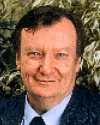
Born 31 Mar 1934. quotes
Italian physicist who in 1984 shared with discovery of the massive, short-lived subatomic W particle and Z particle. Around 1960, he joined the newly founded CERN where he investigated the structure of weak interactions. In 1976, he suggested adapting CERN's Super Proton Synchrotron (SPS) to collide protons and antiprotons in the same ring and the world's first antiproton factory was built, and started running in 1981. In Jan 1983, came the announcement, first from the UA1 detector, that W particles had been created. A couple of months later the even more elusive Z particles were also observed. These particles are the carriers of the so-called weak force involved in the radioactive decay of atomic nuclei.
Italian physicist who in 1984 shared with discovery of the massive, short-lived subatomic W particle and Z particle. Around 1960, he joined the newly founded CERN where he investigated the structure of weak interactions. In 1976, he suggested adapting CERN's Super Proton Synchrotron (SPS) to collide protons and antiprotons in the same ring and the world's first antiproton factory was built, and started running in 1981. In Jan 1983, came the announcement, first from the UA1 detector, that W particles had been created. A couple of months later the even more elusive Z particles were also observed. These particles are the carriers of the so-called weak force involved in the radioactive decay of atomic nuclei.
Born 31 Mar 1927; died 21 Jul 2020 at age 93.
American astrophysicist, known for her discovery of the origin of auroras. She was Richard Feynman’s sister. He was nine years her senior, and was her first teacher. She began solving math problems at the age of five, and at age 14 received a college-level text on Astronomy from her brother. Seeing an aurora had already inspired Joan’s curiosity, so she went on to earn a PhD in 1958. By 1971, she was at the NASA Ames Research Center, developing a way to detect solar coronal mass ejections by searching for helium in the solar wind. From 1985, she researched at the Jet Propulsion Laboratory (JPL) until retirement. While there, she developed a statistical model to estimate how many solar high-energy particles strike a spacecraft.«
American astrophysicist, known for her discovery of the origin of auroras. She was Richard Feynman’s sister. He was nine years her senior, and was her first teacher. She began solving math problems at the age of five, and at age 14 received a college-level text on Astronomy from her brother. Seeing an aurora had already inspired Joan’s curiosity, so she went on to earn a PhD in 1958. By 1971, she was at the NASA Ames Research Center, developing a way to detect solar coronal mass ejections by searching for helium in the solar wind. From 1985, she researched at the Jet Propulsion Laboratory (JPL) until retirement. While there, she developed a statistical model to estimate how many solar high-energy particles strike a spacecraft.«
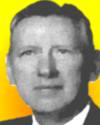
Born 31 Mar 1907; died 28 Aug 1996 at age 89.
American microbiologist who researched arthropod-borne viral diseases such as rabies and encephalitis. While working for the Rockefeller foundation, Johnson isolated a strain of virus from the spinal cord of a 14-year-old girl that died from rabies, introduced the virus to the brain of young chicks, transferred from one chick to another 138 times. In 1945, he gave a sample of this Flury virus (named after the girl) to Dr Hilary Koprowski who spent another ten years developing from it a new vaccine eventually used for dogs in the 1960’s. In later work, Johnson took an ecological approach to understanding diseases transmitted by animals and travelled extensively to track down the natural foci of disease agents in wildlife.«
American microbiologist who researched arthropod-borne viral diseases such as rabies and encephalitis. While working for the Rockefeller foundation, Johnson isolated a strain of virus from the spinal cord of a 14-year-old girl that died from rabies, introduced the virus to the brain of young chicks, transferred from one chick to another 138 times. In 1945, he gave a sample of this Flury virus (named after the girl) to Dr Hilary Koprowski who spent another ten years developing from it a new vaccine eventually used for dogs in the 1960’s. In later work, Johnson took an ecological approach to understanding diseases transmitted by animals and travelled extensively to track down the natural foci of disease agents in wildlife.«
Rabies, by Harald Norlin Johnson. - book suggestion.
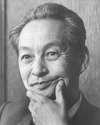
Born 31 Mar 1906; died 8 Jul 1979 at age 73.
Japanese physicist who shared the Nobel Prize for Physics in 1965 (with Richard P. Feynman and Julian S. Schwinger of the U.S.) for independently developing basic principles of quantum electrodynamics. He was one of the first to apply quantum theory to subatomic particles with very high energies. Tomonaga began with an analysis of intermediate coupling - the idea that interactions between two particles take place through the exchange of a third (virtual particle), like one ship affecting another by firing a cannonball. He used this concept to develop a quantum field theory (1941-43) that was consistent with the theory of special relativity. WW II delayed news of his work. Meanwhile, Feynman and Schwinger published their own independent solutions.
Japanese physicist who shared the Nobel Prize for Physics in 1965 (with Richard P. Feynman and Julian S. Schwinger of the U.S.) for independently developing basic principles of quantum electrodynamics. He was one of the first to apply quantum theory to subatomic particles with very high energies. Tomonaga began with an analysis of intermediate coupling - the idea that interactions between two particles take place through the exchange of a third (virtual particle), like one ship affecting another by firing a cannonball. He used this concept to develop a quantum field theory (1941-43) that was consistent with the theory of special relativity. WW II delayed news of his work. Meanwhile, Feynman and Schwinger published their own independent solutions.
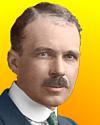
Born 31 Mar 1890; died 1 Jul 1971 at age 81. quotes
William Lawrence Bragg was an Australian-English physicist and X-ray crystallographer who at the early age of 25, shared the Nobel Prize for Physics in 1915 (with his father, Sir William Bragg). Lawrence Bragg formulated the Bragg law of X-ray diffraction, which is fundamental for the determination of crystal structure: nλ = 2dsinθ which relates the wavelength of x-rays, λ, the angle of incidence on a crystal, θ, and the spacing of crystal planes, d, for x-ray diffraction, where n is an integer (1, 2, 3, etc.). Together, the Braggs worked out the crystal structures of a number of substances. Early in this work, they showed that sodium chloride does not have individual molecules in the solid, but is an array of sodium and chloride ions.
William Lawrence Bragg was an Australian-English physicist and X-ray crystallographer who at the early age of 25, shared the Nobel Prize for Physics in 1915 (with his father, Sir William Bragg). Lawrence Bragg formulated the Bragg law of X-ray diffraction, which is fundamental for the determination of crystal structure: nλ = 2dsinθ which relates the wavelength of x-rays, λ, the angle of incidence on a crystal, θ, and the spacing of crystal planes, d, for x-ray diffraction, where n is an integer (1, 2, 3, etc.). Together, the Braggs worked out the crystal structures of a number of substances. Early in this work, they showed that sodium chloride does not have individual molecules in the solid, but is an array of sodium and chloride ions.
Born 31 Mar 1860; died 27 Oct 1943 at age 83.
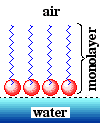
German physical chemist who founded capillary chemistry and whose research on liquids advanced knowledge of critical temperature (the point at which liquid and gas states of a substance are identical), osmosis, surface tension and colloids (suspensions of nanometer-sized particles). He studied liquids including gastric juice, urine, blood, and milk. He designed a viscometer to measure viscosity and a capillarimeter to measure capillary action, the rise of a liquid in a narrow tube. In 1891 he made what could be the first systematic observation of what is now commonly known as the hydrophobic effect. (A single molecular layer of a surfactant adsorbed to a planar liquid-vapour interface does so with hydrocarbon "tails" protruding.)
German physical chemist who founded capillary chemistry and whose research on liquids advanced knowledge of critical temperature (the point at which liquid and gas states of a substance are identical), osmosis, surface tension and colloids (suspensions of nanometer-sized particles). He studied liquids including gastric juice, urine, blood, and milk. He designed a viscometer to measure viscosity and a capillarimeter to measure capillary action, the rise of a liquid in a narrow tube. In 1891 he made what could be the first systematic observation of what is now commonly known as the hydrophobic effect. (A single molecular layer of a surfactant adsorbed to a planar liquid-vapour interface does so with hydrocarbon "tails" protruding.)
Born 31 Mar 1854; died 12 Nov 1932 at age 78.
Scottish inventor of the two-stroke Clerk cycle motorcycle engine, widely used on light motorcycles and other small machines. In 1881 he patented an engine he built in 1876 to run on hydrocarbon vapour which used an explosion once every two strokes of the piston rather than the once every fourof the more common Otto cycle used by most automobile engines. In another major research direction, he studied the properties of gaseous fuel and its heating and lighting applications. The British Admiralty appointed him director of engineering research in 1916, followed by his knighting in 1917. His work appears in the two volumes of The Gas, Petrol, and Oil Engine.
Scottish inventor of the two-stroke Clerk cycle motorcycle engine, widely used on light motorcycles and other small machines. In 1881 he patented an engine he built in 1876 to run on hydrocarbon vapour which used an explosion once every two strokes of the piston rather than the once every fourof the more common Otto cycle used by most automobile engines. In another major research direction, he studied the properties of gaseous fuel and its heating and lighting applications. The British Admiralty appointed him director of engineering research in 1916, followed by his knighting in 1917. His work appears in the two volumes of The Gas, Petrol, and Oil Engine.

English civil engineer and the chief designer of the railway bridge over the Firth of Forth, Scotland. His education began as an apprentice at the ironworks of Price & Fox, Neath Abbey, South Wales. In 1861, Baker became an assistant to the consulting engineer Sir John Fowler, and by 1875 was his partner. In 1890, he was the lead designer of the Firth of Forth Bridge with John Fowler. His other projects included several parts of the London Underground, transporting from Egypt and installing Cleopatra's Needle by the River Thames in London, the Aswan Dam on the Nile (Egypt; 1902) and the first Hudson River Tunnel (USA).[image right: Firth of Forth Bridge] more
Born 31 Mar 1839; died 20 Oct 1888 at age 49.
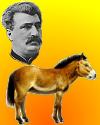
Russian explorer who discovered a wild camel and a primitive horse (named Przhevalsky's horse), during expeditions in the mountain regions between Tibet and Mongolia, collecting both plants and animals. In 1881, Przewalski made an official statement describing the horse: its appearance, characteristics and remote habitat. They lived in herds of 5 to 15 animals led by a stallion. He noted that they were alert and very shy, with acute hearing, very good eyesight and a highly developed sense of smell. They seemed to prefer saline soils and could survive for a long time without water. On his fifth expedition, while investigating Lake Issyk Kul's shores, he died after drinking typhoid-infected water. By 1969, the species was thought extinct in the wild. By breeding the few surviving in zoos, some have been reintroduced to the wild.«
Russian explorer who discovered a wild camel and a primitive horse (named Przhevalsky's horse), during expeditions in the mountain regions between Tibet and Mongolia, collecting both plants and animals. In 1881, Przewalski made an official statement describing the horse: its appearance, characteristics and remote habitat. They lived in herds of 5 to 15 animals led by a stallion. He noted that they were alert and very shy, with acute hearing, very good eyesight and a highly developed sense of smell. They seemed to prefer saline soils and could survive for a long time without water. On his fifth expedition, while investigating Lake Issyk Kul's shores, he died after drinking typhoid-infected water. By 1969, the species was thought extinct in the wild. By breeding the few surviving in zoos, some have been reintroduced to the wild.«
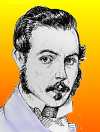
Born 31 Mar 1831; died 11 Mar 1892 at age 60. quotes
Scottish chemist who, independently of August Kekulé, proposed the tetravalency of carbon and the ability of carbon atoms to bond with one another to form long chains, which concepts are fundamental to understanding the molecules found in living organisms. He also created the use of a line between element symbols to indicate a chemical bond. He wrote these landmark ideas in a paper to be submitted to the French Academy of Sciences through his superior, Adolphe Wurtz. Sadly for Couper, that paper was not forwarded from the lab in a timely fashion, and meanwhile another chemist, August Kekulé had published the same, though independent, idea of tetravalence, depriving Couper of his due fame.
Scottish chemist who, independently of August Kekulé, proposed the tetravalency of carbon and the ability of carbon atoms to bond with one another to form long chains, which concepts are fundamental to understanding the molecules found in living organisms. He also created the use of a line between element symbols to indicate a chemical bond. He wrote these landmark ideas in a paper to be submitted to the French Academy of Sciences through his superior, Adolphe Wurtz. Sadly for Couper, that paper was not forwarded from the lab in a timely fashion, and meanwhile another chemist, August Kekulé had published the same, though independent, idea of tetravalence, depriving Couper of his due fame.
Born 31 Mar 1822; died 21 May 1897 at age 75. quotes
Johann Friedrich Theodor Müller was a German entomologist, botanist and zoologist whose important work was done in Brazil. In his field, he was among the most respected scientists of the nineteenth century. In fact, Charles Darwin called him the “prince of observers,” and trusted his opinions. Karl Haeckel was influenced by him. Müller embraced natural selection and contributed greatly to the emerging studies of evolutionary biology. An obituary in Nature asked “whether any other naturalist, save Darwin himself, has given the world so large and original a mass of observations of the kind by which natural selection has been most strongly supported.” He published these prolifically about insects, animals and plants. Today, his name is given in the term Müllerian mimicry whereby natural selection favors a toxic species with similar appearance to another toxic species that predators avoid.«
Johann Friedrich Theodor Müller was a German entomologist, botanist and zoologist whose important work was done in Brazil. In his field, he was among the most respected scientists of the nineteenth century. In fact, Charles Darwin called him the “prince of observers,” and trusted his opinions. Karl Haeckel was influenced by him. Müller embraced natural selection and contributed greatly to the emerging studies of evolutionary biology. An obituary in Nature asked “whether any other naturalist, save Darwin himself, has given the world so large and original a mass of observations of the kind by which natural selection has been most strongly supported.” He published these prolifically about insects, animals and plants. Today, his name is given in the term Müllerian mimicry whereby natural selection favors a toxic species with similar appearance to another toxic species that predators avoid.«
Fritz Muller: A Naturalist in Brazil, by David A. West. - book suggestion.
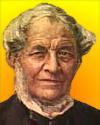

Robert Wilhelm Eberhard Bunsen was a German chemist who, working with Gustav Kirchhoff, about 1859 observed that each element emits a light of characteristic wavelength. (These studies opened the field of spectrum analysis, important in the study of the Sun and stars.) With this tool, Bunsen soon discovered two new elements: caesium and rubidium. He developed several techniques used in separating, identifying, and measuring various chemical substances. He also made a number of improvements in chemical batteries for use in isolating quantities of pure metals, (one is known as the Bunsen battery). His Bunsen burner was created for use in flame tests of various metals and salts because its nonluminous flame did not interfere with the colored flame given off by the test material.
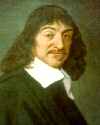
Born 31 Mar 1596; died 11 Feb 1650 at age 53. quotes
French philosopher and mathematician who is known as “the father of modern philosophy.” His work, La géométrie, includes his application of algebra to geometry from which we now have Cartesian geometry. During 1620-28, Descartes travelled through Europe, then settled in Holland. Soon after, he began work on his first major treatise on physics, Le Monde, ou Traité de la Lumière. This work was near completion when news that Galileo was condemned to house arrest reached him. He decided not to publish that work during his lifetime. Later, he turned to philosophy, one of the first to oppose scholastic Aristotelianism, he began by methodically doubting knowledge based on authority, the senses, and reason. His most famous quote is “I think, therefore I am.”
French philosopher and mathematician who is known as “the father of modern philosophy.” His work, La géométrie, includes his application of algebra to geometry from which we now have Cartesian geometry. During 1620-28, Descartes travelled through Europe, then settled in Holland. Soon after, he began work on his first major treatise on physics, Le Monde, ou Traité de la Lumière. This work was near completion when news that Galileo was condemned to house arrest reached him. He decided not to publish that work during his lifetime. Later, he turned to philosophy, one of the first to oppose scholastic Aristotelianism, he began by methodically doubting knowledge based on authority, the senses, and reason. His most famous quote is “I think, therefore I am.”
Descartes: A Biography, by Desmond M. Clarke. - book suggestion.

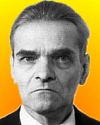
Died 31 Mar 1999 at age 76 (born 19 Nov 1922).
Russian linguist, epigraphist, and ethnologist who played a major role in the decipherment of Mayan hieroglyphic writing. Remarkably, though not permitted to leave the Soviet Union during the post-war decades he focused on the Mayan language, Knorozov still managed to decipher the phonetic code of the pre-Columbian society on the Mexican peninsula. Others before him had tried to "read" Maya glyphs without success, because they tried to interpret them in terms of an alphabet. Knorozov instead advocated phoneticisms. He realized that the purported alphabet represented a part of the Maya syllabary, and then identified many of the syllabic marks, or glyphs, found on the many Mayan tombs and monuments.
Russian linguist, epigraphist, and ethnologist who played a major role in the decipherment of Mayan hieroglyphic writing. Remarkably, though not permitted to leave the Soviet Union during the post-war decades he focused on the Mayan language, Knorozov still managed to decipher the phonetic code of the pre-Columbian society on the Mexican peninsula. Others before him had tried to "read" Maya glyphs without success, because they tried to interpret them in terms of an alphabet. Knorozov instead advocated phoneticisms. He realized that the purported alphabet represented a part of the Maya syllabary, and then identified many of the syllabic marks, or glyphs, found on the many Mayan tombs and monuments.
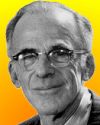
Died 31 Mar 1997 at age 82 (born 26 Jun 1914). quotes
American astrophysicist who advanced knowledge of physical processes in interstellar space and pioneered efforts to harness nuclear fusion as a clean energy source. He made major contributions in stellar dynamics and plasma physics. He founded study of the interstellar medium (gas and dust between stars from which new stars are formed). Spitzer studied in detail interstellar dust grains and magnetic fields as well as the motions of star clusters and their evolution. He studied regions of star formation and was among the first to suggest that bright stars in spiral galaxies formed recently. Spitzer was the first person to propose the idea of placing a large telescope in space and was the driving force behind the development of the Hubble Space Telescope.
American astrophysicist who advanced knowledge of physical processes in interstellar space and pioneered efforts to harness nuclear fusion as a clean energy source. He made major contributions in stellar dynamics and plasma physics. He founded study of the interstellar medium (gas and dust between stars from which new stars are formed). Spitzer studied in detail interstellar dust grains and magnetic fields as well as the motions of star clusters and their evolution. He studied regions of star formation and was among the first to suggest that bright stars in spiral galaxies formed recently. Spitzer was the first person to propose the idea of placing a large telescope in space and was the driving force behind the development of the Hubble Space Telescope.
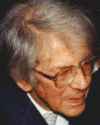
Died 31 Mar 1997 at age 101 (born 4 Feb 1896). quotes
Friedrich (Hermann) Hund was a German physicist known for his work on the electronic structure of atoms and molecules. He introduced a method of using molecular orbitals to determine the electronic structure of molecules and chemical bond formation. His empirical Hund's Rules (1925) for atomic spectra determine the lowest energy level for two electrons having the same n and l quantum numbers in a many-electron atom. (1) The lowest energy state has the maximum multiplicity consistent with the Pauli exclusion principle. (2) The lowest energy state has the maximum total electron orbital angular momentum quantum number, consistent with rule (1). They are explained by the quantum theory of atoms by calculations involving the repulsion between two electrons.
Friedrich (Hermann) Hund was a German physicist known for his work on the electronic structure of atoms and molecules. He introduced a method of using molecular orbitals to determine the electronic structure of molecules and chemical bond formation. His empirical Hund's Rules (1925) for atomic spectra determine the lowest energy level for two electrons having the same n and l quantum numbers in a many-electron atom. (1) The lowest energy state has the maximum multiplicity consistent with the Pauli exclusion principle. (2) The lowest energy state has the maximum total electron orbital angular momentum quantum number, consistent with rule (1). They are explained by the quantum theory of atoms by calculations involving the repulsion between two electrons.
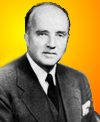
Died 31 Mar 1978 at age 79 (born 27 Feb 1899). quotes
Charles Herbert Best was an American-Canadian physiologist who, while 22 years old, assisted Dr Frederick Banting, in Toronto, Canada, with the discovery (1921) of a pancreatic extract - the hormone insulin - that could control diabetes in the dogs they used as test subjects. This led to human diabetics being treated with insulin. Banting (with J.J.R. Macleod) received the 1923 Nobel Prize for Physiology or Medicine. Best was not nominated because he did not receive his medical degree until 1925. However, Banting recognized Best's role by later voluntarily sharing the prize money with him. Best also discovered the vitamin choline and the enzyme histaminase. He was the first to introduce anticoagulants in treatment of thrombosis (blood clots). Best was born in Maine, U.S.A., but for his university studies he moved to Canada, where he remained.«
Charles Herbert Best was an American-Canadian physiologist who, while 22 years old, assisted Dr Frederick Banting, in Toronto, Canada, with the discovery (1921) of a pancreatic extract - the hormone insulin - that could control diabetes in the dogs they used as test subjects. This led to human diabetics being treated with insulin. Banting (with J.J.R. Macleod) received the 1923 Nobel Prize for Physiology or Medicine. Best was not nominated because he did not receive his medical degree until 1925. However, Banting recognized Best's role by later voluntarily sharing the prize money with him. Best also discovered the vitamin choline and the enzyme histaminase. He was the first to introduce anticoagulants in treatment of thrombosis (blood clots). Best was born in Maine, U.S.A., but for his university studies he moved to Canada, where he remained.«
Margaret and Charley: the personal story of Dr. Charles Best, by Henry B. M. Best. - book suggestion.
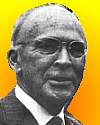
Died 31 Mar 1975 at age 75 (born 19 Jan 1900).
Leslie A(lvin) White was an American anthropologist best known for his theories of the evolution of culture and for the scientific study of culture that he called "culturology." Throughout his life, he was interested in general evolution. He strongly supported the ideas of the 19th-century writers Herbert Spencer, Lewis H. Morgan and Edward Tylor. White adopted many of their ideas and gave them a fresh approach. He coined the term "culturology" because he believed that cultures should not be explained in terms of psychology, biology, or physiology, but rather in its own category. He was especially interested by technological advancements pertaining to effects on advancing culture.
Leslie A(lvin) White was an American anthropologist best known for his theories of the evolution of culture and for the scientific study of culture that he called "culturology." Throughout his life, he was interested in general evolution. He strongly supported the ideas of the 19th-century writers Herbert Spencer, Lewis H. Morgan and Edward Tylor. White adopted many of their ideas and gave them a fresh approach. He coined the term "culturology" because he believed that cultures should not be explained in terms of psychology, biology, or physiology, but rather in its own category. He was especially interested by technological advancements pertaining to effects on advancing culture.
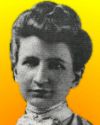
Died 31 Mar 1945 at age 73 (born 11 Oct 1871).
American archaeologist and social activist who gained renown for her discoveries of ancient remains in Crete. She went to Crete in 1900, and with the encouragement of Arthur Evans, began to excavate a Minoan site at Kavousi where she discovered some Iron Age Tombs. From 1901-05 she led a large team that excavated the early Bronze Age Minoan town of Gournia, becoming the first woman to head a major archaeological dig. As a community of humble artisans, Gournia was of particular interest to archaeologists, complementing as it did the more elaborate palaces being unearthed at Knossos and elsewhere. In 1908 she published her monumental work on Gournia. During WW I she went to Corfu to help nurse the Serbians (1916).
American archaeologist and social activist who gained renown for her discoveries of ancient remains in Crete. She went to Crete in 1900, and with the encouragement of Arthur Evans, began to excavate a Minoan site at Kavousi where she discovered some Iron Age Tombs. From 1901-05 she led a large team that excavated the early Bronze Age Minoan town of Gournia, becoming the first woman to head a major archaeological dig. As a community of humble artisans, Gournia was of particular interest to archaeologists, complementing as it did the more elaborate palaces being unearthed at Knossos and elsewhere. In 1908 she published her monumental work on Gournia. During WW I she went to Corfu to help nurse the Serbians (1916).
Born to Rebel: The Life of Harriet Boyd Hawes, by Mary Allsebrook. - book suggestion.
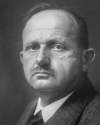
Died 31 Mar 1945 at age 63 (born 27 Jul 1881).
German biochemist who was awarded the Nobel Prize for Chemistry in 1930 for research into the constitution of haemin, the red blood pigment, and chlorophyll, the green pigment in plants and especially for his synthesis of haemin (1929), non-protein part of haemoglobin that gives blood its red colour. He further showed that chlorophylls are porphyrins and that they share a similar structure with haemin, but with subtle differences. Following the destruction of his laboratory during WWII air raids, dispair led to suicide, just one month before Germany surrendered.
German biochemist who was awarded the Nobel Prize for Chemistry in 1930 for research into the constitution of haemin, the red blood pigment, and chlorophyll, the green pigment in plants and especially for his synthesis of haemin (1929), non-protein part of haemoglobin that gives blood its red colour. He further showed that chlorophylls are porphyrins and that they share a similar structure with haemin, but with subtle differences. Following the destruction of his laboratory during WWII air raids, dispair led to suicide, just one month before Germany surrendered.
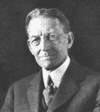
c. 1940 (EB)
Died 31 Mar 1945 at age 80 (born 5 Dec 1864).
U.S. botanist and agricultural biologist who was one of the first and most distinguished of American plant pathologists. Jones began his career at a time when his specialty, plant pathology, was emerging as an offshoot of mycology, plant therapeutics, and bacteriology. He was always on the research frontier of each new development, and he has been credited with initiating interest in the environmental aspects of plant pathology. He pioneered in the use of Bordeaux mixture in the US. He began what became a 20-year experimental program of spraying various mixtures on different varieties of potatoes. For the Department of Agriculture he searched in Europe for disease-resistant potatoes. He also carried out fundamental studies on the bacterial soft rot of carrots and other vegetables. Although his work tended to focus on the diseases of economically important plants, the results were also contributions to basic science. His studies made possible a much greater control of potato diseases and a resulting increase in yield.
U.S. botanist and agricultural biologist who was one of the first and most distinguished of American plant pathologists. Jones began his career at a time when his specialty, plant pathology, was emerging as an offshoot of mycology, plant therapeutics, and bacteriology. He was always on the research frontier of each new development, and he has been credited with initiating interest in the environmental aspects of plant pathology. He pioneered in the use of Bordeaux mixture in the US. He began what became a 20-year experimental program of spraying various mixtures on different varieties of potatoes. For the Department of Agriculture he searched in Europe for disease-resistant potatoes. He also carried out fundamental studies on the bacterial soft rot of carrots and other vegetables. Although his work tended to focus on the diseases of economically important plants, the results were also contributions to basic science. His studies made possible a much greater control of potato diseases and a resulting increase in yield.
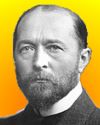
Died 31 Mar 1917 at age 63 (born 15 Mar 1854).
Emil Adolf von Behring was a German bacteriologist who is considered the founder of the science of immunology. He received in 1901 the first Nobel Prize for Physiology or Medicine for his work on serum therapy, especially its application against diphtheria. In 1890, working with S. Kitasato, he discovered that immunity against tetanus and diphtheria could be produced by injecting serum from an animal that had recovered from the disease. He coined the word antitoxin for such substances. They also showed that the antitoxins thus produced by one animal could immunize another animal and that it could cure an animal actually showing symptoms of diphtheria. This great discovery was soon confirmed and successfully used by other workers.
Emil Adolf von Behring was a German bacteriologist who is considered the founder of the science of immunology. He received in 1901 the first Nobel Prize for Physiology or Medicine for his work on serum therapy, especially its application against diphtheria. In 1890, working with S. Kitasato, he discovered that immunity against tetanus and diphtheria could be produced by injecting serum from an animal that had recovered from the disease. He coined the word antitoxin for such substances. They also showed that the antitoxins thus produced by one animal could immunize another animal and that it could cure an animal actually showing symptoms of diphtheria. This great discovery was soon confirmed and successfully used by other workers.
Emil von Behring: Infectious Disease, Immunology, Serum Therapy, by Derek S. Linton. - book suggestion.
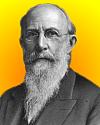
Died 31 Mar 1903 at age 76 (born 29 May 1826).
American manufacturer who is regarded as the inventor of graded paper patterns for clothing (1859), first sold in Sterling in Jun 1863. Formerly, a sewer had to enlarge or reduce from one standard pattern to make the required size. As a tailor, Butterick understood the need, and filled it by supplying tissue paper patterns in sizes. At first, these graded sewing patterns were cut and folded by members of his family and sold from their home in Sterling, Massachusetts. The business grew quickly, and in 1869 he moved to New York City. A box of one hundred patterns were sold at a wholesale price of $10 (retail $25). Also in 1869, he founded Metropolitan, a fashion magazine, to promote pattern sales. In the following years, he established subsidiary offices in all important centres in the U.S. and abroad.« more
American manufacturer who is regarded as the inventor of graded paper patterns for clothing (1859), first sold in Sterling in Jun 1863. Formerly, a sewer had to enlarge or reduce from one standard pattern to make the required size. As a tailor, Butterick understood the need, and filled it by supplying tissue paper patterns in sizes. At first, these graded sewing patterns were cut and folded by members of his family and sold from their home in Sterling, Massachusetts. The business grew quickly, and in 1869 he moved to New York City. A box of one hundred patterns were sold at a wholesale price of $10 (retail $25). Also in 1869, he founded Metropolitan, a fashion magazine, to promote pattern sales. In the following years, he established subsidiary offices in all important centres in the U.S. and abroad.« more
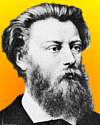
1880

Pavel Nikolayevich Yablochkov (or Paul Jablochkov) was a Russian electrical engineer who invented an improved arc lamp, known as the Yablochkov candle (1876). Being cheap and relatively inexpensive, it was used in public buildings and to light streets for several decades before the advent of incandescent lighting which required much less maintenance. A brilliant white light was produced by an electric arc between two parallel carbon rods, using alternating current to ensure that the rods vaporised at equal rates. Yablochkov candles were used from 1877 in Paris, and were installed in London along Victoria Embankment (1878), followed by Billingsgate fish market, the Mansion House and Holborn Viaduct.«[Image right: Yablochkov candle.]
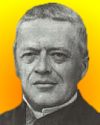
Died 31 Mar 1877 at age 75 (born 28 Aug 1801). quotes
French economist and mathematician, who was the first economist who applied mathematics to the treatment of economic questions. In 1838, he published Recherches sur les principes mathématiques de la théorie des richesses (Researches into the Mathematical Principles of the Theory of Wealth) which was a treatment of mathematical economics. In particular, he considered the supply-and-demand functions. Further, he studied the conditions for equilibrium with monopoly, duopoly and perfect competition. He included the effect of taxes, treated as changes in production costs, and discussed problems of international trade. His definition of a market is still the basis for that presently used in economics. In other work, he applied probability to legal statistics.«
French economist and mathematician, who was the first economist who applied mathematics to the treatment of economic questions. In 1838, he published Recherches sur les principes mathématiques de la théorie des richesses (Researches into the Mathematical Principles of the Theory of Wealth) which was a treatment of mathematical economics. In particular, he considered the supply-and-demand functions. Further, he studied the conditions for equilibrium with monopoly, duopoly and perfect competition. He included the effect of taxes, treated as changes in production costs, and discussed problems of international trade. His definition of a market is still the basis for that presently used in economics. In other work, he applied probability to legal statistics.«
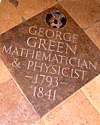
Memorial stone
Died 31 Mar 1841 at age 47 (born 14 Jul 1793). quotes
English mathematician who was the first to develop a mathematical theory of electricity and magnetism. Astonishingly, he followed his father's trade as a baker and miller. He not only was self-taught as a mathematician, but in Mar 1828 he privately published a few dozen copies of a sophisticated work, An Essay on the Application of Mathematical Analysis to the Theories of Electricity and Magnetism. At first it drew little attention, but by age 40, he went to study at Cambridge (Oct 1833). Eventually his Essay became known to Lord Kelvin (William Thomson) who understood it and built upon it, as well as James Clerk Maxwell. From obscure origins, Green had initiated modern mathematical theories of electricity.«
English mathematician who was the first to develop a mathematical theory of electricity and magnetism. Astonishingly, he followed his father's trade as a baker and miller. He not only was self-taught as a mathematician, but in Mar 1828 he privately published a few dozen copies of a sophisticated work, An Essay on the Application of Mathematical Analysis to the Theories of Electricity and Magnetism. At first it drew little attention, but by age 40, he went to study at Cambridge (Oct 1833). Eventually his Essay became known to Lord Kelvin (William Thomson) who understood it and built upon it, as well as James Clerk Maxwell. From obscure origins, Green had initiated modern mathematical theories of electricity.«

In 2003, Calder Hall nuclear power station was closed at the end of an almost 47 years of service since it was opened on 17 Oct 1956. It was the world's first commercial nuclear power station that was connected to a national electricity grid.
Calder Hall: The story of Britain's First Atomic Power Station, by Kenneth Edmund Brian Jay. - book suggestion.
In 1989, a 150-million-year-old fossil egg discovered in Utah was found by CAT scan to contain the oldest dinosaur embryo. The egg was still inside the mother, supposedly. is the first known egg from the 100-million-year gap in the fossil record between Lower Jurassic (South Africa) and upper Lower Cretaceous (Utah). The discovery of the egg, which was found mixed in with thousands of dinosaur bones rather than in a nest, the pathological multilayering of the eggshell as found in modern and fossil reptilians, and the pliable condition of the eggshell at the time of burial indicate an oviducal retention of the egg at the time of burial.Ref: Hirsch, K.F.; Stadtman, K.L.; Miller, W.E. & Madsen, J.H.Jr. (1989) Upper Jurassic dinosaur egg from Utah. Science, 243: 1711-1713.
Eggs, Nests, and Baby Dinosaurs: A Look at Dinosaur Reproduction, by Kenneth Carpenter. - book suggestion.
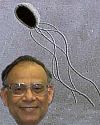
In 1981, a new single cell genetically engineered life form patent was issued to Ananda Chakrabarty (U.S. No. 4,259,444). The Pseudomonas bacterium (now called Burkholderia cepacia) can be used to clean up toxic spills because it can break down crude oil into simpler substances that can even become food for aquatic life. This ability is possessed by no naturally occurring bacteria. A 16 Jun 1980 U.S. Supreme Court decision in the case “Diamond vs. Chakrabarty” held that forms of life can be patented if they are the outcome of “human ingenuity and research” and not “nature's handiwork.” The ruling, made by a majority of five to four, cleared the way for patents to be issued also on genetically-engineered mice and other animals.«[Image: B. cepacia, bacterium; inset: Chakrabarty]
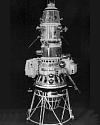
In 1966, Luna 10, the first spacecraft to orbit the moon, was launched by the USSR from an Earth orbiting platform. It entered lunar orbit on 3 Apr 1966 and completed its first orbit 3 hours later. The scientific instruments on board included a gamma-ray spectrometer, triaxial magnetometer, and a meteorite detector. Other instruments investigated the solar-plasma, infrared emissions from the Moon, radiation conditions of the lunar environment and gravitational studies. Luna 10 transmitted the Internationale during the 23rd Congress of the Communist Party of the Soviet Union. It was battery powered, operated for 460 lunar orbits and made 219 radio data transmissions before 30 May 1966, when its batteries were out of power.«
In 1961, the first African-American chosen for the Manned Orbiting Laboratory program was E. J. Dwight, Jr. However, he was not selected for MOL training.*
In 1958, the U.S. Navy established the world’s first Atomic Submarine Division. It had been announced to the press earlier in the month (17 Mar 1958), and reported in the New York Times the next day. Three atomic submarines, Nautilus, Sea Wolf, and Skate, joined three diesel powered submarines, Hardhead, Bang and Halfbreak. The latter were to be replaced as more atomic submarines were commissioned, beginning with the launch of the Skipjack (26 May 1958). For the first three months, Atomic Submarine Division 102 was under the command of Comdr. Roger G. Black, a WW II submarine veteran. Command was to be passed in July to Capt. Eugene P. Wilkinson, (first skipper of the Nautilus, the world's first atomic submarine) after he completed studies at the Naval War College.«
In 1956, the first U.S. space cabin simulator was tested.*
In 1937, the first U.S. newspaper to be printed in colour on pine-pulp paper was the Dallas News.*
In 1933, the first newspaper in the U.S. to be printed on pine-pulp paper was at Soberton, Georgia.*
In 1932, The Ford Motor Company publicly unveiled its "V-8" engine.
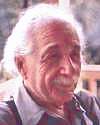
In 1921, Professor Albert Einstein arrived in New York to give a lecture on his new theory of relativity.
Subtle Is the Lord: The Science and the Life of Albert Einstein, by Abraham Pais. - book suggestion.

In 1918, the U.S. first began daylight saving time (DST) on Easter Sunday, when clocks were set ahead by one hour. The idea was sponsored by the Daylight Savings Association. N.Y. Senator William M. Calder introduced the bill to Congress on 17 Apr 1917. It was initially defeated, but subsequently passed by roll-call on 27 Jun 1917. In recent years in the U.S., up to 2006, clocks were changed at 2 a.m. on the first Sunday in April, and reverted on the last Sunday of October. Effective in 2007, DST is set by Congress to begin on the second Sunday of March and end the first Sunday of November. The concept had already been introduced in Great Britain as a fuel-saving measure during wartime, in order to conserve coal stocks during WW I.* [Image: Poster displayed in New Haven Railroad stations, 1941]
Seize the Daylight: The Curious and Contentious Story of Daylight Savings Time, by David Prerau. - book suggestion.
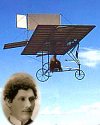
In 1903, New Zealander Richard Pearse (1877-1953) reputedly flew a powered heavier-than-air machine, some nine months before the Wright brothers' more famous and well documented flight. Pearse built a high-wing monoplane powered by his design of a petrol engine. Accounts vary, but his flight was probably 350 yards in the air, though uncontrolled, ending with the machine striking a large hedge. The aircraft was the first to use proper ailerons, instead of the inferior wing warping system that the Wright's used. Also, Pearse's machine had a modern tricycle undercarriage permitting takeoff without ramps or skids. However, his propeller was cruder than the Wrights'. Some sources date his first flight to 31 Mar 1902, and others later.«[Image: from reproduction of Pearse's aircraft on his memorial at the site of his flight, Waitohi, New Zealand]
The Riddle of Richard Pearse: The Story of New Zealand's Pioneer Aviator and Inventor, by Gordon Ogilvie. - book suggestion.
In 1896, the first U.S. patent for a hookless fastener based on a slider was issued to Whitcomb L. Judsen of Chicago Illinois (No. 557,207). It was designed for fastening shoes, whereby two metal chains were fastened together by the movement of a slider. He held a previous patent (No. 504,038 issued 29 Aug 1893) for a hookless fastening design for shoes, which used a clasp locker and unlocker.*
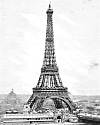
In 1889, the Eiffel Tower, Paris, France, was inaugurated, becoming the world’s tallest tower of its era. With a height of 300-m (986-ft), it remained the world’s tallest structure until surpassed by the Empire State Building, 40 years later. The designer Gustave Eiffel, 56, celebrated by unfurling a French flag at the top of the tower. The immense iron latticework design was chosen unanimously from 700 proposals submitted in a competition. Construction took from 26 Jan 1887 to 31 Mar 1889, using 300 steel workers. It was erected for the Paris Exposition of 1889, which had 1,968,287 visitors. Elevators were powered from machinery in the basements of the eastern and western pillars. «[Image: Exposition universelle de 1889 - La Tour Eiffel au Champ de Mars á Paris, engraving in La Nature.]

Brush arc lamp
In 1880, Wabash, Indiana, became the first U.S. town which completely replaced gas lamps with electric street lighting. Four 4,000 candle-power Brush arc lamps, suspended 50 ft above the business district were powered by a small dynamo connected to a threshing machine’s steam engine, outside the courthouse (where one of the original lamps is still on display). “Promptly as the courthouse clock struck eight…a shower of sparks emitted from a point above…growing more brilliant until…it was absolutely dazzling.” From Wabash Plain Dealer: “People stood overwhelmed with awe, as if in the presence of the supernatural. The strange, weird light, exceeded in power only by the sun, rendered the square as light as midday.…Men fell on their knees…and many were dumb with amazement.”
more
Electrifying America: Social Meanings of a New Technology, 1880-1940, by David E. Nye. - book suggestion.
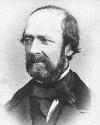
Foucault
In 1851, Leon Foucault demonstrated his pendulum experiment at the Pantheon of Paris at the request of Napoleon Bonaparte, who had been informed of Foucault's recent discovery on 6 Jan 1851. He had installed a pendulum in his cellar in the Arras Street of Paris. It was made from 2 m (6.5-ft) long wire supporting a 5-kg weight. He observed a small movement of the oscillation plane of the pendulum - showing that the Earth was rotating underneath the swinging pendulum. A month later, he repeated the experiment at the observatory of Paris, with a 11-m pendulum which gave longer swings and a more clearly visible deviation. His March demonstration at the Pantheon used a 28-kg sphere on a 67-m (220-ft) wire.
In 1814, the first U.S. patent for a cottonseed hulling machine was issued to John Lineback of Salem, N.C.*
In 1796, Joseph Bramah obtained a British patent for his hydraulic (or hydrostatic) press under the title of “certain new methods of producing and applying a more considerable degree of power to all kinds of mechanical apparatus and other machinery requiring motion and force, than by any means at present practiced for the purpose.” It applied Pascal's hydrostatic principle that a pressure exerted on any portion of the surface of a confined fluid is propagated throughout the fluid. Such great forces could be accomplished that iron girders, anchors and such products could be tested to sustain great weights and strains. His machines could also press goods for packing, or be used to extract vegetable oils.«
In 1791, a contract was made for the first lighthouse built after American independence, the Cape Henry lighthouse. It was to be built by John McComb, Jr..*




