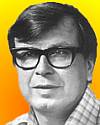
Born 9 Sep 1923; death reported 12 Dec 2008 at age 85.
Daniel Carleton Gajdusek was an American physician and virologist who shared (with Baruch S. Blumberg) the 1976 Nobel Prize for Physiology or Medicine “for their discoveries concerning new mechanisms for the origin and dissemination of infectious dieases.” He identified the cause of kuru, an unusual fatal disease that resulted in a slow degeneration of the brain. He reported that it was was rife among the isolated Fore tribe in New Guinea, who in a funeral ritual honoured their dead by eating their brains. William Hadlow suggested that kuru (Forean for “trembling with fear”) was similar to scrapie in sheep with a years-long incubation period. Gajdusek confirmed this was the mode for the kuru viral infection to spread. He did further work on this a new viral group—the slow-moving virus. In 1997 he was jailed for one year after pleading guilty to child abuse.«
Daniel Carleton Gajdusek was an American physician and virologist who shared (with Baruch S. Blumberg) the 1976 Nobel Prize for Physiology or Medicine “for their discoveries concerning new mechanisms for the origin and dissemination of infectious dieases.” He identified the cause of kuru, an unusual fatal disease that resulted in a slow degeneration of the brain. He reported that it was was rife among the isolated Fore tribe in New Guinea, who in a funeral ritual honoured their dead by eating their brains. William Hadlow suggested that kuru (Forean for “trembling with fear”) was similar to scrapie in sheep with a years-long incubation period. Gajdusek confirmed this was the mode for the kuru viral infection to spread. He did further work on this a new viral group—the slow-moving virus. In 1997 he was jailed for one year after pleading guilty to child abuse.«
The Virus that Ate Cannibals: Six Great Medical Detective Stories, by Carol Eron. - book suggestion.
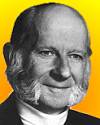
Born 9 Sep 1922.
German-born American physicist who “for the development of the ion trap technique” shared the 1989 Nobel Prize for Physics (with the German physicist Wolfgang Paul and Norman Ramsey) Their methods enabled the study of a single electron or a single ion with extreme precision. Delmelt's electromagnetic device, the Penning trap, in 1973 successfully observed a single electron in the trap. In 1975, he introduced a technique for “cooling” the electron. Later in the 1970's, Dehmelt together with P. Toschek were able to observe a single ion in a trap. This led to single-ion spectroscopy, a new type of spectroscopy.«
German-born American physicist who “for the development of the ion trap technique” shared the 1989 Nobel Prize for Physics (with the German physicist Wolfgang Paul and Norman Ramsey) Their methods enabled the study of a single electron or a single ion with extreme precision. Delmelt's electromagnetic device, the Penning trap, in 1973 successfully observed a single electron in the trap. In 1975, he introduced a technique for “cooling” the electron. Later in the 1970's, Dehmelt together with P. Toschek were able to observe a single ion in a trap. This led to single-ion spectroscopy, a new type of spectroscopy.«
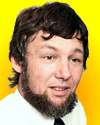
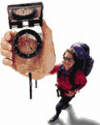
Swedish co-inventor of the Silva compass designed with a compass capsule filled with a motion-damping fluid, a rotating compass dial, and a transparent protractor baseplate. He helped develop it (1932), with his brothers Alvar and Alvid Kjellstrom, and Gunnar Tillander. Bjorn moved to the U.S., and founded Silva, Inc. in LaPorte, Indiana (1946). He also started Silva Ltd., Toronto, Canada (1948). Kjellstrom helped introduce the orienteering sport to the U.S. (1946), in part as a way to promote his product. He wrote Be Expert with Map and Compass (1955). It has been called the “bible of orienteering.” A publicity slogan used was: “Read this or get lost.” He co-founded the U.S. Orienteering Federation in 1971.«
Be Expert with Map and Compass, by Bjorn Kjellstrom. - book suggestion.
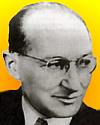
Born 9 Sep 1890; died 12 Feb 1947 at age 56. quotes
German-American psychologist who originated the field theory of behaviour. He was among the first to apply laboratory techniques to everyday behavior. He would always formulate a problem in terms of a theory to be tested in experiments. His approach was to study the forces leading to action. Thus he described behaviour as the outcome of positive and negative forces affecting the individual at a given moment. This needed consideration of two kinds of factors, those of the person and those of his psychological environment. Thus his field theory is an approach to the study of human behavior, rather than a theory which has content which can be used for explanatory, predictive, or control purposes.«
German-American psychologist who originated the field theory of behaviour. He was among the first to apply laboratory techniques to everyday behavior. He would always formulate a problem in terms of a theory to be tested in experiments. His approach was to study the forces leading to action. Thus he described behaviour as the outcome of positive and negative forces affecting the individual at a given moment. This needed consideration of two kinds of factors, those of the person and those of his psychological environment. Thus his field theory is an approach to the study of human behavior, rather than a theory which has content which can be used for explanatory, predictive, or control purposes.«
The Complete Social Scientist: A Kurt Lewin Reader, by Kurt Lewin and Martin Gold. - book suggestion.
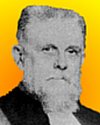
Born 9 Sep 1853; died 13 Apr 1940 at age 86.
French neurologist who made fundamental contributions to endocrinology. He trained at the Salpetriere under Jean Martin Charcot, and hia assistant. Marie developed an early interest in nervous diseases. His doctoral thesis was on Basedow's disease and its characteristic tremour in extended arms and fingers. In 1982 he published a series of lectures he had given on diseases of the spinal cord. He studied and was the first (1886-1891) to describe acromegaly, a form of gigantism of the extremities (Gr. akron, extremity; megas, large). Marie's discovery that growth disorders result from a disorder of the pituitary gland was a fundamental contribution to the emerging field of endocrinology.«
French neurologist who made fundamental contributions to endocrinology. He trained at the Salpetriere under Jean Martin Charcot, and hia assistant. Marie developed an early interest in nervous diseases. His doctoral thesis was on Basedow's disease and its characteristic tremour in extended arms and fingers. In 1982 he published a series of lectures he had given on diseases of the spinal cord. He studied and was the first (1886-1891) to describe acromegaly, a form of gigantism of the extremities (Gr. akron, extremity; megas, large). Marie's discovery that growth disorders result from a disorder of the pituitary gland was a fundamental contribution to the emerging field of endocrinology.«
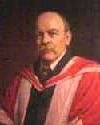
Born 9 Sep 1852; died 30 Mar 1914 at age 61. quotes
British physicist who introduced a theorem (1884-85) that assigns a value to the rate of flow of electromagnetic energy known as the Poynting vector, introduced in his paper On the Transfer of Energy in the Electromagnetic Field (1884). In this he showed that the flow of energy at a point can be expressed by a simple formula in terms of the electric and magnetic forces at that point. He determined the mean density of the Earth (1891) and made a determination of the gravitational constant (1893) using accurate torsion balances. He was also the first to suggest, in 1903, the existence of the effect of radiation from the Sun that causes smaller particles in orbit about the Sun to spiral close and eventually plunge in.
British physicist who introduced a theorem (1884-85) that assigns a value to the rate of flow of electromagnetic energy known as the Poynting vector, introduced in his paper On the Transfer of Energy in the Electromagnetic Field (1884). In this he showed that the flow of energy at a point can be expressed by a simple formula in terms of the electric and magnetic forces at that point. He determined the mean density of the Earth (1891) and made a determination of the gravitational constant (1893) using accurate torsion balances. He was also the first to suggest, in 1903, the existence of the effect of radiation from the Sun that causes smaller particles in orbit about the Sun to spiral close and eventually plunge in.
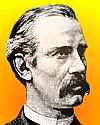
Born 9 Sep 1843; died 4 Nov 1921 at age 78.
Swedish archaeologist who sought to establish foundations for prehistoric chronology, especially that of the Bronze Age in the British Isles and Europe northward to Scandinavia. He developed a relative chronological dating method, known as Swedish seriation. During the early ages of archaeology, accurate records were sometimes kept, sometimes not. His technique dated artifacts based on geography and comparisons from artifacts within a certain geographical area. Montelius' method looked at individual artifacts and placed them using contemporary written records on a timeline specific to the location. Based on the absolute date of that artifact, other artifacts of that geographical region are compared and dated.
Swedish archaeologist who sought to establish foundations for prehistoric chronology, especially that of the Bronze Age in the British Isles and Europe northward to Scandinavia. He developed a relative chronological dating method, known as Swedish seriation. During the early ages of archaeology, accurate records were sometimes kept, sometimes not. His technique dated artifacts based on geography and comparisons from artifacts within a certain geographical area. Montelius' method looked at individual artifacts and placed them using contemporary written records on a timeline specific to the location. Based on the absolute date of that artifact, other artifacts of that geographical region are compared and dated.
(source)
Born 9 Sep 1842; died 25 Dec 1899 at age 57.
American army surgeon and ornithologist whose Key to North American Birds (1872) was the first work of its kind to present a taxonomic classification of birds according to an artificial key and promoted the systematic study of North American. Beginning the U.S. army as a medical cadet during the Civil War (1862), he became an assistant surgeon (1864-81). His interest in the study of birds began while a boy. He met many naturalists at the Smithsonian Institution and published his first technical paper at age 19. As his army assignments took him to various locations throughout the West, he continued studying the bird life in each new area, and found new species. He also did valuable work in mammalogy and wrote a book, Fur-Bearing Animals (1877).«
American army surgeon and ornithologist whose Key to North American Birds (1872) was the first work of its kind to present a taxonomic classification of birds according to an artificial key and promoted the systematic study of North American. Beginning the U.S. army as a medical cadet during the Civil War (1862), he became an assistant surgeon (1864-81). His interest in the study of birds began while a boy. He met many naturalists at the Smithsonian Institution and published his first technical paper at age 19. As his army assignments took him to various locations throughout the West, he continued studying the bird life in each new area, and found new species. He also did valuable work in mammalogy and wrote a book, Fur-Bearing Animals (1877).«
Elliott Coues: Naturalist and Frontier Historian, by Paul Russell Cutright, Michael J. Brodhead. - book suggestion.
1863
Born 9 Sep 1823; died 30 Apr 1891 at age 67. quotes
American zoologist who made significant contributions in a remarkably wide range of earth and natural science disciplines, including comparative anatomy, parasitology, and paleontology. As the Father of American Vertibrate Paleontology, he described not only the first relatively complete dinosaur skeleton, but the diversity of fossil finds in the American West. His knowledge of comparative anatomy enabled him to make sense of even fragmentary fossil remains. He was also a competent microscopist, scientific illustrator, and published papers in human biology and medicine. His microscopic examination of parasite cysts in cooked ham and microorganisms in housefly mouthparts enabled him to improve public heath.«
American zoologist who made significant contributions in a remarkably wide range of earth and natural science disciplines, including comparative anatomy, parasitology, and paleontology. As the Father of American Vertibrate Paleontology, he described not only the first relatively complete dinosaur skeleton, but the diversity of fossil finds in the American West. His knowledge of comparative anatomy enabled him to make sense of even fragmentary fossil remains. He was also a competent microscopist, scientific illustrator, and published papers in human biology and medicine. His microscopic examination of parasite cysts in cooked ham and microorganisms in housefly mouthparts enabled him to improve public heath.«
Joseph Leidy: The Last Man Who Knew Everything, by Leonard Warren. - book suggestion.
Born 9 Sep 1794; died 11 Nov 1871 at age 77.
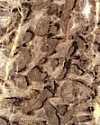
English geologist and paleontologist whose study of coral fossils found in Devon, suggested (1837) certain of them were intermediate between those typical of the older Silurian System (408 to 438 million years old) and those of the later Carboniferous System (286 to 360 million years old). Geologists Roderick Murchison and Adam Sedgwick agreed. They named (1839) this new geologic system after its locale—the Devonian System. Lonsdale's early career was as an army officer (1812-15) and later he became curator and librarian of the Geological Society of London (1829-42). He recognised that fossils showed how species changed over time, and more primitive organisms are found in lower strata. Charles Darwin used this to support his evolution theory.«[Image: Coral-rich limestone from Petitor, Devon.] more
English geologist and paleontologist whose study of coral fossils found in Devon, suggested (1837) certain of them were intermediate between those typical of the older Silurian System (408 to 438 million years old) and those of the later Carboniferous System (286 to 360 million years old). Geologists Roderick Murchison and Adam Sedgwick agreed. They named (1839) this new geologic system after its locale—the Devonian System. Lonsdale's early career was as an army officer (1812-15) and later he became curator and librarian of the Geological Society of London (1829-42). He recognised that fossils showed how species changed over time, and more primitive organisms are found in lower strata. Charles Darwin used this to support his evolution theory.«[Image: Coral-rich limestone from Petitor, Devon.] more
Born 9 Sep 1789; died 29 Jan 1859 at age 69.
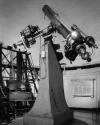
American astronomer who, with his son, George Phillips Bond (1825-65), discovered Hyperion, the eighth satellite of Saturn, and an inner ring called Ring C, or the Crepe Ring. While W.C. Bond was a young clockmaker in Boston, he spent his free time in the amateur observatory he built in part of his home. In 1815 he was sent by Harvard College to Europe to visit existing observatories and gather data preliminary to the building of an observatory at Harvard. In 1839 the observatory was founded. He supervised its construction, then became its first director. Together with his son he developed the chronograph for automatically recording the position of stars. They also took some of the first recognizable photographs of celestial objects.Image: The Harvard College Observatory's 15-inch telescope known as “The Great Refractor”, installed 1846.
American astronomer who, with his son, George Phillips Bond (1825-65), discovered Hyperion, the eighth satellite of Saturn, and an inner ring called Ring C, or the Crepe Ring. While W.C. Bond was a young clockmaker in Boston, he spent his free time in the amateur observatory he built in part of his home. In 1815 he was sent by Harvard College to Europe to visit existing observatories and gather data preliminary to the building of an observatory at Harvard. In 1839 the observatory was founded. He supervised its construction, then became its first director. Together with his son he developed the chronograph for automatically recording the position of stars. They also took some of the first recognizable photographs of celestial objects.Image: The Harvard College Observatory's 15-inch telescope known as “The Great Refractor”, installed 1846.
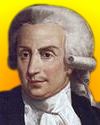
Born 9 Sep 1737; died 4 Dec 1798 at age 61. quotes
Italian physician and physicist studied the structure of organs and the physiology of tissues who is best known for his investigation of the nature and effects of what he conceived to be electricity in animal tissue. He observed how frog muscles twitched when they were touched by metal contacts but he wrongly attributed this to innate "animal electricity" (the current was actually produced by the metal contacts). This was disputed by Alessandro Volta who, in the course of this argument, invented his electrochemical cell. The current produced by this device was for many years called galvanic electricity. The galvanometer was named after him.
Italian physician and physicist studied the structure of organs and the physiology of tissues who is best known for his investigation of the nature and effects of what he conceived to be electricity in animal tissue. He observed how frog muscles twitched when they were touched by metal contacts but he wrongly attributed this to innate "animal electricity" (the current was actually produced by the metal contacts). This was disputed by Alessandro Volta who, in the course of this argument, invented his electrochemical cell. The current produced by this device was for many years called galvanic electricity. The galvanometer was named after him.
Born 9 Sep 1734; died 18 Jun 1816 at age 81. quotes
Welsh apothecary, active in Manchester scientific circles, who translated Antoine Lavoisier's Opuscles, and manufactured and sold calcined magnesia for medicinal purposes.
Welsh apothecary, active in Manchester scientific circles, who translated Antoine Lavoisier's Opuscles, and manufactured and sold calcined magnesia for medicinal purposes.


Died 9 Sep 2003 at age 95 (born 15 Jan 1908). quotes
Hungarian-American nuclear physicist who participated in the production of the first atomic bomb (1945) and who led the development of the world's first thermonuclear weapon, the hydrogen bomb. After studying in Germany he left in 1933, going first to London and then to Washington, DC. He worked on the first atomic reactor, and later working on the first fission bombs during WW II at Los Alamos. Subsequently, he made a significant contribution to the development of the fusion bomb. His work led to the detonation of the first hydrogen bomb (1952). He is sometimes known as “the father of the H-bomb.” Teller's unfavourable evidence in the Robert Oppenheimer security-clearance hearing lost him some respect amongst scientists.
Hungarian-American nuclear physicist who participated in the production of the first atomic bomb (1945) and who led the development of the world's first thermonuclear weapon, the hydrogen bomb. After studying in Germany he left in 1933, going first to London and then to Washington, DC. He worked on the first atomic reactor, and later working on the first fission bombs during WW II at Los Alamos. Subsequently, he made a significant contribution to the development of the fusion bomb. His work led to the detonation of the first hydrogen bomb (1952). He is sometimes known as “the father of the H-bomb.” Teller's unfavourable evidence in the Robert Oppenheimer security-clearance hearing lost him some respect amongst scientists.
Died 9 Sep 2003 at age 99 (born 11 Nov 1903).
English physicist who was a leading authority on high-voltage physics, a member of the Anglo-American team that worked on the atomic bomb, and the last surviving direct colleague of Ernest Rutherford, the father of nuclear physics. Allibone proposed to Rutherford that he could build a powerful generator to provide the huge voltages needed artificially to accelerate electrons in a vacuum tube. By 1927, Allibone had built the Voltage Doubler, a device in which electrons and atoms could be accelerated at high speeds, which was used by Rutherford and his team in their subsequent researches on particle acceleration. In 1944 he joined the British team working on the Manhattan project to build the atomic bomb in Berkeley, Cal., and Oak Ridge, Tenn.
English physicist who was a leading authority on high-voltage physics, a member of the Anglo-American team that worked on the atomic bomb, and the last surviving direct colleague of Ernest Rutherford, the father of nuclear physics. Allibone proposed to Rutherford that he could build a powerful generator to provide the huge voltages needed artificially to accelerate electrons in a vacuum tube. By 1927, Allibone had built the Voltage Doubler, a device in which electrons and atoms could be accelerated at high speeds, which was used by Rutherford and his team in their subsequent researches on particle acceleration. In 1944 he joined the British team working on the Manhattan project to build the atomic bomb in Berkeley, Cal., and Oak Ridge, Tenn.
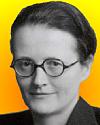
Died 9 Sep 2003 at age 100 (born 8 Sep 1903).
German-British pharmacologist who left Nazi Germany for Britain and became a leading authority on neurotransmitters in the brain. In 1936 she co-authored a classic paper proving that acetylcholine from nerves originating in the spinal cord triggers movement in muscles. She later showed that the hormones epinephrine and norepinephrine help brain cells communicate. Her classic paper on sympathin, published in 1954, helped to pave the way to transforming the lives of the mentally ill. Modern anti-depressant drug therapy is grounded in increasing the availability of amines, predicated on the idea that amines are present and active in the brain in the first place, something which Vogt did much to establish.
German-British pharmacologist who left Nazi Germany for Britain and became a leading authority on neurotransmitters in the brain. In 1936 she co-authored a classic paper proving that acetylcholine from nerves originating in the spinal cord triggers movement in muscles. She later showed that the hormones epinephrine and norepinephrine help brain cells communicate. Her classic paper on sympathin, published in 1954, helped to pave the way to transforming the lives of the mentally ill. Modern anti-depressant drug therapy is grounded in increasing the availability of amines, predicated on the idea that amines are present and active in the brain in the first place, something which Vogt did much to establish.
Died 9 Sep 2000 at age 84 (born 21 Jun 1916).
American astronomer who made seminal contributions to the study of solar radiation. He joined the Naval Research Laboratory in 1940 and developed defense-related radiation detection devices during WW II. In 1949, he obtained the first scientific proof that X rays emanate from the sun. When he directed the firing into space of a V-2 rocket carrying a detecting instrument. Through rocket astronomy, he also produced the first ultraviolet map of celestial bodies, and gathered information for the theory that stars are being continuously formed, on space radiation affecting Earth and on the nature of gases in space. He also made fundamental advances in the application of x rays to material analysis.
American astronomer who made seminal contributions to the study of solar radiation. He joined the Naval Research Laboratory in 1940 and developed defense-related radiation detection devices during WW II. In 1949, he obtained the first scientific proof that X rays emanate from the sun. When he directed the firing into space of a V-2 rocket carrying a detecting instrument. Through rocket astronomy, he also produced the first ultraviolet map of celestial bodies, and gathered information for the theory that stars are being continuously formed, on space radiation affecting Earth and on the nature of gases in space. He also made fundamental advances in the application of x rays to material analysis.
The Astronomer's Universe, by Herbert Freidman. - book suggestion.
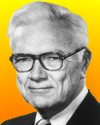
Died 9 Sep 1985 at age 75 (born 19 Jun 1910). quotes
American physical chemist, recipient of the Nobel Prize for Chemistry in 1974 for his investigations of synthetic and natural macromolecules. He researched commercially successful polymers, the processes by which polymers form, and their properties in bulk and in solution. Flory showed how an understanding the sizes and shapes of these flexible molecules is important to establish relationships between their chemical structures and their physical properties.
American physical chemist, recipient of the Nobel Prize for Chemistry in 1974 for his investigations of synthetic and natural macromolecules. He researched commercially successful polymers, the processes by which polymers form, and their properties in bulk and in solution. Flory showed how an understanding the sizes and shapes of these flexible molecules is important to establish relationships between their chemical structures and their physical properties.
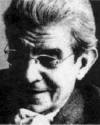
Died 9 Sep 1981 at age 80 (born 13 Apr 1901). quotes
Jacques Marie Émile Lacan was a French psychoanalyst who gained an international reputation as an original interpreter of Sigmund Freud's work. Probably the most controversial figure in French psychiatry, Jacques Lacan dedicated himself to getting strictly back to Freud by way of structural linguistics. After being expelled in 1953 from the International Psychoanalytic Association for unorthodox analytical practices, Lacan, along with Daniel Lagache, created the Societe Francaise de Psychoanalyse. As his theoretical positions continued to develop, Lacan and his followers went on to found the Ecole Freudienne in Paris in 1964. His Ecrits (1966) gained Lacan international attention. Leading intellectuals flocked to his seminars and he exercised a cryptic but powerful influence on the French cultural scene of the 1970s. Concerned that the Ecole was losing its integrity, Lacan dissolved it in 1980.
Jacques Marie Émile Lacan was a French psychoanalyst who gained an international reputation as an original interpreter of Sigmund Freud's work. Probably the most controversial figure in French psychiatry, Jacques Lacan dedicated himself to getting strictly back to Freud by way of structural linguistics. After being expelled in 1953 from the International Psychoanalytic Association for unorthodox analytical practices, Lacan, along with Daniel Lagache, created the Societe Francaise de Psychoanalyse. As his theoretical positions continued to develop, Lacan and his followers went on to found the Ecole Freudienne in Paris in 1964. His Ecrits (1966) gained Lacan international attention. Leading intellectuals flocked to his seminars and he exercised a cryptic but powerful influence on the French cultural scene of the 1970s. Concerned that the Ecole was losing its integrity, Lacan dissolved it in 1980.
Died 9 Sep 1975 at age 76 (born 31 Dec 1898).
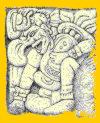
Sir John Eric Sidney Thompson was an English ethnographer who was a leading researcher of the Mayan people. Thompson devoted his life to the study of Mayan culture and was able to extensively decipher early Mayan glyphs, determining that, contrary to prevailing belief, they contained historical as well as ritualistic and religious records. Sir Eric Thompson believed that Maya society was organized around religion, specifically star-worship. He thought that the Maya lived peacefully in villages and were ruled by priests that were more concerned with making astronomical calculation than political competition for power. With the discovery during the 1980's of how to decipher the Maya language, it was learned that almost every aspect of the traditional view of the Maya was wrong.
Sir John Eric Sidney Thompson was an English ethnographer who was a leading researcher of the Mayan people. Thompson devoted his life to the study of Mayan culture and was able to extensively decipher early Mayan glyphs, determining that, contrary to prevailing belief, they contained historical as well as ritualistic and religious records. Sir Eric Thompson believed that Maya society was organized around religion, specifically star-worship. He thought that the Maya lived peacefully in villages and were ruled by priests that were more concerned with making astronomical calculation than political competition for power. With the discovery during the 1980's of how to decipher the Maya language, it was learned that almost every aspect of the traditional view of the Maya was wrong.
Maya Archaeologist, by John Eric Sidney Thompson. - book suggestion.
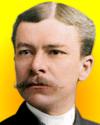

Edward Hibberd Johnson was an American electrical engineer and inventor who spent many years in various business projects with Thomas Edison, including as vice-president of the Edison Electric Light Company. They met when Johnson, as manager of the Automatic Telegraph Company, hired the 24-year-old Thomas Edison. As Edison's talent as an inventor propelled him into developing his invention laboratory and commercial enterprises, Johnson became his business executive and eventually president of Edison Electric Illuminating Co. of New York (organized 17 Dec 1880) which later became today's Con Edison. Johnson created the first electric lights on a Christmas tree on 22 Dec 1882, which he displayed in the window of his New York home. The hand-wired string of bulbs had been made for him, with 80 walnut-sized lamps glowing in equal numbers of red, white and blue light.«* more
Died 9 Sep 1901 at age 45 (born 12 May 1856).
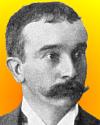
German botanist whose Pflanzentogeographie (1898) was one of the first and finest mapping of the floral regions of the continents. He coined (1885) the term chloroplasts (the organelles in plant cells that conduct photosynthesis), and distinguished them from chromatophores (pigment-containing cells found in many marine animals). In 1880, he proved that starch is the source of stored energy for plants. His explorations included Florida, the West Indies, South America, and Indonesia. On the Valdivia expedition (1898) he studied the oceanic plankton of numerous oceanic islands and coastal Africa. His father, Wilhelm Philipp Schimper was an expert on mosses and whose cousin Karl Friedrich Schimper studied plant morphology.«
German botanist whose Pflanzentogeographie (1898) was one of the first and finest mapping of the floral regions of the continents. He coined (1885) the term chloroplasts (the organelles in plant cells that conduct photosynthesis), and distinguished them from chromatophores (pigment-containing cells found in many marine animals). In 1880, he proved that starch is the source of stored energy for plants. His explorations included Florida, the West Indies, South America, and Indonesia. On the Valdivia expedition (1898) he studied the oceanic plankton of numerous oceanic islands and coastal Africa. His father, Wilhelm Philipp Schimper was an expert on mosses and whose cousin Karl Friedrich Schimper studied plant morphology.«
Died 9 Sep 1896 at age 89 (born 22 Apr 1807).
Physicist.
Physicist.
Died 9 Sep 1894 at age 67 (born 18 Feb 1827).
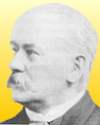
German Egyptologist who pioneered in deciphering demotic, the simplified script of the later Egyptian periods. As a boy he visited the Berlin Museum and became fascinated with its Egyptian artifacts, an interest fostered by Guiseppe Passalacqua, the Museum's curator of the Egyptian collection. On visiting Egypt 1853 as consul for the Prussian government, he joined the French archaeologist August Mariette in his excavations at Memphis. He was director of the School of Egyptology in Cairo (1870-79). His greatest strength was the ancient Egyptian language, and a pioneer in the study of demotic. Brugsch recognized the Semitic side of Egyptian grammar, thus enabling a far more comprehensive and systematic understanding of hieroglyphs.
German Egyptologist who pioneered in deciphering demotic, the simplified script of the later Egyptian periods. As a boy he visited the Berlin Museum and became fascinated with its Egyptian artifacts, an interest fostered by Guiseppe Passalacqua, the Museum's curator of the Egyptian collection. On visiting Egypt 1853 as consul for the Prussian government, he joined the French archaeologist August Mariette in his excavations at Memphis. He was director of the School of Egyptology in Cairo (1870-79). His greatest strength was the ancient Egyptian language, and a pioneer in the study of demotic. Brugsch recognized the Semitic side of Egyptian grammar, thus enabling a far more comprehensive and systematic understanding of hieroglyphs.
(EB)
Died 9 Sep 1841 at age 63 (born 4 Feb 1778).
Swiss botanist whose prolific writings in taxonomy and botany were highly influential, particularly his belief that taxonomy should be based on morphological characters, and his scheme of classification, for which he coined the term taxonomy, prevailed for many years. Candolle achieved extensive subdivision of flowering plants, describing 161 families of dicotyledons, and demonstrated decisively the inadequacy of Linnaean classification, which his system supplanted. Candolle also contributed to agronomy and the linking of soil type with vegetation. He also pioneered the study of phytogeography, the biogeography of plants, by carrying out investigations in Brazil (1827), East India (1829), and North China (1834).
Swiss botanist whose prolific writings in taxonomy and botany were highly influential, particularly his belief that taxonomy should be based on morphological characters, and his scheme of classification, for which he coined the term taxonomy, prevailed for many years. Candolle achieved extensive subdivision of flowering plants, describing 161 families of dicotyledons, and demonstrated decisively the inadequacy of Linnaean classification, which his system supplanted. Candolle also contributed to agronomy and the linking of soil type with vegetation. He also pioneered the study of phytogeography, the biogeography of plants, by carrying out investigations in Brazil (1827), East India (1829), and North China (1834).
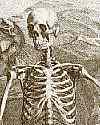
German anatomist who was the first to show the connection of the vascular systems of the mother and the fetus. He is best known for the excellent drawings in his Tabulae sceleti et musculorum corporis humani (1747; “Tables of the Skeleton and Muscles of the Human Body”). Together with Hermann Boerhaave, he edited the works of the physicians Andreas Vesalius and William Harvey.(source)
(NASA)
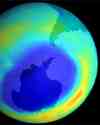
In 2000, the hole in the ozone layer over Antarctica stretched over a populated city for the first time, after ballooning to a new record size. For two days, Sept. 9-10, the hole extended over the southern Chile city of Punta Arenas, exposing residents to very high levels of ultra violet radiation. Too much UV radiation can cause skin cancer and destroy tiny plants at the beginning of the food chain. Previously, the hole had only opened over Antarctica and the surrounding ocean. Data from the U.S. space agency NASA showed the hole covered 11.4 million square miles - an area more than three times the size of the United States.Image, compiled from NASA's Total Ozone Mapping Spectrometer instrument onboard the Earth Probe satellite, reveals how the ozone hole (in deep blue) has extended as far as southern Chile.
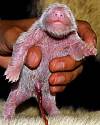
In 1963, the first ever live birth in captivity of a giant panda in the world took place at Beijing Zoo, China, when the male Ming Ming was born to the mother Li Li. Attempts to breed pandas in captivity began in China in 1955. «[Image: panda cub born in China in 2006, This baby weighed 218 grams at birth, the heaviest panda born in captivity. Usual birth weight is between 83 to 190 grams]
In 1945, the first “bug” in a computer program was discovered by Grace Hopper: a moth was removed with tweezers from a relay and taped into the log.
In 1934, the first rocket fired in America to break the sound barrier was lanched by the American Rocket Society from Marine Park, Staten Island, New York. The rocket, named ARS-4, had a single thrust chamber with four canted nozzles. Its flight reached a top speed of 700 mph, a maxium height of 400-ft,1,600-ft horizontal range and ended in New York Bay. On an earlier attempt, 10 Jun 1934, it did not fly because the fuel ports were too small. The society was founded on 4 Apr 1930, originally named the American Interplanetary Society. Their pioneering work designing and testing several liquid-fuelled rockets led the way to the U.S. space program.«*
Blazing The Trail: The Early History Of Spacecraft And Rocketry, by Mike Gruntman. - book suggestion.
In 1929, the discovery of Konel, a new metal alloy was announced by Erwin Foster Lowry, of the Westinghouse Electric and Mfg. Co. research department of Pittsburgh, Pennsylvania. The name reflects the cobalt (ko-) and nickel (-kel) in the alloy. An interesting characteristic is that konel grows stronger at high temperatures, whereas other metal becomes weaker with heat. For example, at 600ºC, konel has twice the tensile strength of chrome nickel steel. When used in oxide-coated filaments for radio vacuum tubes (replacing expensive platinum), konel gives much better electron emission. Other uses include turbine blades; also car engine valve stems and pistons. Its composition is 73% Ni; 17.5% Co; 6.5% Fe; 2.5% Ti; 0.2% Mn.«

In 1926, the National Broadcasting Company (NBC) was created by the Radio Corporation of America (RCA), shortly after the acquistion (May 1926) of the radio network operations of AT&T, which had decided to withdraw from radio. The new NBC network was publicized with full-page ads in many publications. The new network's debut broadcast was transmitted on 15 Nov 1926. The network assets bought from AT&T with stations in major cities of several states became the NBC-Red network (a designation reflecting its origin when the inter-city circuit charts were marked with telephone links between network radio stations in red pencil. The smaller existing network of the buyer became NBC-Blue.«
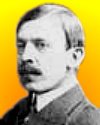
Biggs
In 1892, the New York City health department established the first diagnostic public heath laboratory in the U.S. as its Division of Pathology, Bacteriology and Disinfection. It was spurred by the scare of Asiatic cholera at the time. In 1887, Drs. Hermann M. Biggs and T. Mitchell Prudden had been able to isolate cholera vibrios from passengers on a ship of immigrants. Biggs lobbied for the establishment of a laboratory for the purpose, and was able to use this new diagnosis when he was made director of the new Division. From the testing of suspected cholera cases he initiated, he was able to make positive identification of several among them. In 1893, the laboratory expanded its work to test for diphtheria and tuberculosis.* more
and T. Mitchell Prudden had been able to isolate cholera vibrios from passengers on a ship of immigrants. Biggs lobbied for the establishment of a laboratory for the purpose, and was able to use this new diagnosis when he was made director of the new Division. From the testing of suspected cholera cases he initiated, he was able to make positive identification of several among them. In 1893, the laboratory expanded its work to test for diphtheria and tuberculosis.* more The Sanitarians: A History of American Public Health, by John Duffy. - book suggestion.
(USPTO)
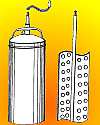
In 1843, a U.S. patent was issued, antedated to 29 Jul 1843, for a hand-cranked ice-cream freezer invented by Nancy M. Johnson (No. 3,254). In previous designs, the ice-cream mixture was held in an inner container, which vessel was itself was rotated within an outer container of ice and salt. Her invention was to add a vertical shaft with curved, perforated paddles within the inner vessel, and reaching nearly to its inside wall. Stirring in one direction would carry the the liquid or semi-fluid mass from the centre to the circumference. Turning in the opposite direction would scrape frozen material and carry it from the inner walls to the centre of the freezer. Thus fresh matter continuously reached the freezing surface.«[Image: detail from patent diagram showing inner container and its paddle.]
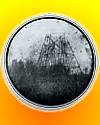
In 1839, John Herschel made the first (remaining) photograph on glass plate. The image he captured was of the 40-foot, 48" aperture telescope used by his father William Herschel, in Slough, England. It had sat decades without use, and was dismantled a short time later. Twenty years earlier, in 1819, Herschel published the results of his experiments with silver and salts. A chance comment about Daguerre's experiments in a letter to his wife on 22 Jan 1839 from a friend prompted John into new activity, and within a few days, he had prepared some photographs. In papers he published in 1840-42, he coined the new words "emulsion", "positive" and "negative" and reinforced Stenger's earlier introduction of the word "photography."«
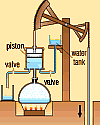
In 1753, the first steam engine imported into the American colonies landed at New York City on the S.S. Irene, which left London on 6 Jun 1753. It was installed to pump water from a copper mine owned by Col. John Schuyler in New Barbadoes Neck (now North Arlington), New Jersey. It arrived there on 25 Sep 1753, was erected, and in operation on 12 Mar 1755. Josiah Hornblower, 25, who came with it from England, superintended the engine, becoming America's first steam engineer. Arent Schuyler, who had owned a large tract of land since 1695, started the copper mine after a slave turned up green copper ore while plowing. He exported the ore to England. His son John later took over managing the mine after his death.*«[Image: Schematic of the Newcomen engine, or atmospheric engine, of the period which was already in use in the tin mines of Cornwall. The building in which it was housed is not shown.]




