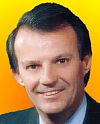
Born 3 Dec 1942.
American ceramicist who, working with Corning Glass researchers Robert Maurer and Donald Keck, made optical fiber, capable of carrying 65,000 times more information than conventional copper wire, a practical reality. In 1970, Maurer, Keck, and Schultz designed and produced the first optical fiber with optical losses low enough for wide use in telecommunications. Optical fiber is made from silicon dioxide (pure sand) and quartz powder to make a hollow rod. A heated gas is then blown through the hollow rod to leave a thin deposit of ultrapure glass on the inside of the rod. The tube is then heated and collapsed into a solid rod with and ultrapure glass core. These "rods" of glass are thinner than a hair and can bend or flex, they are very resilient.
American ceramicist who, working with Corning Glass researchers Robert Maurer and Donald Keck, made optical fiber, capable of carrying 65,000 times more information than conventional copper wire, a practical reality. In 1970, Maurer, Keck, and Schultz designed and produced the first optical fiber with optical losses low enough for wide use in telecommunications. Optical fiber is made from silicon dioxide (pure sand) and quartz powder to make a hollow rod. A heated gas is then blown through the hollow rod to leave a thin deposit of ultrapure glass on the inside of the rod. The tube is then heated and collapsed into a solid rod with and ultrapure glass core. These "rods" of glass are thinner than a hair and can bend or flex, they are very resilient.
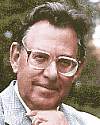
Born 3 Dec 1933. quotes
Paul Josef Crutzen is a Dutch chemist who received the 1995 Nobel Prize for Chemistry for demonstrating, in 1970, that chemical compounds of nitrogen oxide accelerate the destruction of stratospheric ozone, which protects the Earth from the Sun's ultraviolet radiation. His work, published in 1970, that showed that the nitrogen oxides NO and NO2 react catalytically with ozone, thus accelerating the rate of ozone breakdown to O2 in the stratosphere. These nitrogen oxides are formed principally by decay of nitrous oxide (N2O) which originates from microbiological transformations in the soil. He shared the prize with chemists Mario Molina and F. Sherwood Rowland, who discovered in 1974 that manufactured chlorofluorocarbon gases also contribute to ozone depletion.
Paul Josef Crutzen is a Dutch chemist who received the 1995 Nobel Prize for Chemistry for demonstrating, in 1970, that chemical compounds of nitrogen oxide accelerate the destruction of stratospheric ozone, which protects the Earth from the Sun's ultraviolet radiation. His work, published in 1970, that showed that the nitrogen oxides NO and NO2 react catalytically with ozone, thus accelerating the rate of ozone breakdown to O2 in the stratosphere. These nitrogen oxides are formed principally by decay of nitrous oxide (N2O) which originates from microbiological transformations in the soil. He shared the prize with chemists Mario Molina and F. Sherwood Rowland, who discovered in 1974 that manufactured chlorofluorocarbon gases also contribute to ozone depletion.
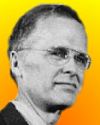
Born 3 Dec 1924; died 28 Oct 1988 at age 63.
American computer scientist who invented the FORTRAN (FORmula TRANslation) programming language in the mid 1950s. He had previously developed an assembly language for IBM's 701 computer when he suggested the development of a compiler and higher level language for the IBM 704. As the first high-level computer programming language, FORTRAN was able to convert standard mathematical formulas and expressions into the binary code used by computers. Thus a non-specialist could write a program in familiar words and symbols, and different computers could use programs generated in the same language. This paved the way for other computer languages such as COBOL, ALGOL and BASIC.
American computer scientist who invented the FORTRAN (FORmula TRANslation) programming language in the mid 1950s. He had previously developed an assembly language for IBM's 701 computer when he suggested the development of a compiler and higher level language for the IBM 704. As the first high-level computer programming language, FORTRAN was able to convert standard mathematical formulas and expressions into the binary code used by computers. Thus a non-specialist could write a program in familiar words and symbols, and different computers could use programs generated in the same language. This paved the way for other computer languages such as COBOL, ALGOL and BASIC.
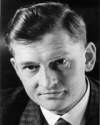
Born 3 Dec 1900; died 1 Aug 1967 at age 66.
Austrian biochemist who was awarded the 1938 Nobel Prize for Chemistry for work on carotenoids and vitamins. In 1933, Kuhn had discovered a third carotene isomer. It was called gamma-carotene because two other components were previously known in carotene, C40H56, a compound found in carrots. Those were the optically inactive alpha-carotene and the optically active beta-carotene (which rotates the plane of polarized light to the right). Initially, Kuhn was required by Hitler to refuse the award because Hitler was offended by the Nobel Peace Prize for Carl von Ossietzky in a Nazi concentration camp. Kuhn finally received his diploma and gold medal after World War II in 1949.«[EB and a NYT obituary give date of death 1 Aug 1967. DSB gives 31 Jul 1967.]
Austrian biochemist who was awarded the 1938 Nobel Prize for Chemistry for work on carotenoids and vitamins. In 1933, Kuhn had discovered a third carotene isomer. It was called gamma-carotene because two other components were previously known in carotene, C40H56, a compound found in carrots. Those were the optically inactive alpha-carotene and the optically active beta-carotene (which rotates the plane of polarized light to the right). Initially, Kuhn was required by Hitler to refuse the award because Hitler was offended by the Nobel Peace Prize for Carl von Ossietzky in a Nazi concentration camp. Kuhn finally received his diploma and gold medal after World War II in 1949.«[EB and a NYT obituary give date of death 1 Aug 1967. DSB gives 31 Jul 1967.]
1927
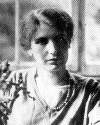
Born 3 Dec 1895; died 9 Oct 1982 at age 86.
Austrian psychoanalyst, who was Sigmund Freud's daughter. As a founder of child psychoanalysis, she was one of its foremost practitioners. She also made fundamental contributions to understanding how the ego, or consciousness, functions in averting painful ideas, impulses, and feelings. Important in her own right, but diverging from her father in emphasizing the role of the ego (as opposed to id forces) in psychological functioning. Her book The Ego and Mechanisms of Defense (1936) laid the groundwork for ego psychology. She was one of the first psychoanalysts to work primarily with children.
Austrian psychoanalyst, who was Sigmund Freud's daughter. As a founder of child psychoanalysis, she was one of its foremost practitioners. She also made fundamental contributions to understanding how the ego, or consciousness, functions in averting painful ideas, impulses, and feelings. Important in her own right, but diverging from her father in emphasizing the role of the ego (as opposed to id forces) in psychological functioning. Her book The Ego and Mechanisms of Defense (1936) laid the groundwork for ego psychology. She was one of the first psychoanalysts to work primarily with children.
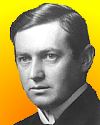
Born 3 Dec 1886; died 26 Sep 1978 at age 91.
Karl Manne Georg was a Swedish physicist who was awarded the Nobel Prize for Physics in 1924 for his discoveries and investigations in X-ray spectroscopy. In 1914 he began his studies in the new science of x-ray spectroscopy which had already established from x-ray spectra that there were two distinct 'shells' of electrons within atoms, each giving rise to groups of spectral lines, labeled 'K' and 'L'. In 1916, Siegbahn discovered a third, or 'M', series. (More were to be found later in heavier elements.) Refining his x-ray equipment and technique, he was able to significantly increase the accuracy of his determinations of spectral lines. This allowed him to make corrections to Bragg's equation for x-ray diffraction to allow for the finer details of crystal diffraction.
Karl Manne Georg was a Swedish physicist who was awarded the Nobel Prize for Physics in 1924 for his discoveries and investigations in X-ray spectroscopy. In 1914 he began his studies in the new science of x-ray spectroscopy which had already established from x-ray spectra that there were two distinct 'shells' of electrons within atoms, each giving rise to groups of spectral lines, labeled 'K' and 'L'. In 1916, Siegbahn discovered a third, or 'M', series. (More were to be found later in heavier elements.) Refining his x-ray equipment and technique, he was able to significantly increase the accuracy of his determinations of spectral lines. This allowed him to make corrections to Bragg's equation for x-ray diffraction to allow for the finer details of crystal diffraction.
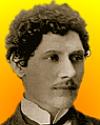
Born 3 Dec 1877; died 29 Jul 1953 at age 75.
New Zealand inventor and aviation pioneer who at age 21, turned from farming his 100 acres of land, and built a workshop with a forge and a lathe to become an inventor. His first patent was a type of bicycle. By 1902, Pearse had probably built a lightweight two-cylinder engine and first plane out of bamboo, tubular steel, wire and canvas. Accounts of the dates and details of his flights vary because they were not documented, but it is believed that on 31 Mar 1903 he made at least a powered takeoff, though not a controlled, sustained flight, covering perhaps 350 yards before crashing into a tall gorse fence. (It would be the fifth successful powered takeoff in the world.) He made other inventions in his life. Pearse died poor, in a mental hospital.«
New Zealand inventor and aviation pioneer who at age 21, turned from farming his 100 acres of land, and built a workshop with a forge and a lathe to become an inventor. His first patent was a type of bicycle. By 1902, Pearse had probably built a lightweight two-cylinder engine and first plane out of bamboo, tubular steel, wire and canvas. Accounts of the dates and details of his flights vary because they were not documented, but it is believed that on 31 Mar 1903 he made at least a powered takeoff, though not a controlled, sustained flight, covering perhaps 350 yards before crashing into a tall gorse fence. (It would be the fifth successful powered takeoff in the world.) He made other inventions in his life. Pearse died poor, in a mental hospital.«
The Riddle of Richard Pearse: The Story of New Zealand's Pioneer Aviator and Inventor, by Gordon Ogilvie. - book suggestion.
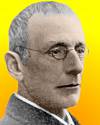
Born 3 Dec 1861; died 4 Mar 1951 at age 89. quotes
British geologist who coined the name mélange for a certain form of large-scale breccia, a metamorphic rock formed from the grinding and mixing of material at a downward moving tectonic plate in a subduction zone. His magnum opus was the now-classic two-volume The Geology of Anglesey (1919). It was the result of his nearly 25-year devotion to producing a detailed survey of the island. Anglesey lies off the NW coast of Wales with an area of 276 sq. mi. (714 km²). His career began with the Geological Survey in Scotland, which he left in 1895 to begin his chosen study of Anglesey.«
British geologist who coined the name mélange for a certain form of large-scale breccia, a metamorphic rock formed from the grinding and mixing of material at a downward moving tectonic plate in a subduction zone. His magnum opus was the now-classic two-volume The Geology of Anglesey (1919). It was the result of his nearly 25-year devotion to producing a detailed survey of the island. Anglesey lies off the NW coast of Wales with an area of 276 sq. mi. (714 km²). His career began with the Geological Survey in Scotland, which he left in 1895 to begin his chosen study of Anglesey.«
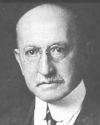
Born 3 Dec 1857; died 21 Mar 1944 at age 86.
Czech-born American ophthalmic surgeon whose introduction of cocaine as a surface anesthetic in eye surgery on 16 Sep 1884 inaugurated the modern era of local anesthesia. He was a colleague of Sigmund Freud, who in 1884 was interested in the use of cocaine to cure morphine addiction. Koller noticed cocaine had a numbing effect on the tongue and, after experimenting with animals, introduced it as a local anaesthetic in ophthalmology. It was also quickly adopted for nose and throat surgery and for dentistry. Cocaine was isolated in 1859 and was synthesized in 1885. It became evident that this agent produced erosion of the corneal epithelium in high doses or with repeated use. Later, less toxic, synthetic local anesthetics such as tetracaine and proparacaine were developed.
Czech-born American ophthalmic surgeon whose introduction of cocaine as a surface anesthetic in eye surgery on 16 Sep 1884 inaugurated the modern era of local anesthesia. He was a colleague of Sigmund Freud, who in 1884 was interested in the use of cocaine to cure morphine addiction. Koller noticed cocaine had a numbing effect on the tongue and, after experimenting with animals, introduced it as a local anaesthetic in ophthalmology. It was also quickly adopted for nose and throat surgery and for dentistry. Cocaine was isolated in 1859 and was synthesized in 1885. It became evident that this agent produced erosion of the corneal epithelium in high doses or with repeated use. Later, less toxic, synthetic local anesthetics such as tetracaine and proparacaine were developed.
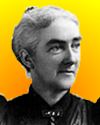
Born 3 Dec 1842; died 30 Mar 1911 at age 68. quotes
American chemist (née Ellen Henrietta Swallow) who was the founder of the home economics movement in the United States. She was the first woman admitted to the Massachusetts Institute of Technology (MIT), graduated with a B.S. in 1873, and stayed on as a chemistry assistant. She set to work analyzing Boston's water supply. In Nov 1876, she created the Woman's Laboratory at MIT where women could learn the rudiments of science. In 1884, MIT made Richards its first woman faculty member. She helped develop a new curriculum in air, water, and sewage chemistry. However, she also saw the home and child-rearing as complex and important work, saying the women who did it should be educated. She spent thirty years developing the concept of domestic science.
American chemist (née Ellen Henrietta Swallow) who was the founder of the home economics movement in the United States. She was the first woman admitted to the Massachusetts Institute of Technology (MIT), graduated with a B.S. in 1873, and stayed on as a chemistry assistant. She set to work analyzing Boston's water supply. In Nov 1876, she created the Woman's Laboratory at MIT where women could learn the rudiments of science. In 1884, MIT made Richards its first woman faculty member. She helped develop a new curriculum in air, water, and sewage chemistry. However, she also saw the home and child-rearing as complex and important work, saying the women who did it should be educated. She spent thirty years developing the concept of domestic science.
Ellen Swallow: The Woman Who Founded Ecology, by Robert Clarke. - book suggestion.
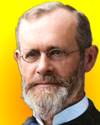
Born 3 Dec 1838; died 28 Oct 1916 at age 77. quotes
American meteorologist, inventor and astronomer, America’s first professional meteorologist, “father of the U.S. Weather Bureau.” He interpreted (1867) the Magellanic Clouds as separate satellites of the Milky Way. From 1 Sep 1869, Abbe issued bulletins and warnings as a private weather reporting service in Cincinnati, Ohio. By 9 Feb 1870, Congress authorized a newly named National Weather Service, under the Signal Service. Abbe was the only American experienced in gathering telegraphic reports to draw weather maps and make forecasts. Hence, Abbe was asked to lead the nation’s official weather forecaster; he accepted on 3 Jan 1871. He wrote on the atmosphere, the climate in relation to crops, and introduced the system of Standard Time.«
American meteorologist, inventor and astronomer, America’s first professional meteorologist, “father of the U.S. Weather Bureau.” He interpreted (1867) the Magellanic Clouds as separate satellites of the Milky Way. From 1 Sep 1869, Abbe issued bulletins and warnings as a private weather reporting service in Cincinnati, Ohio. By 9 Feb 1870, Congress authorized a newly named National Weather Service, under the Signal Service. Abbe was the only American experienced in gathering telegraphic reports to draw weather maps and make forecasts. Hence, Abbe was asked to lead the nation’s official weather forecaster; he accepted on 3 Jan 1871. He wrote on the atmosphere, the climate in relation to crops, and introduced the system of Standard Time.«
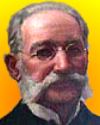
Born 3 Dec 1833; died 20 Aug 1915 at age 81.
Cuban epidemiologist who contributed to the etiology and pathology of yellow fever. He pioneered the recognition of the mosquito as the agent of transmission from infected to healthy humans, which idea he published in 1881. This disease can cause horrible deaths in epidemic numbers. His experimental work pointed to the mosquito, Aedes aegypti. Despite the publication of his significant work in 1886, his ideas were ahead of their time, and ignored by the medical community until 20 years later, then 14 years after his death. His work was taken up by the Reed Commission in 1900. Finlay served in Cuba as the chairman of the commission on infectious diseases, Havana (1899-1902) and chief sanitary officer (1902-09).«
Cuban epidemiologist who contributed to the etiology and pathology of yellow fever. He pioneered the recognition of the mosquito as the agent of transmission from infected to healthy humans, which idea he published in 1881. This disease can cause horrible deaths in epidemic numbers. His experimental work pointed to the mosquito, Aedes aegypti. Despite the publication of his significant work in 1886, his ideas were ahead of their time, and ignored by the medical community until 20 years later, then 14 years after his death. His work was taken up by the Reed Commission in 1900. Finlay served in Cuba as the chairman of the commission on infectious diseases, Havana (1899-1902) and chief sanitary officer (1902-09).«
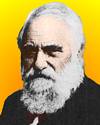
Born 3 Dec 1818; died 10 Feb 1901 at age 82.
German chemist and physiologist whose in his early career worked on industrial chemical processes and analysis of urine and bile acids. At age 26, he became an assistant at the Royal Mint (1845), and improved methods to separate silver and gold. Yet, he is better remembered as a principle founder of public health medicine or hygiene. He studied the need for adequate nutrition. Carl von Voit, a former student, joined him in the design and construction of a respiration chamber to accuracy measure a person's metabolism of protein, fat and carbohydrate, under various conditions of ambient temperature and amount of exercise, or rest. He also developed standards for adequate ventilation in schools and hospitals. Later in his life, he turned to investigations of the epidemiology of the deadly public diseases of cholera and typhoid. He died by suicide.«
German chemist and physiologist whose in his early career worked on industrial chemical processes and analysis of urine and bile acids. At age 26, he became an assistant at the Royal Mint (1845), and improved methods to separate silver and gold. Yet, he is better remembered as a principle founder of public health medicine or hygiene. He studied the need for adequate nutrition. Carl von Voit, a former student, joined him in the design and construction of a respiration chamber to accuracy measure a person's metabolism of protein, fat and carbohydrate, under various conditions of ambient temperature and amount of exercise, or rest. He also developed standards for adequate ventilation in schools and hospitals. Later in his life, he turned to investigations of the epidemiology of the deadly public diseases of cholera and typhoid. He died by suicide.«
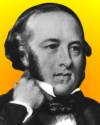
Born 3 Dec 1795; died 27 Aug 1879 at age 83.
English educator and inventor who originated the penny postage system with the first adhesive postage stamp (10 Jan 1840). Interested in inventing, from 1835 he began planning a postal service and by 1846 he became the Secretary to the Postmaster-General. He continued to reform the Post Office until 1864 when he retired. Thus, he developed modern postal service, which was subsequently adopted throughout the world. Earlier in his life, he had taught with his brothers and his father at a North London school that was progressive - using new teaching methods and philosophies, with no corporal punishment but reward systems and strong honour and behaviour codes. Ill health led him away from teaching and he turned to modernizing the postal service.
English educator and inventor who originated the penny postage system with the first adhesive postage stamp (10 Jan 1840). Interested in inventing, from 1835 he began planning a postal service and by 1846 he became the Secretary to the Postmaster-General. He continued to reform the Post Office until 1864 when he retired. Thus, he developed modern postal service, which was subsequently adopted throughout the world. Earlier in his life, he had taught with his brothers and his father at a North London school that was progressive - using new teaching methods and philosophies, with no corporal punishment but reward systems and strong honour and behaviour codes. Ill health led him away from teaching and he turned to modernizing the postal service.
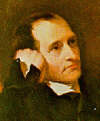
Born 3 Dec 1753; died 26 Jun 1827 at age 73. quotes
British inventor who in 1779, during the Industrial Revolution, created the “spinning mule.” The continuous, strong, fine yarn it was able to spin was a boon for the manufacturers of cotton cloth. It was called a “mule” because it was a hybrid of the ideas of Richard Arkwright and James Hargreaves. Spinning had come of age from a home occupation to factory production. more
British inventor who in 1779, during the Industrial Revolution, created the “spinning mule.” The continuous, strong, fine yarn it was able to spin was a boon for the manufacturers of cotton cloth. It was called a “mule” because it was a hybrid of the ideas of Richard Arkwright and James Hargreaves. Spinning had come of age from a home occupation to factory production. more
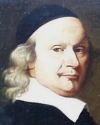
Born 3 Dec 1616; died 8 Nov 1703 at age 86. quotes
British mathematician who introduced the infinity math symbol. Wallis was skilled in cryptography and decoded Royalist messages for the Parliamentarians during the Civil War. Subsequently, he was appointed to the Savilian Chair of geometry at Oxford in 1649, a position he held until his death more than 50 years later. Wallis was part of a group interested in natural and experimental science which became the Royal Society, so Wallis is a founder member of the Royal Society and one of its first Fellows. Wallis contributed substantially to the origins of calculus and was the most influential English mathematician before Newton.[DSB gives dates 3 Dec 1616 - 8 Nov 1703. EB gives 23 Nov 1616 - 28 Oct 1703.]
British mathematician who introduced the infinity math symbol. Wallis was skilled in cryptography and decoded Royalist messages for the Parliamentarians during the Civil War. Subsequently, he was appointed to the Savilian Chair of geometry at Oxford in 1649, a position he held until his death more than 50 years later. Wallis was part of a group interested in natural and experimental science which became the Royal Society, so Wallis is a founder member of the Royal Society and one of its first Fellows. Wallis contributed substantially to the origins of calculus and was the most influential English mathematician before Newton.[DSB gives dates 3 Dec 1616 - 8 Nov 1703. EB gives 23 Nov 1616 - 28 Oct 1703.]

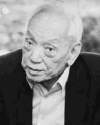
Died 3 Dec 2004 at age 93 (born 26 Oct 1911). quotes
Chinese-American mathematician and educator whose researches in differential geometry include the development of the Chern characteristic classes in fibre spaces, which play a major role in mathematics and in mathematical physics. “When Chern was working on differential geometry in the 1940s, this area of mathematics was at a low point. Global differential geometry was only beginning, even Morse theory was understood and used by a very small number of people. Today, differential geometry is a major subject in mathematics and a large share of the credit for this transformation goes to Professor Chern.”- C N Yang, quoted from the book, Chern, a great geometer of the twentieth century.(1992)
Chinese-American mathematician and educator whose researches in differential geometry include the development of the Chern characteristic classes in fibre spaces, which play a major role in mathematics and in mathematical physics. “When Chern was working on differential geometry in the 1940s, this area of mathematics was at a low point. Global differential geometry was only beginning, even Morse theory was understood and used by a very small number of people. Today, differential geometry is a major subject in mathematics and a large share of the credit for this transformation goes to Professor Chern.”- C N Yang, quoted from the book, Chern, a great geometer of the twentieth century.(1992)
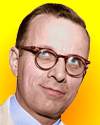
Died 3 Dec 1993 at age 80 (born 25 Nov 1913). quotes
American physician and author best known for his reflective essays on a wide range of topics in biology. While his specialities are immunology and pathology, in his book, Lives of a Cell, his down-to-earth science writing stresses that what is seen under the microscope is similar to the way human beings live, and he emphasizes the interconnectedness of life. As a research scientist, Thomas made an impact by suggesting that an immunosurveillance mechanism protects us from the possible ravages of mutant cells, an idea later championed by Macfarlane Burnett. He also proposed that viruses have played a major role in the evolution of species by their ability to move pieces of DNA from one individual or species to another.
American physician and author best known for his reflective essays on a wide range of topics in biology. While his specialities are immunology and pathology, in his book, Lives of a Cell, his down-to-earth science writing stresses that what is seen under the microscope is similar to the way human beings live, and he emphasizes the interconnectedness of life. As a research scientist, Thomas made an impact by suggesting that an immunosurveillance mechanism protects us from the possible ravages of mutant cells, an idea later championed by Macfarlane Burnett. He also proposed that viruses have played a major role in the evolution of species by their ability to move pieces of DNA from one individual or species to another.
The Lives of a Cell: Notes of a Biology Watcher, by Lewis Thomas. - book suggestion.
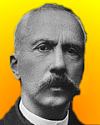
Died 3 Dec 1935 at age 85 (born 26 Aug 1850). quotes
French physiologist, bacteriologist and pathologist who was awarded the 1913 Nobel Prize for Physiology or Medicine. He coined (1902) the term "anaphylaxis" meaning "against protection" to describe the subject of his research, when he found a second vaccinating dose of sea anemone toxin caused a dog's death. Instead of producing protection, as expected in the normal response to vaccination, the first dose had produced a life-threatening sensitivity. This led to an understanding a variety of allergic reactions, hay-fever and asthma. His other interests included aviation: attracted by Marey's experiments on bird flight, Richet participated in the design and construction of one of the first airplanes to leave the ground under its own power.«[DSB and obituary in NYT both give date of death as 3 Dec 1935. EB and other sources give 4 Dec 1935.]
French physiologist, bacteriologist and pathologist who was awarded the 1913 Nobel Prize for Physiology or Medicine. He coined (1902) the term "anaphylaxis" meaning "against protection" to describe the subject of his research, when he found a second vaccinating dose of sea anemone toxin caused a dog's death. Instead of producing protection, as expected in the normal response to vaccination, the first dose had produced a life-threatening sensitivity. This led to an understanding a variety of allergic reactions, hay-fever and asthma. His other interests included aviation: attracted by Marey's experiments on bird flight, Richet participated in the design and construction of one of the first airplanes to leave the ground under its own power.«[DSB and obituary in NYT both give date of death as 3 Dec 1935. EB and other sources give 4 Dec 1935.]
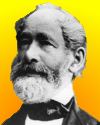
Died 3 Dec 1888 at age 72 (born 11 Sep 1816).
German industrialist who gained a worldwide reputation as a manufacturer of fine optical instruments. After qualifying in medicine, he began the manufacture of optical instruments, which he knew would be in increasing demand as science and medicine advanced. He spent seven years in the workshops of various European instrument-makers before he founded an optical factory at Jena (1846). He quickly establishing a reputation for products of the highest quality. Twenty years later he went into partnership with Ernst Abbe (1840-1905), who was his advisor on theoretical advances in optics. Abbe further enhanced the reputation of the company and became its sole owner upon the death of Zeiss. Abbe enhanced the reputation of the company and established invested in the workers.
German industrialist who gained a worldwide reputation as a manufacturer of fine optical instruments. After qualifying in medicine, he began the manufacture of optical instruments, which he knew would be in increasing demand as science and medicine advanced. He spent seven years in the workshops of various European instrument-makers before he founded an optical factory at Jena (1846). He quickly establishing a reputation for products of the highest quality. Twenty years later he went into partnership with Ernst Abbe (1840-1905), who was his advisor on theoretical advances in optics. Abbe further enhanced the reputation of the company and became its sole owner upon the death of Zeiss. Abbe enhanced the reputation of the company and established invested in the workers.
Died 3 Dec 1882 at age 78 (born 12 Dec 1803).
English astronomer and clergyman, famous in the history of astronomy for his failure to discover the planet Neptune. Astronomer and mathematician John Couch Adams had studied the known deviations in the orbit of the planet Uranus which indicated a planet even further out. In 1845, Adams gave Astronomer Royal George Airy a calculated orbital path for the unknown planet. But Airy was more interested in the primary job of navigation and timekeeping observations. Airy informed Challis, who did not begin until July 1846, and actually sighted the new planet four times without recognising it. On 23 Sep 1845, the new planet was instead discovered from Berlin Observatory. Challis admitted that Adam's prediction was within 2° of the planet's position.
English astronomer and clergyman, famous in the history of astronomy for his failure to discover the planet Neptune. Astronomer and mathematician John Couch Adams had studied the known deviations in the orbit of the planet Uranus which indicated a planet even further out. In 1845, Adams gave Astronomer Royal George Airy a calculated orbital path for the unknown planet. But Airy was more interested in the primary job of navigation and timekeeping observations. Airy informed Challis, who did not begin until July 1846, and actually sighted the new planet four times without recognising it. On 23 Sep 1845, the new planet was instead discovered from Berlin Observatory. Challis admitted that Adam's prediction was within 2° of the planet's position.
1820
Died 3 Dec 1823 at age 45 (born 5 Nov 1778).
Italian circus performer and archaeologist who went to England in 1803, earning a living as a circus strong man. He first travelled to Egypt in 1815 to sell hydraulic engines for use in irrigation. By 1817, he turned to excavating Egyptian archaeological sites for their treasures, though with scant regard for incidental damage to less desirable items. He obtained the colossal sculpture of the head of Ramses II for the British Museum. In the Valley of the Tombs of Kings, he discovered the tomb of Seti I and removed the aragonite sarcophagus for the Sir John Soane's Museum, London. Belzoni cleared the entrance to the great temple of Ramses II at Abu Simbel, was first to penetrate the pyramid of Khafre at Giza, and identified ruins of the city of Berenice on the Red Sea.
Italian circus performer and archaeologist who went to England in 1803, earning a living as a circus strong man. He first travelled to Egypt in 1815 to sell hydraulic engines for use in irrigation. By 1817, he turned to excavating Egyptian archaeological sites for their treasures, though with scant regard for incidental damage to less desirable items. He obtained the colossal sculpture of the head of Ramses II for the British Museum. In the Valley of the Tombs of Kings, he discovered the tomb of Seti I and removed the aragonite sarcophagus for the Sir John Soane's Museum, London. Belzoni cleared the entrance to the great temple of Ramses II at Abu Simbel, was first to penetrate the pyramid of Khafre at Giza, and identified ruins of the city of Berenice on the Red Sea.

In 1984, shortly after midnight, the inhabitants of the city of Bhopal, India, became victims of the world's worst industrial disaster. Over 40 tonnes of highly poisonous methyl isocyanate gas leaked out of the Union Carbide pesticide factory. Poisonous gases enveloped an area of 40 sq.kms. killing thousands of people in its immediate wake. Over 500,000 suffered from acute breathlessness, pain in the eyes and vomiting as they ran in panic to get away from the poison clouds that hung close to the ground for more than four hours. In 1989, after years of litigation, Union Carbide agreed to pay the Indian government $470 million in damages. In return, the government agreed to drop criminal charges against the company and its former chairman.
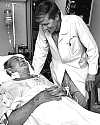
In 1982, doctors at the University of Utah Medical Center removed the respirator of Barney Clark, one day after the retired dentist became the world's first recipient of a permanent artificial heart, the Jarvik-7. Surgery was performed by Dr. William DeVries in cooperation with the inventor, Dr. Robert Jarvik. Clark had actually visited the veterinary laboratory at the University of Utah and watched calves that had received the artificial hearts. Near death, with his own heart practically useless, Clark agreed to the experiment. He said, “It may not work that well for me. I'll do it for the next patient.” He lived 112 days on the artificial heart. Of the next four implants, the longest survivor was William Schroeder, who lived 620 days.[Image: Clark and DeVries.]
After Barney Clark: Reflections on the Utah Artificial Heart Program, by Margery W. Shaw. - book suggestion.
Barnard
In 1967, Dr. Christiaan Barnard, and his team of 20 surgeons, performed the first human heart transplant on a 54-yr-old South African businessman, at the Groote Schuur Hospital, Cape Town, South Africa. The diseased heart of Louis Washkansky was replaced with the healthy heart of a 25-yr-old woman who had died in a car crash. Washkansky survived only 18 days before succumbing to double pneumonia, contracted after destruction of his body’s immunity mechanism by drugs administered to suppress rejection of the new heart as a foreign protein. The next patient, Philip Blaiberg, lived almost two years. Since then, many thousands of transplants have been performed.
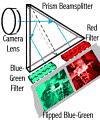
In 1922, the first really successful Technicolor motion picture film was released. The movie, shown at the Rialto Theatre in New York City, was The Toll of the Sea, derived from Madame Butterfly but shifted to China. It was filmed using the early two-color System 2. The Technicolor camera [left] recorded the red and blue-green images simultaneously through a single lens using a beam splitter and color filters to record the images stacked one on top of the other. System 1 had used additive colour with filters on two projected images. System 2 used two dyed matrix prints cemented back to back to form a the final release print. The process was developed by Dr. Herbert T. Kalmus, who founded Technicolor Motion Picture Corp. in 1915.

In 1910, neon lighting, developed by French physicist Georges Claude, made its public debut at the Paris Motor Show. The coloured light is produced by passing electrical current through inert gases in a vacuum tube. This effect was produced following decades of experiments to create a practical alternative to incandescent lighting. Neon signage came to America when Earle C. Anthony bought two signs for $2400 in Paris and installed them in his Los Angeles Packard dealership. Neon gas glows a fiery orange-red; argon is soft lavender; argon gas enhanced with mercury is brilliant blue. More than 150 colors can be achieved by combining different gasses (including krypton, xenon and helium) and phosphors that coat the inside of the glass tube.
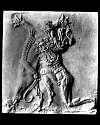
In 1872, a translation from cuneiform tablets of the Chaldean account of the deluge was read by George Smith before the Society of Biblical Archaeology in London. Its resemblance to the biblical account of the Flood in Genesis, though older than the Bible, caused a sensation. He had pieced together fragments of tablets at the British Museum brought from Ninevah (Kuyunjik) while pursuing an interest in cuneiform inscriptions. This is now known as the eleventh tablet of the Gilgamesh epic. The Daily Telegraph newspaper, aware of its value as a media event, the next year provided funding for Smith on behalf of the British Museum to undertake fieldwork at Nineveh to seek more tablet fragments of the flood story.«[Image: Izdubar (Nimrod) in conflict with a lion, from an early Babylonian cylinder, the frontispiece of Smith's Chaldean Account of Genesis book.] more
Chaldean Account of Genesis, by George Smith. - book suggestion.
In 1732, James Blair was rescued from a fire in a coal mine. William Tossach, a Scottish surgeon, found that “there was not the least pulse in either heart or arteries, and not the least breathing could be observed: So that he was in all appearance dead. I applied my mouth close to his, and blowed my breath as strong as I could... I blew again my breath as strong as I could, raising his chest fully with it; and immediately I felt six or seven very quick beats of the heart.” This appears to be the first recorded use of the ventilation technique since it was commented upon by 16th century Flemish anatomist Andreas Vesalius, who investigated the effect on an animal upon which he had performed a tracheotomy and related ventilation to heart function.«
more




