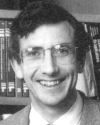
Born 20 Aug 1957.
British mathematician who was awarded the Fields Medal in 1986 for his work in topology. Nearly all his work falls in the two realms of (1) differential geometry of holomorphic vector bundles and (2) applications of gauge theory to 4-manifold topology. Remarkably, Donaldson has solved problems of mathematics by using ideas from physics (wheras most mathematics in usually applied to physics). From the Yang-Mills generalizations of James Clerk Maxwell's electromagnetic equations, Donaldson used special solutions to these equations, called instantons, to look at general four-manifolds. After being awarded the Fields Medal, Donaldson continued his exploitation of ideas from physics with applications to mathematics.
British mathematician who was awarded the Fields Medal in 1986 for his work in topology. Nearly all his work falls in the two realms of (1) differential geometry of holomorphic vector bundles and (2) applications of gauge theory to 4-manifold topology. Remarkably, Donaldson has solved problems of mathematics by using ideas from physics (wheras most mathematics in usually applied to physics). From the Yang-Mills generalizations of James Clerk Maxwell's electromagnetic equations, Donaldson used special solutions to these equations, called instantons, to look at general four-manifolds. After being awarded the Fields Medal, Donaldson continued his exploitation of ideas from physics with applications to mathematics.
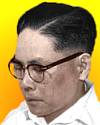
1958
Born 20 Aug 1922; died 9 Aug 2007 at age 84.
Japanese surgeon who built the first artificial heart that was implanted and kept an animal alive. He was a thoracic surgeon at the Cleveland Clinic in 1957 when he was asked by Dr. Willem Kolff to collaborate in the pioneering project. On 12 Dec 1957, it kept a dog alive for 90 minutes. Thus, a new frontier was opened for artificial heart development for humans. Akutsu became assistant director at the Texas Heart Institute, and continued to develop his total artificial heart. Dr Denton Cooley had already implanted the first artifial heart in a human in 1969, but Akutsu was on his team for the implantation of the second human artificial heart at THI in 1981. After that, he returned to Japan and continued taking a major leadership role as a world expert developing the field. He published Heart Replacement: Artificial Heart.«
Japanese surgeon who built the first artificial heart that was implanted and kept an animal alive. He was a thoracic surgeon at the Cleveland Clinic in 1957 when he was asked by Dr. Willem Kolff to collaborate in the pioneering project. On 12 Dec 1957, it kept a dog alive for 90 minutes. Thus, a new frontier was opened for artificial heart development for humans. Akutsu became assistant director at the Texas Heart Institute, and continued to develop his total artificial heart. Dr Denton Cooley had already implanted the first artifial heart in a human in 1969, but Akutsu was on his team for the implantation of the second human artificial heart at THI in 1981. After that, he returned to Japan and continued taking a major leadership role as a world expert developing the field. He published Heart Replacement: Artificial Heart.«
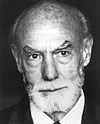
Born 20 Aug 1913; died 17 Apr 1994 at age 80. quotes
American neurobiologist, corecipient with David Hunter Hubel and Torsten Nils Wiesel of the Nobel Prize for Physiology or Medicine in 1981 for their investigations of brain function, Sperry in particular for his study of functional specialization in the cerebral hemispheres. He was responsible for overturning the widespread belief that the left brain is dominant by showing that several cognitive abilities were localized in the right brain. He also provided experimental proof for the specificity of the reconnection of regenerating severed neurons in newts, which later led to new theories on how neurons grow. After 1965, his work turned more to psychology and philosophy.
American neurobiologist, corecipient with David Hunter Hubel and Torsten Nils Wiesel of the Nobel Prize for Physiology or Medicine in 1981 for their investigations of brain function, Sperry in particular for his study of functional specialization in the cerebral hemispheres. He was responsible for overturning the widespread belief that the left brain is dominant by showing that several cognitive abilities were localized in the right brain. He also provided experimental proof for the specificity of the reconnection of regenerating severed neurons in newts, which later led to new theories on how neurons grow. After 1965, his work turned more to psychology and philosophy.

Born 20 Aug 1912; died 7 Jan 1998 at age 85.
American inventor of the peristaltic pump that made open-heart surgery possible. It met the need to pump blood without damaging the cells through a method of expansion and contraction that imitates the way that peristalsis moves the contents of the digestive tract. In addition, the pump was adapted for kidney dialysis and for food processing (to pump soup into cans without crushing the peas or the celery). He decided to invent the airplane boarding ramp when on a day in 1951 at the Miami International Airport he saw passengers having to walk in the rain to the terminal. In all, he held 75 patents including a television antenna rotator, electric carving knife, high-speed dentist drill, power car seat and an audible pressure cooker.[Image: Peristaltic pump showing tubing and rotor that moves blood.]
American inventor of the peristaltic pump that made open-heart surgery possible. It met the need to pump blood without damaging the cells through a method of expansion and contraction that imitates the way that peristalsis moves the contents of the digestive tract. In addition, the pump was adapted for kidney dialysis and for food processing (to pump soup into cans without crushing the peas or the celery). He decided to invent the airplane boarding ramp when on a day in 1951 at the Miami International Airport he saw passengers having to walk in the rain to the terminal. In all, he held 75 patents including a television antenna rotator, electric carving knife, high-speed dentist drill, power car seat and an audible pressure cooker.[Image: Peristaltic pump showing tubing and rotor that moves blood.]
Born 20 Aug 1908; died 27 Feb 1997 at age 88. quotes
American sociologist and demographer who was a world-renowned expert on population trends; he coined the terms population explosion and zero population growth and promoted methods of bringing the latter about. His specific studies of American society led him to work on a general science of world society, based on empirical analysis of each society in its habitat. Later, however, he came to be concerned about low birthrates in developed countries, fearing a shortage of educated leaders.
American sociologist and demographer who was a world-renowned expert on population trends; he coined the terms population explosion and zero population growth and promoted methods of bringing the latter about. His specific studies of American society led him to work on a general science of world society, based on empirical analysis of each society in its habitat. Later, however, he came to be concerned about low birthrates in developed countries, fearing a shortage of educated leaders.
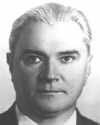
Born 20 Aug 1908; died 10 Jan 1989 at age 80.
Soviet rocket scientist who was a pioneer developer of rocket engines (1946-74). From 1929, he worked in Leningrad in GDL - the Gas Dynamics Laboratory, the military rocket research organization, founded in 1921. He worked with renowned rocket designer Sergey Korolyov (1932-1966). In Aug 1957, they successfully launched the first intercontinental ballistic missile and in October of the same year, sent the first artificial satellite, Sputnik I, into orbit. He became chief designer for the Soviet space program in 1974, helping to oversee development of the Mir space station. During his life, he designed the most succesessful rocket engines in the Soviet space program.
Soviet rocket scientist who was a pioneer developer of rocket engines (1946-74). From 1929, he worked in Leningrad in GDL - the Gas Dynamics Laboratory, the military rocket research organization, founded in 1921. He worked with renowned rocket designer Sergey Korolyov (1932-1966). In Aug 1957, they successfully launched the first intercontinental ballistic missile and in October of the same year, sent the first artificial satellite, Sputnik I, into orbit. He became chief designer for the Soviet space program in 1974, helping to oversee development of the Mir space station. During his life, he designed the most succesessful rocket engines in the Soviet space program.
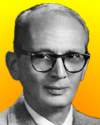
Born 20 Aug 1899; died 2 May 1982 at age 82. quotes
Salomon Chaim Bochner was a Galician-American mathematician and educator who is remembered for his Bochner theorem of positive-definite functions and the Bochner integral. In the later development of abstract Fourier analysis, the Bochner theorem was basic to the theory of distributions. He started his academic career in Germany. In 1933, as a Jew, with the rise of the Nazism, he fled to the U.S., where he joined the faculty at Princeton. In addition to his life-long interest in harmonic analysis, in his prolific writings, Bochner also contributed significantly to complex analysis, differential geometry, probability and other pioneering work in pure mathematics. In his later years, he turned almost exclusively to the history and philosophy of science. His best-known book, The Role of Mathematics in the Rise of Science (1966), was translated into many languages.«
Salomon Chaim Bochner was a Galician-American mathematician and educator who is remembered for his Bochner theorem of positive-definite functions and the Bochner integral. In the later development of abstract Fourier analysis, the Bochner theorem was basic to the theory of distributions. He started his academic career in Germany. In 1933, as a Jew, with the rise of the Nazism, he fled to the U.S., where he joined the faculty at Princeton. In addition to his life-long interest in harmonic analysis, in his prolific writings, Bochner also contributed significantly to complex analysis, differential geometry, probability and other pioneering work in pure mathematics. In his later years, he turned almost exclusively to the history and philosophy of science. His best-known book, The Role of Mathematics in the Rise of Science (1966), was translated into many languages.«
The Role of Mathematics in the Rise of Science, by Salomon Bochner. - book suggestion.
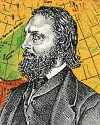
Born 20 Aug 1831; died 26 Apr 1914 at age 82. quotes
Austrian geologist who helped lay the basis for paleogeography and tectonics (the study of the architecture and evolution of the Earth's outer rocky shell). He was an authority on structural geology, especially of mountains, and postulated the existence of the giant land mass Gondwanaland. While he was a professor (1857–1901) at the Univ. of Vienna, he also served for more than 20 years in the Austrian parliament. His Austrian-born son, Hans Suess, became a geochemist who pioneered radiocarbon dating techniques and was a founding faculty member of the University of California, San Diego.Image from Austrian commemorative stamp of 26 Apr 1989. more
Austrian geologist who helped lay the basis for paleogeography and tectonics (the study of the architecture and evolution of the Earth's outer rocky shell). He was an authority on structural geology, especially of mountains, and postulated the existence of the giant land mass Gondwanaland. While he was a professor (1857–1901) at the Univ. of Vienna, he also served for more than 20 years in the Austrian parliament. His Austrian-born son, Hans Suess, became a geochemist who pioneered radiocarbon dating techniques and was a founding faculty member of the University of California, San Diego.Image from Austrian commemorative stamp of 26 Apr 1989. more
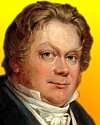
Born 20 Aug 1779; died 7 Aug 1848 at age 68. quotes
Swedish chemist who established the beginnings of modern chemistry. Among his contributions are his determination of atomic weights, the replacement of alchemical signs with letters for chemical symbols and the use small numbers to indicate relative proportions the formula of a compound, new analytical methods and an electrochemical theory. He discovered selenium and thorium and co-discovered cerium. He wrote an authoritative two-volume textbook, Lärbok i kemien (1808-12). His students isolated lithium (Johann Awfwedsen), vanadium (Nils Sefström), and several rare earth elements (Carl Mosander). Berzelius used an electric current to determine salts could be split into positive and negative portions. He coined the terms isomerism (1831), catalysis (1835), and allotropy (1840).
Swedish chemist who established the beginnings of modern chemistry. Among his contributions are his determination of atomic weights, the replacement of alchemical signs with letters for chemical symbols and the use small numbers to indicate relative proportions the formula of a compound, new analytical methods and an electrochemical theory. He discovered selenium and thorium and co-discovered cerium. He wrote an authoritative two-volume textbook, Lärbok i kemien (1808-12). His students isolated lithium (Johann Awfwedsen), vanadium (Nils Sefström), and several rare earth elements (Carl Mosander). Berzelius used an electric current to determine salts could be split into positive and negative portions. He coined the terms isomerism (1831), catalysis (1835), and allotropy (1840).
Jöns Jacob Berzelius: Autobiographical Notes, by H.G.Soderbaum and Olof Larsell (trans). - book suggestion.

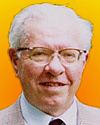
Died 20 Aug 2001 at age 86 (born 24 Jun 1915). quotes
English astronomer and mathematician who is best known as the foremost proponent and defender of the steady-state theory of the universe. This theory holds both that the universe is expanding and that matter is being continuously created to keep the mean density of matter in space constant. He became Britain's best-known astronomer in 1950 with his broadcast lectures on The Nature of the Universe, and he recalled derisively coining the term “Big Bang” in the last of those talks. Although over time, belief in a “steady state” universe as Hoyle had proposed was shared by fewer and fewer scientists because of new discoveries, Hoyle never accepted the now most popular “Big Bang” theory for the origin of the universe.
English astronomer and mathematician who is best known as the foremost proponent and defender of the steady-state theory of the universe. This theory holds both that the universe is expanding and that matter is being continuously created to keep the mean density of matter in space constant. He became Britain's best-known astronomer in 1950 with his broadcast lectures on The Nature of the Universe, and he recalled derisively coining the term “Big Bang” in the last of those talks. Although over time, belief in a “steady state” universe as Hoyle had proposed was shared by fewer and fewer scientists because of new discoveries, Hoyle never accepted the now most popular “Big Bang” theory for the origin of the universe.
Fred Hoyle: A Life in Science, by Simon Mitton. - book suggestion.
Died 20 Aug 1997 at age 88 (born 30 May 1909).
Norris Edwin Bradbury was an American physicist who succeeded J. Robert Oppenheimer as director of the Los Alamos (New Mexico) Scientific Laboratory (1945-70). He joined Los Alamos in 1944 to head the assembly of the non-nuclear components of the nuclear weapons. He guided the Los Alamos facility in its conversion to peacetime work, in basic nuclear research and nuclear power applications, testing several exploratory reactor designs, including solid and liquid plutonium fuels and gas-cooled uranium reactors. Bradbury also encouraged expansion of the laboratory's research into other areas, such as physics, chemistry, metallurgy, and space technology, as well as establishing programs in biological and medical health research.
Norris Edwin Bradbury was an American physicist who succeeded J. Robert Oppenheimer as director of the Los Alamos (New Mexico) Scientific Laboratory (1945-70). He joined Los Alamos in 1944 to head the assembly of the non-nuclear components of the nuclear weapons. He guided the Los Alamos facility in its conversion to peacetime work, in basic nuclear research and nuclear power applications, testing several exploratory reactor designs, including solid and liquid plutonium fuels and gas-cooled uranium reactors. Bradbury also encouraged expansion of the laboratory's research into other areas, such as physics, chemistry, metallurgy, and space technology, as well as establishing programs in biological and medical health research.
Died 20 Aug 1989 at age 83 (born 3 Feb 1906).
British conservationist who, with his wife Joy, pioneered the movement to preserve African wildlife. He was a British game warden who had worked in Kenya as a gold prospector, goat trader, and safari hunter from 1924 when he married Joy in 1944. She wrote internationally successful books on African wildlife, especially a trilogy describing how the couple raised a lion cub, Elsa, and returned it to its natural habitat. She founded the Elsa Wild Animal Appeal (1961), an international group that financed conservation and education projects. They separated in 1971. Joy was murdered by a disgruntled employee (1980). At her funeral, Adamson promised to carry on her work. George and two of his assistants were killed by animal poachers (1989).
British conservationist who, with his wife Joy, pioneered the movement to preserve African wildlife. He was a British game warden who had worked in Kenya as a gold prospector, goat trader, and safari hunter from 1924 when he married Joy in 1944. She wrote internationally successful books on African wildlife, especially a trilogy describing how the couple raised a lion cub, Elsa, and returned it to its natural habitat. She founded the Elsa Wild Animal Appeal (1961), an international group that financed conservation and education projects. They separated in 1971. Joy was murdered by a disgruntled employee (1980). At her funeral, Adamson promised to carry on her work. George and two of his assistants were killed by animal poachers (1989).
Born Wild: The Extraordinary Story of One Man's Passion for Africa, by Tony Fitzjohn. - book suggestion.
Died 20 Aug 1968 at age 66 (born 23 Jul 1902).
Theodore Christian Schneirla was the foremost American comparative psychologist of the mid-1900s (the American Museum of Natural History) whose empirical work was based on observations on the behaviour patterns of army ants. He went so far in his “biphasic A-W theory” as to reduce all behavior to two simple responses: approach and withdrawal. We approach what causes pleasure, and we withdraw from what causes unpleasure or pain. His Principles of Animal Psychology (1935, with N.R.F. Maier) was the leading text in its field.
Theodore Christian Schneirla was the foremost American comparative psychologist of the mid-1900s (the American Museum of Natural History) whose empirical work was based on observations on the behaviour patterns of army ants. He went so far in his “biphasic A-W theory” as to reduce all behavior to two simple responses: approach and withdrawal. We approach what causes pleasure, and we withdraw from what causes unpleasure or pain. His Principles of Animal Psychology (1935, with N.R.F. Maier) was the leading text in its field.
Died 20 Aug 1961 at age 79 (born 21 Apr 1882). quotes
Percy Williams Bridgman was an American experimental physicist noted for his studies of materials at high temperatures and pressures. He was awarded the Nobel Prize for Physics in 1946 for his “invention of an apparatus to produce extremely high pressures, and for the discoveries he made therewith in the field of high pressure physics.” He was the first Harvard physicist to receive a Nobel Prize in Physics. In 1908, he began his first experimental work with static high pressures of about 6,500 atmospheres. Eventually, he reached about 400,000 atmospheres. During studies of the phase changes of solids under pressure, he discovered several high-pressure forms of ice. Bridgman also wrote eloquently on matters of general interest in the physics of his day.
Percy Williams Bridgman was an American experimental physicist noted for his studies of materials at high temperatures and pressures. He was awarded the Nobel Prize for Physics in 1946 for his “invention of an apparatus to produce extremely high pressures, and for the discoveries he made therewith in the field of high pressure physics.” He was the first Harvard physicist to receive a Nobel Prize in Physics. In 1908, he began his first experimental work with static high pressures of about 6,500 atmospheres. Eventually, he reached about 400,000 atmospheres. During studies of the phase changes of solids under pressure, he discovered several high-pressure forms of ice. Bridgman also wrote eloquently on matters of general interest in the physics of his day.
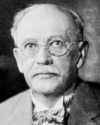
(EB)
Died 20 Aug 1936 at age 86 (born 9 May 1850).
British-born American electrical engineer and industrialist who founded the Weston Electrical Instrument Company. He moved to America as a young medical student in 1870. In the next few years, he revolutionized the electro-plating industry by inventing and manufacturing a highly successful electroplating dynamo, which far surpassed the efficiency of storage batteries. He patented the dynamo and a nickel-plating anode in 1875. From then until about 1917, Weston was granted 334 U.S patents. After early experiments with designs of incandescent lamps, he distinguished himself with the invention and manufacture of a series of precision electronical measuring instruments.
British-born American electrical engineer and industrialist who founded the Weston Electrical Instrument Company. He moved to America as a young medical student in 1870. In the next few years, he revolutionized the electro-plating industry by inventing and manufacturing a highly successful electroplating dynamo, which far surpassed the efficiency of storage batteries. He patented the dynamo and a nickel-plating anode in 1875. From then until about 1917, Weston was granted 334 U.S patents. After early experiments with designs of incandescent lamps, he distinguished himself with the invention and manufacture of a series of precision electronical measuring instruments.
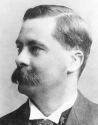
Died 20 Aug 1930 at age 69 (born 13 Aug 1861).
English astronomer who pioneered many of the procedures now universally employed in determining stellar positions from astronomical photographs. After serving as chief assistant at the Royal Greenwich Observatory for nine years, he spent most of his career as Savilian professor of astronomy at Oxford University. One of the leaders in the worldwide effort to produce an astrographic chart of the sky, he developed improved methods for obtaining both positions and magnitudes from photographic plates. Most of his later work was in seismology; he compiled and published worldwide earthquake data starting in 1918, and he discovered the existence of deep-focus earthquakes in 1922.
English astronomer who pioneered many of the procedures now universally employed in determining stellar positions from astronomical photographs. After serving as chief assistant at the Royal Greenwich Observatory for nine years, he spent most of his career as Savilian professor of astronomy at Oxford University. One of the leaders in the worldwide effort to produce an astrographic chart of the sky, he developed improved methods for obtaining both positions and magnitudes from photographic plates. Most of his later work was in seismology; he compiled and published worldwide earthquake data starting in 1918, and he discovered the existence of deep-focus earthquakes in 1922.
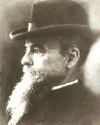
Died 20 Aug 1923 at age 75 (born 15 Jul 1848). quotes
Italian economist and sociologist, known for his application of mathematics to economic analysis and for his theory of the 'circulation of elites'. His initial five-year course in civil engineering, graduating in 1870, gave him a grounding in mathematics. While working as an engineer, he studied philosophy and politics and wrote many periodical articles in which he was one of the first to analyse economic problems with mathematical tools. Pareto's first work, Cours d'economie politique (1896-97), included his famous 'law' of income distribution, a complicated mathematical formulation attempting to prove the distribution of incomes and wealth in society is not random and that a consistent pattern appears throughout history, in all parts of the world and in all societies.
Italian economist and sociologist, known for his application of mathematics to economic analysis and for his theory of the 'circulation of elites'. His initial five-year course in civil engineering, graduating in 1870, gave him a grounding in mathematics. While working as an engineer, he studied philosophy and politics and wrote many periodical articles in which he was one of the first to analyse economic problems with mathematical tools. Pareto's first work, Cours d'economie politique (1896-97), included his famous 'law' of income distribution, a complicated mathematical formulation attempting to prove the distribution of incomes and wealth in society is not random and that a consistent pattern appears throughout history, in all parts of the world and in all societies.
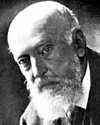
(EB)
Died 20 Aug 1917 at age 81 (born 31 Oct 1835). quotes
Johann Friedrich Wilhelm Adolf von Baeyer was a German chemist who synthesized indigo (1880) and formulated its structure (1883). He was awarded the Nobel Prize for Chemistry in 1905 "in recognition of his services in the advancement of organic chemistry and the chemical industry, through his work on organic dyes and hydroaromatic compounds". Baeyer also did work on acetylene and polyacetylene, and from this derived the famous Baeyer strain theory of the carbon rings. He studied benzene and cyclic terpene. In this connexion the Baeyer-Villiger oxidation of ketones by means of per-acids was discovered. His work on organic peroxides and oxonium compounds and on the connexion between constitution and colour aroused special interest.
Johann Friedrich Wilhelm Adolf von Baeyer was a German chemist who synthesized indigo (1880) and formulated its structure (1883). He was awarded the Nobel Prize for Chemistry in 1905 "in recognition of his services in the advancement of organic chemistry and the chemical industry, through his work on organic dyes and hydroaromatic compounds". Baeyer also did work on acetylene and polyacetylene, and from this derived the famous Baeyer strain theory of the carbon rings. He studied benzene and cyclic terpene. In this connexion the Baeyer-Villiger oxidation of ketones by means of per-acids was discovered. His work on organic peroxides and oxonium compounds and on the connexion between constitution and colour aroused special interest.
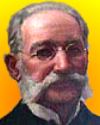
Died 20 Aug 1915 at age 81 (born 3 Dec 1833).
Cuban epidemiologist who contributed to the etiology and pathology of yellow fever. He pioneered the recognition of the mosquito as the agent of transmission from infected to healthy humans, which idea he published in 1881. This disease can cause horrible deaths in epidemic numbers. His experimental work pointed to the mosquito, Aedes aegypti. Despite the publication of his significant work in 1886, his ideas were ahead of their time, and ignored by the medical community until 20 years later, then 14 years after his death. His work was taken up by the Reed Commission in 1900. Finlay served in Cuba as the chairman of the commission on infectious diseases, Havana (1899-1902) and chief sanitary officer (1902-09).«
Cuban epidemiologist who contributed to the etiology and pathology of yellow fever. He pioneered the recognition of the mosquito as the agent of transmission from infected to healthy humans, which idea he published in 1881. This disease can cause horrible deaths in epidemic numbers. His experimental work pointed to the mosquito, Aedes aegypti. Despite the publication of his significant work in 1886, his ideas were ahead of their time, and ignored by the medical community until 20 years later, then 14 years after his death. His work was taken up by the Reed Commission in 1900. Finlay served in Cuba as the chairman of the commission on infectious diseases, Havana (1899-1902) and chief sanitary officer (1902-09).«
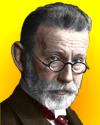
Died 20 Aug 1915 at age 61 (born 14 Mar 1854). quotes
Paul Ralph Ehrlich was a German bacteriologist, hematologist and immunologist whose pioneering work in chemotherapy included the discovery of Salvarsan (arsphenamine), the first effective treatment for syphilis against the spirochete Treponema pallidum. His research in the histology of the blood established hematology as a field. Ehrlich also developed new staining methods for microscopic studies on live tissue. At a time when little was understood about the mechanism of disease caused by bacteria, he proposed the side-chain theory as a chemical explanation of immunity, the body's defenses against infection. Though broadly incorrect, the theory nevertheless stimulated further work on the problem. He shared the 1908 Nobel Prize for Physiology or Medicine with Russian bacteriologist, Élie Metchnikoff.
Paul Ralph Ehrlich was a German bacteriologist, hematologist and immunologist whose pioneering work in chemotherapy included the discovery of Salvarsan (arsphenamine), the first effective treatment for syphilis against the spirochete Treponema pallidum. His research in the histology of the blood established hematology as a field. Ehrlich also developed new staining methods for microscopic studies on live tissue. At a time when little was understood about the mechanism of disease caused by bacteria, he proposed the side-chain theory as a chemical explanation of immunity, the body's defenses against infection. Though broadly incorrect, the theory nevertheless stimulated further work on the problem. He shared the 1908 Nobel Prize for Physiology or Medicine with Russian bacteriologist, Élie Metchnikoff.
Died 20 Aug 1907 at age 69 (born 6 Feb 1838).
German physiologist and psychiatrist and psychiatrist who contributed to the field of brain science. His seminal work with Gustav Fritsch led to the discovery of the motor cortex in the brain. In an 1870 experiment on dogs, Hitzig and Fritsch applied electrical currents to different parts of the cerebral cortex, demonstrating that specific regions controlled distinct muscle groups—localization of brain functions. Their findings sparked interest from others in cortical localization, important in the development of brain surgery techniques, including treatments for conditions like epilepsy. However, his personality has been described as stern, rigid, emotionless, even disagreeable to the point of being abrupt and caustic to others.«
German physiologist and psychiatrist and psychiatrist who contributed to the field of brain science. His seminal work with Gustav Fritsch led to the discovery of the motor cortex in the brain. In an 1870 experiment on dogs, Hitzig and Fritsch applied electrical currents to different parts of the cerebral cortex, demonstrating that specific regions controlled distinct muscle groups—localization of brain functions. Their findings sparked interest from others in cortical localization, important in the development of brain surgery techniques, including treatments for conditions like epilepsy. However, his personality has been described as stern, rigid, emotionless, even disagreeable to the point of being abrupt and caustic to others.«
Died 20 Aug 1622 at age 76 (born 20 Mar 1546).
Syrian-Iranian theologian, mathematician and astronomer, a.k.a. Shaykh Baha'i). He became a very learned Muslim whose genius touched every field of knowledge from mathematics and philosophy to architecture and landscape design. He revived the study of mathematics in Iran. His treatise on the subject, Khulasat al-hisab (“The Essentials of Arithmetic”), and translations from the original Arabic was in use as a textbook until the end of the 19th century. His treatise in astronomy, Tashrihu'l-aflak ("Anatomy of the Heavens") summarised the works of earlier masters. He was born within a year of William Gilbert in England and Tycho Brahe in Denmark, and was still a child when his family left Syria to escape religious persecution.«
Syrian-Iranian theologian, mathematician and astronomer, a.k.a. Shaykh Baha'i). He became a very learned Muslim whose genius touched every field of knowledge from mathematics and philosophy to architecture and landscape design. He revived the study of mathematics in Iran. His treatise on the subject, Khulasat al-hisab (“The Essentials of Arithmetic”), and translations from the original Arabic was in use as a textbook until the end of the 19th century. His treatise in astronomy, Tashrihu'l-aflak ("Anatomy of the Heavens") summarised the works of earlier masters. He was born within a year of William Gilbert in England and Tycho Brahe in Denmark, and was still a child when his family left Syria to escape religious persecution.«
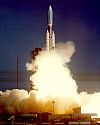
In 1977, NASA launched Voyager 2, on a Titan-Centaur rocket. It was an unmanned spacecraft to explore the outer planets Jupiter, Saturn, Uranus and Neptune, where it also discovered and photographed many previously unknown moons, rings and other features of the planets. A 12-inch copper phonograph record carried on board contained greetings in dozens of languages, samples of music and sounds of nature. Voyager 1 was launched similarly one month later, on 5 Sep 1977.
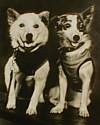
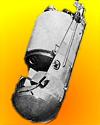
Recovery capsule
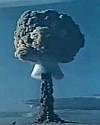
In 1953, the Soviet Union released the news that it had detonated its first hydrogen bomb. U.S. scientists identified it took place eight days earlier (12 Aug 1953), in Kazakhstan. The Soviet device had their own “layer cake” design of lithium-6 deuteride and tritium fuel layered with uranium. The explosion, with a yield of 400 kilotons (about 30 times the power of the bomb dropped on Japan, 6 Aug 1945), came less than 10 months after the first U.S. bomb test, Mike, (1 Nov 1952) announced by President Harry Truman on 7 Jan 1953. Notably, the Soviet bomb was more portable than the U.S. device—small enough to fit in a plane, and be easily weaponizeable, though its size limited the amount of thermonuclear fuel and explosive force. It was dubbed “Joe-4” in the U.S. The American test was designed for greater explosive power.«
more
Dark Sun: The Making of the Hydrogen Bomb, by Richard Rhodes. - book suggestion.
In 1930, the first demonstration telecast of home television in the U.S. was received in New York City. A half-hour program was hosted by the cartoonist Harry Hirschfeld, and demonstrated on screens placed in a store in the Hotel Ansonia, the Hearst building, and a home at 98 Riverside Drive. The signal travelled about six miles, the greatest distance for TV transmission to date. The performers were in the studios were the Jenkins W2XCR (Jersey City, NJ) and the de Forest W2XCD (Passaic, NJ). This program was the first demonstration of home reception, but home sets had been set up in homes beginning on 13 Jan 1928.
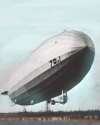
In 1923, the first American-built rigid dirigible was launched in Lakehurst, N.J, later christened the U.S.S. Shenandoah (“daughter of the stars”). It was the first of the Zeppelin type (ZR-1) to use helium gas, of which a supply was was available in the U.S. It was tested in flight the following month, on 3 Sep 1923, and christened 10 Oct 1923. Covered with an aluminum-painted fabric, it was 680 feet long, weighed 36 tons, could bear 55 tons, and carry enough fuel to cruise 5,000 miles at an average speed of 65 mph. It was commanded by Commander Zachery Lansdowne (1888-1925), an early Navy aviator, who died with 14 members of the crew when the airship was struck and destroyed in a violent thunderstorm on 3 Sep 1925 over Caldwell, Ohio, though 29 of the crew survived.
America's Forgotten Airship Disaster: The Crash of the USS Shenandoah, by Aaron J. Keirns. - book suggestion.
In 1913 stainless steel was first cast in Sheffield.*
In 1912, Thomas A. Edison received U.S. patent No. 1036470 for a “Phonographic Apparatus,” and No. 1036471 for a “Storage Battery.”
In 1911, the first cable message sent around the world from the U.S. by commercial telegraph was transmitted from New York City. It read “This message sent around the world,” left the New York Times building at 7:00 pm and was received at 7:16 pm after travelling nearly 29,000 miles through 16 relays via the Azores, Gibraltar, India, Phillipines, Midway, Guam, Hawaii and San Francisco.
In 1897, physician Sir Ronald Ross made a key breakthrough when he discovered malaria parasites while dissecting a mosquito. This day is now known as World Mosquito Day, in celebration of this important discovery.*
In 1872, William Robinson was issued a U.S. patent No.130,661 for electric train signalling.




