Born 10 Nov 1926. quotes
American paleontologist.
American paleontologist.
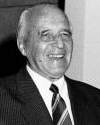
Born 10 Nov 1918.
German theoretical chemist and educator who was co-recipient (with British scientist Geoffrey Wilkinson) of the Nobel Prize for Chemistry in 1973 for his identification of a completely new way in which metals and organic substances can combine. Fischer first knew of the newly synthesized organometallic sandwich compound called ferrocene from reading about it in 1951. Since at that time its structure was unknown, Fischer studied it, and determined that it consisted of a single iron atom sandwiched between two five-sided carbon rings. Wilkinson made this same discovery of independently of Fischer.
German theoretical chemist and educator who was co-recipient (with British scientist Geoffrey Wilkinson) of the Nobel Prize for Chemistry in 1973 for his identification of a completely new way in which metals and organic substances can combine. Fischer first knew of the newly synthesized organometallic sandwich compound called ferrocene from reading about it in 1951. Since at that time its structure was unknown, Fischer studied it, and determined that it consisted of a single iron atom sandwiched between two five-sided carbon rings. Wilkinson made this same discovery of independently of Fischer.
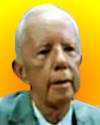
Born 10 Nov 1895; died 18 Feb 1981 at age 85.
John Knudsen (“Jack”) Northrop was an American aircraft designer who was an early advocate of all-metal construction and the flying wing design. As early as 1923, Jack Northrop had been convinced that the flying wing, in which the aircraft carried all loads and controls within the wing and had neither fuselage nor tail sections, was the next major step forward in aircraft design. He pursued various flying wing aircraft designs during WWII. In the decades following the war, Northrop's name was attached as manufacturer and designer of several other aircraft, culminating in the B-2, which vindicated Jack Northrop's dream of a clean flying machine.
John Knudsen (“Jack”) Northrop was an American aircraft designer who was an early advocate of all-metal construction and the flying wing design. As early as 1923, Jack Northrop had been convinced that the flying wing, in which the aircraft carried all loads and controls within the wing and had neither fuselage nor tail sections, was the next major step forward in aircraft design. He pursued various flying wing aircraft designs during WWII. In the decades following the war, Northrop's name was attached as manufacturer and designer of several other aircraft, culminating in the B-2, which vindicated Jack Northrop's dream of a clean flying machine.
Born 10 Nov 1874; died 25 Jul 1933 at age 58.
German physiological chemist who conducted studies on the chemistry of carbohydrate metabolism and muscle contraction and was the first to discover and link together all the steps involved in the conversion of glycogen to lactic acid (1933). In 1918 Otto Meyerhof threw considerable light on the process of cellular metabolism by showing that it involved the breakdown of glucose to lactic acid. Embden spent much time in working out the precise steps involved in such a breakdown, as did many other chemists and physiologists.The metabolic sequence from glycogen to lactic acid was later known as the Embden-Meyerhof pathway, had been worked out. In earlier work, he studied the metabolic processes of liver, laying a foundation for understanding diabetes.
German physiological chemist who conducted studies on the chemistry of carbohydrate metabolism and muscle contraction and was the first to discover and link together all the steps involved in the conversion of glycogen to lactic acid (1933). In 1918 Otto Meyerhof threw considerable light on the process of cellular metabolism by showing that it involved the breakdown of glucose to lactic acid. Embden spent much time in working out the precise steps involved in such a breakdown, as did many other chemists and physiologists.The metabolic sequence from glycogen to lactic acid was later known as the Embden-Meyerhof pathway, had been worked out. In earlier work, he studied the metabolic processes of liver, laying a foundation for understanding diabetes.
Born 10 Nov 1870; died 20 Oct 1952 at age 81.
Russian-American archaeologist and one of the 20th century's most influential authorities on ancient Greek and Roman history, particularly their economic and social aspects. In the period roughly between the two world wars Rostovtzeff came to be widely recognized as one of the leading and most original ancient historians of his time, perhaps the most outstanding. It is difficult to attempt to sum up his work because of its range. He directed the excavation of a Hellenistic city in Syria (1928-37); also wrote on art and archaeology of southern Russia.
Russian-American archaeologist and one of the 20th century's most influential authorities on ancient Greek and Roman history, particularly their economic and social aspects. In the period roughly between the two world wars Rostovtzeff came to be widely recognized as one of the leading and most original ancient historians of his time, perhaps the most outstanding. It is difficult to attempt to sum up his work because of its range. He directed the excavation of a Hellenistic city in Syria (1928-37); also wrote on art and archaeology of southern Russia.
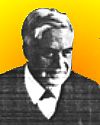
Born 10 Nov 1861; died 13 Mar 1933 at age 71.
Robert Thorburn Ayton Innes was a Scottish astronomer who discovered Proxima Centauri (1915), the closest star to earth after the Sun. Invited by David Gill to the Cape Observatory, South Africa (1894), he became a successful binary star observer with the 7-inch refractor (1628 discoveries). His most famous discovery, Proxima Centauri is a faint star near the binary star Alpha Centauri, which is so far south it is not visible from most of the northern hemisphere. He was also the first to see the Daylight Comet of 1910, though this comet was found independently by so many people in the Southern Hemisphere that no single "original'' discoverer could be named. Innes recorded it on 17 Jan 1910.
Robert Thorburn Ayton Innes was a Scottish astronomer who discovered Proxima Centauri (1915), the closest star to earth after the Sun. Invited by David Gill to the Cape Observatory, South Africa (1894), he became a successful binary star observer with the 7-inch refractor (1628 discoveries). His most famous discovery, Proxima Centauri is a faint star near the binary star Alpha Centauri, which is so far south it is not visible from most of the northern hemisphere. He was also the first to see the Daylight Comet of 1910, though this comet was found independently by so many people in the Southern Hemisphere that no single "original'' discoverer could be named. Innes recorded it on 17 Jan 1910.
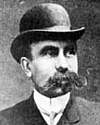
Born 10 Nov 1855; died 2 Nov 1931 at age 75.
French automobile manufacturer, one of the first to plan mass production of motor vehicles. Darracq started out making sewing machines then founded the Gladiator Cycle company in 1891 making the Millet motorcycles. He turned to cars in the late 1890s in France. Later, Darracq manufactured electric cars and Millet motor bicycles. He began producing Léon Bollée voiturettes (1898), then produced quality automobiles under the Darracq, Talbot-Darracq,and Talbot trademarks, notably the Darracq Flying Fifteen (1904). He also built racing cars and operated a school for race drivers. In 1904 Darracq was the most successful car manfacturer in the world producing 1600 vehicles. The Italian branch factory was the origins of Alfa Romeo. He never learned to drive.
French automobile manufacturer, one of the first to plan mass production of motor vehicles. Darracq started out making sewing machines then founded the Gladiator Cycle company in 1891 making the Millet motorcycles. He turned to cars in the late 1890s in France. Later, Darracq manufactured electric cars and Millet motor bicycles. He began producing Léon Bollée voiturettes (1898), then produced quality automobiles under the Darracq, Talbot-Darracq,and Talbot trademarks, notably the Darracq Flying Fifteen (1904). He also built racing cars and operated a school for race drivers. In 1904 Darracq was the most successful car manfacturer in the world producing 1600 vehicles. The Italian branch factory was the origins of Alfa Romeo. He never learned to drive.
(EB)
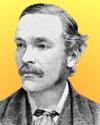
Born 10 Nov 1851; died 19 Jul 1882 at age 30. quotes
British zoologist, younger brother of the statesman Arthur James Balfour, and a founder of modern embryology. Influenced by the work of Michael Foster, with whom he wrote Elements of Embryology (1883), Balfour showed the evolutionary connection between vertebrates and certain invertebrates (similar to research being done by Aleksandr Kovalevski). Balfour proposed the term Chordata for all animals possessing a notochord at some stage in their development. He also did pioneer work on the development of the kidneys and related organs, as well as the spinal nervous system. While convalescing from typhoid fever in Switzerland, he died at the young age of 30 from a fall while attempting an ascent of the unconquered Aiguille Blanche of Mont Blanc.
British zoologist, younger brother of the statesman Arthur James Balfour, and a founder of modern embryology. Influenced by the work of Michael Foster, with whom he wrote Elements of Embryology (1883), Balfour showed the evolutionary connection between vertebrates and certain invertebrates (similar to research being done by Aleksandr Kovalevski). Balfour proposed the term Chordata for all animals possessing a notochord at some stage in their development. He also did pioneer work on the development of the kidneys and related organs, as well as the spinal nervous system. While convalescing from typhoid fever in Switzerland, he died at the young age of 30 from a fall while attempting an ascent of the unconquered Aiguille Blanche of Mont Blanc.
1888
Born 10 Nov 1851; died 17 Feb 1940 at age 88.
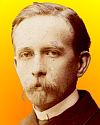
Norwegian mineralogist, petrologist, structural geologist, stratigrapher and palaeontologist. He worked on the correlation of the Lower Palaeozoic and Permian igneous rocks (286 to 245 million years ago). His work revealed much about the mineralogy of the rocks of southern Norway and the Oslo region. in S. Norway. He also made studies of pegmatites, and tectonics of Norway. He greatly advanced petrologic (rock-formation) theory. In his studies of Permian rocks he carried out pioneering work on the theory of magmatic differentiation (the separation into a variety of rock types from an initial single parental molten magma).
Norwegian mineralogist, petrologist, structural geologist, stratigrapher and palaeontologist. He worked on the correlation of the Lower Palaeozoic and Permian igneous rocks (286 to 245 million years ago). His work revealed much about the mineralogy of the rocks of southern Norway and the Oslo region. in S. Norway. He also made studies of pegmatites, and tectonics of Norway. He greatly advanced petrologic (rock-formation) theory. In his studies of Permian rocks he carried out pioneering work on the theory of magmatic differentiation (the separation into a variety of rock types from an initial single parental molten magma).
Born 10 Nov 1793; died 10 Dec 1877 at age 84.
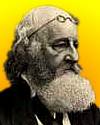
Jared Potter Kirtland was an American naturalist, horticulturist and physician who is credited with originating 26 varieties of cherries and 6 of pears. In 1838, Kirtland published the first list of amphibians collected in Ohio. On 13 May 1851 he made the first discovery of a migrating song bird on his farm near Cleveland, Ohio, which was named Kirtland's Warbler. This yellow-breasted, bluish-gray bird's song can be heard from a quarter of a mile away. It is also one of the rarest birds in the world. The Warbler's finicky nesting requirements also make it extremely unusual. Some still nest in the jack pines of Northern Michigan, but they are on the endangered list.
Jared Potter Kirtland was an American naturalist, horticulturist and physician who is credited with originating 26 varieties of cherries and 6 of pears. In 1838, Kirtland published the first list of amphibians collected in Ohio. On 13 May 1851 he made the first discovery of a migrating song bird on his farm near Cleveland, Ohio, which was named Kirtland's Warbler. This yellow-breasted, bluish-gray bird's song can be heard from a quarter of a mile away. It is also one of the rarest birds in the world. The Warbler's finicky nesting requirements also make it extremely unusual. Some still nest in the jack pines of Northern Michigan, but they are on the endangered list.
Born 10 Nov 1764; died 23 Mar 1849 at age 84.
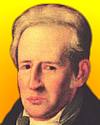
Spanish-American mineralogist who discovered (1801) a new element, later named vanadium. While a professor of mineralogy in Mexico, Del Rio examined a specimen of brown lead from Zimapan and found a new metal, similar to chromium and uranium, which he name erythronium, after the red colour of one of its chemical compounds (Greek erythros, "red"). He was dissuaded by other chemists, and eventually regarded it as impure chromium. Swedish chemist Nils Gabriel Sefström, rediscovered the element (1830) and named it vanadium, after Vanadis, the Scandinavian goddess of beauty, because of its beautiful multi-coloured compounds. Since the early 1900s, vanadium has been used as an alloying element for steels and iron.*
Spanish-American mineralogist who discovered (1801) a new element, later named vanadium. While a professor of mineralogy in Mexico, Del Rio examined a specimen of brown lead from Zimapan and found a new metal, similar to chromium and uranium, which he name erythronium, after the red colour of one of its chemical compounds (Greek erythros, "red"). He was dissuaded by other chemists, and eventually regarded it as impure chromium. Swedish chemist Nils Gabriel Sefström, rediscovered the element (1830) and named it vanadium, after Vanadis, the Scandinavian goddess of beauty, because of its beautiful multi-coloured compounds. Since the early 1900s, vanadium has been used as an alloying element for steels and iron.*

Died 10 Nov 2003 at age 91 (born 15 Sep 1912).
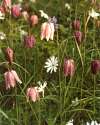
Francis William Simpson was an English naturalist, conservationist and chronicler of the countryside and wild flowers of his native Suffolk. His love of nature began in school, when one of his teachers gave him a flora, a descriptive list of the region's plants. He became a botanist at Ipswich Museum, where he worked until his retirement in 1977. In 1938, he saved a small meadow, famous for its snakeshead fritillaries, from being drained and ploughed into farmland. Using donations amounting to £75, he was able to purchase the field, Mickfield Meadow, for the Society for the Promotion of Nature Reserves. Today, it is one of the oldest nature reserves in the country, protecting the meadow flowers in this small area now surrounded by farmland.[Image: snakeshead fritillaries]
Francis William Simpson was an English naturalist, conservationist and chronicler of the countryside and wild flowers of his native Suffolk. His love of nature began in school, when one of his teachers gave him a flora, a descriptive list of the region's plants. He became a botanist at Ipswich Museum, where he worked until his retirement in 1977. In 1938, he saved a small meadow, famous for its snakeshead fritillaries, from being drained and ploughed into farmland. Using donations amounting to £75, he was able to purchase the field, Mickfield Meadow, for the Society for the Promotion of Nature Reserves. Today, it is one of the oldest nature reserves in the country, protecting the meadow flowers in this small area now surrounded by farmland.[Image: snakeshead fritillaries]
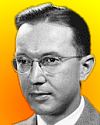
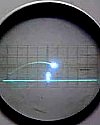
American physicist who invented the first video game, Tennis for Two, as entertainment for the 1958 visitor day at Brookhaven National Laboratory, where he worked (1947-84) then as head of the Instrumentation Division. It used a small analogue computer with ten direct-connected operational amplifiers and output a side view of the curved flight of the tennis ball on an oscilloscope only five inches in diameter. Each player had a control knob and a button. Late in WW II he became electronics group leader at Los Alamos, New Mexico, where the nuclear bomb was developed. After the war, he became active with other nuclear scientists in establishing the Federation of American Scientists to promote nuclear non-proliferation.«[Image right: Oscilloscope display of Tennis for Two showing horizontal line for court, short vertical line for net and curve of tennis ball flight.]
Died 10 Nov 1978 at age 92 (born 16 Apr 1886).
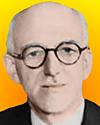
Sir Edward James Salisbury was an English botanist and ecologist who studied and published on the function of soil in the ecology of woodlands and dunes. He investigated plant germination and seed output. He wrote several popular books on not only garden flowers (The Living Garden: the How and Why of Garden Life, 1935), but also weeds and invasive species (Weeds and Aliens, 1961). After WW II, he gave a public lecture in 1945 on the unexpected growth of colorful weeds on the rubble of London's blitzed bomb sites. The colorful yellow and purple flowers provided a welcome relief in the desolate environment, and fascinated Salisbury by the resilience and mobility of weeds. One of his experiments was dropping seeds from a height of 9 feet to measure the time taken for them to reach the floor, which correlated with the ability of the weed to spread in the wind.«
Sir Edward James Salisbury was an English botanist and ecologist who studied and published on the function of soil in the ecology of woodlands and dunes. He investigated plant germination and seed output. He wrote several popular books on not only garden flowers (The Living Garden: the How and Why of Garden Life, 1935), but also weeds and invasive species (Weeds and Aliens, 1961). After WW II, he gave a public lecture in 1945 on the unexpected growth of colorful weeds on the rubble of London's blitzed bomb sites. The colorful yellow and purple flowers provided a welcome relief in the desolate environment, and fascinated Salisbury by the resilience and mobility of weeds. One of his experiments was dropping seeds from a height of 9 feet to measure the time taken for them to reach the floor, which correlated with the ability of the weed to spread in the wind.«
The Living Garden, by Edward James Salisbury. - book suggestion.
Died 10 Nov 1949 at age 87 (born 3 Feb 1862).
American atmospheric physicist who applied basic physical laws to explain the optical, electrical, acoustical, and thermal properties and phenomena of the atmosphere. His book, Physics of the Air (1920), covers most of classical physical meteorology.
American atmospheric physicist who applied basic physical laws to explain the optical, electrical, acoustical, and thermal properties and phenomena of the atmosphere. His book, Physics of the Air (1920), covers most of classical physical meteorology.
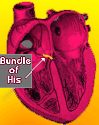
Died 10 Nov 1934 at age 70 (born 29 Dec 1863).
Swiss cardiologist who in 1893 fully described a group of modified muscle fibres (known as the bundle of His) forming part of the impulse-conducting system of the heart. (It was first noted in 1892 by Stanley Kent.) It runs as a single bundle from the atrioventricular node (between the atria and ventricles) then branches into pathways to the right and left ventricles. It relays an electrical impulse, establishing a single rhythm of contraction through the heart. He was among the first to recognize that the heartbeat originates in the individual cells of heart muscle. During WW I, His served as an advisory internist with several armies. In 1916 he described Trench Fever in Volhynia in Russia. His father of the same name was a famous anatomist.«
Swiss cardiologist who in 1893 fully described a group of modified muscle fibres (known as the bundle of His) forming part of the impulse-conducting system of the heart. (It was first noted in 1892 by Stanley Kent.) It runs as a single bundle from the atrioventricular node (between the atria and ventricles) then branches into pathways to the right and left ventricles. It relays an electrical impulse, establishing a single rhythm of contraction through the heart. He was among the first to recognize that the heartbeat originates in the individual cells of heart muscle. During WW I, His served as an advisory internist with several armies. In 1916 he described Trench Fever in Volhynia in Russia. His father of the same name was a famous anatomist.«
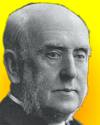
Died 10 Nov 1924 at age 88 (born 28 Dec 1835). quotes
Scottish geologist who worked with Sir Roderick Murchison on the geological survey of Scotland, carried out original research on the effects of glaciation in Scotland (1863), and was appointed director (1867) of the new Scottish branch of the Geological Survey. In 1881, he became director-general of the Geological Survey of the United Kingdom. Geikie produced a geological map of Scotland (1892). He promoted microscopic petrography. Geikie travelled widely across Europe and western America. He concluded that the canyons of the Colorado supported his long-held fluvial theory of erosion. He also developed expertise in volcanic geology. Among many books and papers, he published The Ancient Volcanoes of Great Britain (1897).«
Scottish geologist who worked with Sir Roderick Murchison on the geological survey of Scotland, carried out original research on the effects of glaciation in Scotland (1863), and was appointed director (1867) of the new Scottish branch of the Geological Survey. In 1881, he became director-general of the Geological Survey of the United Kingdom. Geikie produced a geological map of Scotland (1892). He promoted microscopic petrography. Geikie travelled widely across Europe and western America. He concluded that the canyons of the Colorado supported his long-held fluvial theory of erosion. He also developed expertise in volcanic geology. Among many books and papers, he published The Ancient Volcanoes of Great Britain (1897).«
Landscape in history, and other essays, by Archibald Geikie. - book suggestion.
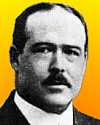
Died 10 Nov 1916 at age 39 (born 5 Apr 1877). quotes
Walter Stanborough Sutton was an American geneticist who provided the first conclusive evidence that chromosomes carry the units of inheritance and occur in distinct pairs. While he was working as a graduate student at Columbia University, studying grasshopper cells, Sutton observed that chromosomes occurred in distinct pairs, and that during meiosis, the chromosome pairs split, and each chromosome goes to its own cell. Sutton announced this discovery in his 1902 paper On the Morphology of the Chromosome Group in Brachyotola. In 1903, Sutton discovered that chromosomes contained genes, and that their behavior during meiosis was random, concepts that later provided the basis for the Chromosomal Theory of Heredity.
Walter Stanborough Sutton was an American geneticist who provided the first conclusive evidence that chromosomes carry the units of inheritance and occur in distinct pairs. While he was working as a graduate student at Columbia University, studying grasshopper cells, Sutton observed that chromosomes occurred in distinct pairs, and that during meiosis, the chromosome pairs split, and each chromosome goes to its own cell. Sutton announced this discovery in his 1902 paper On the Morphology of the Chromosome Group in Brachyotola. In 1903, Sutton discovered that chromosomes contained genes, and that their behavior during meiosis was random, concepts that later provided the basis for the Chromosomal Theory of Heredity.
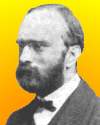
Died 10 Nov 1914 at age 75 (born 21 May 1839).
Swedish astronomer who studied the rotational period of the Sun. Although his PhD thesis had been theoretical (the orbit of asteroid Panopea), Dunér mostly worked as an observer. The most outstanding observing astronomer in Swedish 19th century astronomy, he is mostly known for his introduction of new astrophysical techniques. In 1867-75, he made 2679 micrometer measurements of 445 double and multiple stars. After publishing his catalogue of double star measurements in 1876, Dunér turned to spectroscopy, at first specializing in the spectra of red stars. Later, by measuring the Doppler shift of the spectral lines of light from the approaching and receding edges of the sun, he made the significant discovery that the rotational period differs from about 25.5 days near the Sun's equator but up to 38.5 days near the Sun's poles. His career spanned over almost 50 years, from classical astronomy to astrophysics.
Swedish astronomer who studied the rotational period of the Sun. Although his PhD thesis had been theoretical (the orbit of asteroid Panopea), Dunér mostly worked as an observer. The most outstanding observing astronomer in Swedish 19th century astronomy, he is mostly known for his introduction of new astrophysical techniques. In 1867-75, he made 2679 micrometer measurements of 445 double and multiple stars. After publishing his catalogue of double star measurements in 1876, Dunér turned to spectroscopy, at first specializing in the spectra of red stars. Later, by measuring the Doppler shift of the spectral lines of light from the approaching and receding edges of the sun, he made the significant discovery that the rotational period differs from about 25.5 days near the Sun's equator but up to 38.5 days near the Sun's poles. His career spanned over almost 50 years, from classical astronomy to astrophysics.
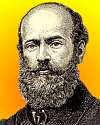
Died 10 Nov 1861 at age 35 (born 15 May 1826).
Alexandre-Henri Mouhot was a French naturalist and explorer of the interior of Siam, Cambodia and Laos (1858-61). He is remembered for his reports of the ruins of Angkor, capital of the ancient Khmer civilization of Cambodia. The location was known to the local population, had been visited by several westerners since the 16th century, but it was Mouhot's evocative accounts and detailed sketches that popularized the Angkor series of sites with the western public. He drew the attention of western scholars to the many ancient terraces, pools, moated cities, palaces and temples as important archaeological sites. His books were published posthumously as he died in Laos at the young age of 35 from malarial fever on his fourth jungle expedition.«
Alexandre-Henri Mouhot was a French naturalist and explorer of the interior of Siam, Cambodia and Laos (1858-61). He is remembered for his reports of the ruins of Angkor, capital of the ancient Khmer civilization of Cambodia. The location was known to the local population, had been visited by several westerners since the 16th century, but it was Mouhot's evocative accounts and detailed sketches that popularized the Angkor series of sites with the western public. He drew the attention of western scholars to the many ancient terraces, pools, moated cities, palaces and temples as important archaeological sites. His books were published posthumously as he died in Laos at the young age of 35 from malarial fever on his fourth jungle expedition.«
Travels in the Central Parts of Indo-China..., by M. Henri Mouhot. - book suggestion.
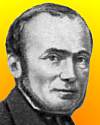
Died 10 Nov 1861 at age 55 (born 16 Dec 1805).
French zoologist who is noted for his work studying anatomical abnormalities in humans and lower animals, for which he coined the term “teratology” in 1832. Although his father, Étienne, had initiated such studies, Isidore was the first to publish an extensive study of teratology, organising all known human and animal malformations taxonomically in Histoire générale et particulière des anomalies de l'organisation chez l'homme et les animaux. This taxonomy of mutants paralleled the Linnean system of natural species: assigning to each a class, order, family, genus, and even species. Many of the principles governing abnormal development were enunciated for the first time in this work. Many of hundreds of names for specific malformations are still in use.
French zoologist who is noted for his work studying anatomical abnormalities in humans and lower animals, for which he coined the term “teratology” in 1832. Although his father, Étienne, had initiated such studies, Isidore was the first to publish an extensive study of teratology, organising all known human and animal malformations taxonomically in Histoire générale et particulière des anomalies de l'organisation chez l'homme et les animaux. This taxonomy of mutants paralleled the Linnean system of natural species: assigning to each a class, order, family, genus, and even species. Many of the principles governing abnormal development were enunciated for the first time in this work. Many of hundreds of names for specific malformations are still in use.
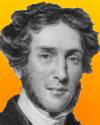
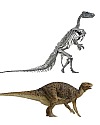
iguanadon
British physician, geologist, and paleontologist, who discovered 4 of the 5 genera of dinosaurs known during his time. As the son of a shoemaker, to a becoming physician, he began a hobby that became all-consuming. An early identification was of the fossil teeth he found while walking with his wife in 1822. When he saw the connection with teeth of the present lizard, the iguana, in 1825, he named the animal the iguanodon (“iguana tooth”). Subsequently, he made additional finds of fossil bones of other large animals which he described accurately: the hylaeosaurus, pelorosaurus, and regnosaurus. His contemporary, paleontologist Sir Richard Owen, coined the word dinosaur (“terrible lizards”). Mantell's books include Medals of Creation (1844).
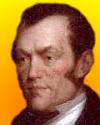
Died 10 Nov 1832 at age 55 (born 31 Dec 1776).
German physician who popularized phrenology, a word he coined to describe the determination of character, personality traits, and criminality on the external shape of the skull (now discredited as a pseudoscience). He was a student of German physician Franz Joseph Gall in Paris, who developed “craniology” which linked cerebral functions to localized areas of the brain and associated them with underlying attributes of the human personality. Spurzheim travelled in Europe and Great Britain teaching phrenology. He influenced a Scottish lawyer, George Combe, who further promoted phrenology and wrote several works on the subject.«
German physician who popularized phrenology, a word he coined to describe the determination of character, personality traits, and criminality on the external shape of the skull (now discredited as a pseudoscience). He was a student of German physician Franz Joseph Gall in Paris, who developed “craniology” which linked cerebral functions to localized areas of the brain and associated them with underlying attributes of the human personality. Spurzheim travelled in Europe and Great Britain teaching phrenology. He influenced a Scottish lawyer, George Combe, who further promoted phrenology and wrote several works on the subject.«
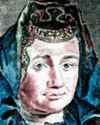
Died 10 Nov 1705 at age 68 (born 26 Dec 1636). quotes
Silesian midwife, also known as Siegemundin, wrote the book The Court Midwife (1690) which was the first German medical text. Beyond descriptions of obstetric techniques of midwifery she also refers to its attendant social pressure. She gives examples of how to offer comfort and encouragement. The prose is written in a conversational style between a novice midwife, Christina, and the experienced Justina (the author’s alter ego). With great care and detail, Siegemund records the experience she had accumulated through a career that included management of various difficult births. She was best known for her expertise in obstructed deliveries. She practiced midwifery in the Brandenburg court.«
Silesian midwife, also known as Siegemundin, wrote the book The Court Midwife (1690) which was the first German medical text. Beyond descriptions of obstetric techniques of midwifery she also refers to its attendant social pressure. She gives examples of how to offer comfort and encouragement. The prose is written in a conversational style between a novice midwife, Christina, and the experienced Justina (the author’s alter ego). With great care and detail, Siegemund records the experience she had accumulated through a career that included management of various difficult births. She was best known for her expertise in obstructed deliveries. She practiced midwifery in the Brandenburg court.«
The Court Midwife, by Justine Siegemund. - book suggestion.
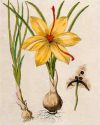
Died 10 Nov 1683 (born 1620).
Scottish botanist whose work, with his contemporary John Ray, served to elucidate and develop the systematic classification of plants. Whereas the seminal classification theories of Jean and Gaspard Bauhin used habit, inflorescence, and vegetative or medicinal qualities, in his book Praeludia botanica (1669) Morison stressed using only morphological features of the fruit of a plant. His lead was taken up by later botanists such as Carolus Linnaeus and Joseph de Tournefort. Earlier in his life, Morison spent his 30's in France as director of the Royal Gardens at Blois. Upon return to England, he became physician to Charles II and in charge of all royal gardens. He was the first regius professor of botany at the University of Oxford (1669-83).Image: crocus florens.
Scottish botanist whose work, with his contemporary John Ray, served to elucidate and develop the systematic classification of plants. Whereas the seminal classification theories of Jean and Gaspard Bauhin used habit, inflorescence, and vegetative or medicinal qualities, in his book Praeludia botanica (1669) Morison stressed using only morphological features of the fruit of a plant. His lead was taken up by later botanists such as Carolus Linnaeus and Joseph de Tournefort. Earlier in his life, Morison spent his 30's in France as director of the Royal Gardens at Blois. Upon return to England, he became physician to Charles II and in charge of all royal gardens. He was the first regius professor of botany at the University of Oxford (1669-83).Image: crocus florens.

In 1988, the Secretary Herrington of the Department of Energy announced that Ellis County, Texas would be the home of a $4.4 billion atom-smashing super collider. Since the Manhattan Project, the DOE and its predecessors had helped build most of the large particle accelerators in the U.S. The superconducting super collider would become the world's largest particle accelerator, the basic research tool in high energy physics for studying the nature of matter and energy. Research at the super collider would not only include study of the fundamental laws that govern the universe but also the exploration of the origins of the universe. However, support for the project declined as cost estimates soared, and Congress finally voted in Oct 1993 to kill it.
In 1983, U.S. student Fred Cohen presented to a security seminar the results of his test - the first documented virus, created as an experiment in computer security. Cohen created this first virus when studying for a PhD at the University of Southern California. Others had written about the potential for creating pernicious programs but he was the first to demonstrate a working example. In the paper, he defined a virus as "a program that can 'infect' other programs by modifying them to include a ... version of itself". Cohen added his virus to a graphics program called VD, written for a Vax mini-computer. The virus hid inside VD and used the permissions users had to look at other parts of the Vax computer to spread around the system.
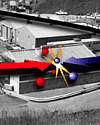
In 1974, the discovery of the “charmed quark” subatomic particle was announced simultaneously by the two American experimental groups responsible. One was an MIT group at Brookhaven National Laboratory, and the other a SLAC-Berkeley group on the west coast at Stanford Linear accelerator centre. The new particle, of mass 3095 MeV had a lifetime about 1000 times more than that of other particles of comparable mass. This announcement set on fire the world of high energy physics and is now known in the physics community as the November revolution. Within two years, in 1976, the scientists leading those groups, Samuel Ting and Burton Richter, were awarded the Nobel prize in physics.[Image: the SPEAR colliding electron-positron storage ring at SLAC in 1974]

In 1960, the first commercial atomic energy reactor, and the third in the U.S., produced power for distribution. This was the $57 million Yankee Atomic Electric Company's plant at Rowe, Mass., on the Deerfield River. The reactor achieved self-sustaining nuclear reaction on 19 Aug 1960. The pressurized light-water reactor produced 125,000 kilowatts of electricity. The company was formed by twelve New England utility companies which signed a contract with the Westinghouse Corporation as the principal contractor. It was permanently shut down on 26 Feb 1992, due to reactor vessel embrittlement, after more than 31 years of service. Decommissioning began in 1993.
In 1951, direct-dial, coast-to-coast telephone service in North America began as Mayor M. Leslie Denning of Englewood, N.J. called Mayor Frank Osborn in Alameda, Calif. Three digits were added to the number dialled. They were able to begin taking just 18 sec. after the dialling. Previously, coast-to-coast calls were placed by long-distance operators. Since the 1930s some calls could be dialed between cities and towns with relatively small areas. By 1965, 9 out of 10 telephones used the new service, with millions of users connecting through thousands of new generation switching centers, with a numbering plan that could be applied nationwide, and a billing system that could record and process millions of transactions automatically.
In 1899, Dr. Rudolph Matas of New Orleans, Louisiana, anesthetized a patient by "spinal subarachnoid method" for surgery. His report, the first on the subject in the U.S. was "The Growing Importance and Value of Local and Regional Anesthesia in Minor and Major Surgery," which was published in the Journal of the Louisiana state Medical Society (1900). Matas is known as "the Father of Modern Vascular Surgery." Delicate surgery was his forte. In 1888 Matas reported the first known aneurysmorrhaphy worldwide. Also in 1888, Dr. Leonard Corning performed the first spinal block with cocaine, but it was over a decade later when Matas performed the first successful preplanned attempt at intraspinal cocainization.
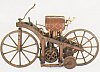
In 1885, the world's first motorcycle, designed by Gottlieb Daimler, made its first significant test-run. Daimler's 17-year-old son, Paul, travelled from Cannstatt to Unterturkheim and back. Their “Reitwagen” had a wooden frame and wheels. A leather drive belt ran between the engine and large brass gears on the rear wheel. With no suspension on the wheels, the leather saddle gave a very uncomfortable ride, at a speed up to 12 km/hr. The single cylinder engine had a bore of 58mm, stroke of 100mm and a displacement of 264cc's. The engine gave 0.5hp at 700 rpm. Two very much smaller, spring-mounted outrigger wheels provided some stability. This was built as an experimental vehicle to test the new Daimler engine in a proof of concept, which was to power Daimler's first motorized carriage the following year.




