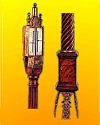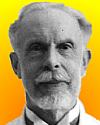
Born 2 Aug 1867; died 12 Jan 1943 at age 75.
American engineer and inventor who later became a pioneer field volcanologist. Using his prior experience at Thomas Edison's labs, at age 20, Perret co-founded the Elektron Mfg Co. in Brooklyn, NY developing the motors, dynamos and electric controls that the company manufactured (and later, elevators). The first American electric elevator (1887) was probably powered by an Elektron motor. He began a second career in 1904 as a volcanologist, using his electrical knowledge to the measure their seismic activity. He became well known for his studies at Vesuvius (1906), Etna (1910), Stromboli and Kilauea (1911). From 1929, he lived at the foot of Mont Pelée, Martinique, where he founded a memorial volcanological museum.«
American engineer and inventor who later became a pioneer field volcanologist. Using his prior experience at Thomas Edison's labs, at age 20, Perret co-founded the Elektron Mfg Co. in Brooklyn, NY developing the motors, dynamos and electric controls that the company manufactured (and later, elevators). The first American electric elevator (1887) was probably powered by an Elektron motor. He began a second career in 1904 as a volcanologist, using his electrical knowledge to the measure their seismic activity. He became well known for his studies at Vesuvius (1906), Etna (1910), Stromboli and Kilauea (1911). From 1929, he lived at the foot of Mont Pelée, Martinique, where he founded a memorial volcanological museum.«
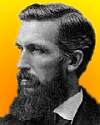
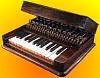
American inventor who filed his ideas for a telephone at the patent office (14 Feb 1876) mere hours after Alexander Graham Bell. In a famous legal battle, Bell was given priority. Gray later worked for Western Electric, where he designed the telegraph printer, the answer-back call-box of the A.D.T. System, and the needle annunciator, among other inventions. He was also the accidental creator of the first electronic musical instrument, a basic single note oscillator using a self-vibrating electromagnetic circuit. To hear that note, he made a simple loudspeaker device with a vibrating diaphragm in a magnetic field. His first “musical telegraph,” or “harmonic telegraph” had sufficient single-note circuits to play two octaves, and later he added a simple tone wheel control. He toured with this invention in 1874.«[Image right: Gray's harmonic telegraph.]
Born 2 Aug 1820; died 4 Dec 1893 at age 73. quotes
Irish physicist who demonstrated why the sky is blue. He became known to the scientific world in 1848 as the author of a substantial work on Crystals. In 1856 he traveled with Professor Huxley to Switzerland, after which he co-authored On the Structure and Motion of Glaciers. He also published Heat as a Mode of Motion (1863), On Radiation (1865), followed by Sound, then in 1870 he published Light. Included in these works were studies of acoustic properties of the atmosphere and the blue colour of the sky, which he suggested was due to the scattering of light by small particles of water. His initial scientific reputation was based on a study of diamagnetism. He carried out research on radiant heat, studied spontaneous generation and the germ theory of disease, glacier motion, sound, the diffusion of light in the atmosphere and a host of related topics. He showed that ozone was an oxygen cluster rather than a hydrogen compound, and invented the firemans respirator and made other less well-known inventions including better fog-horns. One of his most important inventions, the light pipe, has led to the development of fibre optics. The modern light instrument is known as the gastroscope, which enables internal observations of a patient's stomach without surgery. Tyndall was a very popular lecturer. more
Irish physicist who demonstrated why the sky is blue. He became known to the scientific world in 1848 as the author of a substantial work on Crystals. In 1856 he traveled with Professor Huxley to Switzerland, after which he co-authored On the Structure and Motion of Glaciers. He also published Heat as a Mode of Motion (1863), On Radiation (1865), followed by Sound, then in 1870 he published Light. Included in these works were studies of acoustic properties of the atmosphere and the blue colour of the sky, which he suggested was due to the scattering of light by small particles of water. His initial scientific reputation was based on a study of diamagnetism. He carried out research on radiant heat, studied spontaneous generation and the germ theory of disease, glacier motion, sound, the diffusion of light in the atmosphere and a host of related topics. He showed that ozone was an oxygen cluster rather than a hydrogen compound, and invented the firemans respirator and made other less well-known inventions including better fog-horns. One of his most important inventions, the light pipe, has led to the development of fibre optics. The modern light instrument is known as the gastroscope, which enables internal observations of a patient's stomach without surgery. Tyndall was a very popular lecturer. more
A Vision of Modern Science: John Tyndall and the Role of the Scientist in Victorian Culture, by Ursula DeYoung. - book suggestion.
Born 2 Aug 1788; died 13 Apr 1853 at age 64.
German chemist who discovered potassium ferrocyanide (1822), devised Gmelin's test for bile pigments and researched the chemistry of digestion. He published the notable Handbook of Chemistry to comprehensively survey the subject. This was the first thorough update since the era of Lavoisier's influence. Organic chemistry was one of the first edition's three volumes (1817). Gmelin thus reinforced the distinction from inorganic compounds, as had Berzelius, who coined the name organic, only a decade earlier, for substances found in living, or once-living tissues. By the fourth edition (1843), Gmelin's work had expanded to nine volumes, of which six were on organic chemistry. Gmelin coined the names ester, ketone and racemic acid. Johann Georg Gmelin was his great-uncle.« more
German chemist who discovered potassium ferrocyanide (1822), devised Gmelin's test for bile pigments and researched the chemistry of digestion. He published the notable Handbook of Chemistry to comprehensively survey the subject. This was the first thorough update since the era of Lavoisier's influence. Organic chemistry was one of the first edition's three volumes (1817). Gmelin thus reinforced the distinction from inorganic compounds, as had Berzelius, who coined the name organic, only a decade earlier, for substances found in living, or once-living tissues. By the fourth edition (1843), Gmelin's work had expanded to nine volumes, of which six were on organic chemistry. Gmelin coined the names ester, ketone and racemic acid. Johann Georg Gmelin was his great-uncle.« more
Born 2 Aug 1776; died 18 Aug 1835 at age 59.
German chemist.
German chemist.
Born 2 Aug 1754; died 14 Jun 1825 at age 70.
French-American architect. L'Enfant came to the U.S. as a French engineer who assisted the American Continental Army in its fight against the British during the American Revolution. Appointed by President Washington in 1791 to design the new federal city, L'Enfant designed the basic plan for Washington, D.C., based on many European cityscapes. L'Enfant was dismissed from his job in 1792 following professional disagreements and personality clashes with the three commissioners appointed by President Washington to oversee the project.
French-American architect. L'Enfant came to the U.S. as a French engineer who assisted the American Continental Army in its fight against the British during the American Revolution. Appointed by President Washington in 1791 to design the new federal city, L'Enfant designed the basic plan for Washington, D.C., based on many European cityscapes. L'Enfant was dismissed from his job in 1792 following professional disagreements and personality clashes with the three commissioners appointed by President Washington to oversee the project.

Died 2 Aug 1974 at age 92 (born 4 Jul 1882).
American physicist who promoted a magneto-optical technique to detect isotopes (ultimately shown to be non-existent by D. Morey under Merritt at Cornell). This method, he said, was able to distinguish 16 isotopes of lead. In 1931, he thought he had detected the new element 87 in lepidolite, a lithium ore, which he called virginium, now called francium. (This is regarded as erroneous because the element has no long-lived isotopes. The confirmed discovery came in Jan 1939 by Marguerite Perey who discovered it in decay products of actinium). He also thought he had found 2 micrograms of element 85 in monazite, which he named alabamine. (Also now believed erroneous. It was discovered later, and named astatine.)«
American physicist who promoted a magneto-optical technique to detect isotopes (ultimately shown to be non-existent by D. Morey under Merritt at Cornell). This method, he said, was able to distinguish 16 isotopes of lead. In 1931, he thought he had detected the new element 87 in lepidolite, a lithium ore, which he called virginium, now called francium. (This is regarded as erroneous because the element has no long-lived isotopes. The confirmed discovery came in Jan 1939 by Marguerite Perey who discovered it in decay products of actinium). He also thought he had found 2 micrograms of element 85 in monazite, which he named alabamine. (Also now believed erroneous. It was discovered later, and named astatine.)«
Died 2 Aug 1965 at age 73 (born 22 Jun 1892).
American analytical chemist whose analytical separation of uranium contributed to the development of the atomic bomb. He developed special techniques for preparing the bomb project materials, notably the sampling and analysis necessary for producing pure uranium metal. He also devised a new method of estimating traces of metals in various substances and assisted in developing an ether extraction process for the preparation of uranium oxide of the extreme purity required. His special methods also made possible greater utilization of tracer techniques with radioactive and stable isotopes.
American analytical chemist whose analytical separation of uranium contributed to the development of the atomic bomb. He developed special techniques for preparing the bomb project materials, notably the sampling and analysis necessary for producing pure uranium metal. He also devised a new method of estimating traces of metals in various substances and assisted in developing an ether extraction process for the preparation of uranium oxide of the extreme purity required. His special methods also made possible greater utilization of tracer techniques with radioactive and stable isotopes.

Oliver (Hazard Perry) La Farge was an American anthropologist who wrote novels and nonfiction books covering Native American life, and also spoke for the American Indian through his political actions. He learned of their habits and character during field experience, three archaeological expeditions to Arizona, and other ethnological expeditions to Guatemala (1932) and Mexico. This inspiration gave authenticity to his stories of native Americans. His fame was established when he was awarded a Pulitzer Prize for his first novel of Navajo life, Laughing Boy (1929). While La Farge continued his career as a writer, he actively supported the interests of native Americans, eventually as president of the Association on American Indian Affairs.«
Yellow Sun, Bright Sky: The Indian Country Stories of Oliver La Farge, by David L. Caffey. - book suggestion.
Died 2 Aug 1936 at age 64 (born 1 Jul 1872).
French aviator who made the world's first over-the-ocean flight in a heavier-than-air craft. As a successful inventor of automobile lights and accessories, he had his own funds available to turn his interest in aviation. After experimenting with gliders and light-engine airplanes of various designs, on 25 Jul 1909 he flew across the English Channel from Calais to Dover, piloting his Blériot XI, a monoplane with a 28-h.p. engine in 37 minutes. This was the world's first international overseas airplane flight Blériot made the historic crossing after Lord Northcliffe, the owner of the Daily Mail, offered £1,000 to the first successful pilot.
French aviator who made the world's first over-the-ocean flight in a heavier-than-air craft. As a successful inventor of automobile lights and accessories, he had his own funds available to turn his interest in aviation. After experimenting with gliders and light-engine airplanes of various designs, on 25 Jul 1909 he flew across the English Channel from Calais to Dover, piloting his Blériot XI, a monoplane with a 28-h.p. engine in 37 minutes. This was the world's first international overseas airplane flight Blériot made the historic crossing after Lord Northcliffe, the owner of the Daily Mail, offered £1,000 to the first successful pilot.
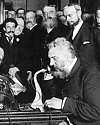
Scottish-American inventor of the telephone. Bell's career was influenced by his grandfather (who published The Practical Elocutionist and Stammering and Other Impediments of Speech), his father (whose interest was the mechanics and methods of vocal communication) and his mother (who was deaf). As a teenager, Alexander was intrigued by the writings of German physicist Hermann Von Helmholtz, On The Sensations of Tone. At age 23 he moved to Canada. In 1871, Bell began giving instruction in Visible Speech at the Boston School for Deaf Mutes. This background set his course in developing the transmission of voice over wires. He cofounded Bell Telephone Co in 1877. With his father-in-law, he re-established the journal Science (1882).«
Alexander Graham Bell, by Edwin S. Grosvenor, Morgan Wesson. - book suggestion.
Died 2 Aug 1895 at age 37 (born 14 Feb 1858).
Scottish geologist, naturalist and explorer who was the first European to enter several regions of eastern Africa and whose writings are outstanding contributions to geographical knowledge, exceptional for their careful records and surveys. Thomson's gazelle (Gazella thomsoni), the most common gazelle of eastern Africa, was named for him.
Scottish geologist, naturalist and explorer who was the first European to enter several regions of eastern Africa and whose writings are outstanding contributions to geographical knowledge, exceptional for their careful records and surveys. Thomson's gazelle (Gazella thomsoni), the most common gazelle of eastern Africa, was named for him.
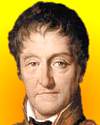
Died 2 Aug 1823 at age 70 (born 13 May 1753). quotes
French mathematician and military engineer who wrote several works on mathematics and military engineering. His military masterpiece is considered to be De la défense des places fortes (1810), the classic work on fortification, but he also studied the mechanics of machines and published works on mathematics. When the first steam engine came to Magdeburg in 1818, Carnot took an interest in analysing how it functioned. This in turn influenced his son Sadi Carnot, now known for his seminal work on thermodynamics (published 1824).
French mathematician and military engineer who wrote several works on mathematics and military engineering. His military masterpiece is considered to be De la défense des places fortes (1810), the classic work on fortification, but he also studied the mechanics of machines and published works on mathematics. When the first steam engine came to Magdeburg in 1818, Carnot took an interest in analysing how it functioned. This in turn influenced his son Sadi Carnot, now known for his seminal work on thermodynamics (published 1824).

In 1965, the trimline telephone was made available to all customers throughout the service area of Michigan Bell Telephone for an optional $1 monthly extra charge. The company had placed the first trimline telephone in service in the U.S. on 21 Oct 1963. The dial and a hang-up button were no longer on a remote base, but instead integrated into the handpiece, midway between the microphone and speaker. A call could thus be dialled from the handpiece alone. A call could thus be dialled from the handpiece alone, which was more convenient in the kitchen or while in bed. It was dramatically different in style from earlier telephones, developed with the industrial design firm Henry Dreyfuss Associates. In 1977, Fortune magazine selected it as one of the country's 25 best-designed products.«
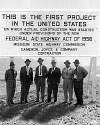
In 1956, the first new contract to build a section of the U.S. Interstate Highway system, awarded after the signing of the Highway-Aid Act of 1956, was for U.S. Route 66 in Laclede County, Missouri, which became Interstate 44. The Highway-Aid Act of 1956 established 90% federal funding for a System of Interstate and Defense Highways across the U.S., making it possible for States to afford construction of the important network of national limited-access highways. Other notable firsts related to the U.S. Interstate highways are claimed by the States of Pennsylvania (which has the oldest section of Interstate Highway, built 1 Oct 1940, years before the Highway Aid Act of 1956, but later part of the Interstate system) and Kansas, which began the first concrete paving under the Act, on 26 Sep 1956.«[Image: Sign which reads "This is the First Project in the United States on which actual construction was started under the provisions of the new Federal Aid Highway Act of 1956. Missouri State Highway Commssion. Cameron, Joyce & Company Contractor."]

In 1938, the first nylon-bristle toothbrush in the U.S. was described in a New York Times business report. Dr. West's Miracle-Tuft toothbrush, a new product from the Weco Products Company, was the first to use synthetic DuPont nylon bristles instead of natural hog bristles. It had four guarantees: “No bristle shedding, 100 per cent waterproofed, longer life, greater cleansing power.” Its price was to be 50 cents (with a fair-trade minimum of 47 cents). The report said an intensive national advertising campaign for the new toothbrush was to be launched in about six weeks. Competition came in May 1939, as Johnson & Johnson began advertising their new Tek toothbrush.*
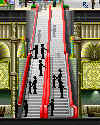
In 1892, George A. Wheeler, of New York City, patented ideas for the first practical moving staircase, though it was never built (U.S. No. 479864). Some of its features were incorporated in the prototype built by the Otis Elevator Company in 1899. Charles D. Seeberger coined the brand name Escalator (from scala, Latin for steps, with elevator). Seeberger with Otis installed the first step-type escalator made for public use at the Paris Exhibition of 1900, where it won first prize. Seeberger eventually sold his patent rights to Otis in 1910. The earliest type of escalator, patented in 1891 by Jesse W. Reno, was introduced as a new novelty ride at Coney Island moving passengers on a conveyor belt at an angle of 25 degrees.[Image: Artist's impression of escalators for a computer graphic.]
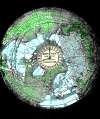
In 1880, Greenwich Mean Time (GMT) was adopted officially by Parliament. Greenwich had been the national centre for time since 1675. GMT was originally set-up to aid naval navigation, but was not was used on land until transportation improved. In the 1840 's with the introduction of the railways there was a need in Britain for a national time system to replace the local time adopted by major towns and cities. GMT was adopted by the U.S. at noon on 18 Nov 1883 when the telegraph lines transmitted time signals to all major cities. Prior to that there were over 300 local times in the USA. GMT was adopted worldwide on 1 Nov 1884, when the International Meridian Conference met in Washington, DC, USA and 24 time zones were created.
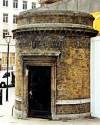
In 1870, Tower Subway, the first tube railway in the world, was opened under the River Thames in London, England. Engineer James Henry Greathead used a tunnelling shield he modified from Barlow’s design to bore the 6-ft diameter tunnel near the Tower of London. It opened with steam operated lifts and a 12-seat carriage shuttled from end to end by wire rope powered by a steam engine. It was not successful due to low use and frequent breakdowns, and the railway closed within three months (Nov 1870). The tunnel was converted to a foot tunnel with stairs. It was closed in 1894 when the opening of the nearby Tower Bridge made it redundant. The tunnel now holds water mains and fibre optic cables.[Image: structure (1926) built over the northern shaft]
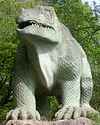
Iguanodon Sculpture
The Dinosaurs of Waterhouse Hawkins, by Barbara Kerley. - book suggestion.
In 1791, Samuel Briggs and his son, Samuel Briggs, Jr. became the first father-son pair to receive a joint U.S. patent. Their invention was a nail-making machine.