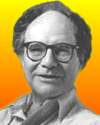
Born 21 Mar 1932. quotes
American molecular biologist who was awarded a share (with Paul Berg and Frederick Sanger) of the Nobel Prize for Chemistry in 1980 for his development of a method for determining the sequence of nucleotide links in the chainlike molecules of nucleic acids (DNA and RNA). Everything from bacteria up, he says, with the exception of some viruses, shares some similar DNA. There are many genes, in many species, that create proteins that have the same biochemical function. In some cases, those genes are identical; sometimes they're very similar. Thus, all living things probably trace back to a single ancestral DNA. Whereas many human genes are similar to those in other life forms, each species evolved enough unique genes to distinguish itself.
American molecular biologist who was awarded a share (with Paul Berg and Frederick Sanger) of the Nobel Prize for Chemistry in 1980 for his development of a method for determining the sequence of nucleotide links in the chainlike molecules of nucleic acids (DNA and RNA). Everything from bacteria up, he says, with the exception of some viruses, shares some similar DNA. There are many genes, in many species, that create proteins that have the same biochemical function. In some cases, those genes are identical; sometimes they're very similar. Thus, all living things probably trace back to a single ancestral DNA. Whereas many human genes are similar to those in other life forms, each species evolved enough unique genes to distinguish itself.
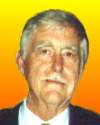
Born 21 Mar 1927; buried 28 Dec 2013 at age 86. quotes
American astronomer noted for challenging the theory that red shifts of quasars indicate their great distance. Arp is one of the key actors in the contemporary debate on the origin and evolution of galaxies in the universe. His landmark compilation of peculiar galaxies led him to challenge the fundamental assumption of modern cosmology, that redshift is a uniform indicator of distance. Astronomers have debated Arp's assertion that quasars are related to peculiar galaxies since the late 1960s. Most astronomers believe that quasars are unrelated to the peculiar galaxies. Yet, no one has been able to explain why the quasars seem to be more numerous around the peculiar galaxies.
American astronomer noted for challenging the theory that red shifts of quasars indicate their great distance. Arp is one of the key actors in the contemporary debate on the origin and evolution of galaxies in the universe. His landmark compilation of peculiar galaxies led him to challenge the fundamental assumption of modern cosmology, that redshift is a uniform indicator of distance. Astronomers have debated Arp's assertion that quasars are related to peculiar galaxies since the late 1960s. Most astronomers believe that quasars are unrelated to the peculiar galaxies. Yet, no one has been able to explain why the quasars seem to be more numerous around the peculiar galaxies.
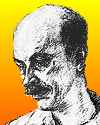
Born 21 Mar 1917; died 28 Jun 1984 at age 67.
(original name Yigael Sukenik) Israeli archaeologist and military leader noted for his work on the Dead Sea Scrolls. Yadin's fieldwork from the 1950's included Hazor, caves of the Judean Desert, Massada, and Meggido.Yadin's findings have shed light on various periods of ancient Israel, such as the Canaanite, First Temple, and Herodian periods, as well as the Bar Kokhba revolt. He made a famous contribution decoding and interpreting several scrolls from the Dead Sea and the Judean Desert. In 1963-5, he excavated at Masada, the ancient mountaintop fortress ruins in the desert about 48.3 km (30 mi) southeast of Jerusalem, the scene of the last stand made by the Jewish Zealots in their revolt against Roman rule (66-73 AD).
(original name Yigael Sukenik) Israeli archaeologist and military leader noted for his work on the Dead Sea Scrolls. Yadin's fieldwork from the 1950's included Hazor, caves of the Judean Desert, Massada, and Meggido.Yadin's findings have shed light on various periods of ancient Israel, such as the Canaanite, First Temple, and Herodian periods, as well as the Bar Kokhba revolt. He made a famous contribution decoding and interpreting several scrolls from the Dead Sea and the Judean Desert. In 1963-5, he excavated at Masada, the ancient mountaintop fortress ruins in the desert about 48.3 km (30 mi) southeast of Jerusalem, the scene of the last stand made by the Jewish Zealots in their revolt against Roman rule (66-73 AD).
A Prophet from Amongst You: The Life of Yigael Yadin, by Neil Asher Silberman. . - book suggestion.
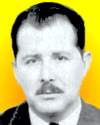
Born 21 Mar 1913; died 26 Apr 1988 at age 75.
Guillermo Haro Barraza was a Mexican astronomer who was working as a newspaper reporter, when he interviewed (1937) Luis Erro of Tonantzintla Observatory. By 1943, Haro’s increasing interest in astronomy was rewarded with a staff position there, despite no formal training. His name remains associated with Herbig-Haro objects, that he and George Herbig discovered independently. These seemed to be stars much younger than the rest of the stars in the sky, and had distinquishing anomalies in their spectra which remained unexplained for many years. Haro’s career of contributions marked the emergence of serious astronomy in Mexico, recognized when he was elected (1959) as the first foreign associate of the Royal Astronomical Society from a developing country.«
Guillermo Haro Barraza was a Mexican astronomer who was working as a newspaper reporter, when he interviewed (1937) Luis Erro of Tonantzintla Observatory. By 1943, Haro’s increasing interest in astronomy was rewarded with a staff position there, despite no formal training. His name remains associated with Herbig-Haro objects, that he and George Herbig discovered independently. These seemed to be stars much younger than the rest of the stars in the sky, and had distinquishing anomalies in their spectra which remained unexplained for many years. Haro’s career of contributions marked the emergence of serious astronomy in Mexico, recognized when he was elected (1959) as the first foreign associate of the Royal Astronomical Society from a developing country.«
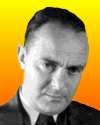
Born 21 Mar 1898; died 8 Sep 1989 at age 91.
Austrian-American biologist who researched nerve regeneration, wound healing and the mechanics of nerve development. During World War II Weiss and his colleagues developed and tested the first practical system of preserving human tissue for later surgical grafting. His experiments on growth and development of neuronal cells led to a study of inductive interactions between tissues as contact effects. Further, he investigated organ-specific antibodies as possible catalysts in growth and differentiation of the respective organs caused by a cooperative product of cell and cell matrix interaction
Austrian-American biologist who researched nerve regeneration, wound healing and the mechanics of nerve development. During World War II Weiss and his colleagues developed and tested the first practical system of preserving human tissue for later surgical grafting. His experiments on growth and development of neuronal cells led to a study of inductive interactions between tissues as contact effects. Further, he investigated organ-specific antibodies as possible catalysts in growth and differentiation of the respective organs caused by a cooperative product of cell and cell matrix interaction
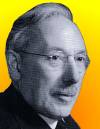
Born 21 Mar 1887; died 27 Feb 1963 at age 75.
Russian-British biochemist who discovered cytochromes, as enzymes critical to the cell's use of oxygen (1923). His career began as an entomologist studying the life cycles of flies. While studying the absorption spectrum of the muscles of the horse botfly, that he noticed four absoption bands that disappeared when the cell suspension was shaken in air, but reappeared afterwards. He had found a respiratory enzyme. He named it cytochrome, and began a thorough investigation of its role in cellular respiration. Like haemoglobin, the cytochrome enzyme contains iron. Cytochrome is a pigment found in some cells, such as bacteria and yeast. He studied also catalase and peroxidase which are also iron-containing enzymes with a role involving oxygen.
Russian-British biochemist who discovered cytochromes, as enzymes critical to the cell's use of oxygen (1923). His career began as an entomologist studying the life cycles of flies. While studying the absorption spectrum of the muscles of the horse botfly, that he noticed four absoption bands that disappeared when the cell suspension was shaken in air, but reappeared afterwards. He had found a respiratory enzyme. He named it cytochrome, and began a thorough investigation of its role in cellular respiration. Like haemoglobin, the cytochrome enzyme contains iron. Cytochrome is a pigment found in some cells, such as bacteria and yeast. He studied also catalase and peroxidase which are also iron-containing enzymes with a role involving oxygen.
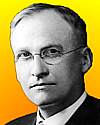
Born 21 Mar 1884; died 12 Nov 1944 at age 60.
American mathematician, foremost of the early 20th century, who formulated the ergodic theorem. As the first American dynamicist, Birkhoff picked up where Poincaré left off, gaining distinction in 1913 with his proof of Poincaré's Last Geometric Theorem, a special case of the 3-body problem. Although primarily a geometer, he discovered new symbolic methods. He saw beyond the theory of oscillations, created a rigorous theory of ergodic behavior, and foresaw dynamical models for chaos. His ergodic theorem transformed the Maxwell- Boltzmann ergodic hypothesis of the kinetic theory of gases (to which exceptions are known) into a rigorous principle through use of the Lebesgue measure theory. He also produced a mathematical model of gravity.
American mathematician, foremost of the early 20th century, who formulated the ergodic theorem. As the first American dynamicist, Birkhoff picked up where Poincaré left off, gaining distinction in 1913 with his proof of Poincaré's Last Geometric Theorem, a special case of the 3-body problem. Although primarily a geometer, he discovered new symbolic methods. He saw beyond the theory of oscillations, created a rigorous theory of ergodic behavior, and foresaw dynamical models for chaos. His ergodic theorem transformed the Maxwell- Boltzmann ergodic hypothesis of the kinetic theory of gases (to which exceptions are known) into a rigorous principle through use of the Lebesgue measure theory. He also produced a mathematical model of gravity.
Dynamical Systems: A Renewal of Mechanism: Centennial of George David Birkhoff, by George David Birkhoff, et al. - book suggestion.
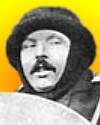
1909
Born 21 Mar 1877; died 25 Feb 1964 at age 86.
Maurice Alain Farman was a French aircraft designer and aircraft manufacturer who contributed greatly to early aviation. In 1908, with his brother Henri Farman, he made the first circular flight of over 1-km, completing a 1.6-km (one-mile) flight near Paris. They built a plane the following year and flew a record distance of 160 km (100 miles). Four years after that, the two brothers started their own aviation company at Boulogne-sur-Seine, supplying the army in France and other countries. The UK also made use of Farman's inventions, for example, air-screw reduction gears, in WW II. In 1917 the Farman brothers built the first long-distance passenger plane, the Goliath. They were born of English parents in Paris.
Maurice Alain Farman was a French aircraft designer and aircraft manufacturer who contributed greatly to early aviation. In 1908, with his brother Henri Farman, he made the first circular flight of over 1-km, completing a 1.6-km (one-mile) flight near Paris. They built a plane the following year and flew a record distance of 160 km (100 miles). Four years after that, the two brothers started their own aviation company at Boulogne-sur-Seine, supplying the army in France and other countries. The UK also made use of Farman's inventions, for example, air-screw reduction gears, in WW II. In 1917 the Farman brothers built the first long-distance passenger plane, the Goliath. They were born of English parents in Paris.
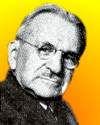
Born 21 Mar 1869; died 8 Dec 1942 at age 73.
German-American industrial architect and planner who is considered the world's foremost in his time: “father of modern factory design.” His rise coincided with the growth of U.S. industry, particularly for the auto industry in Detroit. Shortly after founding Albert Kahn Associates in 1895, he designed Detroit's first large auto plants for the Packard Motor Car Company. Kahn's design for Packard's tenth building was the first concrete- reinforced auto factory. The building was strong, fireproof, and with large areas free of columns, an advance over the dangerous, inefficient, timber-framed plants of the era. Kahn designed Ford Motor Company's famous Highland Park plant, where Henry Ford produced of the Model T and perfected the assembly line process.
German-American industrial architect and planner who is considered the world's foremost in his time: “father of modern factory design.” His rise coincided with the growth of U.S. industry, particularly for the auto industry in Detroit. Shortly after founding Albert Kahn Associates in 1895, he designed Detroit's first large auto plants for the Packard Motor Car Company. Kahn's design for Packard's tenth building was the first concrete- reinforced auto factory. The building was strong, fireproof, and with large areas free of columns, an advance over the dangerous, inefficient, timber-framed plants of the era. Kahn designed Ford Motor Company's famous Highland Park plant, where Henry Ford produced of the Model T and perfected the assembly line process.
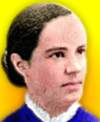
c.1887
Born 21 Mar 1866; died 8 Jan 1952 at age 85. quotes
Antonia Coetana de Paiva Pereira Maury was an American astronomer whose painstaking classifications of stars by their spectra included elaborate work on 681 bright stars of the northern skies published in Annals of Harvard College Observatory (1896), a significant early catalog. Yet she was unappreciated by her observatory director, Edward C. Pickering. Her work was important in Ejnar Hertzsprung's verification of the distinction between dwarf stars and giant stars, as now seen in the Hertzsprung-Russell diagram. After Pickering discovered the first spectroscopic binary star, Mizar, she was first to measure its period, 104 days. In 1889, she herself identified the second binary star, Beta Aurigae, with a period of about 4 days. Antonia was the niece of astronomer Henry Draper, and the granddaughter of John William Draper who pioneered in the use of photography in astronomy.«
Antonia Coetana de Paiva Pereira Maury was an American astronomer whose painstaking classifications of stars by their spectra included elaborate work on 681 bright stars of the northern skies published in Annals of Harvard College Observatory (1896), a significant early catalog. Yet she was unappreciated by her observatory director, Edward C. Pickering. Her work was important in Ejnar Hertzsprung's verification of the distinction between dwarf stars and giant stars, as now seen in the Hertzsprung-Russell diagram. After Pickering discovered the first spectroscopic binary star, Mizar, she was first to measure its period, 104 days. In 1889, she herself identified the second binary star, Beta Aurigae, with a period of about 4 days. Antonia was the niece of astronomer Henry Draper, and the granddaughter of John William Draper who pioneered in the use of photography in astronomy.«
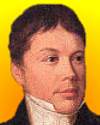
Born 21 Mar 1788; died 20 Apr 1859 at age 71.
Swiss geologist who was one of the first to propose that vast glaciers once covered a substantial portion of the earth's surface. He came to this conclusion by observing that typical striations left in rock by glaciers extended for many miles beyond the limits of existing glaciers. He published these thoughts in 1821, but they were generally ignored. Jean de Chapentier supported Venetz in these ideas, but was also ignored. However, they influenced Louis Agassiz who developed them.[Name also spelled Ignaz or Ignace.]
Swiss geologist who was one of the first to propose that vast glaciers once covered a substantial portion of the earth's surface. He came to this conclusion by observing that typical striations left in rock by glaciers extended for many miles beyond the limits of existing glaciers. He published these thoughts in 1821, but they were generally ignored. Jean de Chapentier supported Venetz in these ideas, but was also ignored. However, they influenced Louis Agassiz who developed them.[Name also spelled Ignaz or Ignace.]
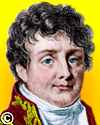
Born 21 Mar 1768; died 16 May 1830 at age 62. quotes
French mathematician, Egyptologist and administrator who exerted strong influence on mathematical physics through his Théorie analytique de la chaleur (1822; The Analytical Theory of Heat). He introduced an infinite mathematical series to aid in solving conduction equations. This analysis technique allows the function of any variable to be expanded into a series of sines of multiples of the variable, which is now known as the Fourier series. His equations spawned many new areas of study in mathematics and physics, including the branch of optics named for him, have subsequently been applied other natural phenomena such as tides, weather and sunspots. more
French mathematician, Egyptologist and administrator who exerted strong influence on mathematical physics through his Théorie analytique de la chaleur (1822; The Analytical Theory of Heat). He introduced an infinite mathematical series to aid in solving conduction equations. This analysis technique allows the function of any variable to be expanded into a series of sines of multiples of the variable, which is now known as the Fourier series. His equations spawned many new areas of study in mathematics and physics, including the branch of optics named for him, have subsequently been applied other natural phenomena such as tides, weather and sunspots. more

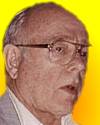
Died 21 Mar 2001 at age 85 (born 23 Sep 1915). quotes
Clifford Glenwood Shull was an American physicist who shared the 1994 Nobel Prize for Physics (with Canadian physicist Bertram N. Brockhouse) for “pioneering contributions to the development of neutron scattering techniques for studies of condensed matter.” Shull’s work produced a new tool to investigate the atomic structure of matter using beams of neutrons from a nuclear reactor. All subatomic particles, including neurons, in a quantum mechanical treatment, have a mathematically described wave character. In X-ray crystallography, when neutron radiation passes through a regular atomic structure, measuring the diffraction pattern interprets the structure that created it. In X-ray scattering is from electrons, but neutron scattering is from nuclei.«
Clifford Glenwood Shull was an American physicist who shared the 1994 Nobel Prize for Physics (with Canadian physicist Bertram N. Brockhouse) for “pioneering contributions to the development of neutron scattering techniques for studies of condensed matter.” Shull’s work produced a new tool to investigate the atomic structure of matter using beams of neutrons from a nuclear reactor. All subatomic particles, including neurons, in a quantum mechanical treatment, have a mathematically described wave character. In X-ray crystallography, when neutron radiation passes through a regular atomic structure, measuring the diffraction pattern interprets the structure that created it. In X-ray scattering is from electrons, but neutron scattering is from nuclei.«
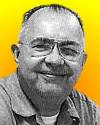
Died 21 Mar 1991 at age 81 (born 10 Aug 1909).
American inventor and manufacturer of electronic musical instruments, including the first solid-body electric guitar to be mass-produced: the Fender Broadcaster (1948, renamed the Telecaster two years later). He was an electronics enthusiast and radio repairman who got involved with guitar design after guitar-playing customers kept bringing him their external pickups for repair. Before Fender came along, guitarists met their amplification needs by attaching pickups to the surface of their hollow-bodied instruments. The Stratocaster (1954), had a flashier, contoured, double-cutaway body, with three (as opposed to two) single-coil pickups and a revolutionary string-bending (tremolo) unit. It became a much favored model of rock guitarists.
American inventor and manufacturer of electronic musical instruments, including the first solid-body electric guitar to be mass-produced: the Fender Broadcaster (1948, renamed the Telecaster two years later). He was an electronics enthusiast and radio repairman who got involved with guitar design after guitar-playing customers kept bringing him their external pickups for repair. Before Fender came along, guitarists met their amplification needs by attaching pickups to the surface of their hollow-bodied instruments. The Stratocaster (1954), had a flashier, contoured, double-cutaway body, with three (as opposed to two) single-coil pickups and a revolutionary string-bending (tremolo) unit. It became a much favored model of rock guitarists.
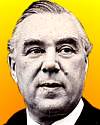

in-vitro fertilization
Patrick Christopher Steptoe was a British scientist and medical researcher who, with Robert Edwards, perfected in-vitro fertilization of the human egg. Their technique enabled the birth of Louise Brown, the world's first “test-tube baby,” on 25 Jul 1978. Steptoe, at an early age, chose medicine over music. During World War II, he was captured by the Italians after his ship was sunk. After the war, with a practice in obstetrics and gynecology, he pioneered a new fiber-optic device, a kind of abdominal “telescope,” called a laparoscope, to perform minimally invasive abdominal surgery. In 1966, to help women with blocked Fallopian tubes, a major cause of infertility, he teamed up with Robert Edwards, a Cambridge physiologist who had developed a way to fertilize human eggs in the lab. Steptoe subsequently helped hundreds of infertile couples have children. He was awarded the C.B.E.
The New Fertility: A Guide to Modern Medical Treatment..., by Graham H. Barker and Patrick Steptoe. - book suggestion.
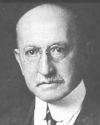
Died 21 Mar 1944 at age 86 (born 3 Dec 1857).
Czech-born American ophthalmic surgeon whose introduction of cocaine as a surface anesthetic in eye surgery on 16 Sep 1884 inaugurated the modern era of local anesthesia. He was a colleague of Sigmund Freud, who in 1884 was interested in the use of cocaine to cure morphine addiction. Koller noticed cocaine had a numbing effect on the tongue and, after experimenting with animals, introduced it as a local anaesthetic in ophthalmology. It was also quickly adopted for nose and throat surgery and for dentistry. Cocaine was isolated in 1859 and was synthesized in 1885. It became evident that this agent produced erosion of the corneal epithelium in high doses or with repeated use. Later, less toxic, synthetic local anesthetics such as tetracaine and proparacaine were developed.
Czech-born American ophthalmic surgeon whose introduction of cocaine as a surface anesthetic in eye surgery on 16 Sep 1884 inaugurated the modern era of local anesthesia. He was a colleague of Sigmund Freud, who in 1884 was interested in the use of cocaine to cure morphine addiction. Koller noticed cocaine had a numbing effect on the tongue and, after experimenting with animals, introduced it as a local anaesthetic in ophthalmology. It was also quickly adopted for nose and throat surgery and for dentistry. Cocaine was isolated in 1859 and was synthesized in 1885. It became evident that this agent produced erosion of the corneal epithelium in high doses or with repeated use. Later, less toxic, synthetic local anesthetics such as tetracaine and proparacaine were developed.
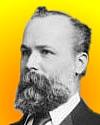
Died 21 Mar 1928 at age 76 (born 12 Apr 1851). quotes
English astronomer who was the first to take the British Civil Service Commission examination for the post of photographic and spectroscopic assistant at the Royal Observatory, Greenwich. For the next forty years that he worked there, he made extensive measurements of sunspots. Checking historical records, he found a period from 1645 to 1715 that had a remarkable lack of reports on sunspots. Although he might have questioned the accuracy of the reporting, he instead attributed the shortage of report to an actual dearth of sunspots during that period. Although his suggestion was not generally accepted at first, accumulating research has since indicated there are indeed decades-long times when the sun has notably few sunspots. These periods are now known as Maunder minima.«
English astronomer who was the first to take the British Civil Service Commission examination for the post of photographic and spectroscopic assistant at the Royal Observatory, Greenwich. For the next forty years that he worked there, he made extensive measurements of sunspots. Checking historical records, he found a period from 1645 to 1715 that had a remarkable lack of reports on sunspots. Although he might have questioned the accuracy of the reporting, he instead attributed the shortage of report to an actual dearth of sunspots during that period. Although his suggestion was not generally accepted at first, accumulating research has since indicated there are indeed decades-long times when the sun has notably few sunspots. These periods are now known as Maunder minima.«
Maunder Minimum: And the Variable Sun-Earth Connection, by Willie Wei-Hock Soon and Steven H. Yaskell. - book suggestion.
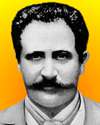
Died 21 Mar 1917 at age 61 (born 27 Feb 1856).
German chemist who developed procaine (1905), also known by its tradename as Novocain, while working with the research group of Adolf von Baeyer at the University of Munich. It provided an alternative to cocaine (and its addictive properties), then used as a local anaesthetic. Because Novocain sometimes caused allergic reactions, it was superceded by lidocaine, first created by Nils Löfgren, was introduced in 1943. Chemically, the generically-named procaine is the mono-hydrochloride of para-amino-benzoyldiethyl-amino-ethanol. U.S. patent No. 812,554 was issued to Einhorn on 13 Feb 1906, assigned to the manufacturer. With the outbreak of hostilities in WW I, three American companies were authorized to synthesize procaine under the patent after Congress passed the Trading with the Enemy Act.«
German chemist who developed procaine (1905), also known by its tradename as Novocain, while working with the research group of Adolf von Baeyer at the University of Munich. It provided an alternative to cocaine (and its addictive properties), then used as a local anaesthetic. Because Novocain sometimes caused allergic reactions, it was superceded by lidocaine, first created by Nils Löfgren, was introduced in 1943. Chemically, the generically-named procaine is the mono-hydrochloride of para-amino-benzoyldiethyl-amino-ethanol. U.S. patent No. 812,554 was issued to Einhorn on 13 Feb 1906, assigned to the manufacturer. With the outbreak of hostilities in WW I, three American companies were authorized to synthesize procaine under the patent after Congress passed the Trading with the Enemy Act.«
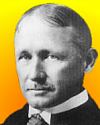
Died 21 Mar 1915 at age 59 (born 20 Mar 1856). quotes
Frederick Winslow Taylor was an American engineer and inventor who is known as the father of scientific management. His system of industrial management has influenced and provided benefits in modern industry world-wide. He introduced “time and motion study” (1881). For example, stop-watches were used to time laborers as they worked, shovel-loads moved were counted, and the load per shovel. He thus determined an optimal shovel size and length. Careful observations of various tasks reduced wasted effort, minimized time used, maximized the efficiency of the laborers, lowered costs, and increased productivity. With Maunsel White, he patented (19 Feb 1901) their invention of a high-speed metal-cutting tool steel—revolutionary because it enabled machining at higher cutting speeds.« more
Frederick Winslow Taylor was an American engineer and inventor who is known as the father of scientific management. His system of industrial management has influenced and provided benefits in modern industry world-wide. He introduced “time and motion study” (1881). For example, stop-watches were used to time laborers as they worked, shovel-loads moved were counted, and the load per shovel. He thus determined an optimal shovel size and length. Careful observations of various tasks reduced wasted effort, minimized time used, maximized the efficiency of the laborers, lowered costs, and increased productivity. With Maunsel White, he patented (19 Feb 1901) their invention of a high-speed metal-cutting tool steel—revolutionary because it enabled machining at higher cutting speeds.« more
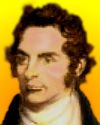
Died 21 Mar 1857 at age 67 (born 5 Oct 1789). quotes
English scientist, explorer and clergyman, who made early scientific studies of the Arctic. On Sir Joseph Banks’ advice, since existing information was sparse, he recorded the natural phenomena he saw on his Arctic voyages. He proved the polar ocean has a warmer temperature at considerable depths than on the surface. He sketched and painted whaling incidents, animals and plants never before seen by Europeans. He drew the hexagonal shapes of snowflakes from microscope observation. Scoresby realized that the colours of the Arctic Sea were due to plankton. He investigated terrestrial magnetism. Eventually all Admiralty ships used Scoresby’s improved compasses. He was quoted by Herman Melville in his novel, Moby Dick.«
English scientist, explorer and clergyman, who made early scientific studies of the Arctic. On Sir Joseph Banks’ advice, since existing information was sparse, he recorded the natural phenomena he saw on his Arctic voyages. He proved the polar ocean has a warmer temperature at considerable depths than on the surface. He sketched and painted whaling incidents, animals and plants never before seen by Europeans. He drew the hexagonal shapes of snowflakes from microscope observation. Scoresby realized that the colours of the Arctic Sea were due to plankton. He investigated terrestrial magnetism. Eventually all Admiralty ships used Scoresby’s improved compasses. He was quoted by Herman Melville in his novel, Moby Dick.«
The Life of William Scoresby, by R. E. Scoresby-Jackson. - book suggestion.
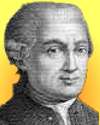
Died 21 Mar 1795 at age 80 (born 16 Oct 1714). quotes
Italian geologist known as the father of Italian geology, who introduced the terms Primary, Secondary, Tertiary, and Quaternary in 1760 to classify four broad divisions of the Earth's rock surface, each earlier in deposition. Within each he recognized numerous minor strata, and had a clear paleontological interpretation of the age sequence of the fossil record. The Primary order contained Paleozoic formations from the oldest, lowest basaltic rock from ancient volcanoes overlaid with metamorphic and sedimentary rocks which he saw in the Atesine Alps. He classified Mesozoic prealpine foothills as of the Secondary order, Tertiary in the subalpine hills and the Quaternary alluvial deposits in the plains.«
Italian geologist known as the father of Italian geology, who introduced the terms Primary, Secondary, Tertiary, and Quaternary in 1760 to classify four broad divisions of the Earth's rock surface, each earlier in deposition. Within each he recognized numerous minor strata, and had a clear paleontological interpretation of the age sequence of the fossil record. The Primary order contained Paleozoic formations from the oldest, lowest basaltic rock from ancient volcanoes overlaid with metamorphic and sedimentary rocks which he saw in the Atesine Alps. He classified Mesozoic prealpine foothills as of the Secondary order, Tertiary in the subalpine hills and the Quaternary alluvial deposits in the plains.«
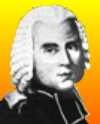
Died 21 Mar 1762 at age 49 (born 15 Mar 1713). quotes
Abbé Nicolas Louis de Lacaille was a French astronomer who named 15 of the 88 constellations in the sky. He spent 1750-1754 mapping the constellations visible from the Southern Hemisphere, as observed from the Cape of Good Hope, the southernmost part of Africa. In his years there, he was said to have observed over 10,000 stars using just his 1/2-inch refractor. He established the first southern star catalogue containing 9776 stars (Caelum Australe Stelliferum, published partly in 1763 and completely in 1847), and a catalogue of 42 nebulae in 1755 containing 33 true deep sky objects (26 his own discoveries).[DSB gives birth date as 15 Mar 1713.EB gives 15 May 1713.]
Abbé Nicolas Louis de Lacaille was a French astronomer who named 15 of the 88 constellations in the sky. He spent 1750-1754 mapping the constellations visible from the Southern Hemisphere, as observed from the Cape of Good Hope, the southernmost part of Africa. In his years there, he was said to have observed over 10,000 stars using just his 1/2-inch refractor. He established the first southern star catalogue containing 9776 stars (Caelum Australe Stelliferum, published partly in 1763 and completely in 1847), and a catalogue of 42 nebulae in 1755 containing 33 true deep sky objects (26 his own discoveries).[DSB gives birth date as 15 Mar 1713.EB gives 15 May 1713.]
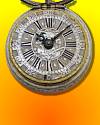
Died 21 Mar 1724 (born c. 1648).
English clockmaker who was one of the most eminent of his time, with wealthy clients for his clocks, barometers and mathematical instruments. In 1680, he invented a repeating pocket watch mechanism which struck the nearest hour and quarter hour on a bell inside the case when a pin was pushed, thus giving the time even in the dark. On 2 Aug 1695 he received a patent for a portable weather-glass (barometer) which "may be removed and transported to any place, though turned upside down, without spilling one drop of the quicksilver, or letting any air into the tube." Quare's elegant barometers had a wooden or ivory column resting on brass feet, with a brass compartment with a glass front to read the measurement scales at the top of the barometric tube.«[Image: Repeating pocket watch by Quare, circa 1700]
English clockmaker who was one of the most eminent of his time, with wealthy clients for his clocks, barometers and mathematical instruments. In 1680, he invented a repeating pocket watch mechanism which struck the nearest hour and quarter hour on a bell inside the case when a pin was pushed, thus giving the time even in the dark. On 2 Aug 1695 he received a patent for a portable weather-glass (barometer) which "may be removed and transported to any place, though turned upside down, without spilling one drop of the quicksilver, or letting any air into the tube." Quare's elegant barometers had a wooden or ivory column resting on brass feet, with a brass compartment with a glass front to read the measurement scales at the top of the barometric tube.«[Image: Repeating pocket watch by Quare, circa 1700]

[Artist concept]
In 2022, NASA announced that in the NASA Exoplanet Archive, with the newest records added, the count of confirmed exoplanets exceeded 5,000. (Videos: 1 2) The archive lists discoveries of exoplanets published in peer-reviewed, scientific papers, and that “have been confirmed using multiple detection methods or by analytical techniques.” Unlike a glowing star seen directly, exoplanets (usually) must be detected indirectly, for example, by the “wobble” method that tracks a slight back-and-forth motion of a star, caused by the gravitational tug of an orbiting planet. The first exoplanet report was on 9 Jan 1992 by Aleksander Wolszczan and Dale Frail using radio astronomy looking at pulsar PSR B1257+12.«
Exoplanets, by Sara Seager (ed.). - book suggestion.
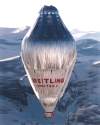
In 1999, a balloon achieved the first non-stop round-the-world balloon flight. After 20 days of flight, the experimental Breitling Orbiter 3 balloon, flown by Brian Jones and Bertrand Piccard, touched down in the Egyptian desert. Bertrand is the grandson of the balloon flight pioneer, Auguste Piccard.
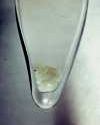
In 1942, a secret report was submitted suggesting the name “plutonium” for artificial element 94 since it followed neptunium and uranium (elements 93 and 92). The symbols Pu and Np were also suggestions. The paper was held secret until after WW II, when it was published by the Journal of the American Chemical Society in 1948. The authors were Glenn Seaborg and Arthur C. Wahl. Since Edwin McMillan and Philip Abelson had named neptunium (discovered 8 Jun 1940) after the planet that lies outside of the orbit of Uranus, the name for the next element in the periodic table was named after the next planet, Pluto. But instead of “plutium,” the authors decided on the name “plutonium.” Seaborg said, “It just sounded better.” They also liked “Pu” instead of “Pl.”Image: Twenty micrograms of pure plutonium hydroxide in capillary tube, Sep 1942.
Plutonium: A History of the World's Most Dangerous Element, by Jeremy Bernstein. - book suggestion.
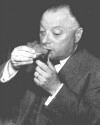
In 1925, Wolfgang Pauli published his “exclusion principle.” At the young age of 24, in an article in Zeitschrift für Physik, Pauli introduced the idea that two nearby electrons cannot be in exactly the same state at the same time. For this, now fundamental, contribution to quantum mechanics, he was awarded a Nobel Prize in 1945.
No Time to be Brief: A Scientific Biography of Wolfgang Pauli, by Charles P. Enz. - book suggestion.
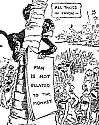
In 1925, the Butler Act became state law in Tennessee that prohibited “the teaching of the Evolution Theory in all the Universities, Normals and all other public schools of Tennessee, which are supported in whole or in part by the public school funds of the State, and to provide penalties for the violations thereof ... that it shall be unlawful ... to teach any theory that denies the story of the Divine Creation of man as taught in the Bible, and to teach instead that man has descended from a lower order of animals.” Within a few months, John Scopes became a willing defendant in the “Scopes Monkey Trial,” which began 10 Jul 1925, and received world attention as the statute was tested. He was convicted and fined $100, which was overturned on appeal. However, the statute was not repealed until 17 May 1967.[Image: Detail from a cartoon. Ape in Jungle-Land: "All those in favor" to monkeys, all with hands raised, in the foreground and a human commotion in the background. The motion: "Man is not related to the monkey." Caption: "The Proposition Would Get A Lot of Support If the Monkeys Could Vote on It. From Orr in the Chicago Tribune.] more
Summer for the Gods: The Scopes Trial and America's Continuing Debate Over Science and Religion, by Edward J. Larson. - book suggestion.
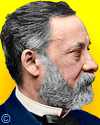
Pasteur
In 1877, Louis Pasteur began work on virulent anthrax bacteria in his laboratory at Lille, France, spurred by a decastating outbreak (1876-77) of anthrax, a disease fatal to cattle and sheep. Robert Koch had already identified the anthrax bacillus. Pasteur showed the disease was caused by this living organism, not by a toxin. He worked with a solution containing the infection, which at a dilution factor of 1 part to 100 still caused death as the living organism continued to multiply. By 1881, he prepared a vaccine made from a weakened strain of the anthrax bacterium. He tested it on 5 May 1881. Cows and sheep innoculated with the vaccine were immunized and survived, while an untreated control group died. He later produced an effective rabies vaccine, tested on Joseph Meister on 6 Jul 1885.«
The Private Science of Louis Pasteur, by Gerald L. Geison. - book suggestion.
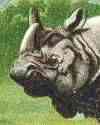
In 1859, the first Zoological Society was incorporated in Philadelphia. PA, USA by its 36 members. The Civil War interrupted establishing the park. On 5 Jun 1873, a perpetual lease of thirty-three acres of land was made to the Society by the Park Commissioners of the city’s West Park, and work commenced at once. Fences, cages, and houses were erected, and donations of birds, beasts, and reptiles began to arrive. The garden did not open to the public until 1 Jul 1874, by which time it had a bear pit and a lion house as featured attractions. By the end of the fiscal year 1875-76, there were added 919 animals, including 342 Quadrupeds, 485 Birds, 74 Reptiles and 31 Fish. Elephants, rhinoceros, giraffes, and three Seal Ponds.«[Image: Male Indian rhinoceros, from an Arbuckle Coffee trade card, 1890. In 1875, this was the first zoo to exhibit one.]
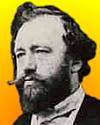
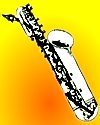
Patent drawing
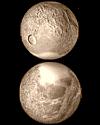
In 1684, Giovanni Domenico Cassini discovered* two moons of Saturn: Tethys and Dione, using a refractor telescope with an aperture of 108mm. He had previously discovered two other satellites of Saturn: Iapetus (Sep 1671) and Rhea (1672). Christiaan Huygens was the first to discover a moon of Saturn, when he viewed Titan (the largest and easiest to see) on 25 Mar 1655.«[Images (top): Tethys; (bottom) Dione. NASA photographs by Voyager.]





