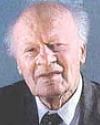
Born 2 Jul 1906; died 6 Mar 2005 at age 98. quotes
German-American physicist who helped to shape classical physics into quantum physics and increased the understanding of the atomic processes responsible for the properties of matter and of the forces governing the structures of atomic nuclei. Bethe did work relating to armour penetration and the theory of shock waves of a projectile moving through air. He studied nuclear reactions and reaction cross sections (1935-38). In 1943, Robert Oppenheimer asked Bethe to be the head of the Theoretical Division at Los Alamos on the Manhattan Project. After returning to Cornell University in 1946, Bethe became a leader promoting the social responsibility of science. He received the Nobel Prize for Physics (1967) for his work on the production of energy in stars.
German-American physicist who helped to shape classical physics into quantum physics and increased the understanding of the atomic processes responsible for the properties of matter and of the forces governing the structures of atomic nuclei. Bethe did work relating to armour penetration and the theory of shock waves of a projectile moving through air. He studied nuclear reactions and reaction cross sections (1935-38). In 1943, Robert Oppenheimer asked Bethe to be the head of the Theoretical Division at Los Alamos on the Manhattan Project. After returning to Cornell University in 1946, Bethe became a leader promoting the social responsibility of science. He received the Nobel Prize for Physics (1967) for his work on the production of energy in stars.
The Road from Los Alamos (Masters of Modern Physics), by Hans Albrecht Bethe. - book suggestion.
1976
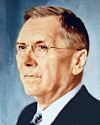
Born 2 Jul 1898; died 2 Dec 1965 at age 67. quotes
Hugh Latimer Dryden was an American physicist and deputy administrator of the National Aeronautics and Space Administration (NASA, 1958) for 7 years. He made pioneering studies in the aerodynamics of high speed and some of the earliest studies of air flow around wing surfaces at the speed of sound. During WW II he headed the Washington Project of the National Defense Research Committee, which developed the Bat radar-homing missile, the first successful U.S. guided missile, which was used by the navy against the Japanese during WW II. In 1962, he led negotiations for joint U.S.-Soviet space projects. He was instrumental in achieving the exchange of weather-satellite data and operation of cooperative communications satellite tests.
Hugh Latimer Dryden was an American physicist and deputy administrator of the National Aeronautics and Space Administration (NASA, 1958) for 7 years. He made pioneering studies in the aerodynamics of high speed and some of the earliest studies of air flow around wing surfaces at the speed of sound. During WW II he headed the Washington Project of the National Defense Research Committee, which developed the Bat radar-homing missile, the first successful U.S. guided missile, which was used by the navy against the Japanese during WW II. In 1962, he led negotiations for joint U.S.-Soviet space projects. He was instrumental in achieving the exchange of weather-satellite data and operation of cooperative communications satellite tests.
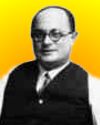
Born 2 Jul 1893; died 31 Oct 1956 at age 63.
Sir Franz Eugen Francis Simon was a German-British physicist whose work in low-temperature physics reached a low of 20 millionths of a degree above absolute zero. He avoided life in Hitler's Germany by going to Oxford. Simon worked on lowering temperatures below the point previously possible by the Joule-Thomson effect. His method was to withdraw heat by lining up paramagnetic molecules at very low temperatures and then allow their orientation to randomize, abstracting further heat from the surroundings and lowering the temperature still further. He came closer to absolute zero, though with more difficulty, by doing the same with nuclear spins.Name before emigrating from Germany (due to anti-semiticsm): Franz Eugen Simon*
Sir Franz Eugen Francis Simon was a German-British physicist whose work in low-temperature physics reached a low of 20 millionths of a degree above absolute zero. He avoided life in Hitler's Germany by going to Oxford. Simon worked on lowering temperatures below the point previously possible by the Joule-Thomson effect. His method was to withdraw heat by lining up paramagnetic molecules at very low temperatures and then allow their orientation to randomize, abstracting further heat from the surroundings and lowering the temperature still further. He came closer to absolute zero, though with more difficulty, by doing the same with nuclear spins.Name before emigrating from Germany (due to anti-semiticsm): Franz Eugen Simon*
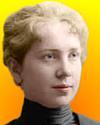
Born 2 Jul 1876; died 17 Apr 1933 at age 56. quotes
Canadian nuclear physicist who was probably the first to observe the recoil of the atomic nucleus as nuclear particles were emitted during radioactive decay. During the years 1901-05, she contributed much to the new science of radioactivity. Working with Ernest Rutherford, she measured the rate at which radium released radon (and other gases) into the air. They demonstrated that the diffusion of the emanations of radium both behaved like a a gas, and that this gas had a high (over 100) molecular weight. Rutherford credited her work identifying the release of radon as crucial to developing his theory of the transmutation of one element into another. She died at the age of 56, from leukemia or a like disease related to radiation exposure.
Canadian nuclear physicist who was probably the first to observe the recoil of the atomic nucleus as nuclear particles were emitted during radioactive decay. During the years 1901-05, she contributed much to the new science of radioactivity. Working with Ernest Rutherford, she measured the rate at which radium released radon (and other gases) into the air. They demonstrated that the diffusion of the emanations of radium both behaved like a a gas, and that this gas had a high (over 100) molecular weight. Rutherford credited her work identifying the release of radon as crucial to developing his theory of the transmutation of one element into another. She died at the age of 56, from leukemia or a like disease related to radiation exposure.
Harriet Brooks: Pioneer Nuclear Scientist, by M.F. & G.W. Rayner-Canham. - book suggestion.
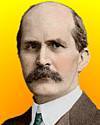
Born 2 Jul 1862; died 12 Mar 1942 at age 79. quotes
Sir William Henry Bragg was a pioneer British scientist in solid-state physics who was a joint winner (with his son Sir Lawrence Bragg) of the Nobel Prize for Physics in 1915 for research on the determination of crystal structures. During the WW I, Bragg was put in charge of research on the detection and measurement of underwater sounds in connection with the location of submarines. He also constructed an X-ray spectrometer for measuring the wavelengths of X-rays. In the 1920s, while director of the Royal Institution in London, he initiated X-ray diffraction studies of organic molecules. Bragg was knighted in 1920.
Sir William Henry Bragg was a pioneer British scientist in solid-state physics who was a joint winner (with his son Sir Lawrence Bragg) of the Nobel Prize for Physics in 1915 for research on the determination of crystal structures. During the WW I, Bragg was put in charge of research on the detection and measurement of underwater sounds in connection with the location of submarines. He also constructed an X-ray spectrometer for measuring the wavelengths of X-rays. In the 1920s, while director of the Royal Institution in London, he initiated X-ray diffraction studies of organic molecules. Bragg was knighted in 1920.
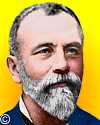
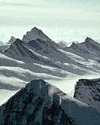
French geologist who was the first to propose the overthrust structure of the Alps, and certain other mountains, such as the Pyranees and Provence. He analyzed lateral crustal compression producing upward displacement and folding of the Earth’s crust. For his work he was awarded (1890) the Prix Vaillant of the Académie des Sciences. (The essay was published postumously in 1908). He developed a theory of orogenic waves resulting in successive periods of massive folding of the Earth’s crust. (The process of folding is named orogeny.) He identified consecutive periods divided as the Caledonian, Hercynian and Alpine periods of orogeny that built up the European mountain system north to south. He was the son of the famous mathematician, Joseph Bertrand.«
Born 2 Jul 1819; died 2 Nov 1874 at age 55.
Scottish organic chemist who discovered pyridine. By distilling bone-oil and other animal material, he also discovered related compounds such as picoline. Other research with alkaloids yielded the structure of codeine. His other interests included agricultural chemistry, and research on anthracene.«
Scottish organic chemist who discovered pyridine. By distilling bone-oil and other animal material, he also discovered related compounds such as picoline. Other research with alkaloids yielded the structure of codeine. His other interests included agricultural chemistry, and research on anthracene.«

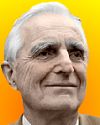
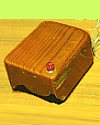
Early mouse
Douglas Carl Engelbart was an American electrical engineer and inventor who invented the computer mouse, which he developed in the 1960s and patented 17 Nov 1970. For input, he also collaborated in the invention of joystick, track ball and light pen devices. It was part of his larger work developing a computer graphical user interface (as opposed to merely keyboard input and text display). This involved a multiple window display, and the ability to display not only text, but also images, audio, video in a single document. After earning his Ph.D. (1955), he joined the Stanford Research Institute (SRI). There, he also worked on ARPANET. By 9 Dec 1968, at a computer conference, he conducted the world's first video conference, multiple window display, as well as collaboration online, and his mouse device for input. Further research was done at Xerox.«
Bootstrapping: Douglas Engelbart, Coevolution, and the Origins of Personal Computing, by Thierry Bardini. - book suggestion.
Died 2 Jul 2002 at age 46 (born 3 Mar 1956).
Korean theoretical physicist specializing in statistical physics and nonlinear dynamic physics, who with colleague Hugo Caram, originated the void diffusing-void model of granular flow, which is recognized as an effective theoretical treatment for a broad range of dynamical phenomena in granular media. In general, his work ranged from percolation network, viscous fingering, granular flows to traffic equations. He studied and taught in America from 1981, and wrote articles for popular magazines on various topics. He died at the young age of 46 of cardiac arrest.«
Korean theoretical physicist specializing in statistical physics and nonlinear dynamic physics, who with colleague Hugo Caram, originated the void diffusing-void model of granular flow, which is recognized as an effective theoretical treatment for a broad range of dynamical phenomena in granular media. In general, his work ranged from percolation network, viscous fingering, granular flows to traffic equations. He studied and taught in America from 1981, and wrote articles for popular magazines on various topics. He died at the young age of 46 of cardiac arrest.«
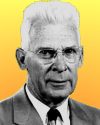
Died 2 Jul 1963 at age 71 (born 12 Nov 1891).
Seth Barnes Nicholson was an American astronomer best known for discovering four satellites of Jupiter. As a graduate student at the University of California, while photographing the recently-discovered 8th moon of Jupiter with the 36-inch Crossley reflector, he discovered a 9th (1914). During his life career at Mt.Wilson Observatory, he discovered two more Jovian satellites (1938) and the 12th (1951), as well as a Trojan asteroid, and computed orbits of several comets and of Pluto. His main assignment at Mt. Wilson was observing the sun with the 150-foot solar tower telescope, and he produced annual reports on sunspot activity and magnetism for decades. With Edison Pettit, he measured the temperatures of the moon, planets, sunspots, and stars in the early 1920s.
Seth Barnes Nicholson was an American astronomer best known for discovering four satellites of Jupiter. As a graduate student at the University of California, while photographing the recently-discovered 8th moon of Jupiter with the 36-inch Crossley reflector, he discovered a 9th (1914). During his life career at Mt.Wilson Observatory, he discovered two more Jovian satellites (1938) and the 12th (1951), as well as a Trojan asteroid, and computed orbits of several comets and of Pluto. His main assignment at Mt. Wilson was observing the sun with the 150-foot solar tower telescope, and he produced annual reports on sunspot activity and magnetism for decades. With Edison Pettit, he measured the temperatures of the moon, planets, sunspots, and stars in the early 1920s.
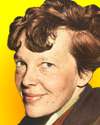
Died 2 Jul 1937 at age 39 (born 24 Jul 1897). quotes
American aviator, one of the world's most celebrated aviators, who was the first woman to fly alone over the Atlantic Ocean. She was lost at sea on a flight enroute to Howland Island. more
American aviator, one of the world's most celebrated aviators, who was the first woman to fly alone over the Atlantic Ocean. She was lost at sea on a flight enroute to Howland Island. more
Amelia Earhart: The Truth at Last, by Mike Campbell. - book suggestion.
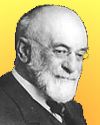
(EB)
Died 2 Jul 1931 at age 87 (born 22 Oct 1843).
American agricultural chemist, the “father of scientific dairying,” developed the Babcock test (1890), a simple way to measure the butterfat content of milk. It consists in liberating the fat globules by dissolving the casein in a strong acid and then separating the fat with a centrifuge. The test discouraged milk adulteration, and was the first adequate standard to determine fair payment for milk. This stimulated improvement of dairy production, and aided in factory manufacture of cheese and butter. He worked for 43 years at the University of Wisconsin (UW). His pioneering research in nutrition included the chemistry of vitamins. He paved the way for UW biochemist, Harry Steenbock, to discover vitamin D, the “sunlight vitamin,” and that a deficiency of this nutrient caused rickets, a disease that prevents bone and tooth growth.«
American agricultural chemist, the “father of scientific dairying,” developed the Babcock test (1890), a simple way to measure the butterfat content of milk. It consists in liberating the fat globules by dissolving the casein in a strong acid and then separating the fat with a centrifuge. The test discouraged milk adulteration, and was the first adequate standard to determine fair payment for milk. This stimulated improvement of dairy production, and aided in factory manufacture of cheese and butter. He worked for 43 years at the University of Wisconsin (UW). His pioneering research in nutrition included the chemistry of vitamins. He paved the way for UW biochemist, Harry Steenbock, to discover vitamin D, the “sunlight vitamin,” and that a deficiency of this nutrient caused rickets, a disease that prevents bone and tooth growth.«
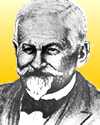
Died 2 Jul 1926 at age 69 (born 26 Feb 1857).
French pharmacist and advocate of optimistic autosuggestion. He was not trained in medicine or psychology, but in 1920 at his clinic in Nancy, Coué introduced a method of psychotherapy characterized by frequent repetition of the formula, je vais de mieux en mieux, "Every day, and in every way, I am becoming better and better." He counseled people to repeat this 15 to 20 times, morning and evening. This method of autosuggestion came to be called Couéism, and was very popular in the 1920s and 1930s. Rev. Charles Inge (1868-1957) expressed this simplistic method in this limerick (1928): "This very remarkable man / Commends a most practical plan: / You can do what you want / If you don't think you can't, / So don't think you can't think you can."
French pharmacist and advocate of optimistic autosuggestion. He was not trained in medicine or psychology, but in 1920 at his clinic in Nancy, Coué introduced a method of psychotherapy characterized by frequent repetition of the formula, je vais de mieux en mieux, "Every day, and in every way, I am becoming better and better." He counseled people to repeat this 15 to 20 times, morning and evening. This method of autosuggestion came to be called Couéism, and was very popular in the 1920s and 1930s. Rev. Charles Inge (1868-1957) expressed this simplistic method in this limerick (1928): "This very remarkable man / Commends a most practical plan: / You can do what you want / If you don't think you can't, / So don't think you can't think you can."
Died 2 Jul 1874 at age 78 (born 4 Aug 1795).
American physician, statistician and agriculturalist who prepared a series of tables of deaths and causes in Philadelphia, during thirty years from 1807. These showed, for example, the excessive mortality of males during childhood. He began practice in Philadelphia on 4 Aug 1820, where yellow fever broke out a few weeks later, with 73 deaths by that fall. Emerson recorded cases, dates, locations, and outcomes. He concluded no current medical treatments was especially effective. When smallpox reappeared there, with 325 deaths in 1824, Emerson drafted a bill for control measures. There were only 6 cases of smallpox in the city in 1825, and 3 in 1826. In retirement, he turned to peach culture, and studied phosphate and guano fertilizers.
American physician, statistician and agriculturalist who prepared a series of tables of deaths and causes in Philadelphia, during thirty years from 1807. These showed, for example, the excessive mortality of males during childhood. He began practice in Philadelphia on 4 Aug 1820, where yellow fever broke out a few weeks later, with 73 deaths by that fall. Emerson recorded cases, dates, locations, and outcomes. He concluded no current medical treatments was especially effective. When smallpox reappeared there, with 325 deaths in 1824, Emerson drafted a bill for control measures. There were only 6 cases of smallpox in the city in 1825, and 3 in 1826. In retirement, he turned to peach culture, and studied phosphate and guano fertilizers.
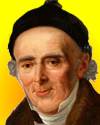
1838
Died 2 Jul 1843 at age 88 (born 10 Apr 1755). quotes
Samuel Christian Friedrich Hahnemann was a German chemist and physician who founded the system of therapeutics known as homeopathy. Hahnemann's methods aroused controversy among his contemporaries and he was forced to leave his practice in Leipzig, eventually settling in Paris. His system was one of complementary medicine, after Hahnemann observed that quinine (an anti-malarial drug) taken by healthy patients produced symptoms similar to those of malaria, and proposed that any compound that produced symptoms similar to those of an illness could cure the illness. This “proving” is the basis of modern homoeopathic practice; compounds are taken in very small doses. Homoeopathy requires the practitioner to treat the patient as a whole, rather than a specific symptom.
Samuel Christian Friedrich Hahnemann was a German chemist and physician who founded the system of therapeutics known as homeopathy. Hahnemann's methods aroused controversy among his contemporaries and he was forced to leave his practice in Leipzig, eventually settling in Paris. His system was one of complementary medicine, after Hahnemann observed that quinine (an anti-malarial drug) taken by healthy patients produced symptoms similar to those of malaria, and proposed that any compound that produced symptoms similar to those of an illness could cure the illness. This “proving” is the basis of modern homoeopathic practice; compounds are taken in very small doses. Homoeopathy requires the practitioner to treat the patient as a whole, rather than a specific symptom.
Samuel Hahnemann: The Founder of Homoeopathic Medicine, by Trevor M Cook. - book suggestion.
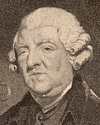
Died 2 Jul 1820 (born 1730).
British optician, son of John Dollond. Peter, though lacking a theoretical background, invented the triple achromatic lens still in wide use, made substantial improvements in the astronomical refracting telescope, and improved navigation instruments of his day. In 1765, he placed convex lenses of crown glass on either side of a biconcave flint glass lens to make the achromatic triplet lens to further improve the correction of colour fringes. (In 1733, Chester Moore Hall had invented the achromatic lens system by joining a crown glass lens and a flint glass lens, which reduce chromatic aberration.)
British optician, son of John Dollond. Peter, though lacking a theoretical background, invented the triple achromatic lens still in wide use, made substantial improvements in the astronomical refracting telescope, and improved navigation instruments of his day. In 1765, he placed convex lenses of crown glass on either side of a biconcave flint glass lens to make the achromatic triplet lens to further improve the correction of colour fringes. (In 1733, Chester Moore Hall had invented the achromatic lens system by joining a crown glass lens and a flint glass lens, which reduce chromatic aberration.)
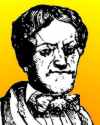
woodcut
Died 2 Jul 1798 at age 55 (born 21 Jan 1743). quotes
American pioneer of steamboat transportation who produced serviceable steamboats before Robert Fulton. Fitch found private support, then rapidly built an engine with features of both Watt's and Newcomen's steam engines. He moved from mistake to mistake until he'd made our first steamboat. It was an odd machine - driven by a rack of Indian-canoe paddles. Yet, by the summer of 1790, Fitch used it in a successful passenger line between Philadelphia and Trenton. On 26 Aug 1791, John Fitch was granted a U.S. patent for the steamboat. He logged thousands of miles at six to eight mph carrying passengers that summer. However, it was not a commercial success, and a few years later, broken by failure, an alcoholic, he turned to suicide with opium pills.
American pioneer of steamboat transportation who produced serviceable steamboats before Robert Fulton. Fitch found private support, then rapidly built an engine with features of both Watt's and Newcomen's steam engines. He moved from mistake to mistake until he'd made our first steamboat. It was an odd machine - driven by a rack of Indian-canoe paddles. Yet, by the summer of 1790, Fitch used it in a successful passenger line between Philadelphia and Trenton. On 26 Aug 1791, John Fitch was granted a U.S. patent for the steamboat. He logged thousands of miles at six to eight mph carrying passengers that summer. However, it was not a commercial success, and a few years later, broken by failure, an alcoholic, he turned to suicide with opium pills.
Poor John Fitch: Inventor of the Steamboat, by Thomas Boyd. - book suggestion.
Died 2 Jul 1644 (born c. 1612).
English astronomer.
English astronomer.
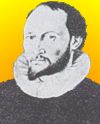
Died 2 Jul 1621 (born c. 1560).
(also spelled Hariot) Mathematician and astronomer who founded the English school of algebra. He introduced a simplified notation for algebra and his fundamental research on the theory of equations was far ahead of its time. He was able to solve equations, even with negative or complex roots. However, he published no mathematical work in his lifetime. (Artes analyticae praxis, posthumous, 1631). Especially early in his career, he worked on navigation for his patron Walter Raleigh. Harriot carried out extensive telescopic observations of the satellites of Jupiter and of sunspots. When investigating optics, he discovered the sine law and measured the refractive indices of 13 different substances. He investigated free motion and motion resisted in air, and ballistic curves.
(also spelled Hariot) Mathematician and astronomer who founded the English school of algebra. He introduced a simplified notation for algebra and his fundamental research on the theory of equations was far ahead of its time. He was able to solve equations, even with negative or complex roots. However, he published no mathematical work in his lifetime. (Artes analyticae praxis, posthumous, 1631). Especially early in his career, he worked on navigation for his patron Walter Raleigh. Harriot carried out extensive telescopic observations of the satellites of Jupiter and of sunspots. When investigating optics, he discovered the sine law and measured the refractive indices of 13 different substances. He investigated free motion and motion resisted in air, and ballistic curves.
Died 2 Jul 1591 (born 1520). quotes
Italian music theorist, lutenist and composer, who as the father of Galileo Galilei, adopted experimentation to prove aspects of acoustics, and may thus have influenced his son, Galileo, away from pure, abstract mathematics and towards making experiments and investigation. Vincenzo's discoveries in acoustics included some of the physics of vibrating strings and columns of air. In particular he was the first to show that the ratio of an interval was proportional to string lengths but varied as the square of the tension applied to the strings and as the cubes of volumes of air. He recognized the superiority of equal tempered tuning and compiled a codex of pieces illustrating the use of all 24 major and minor keys as early as 1584.
Italian music theorist, lutenist and composer, who as the father of Galileo Galilei, adopted experimentation to prove aspects of acoustics, and may thus have influenced his son, Galileo, away from pure, abstract mathematics and towards making experiments and investigation. Vincenzo's discoveries in acoustics included some of the physics of vibrating strings and columns of air. In particular he was the first to show that the ratio of an interval was proportional to string lengths but varied as the square of the tension applied to the strings and as the cubes of volumes of air. He recognized the superiority of equal tempered tuning and compiled a codex of pieces illustrating the use of all 24 major and minor keys as early as 1584.
In 2001, doctors at Jewish Hospital in Louisville, Ky., implanted the first self-contained, mechanical heart replacement into 59-year-old Robert Tools. The device, called the AbioCor, was battery powered and the size of a softball. Tools died almost five months later from multiple organ failure.
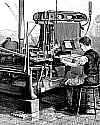
(1889)
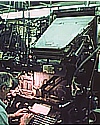
In 1957, the first vacuum-cast steel made in the U.S. was a 93,900-pound ingot, 78 inches in diameter. During the production process, the gases were entrapped by vacuum-stream degassing equipment (designed by the F.J. Stokes Corporation, Philadelphia, Penn.) The ingot was poured by the Bethlehem Steel Corporation, Bethlehem, Penn. Vacuum-cast steel can be made using either an electric or an open-hearth furnace to melt the metal.
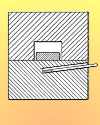
In 1940, a U.S. patent was issued to Enrico Fermi et al., for a process of producing radioactive substances (No. 2,206,634).
In 1940, the first pontoon bridge of reinforced concrete in the U.S. was dedicated watched by a crowd of 2,000. Construction on the Lake Washington Floating Bridge, Seattle, Wash., had begun on 29 Dec 1938. Its total length of 34,021 feet included 25 pontoons bolted together, each having two or more 65-ton anchors making a 6,620-foot floating span attached to fixed approach spans. When Homer M. Hadley had first presented the idea of a floating concrete bridge spanning Lake Washington, people were dubious. But from his experience working in a shipyard during World War I, Hadley knew that concrete could be made to float. Building a floating bridge would be easier than trying to place piers in water 200 feet deep, with another 100 feet of soft clay on the lake bottom. The four-lane concrete highway bridge was anchored with steel cables to resist wind and waves, and hydraulic jacks to let out or take up the slack. It was the first floating draw span in the world, with a 200-foot section designed to allow vessels to pass through. Two 75-horsepower motors were used to open the span in 90 seconds. Fifty years after it was built, water from a heavy rainstorm filled the pontoons and the floating bridge sank into Lake Washington on 25 Nov 1990.
In 1922, a day before his 19th birthday, Ralph W. Samuelson became the first person to ride on water skis he had made as they are used today at Lake Pepin, Minnesota. He had tried a few days earlier with barrel staves and snow skis, with no real success. This day, he used two boards, eight feet long and nine inches wide, with curved tips. He had boiled the tips in his mother's copper kettle and using clamps and braces he curved the tips of the boards and let them set for two days. Binders made from scrap leather held the skis to his feet. Ben, his older brother towed him behind his work launch, which was powered by a converted Saxon truck engine (top speed 14 knots) with a 100-foot sash cord and iron ring as a tow line.

In 1922, the first modern U.S. carillon, (a series of chromatic bells) installed in the Church of Our Lady of Good Voyage, Gloucester, Mass., was blessed by Cardinal O'Connell. The 31 bells and apparatus, weighing 28,000 pounds, were made and installed by John Taylor and Company, Loughborough, England. The largest bell, weighing 2,826 pounds is a pitch of D#. This church is ornately decorated and has models of fishing vessels on its walls. A statue of Our Lady of Good Voyage, holding a boat, stands between two steeples, guiding fishermen safely into port. The first carillon in North America was installed in Canada at the Metropolitan Church in Toronto.
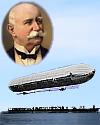
In 1900, the first directed flight of a Zeppelin was made in Germany. LZ-1 was the first rigid airship to use a large internal metal frame containing multiple cells of hydrogen gas balloons. Its overall shape was a long uniform cylinder with rounded ends and 416 feet (120m) overall length. Named after its inventor, Ferdinand Graf von Zeppelin, it flew for about 18 minutes above the Bodensee (Lake Constance) near Friedrichshafen, Germany, powered by two Daimler internal combustion engines. The flight was cut short by technical difficulties. The next attempt was three months later, on 17 Oct. Its floating shed was used to assist launching by being aligned with the wind. Zeppelins built later made many commercial passenger flights.«[Inset: Ferdinand von Zeppelin] more
Zeppelin: The Story of a Great Achievement, by Harry Vissering. - book suggestion.
In 1869, the brig Novelty landed in Boston, Mass., with 84,075 gallons of molasses, shipped on a new principle - not in casks, but in bulk, in large tanks. The product arived from Matanzas in excellent condition.[Ref.: Putnam's Monthly Magazine of American Literature, Science and Art, Vol. 14, No. 21, p.386.]
In 1867, the first elevated railroad in the U.S. opened for traffic in New York City. The first half-mile test section was built by Charles T. Harvey on single columns. It ran along the curb line of Greenwich Street, between Battery Place and Dey Street. The cars travelled at speeds up to 15 mph. Although the line was unsuccessful and sold at a sheriff's sale, it was reorganized on 14 Feb 1870, and placed in operation with steam power. The new service was extended north to the New York Central Railroad Passenger station at 29th Street and Ninth Avenue.
In 1850, the first U.S. patent No. 7,476 for a gas mask with a self-contained breathing apparatus was issued to Benjamin J. Lane of Cambridge, Mass. for a "respiring apparatus." (The first U.S. patent for an "inhaler or lung protector" resembling a gas mask of the modern type was awarded to Lewis Phectic Haslett of Louisville, Ky., on 12 Jun 1849. It had a filter of woolen fabric or other porous substance to purify the air and remove dust.)




