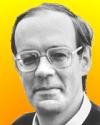
Born 12 Jun 1942.
German medical doctor and research scientist who in 1991, (with German physicist Erwin Neher), won the Nobel Prize for Physiology or Medicine for research into basic cell function and for development of the patch-clamp technique (a laboratory method widely used in cell biology and neuroscience to detect electrical currents as small as a trillionth of an ampere through cell membranes.)
German medical doctor and research scientist who in 1991, (with German physicist Erwin Neher), won the Nobel Prize for Physiology or Medicine for research into basic cell function and for development of the patch-clamp technique (a laboratory method widely used in cell biology and neuroscience to detect electrical currents as small as a trillionth of an ampere through cell membranes.)
Born 12 Jun 1922; died 29 Jun 2013 at age 91.
Italian astrophysicist and activist who was one of the most important in her field in Italy, and contributed to the spectral identification of many stars. She longed to discover more about the big bang and dark matter. Hack was the first woman to head the observatory at Trieste (1964-87). She had an early insight into using space satellites as a platform for astronomical observations. To the public she was a clear communicator of science in the Italian media. Hack was well-known for being vocal and influential in various high-profile civic causes, civil rights and equality. Hack battled the strictures of the Vatican as a committed atheist. She was succesful speaking against the construction of nuclear power plants in Italy. Asteroid 8558 Hack, discovered in 1995, is named after her.«
Italian astrophysicist and activist who was one of the most important in her field in Italy, and contributed to the spectral identification of many stars. She longed to discover more about the big bang and dark matter. Hack was the first woman to head the observatory at Trieste (1964-87). She had an early insight into using space satellites as a platform for astronomical observations. To the public she was a clear communicator of science in the Italian media. Hack was well-known for being vocal and influential in various high-profile civic causes, civil rights and equality. Hack battled the strictures of the Vatican as a committed atheist. She was succesful speaking against the construction of nuclear power plants in Italy. Asteroid 8558 Hack, discovered in 1995, is named after her.«
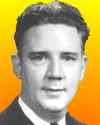
Born 12 Jun 1912; died 16 Apr 1961 at age 48.
Carl Iver Hovland was an American psychologist who pioneered in the study of social communication and the modification of attitudes and beliefs. In 1929, he was one of 30 individuals to work in the communication program founded at Yale University. The program was implemented as a study and became a cooperation research group of 30 individuals. Their mission was to study persuasion communication such as educational programs, publicity campaigns, advertising, propaganda and their effects on behavior and opinion. In 1942, during WW II, Hovland worked on a government study concerning military films and their effect on soldiers' attitudes, behavior and morale.
Carl Iver Hovland was an American psychologist who pioneered in the study of social communication and the modification of attitudes and beliefs. In 1929, he was one of 30 individuals to work in the communication program founded at Yale University. The program was implemented as a study and became a cooperation research group of 30 individuals. Their mission was to study persuasion communication such as educational programs, publicity campaigns, advertising, propaganda and their effects on behavior and opinion. In 1942, during WW II, Hovland worked on a government study concerning military films and their effect on soldiers' attitudes, behavior and morale.
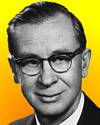
Born 12 Jun 1906; died 7 Jul 1974 at age 68.
Lyman Creighton Craig was an American chemist who developed the counter-current distribution (CCD) method. Within five years of earning his Ph.D., he had designed and built a microdistillation apparatus (1936). Wartime research on antimarial drugs required identification of microgram amounts of an organic compound in a mixture, for which he devised a laboratory technique based on the distribution coefficient. He soon developed the CCD method for fractionation of complex mixtures with an apparatus that could simultaneously accomplish 20 quantitative extractions in a single step. A notable separation, from a difficult mixture, was the isolation and purified parathormone, the active principle of the parathyroid gland, achieved in 1960 with his colleagues. Craig also designed several other significant instruments, including his rotary evaporator, among others.«
Lyman Creighton Craig was an American chemist who developed the counter-current distribution (CCD) method. Within five years of earning his Ph.D., he had designed and built a microdistillation apparatus (1936). Wartime research on antimarial drugs required identification of microgram amounts of an organic compound in a mixture, for which he devised a laboratory technique based on the distribution coefficient. He soon developed the CCD method for fractionation of complex mixtures with an apparatus that could simultaneously accomplish 20 quantitative extractions in a single step. A notable separation, from a difficult mixture, was the isolation and purified parathormone, the active principle of the parathyroid gland, achieved in 1960 with his colleagues. Craig also designed several other significant instruments, including his rotary evaporator, among others.«
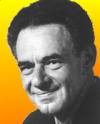
Born 12 Jun 1899; died 24 Jul 1986 at age 87.
German-American biochemist who shared (with Sir Hans Krebs) the 1953 Nobel Prize for Physiology or Medicine for the discovery of coenzyme A, an important catalytic substance involved in the cellular conversion of food into energy. Coenzyme A is a compound with a rather small molecule, which, when united with the enzyme-protein, acquires the property of binding acetic acid. Acetic acid is normally quite unreactive but when bound in this way it becomes labile and reactive and represents the previously mystical 2-carbon compound which combines with a 4-carbon compound to form citric acid. A new way for the transmission of energy in the cell was demonstrated by this discovery.
German-American biochemist who shared (with Sir Hans Krebs) the 1953 Nobel Prize for Physiology or Medicine for the discovery of coenzyme A, an important catalytic substance involved in the cellular conversion of food into energy. Coenzyme A is a compound with a rather small molecule, which, when united with the enzyme-protein, acquires the property of binding acetic acid. Acetic acid is normally quite unreactive but when bound in this way it becomes labile and reactive and represents the previously mystical 2-carbon compound which combines with a 4-carbon compound to form citric acid. A new way for the transmission of energy in the cell was demonstrated by this discovery.
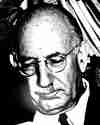
Born 12 Jun 1883; died 21 Sep 1957 at age 74. quotes
Robert Harry Lowie was an Austrian-born American anthropologist whose extensive studies of North American Plains Indians include exemplary research on the Crow. Lowie was instrumental in the development of the discipline. He helped form the profession and influenced the way in which anthropology is done today 'through such works as Culture and Ethnology (1917), Primitive Society (1920), and Social Organization (1948). Lowie's most intense fieldwork on the culture of the Crow Indians took place every season from 1910 to 1916. It was with this assignment that Lowie began to employ "salvage ethnography," the purpose of which was to salvage a record of what was left of a culture before it disappeared.
Robert Harry Lowie was an Austrian-born American anthropologist whose extensive studies of North American Plains Indians include exemplary research on the Crow. Lowie was instrumental in the development of the discipline. He helped form the profession and influenced the way in which anthropology is done today 'through such works as Culture and Ethnology (1917), Primitive Society (1920), and Social Organization (1948). Lowie's most intense fieldwork on the culture of the Crow Indians took place every season from 1910 to 1916. It was with this assignment that Lowie began to employ "salvage ethnography," the purpose of which was to salvage a record of what was left of a culture before it disappeared.
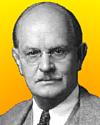
Born 12 Jun 1864; died 15 Nov 1945 at age 81. quotes
Frank M(ichler) Chapman was an American ornithologist famous for his extensive and detailed studies of the life histories, geographic distribution, and systematic relationships of North and South American birds. He joined the American Museum of Natural History in 1888, where he spent his life. By 1920, he was the first Chairman of the newly created Department of Birds. Chapman did pioneer work on Neotropical biogeography. Sensitive to the living environment of birds and other animals, he developed the "habitat group" as a means of display in the Museum, a feature now widely adopted by other museums through the world. A leading conservationist, Chapman was a prolific author who popularized bird study and raised awareness for conservation in the U.S.
Frank M(ichler) Chapman was an American ornithologist famous for his extensive and detailed studies of the life histories, geographic distribution, and systematic relationships of North and South American birds. He joined the American Museum of Natural History in 1888, where he spent his life. By 1920, he was the first Chairman of the newly created Department of Birds. Chapman did pioneer work on Neotropical biogeography. Sensitive to the living environment of birds and other animals, he developed the "habitat group" as a means of display in the Museum, a feature now widely adopted by other museums through the world. A leading conservationist, Chapman was a prolific author who popularized bird study and raised awareness for conservation in the U.S.
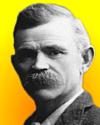
Born 12 Jun 1858; died 22 Jun 1910 at age 52.
American explorer and archaeologist who discovered the Cliff Palace, Mesa Verde, ruins on 18 Dec 1888 near Mancos, Colorado. He subsequently was involved in its excavation, and became perhaps the most influential amateur archaeologist of the late 19th century. Wetherill was a rancher searching for missing cattle when he came upon the Cliff Palace, which is now preserved in the Mesa Verde National Park. He also discovered the Spruce Tree House. After 14 years exploring the archaeology of the region, he was instrumental in the establishment of Chaco Canyon National Monument. He died by murder, shot following a dispute over the theft of horse.«
American explorer and archaeologist who discovered the Cliff Palace, Mesa Verde, ruins on 18 Dec 1888 near Mancos, Colorado. He subsequently was involved in its excavation, and became perhaps the most influential amateur archaeologist of the late 19th century. Wetherill was a rancher searching for missing cattle when he came upon the Cliff Palace, which is now preserved in the Mesa Verde National Park. He also discovered the Spruce Tree House. After 14 years exploring the archaeology of the region, he was instrumental in the establishment of Chaco Canyon National Monument. He died by murder, shot following a dispute over the theft of horse.«
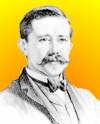
(EB)
Born 12 Jun 1858; died 31 Aug 1927 at age 69.
British explorer, botanist, and pioneer colonial administrator. His interest in zoological specimens gave him a lucrative part-time income, illustrating books for the new sciences of biology, geography and anthropology. The combination of art, languages and a developing interest in the sciences marked Johnston as a new breed of scholar whose skills met colonialism's need for exploration, expansion and documentation.Widely travelled in Africa and speaking many African languages, he was closely involved in what has been called the scramble for Africa by 19th-century colonial powers. He published 40 books on African subjects.
British explorer, botanist, and pioneer colonial administrator. His interest in zoological specimens gave him a lucrative part-time income, illustrating books for the new sciences of biology, geography and anthropology. The combination of art, languages and a developing interest in the sciences marked Johnston as a new breed of scholar whose skills met colonialism's need for exploration, expansion and documentation.Widely travelled in Africa and speaking many African languages, he was closely involved in what has been called the scramble for Africa by 19th-century colonial powers. He published 40 books on African subjects.
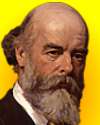
Born 12 Jun 1851; died 22 Aug 1940 at age 89. quotes
English physicist who perfected his “coherer” to act as a radio-wave detector, the essential part of an early radiotelegraph receiver. On 14 Aug 1894, he made the first demonstration of wireless transmission of information using Morse code at a meeting of the British Association at Oxford. He transmitted a message about 150 yards from the old Clarendon Laboratory to the University Museum. He provided his laborary facilities to conduct the first clinical use of X-rays in England (7 Feb 1896), at the request of surgeon Sir Robert Jones (1855-1933), to examine the wrist of boy who had accidentally shot himself. Lodge invented electric spark ignition, and investigated psychic phenomena with his friend Sir Arthur Conan Doyle.« more
English physicist who perfected his “coherer” to act as a radio-wave detector, the essential part of an early radiotelegraph receiver. On 14 Aug 1894, he made the first demonstration of wireless transmission of information using Morse code at a meeting of the British Association at Oxford. He transmitted a message about 150 yards from the old Clarendon Laboratory to the University Museum. He provided his laborary facilities to conduct the first clinical use of X-rays in England (7 Feb 1896), at the request of surgeon Sir Robert Jones (1855-1933), to examine the wrist of boy who had accidentally shot himself. Lodge invented electric spark ignition, and investigated psychic phenomena with his friend Sir Arthur Conan Doyle.« more
Making of Man: A study in Evolution, by Oliver Joseph Lodge. - book suggestion.
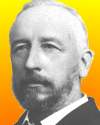
Born 12 Jun 1843; died 24 Jan 1914 at age 70.
Scottish astronomer known for his measurements of solar and stellar parallax, showing the distances of the Sun and other stars from Earth, and for his early use of photography in mapping the heavens. His early training in timekeeping as a watchmaker led to astronomy and he designed, equipped, and operated a private observatory near Aberdeen. To determine parallaxes, he perfected the use of the heliometer, a telescope that uses a split image to measure the angular separation of celestial bodies. In 1877, Gill and his wife measured the solar parallax by observing Mars from Ascension Island. He was appointed Her Majesty's Astronomer at the Cape of Good Hope (1879-1906). Gill also made geodetic surveys of South Africa. In fact he carried out all of the observations to measure the distances to stars in terms of the standard meter. His precise redetermination of the solar parallax was used for almanacs until 1968.
Scottish astronomer known for his measurements of solar and stellar parallax, showing the distances of the Sun and other stars from Earth, and for his early use of photography in mapping the heavens. His early training in timekeeping as a watchmaker led to astronomy and he designed, equipped, and operated a private observatory near Aberdeen. To determine parallaxes, he perfected the use of the heliometer, a telescope that uses a split image to measure the angular separation of celestial bodies. In 1877, Gill and his wife measured the solar parallax by observing Mars from Ascension Island. He was appointed Her Majesty's Astronomer at the Cape of Good Hope (1879-1906). Gill also made geodetic surveys of South Africa. In fact he carried out all of the observations to measure the distances to stars in terms of the standard meter. His precise redetermination of the solar parallax was used for almanacs until 1968.
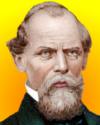
Born 12 Jun 1806; died 22 Jul 1869 at age 63.
John Augustus Roebling was a German-American engineer who pioneered the design and construction of suspension bridges. In 1831 he immigrated to Saxonburg, near Pittsburgh, Pa., and shortly thereafter was employed by the Pennsylvania Railroad Corp. to survey its route across the Allegheny Mountains. He then demonstrated the practicability of steel cables in bridge construction and in 1841 established at Saxonburg the first U.S. factory to manufacture steel-wire rope. Roebling utilized steel cables in the construction of numerous suspension bridges including a railroad suspension bridge over the Niagara River at Niagara Falls (1851-55). He designed the Brooklyn Bridge. He died from injuries while supervising preliminary construction operations. more
John Augustus Roebling was a German-American engineer who pioneered the design and construction of suspension bridges. In 1831 he immigrated to Saxonburg, near Pittsburgh, Pa., and shortly thereafter was employed by the Pennsylvania Railroad Corp. to survey its route across the Allegheny Mountains. He then demonstrated the practicability of steel cables in bridge construction and in 1841 established at Saxonburg the first U.S. factory to manufacture steel-wire rope. Roebling utilized steel cables in the construction of numerous suspension bridges including a railroad suspension bridge over the Niagara River at Niagara Falls (1851-55). He designed the Brooklyn Bridge. He died from injuries while supervising preliminary construction operations. more
Builders of the Bridge: The Story of John Roebling and His Son, by David Barnard Steinman. - book suggestion.

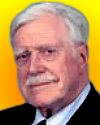
Died 12 Jun 2010 at age 90 (born 14 Aug 1919). quotes
British physiologist who did pioneering work on the mechanisms underlying the conduction of the action potential along nerve fibres. Early in his career, he worked with the giant nerve fibers of squid, which would help discover how nerve impulses are transmitted in all animals. In later resarch, he determined how electric eels project electric fields outside their bodies. Keynes was the first to use radioactive sodium and potassium tracer atoms to follow the movements of these atoms when an impulse is transmitted along a nerve fibre. He has written extensively about the life and work of his great-grandfather, Charles Darwin, beginning with The Beagle Record (1979).«
British physiologist who did pioneering work on the mechanisms underlying the conduction of the action potential along nerve fibres. Early in his career, he worked with the giant nerve fibers of squid, which would help discover how nerve impulses are transmitted in all animals. In later resarch, he determined how electric eels project electric fields outside their bodies. Keynes was the first to use radioactive sodium and potassium tracer atoms to follow the movements of these atoms when an impulse is transmitted along a nerve fibre. He has written extensively about the life and work of his great-grandfather, Charles Darwin, beginning with The Beagle Record (1979).«
Nerve and Muscle, by Richard Darwin Keynes, David John Aidley. - book suggestion.
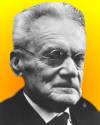
Died 12 Jun 1982 at age 95 (born 20 Nov 1886).
Zoologist whose studies of communication among bees added significantly to the knowledge of the chemical and visual sensors of insects and simple animals. He shared the 1973 Nobel Prize for Physiology or Medicine with animal behaviourists Konrad Lorenz and Nikolaas Tinbergen. He showed that bees have the ability to recognize different odours and tastes, and discovered their famous "waggle dance" used by bees to communicate among with others in the hive. This sequence of body movements indicates the direction and distance to food. He showed polarized light is used by the bees as a "compass" for navigation, even when the sun is not visible. In fish, he demonstrated their acute hearing, and ability to distinguish colours and brightness.
Zoologist whose studies of communication among bees added significantly to the knowledge of the chemical and visual sensors of insects and simple animals. He shared the 1973 Nobel Prize for Physiology or Medicine with animal behaviourists Konrad Lorenz and Nikolaas Tinbergen. He showed that bees have the ability to recognize different odours and tastes, and discovered their famous "waggle dance" used by bees to communicate among with others in the hive. This sequence of body movements indicates the direction and distance to food. He showed polarized light is used by the bees as a "compass" for navigation, even when the sun is not visible. In fish, he demonstrated their acute hearing, and ability to distinguish colours and brightness.
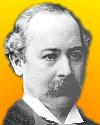
Died 12 Jun 1916 at age 64 (born 19 Jun 1851). quotes
British physicist and historian whose influence spanned both scientific research and technical education. In 1879 he became professor of physics and principal of Finsbury Technical College, where he emphasized hands-on training to prepare workers for modern industry. He wrote widely used texts such as >Elementary Lessons in Electricity and Magnetism and the classic Calculus Made Easy, making complex ideas so clear to broad audiences, it remains in print.) His research advanced knowledge of dynamos, alternating currents, and X-rays, strengthening the foundations of electrical science. A gifted communicator and reformer, Thompson inspired generations of students, engineers, and readers.« more
British physicist and historian whose influence spanned both scientific research and technical education. In 1879 he became professor of physics and principal of Finsbury Technical College, where he emphasized hands-on training to prepare workers for modern industry. He wrote widely used texts such as >Elementary Lessons in Electricity and Magnetism and the classic Calculus Made Easy, making complex ideas so clear to broad audiences, it remains in print.) His research advanced knowledge of dynamos, alternating currents, and X-rays, strengthening the foundations of electrical science. A gifted communicator and reformer, Thompson inspired generations of students, engineers, and readers.« more
Calculus Made Easy, by Silvanus P. Thompson and Martin Gardner. - book suggestion.
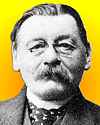
Died 12 Jun 1912 at age 74 (born 20 May 1838).
German geologist and micropetrographist who was a pioneer in microscopic petrography, the study of rock minerals by viewing thin slices of rock under a microscope and noting their optical characteristics. He travelled in the U.S. through the Park Range mountains of the Continental Divide with the King Survey in 1871, and his name was given to the 12,180 foot tall peak as Mount Zirkel, in northwestern Colorado. The King Survey was one of the four “Great Surveys,” the federally sponsored expeditions to the West resumed after the Civil War. These differed from their pre-Civil War surveys in their greater inclusion of civilian specialists, particularly scientists. Zirkel wrote one of the 7 volumes of the King expedition Report, Vol. VI: Microscopial Petrography (1876).
German geologist and micropetrographist who was a pioneer in microscopic petrography, the study of rock minerals by viewing thin slices of rock under a microscope and noting their optical characteristics. He travelled in the U.S. through the Park Range mountains of the Continental Divide with the King Survey in 1871, and his name was given to the 12,180 foot tall peak as Mount Zirkel, in northwestern Colorado. The King Survey was one of the four “Great Surveys,” the federally sponsored expeditions to the West resumed after the Civil War. These differed from their pre-Civil War surveys in their greater inclusion of civilian specialists, particularly scientists. Zirkel wrote one of the 7 volumes of the King expedition Report, Vol. VI: Microscopial Petrography (1876).
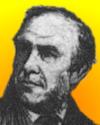
Died 12 Jun 1885 at age 52 (born 25 Mar 1833).
British engineer noted for his work in establishing units of electrical measurement. After earning an M.A. (1851), he worked for the next 10 years with engineering firms engaged in the design and manufacture of submarine telegraph cables and equipment for laying them. In 1861 his friend William Thomson (later Lord Kelvin) procured Jenkin's appointment as reporter for the Committee of Electrical Standards of the British Association for the Advancement of Science. He helped compile and publish reports that established the ohm as the absolute unit of electrical resistance and described methods for precise resistance measurements.
British engineer noted for his work in establishing units of electrical measurement. After earning an M.A. (1851), he worked for the next 10 years with engineering firms engaged in the design and manufacture of submarine telegraph cables and equipment for laying them. In 1861 his friend William Thomson (later Lord Kelvin) procured Jenkin's appointment as reporter for the Committee of Electrical Standards of the British Association for the Advancement of Science. He helped compile and publish reports that established the ohm as the absolute unit of electrical resistance and described methods for precise resistance measurements.
A Victorian Scientist and Engineer: Fleeming Jenkin and the Birth of Electrical Engineering, by Colin Hempstead, Gillian Cookson. - book suggestion.
Died 12 Jun 1835 (born Oct 1753).
English scientist and instrument maker. Troughton soon established himself as the leading maker of instruments in England. Not only did he make great improvements in the design of existing instruments, but he also invented many new instruments. He began his instrument making career with instruments to aid navigation, for example, he designed the 'pillar' sextant, patented in 1788, the dip sector, the marine barometer and the reflecting circle built in 1796. Other instruments which he designed were for use in surveying. He designed the pyrometer, the mountain barometer and the large surveying theodolites. His famous instruments were astronomical ones. He made the Groombridge Transit Circle in 1805 and a six foot Mural Transit Circle in 1810 which was erected at the Observatory in Greenwich in 1812.
English scientist and instrument maker. Troughton soon established himself as the leading maker of instruments in England. Not only did he make great improvements in the design of existing instruments, but he also invented many new instruments. He began his instrument making career with instruments to aid navigation, for example, he designed the 'pillar' sextant, patented in 1788, the dip sector, the marine barometer and the reflecting circle built in 1796. Other instruments which he designed were for use in surveying. He designed the pyrometer, the mountain barometer and the large surveying theodolites. His famous instruments were astronomical ones. He made the Groombridge Transit Circle in 1805 and a six foot Mural Transit Circle in 1810 which was erected at the Observatory in Greenwich in 1812.
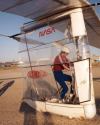
In 1979, the Gossamer Albatross flew across the English Channel, an airplane powered solely by human power. Cyclist Bryan Allen used a pedalling mechanism.
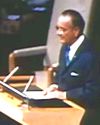
In 1968, after the General Assembly of the United Nations voted to approve of the Treaty on the Non-Proliferation of Nuclear Weapons (NPT), U.S. Pres. Johnson addressed the Assembly, hailing it as “a first step toward ending the peril of nuclear war,” and “the most important international agreement in the field of disarmament since the nuclear age began.” As nuclear powers, France abstained and China refused to participate. Negative votes were cast by Cuba, Albania, Tanzania and Zambia. The NPT was signed by officials of the U.S., Russia and U.K. on 1 Jul 1968. Going forward, the Treaty had a limited effect, but reduced tensions, and set a precedent for international cooperation. Other treaties followed.«
In Jun 1965, Mount Wilson and Palomar astronomers announced the discovery of “quasi-stellar blue galaxies,” unusually bright objects akin to quasars, but radio-quiet. Dr. Allan Sandage said they are 500 times more common than quasars, have very high red-shift, visible billions of light years away, and offer a new tool to probe cosmic structure. These suggest the universe is not infinite but finite, closed, and pulsating—expanding for billions of years, then slowing, reversing, and collapsing in an 82-billion-year cycle. Adding knowledge of quasars and cosmic background radiation, these findings reinforce the Big Bang theory, and refute the steady-state model of an eternal, unchanging universe.«
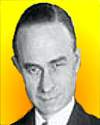
In 1933, the electrobasograph invented by Dr R. Plato Schwartz (1894-1965) of The Myodynamics Laboratory of the University of Rochester, N.Y., was first exhibited in the U.S. to the American Medical Association convention in Milwaukee, Wisc. The device could make a record on film of “the walking gait of individuals, to distinguish between actual and spurious limps in damage claims for injuries.” In conjunction with Dr. Schwartz’s separate researches into poliomyelitis and cerebral palsy in the late 1940s and 1950s, the Laboratory extended its prior electromyographic researches into the effects of poliomyelitis and cerebral palsy on muscle function.«
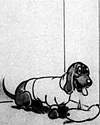
In 1913, the first animated cartoon made in the U.S. by modern techniques was released. John Randolph Bray invented and patented the process with which he produced a movie called The Artist's Dream (a.k.a. The Dachshund) in which a dog eats sausages until it explodes. It inserted animated scenes between live action scenes. Bray began his career as a newspaper artist, and was soon selling cartoons to magazines. After receiving a contract from Pathé to make cartoons, Bray staffed his own new studio. He patented many of his improvements on the animation process, having been quick to realize the business potential of his methods. One innovation was to use translucent paper to make it easier to position successive drawings.«
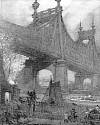
In 1909, the ceremonial opening was held for the Queensboro Bridge, the first significant double-deck bridge in the U.S. It had been opened to traffic on 30 Mar 1909. Architect Henry Hornbostel collaborated with famed bridge engineer Gustav Lindenthal, to design and erect the massive, silver-painted trusses that spanned the East River between 59th Street in Manhattan and Long Island City in Queens. Not only was this a landmark cantilever bridge in the history of U.S. bridge design, but the opening of the Queensboro Bridge immediately stimulated further housing development of Queens from a largely rural area, and brought Long Island City out of its former isolation.«
The Queensboro Bridge, by Greater Astoria & Roosevelt Island Historical Societies. - book suggestion.
1907
In 1908, the Rotherhithe-Stepney tunnel beneath the Thames in South London was opened for road vehicle traffic. It was built by Sir Maurice Fitzmaurice between 1904 and 1908. With a length of 4860 feet (1481 metres) excluding the approaches, it remains the largest iron-lined subaqueous tunnel in the world. It was constructed partly by tunnelling and partly by the cut and cover method. The area around the entrances was cleared resulting in 3,000 people being rehoused. It is located close to the Rotherhithe-Wapping Thames Tunnel built (1825-43) by Marc Brunel and his son, Isambad K. Brunel. which was the world's first tunnel beneath a navigable river.«
In 1906, sound movies were patented by John Ballance (U.S. No. 823,022).
In 1897, the Swiss Army Knife was patented by Carl Elsener.
In 1893, evidence that bacteria are necessary to process nitrogen into a form useable by living creatures was presented by Sergey Winogradsky to the French Academy of Sciences.
In 1860, a "Railroad air brake" was patented by Nehemiah Hodge (U.S. No. 28,670).
In 1849, the forerunner of modern gas masks is patented by Lewis Phectic Haslett of Louisville, Ky. His "inhaler or lung protector" design used woolen fabric (or other porous material) to filter dust and other material from the air (U.S. No. 6,529).
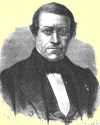
Wheatstone
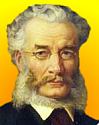
Cooke
Sir Charles Wheatstone, by Margaret Wilson and Brian Bowers (Ed.). - book suggestion.




