Born 19 Jun 1933; died 29 Jun 1971 at age 38.
Viktor Ivanovich Patsayev was a Soviet cosmonaut, whoservedas design engineer onSoyuz 11, with commanderGeorgy Dobrovolskyand flight engineerVladislav Volkov. They remained in orbit for 24 days, a record, and became the first crew to transform an unmanned satellite into a manned orbital scientific station by dockingSoyuz 11withSalyut 1, launched two months earlier. Automatic control broughtSoyuz 11to within 100 m, then the docking was guided manually. In Salyut 1they used a telescope, spectrometer, electrophotometer, and television equipment, tested new onboard systems under varying conditions, and made medico-biological studies. Theydiedduring their return trip,due to rapid cabin depressurization.«[In error, prior to 23 Sep 2025, a thumbnail of Dobrovolsky was shown.]
Viktor Ivanovich Patsayev was a Soviet cosmonaut, whoservedas design engineer onSoyuz 11, with commanderGeorgy Dobrovolskyand flight engineerVladislav Volkov. They remained in orbit for 24 days, a record, and became the first crew to transform an unmanned satellite into a manned orbital scientific station by dockingSoyuz 11withSalyut 1, launched two months earlier. Automatic control broughtSoyuz 11to within 100 m, then the docking was guided manually. In Salyut 1they used a telescope, spectrometer, electrophotometer, and television equipment, tested new onboard systems under varying conditions, and made medico-biological studies. Theydiedduring their return trip,due to rapid cabin depressurization.«[In error, prior to 23 Sep 2025, a thumbnail of Dobrovolsky was shown.]
Salyut - The First Space Station: Triumph and Tragedy, by Grujica S. Ivanovich. - book suggestion.
Born 19 Jun 1924; died 9 Oct 2006 at age 82.
American electrical engineer, known as "the father of computer networking" because he was primarily responsible for making widespread the business use of networked personal computers (PC's). He did not invent the local area network (LAN) by which computers share files and printers through interlinked nodes. However, as chief executive of Novell Inc (1983-94), his organization and marketing turned the company's NetWare brand software into the first major PC network operating system. It linked even previously incompatible computers, whether IBM-compatible, Apple or Unix. To establish standardization in the industry, he believed in working with competitors, for which he coined the term "co-opetition."«
American electrical engineer, known as "the father of computer networking" because he was primarily responsible for making widespread the business use of networked personal computers (PC's). He did not invent the local area network (LAN) by which computers share files and printers through interlinked nodes. However, as chief executive of Novell Inc (1983-94), his organization and marketing turned the company's NetWare brand software into the first major PC network operating system. It linked even previously incompatible computers, whether IBM-compatible, Apple or Unix. To establish standardization in the industry, he believed in working with competitors, for which he coined the term "co-opetition."«
Born 19 Jun 1922.
Aage Niels Bohr is a Danish physicist, son of physicist Niels Bohr. They both contributed to the building of the atomic bomb during WW II. As his Nobel-winning father had done before him, Aage Bohr shared the 1975 Nobel Prize for Physics with Ben R. Mottelson and James Rainwater “for the discovery of the connection between collective motion and particle motion in atomic nuclei and the development of the theory of the structure of the atomic nucleus based on this connection.” The theory helped explain many nuclear properties by showing that nuclear particles can vibrate and rotate so as to distort the shape of the nucleus from the expected spherical symmetry into an ellipsoid.
Aage Niels Bohr is a Danish physicist, son of physicist Niels Bohr. They both contributed to the building of the atomic bomb during WW II. As his Nobel-winning father had done before him, Aage Bohr shared the 1975 Nobel Prize for Physics with Ben R. Mottelson and James Rainwater “for the discovery of the connection between collective motion and particle motion in atomic nuclei and the development of the theory of the structure of the atomic nucleus based on this connection.” The theory helped explain many nuclear properties by showing that nuclear particles can vibrate and rotate so as to distort the shape of the nucleus from the expected spherical symmetry into an ellipsoid.
Born 19 Jun 1910; died 9 Sep 1985 at age 75. quotes
American physical chemist, recipient of the Nobel Prize for Chemistry in 1974 for his investigations of synthetic and natural macromolecules. He researched commercially successful polymers, the processes by which polymers form, and their properties in bulk and in solution. Flory showed how an understanding the sizes and shapes of these flexible molecules is important to establish relationships between their chemical structures and their physical properties.
American physical chemist, recipient of the Nobel Prize for Chemistry in 1974 for his investigations of synthetic and natural macromolecules. He researched commercially successful polymers, the processes by which polymers form, and their properties in bulk and in solution. Flory showed how an understanding the sizes and shapes of these flexible molecules is important to establish relationships between their chemical structures and their physical properties.
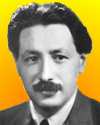
Born 19 Jun 1906; died 12 Aug 1979 at age 73. quotes
German-English biochemist who shared the 1945 Nobel Prize for Physiology or Medicine with Sir Alexander Fleming and Howard Walter Florey (later Baron Florey) for their work on penicillin. In 1928, Fleming had made the initial discovery of the antibiotic effect of penicillin. Being Jewish, Chain fled Nazi Germany to England in 1933. His varied research included phospholipids, snake venoms, tumour metabolism and lysozymes. From 1939, he worked with Florey on natural antibacterial agents produced by microorganisms, leading to their isolation, purification and determination of the chemical structure of penicillin. They performed the first clinical trials of the antibiotic. Chain's mother and sister perished in the Holocaust of WW II.«
German-English biochemist who shared the 1945 Nobel Prize for Physiology or Medicine with Sir Alexander Fleming and Howard Walter Florey (later Baron Florey) for their work on penicillin. In 1928, Fleming had made the initial discovery of the antibiotic effect of penicillin. Being Jewish, Chain fled Nazi Germany to England in 1933. His varied research included phospholipids, snake venoms, tumour metabolism and lysozymes. From 1939, he worked with Florey on natural antibacterial agents produced by microorganisms, leading to their isolation, purification and determination of the chemical structure of penicillin. They performed the first clinical trials of the antibiotic. Chain's mother and sister perished in the Holocaust of WW II.«
The Mold in Dr. Florey's Coat: The Story of the Penicillin Miracle, by Eric Lax. - book suggestion.
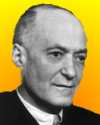
Born 19 Jun 1897; died 9 Oct 1967 at age 70. quotes
English physical chemist who worked on reaction rates and reaction mechanisms, particularly that of the combination of hydrogen and oxygen to form water, one of the most fundamental combining reactions in chemistry. For this work he shared the 1956 Nobel Prize for Chemistry with Soviet scientist Nikolay Semyonov. Other important chain reactions are the combustion of carbon monoxide and of hydrocarbons. When it seemed that almost all reactions were chain reactions, one might believe the simpler mechanisms previously thought of were exceptions. But Hinshelwood found substances which could simultaneously react in two ways, one part reacting by a chain mechanism and at the same time the rest reacting in the old-fashioned way.
English physical chemist who worked on reaction rates and reaction mechanisms, particularly that of the combination of hydrogen and oxygen to form water, one of the most fundamental combining reactions in chemistry. For this work he shared the 1956 Nobel Prize for Chemistry with Soviet scientist Nikolay Semyonov. Other important chain reactions are the combustion of carbon monoxide and of hydrocarbons. When it seemed that almost all reactions were chain reactions, one might believe the simpler mechanisms previously thought of were exceptions. But Hinshelwood found substances which could simultaneously react in two ways, one part reacting by a chain mechanism and at the same time the rest reacting in the old-fashioned way.
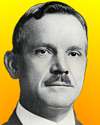
Born 19 Jun 1874; died 11 Sep 1959 at age 85.
German-American inventor, engineer and manufacturer who is credited with designing the first concrete mixing machine in 1905. His U.S. patent issued 19 Feb 1924 (No. 1,484,028), shows the familiar design long used on construction sites. He formed the Jaeger Machine Company, which became the world's largest manufacturer of concrete mixers (1906-1992). At age 18, he emigrated from Germany and settled in St. Louis, MO, then moved in 1900 to Pittsburgh, PA, where he invented and co-patented a machine to maken woven wire fencing. In 1902, he moved to Columbus, OH, and designed the Hayden Concrete Block Machine. He thereafter took out various concrete mixer patents, including a concrete mixer truck (1928), which delivered ready-mixed product to construction sites and contributed to extensive road building in the U.S.«
German-American inventor, engineer and manufacturer who is credited with designing the first concrete mixing machine in 1905. His U.S. patent issued 19 Feb 1924 (No. 1,484,028), shows the familiar design long used on construction sites. He formed the Jaeger Machine Company, which became the world's largest manufacturer of concrete mixers (1906-1992). At age 18, he emigrated from Germany and settled in St. Louis, MO, then moved in 1900 to Pittsburgh, PA, where he invented and co-patented a machine to maken woven wire fencing. In 1902, he moved to Columbus, OH, and designed the Hayden Concrete Block Machine. He thereafter took out various concrete mixer patents, including a concrete mixer truck (1928), which delivered ready-mixed product to construction sites and contributed to extensive road building in the U.S.«
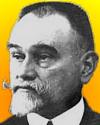
1913
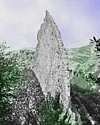
Gustave-Émile Haug was a French geologist and paleontologist known for his contributions to the theory of geosynclines (trenches that accumulate thousands of metres of sediment and later become crumpled and uplifted into mountain chains). From the position of the Alp he theorized that geosynclines form between stable continental platforms. He showed that geosynclinal subsidence accompanies marine regressions on the continental platform and that geosynclinal uplift accompanies marine transgressions on the continental platform. His Traité de géologie (1907-11), rapidly became an indispensible reference work. He also produced important works on the fundamentals of paleotology, stratigraphy and tectonics.[Image right: from Traité de géologie shows a vertical sandstone blade, about 50m high, called The Man of Tanaron.]
Born 19 Jun 1851; died 12 Jun 1916 at age 64. quotes
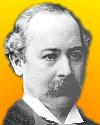
British physicist and historian whose influence spanned both scientific research and technical education. In 1879 he became professor of physics and principal of Finsbury Technical College, where he emphasized hands-on training to prepare workers for modern industry. He wrote widely used texts such as >Elementary Lessons in Electricity and Magnetism and the classic Calculus Made Easy, making complex ideas so clear to broad audiences, it remains in print.) His research advanced knowledge of dynamos, alternating currents, and X-rays, strengthening the foundations of electrical science. A gifted communicator and reformer, Thompson inspired generations of students, engineers, and readers.« more
British physicist and historian whose influence spanned both scientific research and technical education. In 1879 he became professor of physics and principal of Finsbury Technical College, where he emphasized hands-on training to prepare workers for modern industry. He wrote widely used texts such as >Elementary Lessons in Electricity and Magnetism and the classic Calculus Made Easy, making complex ideas so clear to broad audiences, it remains in print.) His research advanced knowledge of dynamos, alternating currents, and X-rays, strengthening the foundations of electrical science. A gifted communicator and reformer, Thompson inspired generations of students, engineers, and readers.« more
Calculus Made Easy, by Silvanus P. Thompson and Martin Gardner. - book suggestion.
Born 19 Jun 1846; died 20 Feb 1928 at age 81.
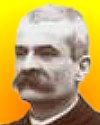
Italian astronomer who was an authority on minor planets. At first a civil engineer, he became an astronomer at the University of Padua (1868-93), with an interest in positional astronomy and made many observations of small planets, comets and star occultations. In 1874, Abetti went to Muddapur, Bengal, to observe the transit of Venus across the sun's disk where his use of a spectroscope was the first use of this kind. Later, he became director at the Arcetri Observatory and Professor of astronomy at the University of Florence (1894-1921). The observatory had been founded by G. B. Donati in 1872, and Abetti equipped it with a new telescope that he had built in the workshops at Padua. He was active after retirement, until his death, and was followed by his son Giorgio.
Italian astronomer who was an authority on minor planets. At first a civil engineer, he became an astronomer at the University of Padua (1868-93), with an interest in positional astronomy and made many observations of small planets, comets and star occultations. In 1874, Abetti went to Muddapur, Bengal, to observe the transit of Venus across the sun's disk where his use of a spectroscope was the first use of this kind. Later, he became director at the Arcetri Observatory and Professor of astronomy at the University of Florence (1894-1921). The observatory had been founded by G. B. Donati in 1872, and Abetti equipped it with a new telescope that he had built in the workshops at Padua. He was active after retirement, until his death, and was followed by his son Giorgio.
Born 19 Jun 1816; died 30 Oct 1899 at age 83.
American naval architect, one of the most versatile and successful shipbuilders of his day, who in 1889 established and endowed the Webb Institute of Naval Architecture at Glen Cove, N.Y. Webb began shipbuilding in 1836 and by 1869 had more tonnage to his credit than any other American builder. He was innovative and varied in his designs.
American naval architect, one of the most versatile and successful shipbuilders of his day, who in 1889 established and endowed the Webb Institute of Naval Architecture at Glen Cove, N.Y. Webb began shipbuilding in 1836 and by 1869 had more tonnage to his credit than any other American builder. He was innovative and varied in his designs.
Born 19 Jun 1795; died 25 Mar 1860 at age 64.
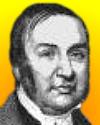
Scottish optometrist whose experiments led him to an early theory of hypnosis that dismissed the idea of "animal magnetism." Earlier, Franz Mesmer induced trances with manual manipulations he believed controlled a force field of animal magnetism. Braid discovered such "mesmeric passes were unnecessary. A person fixating on a bright object about 8 to 15 inches above the eyes could easily enter a trance. In his 1841 book, Neurypnology or the Rationale of Nervous Sleep considered in relation with Animal Magnetism, he coined the word "hypnotism" from the Greek word "hypnos" meaning "sleep." Thus hypnotism replaced mesmerism, even though later investigation showed that hypnosis was not, in fact, related to sleep.«
Scottish optometrist whose experiments led him to an early theory of hypnosis that dismissed the idea of "animal magnetism." Earlier, Franz Mesmer induced trances with manual manipulations he believed controlled a force field of animal magnetism. Braid discovered such "mesmeric passes were unnecessary. A person fixating on a bright object about 8 to 15 inches above the eyes could easily enter a trance. In his 1841 book, Neurypnology or the Rationale of Nervous Sleep considered in relation with Animal Magnetism, he coined the word "hypnotism" from the Greek word "hypnos" meaning "sleep." Thus hypnotism replaced mesmerism, even though later investigation showed that hypnosis was not, in fact, related to sleep.«
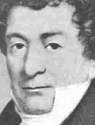
Born 19 Jun 1783; died 20 Feb 1841 at age 57.
German chemist who discovered morphine (1806) while trying to isolate the portion of opium that caused sleep. He named the bitter white crystalline alkaloid after Morpheus, the Greek god of dreams.When his initial reports of the drug's properties were challenged, he engaged the help of three friends in test taking the drug themselves. After this delay, the medicinal values of morphine were recognized in his lifetime. Subsequently, Sertürner became insane in mid-life, though he lived to age 57. Morphine is among the most important naturally occurring compounds, being of use in the treatment of pain and other calming effects. Unfortunately, addiction is a possible side effect. Its discovery established alkaloid chemistry.
German chemist who discovered morphine (1806) while trying to isolate the portion of opium that caused sleep. He named the bitter white crystalline alkaloid after Morpheus, the Greek god of dreams.When his initial reports of the drug's properties were challenged, he engaged the help of three friends in test taking the drug themselves. After this delay, the medicinal values of morphine were recognized in his lifetime. Subsequently, Sertürner became insane in mid-life, though he lived to age 57. Morphine is among the most important naturally occurring compounds, being of use in the treatment of pain and other calming effects. Unfortunately, addiction is a possible side effect. Its discovery established alkaloid chemistry.
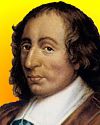
Born 19 Jun 1623; died 19 Aug 1662 at age 39. quotes
French mathematician and physicist who was a child prodigy. He laid the foundation for the modern theory of probabilities. In hydrodynamics he formulated what came to be known as Pascal's law of pressure, and invented the syringe and hydraulic press. Pascal invented the first digital calculator to help his father with his work collecting taxes. He worked on it for three years (1642-45). The device, called the Pascaline, resembled a mechanical calculator of the 1940s. This, almost certainly, makes Pascal the second person to invent a mechanical calculator for Schickard had manufactured one in 1624. He died at the young age of 39 having been sickly and physically weak through life. Autopsy showed he had been born with a deformed skull.
French mathematician and physicist who was a child prodigy. He laid the foundation for the modern theory of probabilities. In hydrodynamics he formulated what came to be known as Pascal's law of pressure, and invented the syringe and hydraulic press. Pascal invented the first digital calculator to help his father with his work collecting taxes. He worked on it for three years (1642-45). The device, called the Pascaline, resembled a mechanical calculator of the 1940s. This, almost certainly, makes Pascal the second person to invent a mechanical calculator for Schickard had manufactured one in 1624. He died at the young age of 39 having been sickly and physically weak through life. Autopsy showed he had been born with a deformed skull.

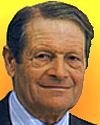
Died 19 Jun 2005 at age 91 (born 4 Mar 1914).
English engineer who designed the Mulberry Harbours - the floating roadways and their anchors - which enabled landing of vehicles and equipment on the Normandy beaches following D-Day in WW II. Various prototypes designs from different engineers were tested in a howling gale at Cairn Head, Scotland. Whereas the rival designs failed, his lozenge-shaped bridge spans connected by spherical bearings survived days of stormy weather without breaking apart or washing away. The "Kite" style of anchors he devised used the force of currents to bury themselves more securely in the seafloor. After the war, he designed major port developments and projects for flood protection, around the world, from Aden to New Zealand.«
English engineer who designed the Mulberry Harbours - the floating roadways and their anchors - which enabled landing of vehicles and equipment on the Normandy beaches following D-Day in WW II. Various prototypes designs from different engineers were tested in a howling gale at Cairn Head, Scotland. Whereas the rival designs failed, his lozenge-shaped bridge spans connected by spherical bearings survived days of stormy weather without breaking apart or washing away. The "Kite" style of anchors he devised used the force of currents to bury themselves more securely in the seafloor. After the war, he designed major port developments and projects for flood protection, around the world, from Aden to New Zealand.«
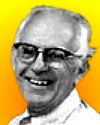
Died 19 Jun 2003 at age 82 (born 18 Jan 1921).
Belding Hibbard Scribner was an American physician who invented the Scribner shunt, making long-term kidney dialysis possible. The dialysis machine, which filters the blood of kidney disease patients, as originally developed by Dr. Willem J. Kolff, used glass tubes that were inserted into veins and arteries. These were painful and could not be used indefinitely because of progressive damage to the blood vessels. Scribner's key contribution (1960) was the shunt, a device implanted in a patient that allowed doctors to tap into their blood vessels and keep them on dialysis indefinitely. Scribner also led a team that developed the “artificial gut,” a method using a catheter to provide nourishment to patients who have lost their stomachs and intestines.
Belding Hibbard Scribner was an American physician who invented the Scribner shunt, making long-term kidney dialysis possible. The dialysis machine, which filters the blood of kidney disease patients, as originally developed by Dr. Willem J. Kolff, used glass tubes that were inserted into veins and arteries. These were painful and could not be used indefinitely because of progressive damage to the blood vessels. Scribner's key contribution (1960) was the shunt, a device implanted in a patient that allowed doctors to tap into their blood vessels and keep them on dialysis indefinitely. Scribner also led a team that developed the “artificial gut,” a method using a catheter to provide nourishment to patients who have lost their stomachs and intestines.
Died 19 Jun 1987 at age 76 (born 27 Dec 1910). quotes
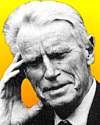
English physician who first successfully applied ultrasound reflection imaging for medical diagnosis. He had become familiar with sonar during service in WW II, and first tested the idea of probing organs with ultrasound on 21 Jul 1955, when he investigated specimens of tumours from human organs with an industrial ultrasonic metal flaw detector. After a period of development, he later he used ultrasound in a life-saving diagnosis of a huge, easily removable, ovarian cyst in a woman who had been diagnosed by others as having inoperable stomach cancer. He published the Investigation of Abdominal Masses by Pulsed Ultrasound in The Lancet (7 Jun 1958). The next year, he extended its use to investigate fetal growth during pregnancy.«*
English physician who first successfully applied ultrasound reflection imaging for medical diagnosis. He had become familiar with sonar during service in WW II, and first tested the idea of probing organs with ultrasound on 21 Jul 1955, when he investigated specimens of tumours from human organs with an industrial ultrasonic metal flaw detector. After a period of development, he later he used ultrasound in a life-saving diagnosis of a huge, easily removable, ovarian cyst in a woman who had been diagnosed by others as having inoperable stomach cancer. He published the Investigation of Abdominal Masses by Pulsed Ultrasound in The Lancet (7 Jun 1958). The next year, he extended its use to investigate fetal growth during pregnancy.«*
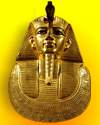
Psusennes I Mask
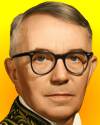
French Egyptologist whose career began with digs of Phoenician temples and royal tombs in Byblos, Syria (1921-24). By the 1930s, he focused on Egypt and uncovered the royal necropolis at Tanis, in the eastern Nile Delta. There he found the intact tombs of Pharaohs Psusennes I, Amenemope, and Shoshenq II, filled with magnificent treasures of gold, silver, and jewelry. These finds were among the most important since Tutankhamun, offering unique insight into burial practices, artistry, and political life of the Third Intermediate Period. Montet’s scholarly publications, especially La Nécropole royale de Tanis, cemented his reputation as one of the foremost Egyptologists of his generation.«
Everyday Life in Egypt in the Days of Ramesses the Great, by Pierre Montet. - book suggestion.
Died 19 Jun 1965 at age 72 (born 20 Nov 1892).
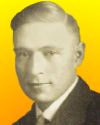
Canadian biochemist co-discovered insulin. He worked with Frederick Banting and Charles Best to refine a method of removing and purifying insulin. Working with the bovine pancreas, Collip produced insulin in a form which permitted clinical use. Together with his other contributions in endocrinology, including his isolation of the parathyroid hormone and establishing a bioassay for measuring serum calcium. He stands as a major figure in Canadian medical history.
Canadian biochemist co-discovered insulin. He worked with Frederick Banting and Charles Best to refine a method of removing and purifying insulin. Working with the bovine pancreas, Collip produced insulin in a form which permitted clinical use. Together with his other contributions in endocrinology, including his isolation of the parathyroid hormone and establishing a bioassay for measuring serum calcium. He stands as a major figure in Canadian medical history.
The Discovery of Insulin, by Michael Bliss. - book suggestion.
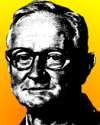
Died 19 Jun 1963 at age 73 (born 16 Apr 1890).
American geneticist and agronomist whose hybridization methods for corn (maize) enabled an agricultural revolution. Prior methods of single-cross hybridization had disappointing results. In 1917, he invented the double-cross method of hybrid seed production, which solved a problem in producing useful strains that were uniform, true-breeding, while still vigorous and able to give greater yield. Earlier researchers obtained "pure lines" from self-pollination to eliminate the variable results of open-pollinated seeds, then investigated single crosses made between two such pure lines. For double-cross hybrids, Jones used two single-cross strains. By 1959, more than 95% of U.S. corn crops used hybrid seeds, producing twice the yield of 1929.«
American geneticist and agronomist whose hybridization methods for corn (maize) enabled an agricultural revolution. Prior methods of single-cross hybridization had disappointing results. In 1917, he invented the double-cross method of hybrid seed production, which solved a problem in producing useful strains that were uniform, true-breeding, while still vigorous and able to give greater yield. Earlier researchers obtained "pure lines" from self-pollination to eliminate the variable results of open-pollinated seeds, then investigated single crosses made between two such pure lines. For double-cross hybrids, Jones used two single-cross strains. By 1959, more than 95% of U.S. corn crops used hybrid seeds, producing twice the yield of 1929.«
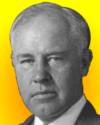
Died 19 Jun 1957 at age 66 (born 11 Jul 1890). quotes
American physician and public health officer who became Vice-President of the Rockefeller Foundation. His career there began when he joined the International Health Board’s project in Brazil (1919) as a public health officer. At its Rio de Janeiro laboratory, he worked to reduce the prevalence of hookworm disease (an internal parasite). Thus he learned the challenges of treatment, sanitary improvements and public health education. Later, for many years, he greatly influenced medical education and research, guiding the Foundation’s investment of millions of dollars in those goals. Its financial support for medical research was distributed both in America and worldwide, especially in psychiatry and public health.«
American physician and public health officer who became Vice-President of the Rockefeller Foundation. His career there began when he joined the International Health Board’s project in Brazil (1919) as a public health officer. At its Rio de Janeiro laboratory, he worked to reduce the prevalence of hookworm disease (an internal parasite). Thus he learned the challenges of treatment, sanitary improvements and public health education. Later, for many years, he greatly influenced medical education and research, guiding the Foundation’s investment of millions of dollars in those goals. Its financial support for medical research was distributed both in America and worldwide, especially in psychiatry and public health.«
Died 19 Jun 1915 at age 92 (born 6 Oct 1822).
B(enjamin) F(ranklin) Isherwood was a U.S. naval engineer who, during the American Civil War, greatly augmented the U.S. Navy's steam-powered fleet.
B(enjamin) F(ranklin) Isherwood was a U.S. naval engineer who, during the American Civil War, greatly augmented the U.S. Navy's steam-powered fleet.
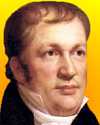
Died 19 Jun 1844 at age 72 (born 15 Apr 1772). quotes
French zoologist who held to his idea of unity of composition, by which all animals are formed of the same elements, in the same number, and with the same connections. He regarded this single structural plan to be fundamental to comparative anatomy. Thereby, he did not accept the modification of existing species. Although he collaborated with Georges Cuvier in other projects, Cuvier rejected this idea. The Museum of Natural History in Paris, was new Geoffroy joined it in 1793. He accompanied Napoleon on his Egyptian campaign (1798-1801). He spent a 47 year career at the museum, teaching, and building its collection. Another of his interests was teratology, the study of animal malformations. From 1840, Geoffroy lost his sight and became paralysed, but his work was carried on by his son, Isidore.«
French zoologist who held to his idea of unity of composition, by which all animals are formed of the same elements, in the same number, and with the same connections. He regarded this single structural plan to be fundamental to comparative anatomy. Thereby, he did not accept the modification of existing species. Although he collaborated with Georges Cuvier in other projects, Cuvier rejected this idea. The Museum of Natural History in Paris, was new Geoffroy joined it in 1793. He accompanied Napoleon on his Egyptian campaign (1798-1801). He spent a 47 year career at the museum, teaching, and building its collection. Another of his interests was teratology, the study of animal malformations. From 1840, Geoffroy lost his sight and became paralysed, but his work was carried on by his son, Isidore.«
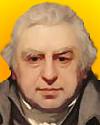
Died 19 Jun 1820 at age 77 (born 13 Feb 1743). quotes
Sir Joseph Banks (Baronet) was an English botanist and explorer who was president of the Royal Society for over 40 years, and known for his promotion of science. As an independent naturalist, Banks participated in a voyage to Newfoundland and Labrador in 1767. He successfully lobbied the Royal Society to be included on what was to be James Cook’s first great voyage of discovery, on board the Endeavour (1768-71). King George III appointed Banks adviser to the Royal Botanic Gardens at Kew. Banks established his London home as a scientific base (1776) with natural history collections he made freely available to researchers. In 1819, he was Chairman of committees established by the House of Commons, one to enquire into prevention of banknote forgery, the other to consider systems of weights and measures. more
Sir Joseph Banks (Baronet) was an English botanist and explorer who was president of the Royal Society for over 40 years, and known for his promotion of science. As an independent naturalist, Banks participated in a voyage to Newfoundland and Labrador in 1767. He successfully lobbied the Royal Society to be included on what was to be James Cook’s first great voyage of discovery, on board the Endeavour (1768-71). King George III appointed Banks adviser to the Royal Botanic Gardens at Kew. Banks established his London home as a scientific base (1776) with natural history collections he made freely available to researchers. In 1819, he was Chairman of committees established by the House of Commons, one to enquire into prevention of banknote forgery, the other to consider systems of weights and measures. more
Joseph Banks: a Life, by Patrick O'Brian. - book suggestion.
Died 19 Jun 1808 at age 70 (born 24 Jul 1737).
Scottish geographer, first hydrographer of the British Admiralty and proponent of the existence of a vast, populous continent in the South Pacific, which he called the Great South Land.
Scottish geographer, first hydrographer of the British Admiralty and proponent of the existence of a vast, populous continent in the South Pacific, which he called the Great South Land.
Died 19 Jun 1770 (born c. 1693).
Spanish mathematician and writer, famous in his own time as the great maker of almanacs that delighted the Spanish public, now remembered for his Vida, picaresque memoirs that are among the best sources for information on life in 18th-century Spain. While young, his career encompassed being a dancer, musician, bullfighter, poet, lock picker, and seller of patent medicines. Later, upon reading a book on solid geometry, he turned to mathematics. In 1721 he wrote his first almanac, and in 1726 he was made professor of mathematics at the University of Salamanca.
Spanish mathematician and writer, famous in his own time as the great maker of almanacs that delighted the Spanish public, now remembered for his Vida, picaresque memoirs that are among the best sources for information on life in 18th-century Spain. While young, his career encompassed being a dancer, musician, bullfighter, poet, lock picker, and seller of patent medicines. Later, upon reading a book on solid geometry, he turned to mathematics. In 1721 he wrote his first almanac, and in 1726 he was made professor of mathematics at the University of Salamanca.
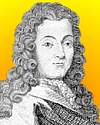
Died 19 Jun 1715 at age 69 (born 17 Nov 1645). quotes
French chemist and pharmacist who prepared a comprehensive dictionary of pharmaceuticals in the Pharmacopée universelle (1697) and the Traité des drogues simples (1698). He also gave popular lectures on chemistry. His Traité de l'antimoine (1707), contains the results of his investigation into the properties and preparations of mineral antimony. His chemistry textbook, Cours de chymie (Paris, 1675), went through 31 editions by 1756. He classified compounds as animal, vegetable or mineral in origin, and explained chemical activity in mechanistic terms (ex. he supposed that “spiky” atoms were associated with acidity and porous atoms with alkalinity, the two fitting together when a chemical reaction took place).[Also spelled Nicholas.]
French chemist and pharmacist who prepared a comprehensive dictionary of pharmaceuticals in the Pharmacopée universelle (1697) and the Traité des drogues simples (1698). He also gave popular lectures on chemistry. His Traité de l'antimoine (1707), contains the results of his investigation into the properties and preparations of mineral antimony. His chemistry textbook, Cours de chymie (Paris, 1675), went through 31 editions by 1756. He classified compounds as animal, vegetable or mineral in origin, and explained chemical activity in mechanistic terms (ex. he supposed that “spiky” atoms were associated with acidity and porous atoms with alkalinity, the two fitting together when a chemical reaction took place).[Also spelled Nicholas.]
In 1987, the U.S. Supreme Court decided that the 1981 Louisiana “Creationism Act” unconstitutionally endorsed religion. The state law originally required that evolution must not be taught in Louisiana public elementary and secondary schools, unless accompanied by instruction in “creation science.” In the case of Edwards v. Aguillard, 482 U.S. 578 (1987) the Supreme Court sided with the Louisiana parents, teachers and religious leaders who had successfully challenged the Act’s constitutionality in Federal District Court, which was affirmed by the Court of Appeals. The state lost again in appealing to the Supreme Court, which also said in its decision that “Forbidding the teaching of evolution when creation science is not also taught undermines the provision of a comprehensive scientific education.”«

In 1977, the Joint Pipeline Office (JPO) gave its permission Alyeska Pipeline Service Company (the joint venture of several oil companies) to begin the operation of the Trans-Alaska Pipeline. The JPO is the joint federal and state office set up with representatives of various agencies with responsibility for monitoring the Trans-Alaska Pipeline System. The Department of Transportation had given its certification of the pipeline on 16 Jun 1977. The first oil began its 800 mile journey on 20 Jun 1977, from the fields on the North Slope of Alaska, to an ice-free, deep-water port on Prince William Sound. At the delivery end, the Valdez Marine Terminal received oil on 28 Jul 1977. The first loaded tanker departed from Valdez on 1 Aug 1977.«
800 Miles to Valdez: Building of the Alaska Pipeline, by James P. Roscow. - book suggestion.

In 1963, Soviet cosmonaut Valentina Tereshkova returned to Earth after spending nearly three days as the first woman in space. She had been interested in parachute jumping when she was young, and that expertise was one of the reasons she was picked for the cosmonaut program. She became the first person to be recruited without experience as a test pilot. On 16 Jun 1963, Tereshkova was launched into space aboard Vostok 6, and became the first woman to travel in space. Her radio name was "Chaika," Russian for "seagull." Her flight made 48 orbits of Earth. Tereshkova never made a second trip into space. She became an important member of the Communist Party and a representative of the Soviet government.

In 1941, Cheerios whole grain oat cereal was invented to provide a more convenient and better tasting alternative to cooked oatmeal. Each piece of the O-shaped cereal is 1/2-inch diameter, and weighs .0025 ounce. Each little "O" puffs itself out, like popcorn, as it explodes from the barrel of a puffing gun at high temperature. It was first called Cheerie Oats when General Mills invented it, but that name had to be changed in 1945, to avoid a conflict with a competitor who suggested they had exclusive rights to use the word "oats" in a commercial name.
In 1934, the first movie of the sun (other than of eclipses) was made at the McMath-Hulbert Observatory at Pontiac, Mich. Using a Spectroheliokinematograph, Robert R. McMath took moving pictures of solar prominenences or sun spots.
In 1931, installation was completed on the first commercial doors operated by photoelectric cell. A magic eye controlled automated swinging doors between the kitchen and main dining room of Wilcox's Pier Restaurant in West Haven, Conn.
In 1900, Michael Pupin was granted a U.S. patent for long distance telephony.
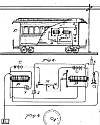
In 1888, Thomas A. Edison, with co-inventor Ezra T. Gilliland were granted a patent for “Railway Signaling” (U.S. No. 384,830). The invention related to signalling systems for communicating between stations and moving trains by induction from the telegraph wires to the roofs of the cars. In such a system, transmitters were vibrators operated by keys to send signals upon the line, and receivers were telephone receivers connected to the ground. The patent was for an innovation to increase the quickness, rapidity and clearness of the vibrations. By making the transmitted vibrations as short and distinct as possible, they may be more clearly reproduced at the receiver.
In 1849, a melodeon was granted a U.S. patent to Charles Austin of Concord, N.H. (No. 6,543). This small reed organ used foot treadle bellows to draw air in by suction through free reeds. This differed from the earlier European harmonium in which bellows functioned to compress air within, and expel it through the reeds. By using suction on free reeds, the melodeon improved the tone by inhibiting overtones, and produced a sound more like a pipe organ. The melodeon using a swell box with reeds was more portable than a full pipe organ. An earlier design of melodeon using the suction principle had been patented by Jeremiah Carhart on 28 Dec 1846 (U.S. No. 4912).«
In 1841, an underwater torpedo operated by electric current was described by its inventor, Samuel Colt of Hartford, Conn., in a letter to U.S. President John Tyler. The invention was a combination of Robert Fulton's stationary torpedo and Prof. Robert Hare's galvanic current. Colt proved his mines could sink ships with a demonstration on 4 Jul 1842 sinking the gunboat Boxer in New York Harbor, and another on the following 18 Oct which sank the 300-ton brig Volta. By 13 Apr 1843, He was called upon to demonstrate to the President and his Cabinet, and Colt blew up a schooner on the Potomac River by an electric main from a distance of five miles.
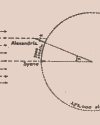
In 240 BC, Eratosthenes, a Greek astronomer and mathematician, estimated the circumference of the earth. As the director of the great library of Alexandria, he read in a papyrus book that in Syene, approaching noon on the summer solstice, the longest day of the year, shadows of temple columns grew shorter. At noon, they were gone. The sun was directly overhead. However, a stick in Alexandria, far to the north, could cast a pronounced shadow. Thus, he realized that the surface of the Earth could not be flat. It must be curved. Not only that, but the greater the curvature, the greater the difference in the shadow lengths. By measurement on the ground and application of geometry, he calculated the circumference of the earth.




