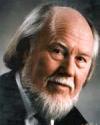
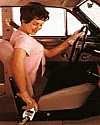
Swedish engineer who invented the familiar three-point lap and shoulder seatbelt which is considered one of the most important innovations in automobile safety. Bohlin left the aircraft industry, where he worked on jet ejector seats, including restraints, and joined AB Volvo in 1958 as safety engineer, where he invented and patented this device. In Aug 1959, Volvo was the first car manufacturer to introduce the three-point seat belt in their cars. They made this design freely available to other car manufacturers to save more lives. Bohlin holds several patents related to automotive and aviation design. After retiring form Volvo in 1985, he continued to give lectures and present papers relating to automotive restraint issues.«[Image right: (source)]
Born 17 Jul 1920; died 16 Sep 2005 at age 85.
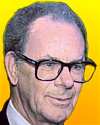
American physicist who coined the word laser from the initial letters of “Light Amplification by Stimulated Emission of Radiation.” Gould was inspired from his youth to be an inventor, wishing to emulate Marconi, Bell, and Edison. He contributed to the WWII Manhattan Project, working on the separation of uranium isotopes. On 9 Nov 1957, during a sleepless Saturday night, he had the inventor’s inspiration and began to write down the principles of what he called a laser in his notebook. Although Charles Townes and Arthur Schawlow, also successfully developed the laser, eventually Gould gained his long-denied patent rights.
American physicist who coined the word laser from the initial letters of “Light Amplification by Stimulated Emission of Radiation.” Gould was inspired from his youth to be an inventor, wishing to emulate Marconi, Bell, and Edison. He contributed to the WWII Manhattan Project, working on the separation of uranium isotopes. On 9 Nov 1957, during a sleepless Saturday night, he had the inventor’s inspiration and began to write down the principles of what he called a laser in his notebook. Although Charles Townes and Arthur Schawlow, also successfully developed the laser, eventually Gould gained his long-denied patent rights.
Laser: The Inventor, the Nobel Laureate, and the Thirty-Year Patent War, by Nick Taylor. - book suggestion.
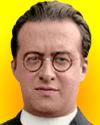
Born 17 Jul 1894; died 20 Jun 1966 at age 71. quotes
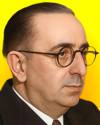
Georges Henri Joseph Édouard Lemaître was a Belgian astronomer and cosmologist who was also a civil engineer, army officer, and ordained priest. He did research on cosmic rays and the three-body problem. Lemaître formulated (1927) the modern big-bang theory. He reasoned that if the universe was expanding now, then the further you go in the past, the universe's contents must have been closer together. He envisioned that at some point in the distant past, all the matter in the universe was in an exceedingly dense state, crushed into a single object he called the “primeval super-atom” which exploded, with all its constituent parts rushing away. This theory was later developed by Gamow and others.
Georges Henri Joseph Édouard Lemaître was a Belgian astronomer and cosmologist who was also a civil engineer, army officer, and ordained priest. He did research on cosmic rays and the three-body problem. Lemaître formulated (1927) the modern big-bang theory. He reasoned that if the universe was expanding now, then the further you go in the past, the universe's contents must have been closer together. He envisioned that at some point in the distant past, all the matter in the universe was in an exceedingly dense state, crushed into a single object he called the “primeval super-atom” which exploded, with all its constituent parts rushing away. This theory was later developed by Gamow and others.
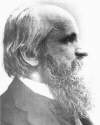
Born 17 Jul 1853; died 27 Nov 1920 at age 67.
Alexius Meinong was an Austrian philosopher and psychologist who worked at the University of Graz. He was a pupil of Franz Brentano and is most famous for his belief in nonexistent objects. He distinguished several levels of reality among objects and facts about them. Thus, existent objects participate in actual (true) facts about the world; subsistent (real but non-existent) objects appear in possible (but false) facts; and objects that neither exist nor subsist can only belong to impossible facts. He is remembered for his contributions to axiology, or theory of values, and for his Gegenstandstheorie, or the Theory of Abstract Objects.
Alexius Meinong was an Austrian philosopher and psychologist who worked at the University of Graz. He was a pupil of Franz Brentano and is most famous for his belief in nonexistent objects. He distinguished several levels of reality among objects and facts about them. Thus, existent objects participate in actual (true) facts about the world; subsistent (real but non-existent) objects appear in possible (but false) facts; and objects that neither exist nor subsist can only belong to impossible facts. He is remembered for his contributions to axiology, or theory of values, and for his Gegenstandstheorie, or the Theory of Abstract Objects.
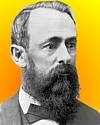
1880
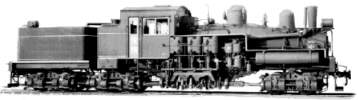
American logger who invented the Shay geared, small steam locomotive to haul heavy logging trains at low speeds over rough terrain with poorly-laid, uneven track, sharp curves, and grades up to 14 percent. His 1880 prototype had a steam boiler mounted amidships; fuel and water on opposite ends; and the unusual arrangement of two vertical cylinders. The wheels were driven by bevelled gears on a shaft. Power was transferred through a crankshaft and universal joints. On 14 Jun 1881, he was issued a U.S. patent for a Locomotive Engine (No. 242,992). In 1882, Ephraim assigned manufacturing rights to the company that would become Lima Locomotive Works. By the end of production in 1945, 2,771 Shays had been built.«[Image right: Shay locomotive and tender.]
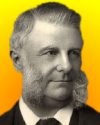
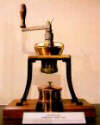
Frederick Augustus Abel was an English chemist who was a military explosives specialist, and with the chemist Sir James Dewar, invented cordite (1889). This smokeless gunpowder was later adopted as the standard explosive of the British army, and proved vital in WWI. Battles could now be fought without the obscuring smoke clouds of gunpowder weapons. Cordite was mixed from purified ingredients of nitroglycerine, nitrocellulose and petroleum jelly then extruded as cords. When dried, this explosive could be measured more precisely and handled more safely than gunpowder. Abel also studied dust explosions in coal mines, invented a device for testing the flash point of petroleum, and found a way to prevent guncotton from exploding.Image right: Cordite mill (1942) Dynamite Company Museum, Zaire. (source)
Born 17 Jul 1819; died 30 Sep 1888 at age 69.
Eunice Newton Foote was a American physicist, inventor and social activist whose experiments anticipated modern climate science. In 1856 she demonstrated that carbon dioxide and water vapor absorb heat and can warm the air, showing with simple apparatus that CO₂ trapped more heat than ordinary air. She concluded that an atmosphere rich in CO₂ would raise Earth’s temperature—an early statement of the greenhouse effect. Her paper, read at an American Association meeting, was among the first to link atmospheric composition with climate, before John Tyndall’s more widely recognized work.«
Eunice Newton Foote was a American physicist, inventor and social activist whose experiments anticipated modern climate science. In 1856 she demonstrated that carbon dioxide and water vapor absorb heat and can warm the air, showing with simple apparatus that CO₂ trapped more heat than ordinary air. She concluded that an atmosphere rich in CO₂ would raise Earth’s temperature—an early statement of the greenhouse effect. Her paper, read at an American Association meeting, was among the first to link atmospheric composition with climate, before John Tyndall’s more widely recognized work.«
click to enlarge
Born 17 Jul 1814; died 13 Apr 1865 at age 50.
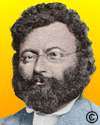
Swiss geologist and paleontologist who was a pioneer, and regarded by some as the founder, of paleogeography. He is known for his work identifying stratigraphic facies (“aspects de terrain”) recognizing lateral regional variations in the character and fossil content of rock strata resulting from the environmental differences at the time of original deposition. This was a notable departure from the conventional geologists' study of vertical differences in strata. He wrote Observations Géologiques sur le Jura Soleurois on his studies of facies (a term he coined) he found in the Jura Mountains. His fossil collection had 25,000 specimens. He was appointed as an assistant to Louis Agassiz at Neuchâtel. The dinosaur Gresslyosaurus (“Gressly's lizard”) was so named in 1857 to honour him. (The name replaced the preoccupied Dinosaurus Ruetimeyer 1856).« more
Swiss geologist and paleontologist who was a pioneer, and regarded by some as the founder, of paleogeography. He is known for his work identifying stratigraphic facies (“aspects de terrain”) recognizing lateral regional variations in the character and fossil content of rock strata resulting from the environmental differences at the time of original deposition. This was a notable departure from the conventional geologists' study of vertical differences in strata. He wrote Observations Géologiques sur le Jura Soleurois on his studies of facies (a term he coined) he found in the Jura Mountains. His fossil collection had 25,000 specimens. He was appointed as an assistant to Louis Agassiz at Neuchâtel. The dinosaur Gresslyosaurus (“Gressly's lizard”) was so named in 1857 to honour him. (The name replaced the preoccupied Dinosaurus Ruetimeyer 1856).« more
(1805)
Born 17 Jul 1752; died 12 Nov 1832 at age 80.
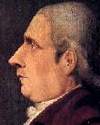
Italian astronomer, geodesist and priest who, shortly after ordination (1776), joined Brera Observatory in Milan, and eventually became its director (1802). Oriani found (1779) the Virgo Cluster galaxies M49, M60 and M61. In 1785, he published calculations on the orbit of Uranus (discovered in Mar 1781 by William Herschel). For 37 years, he worked closely with Giuseppe Piazzi on various projects, including Piazzi’s discovery (1801) of the first known asteroid, Ceres. As cartographer for the new Italian Republic (1802), Oriani measured the arc of the meridian between Rome and Rimini. Besides continuing astronomical contributions to the Effemeridi di Milano, he published memoirs on spherical trigonometry.«
Italian astronomer, geodesist and priest who, shortly after ordination (1776), joined Brera Observatory in Milan, and eventually became its director (1802). Oriani found (1779) the Virgo Cluster galaxies M49, M60 and M61. In 1785, he published calculations on the orbit of Uranus (discovered in Mar 1781 by William Herschel). For 37 years, he worked closely with Giuseppe Piazzi on various projects, including Piazzi’s discovery (1801) of the first known asteroid, Ceres. As cartographer for the new Italian Republic (1802), Oriani measured the arc of the meridian between Rome and Rimini. Besides continuing astronomical contributions to the Effemeridi di Milano, he published memoirs on spherical trigonometry.«

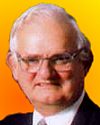
Died 17 Jul 1998 at age 74 (born 23 Jan 1924).
Sir Michael James Lighthill was a British mathematician who contributed to supersonic aerofoil theory and, aeroacoustics which became relevant in the design of the Concorde supersonic jet, and reduction of jet engine noise. Lighthill's eighth power law which states that the acoustic power radiated by a jet is proportional to the eighth power of the jet speed. His work in nonlinear acoutics found application in the lithotripsy machine used to break up kidney stones, the study of flood waves in rivers and road traffic flow. Lighthill also introduced the field of mathematical biofluiddynamics. Lighthill followed Paul Dirac as Lucasian professor of Mathematics (1969) and was succeeded by Stephen Hawking (1989).«
Sir Michael James Lighthill was a British mathematician who contributed to supersonic aerofoil theory and, aeroacoustics which became relevant in the design of the Concorde supersonic jet, and reduction of jet engine noise. Lighthill's eighth power law which states that the acoustic power radiated by a jet is proportional to the eighth power of the jet speed. His work in nonlinear acoutics found application in the lithotripsy machine used to break up kidney stones, the study of flood waves in rivers and road traffic flow. Lighthill also introduced the field of mathematical biofluiddynamics. Lighthill followed Paul Dirac as Lucasian professor of Mathematics (1969) and was succeeded by Stephen Hawking (1989).«
Waves in Fluids, by James Lighthill. - book suggestion.
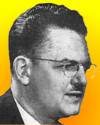
Died 17 Jul 1948 at age 79 (born 31 Jul 1868).
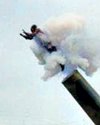
Spanish inventor who devised the human cannonball act in 1922, for his Olympic Circus, assisted by sons, Hugo and Mario. In 1929, he left Europe with Hugo to feature in the U.S. with the Ringling Brothers-Barnum and Bailey Circus at Madison Square Garden, New York City. It is said the cannon idea was inspired by trench mortars used in WW I. Before Zacchini, design attempts were underpowered and not reliable. Zacchini’s star was Hugo, shot headfirst from the barrel of a monster cannon to travel in a projectile curve into a safety net. No explosive was used for the launch; the power came from compressed air under a piston platform. Smoke and bang were stage effects. Seven of his sons grew up as performers.«
Spanish inventor who devised the human cannonball act in 1922, for his Olympic Circus, assisted by sons, Hugo and Mario. In 1929, he left Europe with Hugo to feature in the U.S. with the Ringling Brothers-Barnum and Bailey Circus at Madison Square Garden, New York City. It is said the cannon idea was inspired by trench mortars used in WW I. Before Zacchini, design attempts were underpowered and not reliable. Zacchini’s star was Hugo, shot headfirst from the barrel of a monster cannon to travel in a projectile curve into a safety net. No explosive was used for the launch; the power came from compressed air under a piston platform. Smoke and bang were stage effects. Seven of his sons grew up as performers.«
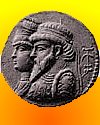
Parthian coin
Died 17 Jul 1937 at age 90 (born 24 Nov 1846).
English archaeologist and historian who studied Greek antiquities and numismatics. In 1871, he joined the British Museum as assistant in the department of coins and metals. He acted as field assistant for W. M. Flinders Petrie in the excavation of the Greek settlement of Naucritus in Egypt. In 1883, his Types of Greek Coins, the first of the modern accounts of classical numismatics, Gardner demonstrated how the history and art of a period is shown by its coinage. While professor of archaeology at Oxford University, (1887-1925), Gardner actively expanded its archaeology library and built a collection of classical sculpture busts. He supervised repair of inept prior restorations of the Arundel marbles held by the University Galleries.«
English archaeologist and historian who studied Greek antiquities and numismatics. In 1871, he joined the British Museum as assistant in the department of coins and metals. He acted as field assistant for W. M. Flinders Petrie in the excavation of the Greek settlement of Naucritus in Egypt. In 1883, his Types of Greek Coins, the first of the modern accounts of classical numismatics, Gardner demonstrated how the history and art of a period is shown by its coinage. While professor of archaeology at Oxford University, (1887-1925), Gardner actively expanded its archaeology library and built a collection of classical sculpture busts. He supervised repair of inept prior restorations of the Arundel marbles held by the University Galleries.«
Archaeology and the Types of Greek Coins, by Percy Gardner. - book suggestion.
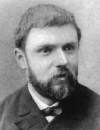
Died 17 Jul 1912 at age 58 (born 29 Apr 1854). quotes
Jules Henri Poincaré was a French mathematician, physicist and astronomer who was also a gifted interpreter of science to the public. His Poincaré Conjecture holds that if any loop in a given three-dimensional space can be shrunk to a point, the space is equivalent to a sphere. It remained an unsolved problem until Grigori Perelman proved a complete proof in 2003. Poincaré influenced cosmogony, relativity, and topology. In applied mathematics he also studied optics, electricity, telegraphy, capillarity, elasticity, thermodynamics, potential theory, quantum theory, and cosmology. He is often described as the last universalist in mathematics. He studied the three-body-problem in celestial mechanics, and theories of light and electromagnetic waves. He was a co-discoverer (with Albert Einstein and Hendrik Lorentz) of the special theory of relativity.«
Jules Henri Poincaré was a French mathematician, physicist and astronomer who was also a gifted interpreter of science to the public. His Poincaré Conjecture holds that if any loop in a given three-dimensional space can be shrunk to a point, the space is equivalent to a sphere. It remained an unsolved problem until Grigori Perelman proved a complete proof in 2003. Poincaré influenced cosmogony, relativity, and topology. In applied mathematics he also studied optics, electricity, telegraphy, capillarity, elasticity, thermodynamics, potential theory, quantum theory, and cosmology. He is often described as the last universalist in mathematics. He studied the three-body-problem in celestial mechanics, and theories of light and electromagnetic waves. He was a co-discoverer (with Albert Einstein and Hendrik Lorentz) of the special theory of relativity.«
The Value of Science: Essential Writings of Henri Poincaré, by Henri Poincaré. - book suggestion.
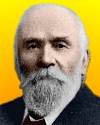
Died 17 Jul 1904 at age 75 (born 27 Jan 1829).
Welsh astronomer who was a pioneer in photography of nebulae. In 1885 he had built an observatory with a 20 inch reflector. Using this instrument Roberts was to make considerable progress in the newly developing science of Astro-photography. He photographed numerous celestial objects including Orion Nebula on 15 Jan 1986 (90 minute exposure) and Pleiades. Undoubtedly his finest work was a photograph showing the spiral structure of the Great Nebula in Andromeda, M31 on 29 Dec 1888. In addition to his contribution to astro-photography, Roberts also devised a machine to be used to engrave stellar positions on copper plates, known as the Stellar Pantograver. He was also a geologist of some considerable note.
Welsh astronomer who was a pioneer in photography of nebulae. In 1885 he had built an observatory with a 20 inch reflector. Using this instrument Roberts was to make considerable progress in the newly developing science of Astro-photography. He photographed numerous celestial objects including Orion Nebula on 15 Jan 1986 (90 minute exposure) and Pleiades. Undoubtedly his finest work was a photograph showing the spiral structure of the Great Nebula in Andromeda, M31 on 29 Dec 1888. In addition to his contribution to astro-photography, Roberts also devised a machine to be used to engrave stellar positions on copper plates, known as the Stellar Pantograver. He was also a geologist of some considerable note.
Died 17 Jul 1794 (born 1718).
British physician, chemist and inventor who is perhaps best-known for having subsidized the experiments of the Scottish engineer James Watt that led to the development of the first commercially practical condensing steam engine (1769).
British physician, chemist and inventor who is perhaps best-known for having subsidized the experiments of the Scottish engineer James Watt that led to the development of the first commercially practical condensing steam engine (1769).
In 2024, an unusually complete Stegosaurus fossil named “Apex” sold for a record-breaking $44.6 million at a Sotheby’s auction in New York. The 150 million-year-old Stegosaurus skeleton, the largest yet found, thus became the most valuable of any dinosaur fossil. Stegosaurs are easily identified by their pointy dorsal plates and dangerous tail spikes. This specimen stands about 3.4m (11ft) tall and 8.2m (27ft) long. It has 254 fossil bone elements with additional 3D printed and sculpted elements. It was found in 2022 on private land, near the town of Dinosaur, Colorado. The anonymous buyer, having out-bid six others, decided to lend the relic to the American Museum of Natural History for public display.«
In 1998, biologists reported in the journal Science how they sequenced the genome of the bacterium that causes syphilis, Treponema pallidum.

In 1959, Mary Leakey, the wife of Dr Louis Leakey, discovered an ancient hominid skull, a very significant find - the first specimen of this species. The location was the Olduvai Gorge in the Serengeti Plains of Tanganyika (now Tanzania, East Africa), where the Leakeys dedicated nearly three decades of their lives in careful exploration. The young male skull is an almost complete cranium, with a brain size is about 530-cm3. Louis Leakey briefly considered this a human ancestor, but the claim was dropped when Homo habilis was found soon afterwards. Zinjanthropus boisei (the nutcracker man) has since been reclassified (1967) as Australopithecus boisei. It has has been accurately dated to 1.8 million years BC.«*
Ancestral Passions: The Leakey Family and the Quest for Humankind's Beginnings, by Virginia Morell. - book suggestion.

In 1955, the American town of Arco, Idaho, became the first community in the world to have all its electrical needs provided by nuclear power. During the one-hour test, the town was cut off from all other sources of electrical power. Arco, a town of about 1,000 residents was about 20 miles away from the Atomic Energy Commission's (AEC) National Reactor Testing Station (NRTS) where the Boiling Water Reactor Experiment (BORAX), an experimental uranium-fuelled nuclear reactor, was operated by the Argonne National Laboratory. The demonstration was made to show the safety of nuclear-powered electricity and its ability to sustain the load. (NRTS is now the Idaho National Laboratory.)«
more
In 1902, Willis Haviland Carrier completed drawings for what came to be recognized as the world's first scientific air conditioning system. In 1901, he started working in research and development for Buffalo Forge Co., a leading manufacturer of fan heating equipment. Shortly, he was assigned to solve a problem for a printing plant where humidity control was necessary for paper handling in the machinery. The system he designed with cooling coils was installed at the Sackett and Wilhelms Co. in Brooklyn in 1902, though it was retrofitted to an existing hot-blast heating system instead of being properly designed from scratch as a total system. However, Carrier went on to improve on his invention, and began the air-conditioning industry.
Willis Haviland Carrier Father of Air Conditioning, by Margaret Ingels. - book suggestion.
(USPTO)
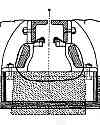
In 1888, African-American inventor Granville Woods was issued a U.S. patent titled "Tunnel-Construction For Electric Railways" (No. 386,282). The tunnel referred to was not for the train itself, but for electric conductors in the railbed to be below the surface of the ground, with a slot at the railbed surface for travelling conductors to transfer power to the motor on the electric car. As the most prolific African-American inventor by career of the late 19th and early 20th century, Woods has been called the Black Edison.«[Image: detail from patent diagram.]
Black Inventors in the Age of Segregation, by Rayvon Fouche. - book suggestion.

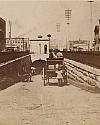
In 1867, Harvard School of Dental Medicine was established in Boston, MA on this day. It was the first university-based dental school in America. The parent institution, Harvard College opened in Cambridge, Massachusetts, in 1636, with an enrollment of 12 students and one Master to teach all subjects. Harvard expanded during the 19th century, opening graduate and professional schools. Thus the School of Dental Medicine was established in close affiliation with the Harvard Medical School, another first which made the full scholarly and scientific resources of a university available to dental education.
In 1850, the first photograph of a star was made. At Harvard Observatory (founded 1839), the observatory director, William Cranch Bond and a Boston photographer John Adams Whipple took a daguerreotype of Vega. (A daguerreotype used a copper base with a thin film of polished silver sensitized by iodine vapors to form a thin yellow layer of silver iodide. After the photograph was taken, the plate was developed in a current of magnesium vapor at 75ºC, which adhered to the light-struck parts of the plate. The plate was then fixed in sodium thiosulfate, and rinsed.) Overall, this process to take an image of a star or nebula took many hours of patient skill. Fortunately better photographic materials were later invented.
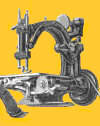
In 1790, Thomas Saint, a London cabinet maker, patented possibly the first sewing machine, fitted with an awl that makes a hole in leather and allows a needle to pass through it. This machine made a chain stitch with a tambour-type needle to produce a mechanical crochet or chain stitch. No evidence exists that Saint produced a single machine, and those who in the 1880s followed his patent specifications failed. An earlier English patent (24 Jun 1755) by German mechanic, Charles Weisenthal, had described a two-pointed needle for mechanical sewing, but there was no mention of a machine to go with it.Image: Wilcox-Gibbs sewing machine, c.1890.
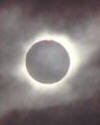
In 709 BC, the earliest record of a confirmed total solar eclipse was written in China. From: Ch'un-ch'iu, book I: "Duke Huan, 3rd year, 7th month, day jen-ch'en, the first day (of the month). The Sun was eclipsed and it was total." This is the earliest direct allusion to a complete obscuration of the Sun in any civilisation. The recorded date, when reduced to the Julian calendar, agrees exactly with that of a computed solar eclipse. Reference to the same eclipse appears in the Han-shu ('History of the Former Han Dynasty') (Chinese, 1st century AD): "...the eclipse threaded centrally through the Sun; above and below it was yellow." Earlier Chinese writings that refer to an eclipse do so without noting totality.




