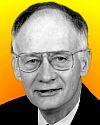
Born 7 Aug 1937; died 27 Feb 1997 at age 59.
American forensic anthropologist who examined and identified the skeletons of a number of historical figures, including Tsar Nicholas II and other members of the Romanov family killed in 1918 by the Bolsheviks, Vietnam MIAs, conquistador Francisco Pizarro, and in 1994 helped convict Byron De La Beckwith of the 1963 murder of civil rights leader Medgar Evers. At the University of Florida, the C.A. Pound Human Identification Laboratory was created through Maples' energetic fundraising. This sophisticated, unique facility, dedicated to forensic anthropology opened its doors in 1986. Maples wrote Dead Men Do Tell Tales (1994, with Michael Browning).
American forensic anthropologist who examined and identified the skeletons of a number of historical figures, including Tsar Nicholas II and other members of the Romanov family killed in 1918 by the Bolsheviks, Vietnam MIAs, conquistador Francisco Pizarro, and in 1994 helped convict Byron De La Beckwith of the 1963 murder of civil rights leader Medgar Evers. At the University of Florida, the C.A. Pound Human Identification Laboratory was created through Maples' energetic fundraising. This sophisticated, unique facility, dedicated to forensic anthropology opened its doors in 1986. Maples wrote Dead Men Do Tell Tales (1994, with Michael Browning).
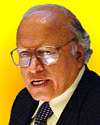
Born 7 Aug 1925; died 28 Sep 2023 at age 98. quotes
Monkombu Sambisivan Swaminathan was an Indian agricultural scientist and geneticist and international administrator, renowned for his leading role in India's “Green Revolution,” a program under which high-yield varieties of wheat and rice seedlings were planted in the fields of poor farmers. He now recognises the need for an “Evergreen Revolution” to extend the benefits of development to the most marginalised. His work in crop genetics and sustainable agricultural development in India and the Third World earned him the first World Food Prize in 1987, among other awards. more
Monkombu Sambisivan Swaminathan was an Indian agricultural scientist and geneticist and international administrator, renowned for his leading role in India's “Green Revolution,” a program under which high-yield varieties of wheat and rice seedlings were planted in the fields of poor farmers. He now recognises the need for an “Evergreen Revolution” to extend the benefits of development to the most marginalised. His work in crop genetics and sustainable agricultural development in India and the Third World earned him the first World Food Prize in 1987, among other awards. more
Scientist and Humanist; M.S. Swaminathan, by R.D. Iyer. - book suggestion.
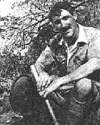
Born 7 Aug 1903; died 1 Oct 1972 at age 69. quotes
Louis Seymour Bazett Leakey was an English anthropologist and archaeologist who was born in Kabete, Kenya, of English missionaries parents. Leakey was largely responsible for convincing scientists that Africa, rather than Java or China, was the most significant area to search for evidence of human origins. Leakey led fossil-hunting expeditions to eastern Africa from the 1920's. He married Mary D. Nicol in 1936 and the couple discovered many important fossils together. In 1964, on an expedition to the Olduvai Gorge in Tanzania, he found fossil remains of, he believed, the earliest member of the genus of human beings. He named the species Homo habilis. He died in London, and buried in the country of his birth on 4 Oct 1972.
Louis Seymour Bazett Leakey was an English anthropologist and archaeologist who was born in Kabete, Kenya, of English missionaries parents. Leakey was largely responsible for convincing scientists that Africa, rather than Java or China, was the most significant area to search for evidence of human origins. Leakey led fossil-hunting expeditions to eastern Africa from the 1920's. He married Mary D. Nicol in 1936 and the couple discovered many important fossils together. In 1964, on an expedition to the Olduvai Gorge in Tanzania, he found fossil remains of, he believed, the earliest member of the genus of human beings. He named the species Homo habilis. He died in London, and buried in the country of his birth on 4 Oct 1972.
Ancestral Passions: The Leakey Family and the Quest for Humankind's Beginnings, by Virginia Morell. - book suggestion.
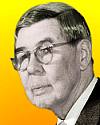
Born 7 Aug 1886; died 24 May 1964 at age 77.
(Louis) Alan Hazeltine was an American electrical engineer and physicist who invented the neutrodyne circuit, which made commercial radio possible. As one of the few experts in radio engineering at the outbreak of WW I, he designed a radio receiver for the U.S. Navy. In 1922, Hazeltine invented the "neutrodyne" receiver to eliminate the squeaks and howls of the early radio receivers, using neutralizing capacitors to in effect siphon off the high pitched squeals. The Hazeltine amplifier neutralized the grid-to-plate capacitative coupling which was a cause of oscillation in triode amplifiers. The neutrodyne was the first commercial receiver suited to general public reception. By 1927 some ten million of these receivers were being used by listeners in the U.S.
(Louis) Alan Hazeltine was an American electrical engineer and physicist who invented the neutrodyne circuit, which made commercial radio possible. As one of the few experts in radio engineering at the outbreak of WW I, he designed a radio receiver for the U.S. Navy. In 1922, Hazeltine invented the "neutrodyne" receiver to eliminate the squeaks and howls of the early radio receivers, using neutralizing capacitors to in effect siphon off the high pitched squeals. The Hazeltine amplifier neutralized the grid-to-plate capacitative coupling which was a cause of oscillation in triode amplifiers. The neutrodyne was the first commercial receiver suited to general public reception. By 1927 some ten million of these receivers were being used by listeners in the U.S.
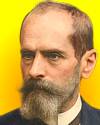
Born 7 Aug 1852; died 2 Oct 1933 at age 81.
Austrian hydraulic engineer who made significant contributions in groundwater hydrology. In his early career, he studied problems of soil mechanics. Later, he turned to applying mathematical physics for hydraulic problems and groundwater movement. In particular, knowing Laplace’s equation well explained heat flow and fluid flow, Forchheimer was able to extend that preexisting mathematical theory to calculations of groundwater flow. He was also the first to both mathematically and experimentally examine the features of dambreak waves in a rectangular channel (with his PhD student Armin Schoklitsch). He made proposals for construction of a tunnel under the English Channel.«
Austrian hydraulic engineer who made significant contributions in groundwater hydrology. In his early career, he studied problems of soil mechanics. Later, he turned to applying mathematical physics for hydraulic problems and groundwater movement. In particular, knowing Laplace’s equation well explained heat flow and fluid flow, Forchheimer was able to extend that preexisting mathematical theory to calculations of groundwater flow. He was also the first to both mathematically and experimentally examine the features of dambreak waves in a rectangular channel (with his PhD student Armin Schoklitsch). He made proposals for construction of a tunnel under the English Channel.«
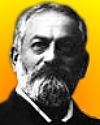
Born 7 Aug 1844; died 27 Sep 1911 at age 67.
Auguste Michel-Lévy was a French geologist and mineralogist who was a pioneer in microscopic petrology, the study of the origin, composition, structure, and alteration of rocks. He was particularly interested in rocks of volcanic origin. He was the first scientist in France to examine thin slices of rock with a polarizing microscope to identify the mineral content. In his published papers, he described the granulite group, and dealt with pegmatites, variolites, eurites, the ophites of the Pyrenees, the extinct volcanoes of Central France, gneisses, and the origin of crystalline schists. He became inspector-general of mines, and in 1870 joined the Geological Survey of France, becoming its director in 1887.«
Auguste Michel-Lévy was a French geologist and mineralogist who was a pioneer in microscopic petrology, the study of the origin, composition, structure, and alteration of rocks. He was particularly interested in rocks of volcanic origin. He was the first scientist in France to examine thin slices of rock with a polarizing microscope to identify the mineral content. In his published papers, he described the granulite group, and dealt with pegmatites, variolites, eurites, the ophites of the Pyrenees, the extinct volcanoes of Central France, gneisses, and the origin of crystalline schists. He became inspector-general of mines, and in 1870 joined the Geological Survey of France, becoming its director in 1887.«
(EB)
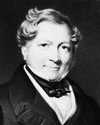
Born 7 Aug 1783; died 18 Jan 1861 at age 77.
Pioneering English inventor of lace-making machinery. As a boy, Heathcoat made stockings and became familiar with the machines and used this knowledge to develop and patent his lace net machine (1809) which was capable of the intricate, complicated motions and delicate operations needed to produce lace. His machines made lace hundreds of times faster than it could be manufactured by hand. He established a company in 1808 and based his original factory in Nottingham. However in 1816, the Luddites burnt down the factory and destroyed most of his machines, and so he relocated the company to Tiverton, Devon, where he had previously purchased an old woolen mill on the banks of the River Exe.Image: Heathcoat, detail of an engraving by T.L. Atkinson after a portrait by W. Beetham, mid-19th century.
Pioneering English inventor of lace-making machinery. As a boy, Heathcoat made stockings and became familiar with the machines and used this knowledge to develop and patent his lace net machine (1809) which was capable of the intricate, complicated motions and delicate operations needed to produce lace. His machines made lace hundreds of times faster than it could be manufactured by hand. He established a company in 1808 and based his original factory in Nottingham. However in 1816, the Luddites burnt down the factory and destroyed most of his machines, and so he relocated the company to Tiverton, Devon, where he had previously purchased an old woolen mill on the banks of the River Exe.Image: Heathcoat, detail of an engraving by T.L. Atkinson after a portrait by W. Beetham, mid-19th century.
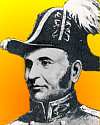
Born 7 Aug 1779; died 1 Feb 1836 at age 56. quotes
English military engineer who constructed the 126-mile (202-km) Rideau Canal connecting the Ottawa River and Lake Ontario, Canada, which was originally intended as a military supply route. It was designed to provide an alternative to the St. Lawrence River route which was vulnerable in case of war with the U.S., which was seen as a possibility after the American Revolution. Work began in 1826 near the junction of the Ottawa and Rideau rivers. Engineering challenges included an arched dam at Jones Falls with four locks with a total lift of 60 feet (three locks, a turning basin and a fourth lock). When the waterway was opened in Spring 1832, Lt. Col. By returned to England. The settlement that grew at the canal's mouth, at first known as Bytown, was named Ottawa in 1855, and is now the nation's capital.«[Note: for comparison, the Panama Canal is 51 miles long.] more
English military engineer who constructed the 126-mile (202-km) Rideau Canal connecting the Ottawa River and Lake Ontario, Canada, which was originally intended as a military supply route. It was designed to provide an alternative to the St. Lawrence River route which was vulnerable in case of war with the U.S., which was seen as a possibility after the American Revolution. Work began in 1826 near the junction of the Ottawa and Rideau rivers. Engineering challenges included an arched dam at Jones Falls with four locks with a total lift of 60 feet (three locks, a turning basin and a fourth lock). When the waterway was opened in Spring 1832, Lt. Col. By returned to England. The settlement that grew at the canal's mouth, at first known as Bytown, was named Ottawa in 1855, and is now the nation's capital.«[Note: for comparison, the Panama Canal is 51 miles long.] more
Building the Rideau Canal: A Pictorial History, by Robert W. Passfield. - book suggestion.
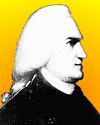
Born 7 Aug 1726; died 6 Nov 1790 at age 64.
James Bowdoin II was an American politician and scientist, who was a co-founder and first president of the American Academy of Arts and Sciences (1780). Active in physics and astronomy, he wrote several papers. He co-authored one on electricity with his friend Benjamin Franklin. In one of his letters to him, he suggested that the sea’s phosphorescence under certain conditions was due to minute animals—a view since accepted. During the American Revolution (1775–83) he played a leading role in Massachusetts politics, later serving as governor (1785–87). His extensive library of 1,200 volumes, spanning science, mathematics, philosophy, religion, poetry, and fiction, was left in his will to benefit the Academy.«
James Bowdoin II was an American politician and scientist, who was a co-founder and first president of the American Academy of Arts and Sciences (1780). Active in physics and astronomy, he wrote several papers. He co-authored one on electricity with his friend Benjamin Franklin. In one of his letters to him, he suggested that the sea’s phosphorescence under certain conditions was due to minute animals—a view since accepted. During the American Revolution (1775–83) he played a leading role in Massachusetts politics, later serving as governor (1785–87). His extensive library of 1,200 volumes, spanning science, mathematics, philosophy, religion, poetry, and fiction, was left in his will to benefit the Academy.«

Died 7 Aug 2025 at age 97 (born 25 Mar 1928). quotes
James Arthur Lovell Jr. was a who participated in the Apollo 13, Apollo 8, Gemini 7, and Gemini 12 space programs. He was command module pilot of the Apollo 8 flight to orbit the moon, with Frank Borman and William Anders. Launched on 21 Dec 1968, they were the first three men to travel to and orbit the moon, making ten orbits before returning to Earth on 27 Dec 1968. His next space flight was on the Apollo 13 mission, launched on 11 Apr 1970. It was aborted due to an oxygen tank failure. Instead, the crew used the Lunar Module to improvise a safe return to Earth on 17 Apr 1970.«
James Arthur Lovell Jr. was a who participated in the Apollo 13, Apollo 8, Gemini 7, and Gemini 12 space programs. He was command module pilot of the Apollo 8 flight to orbit the moon, with Frank Borman and William Anders. Launched on 21 Dec 1968, they were the first three men to travel to and orbit the moon, making ten orbits before returning to Earth on 27 Dec 1968. His next space flight was on the Apollo 13 mission, launched on 11 Apr 1970. It was aborted due to an oxygen tank failure. Instead, the crew used the Lunar Module to improvise a safe return to Earth on 17 Apr 1970.«
Died 7 Aug 1990 at age 78 (born 3 Feb 1912).
Jacques-Émile Soustelle was a French anthropologist and politician who was instrumental in the return to power of General Charles de Gaulle in 1958 but afterward broke with de Gaulle over the issue of Algeria.
Jacques-Émile Soustelle was a French anthropologist and politician who was instrumental in the return to power of General Charles de Gaulle in 1958 but afterward broke with de Gaulle over the issue of Algeria.
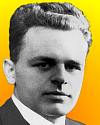
Died 7 Aug 1983 at age 77 (born 28 Apr 1906). quotes
Bart Jan Bok was a Dutch-American astronomer whose name remains associated with the "Bok globules" for being the first to investigate these dark clouds of dense gas and dust visible against a background of bright nebulae. Bok globules have a mass of 10 to 50 times the mass of the Sun and are about a light year across. He began their observation in the 1940's and in a 1947 paper with E.F. Reilly proposed that these were sites of new star formation as the gas clouds underwent gravitational collapse. Bok's other important work was on the structure and evolution of the Milky Way Galaxy. His enthusiasm for astronomy began as a young boy. Bok bicycled to Norway to observe the solar eclipse of 1927. He moved to the U.S. in 1929.«
Bart Jan Bok was a Dutch-American astronomer whose name remains associated with the "Bok globules" for being the first to investigate these dark clouds of dense gas and dust visible against a background of bright nebulae. Bok globules have a mass of 10 to 50 times the mass of the Sun and are about a light year across. He began their observation in the 1940's and in a 1947 paper with E.F. Reilly proposed that these were sites of new star formation as the gas clouds underwent gravitational collapse. Bok's other important work was on the structure and evolution of the Milky Way Galaxy. His enthusiasm for astronomy began as a young boy. Bok bicycled to Norway to observe the solar eclipse of 1927. He moved to the U.S. in 1929.«
The Milky Way, by Bart J. Bok. - book suggestion.
(EB)
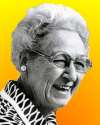
Died 7 Aug 1974 at age 65 (born 7 Jun 1909).
American physician, anesthesiologist and medical researcher who developed the Apgar Score System, a method of evaluating an infant shortly after birth to assess its well-being and to determine if any immediate medical intervention is required.
American physician, anesthesiologist and medical researcher who developed the Apgar Score System, a method of evaluating an infant shortly after birth to assess its well-being and to determine if any immediate medical intervention is required.
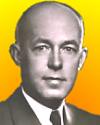
Died 7 Aug 1958 at age 69 (born 13 Apr 1889).
American cryptographer who organized and directed the U.S. government's first formal code-breaking efforts during and after World War I. He began his career as a code clerk in the State Department. During WW I, he served as a cryptologic officer with the American Expeditionary Forces in France during WWI. In the 1920s, when he was chief of MI-8, the first U.S. peacetime cryptanalytic organization, he and a team of cryptanalysts exploited nearly two dozen foreign diplomatic cipher systems. MI-8 was disbanded in 1929 when the State Department withdrew funding. Jobless, Yardley caused a sensation in 1931 by publishing his memoirs of MI-8, The American Black Chamber, which caused new security laws to be enacted.
American cryptographer who organized and directed the U.S. government's first formal code-breaking efforts during and after World War I. He began his career as a code clerk in the State Department. During WW I, he served as a cryptologic officer with the American Expeditionary Forces in France during WWI. In the 1920s, when he was chief of MI-8, the first U.S. peacetime cryptanalytic organization, he and a team of cryptanalysts exploited nearly two dozen foreign diplomatic cipher systems. MI-8 was disbanded in 1929 when the State Department withdrew funding. Jobless, Yardley caused a sensation in 1931 by publishing his memoirs of MI-8, The American Black Chamber, which caused new security laws to be enacted.
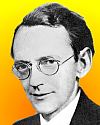
Died 7 Aug 1958 at age 68 (born 7 Jun 1890).
Karl Spencer Lashley was an American psychologist who conducted quantitative investigations of the relation between brain mass and learning ability. He collaborated with Shepherd J. Franz in the study of intelligence and the role of the frontal lobes. Lashley promulgated the theory of cortical specialization for sensory and motor functions. He challenged the ongoing concept of cortical localization. The controversy between localization and holistic emphasis of brain function was brought into focus by Lashley. He is remembered as a great psychologist who approached learning and memory by assessing the effects of brain damage in laboratory animals.
Karl Spencer Lashley was an American psychologist who conducted quantitative investigations of the relation between brain mass and learning ability. He collaborated with Shepherd J. Franz in the study of intelligence and the role of the frontal lobes. Lashley promulgated the theory of cortical specialization for sensory and motor functions. He challenged the ongoing concept of cortical localization. The controversy between localization and holistic emphasis of brain function was brought into focus by Lashley. He is remembered as a great psychologist who approached learning and memory by assessing the effects of brain damage in laboratory animals.
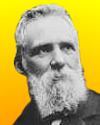
Died 7 Aug 1912 at age 71 (born 2 Feb 1841).
Swiss physician, scientist, and founder of limnology, the study of lakes. Forel is credited with the discovery of density currents, which occur in the Alpine lakes because of the cold temperatures of entering glacier-derived streams. He also explained the mechanism of seiches (1901) and studied earthquakes and glaciers. A seiche is a rhythmic oscillation of water in a lake or a partially enclosed coastal inlet, such as a bay, gulf, or harbour. A seiche may last from a few minutes to several hours or for as long as two days. The phenomenon was first observed and studied in Lake Geneva (Lac Léman), Switzerland, in the 18th century.
Swiss physician, scientist, and founder of limnology, the study of lakes. Forel is credited with the discovery of density currents, which occur in the Alpine lakes because of the cold temperatures of entering glacier-derived streams. He also explained the mechanism of seiches (1901) and studied earthquakes and glaciers. A seiche is a rhythmic oscillation of water in a lake or a partially enclosed coastal inlet, such as a bay, gulf, or harbour. A seiche may last from a few minutes to several hours or for as long as two days. The phenomenon was first observed and studied in Lake Geneva (Lac Léman), Switzerland, in the 18th century.
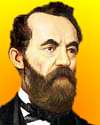
Died 7 Aug 1898 at age 86 (born 12 Sep 1811).
American geologist and paleontologist who is considered one of the founders of American geology. He invented the term geosyncline and the geosyncline theory for mountain building, which proposed that as sediment is increasingly deposited in a shallow basin, the basin will sink, causing the adjacent area to rise. (This was superseded in the 1960's by the new theories of Plate Tectonics.) In paleontology, he studied the Silurian and Devonian fossils (345 million - 430 million years old) found in New York, and recorded his results in a 13-volume series, The Paleontology of New York (1847-94). Hall was a charter member of the Academy of Sciences.«
American geologist and paleontologist who is considered one of the founders of American geology. He invented the term geosyncline and the geosyncline theory for mountain building, which proposed that as sediment is increasingly deposited in a shallow basin, the basin will sink, causing the adjacent area to rise. (This was superseded in the 1960's by the new theories of Plate Tectonics.) In paleontology, he studied the Silurian and Devonian fossils (345 million - 430 million years old) found in New York, and recorded his results in a 13-volume series, The Paleontology of New York (1847-94). Hall was a charter member of the Academy of Sciences.«
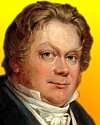
Died 7 Aug 1848 at age 68 (born 20 Aug 1779). quotes
Swedish chemist who established the beginnings of modern chemistry. Among his contributions are his determination of atomic weights, the replacement of alchemical signs with letters for chemical symbols and the use small numbers to indicate relative proportions the formula of a compound, new analytical methods and an electrochemical theory. He discovered selenium and thorium and co-discovered cerium. He wrote an authoritative two-volume textbook, Lärbok i kemien (1808-12). His students isolated lithium (Johann Awfwedsen), vanadium (Nils Sefström), and several rare earth elements (Carl Mosander). Berzelius used an electric current to determine salts could be split into positive and negative portions. He coined the terms isomerism (1831), catalysis (1835), and allotropy (1840).
Swedish chemist who established the beginnings of modern chemistry. Among his contributions are his determination of atomic weights, the replacement of alchemical signs with letters for chemical symbols and the use small numbers to indicate relative proportions the formula of a compound, new analytical methods and an electrochemical theory. He discovered selenium and thorium and co-discovered cerium. He wrote an authoritative two-volume textbook, Lärbok i kemien (1808-12). His students isolated lithium (Johann Awfwedsen), vanadium (Nils Sefström), and several rare earth elements (Carl Mosander). Berzelius used an electric current to determine salts could be split into positive and negative portions. He coined the terms isomerism (1831), catalysis (1835), and allotropy (1840).
Jöns Jacob Berzelius: Autobiographical Notes, by H.G.Soderbaum and Olof Larsell (trans). - book suggestion.
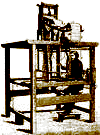
engraving 1874 (EB)
Died 7 Aug 1834 at age 82 (born 7 Jul 1752). quotes
French weaver and inventor of the Jacquard programmable power loom for brocaded fabric. His loom would mechanically produce any pattern, controlled by perforated control cards (1805). This served as the impetus for the technological revolution of the textile industry and is the basis of the modern automatic loom. The concept of using punched cards was later applied by Hollerith to keeping track of the 1890 US census data. The idea further evolved to computer input punched cards.
French weaver and inventor of the Jacquard programmable power loom for brocaded fabric. His loom would mechanically produce any pattern, controlled by perforated control cards (1805). This served as the impetus for the technological revolution of the textile industry and is the basis of the modern automatic loom. The concept of using punched cards was later applied by Hollerith to keeping track of the 1890 US census data. The idea further evolved to computer input punched cards.
Died 7 Aug 1782 at age 73 (born 3 Mar 1709).
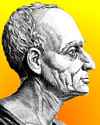
Andreas Sigismund Marggraf was a German chemist who was a pioneer in analytical work. He used the flame test to distinguish between potash and soda. He isolated zinc from its calamine ore, and he recognized alumina in clay. In 1747, Marggraf demonstrated that various kinds of beet-root contained sugar and that the sugar could be extracted and crystallized. The practical significance of this discovery was not recognized at the time, for many years was regarded as merely a laboratory exercise. However, a few decades later, it led to the development of the modern sugar industry, when Franz Karl Achard, a pupil of Marggraf, attacked the problem of beet-root cultivation. Achard succeeded in extracting sugar from beets on a commercial scale.« more
Andreas Sigismund Marggraf was a German chemist who was a pioneer in analytical work. He used the flame test to distinguish between potash and soda. He isolated zinc from its calamine ore, and he recognized alumina in clay. In 1747, Marggraf demonstrated that various kinds of beet-root contained sugar and that the sugar could be extracted and crystallized. The practical significance of this discovery was not recognized at the time, for many years was regarded as merely a laboratory exercise. However, a few decades later, it led to the development of the modern sugar industry, when Franz Karl Achard, a pupil of Marggraf, attacked the problem of beet-root cultivation. Achard succeeded in extracting sugar from beets on a commercial scale.« more
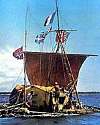
In 1947, the balsa-wood raft Kon-Tiki, which carried Thor Heyerdahl and five companions more than 4,000 miles, crashed into a reef at Raroia in the Tuamotu Islands in the Pacific Ocean. It had left Peru on 28 Apr 1947 to demonstrate his belief that the voyage was possible using materials and technology of pre-Columbian times, and that thus ancient Polynesians could have originated in South America. The Kon-Tiki raft party reported first sighting land—Pukapuka Island in the Tuamotas—on 30 Jul 1947. Kon Tiki was an old name of the Inca sun god, Viracocha.«
more
Kon-Tiki: Across the Pacific in a Raft, by Thor Heyerdahl. - book suggestion.

In 1927, the Peace Bridge, a three-lane toll-bridge between Fort Erie, Ontario, Canada and Buffalo, NY, U.S. was dedicated during ceremonies attended by the Prince of Wales (future King Edward VIII), Price Albert (future George VI), the prime ministers of Canada and Britain, and U.S. Vice-President Charles Dawes. Its name commemorated the over 100 years of peace between Canada and the U.S. The 1,768-m (5,800-ft) structure crosses the Niagara River, about 20-km (12½-mi) upstream from the Niagara Falls, with five arched spans and a Parker through-truss over the Black Rock Canal on the U.S. side of the river. Construction began in 1925, and was opened to traffic on 1 Jun 1927.«[Image: Peace Bridge from a 1953 postcard.]
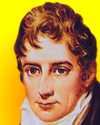
In 1807, Robert Fulton's North River Steam Boat (also known as the Clermont) began chugging its way up New York's Hudson River on its successful round-trip from New York City to Albany 150 miles apart in 32 hours.
more




