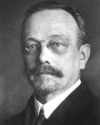
Born 23 Apr 1867; died 30 Jan 1928 at age 60.
Johannes Andreas Grib Fibiger was a Danish pathologist who received the Nobel Prize for Physiology or Medicine in 1926 for his discovery of the Spiroptera carcinoma, achieving the first controlled induction of cancer in laboratory animals, a development of profound importance to cancer research.
Johannes Andreas Grib Fibiger was a Danish pathologist who received the Nobel Prize for Physiology or Medicine in 1926 for his discovery of the Spiroptera carcinoma, achieving the first controlled induction of cancer in laboratory animals, a development of profound importance to cancer research.
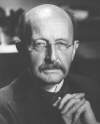
Born 23 Apr 1858; died 4 Oct 1947 at age 89. quotes
Max Karl Ernst Ludwig Planck was a German theoretical physicist who studied at Munich and Berlin, where he studied under Helmholtz, Clausius and Kirchhoff and subsequently joined the faculty. He became professor of theoretical physics (1889-1926). His work on the law of thermodynamics and the distribution of radiation from a black body led him to abandon classical Newtonian principles and introduce the quantum theory (1900), for which he was awarded the Nobel Prize for Physics in 1918. This assumes that energy is not infinitely subdivisible, but ultimately exists as discrete amounts he called quanta (Latin, “how much”). Further, the energy carried by a quantum depends in direct proportion to the frequency of its source radiation.
Max Karl Ernst Ludwig Planck was a German theoretical physicist who studied at Munich and Berlin, where he studied under Helmholtz, Clausius and Kirchhoff and subsequently joined the faculty. He became professor of theoretical physics (1889-1926). His work on the law of thermodynamics and the distribution of radiation from a black body led him to abandon classical Newtonian principles and introduce the quantum theory (1900), for which he was awarded the Nobel Prize for Physics in 1918. This assumes that energy is not infinitely subdivisible, but ultimately exists as discrete amounts he called quanta (Latin, “how much”). Further, the energy carried by a quantum depends in direct proportion to the frequency of its source radiation.
Where Is Science Going?, by Max Planck. - book suggestion.
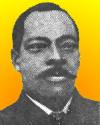
Born 23 Apr 1856; died 30 Jan 1910 at age 53. quotes
American inventor who held numerous patents in diverse fields. As the most prolific black inventor by career of the late 19th and early 20th century in the U.S., he has been called the Black Edison. Wood's first patent (3 Jun 1884) was for a locomotive steam boiler. He started the Woods Electric Company, in Cincinnati, Ohio, to commercially develop a variety of electrical devices. In 1887 he patented his Synchronous Multiplex Railway Telegraph, which enabled moving railway trains to maintain communications links thus avoiding accidents. His other patents included a telephone transmitter, an electric railway, an electric incubator for hatching chickens (1900) and an important safety device - an automatic air-brake for railroad use (10 Jun 1902).« more
American inventor who held numerous patents in diverse fields. As the most prolific black inventor by career of the late 19th and early 20th century in the U.S., he has been called the Black Edison. Wood's first patent (3 Jun 1884) was for a locomotive steam boiler. He started the Woods Electric Company, in Cincinnati, Ohio, to commercially develop a variety of electrical devices. In 1887 he patented his Synchronous Multiplex Railway Telegraph, which enabled moving railway trains to maintain communications links thus avoiding accidents. His other patents included a telephone transmitter, an electric railway, an electric incubator for hatching chickens (1900) and an important safety device - an automatic air-brake for railroad use (10 Jun 1902).« more
Black Inventors in the Age of Segregation, by Rayvon Fouche. - book suggestion.
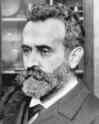
Born 23 Apr 1853; died 13 Feb 1914 at age 60.
French criminologist who was chief of criminal identification for the Paris police from 1880. He developed an identification system known as anthropometry, or the Bertillon system, that came into wide use in France and other countries. The system records physical characteristics (eye colour, scars, deformities, etc.) and specified measurements (height, fingertip reach, head length and width, ear, foot, arm and finger length, etc) These are recorded on cards and classified according to the length of the head. After two decades this system was replaced by fingerprinting in the early 1900s because Bertillon measurements were difficult to take with uniform exactness, and could change later due to growth or surgery.
French criminologist who was chief of criminal identification for the Paris police from 1880. He developed an identification system known as anthropometry, or the Bertillon system, that came into wide use in France and other countries. The system records physical characteristics (eye colour, scars, deformities, etc.) and specified measurements (height, fingertip reach, head length and width, ear, foot, arm and finger length, etc) These are recorded on cards and classified according to the length of the head. After two decades this system was replaced by fingerprinting in the early 1900s because Bertillon measurements were difficult to take with uniform exactness, and could change later due to growth or surgery.
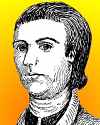
Born 23 Apr 1743; died 2 Jan 1817 at age 73.
American natural philosopher and clergyman who organized the first expedition of its kind in the U.S. (departing on 9 Oct 1780) to observe a total solar eclipse in Penobscot Bay, Maine, although it was held by the British enemy. The eclipse was very slightly less than being total, and he is believed to be the first to observe the “ Baily's Beads” phenomenon seen along the sun's last sliver. Previously, with John Winthrop (under whom he studied) he travelled to St. John's, Newfoundland (1761) to observer the Transit of Venus. When Wintrop died, Williams succeeded him (1779) as the Hollis Professor of Mathematics and Natural Philosophy at Harvard University. He researched and taught astronomy, meteorology, and magnetism. He resigned in June 1788. He also engaged in state boundary surveys: NY and Mass. (1785-88), and Vermont and Canada (1795).«[Image drawn from a miniature.] more
American natural philosopher and clergyman who organized the first expedition of its kind in the U.S. (departing on 9 Oct 1780) to observe a total solar eclipse in Penobscot Bay, Maine, although it was held by the British enemy. The eclipse was very slightly less than being total, and he is believed to be the first to observe the “ Baily's Beads” phenomenon seen along the sun's last sliver. Previously, with John Winthrop (under whom he studied) he travelled to St. John's, Newfoundland (1761) to observer the Transit of Venus. When Wintrop died, Williams succeeded him (1779) as the Hollis Professor of Mathematics and Natural Philosophy at Harvard University. He researched and taught astronomy, meteorology, and magnetism. He resigned in June 1788. He also engaged in state boundary surveys: NY and Mass. (1785-88), and Vermont and Canada (1795).«[Image drawn from a miniature.] more
Born 23 Apr 1734; died 17 Oct 1809 at age 75.
French hydraulic engineer who derived formulas for computing the discharge of fluids from pipes and open channels.
French hydraulic engineer who derived formulas for computing the discharge of fluids from pipes and open channels.
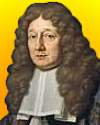
Born 23 Apr 1628; died 15 Apr 1704 at age 75.
Dutch mathematician and statesman who, after an education in law, became interested in mathematics, though for a limited time (1654-63). He worked on improving the algebraic methods of René Descartes, seeking to extend them to the solution of equations of a higher degree by applying an algorithm. He also developed an algorithm based on Fermat's method to deal with the maxima, minima and tangents to curves of algebraic functions. Later, he served as burgomaster of Amsterdam for 30 years. During this time time he made a mathematical study of annuities. Hudde continued with an interest in physics and astronomy, producing lenses and microscopes. He collaborated with Baruch Spinoza, of Amsterdam, on telescopes. Hudde determine that in a telescope, a plano-convex lenses were better than concavo-convex .«
Dutch mathematician and statesman who, after an education in law, became interested in mathematics, though for a limited time (1654-63). He worked on improving the algebraic methods of René Descartes, seeking to extend them to the solution of equations of a higher degree by applying an algorithm. He also developed an algorithm based on Fermat's method to deal with the maxima, minima and tangents to curves of algebraic functions. Later, he served as burgomaster of Amsterdam for 30 years. During this time time he made a mathematical study of annuities. Hudde continued with an interest in physics and astronomy, producing lenses and microscopes. He collaborated with Baruch Spinoza, of Amsterdam, on telescopes. Hudde determine that in a telescope, a plano-convex lenses were better than concavo-convex .«

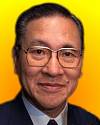
Died 23 Apr 2011 at age 81 (born 29 Jan 1930). quotes
Japanese business executive who as a former president and chairman of Sony is credited with developing the compact disc. He insisted that a CD should hold 75 minutes of music, sufficient for the entire Beethoven's Ninth Symphony, which accounts for the designed 4.8-inch diameter. Having had a career as an opera singer before he joined the company in the 1950s, he remained a music connoisseur, and recognized the importance of improved sound quality made possible by the CD. Sony issued the world's first CD in 1982, and in Japan, within five years the format overtook LP record sales. He rose through the company to become its chief executive in 1989, always pursuing improvements to quality and appealing design, and led Sony's expansion from hardware to software to entertainment including music, films and video games.«
Japanese business executive who as a former president and chairman of Sony is credited with developing the compact disc. He insisted that a CD should hold 75 minutes of music, sufficient for the entire Beethoven's Ninth Symphony, which accounts for the designed 4.8-inch diameter. Having had a career as an opera singer before he joined the company in the 1950s, he remained a music connoisseur, and recognized the importance of improved sound quality made possible by the CD. Sony issued the world's first CD in 1982, and in Japan, within five years the format overtook LP record sales. He rose through the company to become its chief executive in 1989, always pursuing improvements to quality and appealing design, and led Sony's expansion from hardware to software to entertainment including music, films and video games.«
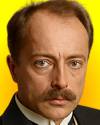
(1929)
Died 23 Apr 1960 at age 80 (born 9 Oct 1879). quotes
Max Theodor Felix von Laue was a German physicist whose discovery of X-ray diffraction in crystals earned him the 1914 Nobel Prize in Physics. His experiment proved that X-rays are waves, and that crystals have a regular atomic lattice capable of diffracting them. This achievement opened the way for determining atomic structures, founding modern crystallography and laying the cornerstone for solid-state physics and materials science. Laue also made contributions to relativity theory, optics, and superconductivity. A principled opponent of Nazism, he defended scientific integrity, supported persecuted colleagues, and later helped rebuild and guide German science after World War II, inspiring a new generation of physicists worldwide.«
Max Theodor Felix von Laue was a German physicist whose discovery of X-ray diffraction in crystals earned him the 1914 Nobel Prize in Physics. His experiment proved that X-rays are waves, and that crystals have a regular atomic lattice capable of diffracting them. This achievement opened the way for determining atomic structures, founding modern crystallography and laying the cornerstone for solid-state physics and materials science. Laue also made contributions to relativity theory, optics, and superconductivity. A principled opponent of Nazism, he defended scientific integrity, supported persecuted colleagues, and later helped rebuild and guide German science after World War II, inspiring a new generation of physicists worldwide.«
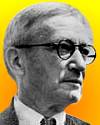
Died 23 Apr 1959 at age 73 (born 9 Jan 1886).
American psychologist whose work dealt with the psychology of learning and the role association plays. In his Law of Contiguity, he held that “a combination of stimuli which has accompanied a movement, will on its recurrence tend to be followed by that movement.” He said that all learning is based on a stimulus- response association. Movements are small stimulus- response combinations. These movements make up an act. A learned behavior is a series of movements. It takes time for the movements to develop into an act. He believed that learning is incremental. Some behavior involves repetition of movements and what is learned are movements, not behaviors.
American psychologist whose work dealt with the psychology of learning and the role association plays. In his Law of Contiguity, he held that “a combination of stimuli which has accompanied a movement, will on its recurrence tend to be followed by that movement.” He said that all learning is based on a stimulus- response association. Movements are small stimulus- response combinations. These movements make up an act. A learned behavior is a series of movements. It takes time for the movements to develop into an act. He believed that learning is incremental. Some behavior involves repetition of movements and what is learned are movements, not behaviors.
The Psychology of Learning, by Edwin Ray Guthrie. - book suggestion.
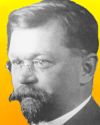
Died 23 Apr 1942 at age 64 (born 13 Apr 1878).
Soviet physicist and biophysicist known for his physicochemical theory of the movement of ions and the consequent theory of nerve excitation in living matter, which attempts to explain sensation, muscular contraction, and the functions of the central nervous system. He trained as a medical doctor in Moscow. In addition, he studied mathematics and physics on his own. His doctoral thesis (1912) at Moscow University was a fundamental investigation in prequantum photochemistry. He supported the October Revolution. Lazarev established prospecting surveys, which revealed enormous national reserves of iron ore (1919).
Soviet physicist and biophysicist known for his physicochemical theory of the movement of ions and the consequent theory of nerve excitation in living matter, which attempts to explain sensation, muscular contraction, and the functions of the central nervous system. He trained as a medical doctor in Moscow. In addition, he studied mathematics and physics on his own. His doctoral thesis (1912) at Moscow University was a fundamental investigation in prequantum photochemistry. He supported the October Revolution. Lazarev established prospecting surveys, which revealed enormous national reserves of iron ore (1919).
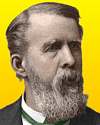
Died 23 Apr 1922 at age 85 (born 25 Apr 1836).
Laroy Sunderland Starrett was an American inventor and manufacturer who held over 100 patents, many for fine measurement tools, including the micrometer screw guage (patented 29 Jul 1890) that is familiar to present-day machinists and physics lab workers. His first patent (23 May 1865) was for a meat chopper, which he had manufactured for him, but marketed it himself. This product was successful, and his next patents for shoe studs and hooks provided enough income to establish his own factory. He began making a combination square. This was a try-square with a head that could be moved and clamped at any position along the blade, which he patented 26 Feb 1879. He added products including rules, surface guages, and other small tools. His business became the world's largest in his specialty. When he died, it had over five acres of production space, and 1,000 workers.«
Laroy Sunderland Starrett was an American inventor and manufacturer who held over 100 patents, many for fine measurement tools, including the micrometer screw guage (patented 29 Jul 1890) that is familiar to present-day machinists and physics lab workers. His first patent (23 May 1865) was for a meat chopper, which he had manufactured for him, but marketed it himself. This product was successful, and his next patents for shoe studs and hooks provided enough income to establish his own factory. He began making a combination square. This was a try-square with a head that could be moved and clamped at any position along the blade, which he patented 26 Feb 1879. He added products including rules, surface guages, and other small tools. His business became the world's largest in his specialty. When he died, it had over five acres of production space, and 1,000 workers.«
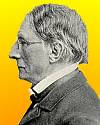
Died 23 Apr 1895 at age 78 (born 29 Dec 1816). quotes
German physiologist and biochemist who was one of the creators of modern physiology. He applied the experimental approach of chemistry and physics to explain the way the body functions. Ludwig investigated the structure of the kidneys and cardiac activity. The kymograph he invented (1847) continuously recorded blood pressure on a rotating drum. He explained blood circulation in terms of conventional forces, repudiating any mysterious "vital force." With his mercurial blood-gas pump (1859) he extracted gases from blood for study. In 1856, he was the first to keep an organ alive after removal from an animal (a frog heart), using perfusion (pumping blood plasma through them.) He was also first to study the nitrogen content of urine as a measure of protein metabolism.«
German physiologist and biochemist who was one of the creators of modern physiology. He applied the experimental approach of chemistry and physics to explain the way the body functions. Ludwig investigated the structure of the kidneys and cardiac activity. The kymograph he invented (1847) continuously recorded blood pressure on a rotating drum. He explained blood circulation in terms of conventional forces, repudiating any mysterious "vital force." With his mercurial blood-gas pump (1859) he extracted gases from blood for study. In 1856, he was the first to keep an organ alive after removal from an animal (a frog heart), using perfusion (pumping blood plasma through them.) He was also first to study the nitrogen content of urine as a measure of protein metabolism.«
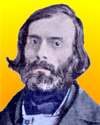
Died 23 Apr 1853 at age 45 (born 14 Nov 1807). quotes
French chemist who developed organic chemistry as a distinct science. For a while, he assisted Jean Dumas, and extended his work, understanding organic compounds as derivatives of hydrocarbon molecules. In crystallography he was influenced by René-Just Haüy. Laurent recognised that carbon atoms formed bonds based on a pyramid structure. Furthermore, against the opinion of many peers, he rejected the idea held by Jöns Berzelius that even organic molecules were formed from positively and negatively charged entities. Laurent showed (1836) that a supposedly positive-charge hydrogen atom could be replaced by a supposedly negative-charge chlorine atom. He recognised families of organic compounds with characteristic groups. He died in middle age from tuberculosis.«
French chemist who developed organic chemistry as a distinct science. For a while, he assisted Jean Dumas, and extended his work, understanding organic compounds as derivatives of hydrocarbon molecules. In crystallography he was influenced by René-Just Haüy. Laurent recognised that carbon atoms formed bonds based on a pyramid structure. Furthermore, against the opinion of many peers, he rejected the idea held by Jöns Berzelius that even organic molecules were formed from positively and negatively charged entities. Laurent showed (1836) that a supposedly positive-charge hydrogen atom could be replaced by a supposedly negative-charge chlorine atom. He recognised families of organic compounds with characteristic groups. He died in middle age from tuberculosis.«
Auguste Laurent and the Prehistory of Valence, by Mary Eunice Novitski. - book suggestion.
In 1994, physicists at the Department of Energy's Fermi National Accelerator Laboratory discovered the subatomic particle called the top quark.
In 1981, artificial skin was first transplanted in the U.S. on patients at Massachussetts General Hospital, Boston. The combination of cowhide, shark cartilage and plastic was developed by Ioannis V. Yannas and a research team at MIT. This material makes possible the treatment of burn patients whose injuries might otherwise be fatal.
In 1970, electrical anesthesia was first used in obstetrics. The inventor, Prof. Aime Limoge applied the technique at the Rothschild Hospital in Paris.
In 1962, the first American satellite to reach the moon surface, the Ranger IV, was launched at 3:50pm from Cape Canaveral, Florida. As intended, it impacted on the moon three days later at 7:50pm on 26 Apr, travelling at 5,963 mph. The launch vehicle was an Atlas-Agena B rocket, 102 feet high, 16 feet in diameter at the base. The distance the satellite would travel was about 229,541 miles.
In 1951, the Associated Press started using their new "teletypesetting" service in Charlotte, NC. The news article information was transmitted using a perforated, paper tape. At the receiving end of the circuit, a punch produced a copy of the perforated tape. This tape could then be used by typesetting machines. The first message sent was "Greetings. This is the opening of the first teletypesetter circuit," for they were the first news agency in the U.S. to begin such operation.
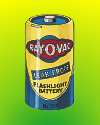
1939
In 1940, a leak-proof flashlight battery (Ray-o-Vac) was patented in the U.S. by Herman Anthony (No. 2,198,423).
In 1896, the first movie shown to a paying theatre audience in the U.S. was presented using Thomas Edison’s Vitascope. The movie had a series of short scenes, and were part of a program with other acts at Koster and Bial’s Music Hall, 34th St, New York City. Included in the film shorts were a ballet scene, a burlesque boxing match, waves on a sea shore, and a comic allegory The Monroe Doctrine,all of which were projected at about half life size.
In 1895, a "photographic print wash" was patented by a black American inventor, C.J. Dorticus (No. 537,968). Another black American invention was patented this same day, issued to Purdy and Peters for a "design for spoons" (No. 524,228). Other black American inventions were patented on this day in other years. In 1889, a "passenger register" was patented by A. Romain. (No. 402,035). In 1878, B.H. Taylor patented a "rotary engine" (No. 202,888).
The Inventive Spirit of African Americans: Patented Ingenuity, by Patricia Carter Sluby. - book suggestion.
In 1867, the Zoetrope was patented by William E. Lincoln of Providence, R.I. (No. 64,117). The device was the first animated picture machine. It provided an animation sequence of pictures lining the inside wall of a shallow cylinder, with vertical slits between the images. By spinning the cylinder and looking through the slits, a repeating loop of a moving image could be viewed.
In 1827, William Rowan Hamilton presented his Theory of Systems of Rays at the Royal Irish Academy in Dublin. Although he was still an undergraduate, only 21 years old, his work is one of the important works in optics, for it provided a single function that brings together mechanics, optics and mathematics. It led to establishing the wave theory of light, which gives that light is a form of energy that travels in waves.




