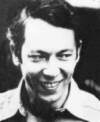
Born 26 Nov 1940.
Italian mathematician who was awarded the Fields Medal in 1974 for his major contributions to the study of the prime numbers, to the study of univalent functions and the local Bieberbach conjecture, to the theory of functions of several complex variables, and to the theory of partial differential equations and minimal surfaces. "Bombieri's mean value theorem", which concerns the distribution of primes in arithmetic progressions which is obtained by an application of the methods of the large sieve. Between 1979 and 1982 Bombieri served on the executive committee of the International Mathematical Union. Bombieri now works in the United States. In 1996 Bombieri was elected to membership of the National Academy of Sciences.
Italian mathematician who was awarded the Fields Medal in 1974 for his major contributions to the study of the prime numbers, to the study of univalent functions and the local Bieberbach conjecture, to the theory of functions of several complex variables, and to the theory of partial differential equations and minimal surfaces. "Bombieri's mean value theorem", which concerns the distribution of primes in arithmetic progressions which is obtained by an application of the methods of the large sieve. Between 1979 and 1982 Bombieri served on the executive committee of the International Mathematical Union. Bombieri now works in the United States. In 1996 Bombieri was elected to membership of the National Academy of Sciences.

Born 26 Nov 1937; died 12 Sep 1994 at age 56.
Soviet physician who was the first practicing doctor in space. He travelled on Voskhod 1 ("Sunrise 1"), 12-13 Oct 1964 the first space flight with a crew of more than one man. He was an expert in the sense-of-balance mechanism of the inner ear. He collected medical information, including the effects of radiation, confinement and weightlessness on the crew. He began his training in the summer of 1964, a few months before the flight, but was not a long-term cosmonaut and afterwards returned to his medical practice.
Soviet physician who was the first practicing doctor in space. He travelled on Voskhod 1 ("Sunrise 1"), 12-13 Oct 1964 the first space flight with a crew of more than one man. He was an expert in the sense-of-balance mechanism of the inner ear. He collected medical information, including the effects of radiation, confinement and weightlessness on the crew. He began his training in the summer of 1964, a few months before the flight, but was not a long-term cosmonaut and afterwards returned to his medical practice.
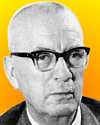
Born 26 Nov 1898; died 12 Aug 1973 at age 74.
German chemist who shared the 1963 Nobel Prize for Chemistry with Giulio Natta “for their discoveries in the field of the chemistry and technology of high polymers” improving the quality of plastics. Polymer molecules are long chains of thousands of atoms, made by connecting together repeating units of a small molecule (the monomer). Ziegler found peculiar electrical forces in a bond between an aluminium and a carbon atom in a hydrocarbon chain: reactive molecules are drawn in and sandwiched between these two atoms, increasing the length of the chain. When the chain is long enough, detaching the aluminium stops further growth of the molecule. The combination of aluminium compounds with other metallic compounds gives Ziegler catalysts..
German chemist who shared the 1963 Nobel Prize for Chemistry with Giulio Natta “for their discoveries in the field of the chemistry and technology of high polymers” improving the quality of plastics. Polymer molecules are long chains of thousands of atoms, made by connecting together repeating units of a small molecule (the monomer). Ziegler found peculiar electrical forces in a bond between an aluminium and a carbon atom in a hydrocarbon chain: reactive molecules are drawn in and sandwiched between these two atoms, increasing the length of the chain. When the chain is long enough, detaching the aluminium stops further growth of the molecule. The combination of aluminium compounds with other metallic compounds gives Ziegler catalysts..
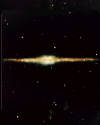
Born 26 Nov 1895; died 26 Jun 1965 at age 69.
Swedish astronomer who contributed greatly to the theory of galactic structure and motion and to the methods of determining the absolute magnitude (true brightness, disregarding distance) of distant stars. He theorized that the areas around the center of a galaxy revolve and this is why it was flattened. Oort later proved that does indeed happen. He studied the structure and dynamics of star clusters, estimated the Milky Way's galactic mass, the period of our Sun's orbit, confirmed Harlow Shapley's direction and approximate distance to the center of the Galaxy, and developed spectroscopic means of distinguishing between giant and main sequence stars.
Swedish astronomer who contributed greatly to the theory of galactic structure and motion and to the methods of determining the absolute magnitude (true brightness, disregarding distance) of distant stars. He theorized that the areas around the center of a galaxy revolve and this is why it was flattened. Oort later proved that does indeed happen. He studied the structure and dynamics of star clusters, estimated the Milky Way's galactic mass, the period of our Sun's orbit, confirmed Harlow Shapley's direction and approximate distance to the center of the Galaxy, and developed spectroscopic means of distinguishing between giant and main sequence stars.
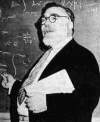
Born 26 Nov 1894; died 18 Mar 1964 at age 69. quotes
American mathematician who established the science of cybernetics, a term he coined, which is concerned with the common factors of control and communication in living organisms, automatic machines, and organizations. He attained international renown by formulating some of the most important contributions to mathematics in the 20th century. His work on generalised harmonic analysis and Tauberian theorems won the Bôcher Prize in 1933 when he received the prize from the American Mathematical Society for his memoir Tauberian theorems published in Annals of Mathematics in the previous year. His extraordinarily wide range of interests included stochastic processes, quantum theory and during WW II he worked on gunfire control.
American mathematician who established the science of cybernetics, a term he coined, which is concerned with the common factors of control and communication in living organisms, automatic machines, and organizations. He attained international renown by formulating some of the most important contributions to mathematics in the 20th century. His work on generalised harmonic analysis and Tauberian theorems won the Bôcher Prize in 1933 when he received the prize from the American Mathematical Society for his memoir Tauberian theorems published in Annals of Mathematics in the previous year. His extraordinarily wide range of interests included stochastic processes, quantum theory and during WW II he worked on gunfire control.
Cybernetics, by Norbert Wiener. - book suggestion.
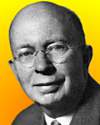
Born 26 Nov 1891; died 7 Jun 1982 at age 90. quotes
American physicist who began his career as a research physicst with Western Electric (which became Bell Laboratories in 1925). He later became a science writer there, which continued until his retirement. His prolific writings also included critical reviews, obituaries of scientists, encyclopedia entries and four science books. At the Lowell Institute, he gave a notable series of lectures in 1935. As a speaker, he could interpret physics with clarity whether to a gathering of scientist or to wider intellectual audiences in other communities. Four universities at different times between 1929 and 1942 invited him as a visiting professor. He was the nephew of Clarence Darrow, known as the brilliant defense lawyer at the Scopes Monkey Trial.«
American physicist who began his career as a research physicst with Western Electric (which became Bell Laboratories in 1925). He later became a science writer there, which continued until his retirement. His prolific writings also included critical reviews, obituaries of scientists, encyclopedia entries and four science books. At the Lowell Institute, he gave a notable series of lectures in 1935. As a speaker, he could interpret physics with clarity whether to a gathering of scientist or to wider intellectual audiences in other communities. Four universities at different times between 1929 and 1942 invited him as a visiting professor. He was the nephew of Clarence Darrow, known as the brilliant defense lawyer at the Scopes Monkey Trial.«
The Renaissance Of Physics, by Karl Kelchner Darrow. - book suggestion.

Born 26 Nov 1876; died 7 Oct 1950 at age 73.
American inventor who initiated modern air conditioning. In 1902 (a year after graduating with an M.E.), he designed his first system to control temperature and humidity in a Brooklyn printing plant. By 2 Jan 1906, he patented an “Apparatus for Treating Air,” the world's first spray type air conditioning equipment, (U.S. No. 808,897). His “Rational Psychrometric Formulae,” (1911) remain essential for air conditioning engineers. In 1915, he started the Carrier Engineering Corporation, to deal with temperature and humidity conditions in the industrial environment. Eventually the technology reached public buildings and then homes. He developed the first safe, low pressure centrifugal refrigeration machine using nontoxic, nonflammable refrigerant.«
American inventor who initiated modern air conditioning. In 1902 (a year after graduating with an M.E.), he designed his first system to control temperature and humidity in a Brooklyn printing plant. By 2 Jan 1906, he patented an “Apparatus for Treating Air,” the world's first spray type air conditioning equipment, (U.S. No. 808,897). His “Rational Psychrometric Formulae,” (1911) remain essential for air conditioning engineers. In 1915, he started the Carrier Engineering Corporation, to deal with temperature and humidity conditions in the industrial environment. Eventually the technology reached public buildings and then homes. He developed the first safe, low pressure centrifugal refrigeration machine using nontoxic, nonflammable refrigerant.«
Willis Haviland Carrier Father of Air Conditioning, by Margaret Ingels. - book suggestion.
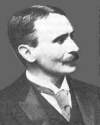
Born 26 Nov 1862; died 26 Oct 1943 at age 80.
Sir (Mark) Aurel Stein was an Hungarian-British archaeologist and geographer, born in Budapest, whose travels and research in central Asia, particularly in Chinese Turkistan, revealed much about its strategic role in history. In 1906, Stein uncovered a group of mummified corpses near Loulan, in Central Asia. Their well-preserved bodies were clad in woollen garments and they wore tall felt hats decorated with jaunty feathers. The men were bearded and their facial features seemed European. Stein dated them to c.100 BC. When the Dunhuang Caves, China, closed for centuries, were reopened, he discovered 15,000 manuscripts (1907), including the Diamond Sutra, reputed to be the first dated printed book (868 A.D.).
Sir (Mark) Aurel Stein was an Hungarian-British archaeologist and geographer, born in Budapest, whose travels and research in central Asia, particularly in Chinese Turkistan, revealed much about its strategic role in history. In 1906, Stein uncovered a group of mummified corpses near Loulan, in Central Asia. Their well-preserved bodies were clad in woollen garments and they wore tall felt hats decorated with jaunty feathers. The men were bearded and their facial features seemed European. Stein dated them to c.100 BC. When the Dunhuang Caves, China, closed for centuries, were reopened, he discovered 15,000 manuscripts (1907), including the Diamond Sutra, reputed to be the first dated printed book (868 A.D.).
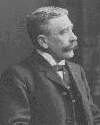
Born 26 Nov 1857; died 22 Feb 1913 at age 55.
Swiss linguist, born in Geneva, whose ideas on structure in language laid the foundation for much of the approach to and progress of the linguistic sciences in the 20th century. The work by which he is best known, the Cours de linguistique générale (1916, Course in General Linguistics) was compiled from the lecture notes of his students after his death. His focus on language as an 'underlying system' inspired a great deal of later semiology and structuralism, and he is often described as the founder of modern linguistics.
Swiss linguist, born in Geneva, whose ideas on structure in language laid the foundation for much of the approach to and progress of the linguistic sciences in the 20th century. The work by which he is best known, the Cours de linguistique générale (1916, Course in General Linguistics) was compiled from the lecture notes of his students after his death. His focus on language as an 'underlying system' inspired a great deal of later semiology and structuralism, and he is often described as the founder of modern linguistics.
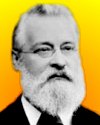
Born 26 Nov 1837; died 29 Jul 1898 at age 60. quotes
John Alexander Reina Newlands was an English chemist who first established an order of elements by the atomic weights, and observed a periodicity in the properties. Every eighth element has similar properties, hence he named the Law of Octaves (7 Feb 1863). It took another quarter century, and the work of others, such as Dmitry Mendeleev, for the significance of his discovery to be recognized.
John Alexander Reina Newlands was an English chemist who first established an order of elements by the atomic weights, and observed a periodicity in the properties. Every eighth element has similar properties, hence he named the Law of Octaves (7 Feb 1863). It took another quarter century, and the work of others, such as Dmitry Mendeleev, for the significance of his discovery to be recognized.
Born 26 Nov 1817; died 12 May 1884 at age 66. quotes
French chemist and educator noted for his research on organic nitrogen compounds, hydrocarbons, and glycols. In 1848, he studied a group of compounds related to ammonia called amines and showed they belonged to a type with a nitrogen nucleus. In ammonia a nitrogen atom was bound to three hydrogens, whereas in amines, organic radicals replaced one or more of these hydrogens.
French chemist and educator noted for his research on organic nitrogen compounds, hydrocarbons, and glycols. In 1848, he studied a group of compounds related to ammonia called amines and showed they belonged to a type with a nitrogen nucleus. In ammonia a nitrogen atom was bound to three hydrogens, whereas in amines, organic radicals replaced one or more of these hydrogens.
Born 26 Nov 1810; died 27 Dec 1900 at age 90. quotes
Baron of Cragside, William George Armstrong was an English inventor, engineer and industrialist in hydraulic engineering, shipbuilding and artillery. He invented a hydroelectric machine which produced frictional electricity (1843), a hydraulic crane (1846), a hydraulic accumulator to power machinery (1850), the Armstrong breech-loading gun made of successive rings of metal shrunk upon an inner steel barrel with rifle bore (1855), prototype of all modern artillery, and a breech-loading gun with wire-wound cylinder (1880). He founded Elswick Engineering Works (1847) which merged (1927) its armament and shipbuilding activities with Vickers' Sons and Co. to form Vickers Armstrong, Ltd. His mansion, Cragside, was the first British home lighted by hydroelectricity.«
Baron of Cragside, William George Armstrong was an English inventor, engineer and industrialist in hydraulic engineering, shipbuilding and artillery. He invented a hydroelectric machine which produced frictional electricity (1843), a hydraulic crane (1846), a hydraulic accumulator to power machinery (1850), the Armstrong breech-loading gun made of successive rings of metal shrunk upon an inner steel barrel with rifle bore (1855), prototype of all modern artillery, and a breech-loading gun with wire-wound cylinder (1880). He founded Elswick Engineering Works (1847) which merged (1927) its armament and shipbuilding activities with Vickers' Sons and Co. to form Vickers Armstrong, Ltd. His mansion, Cragside, was the first British home lighted by hydroelectricity.«
Arms and the State: Sir William Armstrong and the Remaking of British Naval Power, 1854-1914, by Marshall J. Bastable. - book suggestion.
Born 26 Nov 1754; died 12 Jan 1794 at age 39.
German explorer and scientist who helped to establish the literary travel book as a favoured genre in German literature. Forster sailed to the Pacific as a botanical collector with James Cook's second expedition to the Pacific 1772-75 on board the "Resolution". He then worked as an anthropologist, essayist, art critic, and travel writer in Germany, and finally participated in the French Revolution before dying in his Paris exile in 1794. He died before he was 40.
German explorer and scientist who helped to establish the literary travel book as a favoured genre in German literature. Forster sailed to the Pacific as a botanical collector with James Cook's second expedition to the Pacific 1772-75 on board the "Resolution". He then worked as an anthropologist, essayist, art critic, and travel writer in Germany, and finally participated in the French Revolution before dying in his Paris exile in 1794. He died before he was 40.

Died 26 Nov 2012 at age 93 (born 1 Apr 1919). quotes
American surgeon who shared (with E. Donnall Thomas) the Nobel Prize for Physiology or Medicine in 1990 for discoveries concerning “organ and cell transplantation in the treatment of human disease.” His work concerned how rejection following organ transplantation in man could be mastered. He first experienced tissue rejection when doing skin grafts as a plastic surgeon. In 1954, Murray was the first to successfully perform a human organ transplant. Richard Herrick, 23 years old, received a kidney from his homozygous twin brother. Also, Murray pioneered transplantation of kidneys obtained from deceased persons and showed that patients with terminal renal insufficiency could be cured. The field was then open for transplantation of other organs such as the liver, pancreas, heart or lungs.«
American surgeon who shared (with E. Donnall Thomas) the Nobel Prize for Physiology or Medicine in 1990 for discoveries concerning “organ and cell transplantation in the treatment of human disease.” His work concerned how rejection following organ transplantation in man could be mastered. He first experienced tissue rejection when doing skin grafts as a plastic surgeon. In 1954, Murray was the first to successfully perform a human organ transplant. Richard Herrick, 23 years old, received a kidney from his homozygous twin brother. Also, Murray pioneered transplantation of kidneys obtained from deceased persons and showed that patients with terminal renal insufficiency could be cured. The field was then open for transplantation of other organs such as the liver, pancreas, heart or lungs.«
Surgery of the Soul: Reflections on a Curious Career, by Joseph E. Murray. - book suggestion.
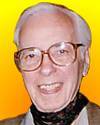
Died 26 Nov 1999 at age 94 (born 28 Jun 1905). quotes
British anthropologist who is noted for his works popularizing anthropology and science. By working out the embryology of the upper jaw, Montagu enabled surgeons to repair cleft palates. Montagu made contributions in a wide variety of fields, of which his analysis of the concept of race will remain his his most important legacy. The subject interested him from the 1930s and by 1942 he published Man's Most Dangerous Myth; The Fallacy of Race. In 1950, he was asked by UNESCO to frame their statement on race. His fifty books include The Elephant Man, which formed the basis of the play and movie of the same name. Other topics included social factors in crime, home birth and prenatal care, birth order, privacy, smaking and natural foods.«
British anthropologist who is noted for his works popularizing anthropology and science. By working out the embryology of the upper jaw, Montagu enabled surgeons to repair cleft palates. Montagu made contributions in a wide variety of fields, of which his analysis of the concept of race will remain his his most important legacy. The subject interested him from the 1930s and by 1942 he published Man's Most Dangerous Myth; The Fallacy of Race. In 1950, he was asked by UNESCO to frame their statement on race. His fifty books include The Elephant Man, which formed the basis of the play and movie of the same name. Other topics included social factors in crime, home birth and prenatal care, birth order, privacy, smaking and natural foods.«
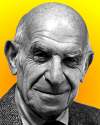
Died 26 Nov 1991 at age 80 (born 18 Mar 1911).
American biochemist who pioneered the use of radioactive and stable isotopes to trace chemical pathways by which the body creates its own materials, such as blood. He discovered the metabolic pathway by which the cell synthesizes heme (the red substance in haemoglobin), vitamin B-12 and related compounds. In 1946, with David Rittenberg, to investigate the path of glycine in the body, he ingested glycine labelled with atoms of the stable isotope nitrogen-15, and his blood was analyzed for products containing the tracer atoms. Hence they found glycine is used to synthesize the pyrrole rings of protoporphyrin. Further, he found that red blood cells had a lifespan of about 127 days, which led to understanding certain red blood cell diseases. He continued to study the mechanism of the intermediary metabolism of amino acids.«
American biochemist who pioneered the use of radioactive and stable isotopes to trace chemical pathways by which the body creates its own materials, such as blood. He discovered the metabolic pathway by which the cell synthesizes heme (the red substance in haemoglobin), vitamin B-12 and related compounds. In 1946, with David Rittenberg, to investigate the path of glycine in the body, he ingested glycine labelled with atoms of the stable isotope nitrogen-15, and his blood was analyzed for products containing the tracer atoms. Hence they found glycine is used to synthesize the pyrrole rings of protoporphyrin. Further, he found that red blood cells had a lifespan of about 127 days, which led to understanding certain red blood cell diseases. He continued to study the mechanism of the intermediary metabolism of amino acids.«
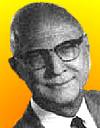
Died 26 Nov 1987 at age 90 (born 7 Mar 1897).
American psychologist and practitioner of psychophysics, the quantitative measurement of subjective psychological phenomena (such sensation, personality, attention). For example, he studied the relative affectiveness of colour, hue, brightness, and saturation for men and women. In the 1950s, Guilford created his three-factor structure of the intellect (SOI). In Guilford's Structure of Intellect theory (1959) any intellectual activity is viewed as comprising three separate factors: 1) Operations - the things an individual does (ex. remembering, thinking creatively). 2) Contents - things that the individual works with and performs his operations on, (ex. words, sounds, body language). 3) Products - the ways in which information is organized (ex. singly, in groups, generalized).
American psychologist and practitioner of psychophysics, the quantitative measurement of subjective psychological phenomena (such sensation, personality, attention). For example, he studied the relative affectiveness of colour, hue, brightness, and saturation for men and women. In the 1950s, Guilford created his three-factor structure of the intellect (SOI). In Guilford's Structure of Intellect theory (1959) any intellectual activity is viewed as comprising three separate factors: 1) Operations - the things an individual does (ex. remembering, thinking creatively). 2) Contents - things that the individual works with and performs his operations on, (ex. words, sounds, body language). 3) Products - the ways in which information is organized (ex. singly, in groups, generalized).
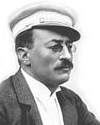
Died 26 Nov 1952 at age 87 (born 19 Feb 1865).
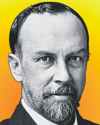
Swedish explorer and geographer who led through Central Asia a series of expeditions that resulted in important archaeological and geographical findings. During his first major Asian expedition, he crossed the Pamirs, charted Lop Nor (Lake) in China, and finally arrived at Beijing. He then journeyed to Tibet by way of Mongolia, Siberia, and the Gobi Desert. Hedin explored Tibet and Xinjiang (Sinkiang), identified the sources of the Brahmaputra, Indus, and Sutlej rivers, and, in 1906, explored and named the Trans-Himalayas. In 1927 Hedin led an expedition of Chinese and Swedish scientists into Central Asia. He wrote Through Asia (1898), The Conquest of Tibet (1935), My Life as an Explorer (1926), and other accounts of his travels.
Swedish explorer and geographer who led through Central Asia a series of expeditions that resulted in important archaeological and geographical findings. During his first major Asian expedition, he crossed the Pamirs, charted Lop Nor (Lake) in China, and finally arrived at Beijing. He then journeyed to Tibet by way of Mongolia, Siberia, and the Gobi Desert. Hedin explored Tibet and Xinjiang (Sinkiang), identified the sources of the Brahmaputra, Indus, and Sutlej rivers, and, in 1906, explored and named the Trans-Himalayas. In 1927 Hedin led an expedition of Chinese and Swedish scientists into Central Asia. He wrote Through Asia (1898), The Conquest of Tibet (1935), My Life as an Explorer (1926), and other accounts of his travels.
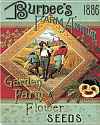
1886 cover
Washington Atlee Burpee was an American horticulturist who founded the world's largest mail-order seed company. He had a boyhood interest in selective breeding poultry, and a passion for research in the genetics of breeding, and he subsequently experimented with other livestock, dogs and plants. By age 18, in 1876, he founded his own Burpee company in Philadelphia, aided by his mother's loan of $1000 to starte up. His original line was primarily livestock to farmers, but he gravitated toward plant seeds as an easier product. In 1888, he bought a farm at Doylestown, Pennsylvania, for plant development. After 25 years in business, he had expanded into the largest, most progressive seed company in America. Much of his company's success resulted from his work in creating new hybrids and strains of flowers and vegetables. Luther Burbank was his cousin.«[Image right height compressed.]
Died 26 Nov 1896 at age 72 (born 27 Sep 1824).
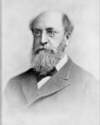
American astronomer whose star catalogs helped fix the list of constellations of the Southern Hemisphere Gould's early work was done in Germany, observating the motion of comets and asteroids. In 1861 undertook the enormous task of preparing for publication the records of astronomical observations made at the US Naval Observatory since 1850. But Gould's greatest work was his mapping of the stars of the southern skies, begun in 1870. The four-year endeavor involved the use of the recently developed photometric method, and upon the publication of its results in 1879 it was received as a signicant contribution to science. He was highly active in securing the establishment of the National Academy of Sciences.
American astronomer whose star catalogs helped fix the list of constellations of the Southern Hemisphere Gould's early work was done in Germany, observating the motion of comets and asteroids. In 1861 undertook the enormous task of preparing for publication the records of astronomical observations made at the US Naval Observatory since 1850. But Gould's greatest work was his mapping of the stars of the southern skies, begun in 1870. The four-year endeavor involved the use of the recently developed photometric method, and upon the publication of its results in 1879 it was received as a signicant contribution to science. He was highly active in securing the establishment of the National Academy of Sciences.
Died 26 Nov 1895 at age 51 (born 4 Sep 1844).
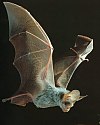
Irish zoologist, chiefly remembered for his laborious investigation into the structure and classification of the chiroptera and insectivora, on both of which he became the chief authority of his time." After graduating with medical training (1867) from Trinity College, Dublin, he rose to the rank of surgeon lieutenant colonel in the army. He also served in the Zulu war of 1879. He was awarded the gold medal of the Dublin Pathological Society for his essay on Diagnosis and Pathology of the Injuries and Diseases of the Shoulderblade. He contributed the sections for Insectivora, Chiroptera, and Rodentia, in the article Mammalia and the articles Mole, Shrew, and Vampire to the ninth edition of the Encyclopedia Britannica.[Image: example of a Chiroptera]
Irish zoologist, chiefly remembered for his laborious investigation into the structure and classification of the chiroptera and insectivora, on both of which he became the chief authority of his time." After graduating with medical training (1867) from Trinity College, Dublin, he rose to the rank of surgeon lieutenant colonel in the army. He also served in the Zulu war of 1879. He was awarded the gold medal of the Dublin Pathological Society for his essay on Diagnosis and Pathology of the Injuries and Diseases of the Shoulderblade. He contributed the sections for Insectivora, Chiroptera, and Rodentia, in the article Mammalia and the articles Mole, Shrew, and Vampire to the ninth edition of the Encyclopedia Britannica.[Image: example of a Chiroptera]
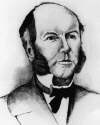
Died 26 Nov 1885 at age 71 (born 19 Dec 1813). quotes
Irish physical chemist who demonstrated the continuity of the gaseous and liquid states whereby during changes between the two states, physical properties display no abrupt changes. He discovered the critical temperature for carbon dioxide (1861), above which the gas cannot be liquefied by pressure alone. He wrote: We may yet live to see...such bodies as oxygen and hydrogen in the liquid, perhaps even in the solid state. He accurately measured heats of neutralisation, formation and reaction; and latent heats of evaporation. Andrews was the first to use a "bomb calorimeter" - a strong, sealed, metal vessel for measuring heat of combustion. He studied ozone, and proved that is an allotrope - or altered form - of oxygen.«
Irish physical chemist who demonstrated the continuity of the gaseous and liquid states whereby during changes between the two states, physical properties display no abrupt changes. He discovered the critical temperature for carbon dioxide (1861), above which the gas cannot be liquefied by pressure alone. He wrote: We may yet live to see...such bodies as oxygen and hydrogen in the liquid, perhaps even in the solid state. He accurately measured heats of neutralisation, formation and reaction; and latent heats of evaporation. Andrews was the first to use a "bomb calorimeter" - a strong, sealed, metal vessel for measuring heat of combustion. He studied ozone, and proved that is an allotrope - or altered form - of oxygen.«
The Scientific Papers of the Late Thomas Andrews, by Thomas Andrews. - book suggestion.
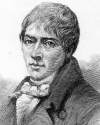
Died 26 Nov 1836 at age 80 (born 21 Sep 1756).
John Loudon McAdam was born in Ayr, Scotland, and was the inventor of of macadamized roads. He made his fortune in his uncle's counting-house. (New York City, 1770-83) then returned to England. McAdam developed new methods of road construction. In 1816, as surveyor to the Bristol Turnpike Trust, he re-made their roads with a raised carriageway to improve drainage. Stones were graded and laid in three levels, with the smallest stones crushed and laid as a top surface. This provided swifter and safer travel. Later he added tarmacadam ("tarmac", asphalt) to bind the top layer. His methods were adopted in many other countries. In 1827 he was made surveyor-general of metropolitan roads in Great Britain.[Image: engraving by Charles Turner]
John Loudon McAdam was born in Ayr, Scotland, and was the inventor of of macadamized roads. He made his fortune in his uncle's counting-house. (New York City, 1770-83) then returned to England. McAdam developed new methods of road construction. In 1816, as surveyor to the Bristol Turnpike Trust, he re-made their roads with a raised carriageway to improve drainage. Stones were graded and laid in three levels, with the smallest stones crushed and laid as a top surface. This provided swifter and safer travel. Later he added tarmacadam ("tarmac", asphalt) to bind the top layer. His methods were adopted in many other countries. In 1827 he was made surveyor-general of metropolitan roads in Great Britain.[Image: engraving by Charles Turner]

Died 26 Nov 1830 at age 50 (born 3 Jul 1780).
(Anglicized name: Andrew Parmentier) Belgian-American, André Joseph Ghislain Parmentier, born in Enghien, Belgium, was a horticulturist, responsible for exhibiting many plant species in America. He was the second of four sons of a linen merchant. Little is known about his early life. In 1824 Parmentier emigrated to America where he lived for only six years until his untimely death in 1830. Soon after arriving he established a nursery in Brooklyn from which he supplied seeds and root stock he had imported or propagated himself. In 1825, he established the first botanic garden in Brooklyn, at Atlantic and Carleton Avenues. His work is also preserved at the Vanderbilt Mansion, Hyde Park, NY, the most impressive of the four known Parmentier designs.
(Anglicized name: Andrew Parmentier) Belgian-American, André Joseph Ghislain Parmentier, born in Enghien, Belgium, was a horticulturist, responsible for exhibiting many plant species in America. He was the second of four sons of a linen merchant. Little is known about his early life. In 1824 Parmentier emigrated to America where he lived for only six years until his untimely death in 1830. Soon after arriving he established a nursery in Brooklyn from which he supplied seeds and root stock he had imported or propagated himself. In 1825, he established the first botanic garden in Brooklyn, at Atlantic and Carleton Avenues. His work is also preserved at the Vanderbilt Mansion, Hyde Park, NY, the most impressive of the four known Parmentier designs.
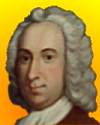
Died 26 Nov 1788 (born c. 1710). quotes
English naturalist who published Plantaeæ Favershamienses (1777) on the flora of Faversham, Kent. He also wrote about his fossil finds on his estate on the Isle of Sheppey (purchased in 1752), and nearby coastal cliffs of Kent, including chambered Nautilus varying in size “from that of a hazelnut to that of a Man's Head,” crabs, turtle, petrified fruits and vegetables. In 1750, he discovered the acelabultim, a vertebra and a 4-ft thigh bone sticking in the clay on the Minster cliffs, which he thought were remains of an Elephas (elephant). Until his explorations there, little was known of interest to the antiquarian, naturalist, geologist and zoologist. He believed the great variety of remains of very different climates to be proof of “an universal deluge.”« more
English naturalist who published Plantaeæ Favershamienses (1777) on the flora of Faversham, Kent. He also wrote about his fossil finds on his estate on the Isle of Sheppey (purchased in 1752), and nearby coastal cliffs of Kent, including chambered Nautilus varying in size “from that of a hazelnut to that of a Man's Head,” crabs, turtle, petrified fruits and vegetables. In 1750, he discovered the acelabultim, a vertebra and a 4-ft thigh bone sticking in the clay on the Minster cliffs, which he thought were remains of an Elephas (elephant). Until his explorations there, little was known of interest to the antiquarian, naturalist, geologist and zoologist. He believed the great variety of remains of very different climates to be proof of “an universal deluge.”« more
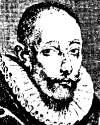
Died c. 26 Nov 1623 (born c. 1550).
Portuguese physician and philosopher who espoused a "constructive skepticism" that rejected mathematical truths as unreal and Aristotle's theory of knowledge as false. In Quod nihil scitur, written in 1576, explored the human epistemological situation and showed that man's knowledge claims in all areas were extremely dubious. Sanches advocated recognizing that nothing can be known and then trying to gain what limited information one can through empirical scientific means.
Portuguese physician and philosopher who espoused a "constructive skepticism" that rejected mathematical truths as unreal and Aristotle's theory of knowledge as false. In Quod nihil scitur, written in 1576, explored the human epistemological situation and showed that man's knowledge claims in all areas were extremely dubious. Sanches advocated recognizing that nothing can be known and then trying to gain what limited information one can through empirical scientific means.
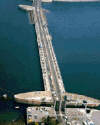
In 1966, President Charles de Gaulle opened the world's first tidal power station at Rance estuary, in Brittany. La Rance is the most powerful tidal power plant in the world. With its width of 700 metres, it blocks La Rance estuary situated near Saint-Malo (Côtes d'Armor). The operation of the dam is similar to that of run-of-river power plants since its head is also low and there is a substantial flow rate. At high and low tide, the water builds up rapidly on one of the sides of the dam. When the difference in level is sufficient, the gates are opened and the water rushes into the dam. The turbines are reversible so as to be able to operate regardless of the direction of water flow. Each year, the power plant generates 500 million kWh.

In 1965, 14:47 GMT, France launched its first satellite, Astrix-1 onboard a Diamant rocket from Hammaguir, Algeria, becoming the third country in space (after the USSR Sputnik on 4 Oct 1957), and the U.S. Explorer-I on 31 Jan 1958). With a 42-kg payload, the French launch was a test of the Diamant launching vehicle for the first time. Before it lost the colony, the French conducted nuclear, missile, and space launch tests from the Hammaguir site in the Sahara desert near the Moroccan border. The fourth nation to put a satellite in orbit was Japan (Osumi 5, 11 Feb 1970) followed by China (China 1, 24 Apr1970) and the U.K. (Prospero, 28 Oct 1972)
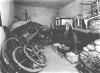
In 1922, archaeologist Howard Carter pierced the second of two doorways closing the tomb of King Tutankamun. Carter made archaeological history by unearthing the first Egyptian pharaonic tomb that still contained most of its treasures. Carter recorded in his notes, "...we made a tiny breach in the top left hand corner to see what was beyond." On this day, Carter and his backer Lord Carnarvon saw the Antechamber through this hole, where "...the interior of the chamber gradually loomed before one, with its strange and wonderful medley of extraordinary and beautiful objects heaped upon one another." The antechamber was entered the next day.[Image: view of the antechamber with objects in situ.]
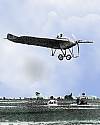
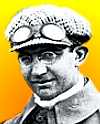
Weymann

In 1885, the first meteor trail was photographed in Prague, Czechoslovakia. This was part of the Andromedid meteor shower also known as the Bielids because they were caused by Comet Biela. William F. Denning (Bristol, England) noted the activity with rates averaging 100 per hour. On the next evening, 27 Nov, he declared "meteors were falling so thickly as the night advanced that it became almost impossible to enumerate them." Observers with especially clear skies had rates of about one meteor/second or 3600/hour. Meteor showers are produced by small fragments of cosmic debris entering the earth's atmosphere at extremely high speed. The debris originates from the intersection between a planet's orbit and a comet's orbit.[Image: clipart of a shooting star]
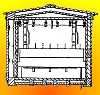
(USPTO)
In 1867, the first U.S. patent for a refrigerated railroad car was issued to J.B. Sutherland of Detroit, Michigan (No. 71,423). This described an insulated car with double walls, double roof and double floor with the space between filled with sawdust, felt or other suitable material. Ice chambers at each end of the chamber would carry about 800 pounds of ice. Hanging flaps were designed to maintain air circulation such that warmer air moving upward would then flow through the ice chamber, and thus cooled, be returned to the body of the car. Iron pipes mounted under the roof were installed for hooks carrying meat, or other edibles. Matting was positioned between the inner sliding door and outer door to keep the car as air-tight as possible.
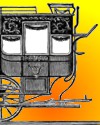
In 1832, the first horse drawn American street car in the U.S. began public operation in New York City. Named the John Mason (after its owner, a prominent New York banker) it was equipped with iron wheels and drawn over iron rails laid in the center of the road along 4th Avenue from Prince St to 14th St. Thirty passengers were carried in three non-connecting compartments with 10 seats in each. The fare was 12-1/2 cents. An earlier trip was made 14 Nov 1832 to show the street car to municipal officials carried onboard. (The John Mason was the first horse-drawn streetcar, although horses had been used at an earlier date to pull trains on railroad track lines.) The line prospered, encouraging franchises in other cities.[Image: San Diego horse car from 1886 during a 1911 parade] more
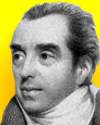
In 1801, Charles Hatchett announced to the Royal Society in London that he had discovered a new element, which he named columbium (Cb). In 1801, while working for the British Museum in London he analyzed a piece of columbite, a black mineral from New England, found by JohnWinthrop (1606-1676), the first governor of Connecticut, a mineral collector. His grandson sent the specimen decades before to Sir Hans Sloane, who gave it to the museum. Columbite turned out to be a very complex mineral but Hachett discovered that it contained a “new earth” which implied the existence of a new element which he could detect, but not isolate. Rediscovered 40 years by German chemist, Heinrich Rose, it is now called niobium.«
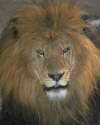
In 1716, the first lion to be seen in America, tamed for exhibition, was exhibited by Captain Arthur Savage at his house in Brattle Street, Boston, Mass. This lion was first advertised for show in The Boston News Letter on 31 Mar 1718, as follows: "All persons having the Curiosity of seeing the noble and Royal Beast the Lyon, never one before in America, may see him at the House of Capt. Arthur Savage near Mr. Colman's Church, Boston." This representative of the "dark continent" was moved in 1720 to the home of Martha Adams. Her newspaper advertisement welcomed anyone at any time, and a sign on her house read "The King of Beasts is to be seen here." In 1726, the lion was shown in the West Indies, in 1727 it was at Philadelphia, Penn., in 1728 it was seen in New York, New Jersey and was last recorded as being in New London, Conn.
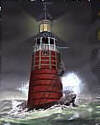
In 1703, during the "Great Storm" more than 8,000 people perished and the first Eddystone lighthouse was totally destroyed; among the dead was its designer, Henry Winstanley. He was a a London merchant, who had lost two of his ships on the Eddystone Reef, 14 miles south of Plymouth, England, site of many other shipwrecks. In 1696, work began on a rather strange wooden structure. Although unlike today's lighthouses, it was a major achievement for its day. It was first lit on 14 Nov 1698. After additional modification and strengthening, Winstanley was so confident that he said he wished to be present during "the greatest storm there ever was.". His wish came true, for Winstanley was killed sleeping inside it, during the 1703 storm.[Image: from 1989 British stamp]




