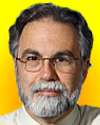
Born 1 Jul 1956. quotes
Gregg Leonard Semenza is an American biochemist, geneticist and oncologist who shared the 2019 Nobel Prize in Physiology or Medicine with William G. Kaelin Jr. and Peter J. Ratcliffe, for their work on how cells sense and adapt to oxygen availability. Semenza made the ground-breaking discovery of the HIF-1 (hypoxia-inducible factor 1), a protein, which controls genes in response to changes in oxygen availability, and adjust how much oxygen is received by cells. This line of investigation has far-reaching implications in the treatment of various diseases, including cancer, heart attacks, anemia and strokes. For example, further study can be made to examine if cancer cells are seeking oxygen when they spread into surrounding tissues and the bloodstream which carries them around the body.«
Gregg Leonard Semenza is an American biochemist, geneticist and oncologist who shared the 2019 Nobel Prize in Physiology or Medicine with William G. Kaelin Jr. and Peter J. Ratcliffe, for their work on how cells sense and adapt to oxygen availability. Semenza made the ground-breaking discovery of the HIF-1 (hypoxia-inducible factor 1), a protein, which controls genes in response to changes in oxygen availability, and adjust how much oxygen is received by cells. This line of investigation has far-reaching implications in the treatment of various diseases, including cancer, heart attacks, anemia and strokes. For example, further study can be made to examine if cancer cells are seeking oxygen when they spread into surrounding tissues and the bloodstream which carries them around the body.«
Transcription Factors and Human Disease, by Gregg L. Semenza. - book suggestion.

Born 1 Jul 1941.
Alfred Goodman Gilman is an American pharmacologist who shared the 1994 Nobel Prize for Physiology or Medicine with American biochemist Martin Rodbell for their separate research in discovering molecules called G proteins, which are intermediaries in the multistep pathway cells use to react to an incoming signal, such as a hormone or neurotransmitter. Gilman and his co-workers used genetic and biochemical techniques to identify and purify the G protein.
Alfred Goodman Gilman is an American pharmacologist who shared the 1994 Nobel Prize for Physiology or Medicine with American biochemist Martin Rodbell for their separate research in discovering molecules called G proteins, which are intermediaries in the multistep pathway cells use to react to an incoming signal, such as a hormone or neurotransmitter. Gilman and his co-workers used genetic and biochemical techniques to identify and purify the G protein.
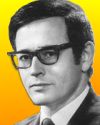
Born 1 Jul 1929. quotes
American biochemist whose contributions in elucidating the chemical structure of antibodies won him (with Rodney Porter) the Nobel Prize for Medicine or Physiology in 1972. Edelman studied the structure of human immunoglobulin. He first split this large molecule into smaller portions, by reducing and splitting the disulfide bonds. Edelman proposed that the molecule contained two kinds of polypeptide chains: light and heavy. From such studies, Porter proposed a structure for the antibody immunoglobulin G (IgG) in 1962. Edelman aimed to work out the complete amino-acid sequence of IgG. As it contained 1330 amino acids it was by far the largest protein then attempted. By 1969 he announced the complete sequence.
American biochemist whose contributions in elucidating the chemical structure of antibodies won him (with Rodney Porter) the Nobel Prize for Medicine or Physiology in 1972. Edelman studied the structure of human immunoglobulin. He first split this large molecule into smaller portions, by reducing and splitting the disulfide bonds. Edelman proposed that the molecule contained two kinds of polypeptide chains: light and heavy. From such studies, Porter proposed a structure for the antibody immunoglobulin G (IgG) in 1962. Edelman aimed to work out the complete amino-acid sequence of IgG. As it contained 1330 amino acids it was by far the largest protein then attempted. By 1969 he announced the complete sequence.
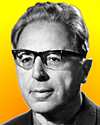
Born 1 Jul 1916; died 3 Mar 1985 at age 68.
Iosif Samuilovich Shklovskii was a Soviet astrophysicist who identified the continuum radiation of the Crab Nebula as synchrotron radiation, and he linked x-ray stars to binary systems containing a neutron star. His investigation of the corona of the sun showed it had a temperature of the order of a million kelvin, and that magnetic fields act to confine it. He applied radio astronomy to study supernovae. Mass extinctions on earth, he suggested, may have resulted from the cosmic rays ejected from past supernovae happening at relatively close range to our solar sytem. He was awarded the 1972 Bruce Medal. Shklovskii was one of the earliest well-respected astrophysicists to regard the possibility of extraterrestrial life as worthy of consideration. His popular books include Intelligent Life in the Universe (English translation by Carl Sagan).«
Iosif Samuilovich Shklovskii was a Soviet astrophysicist who identified the continuum radiation of the Crab Nebula as synchrotron radiation, and he linked x-ray stars to binary systems containing a neutron star. His investigation of the corona of the sun showed it had a temperature of the order of a million kelvin, and that magnetic fields act to confine it. He applied radio astronomy to study supernovae. Mass extinctions on earth, he suggested, may have resulted from the cosmic rays ejected from past supernovae happening at relatively close range to our solar sytem. He was awarded the 1972 Bruce Medal. Shklovskii was one of the earliest well-respected astrophysicists to regard the possibility of extraterrestrial life as worthy of consideration. His popular books include Intelligent Life in the Universe (English translation by Carl Sagan).«
Five Billion Vodka Bottles to the Moon: Tales of a Soviet Scientist, by Iosif Shklovsky. - book suggestion.
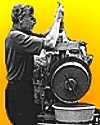
Born 1 Jul 1907; died 29 Mar 1997 at age 89. quotes
British biochemist and virologist who collaborated with Frederick Bawden to demonstrate that the genetic material found in viruses is RNA. Together they obtained about a dozen viruses, or strains of viruses, in semi-crystalline or even crystalline form, including tobacco mosaic virus (TMV). Pirie demonstrated that the preparations contained small amounts of phosphorus and showed conclusively that all contained ribonucleic acid (RNA). This contradicted the early views of Wendell Stanley (a later Nobel laureate), who believed viruses consisted entirely of protein. Bawden and Pirie realized that RNA might be the infective component of viruses; but they were unable to confirm this experimentally, and it was left until 1956 for others to establish.
British biochemist and virologist who collaborated with Frederick Bawden to demonstrate that the genetic material found in viruses is RNA. Together they obtained about a dozen viruses, or strains of viruses, in semi-crystalline or even crystalline form, including tobacco mosaic virus (TMV). Pirie demonstrated that the preparations contained small amounts of phosphorus and showed conclusively that all contained ribonucleic acid (RNA). This contradicted the early views of Wendell Stanley (a later Nobel laureate), who believed viruses consisted entirely of protein. Bawden and Pirie realized that RNA might be the infective component of viruses; but they were unable to confirm this experimentally, and it was left until 1956 for others to establish.
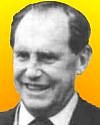
Born 1 Jul 1906; died 29 Nov 1992 at age 86. quotes
French mathematician and educator known for his writings on abstract algebra, functional analysis, topology, and his theory of Lie groups. Dieudonné was one of the two main contributors to the Bourbaki series of texts. He began his mathematical career working on the analysis of polynomials. He worked in a wide variety of mathematical areas including general topology, topological vector spaces, algebraic geometry, invariant theory and the classical groups.
French mathematician and educator known for his writings on abstract algebra, functional analysis, topology, and his theory of Lie groups. Dieudonné was one of the two main contributors to the Bourbaki series of texts. He began his mathematical career working on the analysis of polynomials. He worked in a wide variety of mathematical areas including general topology, topological vector spaces, algebraic geometry, invariant theory and the classical groups.
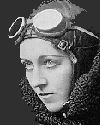
Born 1 Jul 1903; died 5 Jan 1941 at age 37.
Pioneering British female aviator who first achieved fame as a result of her attempt (1930) to set a record for solo flight from London to Darwin, Australia, although she missed that record by three days. She took up flying in 1928, and also showed talent for mechanics. By 1930 she had qualified as both a pilot and a ground engineer. Flying a De Havilland Moth, Johnson set out to beat Bert Hinkler's record for flying to Australia. Though she did not beat the record, she made it to Australia, and was given a hero's welcome. She was the first woman to make the trip. The Daily Mail gave her a £10,000 prize. Johnson made other long-distance flights. While on a flying mission for the Air Ministry, 5 Jan 1941, she disappeared over the Thames estuary.
Pioneering British female aviator who first achieved fame as a result of her attempt (1930) to set a record for solo flight from London to Darwin, Australia, although she missed that record by three days. She took up flying in 1928, and also showed talent for mechanics. By 1930 she had qualified as both a pilot and a ground engineer. Flying a De Havilland Moth, Johnson set out to beat Bert Hinkler's record for flying to Australia. Though she did not beat the record, she made it to Australia, and was given a hero's welcome. She was the first woman to make the trip. The Daily Mail gave her a £10,000 prize. Johnson made other long-distance flights. While on a flying mission for the Air Ministry, 5 Jan 1941, she disappeared over the Thames estuary.
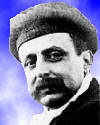
Born 1 Jul 1872; died 2 Aug 1936 at age 64.
French aviator who made the world's first over-the-ocean flight in a heavier-than-air craft. As a successful inventor of automobile lights and accessories, he had his own funds available to turn his interest in aviation. After experimenting with gliders and light-engine airplanes of various designs, on 25 Jul 1909 he flew across the English Channel from Calais to Dover, piloting his Blériot XI, a monoplane with a 28-h.p. engine in 37 minutes. This was the world's first international overseas airplane flight Blériot made the historic crossing after Lord Northcliffe, the owner of the Daily Mail, offered £1,000 to the first successful pilot.
French aviator who made the world's first over-the-ocean flight in a heavier-than-air craft. As a successful inventor of automobile lights and accessories, he had his own funds available to turn his interest in aviation. After experimenting with gliders and light-engine airplanes of various designs, on 25 Jul 1909 he flew across the English Channel from Calais to Dover, piloting his Blériot XI, a monoplane with a 28-h.p. engine in 37 minutes. This was the world's first international overseas airplane flight Blériot made the historic crossing after Lord Northcliffe, the owner of the Daily Mail, offered £1,000 to the first successful pilot.
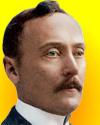
Born 1 Jul 1872; died 4 Nov 1917 at age 45.
English electrical engineer who invented the sensitive moving coil oscillograph able to photographically record a light spot tracing the oscillations of an electrical voltage, and other electrical instruments. He devised what may be regarded as the first electric musical instrument, the Singing Arc (1899), based on the sounds emitted by an electric carbon arc lamp when its supply voltage was varied. It was an outcome of his investigation to solve the problem of the undesirable humming or whining noises generated by carbon arc street lighting. This research discovered an associated principle of negative resistance. The audio frequencies were generated by switching suitable resonant circuits to the arc. Duddell died aged only 45 years old.« more
English electrical engineer who invented the sensitive moving coil oscillograph able to photographically record a light spot tracing the oscillations of an electrical voltage, and other electrical instruments. He devised what may be regarded as the first electric musical instrument, the Singing Arc (1899), based on the sounds emitted by an electric carbon arc lamp when its supply voltage was varied. It was an outcome of his investigation to solve the problem of the undesirable humming or whining noises generated by carbon arc street lighting. This research discovered an associated principle of negative resistance. The audio frequencies were generated by switching suitable resonant circuits to the arc. Duddell died aged only 45 years old.« more
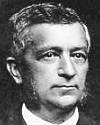
Born 1 Jul 1818; died 22 Nov 1884 at age 66.
German physician and professor of medicine who invented the sphygmograph (1854), the first instrument to trace a human pulse by a non-invasive measurement of blood pressure. His method of using weights and a mechanical balance was crude, but did establish the principle that blood pressure could be measured by finding the counter pressure needed to balance the arterial pulsation. In 1852, he developed a technical method by which blood cells could be counted (though too tedious to gain widespread use). Vierordt also devised the hemotachometer to monitor the speed of blood flow. He made spectrographic analyses of haemoglobin solutions, bile, and urine and also studied respiration and sound conduction.« more
German physician and professor of medicine who invented the sphygmograph (1854), the first instrument to trace a human pulse by a non-invasive measurement of blood pressure. His method of using weights and a mechanical balance was crude, but did establish the principle that blood pressure could be measured by finding the counter pressure needed to balance the arterial pulsation. In 1852, he developed a technical method by which blood cells could be counted (though too tedious to gain widespread use). Vierordt also devised the hemotachometer to monitor the speed of blood flow. He made spectrographic analyses of haemoglobin solutions, bile, and urine and also studied respiration and sound conduction.« more
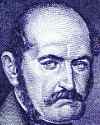
Born 1 Jul 1818; died 13 Aug 1865 at age 47. quotes
Ignaz Philipp Semmelweis was a German physician who discovered the cause of puerperal (“child bed”) fever and introduced antisepsis into medical practice by insisting on health workers rigorously handwashing between patients, and clean bed sheets. While originally a student of law, he attended an anatomy lecture with a friend, resulting in Semmelweis changing his career. He observed that puerperal fever killed as many as 3 out of 10 of the offspring of mothers who gave birth in hospitals, yet it was rare among mothers who delivered at home. Against the prejudice of other doctors, Semmelweis proposed they were themselves transmitting the disease. Semmelweis insisted that those working under him wash their hands in strong chemicals between patient examinations, with the result that deaths from fever were significantly reduced.[Also known as Ignác Fülöp Semmelweis]] more
Ignaz Philipp Semmelweis was a German physician who discovered the cause of puerperal (“child bed”) fever and introduced antisepsis into medical practice by insisting on health workers rigorously handwashing between patients, and clean bed sheets. While originally a student of law, he attended an anatomy lecture with a friend, resulting in Semmelweis changing his career. He observed that puerperal fever killed as many as 3 out of 10 of the offspring of mothers who gave birth in hospitals, yet it was rare among mothers who delivered at home. Against the prejudice of other doctors, Semmelweis proposed they were themselves transmitting the disease. Semmelweis insisted that those working under him wash their hands in strong chemicals between patient examinations, with the result that deaths from fever were significantly reduced.[Also known as Ignác Fülöp Semmelweis]] more
The Doctors' Plague: Germs, Childbed Fever, and the Strange Story of Ignac Semmelweis, by Sherwin B. Nuland. - book suggestion.
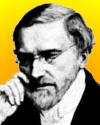
Born 1 Jul 1788; died 22 Dec 1867 at age 79. quotes
French mathematician and engineer whose study of the pole and polar lines associated with conic led to the principle of duality. While serving as an engineer in Napoleon's 1812 Russian campaign, he was left for dead at Krasnoy, but then captured. During his imprisonment he studied projective geometry and wrote a treatise on analytic geometry. Released in 1814, he returned to France, and in 1822 published Traité des propriétés projectives des figures in which he presented his fundamental ideas of projective geometry such as the cross-ratio, perspective, involution and the circular points at infinity. As a professor of mechanics (1825-35), he applied mechanics to improve waterwheels and was able to double their efficiency.«
French mathematician and engineer whose study of the pole and polar lines associated with conic led to the principle of duality. While serving as an engineer in Napoleon's 1812 Russian campaign, he was left for dead at Krasnoy, but then captured. During his imprisonment he studied projective geometry and wrote a treatise on analytic geometry. Released in 1814, he returned to France, and in 1822 published Traité des propriétés projectives des figures in which he presented his fundamental ideas of projective geometry such as the cross-ratio, perspective, involution and the circular points at infinity. As a professor of mechanics (1825-35), he applied mechanics to improve waterwheels and was able to double their efficiency.«
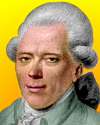
Born 1 Jul 1742; died 24 Feb 1799 at age 56. quotes
German physicist and satirical writer, best known for his aphorisms and his ridicule of metaphysical and romantic excesses. At Göttingen University, Lichtenberg did research in a wide variety of fields, including geophysics, volcanology, meteorology, chemistry, astronomy, and mathematics. His most important were his investigations into physics. Notably, he constructed a huge electrophorus and, in the course of experimentations, discovered in 1777 the basic principle of modern xerographic copying; the images that he reproduced are still called “Lichtenberg figures.” These are radial patterns formed when sharp, pointed conducting bodies at high voltage get near enough to insulators to discharge electrically, or seen on persons struck by lightning.
German physicist and satirical writer, best known for his aphorisms and his ridicule of metaphysical and romantic excesses. At Göttingen University, Lichtenberg did research in a wide variety of fields, including geophysics, volcanology, meteorology, chemistry, astronomy, and mathematics. His most important were his investigations into physics. Notably, he constructed a huge electrophorus and, in the course of experimentations, discovered in 1777 the basic principle of modern xerographic copying; the images that he reproduced are still called “Lichtenberg figures.” These are radial patterns formed when sharp, pointed conducting bodies at high voltage get near enough to insulators to discharge electrically, or seen on persons struck by lightning.
Born 1 Jul 1740; died 12 Oct 1825 at age 85.
Austrian mineralogist.
Austrian mineralogist.
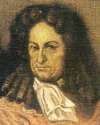
Born 1 Jul 1646; died 14 Nov 1716 at age 70. quotes
German philosopher, mathematician and political adviser, important both as a metaphysician and as a logician, and also distinguished for his independent invention of the differential and integral calculus. Through meeting with such scholars as Christiaan Huygens in Paris and with members of the Royal Society, including Robert Boyle, during two trips to London in 1673 and 1676, Leibniz was introduced to the outstanding problems challenging the mathematicians and physicists of Europe. Leibniz's independently discovered differential and integral calculus (published 1684), but became involved in a bitter priority dispute with Isaac Newton, whose ideas on the calculus were developed earlier (1665), but published later (1687).
German philosopher, mathematician and political adviser, important both as a metaphysician and as a logician, and also distinguished for his independent invention of the differential and integral calculus. Through meeting with such scholars as Christiaan Huygens in Paris and with members of the Royal Society, including Robert Boyle, during two trips to London in 1673 and 1676, Leibniz was introduced to the outstanding problems challenging the mathematicians and physicists of Europe. Leibniz's independently discovered differential and integral calculus (published 1684), but became involved in a bitter priority dispute with Isaac Newton, whose ideas on the calculus were developed earlier (1665), but published later (1687).
The Early Mathematical Manuscripts Of Leibniz, by Gottfried Wilhelm Leibniz. - book suggestion.

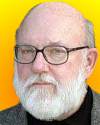
Died 1 Jul 2004 at age 62 (born 1 Jan 1942).
American biomedical physicist who helped create (1974) the PET Scanner (Positron Emission Tomography), which is used to detect cancers and other diseases. Michael E Phelps and others share credit for this invention. A patient is prepared for a PET scan with an injection of slightly radioactive material, typically tagging molecules that behave like glucose within the body. Since cancerous tissues consume glucose, the scanner can then detect their location. PET technology can also be employed in the diagnosis of cardiovascular disease and Alzheimer's disease. Hoffman further developed the PET Scanner for use in making quantitative measurements. He became internationally known in the field of medical imaging. By the time he died in 2004, some 1,500 scanners were in use as a powerful diagnostic tool for saving or extending lives.«
American biomedical physicist who helped create (1974) the PET Scanner (Positron Emission Tomography), which is used to detect cancers and other diseases. Michael E Phelps and others share credit for this invention. A patient is prepared for a PET scan with an injection of slightly radioactive material, typically tagging molecules that behave like glucose within the body. Since cancerous tissues consume glucose, the scanner can then detect their location. PET technology can also be employed in the diagnosis of cardiovascular disease and Alzheimer's disease. Hoffman further developed the PET Scanner for use in making quantitative measurements. He became internationally known in the field of medical imaging. By the time he died in 2004, some 1,500 scanners were in use as a powerful diagnostic tool for saving or extending lives.«
Basics of PET Imaging: Physics, Chemistry, and Regulations, by Gopal B. Saha. - book suggestion.
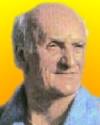
Died 1 Jul 1999 (born 1904).
American candy manufacturer who led Mars Inc., one of the world's largest confectionery companies. After helping to develop the Milky Way bar for his father's candy-making business, he established his own company in Europe in the 1930s, successfully marketing a version of Milky Way called the Mars Bar; he went on to create M&Ms. When he merged his confectionery firm with father's (1964), it became the world's largest candy manufacturer. Details of Mars' life, including his birthday, are a closely guarded corporate secret within Mars Inc., a secretive company.
American candy manufacturer who led Mars Inc., one of the world's largest confectionery companies. After helping to develop the Milky Way bar for his father's candy-making business, he established his own company in Europe in the 1930s, successfully marketing a version of Milky Way called the Mars Bar; he went on to create M&Ms. When he merged his confectionery firm with father's (1964), it became the world's largest candy manufacturer. Details of Mars' life, including his birthday, are a closely guarded corporate secret within Mars Inc., a secretive company.
The Emperors of Chocolate: Inside the Secret World of Hershey and Mars, by Joël Glenn Brenner. - book suggestion.
(EB)
Died 1 Jul 1983 at age 87 (born 12 Jul 1895). quotes
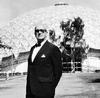
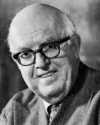
Richard Buckminster Fuller was an American inventor, educator, author, philosopher, engineer and architect who developed the geodesic dome. This large dome can be set directly on the ground as a complete structure. There is no limit to the size to which it may be built and retain sufficient structural strength. Fuller also invented a wide range of other paradigm-shifting machines and structural systems. He was especially interested in high-strength-to-weight designs, with a maximum of utility for minimum of material. His designs and engineering philosophy are part of the foundation of contemporary high-tech design aesthetics. He held over 2000 patents.Photo: R. Buckminster Fuller shown with a geodesic dome constructed as the U.S. pavilion at the American Exhange Exhibition, 1959.
Richard Buckminster Fuller was an American inventor, educator, author, philosopher, engineer and architect who developed the geodesic dome. This large dome can be set directly on the ground as a complete structure. There is no limit to the size to which it may be built and retain sufficient structural strength. Fuller also invented a wide range of other paradigm-shifting machines and structural systems. He was especially interested in high-strength-to-weight designs, with a maximum of utility for minimum of material. His designs and engineering philosophy are part of the foundation of contemporary high-tech design aesthetics. He held over 2000 patents.Photo: R. Buckminster Fuller shown with a geodesic dome constructed as the U.S. pavilion at the American Exhange Exhibition, 1959.
(EB)
Died 1 Jul 1980 at age 74 (born 15 Oct 1905). quotes
Baron Charles Percy Snow was an English physicist, novelist and government administrator who had an active, varied career. In his controversial 1959 Rede Lecture called The Two Cultures and the Scientific Revolution, he claimed there were two cultures—the literary intellectuals and the scientists—who didn't understand each other and didn't trust each other. The split was not new; Snow noted that in the 1930s, literary theorists had begun to use the word “intellectual” to refer only to themselves. He illustrated this gap by asking a group of literary intellectuals to tell him about the Second Law of Thermodynamics, which he called the scientific equivalent of “Have you read a work of Shakespeare?” Since then, debate about this polarization has continued.
Baron Charles Percy Snow was an English physicist, novelist and government administrator who had an active, varied career. In his controversial 1959 Rede Lecture called The Two Cultures and the Scientific Revolution, he claimed there were two cultures—the literary intellectuals and the scientists—who didn't understand each other and didn't trust each other. The split was not new; Snow noted that in the 1930s, literary theorists had begun to use the word “intellectual” to refer only to themselves. He illustrated this gap by asking a group of literary intellectuals to tell him about the Second Law of Thermodynamics, which he called the scientific equivalent of “Have you read a work of Shakespeare?” Since then, debate about this polarization has continued.
Died 1 Jul 1973 at age 78 (born 11 Jan 1895).
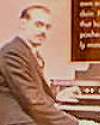
American businessman and inventor who developed the electronic Hammond organ (patented 24 Apr 1934). Fascinated by science, Hammond patented his first invention, an automobile transmission, while barely a teenager. In 1909, he sold his idea for an inexpensive yet sensitive barometer, and in 1920, he sold his design for a “tickless” clock. In 1933, he stripped an old piano leaving only the keyboard action to use as a controller. He experimented with various different ways of generating sound until he found the one that sounded best - the tonewheel generator, with which he founded the Hammond Organ Company. During WW II, Laurens helped design guided missile controls with patents for bomb guidance.
American businessman and inventor who developed the electronic Hammond organ (patented 24 Apr 1934). Fascinated by science, Hammond patented his first invention, an automobile transmission, while barely a teenager. In 1909, he sold his idea for an inexpensive yet sensitive barometer, and in 1920, he sold his design for a “tickless” clock. In 1933, he stripped an old piano leaving only the keyboard action to use as a controller. He experimented with various different ways of generating sound until he found the one that sounded best - the tonewheel generator, with which he founded the Hammond Organ Company. During WW II, Laurens helped design guided missile controls with patents for bomb guidance.
Died 1 Jul 1971 at age 81 (born 31 Mar 1890). quotes
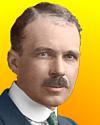
William Lawrence Bragg was an Australian-English physicist and X-ray crystallographer who at the early age of 25, shared the Nobel Prize for Physics in 1915 (with his father, Sir William Bragg). Lawrence Bragg formulated the Bragg law of X-ray diffraction, which is fundamental for the determination of crystal structure: nλ = 2dsinθ which relates the wavelength of x-rays, λ, the angle of incidence on a crystal, θ, and the spacing of crystal planes, d, for x-ray diffraction, where n is an integer (1, 2, 3, etc.). Together, the Braggs worked out the crystal structures of a number of substances. Early in this work, they showed that sodium chloride does not have individual molecules in the solid, but is an array of sodium and chloride ions.
William Lawrence Bragg was an Australian-English physicist and X-ray crystallographer who at the early age of 25, shared the Nobel Prize for Physics in 1915 (with his father, Sir William Bragg). Lawrence Bragg formulated the Bragg law of X-ray diffraction, which is fundamental for the determination of crystal structure: nλ = 2dsinθ which relates the wavelength of x-rays, λ, the angle of incidence on a crystal, θ, and the spacing of crystal planes, d, for x-ray diffraction, where n is an integer (1, 2, 3, etc.). Together, the Braggs worked out the crystal structures of a number of substances. Early in this work, they showed that sodium chloride does not have individual molecules in the solid, but is an array of sodium and chloride ions.
Died 1 Jul 1968 at age 81 (born 23 Oct 1886). quotes
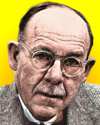
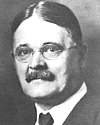
Edwin Garrigues Boring was an American psychologist and teacher who was first recognized for his experimental work but later known as a historian of psychology. When the U.S. entered WW I, Robert M. Yerkes recruited Boring to help test the intelligence of draftees. In 1922, he was invited to Harvard, where he began a long and productive career as director of the psychological laboratory (1924-49). To free psychology from its status as part of the Dept. of Philosophy, Boring succeeded in establishing a separate Dept of Psychology (1934). Upon retirement, he was appointed Edgar Pierce Professor Emeritus and continued to teach classes until he was nearly 71. Throughout his life, he wrote textbooks and edited professional journals.
Edwin Garrigues Boring was an American psychologist and teacher who was first recognized for his experimental work but later known as a historian of psychology. When the U.S. entered WW I, Robert M. Yerkes recruited Boring to help test the intelligence of draftees. In 1922, he was invited to Harvard, where he began a long and productive career as director of the psychological laboratory (1924-49). To free psychology from its status as part of the Dept. of Philosophy, Boring succeeded in establishing a separate Dept of Psychology (1934). Upon retirement, he was appointed Edgar Pierce Professor Emeritus and continued to teach classes until he was nearly 71. Throughout his life, he wrote textbooks and edited professional journals.
(EB)
Died 1 Jul 1964 at age 93 (born 27 Oct 1870).
American jurist and chief advocate of “sociological jurisprudence” who was first active as a botanist and educator. He followed his B.A. in botany with studies in law. Meanwhile, he served as director of the Nebraska state botanical survey (1892-1903), during which time he discovered a rare fungus, subsequently named Roscopoundia. Having been admitted to the Nebraska bar, Pound turned to the practice of law, and eventually became a leader in the reform of court administration in the United States.
American jurist and chief advocate of “sociological jurisprudence” who was first active as a botanist and educator. He followed his B.A. in botany with studies in law. Meanwhile, he served as director of the Nebraska state botanical survey (1892-1903), during which time he discovered a rare fungus, subsequently named Roscopoundia. Having been admitted to the Nebraska bar, Pound turned to the practice of law, and eventually became a leader in the reform of court administration in the United States.
Died 1 Jul 1958 at age 78 (born 10 Jul 1879).
American chemist who crystalized vitamin A. In Apr 1937, Time magazine reported that he obtained pale yellow crystals that were frozen out of a wood alcohol solution containing oil from mackerel livers. The crystals disclosed a vitamin potency of 3,000,000 international units.
American chemist who crystalized vitamin A. In Apr 1937, Time magazine reported that he obtained pale yellow crystals that were frozen out of a wood alcohol solution containing oil from mackerel livers. The crystals disclosed a vitamin potency of 3,000,000 international units.
(EB)
Died 1 Jul 1912 at age 37 (born 11 May 1875).
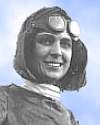
American aviator, the first female pilot to fly across the English Channel. Although she was the first American woman to become a licensed pilot, her career as a pilot lasted a mere 11 months. On 16 Apr 1912 she left England in a 50-hp monoplane lent to her by Louis Blériot. She headed for France in a plane she had never flown before and a compass she had just learned how to use. Despite poor visibility and fog, Quimby landed 59 minutes later near Hardelot, France. Upon landing, she was greeted by the local residents, but the Titanic sinking just days earlier, limited reporting of Quimby's achievement in the world press. She died the same year, on 1 Jul 1912, when she lost control of her plane at a flying exhibition near Quincy, Mass.[Birth day or year is uncertain; there is no birth certificate. 11 May 1875 is widely quoted, but Enc. Brit. gives born May 1, 1875?]
American aviator, the first female pilot to fly across the English Channel. Although she was the first American woman to become a licensed pilot, her career as a pilot lasted a mere 11 months. On 16 Apr 1912 she left England in a 50-hp monoplane lent to her by Louis Blériot. She headed for France in a plane she had never flown before and a compass she had just learned how to use. Despite poor visibility and fog, Quimby landed 59 minutes later near Hardelot, France. Upon landing, she was greeted by the local residents, but the Titanic sinking just days earlier, limited reporting of Quimby's achievement in the world press. She died the same year, on 1 Jul 1912, when she lost control of her plane at a flying exhibition near Quincy, Mass.[Birth day or year is uncertain; there is no birth certificate. 11 May 1875 is widely quoted, but Enc. Brit. gives born May 1, 1875?]
Fearless: Harriet Quimby A Life Without Limit, by Don Dahler. - book suggestion.
Died 1 Jul 1899 at age 67 (born 30 Nov 1831). quotes
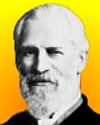
British zoologist who made significant contributions to comparative anatomy and clarification of the classification of mammals, including carnivores (1869), rhinocerosces (1875), and edentates (1882). He was superintendent, and subsequently followed Sir Richard Owen as director of Natural History Departments of the British Museum of Natural History (1884-98). Flower's innovations in museum displays greatly improved their educational value to the public. His main research interest dealt with marsupials, primates and especially whales, through which he was the first to demonstrate that lemurs are primates. Further, in thorough anthropological studies, he recorded detailed measurements of over 1,300 human skulls.«
British zoologist who made significant contributions to comparative anatomy and clarification of the classification of mammals, including carnivores (1869), rhinocerosces (1875), and edentates (1882). He was superintendent, and subsequently followed Sir Richard Owen as director of Natural History Departments of the British Museum of Natural History (1884-98). Flower's innovations in museum displays greatly improved their educational value to the public. His main research interest dealt with marsupials, primates and especially whales, through which he was the first to demonstrate that lemurs are primates. Further, in thorough anthropological studies, he recorded detailed measurements of over 1,300 human skulls.«
Essays on Museums and Other Subjects Connected with Natural History, by William Henry Flower (reprint). - book suggestion.
Died 1 Jul 1886 at age 79 (born 11 Dec 1806).
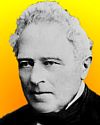
Otto Wilhelm Hermann von Abich was a German geologist whose early work was on spinels and other minerals. Later, he made special studies of fumaroles, of the mineral deposits around volcanic vents, and of the structure of volcanoes. He was a supporter of volcanistic theory, and was noted for his explorations in Asia. After moving to Russia in 1843, until his retirement, he made studies that ranged among minerology, petrography, paleontological stratigraphy, tectonics, and economic geology. He developed the anticlinal theory of oil prospecting. The mineral now called clinoclasite (basic copper arsenate) was originally named Abichite after him.
Otto Wilhelm Hermann von Abich was a German geologist whose early work was on spinels and other minerals. Later, he made special studies of fumaroles, of the mineral deposits around volcanic vents, and of the structure of volcanoes. He was a supporter of volcanistic theory, and was noted for his explorations in Asia. After moving to Russia in 1843, until his retirement, he made studies that ranged among minerology, petrography, paleontological stratigraphy, tectonics, and economic geology. He developed the anticlinal theory of oil prospecting. The mineral now called clinoclasite (basic copper arsenate) was originally named Abichite after him.
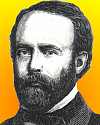
Died 1 Jul 1881 at age 63 (born 11 Mar 1818). quotes
French chemist and geologist who began the first industrial production of aluminium. His career started with research of turpentine. By 1849, turning to inorganic chemistry, he synthesized nitrogen pentoxide. Friedrich Woehler had isolated aluminum using costly potassium, as a laboratory curiosity. In 1854, Deville made aluminium, from aluminium chloride and less costly sodium. By 1860, he was producing aluminium at a factory in Javel, Paris, and later in Nanterre. The metal was more expensive than gold until Charles Hall invented the cheap electrolytic process. Deville also studied platinum and other minerals. As a geologist, he visited the coastal sites of Vesuvius and Stromboli. He proposed that volcanic eruptions resulted when sea water entered the fissures of the earth's crust where contact with hot rocks produced the explosive eruptions.« more
French chemist and geologist who began the first industrial production of aluminium. His career started with research of turpentine. By 1849, turning to inorganic chemistry, he synthesized nitrogen pentoxide. Friedrich Woehler had isolated aluminum using costly potassium, as a laboratory curiosity. In 1854, Deville made aluminium, from aluminium chloride and less costly sodium. By 1860, he was producing aluminium at a factory in Javel, Paris, and later in Nanterre. The metal was more expensive than gold until Charles Hall invented the cheap electrolytic process. Deville also studied platinum and other minerals. As a geologist, he visited the coastal sites of Vesuvius and Stromboli. He proposed that volcanic eruptions resulted when sea water entered the fissures of the earth's crust where contact with hot rocks produced the explosive eruptions.« more
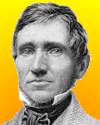
Died 1 Jul 1860 at age 59 (born 29 Dec 1800).
American inventor who baked rubber mixed with sulphur and discovered the vulcanization process which made rubber practical as a commercial product. Previously, rubber was of limited use since it froze hard in winter and sticky in summer. After years of persistent experimentation, Goodyear had created a tough, cured compound, able to withstand heat and stress. Sadly, he was a poor businessman, unable to profit from his invention or effectively patent it abroad. The “vulcanized” name was applied by English rubber pioneer Thomas Hancock, using the sugggestion of a friend to name the process after Vulcan, the Roman god of fire. Nor was Goodyear ever connected to the Goodyear Tire & Rubber Co. which was named in his honour.«
American inventor who baked rubber mixed with sulphur and discovered the vulcanization process which made rubber practical as a commercial product. Previously, rubber was of limited use since it froze hard in winter and sticky in summer. After years of persistent experimentation, Goodyear had created a tough, cured compound, able to withstand heat and stress. Sadly, he was a poor businessman, unable to profit from his invention or effectively patent it abroad. The “vulcanized” name was applied by English rubber pioneer Thomas Hancock, using the sugggestion of a friend to name the process after Vulcan, the Roman god of fire. Nor was Goodyear ever connected to the Goodyear Tire & Rubber Co. which was named in his honour.«
The Goodyear Story: An Inventor's Obsession and the Struggle for a Rubber Monopoly, by Richard Korman. - book suggestion.
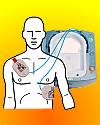
In 1997, American Airlines became the first United States air carrier to place automatic external defibrillators on its fleet of 700 aircraft. AEDs are thus available to give immediate coronary care to in-flight heart-attack victims. Since seconds count, many lives have been saved by restoring the natural rhythm of their heart beats. The airline was the first public entity in the United States to do mass deployment of AEDs, and trained over 22,000 flight attendants on the use of the defibrillator. On 18 Feb 1998, their first passenger was saved when he collapsed on an aircraft after rushing to catch a connecting flight. On 12 Apr 2004, The U.S. Federal Aviation Administration required AEDs to be on commercial passenger aircraft of a certain size.«[The 1 Jul 1997 date was given in testimony to a U.S. Congress House Aviation Subcommittee hearing by Dr. David K. McKenas that American Airlines was first to "On July 1st, 1997... place ... AEDs, on its fleet." A later press release by American Airlines gives another date: "The program was turned on May 1, 1997."]

In 1967, BBC2 begain its first scheduled, but limited, colour television service in England with a 4-hr outside broadcast (OB) from the Wimbledon Tennis Championship. The OB used the only colour mobile control room that the BBC had available. This live program was different from the BBC1 (black and white) production at the event. (The practice of using the colour camera feed for the b/w service began the following year.) The first week of colour broadcasts also included an episode of the Western series, The Virginian. Studios were not yet ready for colour, so colour programming was limited at first to films and OBs, using only six of the BBC2 transmitters (those in other regions of England remained in black and white). BBC2 expanded on 2 Dec 1967 to about 25 hours in colour per week. «
In 1947, the National Malaria Eradication Program commenced in the U.S., which succeeded in eliminating malaria as a significant public health problem in the country by 1949. The operation was the result of cooperation between the Communicable Disease Center of the U.S. Public Health Service (CDC) with the state and local health agencies of 13 southeastern states. It was proposed by Dr. L. L. Williams. By 1949, the primary effort was 4,650,000 spray applications of the insecticide DDT in rural homes of counties with malaria prevalent. In addition, drainage operations and spraying of insecticides (sometimes by aircraft) removed mosquito breeding sites. With the success, by 1951 the CDC's role was reduced to surveillance. Worldwide efforts continue.«
In 1941, commercial television broadcasting began in the United States, having been authorized for commercial operation by the Federal Communications Commission on 2 May 1941. There had been early experiments with television following the decision on standards by the Radio Manufacturers Association in Dec 1937. Closed-circuit television pictures were exhibited by RCA at the New York and San Francisco World Fairs in 1939. The same year, there was a demonstration telecast of a baseball game between Princeton and Columbia University. The signal was sent to the top of the 84th floor of the Empire State Building in New York and retransmitted from there to 5,000 Manhattan area viewers.«
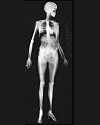
In 1934, the first X-ray photograph of the whole body taken in a one-second exposure, using ordinary clinical conditions such as would exist at an average hospital, was made at Rochester, N.Y. The one-piece radiograph was made by Arthur W. Fuchs of the Eastman Kodak Company. A selective filter was used for the first time, and the film size was 32"x72". It was exhibited by the Chicago Roentgen Society at the Century of Progress Exhibition in Chicago, Illinois.*
In 1925, the U.S. government assumed control of all helium production in the nation. Congress created a Federal Helium Program to manage helium as a critical war material, such as for airships. Helium was present as up to almost 2% in natural gas obtained from some gasfields. From 1910, the Bureau of Mines contracted experimental production facilities in Texas, and the first of full-scale plants by1921. The natural gas was cooled enough to liquified all gases except the helium, which then was readily separated. Helium released by the radioactive decay of uranium and thorium has accumulated over millions of years in the rock strata of the gas fields. Other sources found were in New Mexico, Oklahoma and Kansas (first discovered at Dexter, 1903). The Federal Helium Reserve stewardship later ensured supplies for medical applications, high-tech research and aerospace purposes. It was privatized in 1996.«
more

In 1913, the Lincoln Highway Association was formed in the U.S. to promote a coast-to-coast road to be known as the Lincoln Highway, the idea of Carl Fisher. (He had created Indianapolis Motor Speedway and Miami Beach resort). He, and fellow industrialists Frank Seiberling and Henry Joy, envisioned an improved, hard-surfaced road stretching almost 3,400 miles from New York on the east coast to San Francisco on the west coast, by the shortest practical route. The Association encouraged private and corporate donations to help fund the road. The need for good roads led to the federal government building roads and the creation of numbered U.S. routes in the 1920s. An existing improved road in New Jeresey was the first named part of the Lincoln Highway on 13 Dec 1913. [References on the Web to 10 Sep 1913 as the opening date of the Lincoln Highway are obviously wrong.See Reference.] more
[References on the Web to 10 Sep 1913 as the opening date of the Lincoln Highway are obviously wrong.See Reference.] more The Lincoln Highway: Coast to Coast from Times Square to the Golden Gate, by Michael Wallis et al. - book suggestion.
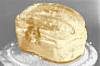
In 1910, the first completely automatic bread baking plant in the U.S. was opened by the Ward Baking Company of Chicago, Illinois. Neither the dough nor the bread was touched by human hand until it exited at the wrapping machine. With several plants, this was one of the largest baking companies at the beginning of the 20th century. A 1915 publication described their Bronx, N.Y. plant's operation: flour was winnowed to remove impurities, piped to huge tanks to be combined with water and other ingredients and allowed to stand for a time to "ripen." Next, the dough travelled to large mixers, was kneaded, allowed to rise in a huge trough, then mechanically split into loaf pans, conveyed slowly through an oven and wrapped.«
more

In 1901, the U.S. National Bureau of Standards became effective. It had been established under an Act of Congress (31 Stat. 1449) approved 3 Mar 1901 that expanded the functions of the Office of Standard Weights and Measures, previously part of the Coast and Geodetic Survey. Its duties included the custody of the standards; comparison of standards; construction of standards; testing and calibration of standard measuring apparatus; and determination of physical constants and the properties of materials which are of great importance to scientific or manufacturing interests. The Bureau became the National Institute of Standards and Technology (N.I.S.T) in 1988.«*
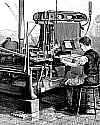
(1889)
In 1886, the first Linotype machine intended for commercial use in the U.S. was set up at the premises of the New York Tribune newspaper. Some type lines set on 2 Jul 1886 were part of the editorial page in the next day’s issue. The machine’s success was immediate. By the end of 1886, several more of them were in use at the Tribune. A decade later thousands of Linotype machines were in use around the world. The work of at least three men hand-setting type could be done by one operator at a keyboard, who cast a line of type at a time. It was for that capability that Whitelaw Reid, editor of the New York Tribune, gave the Linotype its name. Ottmar Mergenthaler invented, patented and continued to improve the machine.«[This date is according to Kane’s Famous First Facts, 4th ed., but Webmaster has not found a second source confirming the 1 Jul 1886 date. Other sources have collateral information. The machine was shipped out from the Baltimore factory on 27 Jun 1886. When it arrived in New York City, it was taken to the newspaper building and had to be hoisted up and through a 9th floor window by a safe (strongbox) rigger. On 2 Jul, Reid dated a letter, saying, “Machine here and working beautifully.” So Kane’s specific date may be an undocumented guesstimate. Mergenthaler’s biography is silent on day by day progress or the exact date of installation.] more
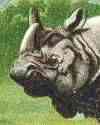
In 1874, the Philadelphia Zoo, the first zoological gardens in the U.S. opened to the public in Philadelphia, Penn. It was originally chartered by the Pennsylvania state legislature on 21 Mar 1859, as the Zoological Society of Philadelphia, whose core purpose was to oversee “the purchase and collection of living wild and other animals” and “for the instruction and recreation of the people”. Rumors of a civil war made it a difficult time for private undertakings, and delayed the opening. After much preparation at home and abroad, the Philadelphia Zoo opened with several hundred native and exotic specimens on the grounds of Solitude, the last estate in the area to be owned by the Penn family. In 1875, this was the first U.S. zoo to exhibit a male Indian rhinoceros.[Image: Indian rhinoceros, from an Arbuckle Coffee trade card, 1890]
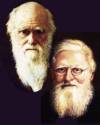
Darwin & Wallace
In 1858, the Wallace-Darwin theory of evolution was first published at the Linnaean Society in London*. A month earlier, Charles Darwin received a letter from Alfred Wallace, who was collecting specimens in the East Indies. Wallace had independently developed a theory of natural selection, which was almost identical to Darwin’s. The letter asked Darwin to evaluate the theory, and if worthy of publication, to forward the manuscript to Charles Lyell. Darwin did so, almost giving up his clear priority (as he had not by then published his own masterwork The Origin of Species). Neither were at the oral presentation at the Society. Geologist Charles Lyell and botanist Joseph Hooker presented Wallace’s paper and excerpts from Darwin’s unpublished 1844 essay.«
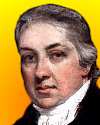
In 1796, the first experiment with smallpox inoculation was made by Dr Edward Jenner of Berkeley, England. He treated both arms of eight-year-old James Phipps. Jenner had previously vaccinated the boy with cowpox on 14 May 1796, with the result that he was not harmed by the otherwise deadly smallpox material.
more




