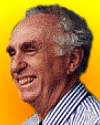
Born 24 Jun 1927; died 30 Sep 2014 at age 87. quotes
Martin Lewis Perl was an American physicist who received the 1995 Nobel Prize for Physics for discovering a subatomic particle that he named the tau, a massive lepton with a negative charge. The tau, which he found in the mid-1970s, was the first evidence of a third “generation” of fundamental particles. It is a superheavy cousin of the electron, identical in all respects except that the tau is more than 3,500 times heavier than the electron and survives less than a trillionth of a second, whereas the electron is stable.
Martin Lewis Perl was an American physicist who received the 1995 Nobel Prize for Physics for discovering a subatomic particle that he named the tau, a massive lepton with a negative charge. The tau, which he found in the mid-1970s, was the first evidence of a third “generation” of fundamental particles. It is a superheavy cousin of the electron, identical in all respects except that the tau is more than 3,500 times heavier than the electron and survives less than a trillionth of a second, whereas the electron is stable.
The Particle Garden: Our Universe As Understood by Particle Physicists, by Gordon Kane, Heather Mimnaugh. - book suggestion.
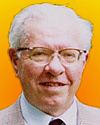
Born 24 Jun 1915; died 20 Aug 2001 at age 86. quotes
English astronomer and mathematician who is best known as the foremost proponent and defender of the steady-state theory of the universe. This theory holds both that the universe is expanding and that matter is being continuously created to keep the mean density of matter in space constant. He became Britain's best-known astronomer in 1950 with his broadcast lectures on The Nature of the Universe, and he recalled derisively coining the term “Big Bang” in the last of those talks. Although over time, belief in a “steady state” universe as Hoyle had proposed was shared by fewer and fewer scientists because of new discoveries, Hoyle never accepted the now most popular “Big Bang” theory for the origin of the universe.
English astronomer and mathematician who is best known as the foremost proponent and defender of the steady-state theory of the universe. This theory holds both that the universe is expanding and that matter is being continuously created to keep the mean density of matter in space constant. He became Britain's best-known astronomer in 1950 with his broadcast lectures on The Nature of the Universe, and he recalled derisively coining the term “Big Bang” in the last of those talks. Although over time, belief in a “steady state” universe as Hoyle had proposed was shared by fewer and fewer scientists because of new discoveries, Hoyle never accepted the now most popular “Big Bang” theory for the origin of the universe.
Fred Hoyle: A Life in Science, by Simon Mitton. - book suggestion.
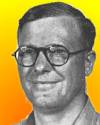
Born 24 Jun 1909; died 3 Mar 1991 at age 81.
(Baron Penney of East Hendred) British nuclear physicist who led Britain's development of the atomic bomb. Penney was to Britain as Robert Oppenheimer was to the U.S. He was a prominent part of the British Mission at Los Alamos during WW II, where his principal assignment was studying the damage effects from the blast wave of the atomic bomb, but he became involved in implosion studies as well. Penney's combination of expertise, analytical skill, effective communication, and the ability to translate them into practical application soon made him one of the five members of the Los Alamos “brain trust” that made key decisions. He was the only Briton to be part of the ten man Target Committee that drew up the list of targets for the atomic bombing of Japan.
(Baron Penney of East Hendred) British nuclear physicist who led Britain's development of the atomic bomb. Penney was to Britain as Robert Oppenheimer was to the U.S. He was a prominent part of the British Mission at Los Alamos during WW II, where his principal assignment was studying the damage effects from the blast wave of the atomic bomb, but he became involved in implosion studies as well. Penney's combination of expertise, analytical skill, effective communication, and the ability to translate them into practical application soon made him one of the five members of the Los Alamos “brain trust” that made key decisions. He was the only Briton to be part of the ten man Target Committee that drew up the list of targets for the atomic bombing of Japan.
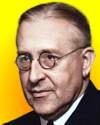
Born 24 Jun 1883; died 17 Dec 1964 at age 81.
Austrian-American physicist who shared (with Carl D. Anderson) the 1936 Nobel Prize for Physics for his discovery of cosmic rays (high-energy radiation from outer space). He emigrated to the U.S. in 1938 and later naturalized. By making electrometer measurements during a series of high-altitude balloon ascents, Hess and others proved the cosmic origin of radiation that ionizes the atmosphere. In 1939, he correlated a 27-day cycle of cosmic-ray intensity to the magnetic field of the sun and its 27-day rotaion period. In other work, Hess devised methods for detecting minute quantities of radioactive substances, and studied the effects of radiation on the human body.«
Austrian-American physicist who shared (with Carl D. Anderson) the 1936 Nobel Prize for Physics for his discovery of cosmic rays (high-energy radiation from outer space). He emigrated to the U.S. in 1938 and later naturalized. By making electrometer measurements during a series of high-altitude balloon ascents, Hess and others proved the cosmic origin of radiation that ionizes the atmosphere. In 1939, he correlated a 27-day cycle of cosmic-ray intensity to the magnetic field of the sun and its 27-day rotaion period. In other work, Hess devised methods for detecting minute quantities of radioactive substances, and studied the effects of radiation on the human body.«
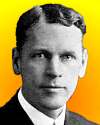
Born 24 Jun 1880; died 10 Aug 1960 at age 80.
American mathematician who made important contributions in early topology, and in projective and differential geometry - work which found applications in atomic physics and the theory of relativity. In 1905, he proved the Jordan curve theorem, which states that every non-self-intersecting loop in the plane divides the plane into an "inside" and an "outside". Although it may seem obvious in its statement, it is a very difficult theorem to prove. During WW II, he was involved in overseeing the work that produced the pioneering ENIAC electronic digital computer. His name is commemorated by the American Mathematical Society's Oswald Veblen Prize. Awarded every five years, it is the most prestigious award in recognition of outstanding research in geometry.«
American mathematician who made important contributions in early topology, and in projective and differential geometry - work which found applications in atomic physics and the theory of relativity. In 1905, he proved the Jordan curve theorem, which states that every non-self-intersecting loop in the plane divides the plane into an "inside" and an "outside". Although it may seem obvious in its statement, it is a very difficult theorem to prove. During WW II, he was involved in overseeing the work that produced the pioneering ENIAC electronic digital computer. His name is commemorated by the American Mathematical Society's Oswald Veblen Prize. Awarded every five years, it is the most prestigious award in recognition of outstanding research in geometry.«
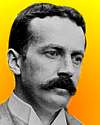
Born 24 Jun 1856; died 9 Mar 1930 at age 73.
American archaeologist, collector, and tilemaker. In his early years, he pursued archaeology. In 1897, while searching for fireplace tools in a junk dealer's barn, Mercer found a jumble of American Pioneer handicraft tools made obsolete by the Industrial Revolution. He realized these pre-1850 work related implements might one day be the prized findings of future archeologists. Mercer seized upon opportunity to preserve such endangered artifacts. He spent a lifetime building his collection, which he called "The Tools of the Nation Maker." In 1898, he founded the Moravian Pottery and Tile Works in Doylestown, PA., to manufacture hand-worked relief-decorated ceramic tiles by a system he developed and patented.
American archaeologist, collector, and tilemaker. In his early years, he pursued archaeology. In 1897, while searching for fireplace tools in a junk dealer's barn, Mercer found a jumble of American Pioneer handicraft tools made obsolete by the Industrial Revolution. He realized these pre-1850 work related implements might one day be the prized findings of future archeologists. Mercer seized upon opportunity to preserve such endangered artifacts. He spent a lifetime building his collection, which he called "The Tools of the Nation Maker." In 1898, he founded the Moravian Pottery and Tile Works in Doylestown, PA., to manufacture hand-worked relief-decorated ceramic tiles by a system he developed and patented.
Ancient Carpenter's Tools: Illustrated and Explained..., by Henry Chapman Mercer. - book suggestion.
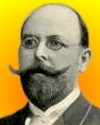
Born 24 Jun 1852; died 9 Apr 1915 at age 62.
German bacteriologist who discovered the organism that causes diphtheria, Corynebacterium diphtheriae, (1884) which had first been observed by the German physiologist Theodor Klebs in the throats of diphtheria patients (the organism became known as the Klebs-Löffler bacillus). The isolation and cultivation of pure cultures involved a number of formidable technical problems; Löffler found it necessary to develop a new medium, thickened serum, as the conventional gelatin used by Robert Koch required temperatures far too low for the diphtheria pathogen. In 1898, with Paul Frosch, he showed that viruses could cause diseases in animals by passing foot-and-mouth disease in cows by inoculation with cell-free filtrates taken from lesions.
German bacteriologist who discovered the organism that causes diphtheria, Corynebacterium diphtheriae, (1884) which had first been observed by the German physiologist Theodor Klebs in the throats of diphtheria patients (the organism became known as the Klebs-Löffler bacillus). The isolation and cultivation of pure cultures involved a number of formidable technical problems; Löffler found it necessary to develop a new medium, thickened serum, as the conventional gelatin used by Robert Koch required temperatures far too low for the diphtheria pathogen. In 1898, with Paul Frosch, he showed that viruses could cause diseases in animals by passing foot-and-mouth disease in cows by inoculation with cell-free filtrates taken from lesions.
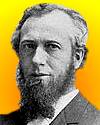
Born 24 Jun 1839; died 29 Mar 1903 at age 63.
American manufacturer and inventor of the first refrigerated railroad cars. These improved his handling of the supply of beef from western states to the Chicago meat company of which he was a partner. No longer was it necessary to ship live cattle for slaughter in the East. Upon the huge success of this venture, he founded a new company with his brother, Swift and Company, worth $25 million at his death. The alliances he made with two other major meat suppliers, J.O. Armour and Edward Morris, formed such a monopoly that the “Beef Trust” was broken up by action of the Supreme Court in 1905. Swift further pioneered products such as glue, soap, and margarine to make use of the parts of cattle previously discarded.
American manufacturer and inventor of the first refrigerated railroad cars. These improved his handling of the supply of beef from western states to the Chicago meat company of which he was a partner. No longer was it necessary to ship live cattle for slaughter in the East. Upon the huge success of this venture, he founded a new company with his brother, Swift and Company, worth $25 million at his death. The alliances he made with two other major meat suppliers, J.O. Armour and Edward Morris, formed such a monopoly that the “Beef Trust” was broken up by action of the Supreme Court in 1905. Swift further pioneered products such as glue, soap, and margarine to make use of the parts of cattle previously discarded.
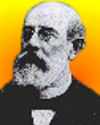
Born 24 Jun 1836; died 20 Jan 1914 at age 77.
German geologist who laid the foundations of the science of microscopic petrography (the study of rocks in thin section, based on the optical properties of constituent mineral grains). He was appointed professor (extraordinary) of petrography at Strasbourg in 1873 and ordinary professor of mineralogy at Heidelberg in 1878.
German geologist who laid the foundations of the science of microscopic petrography (the study of rocks in thin section, based on the optical properties of constituent mineral grains). He was appointed professor (extraordinary) of petrography at Strasbourg in 1873 and ordinary professor of mineralogy at Heidelberg in 1878.
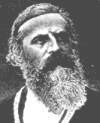
Born 24 Jun 1835; died 5 Dec 1902 at age 67. quotes
Johannes Adolph Wislicenus was a German chemist whose pioneering work led to the recognition of the importance of the spatial arrangement of atoms within a molecule. He is noted for his work on the lactic acids, and in particular for his discoveries in the study of the geometrical isomerism (the existence of identical formulae with differing chemical properties) of organic compounds.
Johannes Adolph Wislicenus was a German chemist whose pioneering work led to the recognition of the importance of the spatial arrangement of atoms within a molecule. He is noted for his work on the lactic acids, and in particular for his discoveries in the study of the geometrical isomerism (the existence of identical formulae with differing chemical properties) of organic compounds.
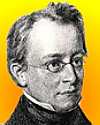
Born 24 Jun 1804; died 28 Mar 1849 at age 44.
Austrian botanist who formulated a major system of plant classification. In 1830, he had issued his first botanical treatise, that on the flora of Pressburg. In 1836, he was curator of a museum botanical department, and in 1840, a professor of botany and director of the Botanical Garden of the University of Vienna. While a curator he united the various distinct herbaria into one scientifically arranged general herbarium, to which he contributed his own 30,000 species of plants. His classification remained until 1885. His botanical system is explained in his well-known and most important work: Genera plantarum secundum ordines naturales disposita (Vienna, 1836-50), a work regarded as one of the fundamental writings of systematized botany.
Austrian botanist who formulated a major system of plant classification. In 1830, he had issued his first botanical treatise, that on the flora of Pressburg. In 1836, he was curator of a museum botanical department, and in 1840, a professor of botany and director of the Botanical Garden of the University of Vienna. While a curator he united the various distinct herbaria into one scientifically arranged general herbarium, to which he contributed his own 30,000 species of plants. His classification remained until 1885. His botanical system is explained in his well-known and most important work: Genera plantarum secundum ordines naturales disposita (Vienna, 1836-50), a work regarded as one of the fundamental writings of systematized botany.
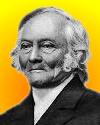
Born 24 Jun 1795; died 26 Jan 1878 at age 82. quotes
German anatomist and physiologist whose fundamental studies of the sense of touch introduced a concept, important to psychology and sensory physiology, that of the "just-noticeable difference", the smallest difference perceivable between two similar stimuli. With his brother Eduard Friedrich Weber (1806-71) he discovered the inhibitory power of the vagus nerve (1845). With another brother, W. E. Weber, he made studies of acoustics and wave motion. He formuled Weber's law: that the increase in stimulus necessary to produce an increase in sensation is not fixed but depends on the strength of the preceding stimulus.
German anatomist and physiologist whose fundamental studies of the sense of touch introduced a concept, important to psychology and sensory physiology, that of the "just-noticeable difference", the smallest difference perceivable between two similar stimuli. With his brother Eduard Friedrich Weber (1806-71) he discovered the inhibitory power of the vagus nerve (1845). With another brother, W. E. Weber, he made studies of acoustics and wave motion. He formuled Weber's law: that the increase in stimulus necessary to produce an increase in sensation is not fixed but depends on the strength of the preceding stimulus.
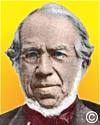
Born 24 Jun 1788; died 16 Apr 1864 at age 75.
American inventor who made major contributions to the development of machine tools. He invented a number of machines before he created the famous lathe that bears his name. At age 13, he developing an apple-paring machine. While employed by his brother in the monotonous job of making tacks, which all had to be headed by hand, Blanchard came up with a machine for mass-producting the tacks. He went into the armory business, for which he developed a specialized lathe which could turn irregularly shaped parts, such as gunstocks. Blanchard's profile lathe also revolutionized other industries that manufactured standardized, asymmetrical items, such as axe handles, shoe lasts, and wheel-spokes. more
American inventor who made major contributions to the development of machine tools. He invented a number of machines before he created the famous lathe that bears his name. At age 13, he developing an apple-paring machine. While employed by his brother in the monotonous job of making tacks, which all had to be headed by hand, Blanchard came up with a machine for mass-producting the tacks. He went into the armory business, for which he developed a specialized lathe which could turn irregularly shaped parts, such as gunstocks. Blanchard's profile lathe also revolutionized other industries that manufactured standardized, asymmetrical items, such as axe handles, shoe lasts, and wheel-spokes. more
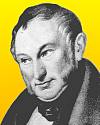
Born 24 Jun 1783; died 22 Sep 1850 at age 67.
German agriculturalist best known for his work on the relationship of the costs of commodity transportation to the location of production. He used his farm as a source of facts for his theoretical work in agricultural economics. He built a theoretical model which he used to find the important factors that determined the most profitable location of various branches of agriculture in relation to their sources of demand. His theory of rent was similar to that of Ricardo. He set out a theory of distribution based on marginal productivity, using calculus, and he could be considered one of the founders of marginal analysis. Nearing his death, he asked that his famous equation for the marginal product of labor be carved into his tombstone.
German agriculturalist best known for his work on the relationship of the costs of commodity transportation to the location of production. He used his farm as a source of facts for his theoretical work in agricultural economics. He built a theoretical model which he used to find the important factors that determined the most profitable location of various branches of agriculture in relation to their sources of demand. His theory of rent was similar to that of Ricardo. He set out a theory of distribution based on marginal productivity, using calculus, and he could be considered one of the founders of marginal analysis. Nearing his death, he asked that his famous equation for the marginal product of labor be carved into his tombstone.
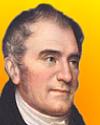
Born 24 Jun 1771; died 31 Oct 1834 at age 63.
French-American industrialist who migrated following the French Revolution from France to the U.S. in 1800. From 1788, he had worked for French chemist Antoine Lavoisier, then chief of the royal powwder works, and became his first assistant in 1791. Thus, he had the knowledge to recognize an opportunity to manufacture gunpowder in the U.S., and by 1803 had established a small mill at Wilmington, Delaware. Government orders during the American war of 1812 made Du Pont the foremost manufacturer in the U.S. From this beginning, he diversified with interests in a woolen mill, a cotton mill, a tannery and became a director of the Bank of the United States.«
French-American industrialist who migrated following the French Revolution from France to the U.S. in 1800. From 1788, he had worked for French chemist Antoine Lavoisier, then chief of the royal powwder works, and became his first assistant in 1791. Thus, he had the knowledge to recognize an opportunity to manufacture gunpowder in the U.S., and by 1803 had established a small mill at Wilmington, Delaware. Government orders during the American war of 1812 made Du Pont the foremost manufacturer in the U.S. From this beginning, he diversified with interests in a woolen mill, a cotton mill, a tannery and became a director of the Bank of the United States.«
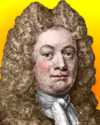
Born 24 Jun 1654; died 17 Sep 1734 at age 80. quotes
English physician who was a good clinical observer and a pioneer in recognizing the specificness in infection and immunity. His practice was in Sevenoaks, Kent. He collected the “best and neatest medicines,” and published a thousand such prescriptions in his Pharmacopoiea, which appeared in at least 12 editions. Through a keen interest reading about medical progress, he remained well-informed. Fuller was an early advocate of protective inoculation against smallpox. His published list of qualifications for nurses may have been the first of its kind by an English physician. Long before microbic investigations by such as Pasteur, Fuller recognized diseases like measles or smallpox were “produced by its proper and peculiar Species of Virus” (meaning venom). In Gnomologia he collected 6496 adagies and proverbs.«
English physician who was a good clinical observer and a pioneer in recognizing the specificness in infection and immunity. His practice was in Sevenoaks, Kent. He collected the “best and neatest medicines,” and published a thousand such prescriptions in his Pharmacopoiea, which appeared in at least 12 editions. Through a keen interest reading about medical progress, he remained well-informed. Fuller was an early advocate of protective inoculation against smallpox. His published list of qualifications for nurses may have been the first of its kind by an English physician. Long before microbic investigations by such as Pasteur, Fuller recognized diseases like measles or smallpox were “produced by its proper and peculiar Species of Virus” (meaning venom). In Gnomologia he collected 6496 adagies and proverbs.«

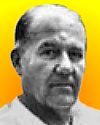
Died 24 Jun 2003 at age 99 (born 19 Apr 1904).
American ecologist who was founding president of the Nature Conservancy (1950), one of the nation's largest environmental organizations. He later helped develop the World Wildlife Fund. His training was in chemical engineering, but his lifelong passion was the outdoors. In the 1930s, he persuaded a New York socialite to raise money to buy Hawk Mountain, Pennsylvania, as a bird sanctuary to protect the hawks from devastation by hunters. In 1945, in the New Yorker magazine, he was one of the first to warn that DDT could drive fish, frogs, and birds extinct. He also fought for a law that banned the sale of rare-bird feathers for women's hats. He wrote the Audubon Bird Guide.
American ecologist who was founding president of the Nature Conservancy (1950), one of the nation's largest environmental organizations. He later helped develop the World Wildlife Fund. His training was in chemical engineering, but his lifelong passion was the outdoors. In the 1930s, he persuaded a New York socialite to raise money to buy Hawk Mountain, Pennsylvania, as a bird sanctuary to protect the hawks from devastation by hunters. In 1945, in the New Yorker magazine, he was one of the first to warn that DDT could drive fish, frogs, and birds extinct. He also fought for a law that banned the sale of rare-bird feathers for women's hats. He wrote the Audubon Bird Guide.
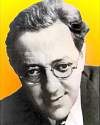
Died 24 Jun 1969 at age 62 (born 2 Oct 1906). quotes
German-American engineer who was a co-founder in 1927 of the German Verein für Raumschiffahrt ( “VfR”, Society for Space Travel). This was the first group of men (with the sole exception of Robert Goddard) to experiment with rockets. Ley introduced Wernher von Braun to the society. Ley was consultant for the science fiction film Frau im Mond in which the countdown from ten to zero was introduced. Fiercely anti-Nazi, unlike Von Braun, in 1934, he emigrated to the U.S. rather than pursuing military applications of rocketry. In the U.S., he became a popularizer of space exploration and travel, writing many popular books.
German-American engineer who was a co-founder in 1927 of the German Verein für Raumschiffahrt ( “VfR”, Society for Space Travel). This was the first group of men (with the sole exception of Robert Goddard) to experiment with rockets. Ley introduced Wernher von Braun to the society. Ley was consultant for the science fiction film Frau im Mond in which the countdown from ten to zero was introduced. Fiercely anti-Nazi, unlike Von Braun, in 1934, he emigrated to the U.S. rather than pursuing military applications of rocketry. In the U.S., he became a popularizer of space exploration and travel, writing many popular books.
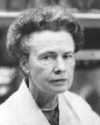
Died 24 Jun 1968 at age 67 (born 5 Apr 1901).
American pediatrician and microbiologist whose groundbreaking work on influenzal meningitis significantly reduced infant death rates and advanced the field of microbiological genetics. She made a major contribution in her third published paper (1939), devising an anti-influenzal rabbit serum against H. influenzae type b, the causative organism of a then almost uniformly fatal meningitis in infants and children. Her antiserum reduced the mortality rate to 20 percent. When the advent of antibiotics made the antiserum obsolete, she quickly mastered their use against all the bacterial meningitides. Late in her career--the 1950s and 60s--she became a pioneer in microbial genetics. Over 30 years she published some 70 papers.
American pediatrician and microbiologist whose groundbreaking work on influenzal meningitis significantly reduced infant death rates and advanced the field of microbiological genetics. She made a major contribution in her third published paper (1939), devising an anti-influenzal rabbit serum against H. influenzae type b, the causative organism of a then almost uniformly fatal meningitis in infants and children. Her antiserum reduced the mortality rate to 20 percent. When the advent of antibiotics made the antiserum obsolete, she quickly mastered their use against all the bacterial meningitides. Late in her career--the 1950s and 60s--she became a pioneer in microbial genetics. Over 30 years she published some 70 papers.
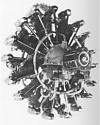
Died 24 Jun 1950 at age 67 (born 30 Sep 1882).
Charles Lanier Lawrance was an American aeronautical engineer who designed the first successful air-cooled aircraft engine, used on many historic early flights. He also designed a new type of wing section with an exceptionally good lift-to-drag ratio. His wing design was used widely in World War I. By the mid-1920s his improvements in engine power and reliability made a remarkable series of long-distance flights possible, including those of Admiral Byrd, Charles Lindbergh, Amelia Earhart and Clarence Chamberlin. Despite the sensational publicity of the Lindbergh flight, Lawrance remained in relative obscurity - upon which he commented, "Who remembers Paul Revere's horse?" For his J-5 Whirlwind engine, Lawrance was awarded the annual Collier Trophy in 1928.
Charles Lanier Lawrance was an American aeronautical engineer who designed the first successful air-cooled aircraft engine, used on many historic early flights. He also designed a new type of wing section with an exceptionally good lift-to-drag ratio. His wing design was used widely in World War I. By the mid-1920s his improvements in engine power and reliability made a remarkable series of long-distance flights possible, including those of Admiral Byrd, Charles Lindbergh, Amelia Earhart and Clarence Chamberlin. Despite the sensational publicity of the Lindbergh flight, Lawrance remained in relative obscurity - upon which he commented, "Who remembers Paul Revere's horse?" For his J-5 Whirlwind engine, Lawrance was awarded the annual Collier Trophy in 1928.
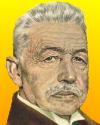
Died 24 Jun 1942 at age 76 (born 10 Jan 1866).
Karl Albert Ludwig Aschoff was a German pathologist who named the reticuloendothelial system (1924) comprising those cells found in various tissues that are phagocytic (capable of engulfing bacteria and other substances). He also made important studies on appendicitis, gallstones, jaundice, scurvy, and thrombosis. In 1904 in an article on myocarditis associated with acute rheumatic fever he presented his classic description of the inflammatory nodules (called Aschoff's bodies, or nodules) that are characteristic of this rheumatic process. One of the foremost pathologists of his time, Aschoff undertook noteworthy investigations into cholelithiasis, thrombosis, scurvy, and appendicitis.
Karl Albert Ludwig Aschoff was a German pathologist who named the reticuloendothelial system (1924) comprising those cells found in various tissues that are phagocytic (capable of engulfing bacteria and other substances). He also made important studies on appendicitis, gallstones, jaundice, scurvy, and thrombosis. In 1904 in an article on myocarditis associated with acute rheumatic fever he presented his classic description of the inflammatory nodules (called Aschoff's bodies, or nodules) that are characteristic of this rheumatic process. One of the foremost pathologists of his time, Aschoff undertook noteworthy investigations into cholelithiasis, thrombosis, scurvy, and appendicitis.
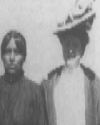
Died 24 Jun 1915 at age 66 (born 12 May 1849).
(née Matilda Coxe Evans) was an American ethnologist who became one of the major contributors to her field, particularly in the study of Zuni religion. She married geologist James Stevenson (Apr 1872). In 1879, he became executive officer of the U.S. Geological Survey and she took an interest in her husband's work, accompanying him on an expedition to New Mexico to study the Zuni for the Bureau of American Ethnology. On several visits to the Zuni she studied their domestic life and in particular the roles, duties, and rituals of Zuni women. The Twenty-Third Annual Report of the Bureau in 1901-02 published her 600-page The Zuñi Indians: Their Mythology, Esoteric Fraternities, and Ceremonies, her most important written work.[Image: Matilda Coxe Stevenson with Pueblo woman, mid 1890s]
(née Matilda Coxe Evans) was an American ethnologist who became one of the major contributors to her field, particularly in the study of Zuni religion. She married geologist James Stevenson (Apr 1872). In 1879, he became executive officer of the U.S. Geological Survey and she took an interest in her husband's work, accompanying him on an expedition to New Mexico to study the Zuni for the Bureau of American Ethnology. On several visits to the Zuni she studied their domestic life and in particular the roles, duties, and rituals of Zuni women. The Twenty-Third Annual Report of the Bureau in 1901-02 published her 600-page The Zuñi Indians: Their Mythology, Esoteric Fraternities, and Ceremonies, her most important written work.[Image: Matilda Coxe Stevenson with Pueblo woman, mid 1890s]
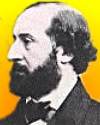
Died 24 Jun 1875 at age 74 (born 11 May 1801).
French architect important for his early use of iron frame construction. He is primarily remembered for the two Parisian libraries he designed. The Bibliothèque Sainte-Geneviève (built 1843-50) uses exposed iron structural elements (columns and arches). For his second library project, the reading room of the Bibliothèque Nationale, (built 1862-68), its roof consists of nine decorated metal domes supported by slender cast-iron columns.
French architect important for his early use of iron frame construction. He is primarily remembered for the two Parisian libraries he designed. The Bibliothèque Sainte-Geneviève (built 1843-50) uses exposed iron structural elements (columns and arches). For his second library project, the reading room of the Bibliothèque Nationale, (built 1862-68), its roof consists of nine decorated metal domes supported by slender cast-iron columns.
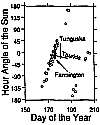
In 1975, a moon tremour, caused by a strike of Taurid meteors, was detected by the seismometer network left on the Moon's surface by American astronauts. The major series of lunar impacts between 22 - 26 Jun 1975 represented 5% of the total number of impacts detected during the eight years of the network's operation, and included numerous 1-ton meteorites. The impacts were detected only when the nearside of the Moon (where the astronauts landed) was facing the Beta Taurid radiant. At the same time, there was a lot of activity detected in Earth's ionosphere, which has been linked with meteor activity. The Taurid meteor storm crosses the Earth orbit twice a year, during the period 24 Jun to 6 Jul and the period 3 Nov to 15 Nov.«[Image: Lunar impact times of meteroids in the period June-July 1975 in the Time-of-the-Year (spatial) and Day-of-the-Year (directional) coordinates.]

In 1963, the first demonstration of a home video recorder was made at the BBC News Studios in London. A Telcan fixed-head longitudinal videotape recorder intended for home-taping of television programmes was demonstrated on BBC television news. The open-reel recorder was mounted on the top of a television cabinet. Developed by Norman Rutherford and Michael Turner of Nottingham Electronic Valve Company (NEVC), the machine used quarter-inch tape running at 120 ips (10 feet/sec) past fixed heads, carrying two low-resolution black and white 15-minute tracks. The intended price was £61 19s (£61.90). It never went on sale. Both Telcan and NEVC collapsed.
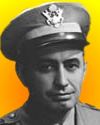
1942
In 1943, Dr. William Randolph Lovelace II jumped out of a B-17 bomber flying at 40,200 feet in order to test the emergency oxygen unit he had designed with colleagues. It was his first ever parachute jump. An unaided parachutist at such high altitude would quickly lose consciousness due to lack of oxygen, and unable to pull the parachute ripcord when needed. When he opened his parachute, it was the sudden deceleration of 32 g's, which knocked him unconscious. He lost a glove, and in the sub-zero (-40º F) temperature his hand became frostbitten. The oxygen unit kept him alive. He regained consciousness at a lower altitude, and landed almost 24 minutes after he bailed out. His test led to development of automatic parachute opening devices.«*
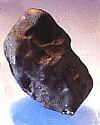
In 1938, scores of eyewitnesses observed the explosive roar of a huge fireball streaking over Butler County, Pa, USA. A cow was struck and injured by a falling stone. Two pieces were found of the stone meteorite, named the Chicora (for the region in which it fell), an olivine-hypersthene chondrite (amphoterite). They had masses 242g and 61g, discovered some miles short of the calculated point of impact of the main mass - which is yet to be found. The original total mass, estimated from the smoke trail and energy considerations, was 519 tons before it exploded about 12 miles up. In 1940, two more fragments were found, 400-ft from the first site. Of the eight meteorites found in the state, five were iron meteorites.«*
In 1930, the first radar detection of aircraft took place at Anacostia, DC.
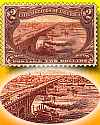
In 1898, a U.S. commemorative stamp was first used that carried the design of a major engineering construction project, the Mississippi River Bridge, a triple-arch steel bridge between East St. Louis, Illinois and St. Louis, Missouri. Each span was roughly 500 feet and rested on piers resting on bedrock some 100 feet beneath the river bottom. Opened on 4 Jul 1874, the bridge was named after its designer, the self-trained engineer, James Eads. The upper level road also carried streetcars, which are seen in the stamp design along with steam ships on the river below. The trains that ran on its lower level are hidden from view at this angle. (Although still in use, the bridge no longer carries rail traffic.) The design was reissued in 1998.«
James B. Eads, by Louis How. - book suggestion.
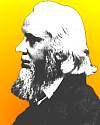
Huggins
In 1881, Sir William Huggins made the first photographic spectrum the first photographic spectrum of a comet (1881 III) and discovered the cyanogen (CN) emission at violet wavelengths. (This fact caused near mass hysteria 29 years later as the Earth passed thru the tail of Halley's Comet and some persons worried about the effect of this for life on Earth.) The first spectroscopic observations of comets were made made by Giovanni Donati (1864) and by Huggins in 1868 when he visually compared the spectrum of comet Winnecke (1868 II) with flame spectra and found that the bands seen in the comet and in the flame, now known as the “carbon” or “Swan Bands” were similar. Spectroscopy soon became the standard technique for studying the light of comets.[Ref: W. Huggins, "Preliminary Note on the Photographic Spectrum of Comet b, 1881," Proceedings of the Royal Society 33 (1881): 1-3.]
(USPTO)
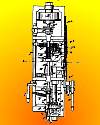
In 1873, Samuel Clemens (the author known as Mark Twain) received a U.S. patent for a self-pasting Scrapbook (No. 140,245). His invention was to coat the pages of the scrapbook with mucilage or adhesive. He suggested two forms. In one form, the pages would be coated with patches of adhesive with intervals of untreated paper between them. The second form was to coat the entire page. In either case, only sufficient area of the leaf is moistened that is necessary to hold the piece that is to be pasted in. Earlier, in 1871, Samuel Clemens received his first patent for “An Improvement in Adjustable and Detachable Garment Straps” (No.121,992).«
In 1778, David Rittenhouse observed a total solar eclipse in Philadelphia. In a letter to him, dated 17 Jul 1778, Thomas Jefferson wrote that "We were much disappointed in Virginia generally on the day of the great eclipse, which proved to be cloudy." Rittenhouse (1732-1796) was not only an American astronomer, but also a mathematician and public official. He is reputed to have built the first American-made telescope and was the first director of the U.S. Mint (1792-1795).
In 451, the 10th recorded perihelion passage of Halley's Comet was sighted.





