Born 19 Dec 1944; died 2 Jan 2022 at age 77. quotes
Kenyan paleontologist and physical anthropologist, second of three sons of noted anthropologists Louis Leakey and Mary Leakey. At an early age, he decided he wanted nothing to do with paleoanthropology and started a expedition business. In 1964, he led an expedition to a fossil site which sparked his interest in paleontology. Since then he has been responsible for extensive fossil finds of human ancestral forms in East Africa, including a Homo habilis skull found in 1972, and a Homo erectus skull found in 1975. His discoveries showed that man's ancestors used tools, which shows intelligence, and lived in eastern Africa at least 3 million years ago - almost doubling the previously accepted age of human origins.«
Kenyan paleontologist and physical anthropologist, second of three sons of noted anthropologists Louis Leakey and Mary Leakey. At an early age, he decided he wanted nothing to do with paleoanthropology and started a expedition business. In 1964, he led an expedition to a fossil site which sparked his interest in paleontology. Since then he has been responsible for extensive fossil finds of human ancestral forms in East Africa, including a Homo habilis skull found in 1972, and a Homo erectus skull found in 1975. His discoveries showed that man's ancestors used tools, which shows intelligence, and lived in eastern Africa at least 3 million years ago - almost doubling the previously accepted age of human origins.«
Origins Reconsidered: In Search of What Makes Us Human, by Richard E. Leakey. - book suggestion.
Born 19 Dec 1943. quotes
American heart surgeon who made the first human implant of a permanent artificial heart, the Jarvik-7, into terminally ill cardiac patient, 61-year-old Barney Clark on 2 Dec 1982, at the University of Utah, Salt Lake City. He survived for 112 days, but was never strong enough to leave the hospital. The device, invented by Robert K. Jarvik, pumped blood through tubes powered by an external compressor. Four more attempts at permanent implants were made, but then abandoned as technical problems of the Jarvik-7 remained unsolved. The second, and longest survivor, was William J. Schroeder who received a Jarvik-7 on 25 Nov 1984 at the Humana Hospital Audubon in Louisville, Ky. He lived 620 days, dying in Aug 1986 at age 54.«
American heart surgeon who made the first human implant of a permanent artificial heart, the Jarvik-7, into terminally ill cardiac patient, 61-year-old Barney Clark on 2 Dec 1982, at the University of Utah, Salt Lake City. He survived for 112 days, but was never strong enough to leave the hospital. The device, invented by Robert K. Jarvik, pumped blood through tubes powered by an external compressor. Four more attempts at permanent implants were made, but then abandoned as technical problems of the Jarvik-7 remained unsolved. The second, and longest survivor, was William J. Schroeder who received a Jarvik-7 on 25 Nov 1984 at the Humana Hospital Audubon in Louisville, Ky. He lived 620 days, dying in Aug 1986 at age 54.«
Born 19 Dec 1908; died 4 May 2001 at age 92.
American psychologist known as the "test guru," for her pioneering development of psychometrics, the measurement and understanding of psychological traits. Her seminal work, Psychological Testing (1954), remains a classic text in the subject. In it, she drew attention to the ways in which trait development is influenced by education and heredity. She explored how variables in the measurement of those traits include differences in training, culture, and language. In 1972, she became the first woman to be elected president of the American Psychological Association in half a century. For her accomplishments, she was awarded the National Medal of Science in 1987.«
American psychologist known as the "test guru," for her pioneering development of psychometrics, the measurement and understanding of psychological traits. Her seminal work, Psychological Testing (1954), remains a classic text in the subject. In it, she drew attention to the ways in which trait development is influenced by education and heredity. She explored how variables in the measurement of those traits include differences in training, culture, and language. In 1972, she became the first woman to be elected president of the American Psychological Association in half a century. For her accomplishments, she was awarded the National Medal of Science in 1987.«
Psychological Testing, by Anne Anastasi. - book suggestion.
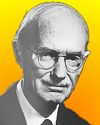
Born 19 Dec 1903; died 6 Jun 1996 at age 92.
American geneticist, known as the "father of immunogenetics," who paved the way for modern organ transplants. He shared the 1980 Nobel Prize for Physiology or Medicine for his studies of the genetic factors of histocompatibility which govern transplanting tissue from one individual to another. Snell identified the factors responsible as the major histocompatibility complex (MHC) - an assortment of antigens (which cause the production of antibodies) common across the genetic makeup of all vertebrates. Early in his career, Snell had been the first to show that x-rays can cause mutations in mammals, by showing that x-rays induce chromosome translocations in mice.«
American geneticist, known as the "father of immunogenetics," who paved the way for modern organ transplants. He shared the 1980 Nobel Prize for Physiology or Medicine for his studies of the genetic factors of histocompatibility which govern transplanting tissue from one individual to another. Snell identified the factors responsible as the major histocompatibility complex (MHC) - an assortment of antigens (which cause the production of antibodies) common across the genetic makeup of all vertebrates. Early in his career, Snell had been the first to show that x-rays can cause mutations in mammals, by showing that x-rays induce chromosome translocations in mice.«
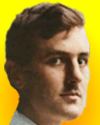
Born 19 Dec 1903; died 26 Mar 1981 at age 77. quotes
British biologist whose research on chromosomes influenced the basic concepts of the hereditary mechanisms underlying the evolution of sexually reproducing species. He elucidated the behaviour of chromosomes during the formation of gametes (meiosis). Knowing that Thomas Hunt Morgan had shown that portions of homologous chromosomes cross over (are exchanged), Darlington recognized that this applied to evolution. He formulated a theory of evolution in which the inherited characteristics of the next generation are variable, determined by this crossing over mechanism.
British biologist whose research on chromosomes influenced the basic concepts of the hereditary mechanisms underlying the evolution of sexually reproducing species. He elucidated the behaviour of chromosomes during the formation of gametes (meiosis). Knowing that Thomas Hunt Morgan had shown that portions of homologous chromosomes cross over (are exchanged), Darlington recognized that this applied to evolution. He formulated a theory of evolution in which the inherited characteristics of the next generation are variable, determined by this crossing over mechanism.
The Man Who Invented the Chromosome: the life of Cyril Darlington, by Oren Solomon Harman. - book suggestion.
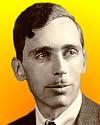

Oliver (Hazard Perry) La Farge was an American anthropologist who wrote novels and nonfiction books covering Native American life, and also spoke for the American Indian through his political actions. He learned of their habits and character during field experience, three archaeological expeditions to Arizona, and other ethnological expeditions to Guatemala (1932) and Mexico. This inspiration gave authenticity to his stories of native Americans. His fame was established when he was awarded a Pulitzer Prize for his first novel of Navajo life, Laughing Boy (1929). While La Farge continued his career as a writer, he actively supported the interests of native Americans, eventually as president of the Association on American Indian Affairs.«
Yellow Sun, Bright Sky: The Indian Country Stories of Oliver La Farge, by David L. Caffey. - book suggestion.
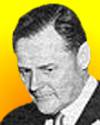
Born 19 Dec 1893; died 24 Nov 1972 at age 78.
Roger Lowell Putnam was a businessman and politician who facilitated the search for Pluto. He pursued a business career in Boston but had an amateur love of astronomy. His uncle, Percival Lowell, had founded the Lowell Observatory in Flagstaff, Arizona, where he began a quest to find the suspected planet he called “Planet X.” Lowell died in 1916, and left considerable funds in his will for his observatory to continue that work. The search languished while his widow contested the Observatory's trust fund. She lost the case, but the legal costs of the fight halved the fund. Putnam became its trustee in 1927, and he revived the search for Planet X. He organized, and helped fund, a new 13-inch refracting telescope and astrograph for that purpose. It was this instrument Clyde Tombaugh used to make the photographic plates on which he identified the new planet on 13 Mar 1930.«
Roger Lowell Putnam was a businessman and politician who facilitated the search for Pluto. He pursued a business career in Boston but had an amateur love of astronomy. His uncle, Percival Lowell, had founded the Lowell Observatory in Flagstaff, Arizona, where he began a quest to find the suspected planet he called “Planet X.” Lowell died in 1916, and left considerable funds in his will for his observatory to continue that work. The search languished while his widow contested the Observatory's trust fund. She lost the case, but the legal costs of the fight halved the fund. Putnam became its trustee in 1927, and he revived the search for Planet X. He organized, and helped fund, a new 13-inch refracting telescope and astrograph for that purpose. It was this instrument Clyde Tombaugh used to make the photographic plates on which he identified the new planet on 13 Mar 1930.«
A Yankee image: The life and times of Roger Lowell Putnam, by William Lowell Putnam. - book suggestion.
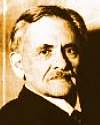
Born 19 Dec 1852; died 9 May 1931 at age 78. quotes
Albert Abraham Michelson was a German-American physicist physicist who accurately measured the speed of light and received the 1907 Nobel Prize for Physics “for his optical precision instruments and the spectroscopic and metrological investigations” he carried out with them. He designed the highly accurate Michelson interferometer and used it to establish the speed of light as a fundamental constant. With Edward Morley, he also used it in an attempt to measure the velocity of the earth through the ether (1887). The experiment yielded null results that eventually led Einstein to his theory of relativity. He measured the standard meter bar in Paris to be 1,553,163.5 wavelengths of the red cadmium line (1892-3).«
Albert Abraham Michelson was a German-American physicist physicist who accurately measured the speed of light and received the 1907 Nobel Prize for Physics “for his optical precision instruments and the spectroscopic and metrological investigations” he carried out with them. He designed the highly accurate Michelson interferometer and used it to establish the speed of light as a fundamental constant. With Edward Morley, he also used it in an attempt to measure the velocity of the earth through the ether (1887). The experiment yielded null results that eventually led Einstein to his theory of relativity. He measured the standard meter bar in Paris to be 1,553,163.5 wavelengths of the red cadmium line (1892-3).«
The Master of Light: A biography of Albert A. Michelson, by Dorothy Michelson Livingston. - book suggestion.
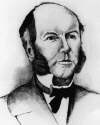
Born 19 Dec 1813; died 26 Nov 1885 at age 71. quotes
Irish physical chemist who demonstrated the continuity of the gaseous and liquid states whereby during changes between the two states, physical properties display no abrupt changes. He discovered the critical temperature for carbon dioxide (1861), above which the gas cannot be liquefied by pressure alone. He wrote: We may yet live to see...such bodies as oxygen and hydrogen in the liquid, perhaps even in the solid state. He accurately measured heats of neutralisation, formation and reaction; and latent heats of evaporation. Andrews was the first to use a "bomb calorimeter" - a strong, sealed, metal vessel for measuring heat of combustion. He studied ozone, and proved that is an allotrope - or altered form - of oxygen.«
Irish physical chemist who demonstrated the continuity of the gaseous and liquid states whereby during changes between the two states, physical properties display no abrupt changes. He discovered the critical temperature for carbon dioxide (1861), above which the gas cannot be liquefied by pressure alone. He wrote: We may yet live to see...such bodies as oxygen and hydrogen in the liquid, perhaps even in the solid state. He accurately measured heats of neutralisation, formation and reaction; and latent heats of evaporation. Andrews was the first to use a "bomb calorimeter" - a strong, sealed, metal vessel for measuring heat of combustion. He studied ozone, and proved that is an allotrope - or altered form - of oxygen.«
The Scientific Papers of the Late Thomas Andrews, by Thomas Andrews. - book suggestion.
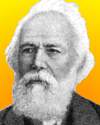
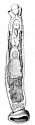
Belgian parasitologist and paleontologist who discovered the life cycle of tapeworms (Cestoda). In the earlier part of his career he directed his attention especially to invertebrates and particularly to marine invertebrates. In 1843 he established at his own expense a marine laboratory and an aquarium to further enable his studies, and this is believed to have been one of the earliest if not actually the first example of a place of study of its kind in the world. Associated with this part of his work were his classical studies in connection with parasitic worms. He expanded his studies to cetacea, living and extinct, and examined a number of bones of fossil whales uncovered by excavations during construction of fortifications for Antwerp.«[Image right: Udonella caligorum(source) ]
Born 19 Dec 1783; died 29 Apr 1864 at age 80.
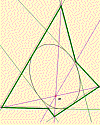
French mathematician who published a geometrical theorem (named as Brianchon's theorem) while a student (1806). He showed that in any hexagon formed of six tangents to a conic, the three diagonals meet at a point. (Conics include circles, ellipses, parabolas, and hyperbolas.) In fact, this theorem is simply the dual of Pascal's theorem which was proved in 1639. After graduation, Brianchon became a lieutenant in artillery fighting in Napoleon's army until he left active service in 1813 due to ill health. His last work in mathematics made the first use of the term "nine-point circle." By 1823, Brianchon's interests turned to teaching and to chemistry.«
French mathematician who published a geometrical theorem (named as Brianchon's theorem) while a student (1806). He showed that in any hexagon formed of six tangents to a conic, the three diagonals meet at a point. (Conics include circles, ellipses, parabolas, and hyperbolas.) In fact, this theorem is simply the dual of Pascal's theorem which was proved in 1639. After graduation, Brianchon became a lieutenant in artillery fighting in Napoleon's army until he left active service in 1813 due to ill health. His last work in mathematics made the first use of the term "nine-point circle." By 1823, Brianchon's interests turned to teaching and to chemistry.«
Born 19 Dec 1498; died 17 Oct 1552 at age 53. quotes
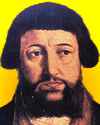
Andreas Osiander, born as Andreas Hosemann was a German theologian who pursued mathematical sciences as a hobby. He replaced Rheticus as editor of Nicolaus Copernicus’ De revolutionibus. However, Osiander refused to accept the theories as truth, which he regarded as coming only from divine revelation. Therefore, going against what he knew were the wishes of Rheticus and Copernicus, Osiander imposed his views, and provided the printer with his own anonymous preface (that he had written) presenting the Coperican theories as mere hypotheses, without certainty. In consequence, though, it helped delay controversy, and the work was not added to the Index of Forbidden Books until the following century. Osiander also editted Cardano's Artis Magnae, which introduced the theory of algebraic equations.«
Andreas Osiander, born as Andreas Hosemann was a German theologian who pursued mathematical sciences as a hobby. He replaced Rheticus as editor of Nicolaus Copernicus’ De revolutionibus. However, Osiander refused to accept the theories as truth, which he regarded as coming only from divine revelation. Therefore, going against what he knew were the wishes of Rheticus and Copernicus, Osiander imposed his views, and provided the printer with his own anonymous preface (that he had written) presenting the Coperican theories as mere hypotheses, without certainty. In consequence, though, it helped delay controversy, and the work was not added to the Index of Forbidden Books until the following century. Osiander also editted Cardano's Artis Magnae, which introduced the theory of algebraic equations.«

Died 19 Dec 2004 at age 92 (born 22 May 1912). quotes
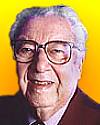
English-born American chemist who developed organoboranes (compounds of boron, carbon and hydrogen) which provided many new techniques in synthetic organic chemistry. For this accomplishment, he shared (with Georg Wittig) the 1979 Nobel Prize for Chemistry. The versatility of organoboranes as reagents in reductions, additions and rearrangements provides new ways of linking carbon atoms to each other. Applications of organoboranes now include the manufacture of agricultural and pharmaceutical chemicals (such as the antidepressant Prozac). In graduate research during WW II, he discovered a method to produce sodium borohydride, giving a new approach to making hydrogen gas, used in weather balloons and later in fuel cells.«
English-born American chemist who developed organoboranes (compounds of boron, carbon and hydrogen) which provided many new techniques in synthetic organic chemistry. For this accomplishment, he shared (with Georg Wittig) the 1979 Nobel Prize for Chemistry. The versatility of organoboranes as reagents in reductions, additions and rearrangements provides new ways of linking carbon atoms to each other. Applications of organoboranes now include the manufacture of agricultural and pharmaceutical chemicals (such as the antidepressant Prozac). In graduate research during WW II, he discovered a method to produce sodium borohydride, giving a new approach to making hydrogen gas, used in weather balloons and later in fuel cells.«
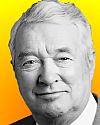
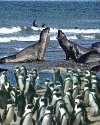
Alton A(nthony) Lindsey, an American biologist, was a pioneer ecologist and conservationist who mobilized support from scientists, educators and in Congress to preserve the Indiana shore of Lake Michigan. In Oct 1966, the 5,800 acre Indiana Dunes National Lakeshore was established. In his early career, he travelled to Antarctica as vertebrate zoologist for Adm. Richard E. Byrd's second expedition (1933-35). Lindsey studied the continent's animal life: seals and penguins. Throughout his life he observed the planetary ecosystem in many lands, on the seas, in plains and prairies, the deserts and mountains, forests, the tropics, and both polar regions. At his death, he was believed to be the last living scientist from the Antarctica expeditions.«
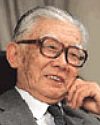
Died 19 Dec 1998 at age 90 (born 11 Apr 1908). quotes
Japanese electronics pioneer who co-founded a small post-war radio-repair company that grew into the giant Sony Corporation. He changed the Japanese electronics industry from simply copying Western products to innovation with their own electronic products. He introduced transistor technology to Japan. Sony progressed from making the first Japanese transistor radio to manufacturing the world's first transistorized television set. In the 1960's Ibuka pioneered color television. He retired from management in 1976, and turned to research that developed products such as the creative Walkman and the compact disc player. His accomplishments were significant in building consumer confidence in Japanese electronic products and rebuilding Asian economies.«
Japanese electronics pioneer who co-founded a small post-war radio-repair company that grew into the giant Sony Corporation. He changed the Japanese electronics industry from simply copying Western products to innovation with their own electronic products. He introduced transistor technology to Japan. Sony progressed from making the first Japanese transistor radio to manufacturing the world's first transistorized television set. In the 1960's Ibuka pioneered color television. He retired from management in 1976, and turned to research that developed products such as the creative Walkman and the compact disc player. His accomplishments were significant in building consumer confidence in Japanese electronic products and rebuilding Asian economies.«
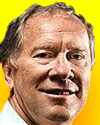
Died 19 Dec 1997 at age 52 (born 25 Oct 1945). quotes
American theoretical astrophysicist who was an authority on the particle-physics aspects of the Big Bang theory of the origin of the universe. He considered the nuclear physics involved in the synthesis of the light elements created during the Big Bang comprising mainly hydrogen, with lesser quantities of deuterium, helium, lithium, beryllium and boron. He predicted, from cosmological considerations, that a third family of neutrinos existed - which was later proven in particle accelerator experiments (1989). Schramm worked to evaluate undetected dark matter that contributed to the mass of the universe, and which would determine whether the universe would ultimately continue to expand. He died in the crash of the small airplane he was piloting.«
American theoretical astrophysicist who was an authority on the particle-physics aspects of the Big Bang theory of the origin of the universe. He considered the nuclear physics involved in the synthesis of the light elements created during the Big Bang comprising mainly hydrogen, with lesser quantities of deuterium, helium, lithium, beryllium and boron. He predicted, from cosmological considerations, that a third family of neutrinos existed - which was later proven in particle accelerator experiments (1989). Schramm worked to evaluate undetected dark matter that contributed to the mass of the universe, and which would determine whether the universe would ultimately continue to expand. He died in the crash of the small airplane he was piloting.«
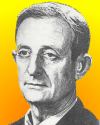
Died 19 Dec 1996 at age 92 (born 27 Feb 1904).
Russian physicist who played a key role in the development of the Soviet Union's nuclear weapons and nuclear physics research. Khariton began his career as a researcher in chemical physics, studying combustion and explosion effects. In 1926-28 he studied and worked in Ernest Rutherford's Laboratory in Cambridge, England. Upon his return to the Soviet Union, he directed nuclear research at the Arzamas-16 centre through the 1930's and 1940's. He oversaw the preparation, assembly and detonation of the Soviet atomic bomb, which was built using stolen blueprints of the American plutonium bomb. The first Soviet A-bomb was detonated on 29 Aug 1949 at the Semipalatinsk test range.«
Russian physicist who played a key role in the development of the Soviet Union's nuclear weapons and nuclear physics research. Khariton began his career as a researcher in chemical physics, studying combustion and explosion effects. In 1926-28 he studied and worked in Ernest Rutherford's Laboratory in Cambridge, England. Upon his return to the Soviet Union, he directed nuclear research at the Arzamas-16 centre through the 1930's and 1940's. He oversaw the preparation, assembly and detonation of the Soviet atomic bomb, which was built using stolen blueprints of the American plutonium bomb. The first Soviet A-bomb was detonated on 29 Aug 1949 at the Semipalatinsk test range.«
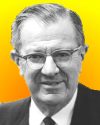
Died 19 Dec 1982 at age 82 (born 7 Jun 1900).
American electrical engineer whose research during WW II produced valuable radar countermeasures for the allied forces. He directed the Radio Research Laboratory at Harvard University formed for the purpose of inventing jammers of enemy radar, which included active radio transmitters, passive chaff (aluminium strips to mask targets by producing invalid reflections to enemy radar), and tunable receivers to detect radar signals. Terman also had responsibility for advising industrial contractors (such as RCA, GE, and Western Electric) concerning their manufacture. The radio electronics textbooks were popular because of his clarity. After the war, Terman worked on the design of long-distance electrical transmission and resonant transmission lines.«
American electrical engineer whose research during WW II produced valuable radar countermeasures for the allied forces. He directed the Radio Research Laboratory at Harvard University formed for the purpose of inventing jammers of enemy radar, which included active radio transmitters, passive chaff (aluminium strips to mask targets by producing invalid reflections to enemy radar), and tunable receivers to detect radar signals. Terman also had responsibility for advising industrial contractors (such as RCA, GE, and Western Electric) concerning their manufacture. The radio electronics textbooks were popular because of his clarity. After the war, Terman worked on the design of long-distance electrical transmission and resonant transmission lines.«
Fred Terman at Stanford: Building a Discipline, a University, and Silicon Valley, by C. Stewart Gillmor. - book suggestion.
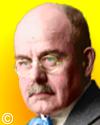
Died 19 Dec 1954 at age 85 (born 2 Feb 1869). quotes
American zoologist known for work on sensitivity and reactivity of animal organisms, but especially on reproduction, development, and especially regeneration. In 1911, he formulated the axial gradient theory. He believed that when a simple animal regenerates after an injury, the physiological stages occur along an axis, with each successive process appearing to be connected with the stage immediately preceeding it. He observed a similarity between such regeneration and embryonic development in that the dominant section is formed first, with the lesser ones following. Though present knowledge views his theory as incorrect, in its time, it represented an early approach to understanding functional organization within organisms.«
American zoologist known for work on sensitivity and reactivity of animal organisms, but especially on reproduction, development, and especially regeneration. In 1911, he formulated the axial gradient theory. He believed that when a simple animal regenerates after an injury, the physiological stages occur along an axis, with each successive process appearing to be connected with the stage immediately preceeding it. He observed a similarity between such regeneration and embryonic development in that the dominant section is formed first, with the lesser ones following. Though present knowledge views his theory as incorrect, in its time, it represented an early approach to understanding functional organization within organisms.«
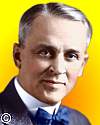
Died 19 Dec 1953 at age 85 (born 22 Mar 1868). quotes
American physicist who was awarded the 1923 Nobel Prize for Physics for “his work on the elementary charge of electricity and on the photoelectric effect.” Millikan's famous oil-drop experiment (1911) was far superior to previous determinations of the charge of an electron, and further showed that the electron was a fundamental, discrete particle. When its value was substituted in Niels Bohr's theoretical formula for the hydrogen spectrum, that theory was validated by the experimental results. Thus Millikan's work also convincingly provided the first proof of Bohr's quantum theory of the atom. In later work, Millikan coined the term “cosmic rays” in 1925 during his study of the radiation from outer space.«
American physicist who was awarded the 1923 Nobel Prize for Physics for “his work on the elementary charge of electricity and on the photoelectric effect.” Millikan's famous oil-drop experiment (1911) was far superior to previous determinations of the charge of an electron, and further showed that the electron was a fundamental, discrete particle. When its value was substituted in Niels Bohr's theoretical formula for the hydrogen spectrum, that theory was validated by the experimental results. Thus Millikan's work also convincingly provided the first proof of Bohr's quantum theory of the atom. In later work, Millikan coined the term “cosmic rays” in 1925 during his study of the radiation from outer space.«
The electron: Its isolation and measurement and the determination of some of its properties, by Robert Andrews Millikan. - book suggestion.
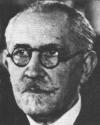
Died 19 Dec 1946 at age 74 (born 23 Jan 1872). quotes
French physicist who was the first to explain (1905) the effects of paramagnetism and diamagnetism (the weak attraction or repulsion of substances in a magnetic field) using statistical mechanics. He further theorized how the effects could be explained by how electron charges behaved within the atom. He popularized Einstein's theories for the French public. During WW I, he began developing a source for high intensity ultrasonic waves, which made sonar detection of submarines possible. He created the ultrasound from piezoelectric crystals vibrated by high-frequency radio circuits. In WW II, he spoke out against the Nazis, for which he was arrested and imprisoned, though he managed to escaped and fled to Switzerland.«
French physicist who was the first to explain (1905) the effects of paramagnetism and diamagnetism (the weak attraction or repulsion of substances in a magnetic field) using statistical mechanics. He further theorized how the effects could be explained by how electron charges behaved within the atom. He popularized Einstein's theories for the French public. During WW I, he began developing a source for high intensity ultrasonic waves, which made sonar detection of submarines possible. He created the ultrasound from piezoelectric crystals vibrated by high-frequency radio circuits. In WW II, he spoke out against the Nazis, for which he was arrested and imprisoned, though he managed to escaped and fled to Switzerland.«
An Introduction to Stochastic Processes in Physics: Containing "On the Theory of Brownian Motion: by Paul Langevin", by Don S. Lemons. - book suggestion.
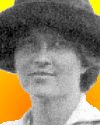
Died 19 Dec 1941 at age 66 (born 27 Nov 1875).
U.S. ethnologist and anthropologist who was an expert on the customs of Indian tribes of the southwestern United States, especially the Hopi and Pueblo. Despite being raised in a socially prominent family, she asserted he independence and became an outspoken feminist. Influenced by meeting anthropologist Franz Boas during a visit to the southwest U.S. (1915), she became interested in work among native Americans of that region. Thus began 25-years of diligent study of native American life. In 1939 she published Pueblo Indian Religion in two volumes. Boas complimented this massive collection as "a summary of practically all we know about Pueblo religion and an indispensable source book for every student of Indian life."«
U.S. ethnologist and anthropologist who was an expert on the customs of Indian tribes of the southwestern United States, especially the Hopi and Pueblo. Despite being raised in a socially prominent family, she asserted he independence and became an outspoken feminist. Influenced by meeting anthropologist Franz Boas during a visit to the southwest U.S. (1915), she became interested in work among native Americans of that region. Thus began 25-years of diligent study of native American life. In 1939 she published Pueblo Indian Religion in two volumes. Boas complimented this massive collection as "a summary of practically all we know about Pueblo religion and an indispensable source book for every student of Indian life."«
Elsie Clews Parsons: Inventing Modern Life, by Desley Deacon. - book suggestion.
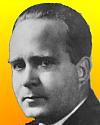
Died 19 Dec 1936 at age 41 (born 21 Sep 1895).
Juan de la Cierva (Codorniu) was a Spanish aeronautical engineer who invented the autogiro (1923), a predecessor to the helicopter. Its rotor, mounted on a mast, was not powered but provided lift by auto-rotation. Power was provided by a forward-mounted engine and a conventional propeller. Flight was controlled by elevators, a rudder, and usually ailerons, though some roll control could be achieved by adjusting the tilt of the rotor head. Unlike the later helicopters, it could not take off vertically nor hover though it could takeoff and land in a much shorter distance, it could. However, if an autogiro lost power, it could spin safely back down to earth like a maple seed. He died in a fixed-wing plane accident.«
Juan de la Cierva (Codorniu) was a Spanish aeronautical engineer who invented the autogiro (1923), a predecessor to the helicopter. Its rotor, mounted on a mast, was not powered but provided lift by auto-rotation. Power was provided by a forward-mounted engine and a conventional propeller. Flight was controlled by elevators, a rudder, and usually ailerons, though some roll control could be achieved by adjusting the tilt of the rotor head. Unlike the later helicopters, it could not take off vertically nor hover though it could takeoff and land in a much shorter distance, it could. However, if an autogiro lost power, it could spin safely back down to earth like a maple seed. He died in a fixed-wing plane accident.«
Cierva Autogiros: The Development of Rotary-Wing Flight, by Peter W. Brooks. - book suggestion.
click to enlarge
Died 19 Dec 1934 at age 59 (born 6 Nov 1875).
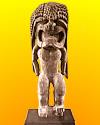
Roland Burrage Dixon was an American cultural anthropologist who built Harvard's reputation for training anthropologists. After graduating from Harvard (1897) while an assistant at its Peabody Museum, he made archaeological excavations of the burial mounds in Madisonville, Ohio. He first visited the Indians of California in 1899, and with subsequent studies there through 1907 became a recognized authority on their ethnography, folklore, and linguistics. He travelled widely in his field work, making studies in Siberia, Mongolia, the Himalayas, and Oceania. He published work on the geographical distributions of cultural traits of diverse populations around the world in The Racial History of Man (1923).«[Image: Kuila-moku, one of the Hawaiian patron deities of medicine. Frontispiece in his Oceanic Mythology (1916).]
Roland Burrage Dixon was an American cultural anthropologist who built Harvard's reputation for training anthropologists. After graduating from Harvard (1897) while an assistant at its Peabody Museum, he made archaeological excavations of the burial mounds in Madisonville, Ohio. He first visited the Indians of California in 1899, and with subsequent studies there through 1907 became a recognized authority on their ethnography, folklore, and linguistics. He travelled widely in his field work, making studies in Siberia, Mongolia, the Himalayas, and Oceania. He published work on the geographical distributions of cultural traits of diverse populations around the world in The Racial History of Man (1923).«[Image: Kuila-moku, one of the Hawaiian patron deities of medicine. Frontispiece in his Oceanic Mythology (1916).]
The Buildings of Cultures, by Roland B. Dixon. - book suggestion.
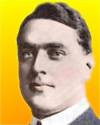
Died 19 Dec 1933 at age 57 (born 19 Mar 1876).
U.S. mechanical engineer who advanced the design of steam turbines with simplifications, increased capacity and improved methods of manufacturing. Early in his career as a machinist and draftsman for a railroad, he invented a braking control for trains having several locomotives (1904) and a mechanism to regulate braking power according to the weight of the car. By 1908, he was vice president and general manager of the Westinghouse Machine Company. In developing steam turbines (1913), he brought together elements of the highly efficient Parsons system with elements of the lighter Curtis- Rateau impulse system. He also pioneered in propulsion of marine vessels, and remote-control to operate a ship's engine from the bridge (1916).« more
U.S. mechanical engineer who advanced the design of steam turbines with simplifications, increased capacity and improved methods of manufacturing. Early in his career as a machinist and draftsman for a railroad, he invented a braking control for trains having several locomotives (1904) and a mechanism to regulate braking power according to the weight of the car. By 1908, he was vice president and general manager of the Westinghouse Machine Company. In developing steam turbines (1913), he brought together elements of the highly efficient Parsons system with elements of the lighter Curtis- Rateau impulse system. He also pioneered in propulsion of marine vessels, and remote-control to operate a ship's engine from the bridge (1916).« more
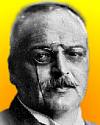
Died 19 Dec 1915 at age 51 (born 14 Jun 1864).
German psychiatrist who recognized the disease named after him. In Nov 1901, a 51-year old female patient with signs of dementia had been admitted to the Frankfurt hospital where Dr. Alzheimer was working. At a meeting German psychiatrists in Nov 1906, Alzheimer reported on this patient. The title of his lecture was Über eiene eigenartige Erkrankung der Hirnrinde (On a peculiar disorder of the cerebral cortex). Later on, at the suggestion of Emil Kraepelin, presenile dementia was designated “Alzheimer's disease.” This disease is a progressive, degenerative disorder that affects the brain. The first symptoms are loss of memory, inability to think and understand and gradual behaviour changes. Death follows in from 8 to 20 years.«
German psychiatrist who recognized the disease named after him. In Nov 1901, a 51-year old female patient with signs of dementia had been admitted to the Frankfurt hospital where Dr. Alzheimer was working. At a meeting German psychiatrists in Nov 1906, Alzheimer reported on this patient. The title of his lecture was Über eiene eigenartige Erkrankung der Hirnrinde (On a peculiar disorder of the cerebral cortex). Later on, at the suggestion of Emil Kraepelin, presenile dementia was designated “Alzheimer's disease.” This disease is a progressive, degenerative disorder that affects the brain. The first symptoms are loss of memory, inability to think and understand and gradual behaviour changes. Death follows in from 8 to 20 years.«
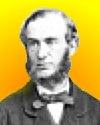
Died 19 Dec 1887 at age 59 (born 1 Nov 1828). quotes
Scottish meteorologist and geophysicist who studied terrestrial magnetism and radiant heat. His researches on radiant heat contributed to foundation of spectrum analysis. He was the first to discover that bodies radiate and absorb energy of the same wavelength. In meteorology, he pioneered in ionospheric science, making a special study of terrestrial magnetism. He proposed (1882) that the daily variation in the Earth's magnetic field could be due to air currents in the upper atmosphere, which act as conductors and generate electrical currents as they pass through the Earth's magnetic field. He also investigated sunspots. In 1887, he suffered a stroke while crossing to spend Christmas at his estate in Ireland and died soon after at the age of 59.«
Scottish meteorologist and geophysicist who studied terrestrial magnetism and radiant heat. His researches on radiant heat contributed to foundation of spectrum analysis. He was the first to discover that bodies radiate and absorb energy of the same wavelength. In meteorology, he pioneered in ionospheric science, making a special study of terrestrial magnetism. He proposed (1882) that the daily variation in the Earth's magnetic field could be due to air currents in the upper atmosphere, which act as conductors and generate electrical currents as they pass through the Earth's magnetic field. He also investigated sunspots. In 1887, he suffered a stroke while crossing to spend Christmas at his estate in Ireland and died soon after at the age of 59.«
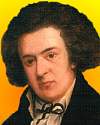
Died 19 Dec 1815 at age 49 (born 10 Feb 1766).
American naturalist who wrote the first botanical textbook published in the U.S. His Elements of Botany (1803) which reached a sixth edition, including three after his death. In 1789, aged 23, he became a professor of natural history at the University of Pennsylvania in Philadelphia. He brought together 1,674 specimens of native plants between 1797 and 1807 to form a herbarium that was the largest of the time. The number of books he owned also comprised the largest private natural history library of its time. The Elements textbook was illustrated by William Bartram. Barton died at age 49 leaving incomplete the project entrusted to him to classify the plant specimens brought back from the Lewis and Clark expedition.«
American naturalist who wrote the first botanical textbook published in the U.S. His Elements of Botany (1803) which reached a sixth edition, including three after his death. In 1789, aged 23, he became a professor of natural history at the University of Pennsylvania in Philadelphia. He brought together 1,674 specimens of native plants between 1797 and 1807 to form a herbarium that was the largest of the time. The number of books he owned also comprised the largest private natural history library of its time. The Elements textbook was illustrated by William Bartram. Barton died at age 49 leaving incomplete the project entrusted to him to classify the plant specimens brought back from the Lewis and Clark expedition.«
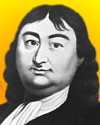
Died 19 Dec 1741 at age 60 (born 12 Aug 1681).
Vitus Jonassen Bering was a Danish-Russian navigator who helped establish that Asia and America are two separate continents. He joined the Dutch navy as a young man, and later the Russian navy. He was commissioned by Tsar Peter the Great to travel the coast of Asia to see if it was connected to North America. He sailed through the Bering Strait in 1728. He discovered Alaska on his second voyage (1741), with several scientists on board, explored its coast, and discovered the Aleutian Islands. He died stranded during the winter following a shipwreck. The Bering Sea and Bering Island (where he died) are also named for him.«
Vitus Jonassen Bering was a Danish-Russian navigator who helped establish that Asia and America are two separate continents. He joined the Dutch navy as a young man, and later the Russian navy. He was commissioned by Tsar Peter the Great to travel the coast of Asia to see if it was connected to North America. He sailed through the Bering Strait in 1728. He discovered Alaska on his second voyage (1741), with several scientists on board, explored its coast, and discovered the Aleutian Islands. He died stranded during the winter following a shipwreck. The Bering Sea and Bering Island (where he died) are also named for him.«
Bering: The Russian Discovery of America, by Professor Orcutt Frost. - book suggestion.
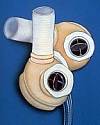
In 1985, Mary Lund of Minnesota became the first woman to receive a Jarvik VII artificial heart in Minneapolis. Lund received a human heart transplant 45 days later. She survived until October 1986. The Jarvik-7 has two pumps, much like the heart's ventricles. Each sphere-shaped polyurethane "ventricle" has a disk-shaped mechanism that pushes the blood from the inlet valve to the outlet valve. The ventricles are powered by air pulses at rates of 40 to 120 beats per minute. The artificial heart is attached to the heart's natural atria by cuffs made of Dacron felt. The drive-lines exit the left side of the body, to an external air power supply. Now called the CardioWest total artificial heart, it is used as a bridge to transplantation.«
After Barney Clark: Reflections on the Utah Artificial Heart Program, by Margery W. Shaw. - book suggestion.
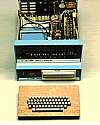
In 1974, the pioneering Altair 8800 microcomputer was first put on sale in the U.S. as a do-it-yourself computer kit, for $397. It used switches for input and flashing lights as a display. Ed Roberts founded Micro Instrumentation and Telemetry Systems (MITS) to market his product that used the 8800 microprocessor. The demand for the $395.00 machine exceeded the manufacturer's wildest expectations. The Altair 8800 was featured on the cover of the Jan 1975 issue of Popular Electronics. The first commercially successful personal computer, the Commodore PET, which integrated a keyboard and monitor in its case, came out in early 1977. The Apple II followed later that year.
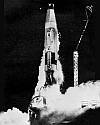
In 1958, the first known radio broadcast from outer space was transmitted. President Eisenhower's voice issued a Christmas greeting from a pre-recorded tape on a recorder aboard an orbiting space satellite. His full message was, "This is the President of the United States speaking. Through the marvels of scientific advance, my voice is coming to you from a satellite circling in outer space. My message is a simple one. Through this unique means I convey to you and all mankind America's wish for peace on earth and good will to men everywhere." The broadcast came from the first experimental satellite, Project SCORE, which had been launched two days earlier. The battery-operated 132 MHz all vacuum tubes transmitter had an 8-W output.[Image: An Atlas-B rocket of the type used to launch the Project SCORE satellite.]
(USPTO)
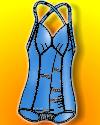
In 1950, Rose Marie Reid of Los Angeles, California, received a U.S. patent for a one-piece bathing suit (No. 2,535,018) "embodying a novel construction for causing it to snugly fit the body of a wearer in a flattering manner," using elastic fabric. It would "shape and support portions of the body of the wearer in areas of the bust and abdomen in a flattering manner without discomfort or impedance to free movements of the body." The elastic fabric and elastic securing bands were designed to enable the garment to be put on without having buttoned openings which would "detract from the appearance of the garment." She assigned the patent to a corporation with her name through which she was a successful businesswoman and swimsuit designer.
Rose Marie Reid: An Extraordinary Life Story, by Carole Reid Burr, et al. - book suggestion.
1n 1944, the first patent for an atomic pile, titled “Neutronic Reactor,” was filed by Enrico Fermi and Leo Szilard. It remained highly classified, and was not issued until 17 May 1955 (No. 2,708,656). Work on the initial patent application had began six months before the reactor was completed at the University of Chicago's Metallurgical Laboratory (predecessor to Argonne National Laboratory). The patent had 42 diagrams, and described the method by which a self-sustaining nuclear chain reaction had been accomplished. Fermi, Szilard and their team of scientists ushered in the nuclear age when they achieved the world's first controlled, self-sustaining nuclear chain reaction on 2 Dec 1942. Fermi died on 28 Nov 1954, six months before the patent was issued.

In 1930, the first autogyro pilot to carry a passenger was Amelia Earhart at Pitcairn Field, Willow Grove, Pa. She flew a PCA-2 Pitcairn Autogyro, making several trips with various passengers until dark. It was only on the previous day, 18 Dec 1930, that she made her first solo flight in the autogyro, also making her the first female to make a solo flight. Two years before, on 19 Dec 1928, the first autogyro flight had been made there. Harold F. Pitcairn had brought the aircraft to America and formed the Pitcairn-Cieva Autogyro Company of America for licensing the manufacture of the autogiro in the U.S.
more
Amelia Earhart: The Truth at Last, by Mike Campbell. - book suggestion.

In 1910, rayon was first commercially produced, in Marcus Hook, Pa, USA, by the American Viscose Company. At the time, it was known by the name of artificial silk or a similar name. The patents had been acquired from the General Artificial Silk Company of Lansdowne, Pa. It was not until 1924 that the term rayon was adopted. Production in 1911 was 362,000 pounds.
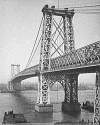
In 1903, the Williamsburg Bridge, was opened in New York City. This was America's first major suspension bridge using steel towers instead of the customary masonry towers. It was built to alleviate traffic on the Brooklyn Bridge and to provide a link between Manhattan and the Williamsburg section of Brooklyn, and was the second of three steel-frame suspension bridges to span the East River. Designed by Leffert L. Buck and Henry Hornbostel, it had taken over seven years to complete. The 1,600 foot Williamsburg Bridge was the world's longest suspension bridge until the 1920s. It had cost $24,100,000 for the land and construction.
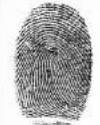
In 1902, the first fingerprint file in the U.S. was initiated when the first fingerprint impression record was taken from James Johnson, an applicant for a job as a city fireman. The file was established for bureaucratic, not criminal reasons, to identifiy candidates taking the New York City Civil Service examination. It had become necessary to end a problem with impersonation by hired stand-ins taking the test on behalf of applicants for jobs as police or firemen. The medical examiner in charge of the physical exams, Dr. Henry P. DeForest, had been given the task of implementing a suitable identification procedure. He travelled to England and learned first-hand about the new fingerprinting procedures at Scotland Yard.«
(USPTO)
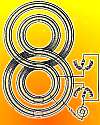
In 1899, black American inventor, Granville T. Woods was issued a U.S. patent for an "Amusement Apparatus" (No. 639,692). Woods, as the most prolific African-American inventor of the late 19th and early 20th centuries, has been called the black Edison. His numerous inventions included a steam-boiler furnace, telephone, telegraph system, electric railway and automatic air brake for railroad safety. This patent design was for small scale or large scale electrically-driven cars on a closed track, such as a figure-8 layout . If carrying persons, Woods claimed that it was suitable for amusement "use at summer and other resorts, at fairs, &c., and in or out of doors." The track could cross at different levels, or on the same level.«
more
Black Inventors in the Age of Segregation, by Rayvon Fouche. - book suggestion.
In 1899, black American inventor, Jerome Bonapart. Rhodes received a patent for an invention concerning "Water Closets" (No. 639,290).
The Inventive Spirit of African Americans: Patented Ingenuity, by Patricia Carter Sluby. - book suggestion.
(USPTO)
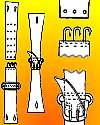
In 1871, Samuel Clemens received a patent for "An Improvement in Adjustable and Detachable Garment Straps" (No.121,992). He is better known as the author Mark Twain (1835-1910). The patent drawing showed elastic straps that were designed to be adjustable and detachable, suitable for "vests, pantaloons, or other garments." One part of the strap had several parallel rows of holes into which were inserted hooks at the end of the second part. That part could be adjusted for length using a slide. He subsequently held two more patents. One was for "Mark Twain's Self-Pasting Scrapbook" in 1873 (No. 140,245), and the other in 1885 for an educational game that helped players remember important historical dates (No. 324,535).«
more

In 1871, Albert L. Jones of New York City received the first U.S. patent for corrugated paper as an "improvement in paper for packing" (No. 122,023). He assigned his patent to Thomson and Norris Company of Brooklyn, which became the first U.S. manufacturer of corrugated paper. It was not until later that a facing sheet was applied to one or two sides to make single-face or double-face corrugated cardboard. Boxes made from corrugated paper came into use in about 1890.

(USPTO)