Born 23 May 1954.
British embryologist who was the key member of a team of scientists at Roslin Institute, Edinburgh, Scotland that produced the first mammal clone, a lamb called Dolly, by nuclear transfer from an adult's cell. The reproduced DNA material came from a donor sheep's udder cell. Dolly's birth, on 5 Jul 1996, was announced on 23 Feb 1997. The team was supervised by Ian Wilmut.«
British embryologist who was the key member of a team of scientists at Roslin Institute, Edinburgh, Scotland that produced the first mammal clone, a lamb called Dolly, by nuclear transfer from an adult's cell. The reproduced DNA material came from a donor sheep's udder cell. Dolly's birth, on 5 Jul 1996, was announced on 23 Feb 1997. The team was supervised by Ian Wilmut.«
Born 23 May 1934; died 21 Aug 2005 at age 71.
Robert Arthur Moog was an American engineer and inventor who advanced electronic music with his Moog synthesizer. His passion for building electronic circuits began in his youth, and at age 14 he had built a theremin. While a post-graduate, Moog developed his first analog electronic synthesizer, complete with control dials to create a wide spectrum of modifications of sound waveforms generated from electronic oscillator circuits. By the 1960s, he had a portable model, the Minimoog, which provided many rock groups with distinctive sounds. In 1968 Walter (later Wendy) Carlos won a Grammy for Switched on Bach, with all instrument tracks played entirely on a Moog synthesizer.«
Robert Arthur Moog was an American engineer and inventor who advanced electronic music with his Moog synthesizer. His passion for building electronic circuits began in his youth, and at age 14 he had built a theremin. While a post-graduate, Moog developed his first analog electronic synthesizer, complete with control dials to create a wide spectrum of modifications of sound waveforms generated from electronic oscillator circuits. By the 1960s, he had a portable model, the Minimoog, which provided many rock groups with distinctive sounds. In 1968 Walter (later Wendy) Carlos won a Grammy for Switched on Bach, with all instrument tracks played entirely on a Moog synthesizer.«
Born 23 May 1925.
American geneticist, pioneer in the field of bacterial genetics, who shared the 1958 Nobel Prize for Physiology or Medicine (with George W. Beadle and Edward L. Tatum) for discovering the mechanisms of genetic recombination in bacteria.
American geneticist, pioneer in the field of bacterial genetics, who shared the 1958 Nobel Prize for Physiology or Medicine (with George W. Beadle and Edward L. Tatum) for discovering the mechanisms of genetic recombination in bacteria.
Born 23 May 1917; died 16 Apr 2008 at age 90. quotes
American mathematician and meteorologist known for pointing out the “butterfly effect” whereby chaos theory predicts that “slightly differing initial states can evolve into considerably different states.” In his 1963 paper in the Journal of Atmospheric Sciences, he cited the flapping of a seagull’s wings as changing the state of the atmosphere in even such a trivial way can result in huge changes in outcome in weather patterns. Thus very long range weather forecasting becomes almost impossible. He determined this unexpected result in 1961 while running a computer weather simulation that gave wildly different results from even tiny changes in the input data.«
American mathematician and meteorologist known for pointing out the “butterfly effect” whereby chaos theory predicts that “slightly differing initial states can evolve into considerably different states.” In his 1963 paper in the Journal of Atmospheric Sciences, he cited the flapping of a seagull’s wings as changing the state of the atmosphere in even such a trivial way can result in huge changes in outcome in weather patterns. Thus very long range weather forecasting becomes almost impossible. He determined this unexpected result in 1961 while running a computer weather simulation that gave wildly different results from even tiny changes in the input data.«
Chaos: Making a New Science, by James Gleick. - book suggestion.
Born 23 May 1915; died 5 Jul 1996 at age 81.
American physicist who worked on the Manhattan Project (which produced the atomic bomb during WW II). In the 1950's, he was part of a team that discovered the antiproton, using the bevatron particle accelerator at Lawrence Berkeley National Laboratory. Although two other members of the research team (Owen Chamberlain and Emilio Segrè) won the 1959 Nobel Prize in Physics for this work, Wiegand's crucial contribution was not so recognized.
American physicist who worked on the Manhattan Project (which produced the atomic bomb during WW II). In the 1950's, he was part of a team that discovered the antiproton, using the bevatron particle accelerator at Lawrence Berkeley National Laboratory. Although two other members of the research team (Owen Chamberlain and Emilio Segrè) won the 1959 Nobel Prize in Physics for this work, Wiegand's crucial contribution was not so recognized.
Born 23 May 1912; died 11 Sep 1981 at age 69.
American anthropologist who served as chairman (1956-57) of the anthropology department and acting director of African studies (1953, 1957) at Northwestern University, Evanston, Ill.
American anthropologist who served as chairman (1956-57) of the anthropology department and acting director of African studies (1953, 1957) at Northwestern University, Evanston, Ill.
Born 23 May 1908; died 30 Jan 1991 at age 82. quotes
American physicist who was cowinner of the Nobel Prize for Physics in both 1956 and 1972. He shared the 1956 prize with William B. Shockley and Walter H. Brattain for their joint invention of the transistor. With Leon N. Cooper and John R. Schrieffer he was awarded the 1972 prize for development of the theory of superconductors, usually called the BCS-theory (after the initials of their names).
American physicist who was cowinner of the Nobel Prize for Physics in both 1956 and 1972. He shared the 1956 prize with William B. Shockley and Walter H. Brattain for their joint invention of the transistor. With Leon N. Cooper and John R. Schrieffer he was awarded the 1972 prize for development of the theory of superconductors, usually called the BCS-theory (after the initials of their names).
True Genius: The Life And Science Of John Bardeen, by Lillian Hoddeson. - book suggestion.
Born 23 May 1862; died 6 Nov 1927 at age 65. quotes
English archaeologist who explored and excavated (1887–1907) in Cyprus, Crete, Egypt, Syria, and Melos. While Keeper of the Ashmolean Museum, Oxford (1908 until death 1927), he met T. E. Lawrence. Hogarth mentored him and arranged for him to join a British Museum excavation at Carchemish in northern Syria, where Lawrence also supported the Ashmolean as a buyer of Syrian antiquities. During WW I, Hogarth prepared reference works on the Middle East for the Geographical Section of Naval Intelligence, and spent some time organizing the Arab Bureau in Cairo. Postwar, both Hogarth and Lawrence were involved in official deliberations about the political settlement of the Middle East.«
English archaeologist who explored and excavated (1887–1907) in Cyprus, Crete, Egypt, Syria, and Melos. While Keeper of the Ashmolean Museum, Oxford (1908 until death 1927), he met T. E. Lawrence. Hogarth mentored him and arranged for him to join a British Museum excavation at Carchemish in northern Syria, where Lawrence also supported the Ashmolean as a buyer of Syrian antiquities. During WW I, Hogarth prepared reference works on the Middle East for the Geographical Section of Naval Intelligence, and spent some time organizing the Arab Bureau in Cairo. Postwar, both Hogarth and Lawrence were involved in official deliberations about the political settlement of the Middle East.«
Philip and Alexander of Macedon: Two Essays in biography, by David George Hogarth. - book suggestion.
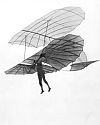
German aeronautical engineer and inventor whose pioneering studies formed a foundation for Octave Chanute and the brothers Wilbur and Orville Wright. His prior inventions, such as a small steam engine that worked on a system of tubular boilers designed for safety, brought him financial success. In 1891, he built and flew in the Derwitzer Glider. Within the next five years (before he died in a crash), assisted by his brother, Gustav, he designed other gliders and made 2000 flights. He carefully studied the aerodynamics of rigid wings, inspired by the gliding flight of storks made without flapping their wings. Although his aircraft achieved only low speed and altitudes, and he had survived other crashes, he broke his spine and died the day following a crash, falling from about 56-feet.«[Image (right): 1986 biplane design of the type he used on his last flight. He crashed when the upper wing fractured] more
Birdflight As The Basis Of Aviation, by Otto Lilienthal. - book suggestion.
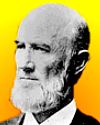
Born 23 May 1820; died 8 Mar 1887 at age 66.
James Buchanan Eads was an American engineer who built the two-tier triple-arch steel bridge over the Mississippi River at St. Louis, Missouri. At the age of 22, he invented a boat and diving bell which enabled walking on the river bottom. In 12 years' time he made a fortune with his salvage boat operation. During the Civil War, he built ironclad warships. After the war, he built the Mississippi River bridge, the first major bridge to use steel and cantilevered construction, which was opened 4 Jul 1874. Each roughly 500-ft span rested on piers built on bedrock about 100 feet beneath the river bottom. He created a year-round navigation channel for New Orleans scoured out with a system of jetties harnessing the river's water flow (1879).«
James Buchanan Eads was an American engineer who built the two-tier triple-arch steel bridge over the Mississippi River at St. Louis, Missouri. At the age of 22, he invented a boat and diving bell which enabled walking on the river bottom. In 12 years' time he made a fortune with his salvage boat operation. During the Civil War, he built ironclad warships. After the war, he built the Mississippi River bridge, the first major bridge to use steel and cantilevered construction, which was opened 4 Jul 1874. Each roughly 500-ft span rested on piers built on bedrock about 100 feet beneath the river bottom. He created a year-round navigation channel for New Orleans scoured out with a system of jetties harnessing the river's water flow (1879).«
James B. Eads, by Louis How. - book suggestion.
Born 23 May 1779; died 7 Jul 1831 at age 52.
American inventor and mechanic of textile machinery, who collaborated with Francis Cabot Lowell, the principal founder of a the Boston Manufacturing Company textile mill at Waltham, Massachusetts. Moody oversaw the factory operations, but also worked with Lowell to develop an efficient power loom, the first constructed in the U.S. (1814), the “dead spindle” spinning apparatus, and other innovations. In 1823, he became an investor and began working at the newly founded Merrimack Company in Lowell, Massacusetts to manufacture calico. By contributing a substantial number of patented improvements in textile machinery, he was important in the development of the textile industry in New England.«
American inventor and mechanic of textile machinery, who collaborated with Francis Cabot Lowell, the principal founder of a the Boston Manufacturing Company textile mill at Waltham, Massachusetts. Moody oversaw the factory operations, but also worked with Lowell to develop an efficient power loom, the first constructed in the U.S. (1814), the “dead spindle” spinning apparatus, and other innovations. In 1823, he became an investor and began working at the newly founded Merrimack Company in Lowell, Massacusetts to manufacture calico. By contributing a substantial number of patented improvements in textile machinery, he was important in the development of the textile industry in New England.«
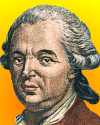
Born 23 May 1734; died 5 Mar 1815 at age 80.
Franz Friedrich Anton Mesmer was a German physician whose system of therapeutics, known as mesmerism, was the forerunner of the modern practice of hypnotism. He spent his career offering this controversial therapy to wealthy aristocratic clients in several European capitals.
Franz Friedrich Anton Mesmer was a German physician whose system of therapeutics, known as mesmerism, was the forerunner of the modern practice of hypnotism. He spent his career offering this controversial therapy to wealthy aristocratic clients in several European capitals.
The Wizard from Vienna: Franz Anton Mesmer, by Vincent Buranelli. - book suggestion.
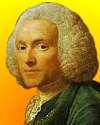
Born 23 May 1718; died 30 Mar 1783 at age 64. quotes
British obstetrician, educator, and medical writer whose high standards of teaching and medical practice took obstetrics from the hands of the midwives and established it as an accepted branch of medicine. He built up a distinguished clientèle (including members of the Royal Family) and made a collection of anatomical and pathological specimens related to his medical work. Hunter began public lectures on anatomy in 1746 and became a member of the corporation of surgeons in 1746. With the lack of training spaces in hospitals, the demand for private anatomy schools increased rapidly. He became one of the most successful anatomy teachers of his time. Hunter was still teaching anatomy in his Great Windmill Street Institute until his death.
British obstetrician, educator, and medical writer whose high standards of teaching and medical practice took obstetrics from the hands of the midwives and established it as an accepted branch of medicine. He built up a distinguished clientèle (including members of the Royal Family) and made a collection of anatomical and pathological specimens related to his medical work. Hunter began public lectures on anatomy in 1746 and became a member of the corporation of surgeons in 1746. With the lack of training spaces in hospitals, the demand for private anatomy schools increased rapidly. He became one of the most successful anatomy teachers of his time. Hunter was still teaching anatomy in his Great Windmill Street Institute until his death.
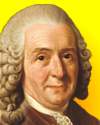
Born 23 May 1707; died 10 Jan 1778 at age 70. quotes
Carolus (Carl) Linnaeus, a.k.a.Carl von Linné was a Swedish botanist and explorer who was the first to establish a precise biological classification, with a uniform system for naming organisms by genera and species of organisms (binomial nomenclature). Thus he can be called the “father of modern taxonomy.” He associated whales as mammals, but did not group man with the apes. Later, others improved his scheme by adopting more natural, developmental distinctions between species. He travelled widely to build his collection of plant specimens. He recognised balance and competition in nature relating to insects, animals and plants. After being made a Swedish noble (1761), he took the name Carl von Linné. more
Carolus (Carl) Linnaeus, a.k.a.Carl von Linné was a Swedish botanist and explorer who was the first to establish a precise biological classification, with a uniform system for naming organisms by genera and species of organisms (binomial nomenclature). Thus he can be called the “father of modern taxonomy.” He associated whales as mammals, but did not group man with the apes. Later, others improved his scheme by adopting more natural, developmental distinctions between species. He travelled widely to build his collection of plant specimens. He recognised balance and competition in nature relating to insects, animals and plants. After being made a Swedish noble (1761), he took the name Carl von Linné. more

Baptized 23 May 1667; died 16 May 1741 at age 73.
German-French inventor who invented the modern system of four-colour printing. Influenced by Newton's work on the light spectrum, after many printing trials, Le Blon in 1710 proposed that three primary colours - cyan, magenta and yellow (blue, red, yellow) and black - are sufficient for mixing in varying proportions to produce all other colours. He used this process to print engravings that mimic the full colour of paintings by superimposing mezzotint plates in each primary colour. For each hand-engraved plate, the individual contribution of each colour estimated. In 1719, George I granted him a priviledge of a monopoly for the reproduction of pictures and drawings in full colour. Nevertheless, by 1725, his company failed.«[Also spelled Jacob Christoph Le Blon; in French as French Jacques-Christophe Le Blond.]
German-French inventor who invented the modern system of four-colour printing. Influenced by Newton's work on the light spectrum, after many printing trials, Le Blon in 1710 proposed that three primary colours - cyan, magenta and yellow (blue, red, yellow) and black - are sufficient for mixing in varying proportions to produce all other colours. He used this process to print engravings that mimic the full colour of paintings by superimposing mezzotint plates in each primary colour. For each hand-engraved plate, the individual contribution of each colour estimated. In 1719, George I granted him a priviledge of a monopoly for the reproduction of pictures and drawings in full colour. Nevertheless, by 1725, his company failed.«[Also spelled Jacob Christoph Le Blon; in French as French Jacques-Christophe Le Blond.]

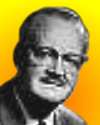
Died 23 May 1970 at age 71 (born 26 Oct 1898).
W(illiam) Lloyd Warner was an American sociologist and anthropologist who is remembered for authoring studies of social class structure. He pioneered in applying anthropology research methods in the field of the contemporary urban social community. In his Yankee City (5 vols.), he merged an ethnographic perspective gained from fieldwork among Australian aborigines with information gathered from formal interviews for his social study of a New England city, Yankee City. He was the first sociologist to use a six-fold classification. In studying the old town, Warner recognised three distinct groups - upper, middle and lower classes - each sub-divided into upper and lower sections. The topmost, or upper-upper class, was composed of the wealthy old families; the lower-lower class represented the poorest.«
W(illiam) Lloyd Warner was an American sociologist and anthropologist who is remembered for authoring studies of social class structure. He pioneered in applying anthropology research methods in the field of the contemporary urban social community. In his Yankee City (5 vols.), he merged an ethnographic perspective gained from fieldwork among Australian aborigines with information gathered from formal interviews for his social study of a New England city, Yankee City. He was the first sociologist to use a six-fold classification. In studying the old town, Warner recognised three distinct groups - upper, middle and lower classes - each sub-divided into upper and lower sections. The topmost, or upper-upper class, was composed of the wealthy old families; the lower-lower class represented the poorest.«
Yankee City, by W. Lloyd Warner (ed.). - book suggestion.


French chemist, engineer and inventor who developed a safer method of storing acetylene with Albert Hess). He devised an efficient process (1902) to liquefy air and separate its gases. With Paul Delorme, he founded Air Liquide (8 Nov 1902), which became an international industrial gas company. Neon gas recovered during air separation supplied his patented lighting system. His business Claude Neon spread illuminated advertising signs internationally. He developed an ultra-high-pressure ammonia synthesis process, and he pioneered experimental electricity generation using the temperature difference between warm surface and cold deep seawater. His WWII Nazi collaboration led to imprisonment (1945-49).«
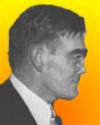
Died 23 May 1949 at age 39 (born 27 May 1909).
American physicist who contributed to the development of radar and is regarded as the founder of microwave technology. He developed the klystron, a vacuum tube essential to radar technology (1937). Based on amplitude modulation of an electron beam, rather than on resonant circuits of coils and condensers, it permits the generation of powerful and stable high-frequency oscillations. It revolutionized high-energy physics and microwave research and led to airborne radar. The klystron also has been used in satellite communications, airplane and missile guidance systems, and telephone and television transmission. After WW II, working with three graduate students, Hansen demonstrated the first 4.5 MeV linear accelerator in 1947.
American physicist who contributed to the development of radar and is regarded as the founder of microwave technology. He developed the klystron, a vacuum tube essential to radar technology (1937). Based on amplitude modulation of an electron beam, rather than on resonant circuits of coils and condensers, it permits the generation of powerful and stable high-frequency oscillations. It revolutionized high-energy physics and microwave research and led to airborne radar. The klystron also has been used in satellite communications, airplane and missile guidance systems, and telephone and television transmission. After WW II, working with three graduate students, Hansen demonstrated the first 4.5 MeV linear accelerator in 1947.
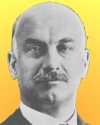
Died 23 May 1941 at age 74 (born 8 Nov 1866).
English engineer, who founded the Austin Motor Company (1905), whose Austin Seven model greatly influenced British and European light-car design. In 1884, after completing his early education Herbert moved to Melbourne, Australia, and apprenticed in engineering at Langlands Foundry. He later became the manager of Wolseley Sheep Shearing Company. In 1893, he returned to the UK with this company in 1893 and soon became the production manager. From long journeys in the Australian outback he had insight into the need for petrol driven vehicles. In 1895, he produced the first Wolseley car (a three wheeler) and in 1900, his first Wolseley four wheel design. By 1914, the company was producing more then 1000 cars with 2000 employees.
English engineer, who founded the Austin Motor Company (1905), whose Austin Seven model greatly influenced British and European light-car design. In 1884, after completing his early education Herbert moved to Melbourne, Australia, and apprenticed in engineering at Langlands Foundry. He later became the manager of Wolseley Sheep Shearing Company. In 1893, he returned to the UK with this company in 1893 and soon became the production manager. From long journeys in the Australian outback he had insight into the need for petrol driven vehicles. In 1895, he produced the first Wolseley car (a three wheeler) and in 1900, his first Wolseley four wheel design. By 1914, the company was producing more then 1000 cars with 2000 employees.
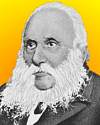
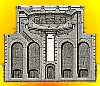
French engineer who adapted the steelmaking process by using the open-hearth regenerative furnace invented by Charles William Siemens and Friedrich Siemens (1856), now known as the Siemens-Martin process. The Siemens' idea was to capture heat from exhaust gases in chambers flanking the furnace containing fire-bricks. When the flow is changed to preheat the input gases using recycled energy stored in the bricks, huge fuel savings result. Martin applied the process to steel production because it could produce the necessary high temperature to melt steel, with furnace capacity of 50-100 tons or more This process was adopted and almost universally worldwide to manufacture steel, until replaced by the basic oxygen process from the late 1940's.«[Image: left - Pierre Martin; right - vertical section of Siemens-Martin furnace]
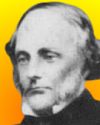
Died 23 May 1863 at age 58 (born 27 Jan 1805).
William Henry Duncan was an English physician who was appointed as a Chief Medical Officer, the first such salaried official in Britain, on 1 Jan 1847 in Liverpool, England. He was born of Scottish parents, in Liverpool, received his M.D. in Edinburgh (1829), then returned to Liverpool where he began general practice. He realized the city had poor housing and sanitation conditions for the working people, which threatened the public health with diseases that could be prevented by reform. His 1843 pamphlet, The Physical Causes of the High Mortality Rate in Liverpool, identifed the issues that raised the city's mortality rate far above other towns. Duncan helped create the city's first Sanitary Act (1846) and pioneered in the Victorian public health movement. He used the power of the media to spread public health messages, by holding weekly press conferences to keep a focus on public health and to advocate improvements.«
William Henry Duncan was an English physician who was appointed as a Chief Medical Officer, the first such salaried official in Britain, on 1 Jan 1847 in Liverpool, England. He was born of Scottish parents, in Liverpool, received his M.D. in Edinburgh (1829), then returned to Liverpool where he began general practice. He realized the city had poor housing and sanitation conditions for the working people, which threatened the public health with diseases that could be prevented by reform. His 1843 pamphlet, The Physical Causes of the High Mortality Rate in Liverpool, identifed the issues that raised the city's mortality rate far above other towns. Duncan helped create the city's first Sanitary Act (1846) and pioneered in the Victorian public health movement. He used the power of the media to spread public health messages, by holding weekly press conferences to keep a focus on public health and to advocate improvements.«
Duncan of Liverpool, by W.M. Frazer. - book suggestion.
Died 23 May 1857 at age 67 (born 21 Aug 1789). quotes
French mathematician who pioneered in analysis and the theory of substitution groups (groups whose elements are ordered sequences of a set of things). He was one of the greatest of modern mathematicians. His name is one of the 72 French scientists engraved on the Eiffel Tower.
French mathematician who pioneered in analysis and the theory of substitution groups (groups whose elements are ordered sequences of a set of things). He was one of the greatest of modern mathematicians. His name is one of the 72 French scientists engraved on the Eiffel Tower.
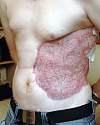
In 1994, British doctors explained a “deadly flesh-eating bug” outbreak in England, attributing the cluster of exceptionally intense infections to the common Streptococcus bacterium. Eleven people in Gloucestershire had died, and others had been injured by a toxin that dissolved flesh and fat which came from the bacteria's unusually virulent attack. This rare, but long-known, disease, necrotizing fasciitis, is fatal if not quickly diagnosed and treated with antibiotics and prompt removal of the infected tissues. The group A streptococci cause a wide variety of diseases, more than any other microorganism, and are most frequently associated with simple sore throats and fever. By 2001, scientists had sequenced the genome of streptococci-A to further research in treatment and prevention.«.[Image: Sep 2008. A patient recovering after three operations to remove tissues infected by necrotizing fasciitis, followed by skin grafting.]
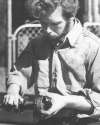
In 1962, a 12-year-old boy's severed arm was reattached in the world's first successful replantation of a human limb with microvascular repair of vessels by a team of surgeons led by Drs. Ronald A. Malt and J. McKhann at the Massachusetts General Hospital, Boston. The arm had been severed three inches below the shoulder by the wheels of a train. Good functional recovery of nerves is generally better in children than in adults. After additional operations, he regained some useful functioning of the limb. A journal article in Nov 1969 gave in a case report that he recovered a powerful grip and strength in his biceps muscle. Though there was a little “clawing” of the fingers, his tactile recovery was good enough to identify coins and use his fingers in handling objects. He became employed as a garage mechanic.«
In 1950, black American inventor F.M. Jones was issued a patent for a "System for Controlling Operation of Refrigeration Units" (No. 2,509,099).
The Inventive Spirit of African Americans: Patented Ingenuity, by Patricia Carter Sluby. - book suggestion.
In 1940, R.V. Jones, a scientist with air intelligence, tells the government that intersecting radio beams could guide Luftwaffe bombers to their targets.
In 1939, the USS Squalus submarine test dive in the Atlantic Ocean ended in disaster when an important valve remained open and flooded the vessel. It settled, disabled, on the bottom at a depth of 243 feet, located not far off the coast from Portsmouth, New Hampshire. Of the crew, 26 men had drowned, but 33 remained alive sealed behind watertight doors in the forward compartment. The historic mission to bring the survivors to the surface lasted from 24 May to shortly after mindnight on 25 May. It marked the world's first rescue using a McCann Rescue Chamber. The large diving bell used had been specially designed for the purpose by Cdr Allan R. McCann, following earlier submarine rescue equipment development initiatives by Cdr Charles B. Momsen.«
In 1933, Gertrude Ederle and C. Kelsey were granted a patent for a "paddle-driven swimming device" (U.S. No. 1,911,129). On the same date, Max Wasserberg received a patent for a "beach and lawn chair" (U.S. No. 1,911,127).
In 1930, a new U.S. Plant Patent Act provided, for the first time, allowed patent protection for new and distinct varieties of asexually reproduced plants. This legislation resulted from the growing awareness that plant breeders had no financial incentive to enter plant breeding because they could not exercise control over their discoveries. In supporting this legislation, Thomas A. Edison testified: "This (bill) will, I feel sure, give us many Burbanks." He was referring to Luther Burbank who during a lifetime devoted to plant breeding developed more than 800 strains and varieties of plants. Burbank was issued 16 plant patents posthumously. Plant patent No. 10,000 was issued 12 Aug 1997 for a "Geranium plant named Lois."
In 1922, Thomas A. Edison was issued a patent for "Production of Thin Metal Sheets or Foils" (U.S. No. 1,417,464).
In 1916, Thomas A. Edison was finally issued three patents for his "Phonograph or Talking Machine." The original patent applications were made 7 Dec 1910, 17 Feb 1911, and 12 Aug 1912. (U.S. Nos. 1,184,332 ; -3 and -4).
In 1911, Thomas A. Edison was issued a patent for “Device for Feeding Pulverulent Material” (U.S. No. 993,294). Pulverulent refers to a consistency of fine powder.
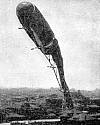
In 1908, the first airship disaster in the U.S. took place in Berkeley, Cal. A 450-foot long balloon collapsed and exploded, injuring 15 passengers and the inventor, John A. Morrell. The widest part of the cigar-shaped craft was 46 feet in diameter. It was fitted with six 200-h.p. gasoline engines. This was about 30 years before the better-known disaster of the Hindenburg, which ignited and burned on 6 May 1937, killing 36 people. Yet the death toll of the Hindenburg did not eclipse the death toll of 73 people in an earlier airship disaster on 4 Apr 1933, when the Akron crashed at sea during a storm.
more
In 1905, Thomas A. Edison was issued a patent for a “Process of Duplicating Phonographic Records” (U.S. 790351).
In 1903, the European capital cities of Paris and Rome were linked by telephone for first time.
In 1871, a "Locomotive Smoke Stack" was patented by black American inventor L. Bell (No. 115,153).
Great Discoveries and Inventions by African-Americans, by David M. Foy. - book suggestion.
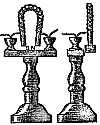
In 1825, the electromagnet in a practical form was first exhibited by its inventor, William Sturgeon, on the occasion of reading a paper, recorded in the Transactions of the Society of Arts for 1825 (Vol xliii, p.38). The publication showed pictures of his set of improved apparatus for electromagnetic experiments, including two electromagnets, one of horse-shoe shape and one a straight bar. The formed was bent from a rod about 1 foot (30 cm) long and one-half inch (1.3 cm) in diameter, varnished for insulation, then coiled with a single spiral of 18 turns of stout copper wire. In return for the Society's medal and premium, Sturgeon deposited the apparatus in the museum of the Society. Sadly, this was lost after the society's museum was dispersed.«
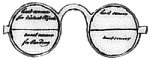
Thm.jpg "Bifocal spectacles")
Franklin by Peale
Benjamin Franklin: An American Life, by Walter Isaacson. - book suggestion.





