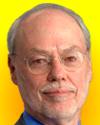
Born 6 Jun 1944.
Phillip Allen Sharpe is an American molecular biologist, who shared the 1993 Nobel Prize for Physiology or Medicine with Richard J. Roberts, for “their discoveries of split genes.” Genetic information in DNA is transferred to the molecular chain of “messenger” mRNA, composed of exons (long sections which are required for protein formation) and introns (intervening sections that are inactive and not needed). Working independently, Sharp and Roberts each showed how the the exons and introns of RNA might be splittable from each other. This also predicted exons might be spliced together into a modified molecular chain—a gene with the potential to form various different proteins. This spurred new research in evolutionary biology, and into the development of cancer and other diseases.«
Phillip Allen Sharpe is an American molecular biologist, who shared the 1993 Nobel Prize for Physiology or Medicine with Richard J. Roberts, for “their discoveries of split genes.” Genetic information in DNA is transferred to the molecular chain of “messenger” mRNA, composed of exons (long sections which are required for protein formation) and introns (intervening sections that are inactive and not needed). Working independently, Sharp and Roberts each showed how the the exons and introns of RNA might be splittable from each other. This also predicted exons might be spliced together into a modified molecular chain—a gene with the potential to form various different proteins. This spurred new research in evolutionary biology, and into the development of cancer and other diseases.«
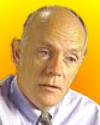
Born 6 Jun 1943; died 28 Oct 2005 at age 62. quotes
Richard Errett Smalley was an American chemist and physicist, known as the father of nanotechnology, who shared the 1996 Nobel Prize for Chemistry with Robert F. Curl, Jr., and Sir Harold W. Kroto for their joint 1985 discovery of carbon60 (C60, or buckminsterfullerene, or buckyball) and the fullerenes.
Richard Errett Smalley was an American chemist and physicist, known as the father of nanotechnology, who shared the 1996 Nobel Prize for Chemistry with Robert F. Curl, Jr., and Sir Harold W. Kroto for their joint 1985 discovery of carbon60 (C60, or buckminsterfullerene, or buckyball) and the fullerenes.
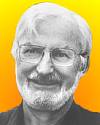
Born 6 Jun 1933; died 16 May 2013 at age 79.
Swiss physicist who, with Gerd Binnig, received half of the 1986 Nobel Prize for Physics for their joint invention of the scanning tunneling microscope. (Ernst Ruska received the other half of the prize.) Ruska's electron microscope of the 1930s was unable to show surface structure at the atomic level. Rohrer and Binnig began work in 1978 on a scanning tunneling microscope in which a fine probe passes within a few angstroms of the surface of the sample. A positive voltage on the probe enables electrons to move from the sample to the probe by the tunnel effect, and the detected current can used to keep the probe at a constant distance from the surface. As the probe moves in parallel lines, a 3D image of the surface can be constructed.
Swiss physicist who, with Gerd Binnig, received half of the 1986 Nobel Prize for Physics for their joint invention of the scanning tunneling microscope. (Ernst Ruska received the other half of the prize.) Ruska's electron microscope of the 1930s was unable to show surface structure at the atomic level. Rohrer and Binnig began work in 1978 on a scanning tunneling microscope in which a fine probe passes within a few angstroms of the surface of the sample. A positive voltage on the probe enables electrons to move from the sample to the probe by the tunnel effect, and the detected current can used to keep the probe at a constant distance from the surface. As the probe moves in parallel lines, a 3D image of the surface can be constructed.
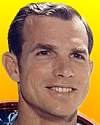
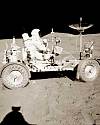
American astronaut who was the first to drive a wheeled vehicle on the moon on 31 Jul 1971. Gemini 8 was launched 16 Mar 1966, with Scott and Neil Armstrong as crew and conducted the first docking in space with an Agena. Scott flew on the Apollo 9 mission, launched 3 Mar 1969, a ten-day earth-orbit test of the first complete set of Apollo hardware. On 26 Jul 1971, Scott was launched on the Apollo 15 mission. He was in command of its Lunar Module which made the fourth lunar landing, became the seventh person to walk on the moon and the first to use the Lunar Rover vehicle on the moon's surface. This was part of a three day scientific investigation, with about 77 kg of rock samples collected, and an ALSEP science station left at the landing site to continue monitoring the lunar environment.«[Image (right):Lunar Rover Vehicle during the first lunar surface extravehicular activity at the Hadley-Apennine landing site.]
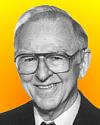
Born 6 Jun 1918; died 21 Dec 2009 at age 91.
Edwin Gerhard Krebs was an American biochemist who shared (with Edmond H. Fischer) the 1992 Nobel Prize for Physiology or Medicine. They discovered reversible protein phosphorylation, a biochemical process that regulates the activities of proteins in cells and thus governs countless processes that are necessary for life. Malfunctions in protein phosphorylation have been implicated in the causation of diseases such as diabetes, cancer, and Alzheimer's disease.«
Edwin Gerhard Krebs was an American biochemist who shared (with Edmond H. Fischer) the 1992 Nobel Prize for Physiology or Medicine. They discovered reversible protein phosphorylation, a biochemical process that regulates the activities of proteins in cells and thus governs countless processes that are necessary for life. Malfunctions in protein phosphorylation have been implicated in the causation of diseases such as diabetes, cancer, and Alzheimer's disease.«
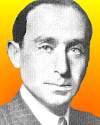
Born 6 Jun 1900; died 2 Dec 1957 at age 57.
Manfred Joshua Sakel was a Polish neurophysiologist and psychiatrist who introduced insulin-shock therapy for schizophrenics and other mental patients in 1927, while a young doctor in Vienna. Insulin-induced coma and convulsions, due to the low level of glucose attained in the blood (hypoglicemic crisis) improved the mental state of drug addicts and psychotics, sometimes dramatically. His findings indicated that up to 88% of his patients improved with insulin shock therapy. His method became widely applied for many years in mental institutions worldwide. He immigrated to the U.S. ahead of WW II. in 1936. "Sakel's Therapy" is still used in Europe, but in the U.S. it has been superceded by electroconvulsive therapy and other means of treatment.
Manfred Joshua Sakel was a Polish neurophysiologist and psychiatrist who introduced insulin-shock therapy for schizophrenics and other mental patients in 1927, while a young doctor in Vienna. Insulin-induced coma and convulsions, due to the low level of glucose attained in the blood (hypoglicemic crisis) improved the mental state of drug addicts and psychotics, sometimes dramatically. His findings indicated that up to 88% of his patients improved with insulin shock therapy. His method became widely applied for many years in mental institutions worldwide. He immigrated to the U.S. ahead of WW II. in 1936. "Sakel's Therapy" is still used in Europe, but in the U.S. it has been superceded by electroconvulsive therapy and other means of treatment.
Born 6 Jun 1891; died 10 Dec 1940 at age 49.
Thomas Russell Wilkins was a Canadian physicist who secured photographic recordings of cosmic rays and the disintegration of radium atoms. He moved to the U.S. in 1926. From the fall of 1929 to 1938, he was the founding director of Institute of Applied Optics at the University of Rochester. In Apr 1939 he announced the perfection of a camera that was able to record the “footprints” of invisible atoms after they collide. In October of the same year, he received a medal from the Royal Photographic Society of Great Britain recognizing his work regarding the use of photographic emulsions in the study of radium emissions. A year later, in Oct 1940, he perfected a camera that could determine the energy levels inside the nuclei of stable chemical elements. Dr. Wilkins died quite suddenly of a heart attack on his way back to his laboratory after a faculty meeting.[Image shows the star formed when primary cosmic ray particle hits a photographic plate at 95,000 feet. This is similar to, but about 1,700 feet higher than the photographs available to Wilkins, taken in 1935 from the Explorer II balloon. This undated image appeared in a 1950 magazine.]
Thomas Russell Wilkins was a Canadian physicist who secured photographic recordings of cosmic rays and the disintegration of radium atoms. He moved to the U.S. in 1926. From the fall of 1929 to 1938, he was the founding director of Institute of Applied Optics at the University of Rochester. In Apr 1939 he announced the perfection of a camera that was able to record the “footprints” of invisible atoms after they collide. In October of the same year, he received a medal from the Royal Photographic Society of Great Britain recognizing his work regarding the use of photographic emulsions in the study of radium emissions. A year later, in Oct 1940, he perfected a camera that could determine the energy levels inside the nuclei of stable chemical elements. Dr. Wilkins died quite suddenly of a heart attack on his way back to his laboratory after a faculty meeting.[Image shows the star formed when primary cosmic ray particle hits a photographic plate at 95,000 feet. This is similar to, but about 1,700 feet higher than the photographs available to Wilkins, taken in 1935 from the Explorer II balloon. This undated image appeared in a 1950 magazine.]
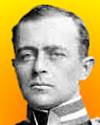
c. 1905
Born 6 Jun 1868; died c. 27 Mar 1912. quotes
English explorer who is remembered as “Scott of the Antarctic.” He led an ill-fated expedition to the South Pole, reached 17 Jan 1912, only to find Norwegian Roald Amundsen's party had beaten them there, 35 days earlier. Scott's group of five men all died on the return journey. He had previously made a “Discovery Expedition” (1901-1904) for scientific and exploratory work. He led a party to within 480 miles of the South Pole on a 93-day trip from their base. His final voyage to Antarctica left Cardiff, Wales, on 15 Jun 1910 aboard the Terra Nova, with ponies, dogs and three motorized sleds. It reached McMurdo Sound on 4 Jan 1911. The men on the final 1766-mile journey to the Pole set off on 1 Nov 1911, never to return alive. When the bodies were discovered, Scott's sled still had 35-lbs of geological specimens on it.«
English explorer who is remembered as “Scott of the Antarctic.” He led an ill-fated expedition to the South Pole, reached 17 Jan 1912, only to find Norwegian Roald Amundsen's party had beaten them there, 35 days earlier. Scott's group of five men all died on the return journey. He had previously made a “Discovery Expedition” (1901-1904) for scientific and exploratory work. He led a party to within 480 miles of the South Pole on a 93-day trip from their base. His final voyage to Antarctica left Cardiff, Wales, on 15 Jun 1910 aboard the Terra Nova, with ponies, dogs and three motorized sleds. It reached McMurdo Sound on 4 Jan 1911. The men on the final 1766-mile journey to the Pole set off on 1 Nov 1911, never to return alive. When the bodies were discovered, Scott's sled still had 35-lbs of geological specimens on it.«
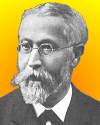
Born 6 Jun 1850; died 20 Apr 1918 at age 67.
Karl Ferdinand Braun was a German physicist who shared the Nobel Prize for Physics in 1909 with Guglielmo Marconi for the development of wireless telegraphy. He published papers on deviations from Ohm's law and on the calculations of the electromotive force of reversible galvanic elements from thermal sources, and discovered (1874) the electrical rectifier effect. He demonstrated the first cathode-ray oscilloscope (Braun tube) in 1897, after work on high-frequency alternating currents. Cathode-ray tubes had previously been characterized by uncontrolled rays; Braun succeeded in producing a narrow stream of electrons, guided by means of alternating voltage, that could trace patterns on a fluorescent screen.
Karl Ferdinand Braun was a German physicist who shared the Nobel Prize for Physics in 1909 with Guglielmo Marconi for the development of wireless telegraphy. He published papers on deviations from Ohm's law and on the calculations of the electromotive force of reversible galvanic elements from thermal sources, and discovered (1874) the electrical rectifier effect. He demonstrated the first cathode-ray oscilloscope (Braun tube) in 1897, after work on high-frequency alternating currents. Cathode-ray tubes had previously been characterized by uncontrolled rays; Braun succeeded in producing a narrow stream of electrons, guided by means of alternating voltage, that could trace patterns on a fluorescent screen.
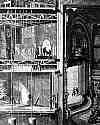
Stacked stages
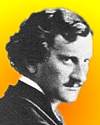
James Morrison Steele Mackaye was an American dramatist and inventor in theatre design. He studied in Europe. After returning to the U.S. (c.1872), he opened the Madison Square Theatre in 1879, where he created a huge elevator with two stages stacked one on top of the other so that elaborate furnishings could be changed quickly between scenes. He also invented and installed overhead and indirect stage lighting, movable stage wagons, artificial ventilation, and folding seats. MacKaye was the first to light a New York theatre entirely by electricity, the Lyceum, which he founded in 1884. In all, Mackaye patented over 100 inventions, mostly of theatrical equipment, including the disappearing orchestra pit. One of his sons, Benton MacKaye (1879-1975), became a forester, and proposed the establishment of the Appalachian Trail (1921).«
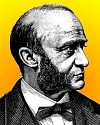
Born 6 Jun 1819; died 7 Jan 1892 at age 72. quotes
German physiologist who helped to introduce physical and chemical methods into medical research. He taught in Vienna (1849-90) where his school for physiologists gained an international reputation. The range of his physiological interests was vast, as shown in his Lectures in Physiology (1873-4). He discovered the ciliary muscle named for him, and his Anatomical Description of the Human Eye (1847) has become the standard histological work for contemporary oculists. He also did work on luminescence, blood coagulation, microscopy and cells. As a student, Sigmund Freud began research work on the central nervous system, guided by Brücke (1876), and qualified as doctor of medicine in 1881.
German physiologist who helped to introduce physical and chemical methods into medical research. He taught in Vienna (1849-90) where his school for physiologists gained an international reputation. The range of his physiological interests was vast, as shown in his Lectures in Physiology (1873-4). He discovered the ciliary muscle named for him, and his Anatomical Description of the Human Eye (1847) has become the standard histological work for contemporary oculists. He also did work on luminescence, blood coagulation, microscopy and cells. As a student, Sigmund Freud began research work on the central nervous system, guided by Brücke (1876), and qualified as doctor of medicine in 1881.
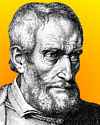
Born 6 Jun 1580; died 24 Oct 1667 at age 87.
Flemish astronomer and clergyman who was known as the Ptolemy of his time. Despite going against the tenets of his Church, he was an audacious proponent of the Copernican theory that the planets orbit around the sun. He made more accurate measurements of the distance to the sun as previously made by Aristachus (2,000 years earlier) from the geometrical relationships at the exact time of a half-moon. His result was a third smaller than now accepted, but still indicated the order of magnitude. From his studies the motion of a pendulum, he observed that as amplitude is increased, there is some increase the period of the swings. He noted a temperature effect on the period of a pendulum: more oscillations in winter than in summer. Wendelin is regarded as first to formulate a law for the variation of the obliquity of the ecliptic. Newton cited him in his Principia.«[Latinized name: Vendelinus. First name variations: Godefroid or Gottfried.]
Flemish astronomer and clergyman who was known as the Ptolemy of his time. Despite going against the tenets of his Church, he was an audacious proponent of the Copernican theory that the planets orbit around the sun. He made more accurate measurements of the distance to the sun as previously made by Aristachus (2,000 years earlier) from the geometrical relationships at the exact time of a half-moon. His result was a third smaller than now accepted, but still indicated the order of magnitude. From his studies the motion of a pendulum, he observed that as amplitude is increased, there is some increase the period of the swings. He noted a temperature effect on the period of a pendulum: more oscillations in winter than in summer. Wendelin is regarded as first to formulate a law for the variation of the obliquity of the ecliptic. Newton cited him in his Principia.«[Latinized name: Vendelinus. First name variations: Godefroid or Gottfried.]
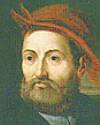
Born 6 Jun 1519; died 23 Feb 1603 at age 83.
Italian physician, philosopher and botanist who sought a philosophical and theoretical approach to plant classification based on unified and coherent principles rather than on alphabetical sequence or medicinal properties. He helped establish botany as an independent science. In 1555, he succeeded Luca Ghini as director of the Pisan botanic garden. His book De plantis libri XVI (1583) starts with botanical principles. Following Aristotle's division of plants into trees, shrubs, shrubby herbs, and herbs, Cesalpino's pioneering classification concentrated on fruits and seeds, neglecting broader affinities. The greater part of his book contains descriptions of about 1500 plants, but with less advice on their uses than the herbalists provided.
Italian physician, philosopher and botanist who sought a philosophical and theoretical approach to plant classification based on unified and coherent principles rather than on alphabetical sequence or medicinal properties. He helped establish botany as an independent science. In 1555, he succeeded Luca Ghini as director of the Pisan botanic garden. His book De plantis libri XVI (1583) starts with botanical principles. Following Aristotle's division of plants into trees, shrubs, shrubby herbs, and herbs, Cesalpino's pioneering classification concentrated on fruits and seeds, neglecting broader affinities. The greater part of his book contains descriptions of about 1500 plants, but with less advice on their uses than the herbalists provided.
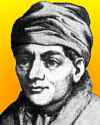
Born 6 Jun 1436; died 6 Jul 1476 at age 40.
German astronomer and mathematician who was chiefly responsible for the revival and advancement of trigonometry in Europe. His book De triangulis omnimodis (1464) is a systematic account of methods for solving triangles. In Jan 1472 he made observations of a comet which were accurate enough to allow it to be identified with Halley's comet 210 years later (being three returns of the 70 year period comet). He also observed several eclipses of the Moon. His interest in the motion of the Moon led him to make the important observation that the method of lunar distances could be used to determine longitude at sea. However, instruments of the time lacked the necessary accuracy to use the method at sea.
German astronomer and mathematician who was chiefly responsible for the revival and advancement of trigonometry in Europe. His book De triangulis omnimodis (1464) is a systematic account of methods for solving triangles. In Jan 1472 he made observations of a comet which were accurate enough to allow it to be identified with Halley's comet 210 years later (being three returns of the 70 year period comet). He also observed several eclipses of the Moon. His interest in the motion of the Moon led him to make the important observation that the method of lunar distances could be used to determine longitude at sea. However, instruments of the time lacked the necessary accuracy to use the method at sea.

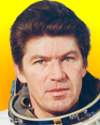
Died 6 Jun 2022 at age 82 (born 16 Aug 1939). quotes
Valery Victorovich Ryumin was a Russian cosmonaut who flew on several Soyuz space station missions (1977-80) as Flight Engineer, and on STS-91 Discovery (1998). His career total was 365 days in space, including his second and third space flights of record-breaking duration: 175 days (1977) and 185 days (1980). From 1992, Ryumin was Director of the Russian portion of the Shuttle-Mir and NASA-Mir program. He was selected by NASA as a crew member of STS-91, the final Shuttle docking mission with the Mir space station, which was the last phase of the joint U.S.-Russian Phase 1 space program (to be superseded by the International Space Station).«
Valery Victorovich Ryumin was a Russian cosmonaut who flew on several Soyuz space station missions (1977-80) as Flight Engineer, and on STS-91 Discovery (1998). His career total was 365 days in space, including his second and third space flights of record-breaking duration: 175 days (1977) and 185 days (1980). From 1992, Ryumin was Director of the Russian portion of the Shuttle-Mir and NASA-Mir program. He was selected by NASA as a crew member of STS-91, the final Shuttle docking mission with the Mir space station, which was the last phase of the joint U.S.-Russian Phase 1 space program (to be superseded by the International Space Station).«
Died 6 Jun 2013 at age 94 (born 18 Jun 1918).
American physical chemist who shared the 1985 Nobel prize in chemistry (with Herbert A. Hauptman) for “for their outstanding achievements in the development of direct methods for the determination of crystal structures.” Their work made possible the determination of such 3D crystal structures as hormone, vitamin and antibiotic molecules. He began his career with a brief time in Chicago in the early 1940s working for the Manhattan Project developing the atomic bomb, then he joined the staff of the Naval Research Laboratory in 1946. He became their chief scientist for the Laboratory for the Structure of Matter in 1968.« more
American physical chemist who shared the 1985 Nobel prize in chemistry (with Herbert A. Hauptman) for “for their outstanding achievements in the development of direct methods for the determination of crystal structures.” Their work made possible the determination of such 3D crystal structures as hormone, vitamin and antibiotic molecules. He began his career with a brief time in Chicago in the early 1940s working for the Manhattan Project developing the atomic bomb, then he joined the staff of the Naval Research Laboratory in 1946. He became their chief scientist for the Laboratory for the Structure of Matter in 1968.« more
Died 6 Jun 1996 at age 92 (born 19 Dec 1903).
American geneticist, known as the "father of immunogenetics," who paved the way for modern organ transplants. He shared the 1980 Nobel Prize for Physiology or Medicine for his studies of the genetic factors of histocompatibility which govern transplanting tissue from one individual to another. Snell identified the factors responsible as the major histocompatibility complex (MHC) - an assortment of antigens (which cause the production of antibodies) common across the genetic makeup of all vertebrates. Early in his career, Snell had been the first to show that x-rays can cause mutations in mammals, by showing that x-rays induce chromosome translocations in mice.«
American geneticist, known as the "father of immunogenetics," who paved the way for modern organ transplants. He shared the 1980 Nobel Prize for Physiology or Medicine for his studies of the genetic factors of histocompatibility which govern transplanting tissue from one individual to another. Snell identified the factors responsible as the major histocompatibility complex (MHC) - an assortment of antigens (which cause the production of antibodies) common across the genetic makeup of all vertebrates. Early in his career, Snell had been the first to show that x-rays can cause mutations in mammals, by showing that x-rays induce chromosome translocations in mice.«
Died 6 Jun 1981 at age 76 (born 23 Jun 1904).
Carleton Stevens Coon was an American anthropologist who made notable contributions to cultural and physical anthropology and archaeology, with controversial studies of the origins and contemporary variations of human racial types. His studies ranged from prehistoric communities to modern tribal societies in the Middle East, Patagonia, and the hill country of India. He applied Darwinian adaptation to explain the physical characteristics of race in The Origin of Races (1962), based primarily on human fossil material. In his last book (1982), he was able to include biochemical data to suggest explanations for the physical variations in man. In the 1950's he was a regular panelist on a TV show, in which experts identified museum artifacts.
Carleton Stevens Coon was an American anthropologist who made notable contributions to cultural and physical anthropology and archaeology, with controversial studies of the origins and contemporary variations of human racial types. His studies ranged from prehistoric communities to modern tribal societies in the Middle East, Patagonia, and the hill country of India. He applied Darwinian adaptation to explain the physical characteristics of race in The Origin of Races (1962), based primarily on human fossil material. In his last book (1982), he was able to include biochemical data to suggest explanations for the physical variations in man. In the 1950's he was a regular panelist on a TV show, in which experts identified museum artifacts.
Died 6 Jun 1961 at age 85 (born 26 Jul 1875). quotes
Carl Gustav Jung was a Swiss psychiatrist and psychologist who met and collaborated with Sigmund Freud in Vienna in (1907-13), but then developed his own theories, which he called “analytical psychology” to distinguish them from Freud's psychoanalysis or Alfred Adler's individual psychology. Jung proposed and developed the concepts of the extroverted and introverted personality, archetypes, and the collective unconscious. The “father” of psychoanalysis, his work has been influential in psychiatry and in the study of religion. He held chairs at Basel and Zürich.
Carl Gustav Jung was a Swiss psychiatrist and psychologist who met and collaborated with Sigmund Freud in Vienna in (1907-13), but then developed his own theories, which he called “analytical psychology” to distinguish them from Freud's psychoanalysis or Alfred Adler's individual psychology. Jung proposed and developed the concepts of the extroverted and introverted personality, archetypes, and the collective unconscious. The “father” of psychoanalysis, his work has been influential in psychiatry and in the study of religion. He held chairs at Basel and Zürich.
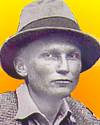
Died 6 Jun 1956 at age 80 (born 19 Nov 1875). quotes
Hiram Bingham III was an American archaeologist and politician who on 24 Jul 1911 (re-)discovered the ancient Inca city of Machu Picchu in a remote part of the Peruvian Andes. As a Yale University professor searching for the lost Inca capital of Vilcabamba, he paid a Peruvian guide to lead him to a nearby ruin. The guide took him 2,000 ft (610 m) up a precipitous slope, and to the well-preserved, extensive, stoneworks of Machu Picchu. It became one of the greatest archaeological sites in the Americas, Machu Picchu remains a mystery. Scholars debate if it is the birthplace of the Inca Empire, a ceremonial center or a fortification. Bingham also discovered the Inca city of Viitcos. His work stimulated further archaeological study elsewhere in the Andes and more widely, across South America.«
Hiram Bingham III was an American archaeologist and politician who on 24 Jul 1911 (re-)discovered the ancient Inca city of Machu Picchu in a remote part of the Peruvian Andes. As a Yale University professor searching for the lost Inca capital of Vilcabamba, he paid a Peruvian guide to lead him to a nearby ruin. The guide took him 2,000 ft (610 m) up a precipitous slope, and to the well-preserved, extensive, stoneworks of Machu Picchu. It became one of the greatest archaeological sites in the Americas, Machu Picchu remains a mystery. Scholars debate if it is the birthplace of the Inca Empire, a ceremonial center or a fortification. Bingham also discovered the Inca city of Viitcos. His work stimulated further archaeological study elsewhere in the Andes and more widely, across South America.«
Lost City of the Incas, by Hiram Bingham. - book suggestion.
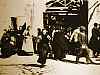
Louis Jean Lumiere was a French inventor, who worked with his brother Auguste, to make pioneering motion-picture equipment. Louis invented the 25-lb “Cinématographe” twin-function projector and camera, which improved on Thomas Edison's Kinetoscope by adding a intermittent film motion mechanism (based on the sewing machine). On 13 Feb 1895, they jointly patented the device (as was their custom). It was first demonstrated to an invited audience on 22 Mar 1895, showing their first film to an invited audience who viewed La Sortie des ouvriers de l'usine Lumière showing workers leaving the Lumière factory. The hugely successful first public screening on 28 Dec 1895 of their films in Paris was the “birth” of the cinema.«[Image right: Frame from La Sortie des ouviers film.]
Died 6 Jun 1942 at age 74 (born 5 Nov 1867).
American archaeologist who directed many excavations in Egypt and Nubia (Nilotic Sudan) and discovered the subterranean burial chamber of Queen Hetepheres, mother of King Cheops (2606-2583 BC), builder of the Great Pyramid at Giza, the painted tomb chapel of Queen Meresankh III, granddaughter of King Cheops; the excavation of the third Giza pyramid and funerary temples of King Mycerinus (2548–2530 B.C.). After directing the Archaeological Survey of Nubia (1907-09) intended to record sites prior to construction of the original Aswan High Dam, he explored the cultures of Nubia (modern Sudan) to the south of Egypt. In his final years despite near total blindness, he continued working. He was buried in the Christian cemetery in Cairo.
American archaeologist who directed many excavations in Egypt and Nubia (Nilotic Sudan) and discovered the subterranean burial chamber of Queen Hetepheres, mother of King Cheops (2606-2583 BC), builder of the Great Pyramid at Giza, the painted tomb chapel of Queen Meresankh III, granddaughter of King Cheops; the excavation of the third Giza pyramid and funerary temples of King Mycerinus (2548–2530 B.C.). After directing the Archaeological Survey of Nubia (1907-09) intended to record sites prior to construction of the original Aswan High Dam, he explored the cultures of Nubia (modern Sudan) to the south of Egypt. In his final years despite near total blindness, he continued working. He was buried in the Christian cemetery in Cairo.
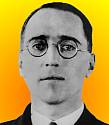
Died 6 Jun 1942 at age 38 (born 29 Jun 1903).
British electronics engineer whose 128 patents contributed greatly in a wide field of electronics, including mono and stereo sound reproduction and sound recording, as well as high-definition radar, telephony and electrical measurements. His profuse creativity was achieved within just 18 years, because he died at age only 38 (while flight-testing a radar project during WW II). He began working in 1924 for International Western Electric Co., and by 1929 was with Columbia Gramophone Co. which became EMI (1931) where he invented the stereophonic recording system. Although a few stereo recordings were made in the 1930's, EMI did not extensively develop the technology until the 1950's, when it built on Blumlein's work.«
British electronics engineer whose 128 patents contributed greatly in a wide field of electronics, including mono and stereo sound reproduction and sound recording, as well as high-definition radar, telephony and electrical measurements. His profuse creativity was achieved within just 18 years, because he died at age only 38 (while flight-testing a radar project during WW II). He began working in 1924 for International Western Electric Co., and by 1929 was with Columbia Gramophone Co. which became EMI (1931) where he invented the stereophonic recording system. Although a few stereo recordings were made in the 1930's, EMI did not extensively develop the technology until the 1950's, when it built on Blumlein's work.«
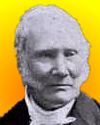
Died 6 Jun 1878 at age 87 (born 25 Oct 1790).
Scottish minister and inventor of the Stirling Cycle engine. Its principles were included in his first British patent, No. 4081 (1816), which he called the heat economiser as he described methods of regenerating heat from exhaust back into input gases. He continued to refine his idea for years in his home workshop during his spare time. The first practical Stirling engine generated about 2 horsepower, spending two years pumping water out of a quarry. By 1843, he had a modified steam engine producing 37 horsepower. He was assisted in preparing further patents by his brother James, a mechanical engineer who managed a foundry where the engine was manufactured. Robert also made scientific instruments.«
Scottish minister and inventor of the Stirling Cycle engine. Its principles were included in his first British patent, No. 4081 (1816), which he called the heat economiser as he described methods of regenerating heat from exhaust back into input gases. He continued to refine his idea for years in his home workshop during his spare time. The first practical Stirling engine generated about 2 horsepower, spending two years pumping water out of a quarry. By 1843, he had a modified steam engine producing 37 horsepower. He was assisted in preparing further patents by his brother James, a mechanical engineer who managed a foundry where the engine was manufactured. Robert also made scientific instruments.«
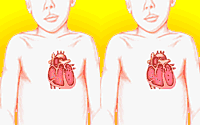
In 1961, the success of a mass-screening field-test for the detection of heart defects in children was announced by the American Heart Association. A child's tape-recorded heart sounds were amplified and filtered, so distinctive murmers and abnormal sounds could be recognized. The system “permits a relatively few trained cardiologists to rapidly screen large numbers of children” and “finds heart disease with an accuracy of 91 percent,” reported the New York Times the next day. From Apr 1959 to Jul 1960, with equipment housed in a trailer and moved between Chicago schools, 33,026 children were recorded. Of these 506 were indentified for further examination, and 64 of those were followed up, some with corrective surgery. Such ailments as rheumatic disease and inborn defects are best treated in childhood.«
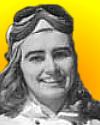
In 1942, the first parachute jump in the U.S. using a nylon parachute was made by Adeline Gray. Cotton had been superceded by silk cloth as a higher-strength, lower-weight parachute fabric. Oriental high-volume sources of the silkworm product were cut off during WWII. Fortunately, nylon, a newly invented synthetic substitute produced by the DuPont Co was available, as exhibited at the 1939 World's Fair. Nylon parachutes had been tested with dead weights, but the military needed a live trial to confirm personnel use. Gray, a parachute rigger at the Pioneer Parachute Company volunteered. She jumped from an aircraft flying from Brainard Field, Hartford, Conn. convincing an audience of 50 critical army and navy observers.«
In 1933, the first huge bucketful of wet concrete was poured to begin building Boulder Dam. Every 2½-min., on average, round the clock, another 8-yard, 20 ton bucketful was placed, repeating until the last was added to the main structure of Boulder Dam on 21 Feb 1935. A system of cableways were strung across the Black Canyon to deliver the loads of material. A cooling system of water pipes was embedded in the structure to carry away the heat of hydration as the concrete cured. The gravity-arch dam was dedicated on 30 Sep 1935 by President Franklin D. Roosevelt. Lake Mead was formed behind it on the Colorado River between Nevada and Arizona. It was renamed the Hoover Dam in 1947.«
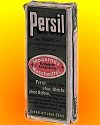
In 1907, Persil, the first household detergent, was marketed by Henkel & Cie, of Düsseldorf as the first “self-acting'' washing powder in the world. Persil was the combination of both washing and bleaching agents in one powder. The brand name derived from the beginning syllables of its two most important chemical components, perborate (a bleaching agent) and silicate. The first Persil packet was a paper-wrapped folding box, with much text, decorated in the primary colors green, red and white. Around 1910 the popular Persil box triggered the beginnings of brand piracy, as witnessed by innumerable imitation attempts (Pirsil, Pirsal, Persiehl, O-Hä etc.) In 1917, the Persil brand was registered as a trademark.

Dewar
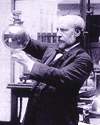
1931
In 1899, Thomas A. Edison was issued a patent for his “Filament for Incandescent Lamps, and Process of Manufacturing Same” (U.S. No. 626,460). “I form a filament of highly-refractory non-conducting material which is preferably porous, and incorporate therein isolated particles of carbon, so as to produce spark gaps between the particles, whereby high-tension currents, either alternating, continuous, or intermittent, will be conducted from particle to particle of the carbon to raise the filament to incandescence. ... I prefer to use ... an oxid or oxids of the rare earths—such as the oxid of zirconium, thorium and others. ... I prefer to admix ... a carbonizable organic compound—such as a solution of sugar, asphalt or tartrate of the oxid itself” which will be carbonized.«
more
Edison: A Biography, by Matthew Josephson. - book suggestion.
(USPTO)
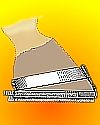
In 1899, black American inventor James Ricks was issued a patent for an "Overshoe for Horses" (U.S. No. 626,245). The invention was a rubber horseshoe "to prevent a horse from slipping in sleety weather and to secure noiseless travel when preferred, and is applied over the horseshoe in common use." It was formed from rubber and canvas so as to cover the entire bottom of the foot, and was fastened to the hoof by means of a strap. The rough outer surface provided traction, but also prevented snow or ice packing against any part of the foot and pressing the shoe out of place. Ricks held an earlier patent for the rough-shoeing of horses (30 Mar 1886, No.338,781).
The Inventive Spirit of African Americans: Patented Ingenuity, by Patricia Carter Sluby. - book suggestion.
(USPTO)
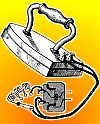
In 1882, the first American patent for an electric iron was issued to Henry Seely of New York City (No. 259,054). In his design, there is placed "within the iron and close to its face a resistance, preferably of carbon, and of such size and shape that it will heat the face of the iron sufficiently. This resistance ... may be connected in an electric circuit, preferably a multiple-arc circuit of an electricl lighting system." The internal carbon heating element is mounted to be electrically insulated from the metal of the iron and heat insulation above, such as plaster-of-paris. An adjustable resistance may be included in the circuit to regulate the heat, and a "safety-catch should be provided, preferably within the plug to protect the system in case of a short circuit."«
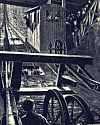
In 1880, the first funicular to transport passengers up an active volcano was inaugurated on Mount Vesuvius, Italy. Previously, tourists could ride in sedan chairs carried by four porters. When opened to the public 10 Jun, visitors could travel up a steep rail in an 8-seat carriage, towed by a cable loop along the ground powered by a steam engine at the lower station. The famous song Funiculi, Funicula was inspired by this inauguration. The Hungarian engineer, Ernesto Emanuele Oblieght, had worked since 1870 to make the funicular possible. He formed the Sociètè Anonyme du Chemin de Fer Funicolaire du Vèsuve, to operate it, but expenses later forced it to cede the operation to Thomas Cook and Son Co. (24 Nov 1888).«
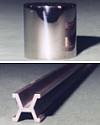
In 1799, the first definitive prototype metre bars (mètre des Archives) and kilograms were constructed in platinum. This followed the legal definition of the metric system by the French National Assembly on 7 Apr 1795, that was itself established during the famous measurements of the Earth's meridian between Dunkerque and Barcelona. The definitive protype replaced a provisional metre prototype bar constructed by Lenoirthat had been accepted as a standard for the metre on 9 Jun 1795. The use of a metal bar to define the standard meter continued until replaced on 14 Oct 1960 by a definition based upon a number of wavelengths of light from a certain spectroscopic light source. By 20 Oct 1983, that was replaced with a new definition based on the speed of light.«
The Measure of All Things: The Seven-Year Odyssey and Hidden Error That Transformed the World, by Ken Alder. - book suggestion.
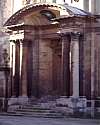
In 1683, the general public were admitted for the first time to the Ashmolean Museum of Art and Archaeology, Oxford. This was the first public museum to open in Britain, and perhaps in the world. The building had multiple purposes: the basement contained a chemistry laboratory, the ground floor was used for lectures and it was the top floor which housed a collection of curiosities acquired by Elias Ashmole and donated to the university. A fortnight earlier, the “formal inauguration ceremony” was attended by the Duke and Duchess of York and the Princess Anne, on 21 May 1683 followed by a private view for members of the University on the afternoon of 24 May 1683.«[Image: doorway on the east wall]
The Ashmolean Museum: A Brief History of the Museum and Its Collections, by Arthur MacGregor. - book suggestion.
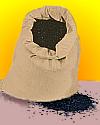
In 1639, the first record of the establishment of a gunpowder mill in the American colonies was an order from the General Court of Massachusetts granting 500 acres of land at Pecoit, Mass. Edward Rawson received the grant, “so as he goes on with the powder if the saltpeter comes.” Since Jamestown was settled (1607) and the Pilgrims landed at Plymouth (1620), firearms and gunpowder were brought from England—an uncertain supply. When the colonialists turned to producing gunpowder for themselves, the General Court encouraged homespun production efforts, especially for the saltpeter ingredient. The first gunpowder mill of importance was established in 1675 at Milton, Mass., on the Neponset River.«
more




