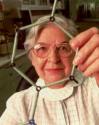
Born 31 Jul 1923; died 18 Jun 2014 at age 90. quotes
American chemist and inventor of Kevlar. Shortly after graduating with a bachelor's degree in chemistry (1946), she began a career at DuPont's textile fibers department in Buffalo, New York. Kwolek was assigned to search for a new, high-performance fiber that would be acid- and base-resistant and stable at high temperatures, suitable to replace steel in radial tyres. After extensive experimentation, she created a polymer solution which, when spun into a fibre, was five times stronger than steel and had half the density of fiberglass. It was named Kevlar. Today, this fibre is used to make bullet-proof jackets military helmets, aircraft parts, inflatable boats, gloves, rope, and building materials. Kwolek never pursued a Ph.D. degree. She was the fourth woman inducted into the National Inventors Hall of Fame (1995).
American chemist and inventor of Kevlar. Shortly after graduating with a bachelor's degree in chemistry (1946), she began a career at DuPont's textile fibers department in Buffalo, New York. Kwolek was assigned to search for a new, high-performance fiber that would be acid- and base-resistant and stable at high temperatures, suitable to replace steel in radial tyres. After extensive experimentation, she created a polymer solution which, when spun into a fibre, was five times stronger than steel and had half the density of fiberglass. It was named Kevlar. Today, this fibre is used to make bullet-proof jackets military helmets, aircraft parts, inflatable boats, gloves, rope, and building materials. Kwolek never pursued a Ph.D. degree. She was the fourth woman inducted into the National Inventors Hall of Fame (1995).
Women Inventors, by Jean F. Blashfield. - book suggestion.
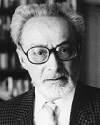
Born 31 Jul 1919; died 11 Apr 1987 at age 67. quotes
An Italian novelist, short-story writer and poet, Primo Levi was also a chemist most of his professional life. As a memoirist, he is noted for his restrained and moving autobiographical account of and reflections on survival in the Nazi concentration camps. In his science work, The Periodic Table, he wrote: "...conquering matter is to understand it, and understanding matter is necessary to understanding the universe and ourselves." His gift of writing brought the subject to life. Chemistry, in turn, saved his life. Imprisoned as a Jew in Auschwitz, the young Italian chemist was granted a tenuous reprieve as a technician in the laboratory of an I. G. Farben rubber factory built by slave laborers on the camp's grounds. He died by suicide in 1987, after a long illness.
An Italian novelist, short-story writer and poet, Primo Levi was also a chemist most of his professional life. As a memoirist, he is noted for his restrained and moving autobiographical account of and reflections on survival in the Nazi concentration camps. In his science work, The Periodic Table, he wrote: "...conquering matter is to understand it, and understanding matter is necessary to understanding the universe and ourselves." His gift of writing brought the subject to life. Chemistry, in turn, saved his life. Imprisoned as a Jew in Auschwitz, the young Italian chemist was granted a tenuous reprieve as a technician in the laboratory of an I. G. Farben rubber factory built by slave laborers on the camp's grounds. He died by suicide in 1987, after a long illness.
The Periodic Table, by Primo Levi. - book suggestion.
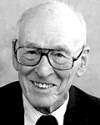
Born 31 Jul 1918; died 2 Jun 2018 at age 99.
American biochemist who, together with John E. Walker, received half the 1997 Nobel Prize for Chemistry for their work explaining the enzymatic process involved in the production of the energy-storage molecule adenosine triphosphate (ATP), which fuels the metabolic processes of the cells of all living things and how the enzyme ATP synthase catalyses the formation of ATP. Boyer and his co-workers proposed, on the basis of biochemical data, a mechanism for how ATP is formed from adenosine diphosphate (ADP) and inorganic phosphate. Walker and his co-workers have established the structure of the enzyme and verified the mechanism proposed by Boyer.
American biochemist who, together with John E. Walker, received half the 1997 Nobel Prize for Chemistry for their work explaining the enzymatic process involved in the production of the energy-storage molecule adenosine triphosphate (ATP), which fuels the metabolic processes of the cells of all living things and how the enzyme ATP synthase catalyses the formation of ATP. Boyer and his co-workers proposed, on the basis of biochemical data, a mechanism for how ATP is formed from adenosine diphosphate (ADP) and inorganic phosphate. Walker and his co-workers have established the structure of the enzyme and verified the mechanism proposed by Boyer.
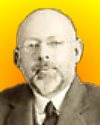
Born 31 Jul 1882; died 13 Nov 1953 at age 71.
Herbert Eugene Ives was an American physicist and inventor of transmission of mechanical video pictures. Research into a television process by the AT&T Co. at Bell Laboratories, New York was under the direction of Dr. Herbert E. Ives. On 7 Apr 1927, live images of Commerce Secretary Hoover were transmitted in the first successful long distance demonstration of television, sent from Washington D.C. to New York, over long distance wires. On 27 June 1929 the first public demonstration of color TV showed images are a bouquet of roses and an American flag using a mechanical system was used to transmit 50-line color television images between New York and Washington. A two-way video telephone was first demonstrated in 1930 by Ives in New York City.
Herbert Eugene Ives was an American physicist and inventor of transmission of mechanical video pictures. Research into a television process by the AT&T Co. at Bell Laboratories, New York was under the direction of Dr. Herbert E. Ives. On 7 Apr 1927, live images of Commerce Secretary Hoover were transmitted in the first successful long distance demonstration of television, sent from Washington D.C. to New York, over long distance wires. On 27 June 1929 the first public demonstration of color TV showed images are a bouquet of roses and an American flag using a mechanical system was used to transmit 50-line color television images between New York and Washington. A two-way video telephone was first demonstrated in 1930 by Ives in New York City.
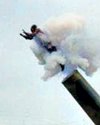
Born 31 Jul 1868; died 17 Jul 1948 at age 79.
Spanish inventor who devised the human cannonball act in 1922, for his Olympic Circus, assisted by sons, Hugo and Mario. In 1929, he left Europe with Hugo to feature in the U.S. with the Ringling Brothers-Barnum and Bailey Circus at Madison Square Garden, New York City. It is said the cannon idea was inspired by trench mortars used in WW I. Before Zacchini, design attempts were underpowered and not reliable. Zacchini’s star was Hugo, shot headfirst from the barrel of a monster cannon to travel in a projectile curve into a safety net. No explosive was used for the launch; the power came from compressed air under a piston platform. Smoke and bang were stage effects. Seven of his sons grew up as performers.«
Spanish inventor who devised the human cannonball act in 1922, for his Olympic Circus, assisted by sons, Hugo and Mario. In 1929, he left Europe with Hugo to feature in the U.S. with the Ringling Brothers-Barnum and Bailey Circus at Madison Square Garden, New York City. It is said the cannon idea was inspired by trench mortars used in WW I. Before Zacchini, design attempts were underpowered and not reliable. Zacchini’s star was Hugo, shot headfirst from the barrel of a monster cannon to travel in a projectile curve into a safety net. No explosive was used for the launch; the power came from compressed air under a piston platform. Smoke and bang were stage effects. Seven of his sons grew up as performers.«
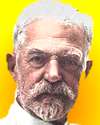
Born 31 Jul 1860; died 25 Oct 1939 at age 79.
Austrian neurosurgeon who significantly advanced neurosurgical techniques. He delved deep into the functions of the thyroid gland (1891), a critical endocrine organ influencing metabolism. At Vienna’s General Hospital, Eiselsberg pioneered the introduction of neurosurgery, where he was the first to successfully remove a cerebral tumor (1904). In an innovative 1908 paper*, he detailed the surgical removal of a pituitary gland (hypophysis) tumor, thereby providing a treatment for acromegaly—a disorder resulting from excess growth hormone, leading to enlarged body extremities. During the 1914-18 War, he served as a consultant to the Austro-Hungarian Navy, especially regarding abdominal wounds and amputations.«[* The operative cure of acromegaly by removal of a hypophysial tumor, in Ann. Surg. 48, 783-784 (1908).]
Austrian neurosurgeon who significantly advanced neurosurgical techniques. He delved deep into the functions of the thyroid gland (1891), a critical endocrine organ influencing metabolism. At Vienna’s General Hospital, Eiselsberg pioneered the introduction of neurosurgery, where he was the first to successfully remove a cerebral tumor (1904). In an innovative 1908 paper*, he detailed the surgical removal of a pituitary gland (hypophysis) tumor, thereby providing a treatment for acromegaly—a disorder resulting from excess growth hormone, leading to enlarged body extremities. During the 1914-18 War, he served as a consultant to the Austro-Hungarian Navy, especially regarding abdominal wounds and amputations.«[* The operative cure of acromegaly by removal of a hypophysial tumor, in Ann. Surg. 48, 783-784 (1908).]
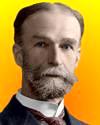

American pathologist and microbiologist, whose pioneeringachievementsrank himamonghis nation’sforemostbacteriologists. His wide-rangingcontributionsled tounderstandingparasitic organisms and how they transmit disease, yielding major health and economic benefits for both humans and domestic animals. He is best known for his studies of Texas cattle fever (1889-93, with Fred L. Kilborne), identifying the protozoan parasite carried by blood-sucking ticks—the first proof arthropods transmit infection. This inspired moreresearchersof insect-bornediseases, such as yellow fever and African sleeping sickness. In immunology, he also contributed to the development of a diphtheria vaccine.«
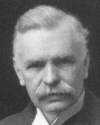
Born 31 Jul 1858; died 15 Jul 1936 at age 77. quotes
Irish geologist and seismologist who discovered evidence for the existence of the Earth's liquid core (1906). In studying seismograms of great 1897 Indian Earthquake he identified P (primary) and S (secondary) waves. It is interesting that he did not get a clue to the presence of the core from the S waves, which are actually incapable of being transmitted through the liquid of the outer core. (The liquid core does not transmit the shear wave energy released during an earthquake.) Rather he noted the existence of a shadow zone in which P waves from an earthquake in the opposite hemisphere of the earth failed to appear.
Irish geologist and seismologist who discovered evidence for the existence of the Earth's liquid core (1906). In studying seismograms of great 1897 Indian Earthquake he identified P (primary) and S (secondary) waves. It is interesting that he did not get a clue to the presence of the core from the S waves, which are actually incapable of being transmitted through the liquid of the outer core. (The liquid core does not transmit the shear wave energy released during an earthquake.) Rather he noted the existence of a shadow zone in which P waves from an earthquake in the opposite hemisphere of the earth failed to appear.
Born 31 Jul 1855; died 25 Dec 1904 at age 49.
German chemist who, with Richard Abegg, proposed an electrochemical theory of valency in a paper Die Elektronaffinität (Electron Affinity, 1899) to explain how certain atoms can combine based on the newly discovered electrons comprising the atom. It had several difficulties and was not generally accepted. Bodländer studied the electrolytical and optical properties of solutions; and the optical properties of crystals.«[Ref: Abegg and Bodländer, Zeit. Anorg. Chem. (1899), 20, 453.]
German chemist who, with Richard Abegg, proposed an electrochemical theory of valency in a paper Die Elektronaffinität (Electron Affinity, 1899) to explain how certain atoms can combine based on the newly discovered electrons comprising the atom. It had several difficulties and was not generally accepted. Bodländer studied the electrolytical and optical properties of solutions; and the optical properties of crystals.«[Ref: Abegg and Bodländer, Zeit. Anorg. Chem. (1899), 20, 453.]
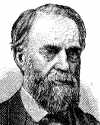
Born 31 Jul 1822; died 18 Jan 1903 at age 80.
American engineer, industrialist, made first Bessemer steel in the US. He was also a philanthropist, and politician who in 1886 defeated Henry George and Theodore Roosevelt to become mayor of New York City. Hewitt was a partner in a company owning several iron works. At the Cheltenham meeting of the British Association for the Advancement of Science in the summer of 1856 he heard the presentation of Henry Bessemer on the production of steel without fuel. Within the same year, Hewitt arranged an experiment with that process at the furnace of Cooper and Hewitt, at Philipsburgh, in New Jersey, with successful results.
American engineer, industrialist, made first Bessemer steel in the US. He was also a philanthropist, and politician who in 1886 defeated Henry George and Theodore Roosevelt to become mayor of New York City. Hewitt was a partner in a company owning several iron works. At the Cheltenham meeting of the British Association for the Advancement of Science in the summer of 1856 he heard the presentation of Henry Bessemer on the production of steel without fuel. Within the same year, Hewitt arranged an experiment with that process at the furnace of Cooper and Hewitt, at Philipsburgh, in New Jersey, with successful results.
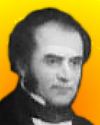
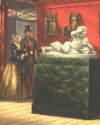
English engraver and printer who invented a process (patented 1835) of colour printing that made mass reproductions of paintings. Baxter used wood and metal colour blocks in conjunction with steel key plates and using oil inks. The subject was first engraved onto a steel key plate, impressions of this plate were taken, and colour blocks were cut for it - one for each different colour. The steel key plate printed a monochrome picture and then the colours would be built up by printing from the colour blocks using the relief process. Prints might require only 8 different blocks or as many as 20 different colours, each superimposed after being allowed to dry. Baxter died in Jan 1867 after being struck by a horse omnibus.[Image right: Detail from "Gems of the Great Exhibition, No. 2" showing statue of "The Unhappy Child" from the Belgian Deptartment, patented 26 Apr 1852.]
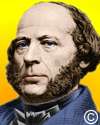
Born 31 Jul 1803; died 8 Mar 1889 at age 85.
Swedish-American inventor and naval engineer, who became an American citizen in 1847. He was the inventor of the screw propeller, built the first armoured turret warship, the USS Monitor. At the age of 14, he participated in the building of the Göta Canal (1817). A locomotive of his design, The Novelty, participated in a competition with Stephenson's Rocket in 1829. Ericsson invented and patented (No.588, on 1 Feb 1836) a double rotation propeller. In Aug 1861, the American Congress authorized ironclad warships and one ship of the Monitor type designed by Ericsson was ordered. By Mar 1862 the Monitor was ready for sea. He also developed a torpedo boat, The Destroyer, and worked to design his sun-motor engine. more
Swedish-American inventor and naval engineer, who became an American citizen in 1847. He was the inventor of the screw propeller, built the first armoured turret warship, the USS Monitor. At the age of 14, he participated in the building of the Göta Canal (1817). A locomotive of his design, The Novelty, participated in a competition with Stephenson's Rocket in 1829. Ericsson invented and patented (No.588, on 1 Feb 1836) a double rotation propeller. In Aug 1861, the American Congress authorized ironclad warships and one ship of the Monitor type designed by Ericsson was ordered. By Mar 1862 the Monitor was ready for sea. He also developed a torpedo boat, The Destroyer, and worked to design his sun-motor engine. more
Man of the Monitor, The Story of John Ericsson, by Jean Lee Latham. - book suggestion.
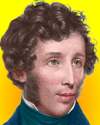
Born 31 Jul 1800; died 23 Sep 1882 at age 82. quotes
German chemist who co-discovered vanadium. Having studied first medicine, then mineralogy, chemistry became his primary interest. He found a method to produce metallic aluminum (1827), in the form of a grey powder, by heating aluminum chloride with potassium. Similarly, he isolated beryllium (1828), as a black-grey powder; as well as yttrium (1828). Working with Sainte Claire Deville, the crystalline form of silicon was made (1856). He is best-known for the synthesis of urea from ammonium cyanate (1828). Thus an organic compound was created from an inorganic one, a connection between the two formerly distinct areas of chemical study. In 1862, he produced acetylene from calcium carbide.«[Also known as Frederick Woehler.] more
German chemist who co-discovered vanadium. Having studied first medicine, then mineralogy, chemistry became his primary interest. He found a method to produce metallic aluminum (1827), in the form of a grey powder, by heating aluminum chloride with potassium. Similarly, he isolated beryllium (1828), as a black-grey powder; as well as yttrium (1828). Working with Sainte Claire Deville, the crystalline form of silicon was made (1856). He is best-known for the synthesis of urea from ammonium cyanate (1828). Thus an organic compound was created from an inorganic one, a connection between the two formerly distinct areas of chemical study. In 1862, he produced acetylene from calcium carbide.«[Also known as Frederick Woehler.] more
Wöhler’s Outlines Of Organic Chemistry, by Friedrich Wöhler. - book suggestion.
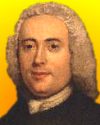
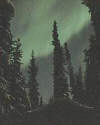
British physicist and teacher, who educated himself about science, and for developing a new method of preparing artificial magnets, won election to the Royal Society (1749). In July 1752, he was the first Englishman to repeat French experiments verifying Franklin's hypothesis that lightning was just a huge electric spark, (as seen from charged Leyden jars). Following this, he studied the polarity of the charge on a cloud. He invented a portable electroscope to detect charge present in a system, and he remains well-known for electrostatic induction experiments. Canton proved that water is slightly compressible (1762). Noting compass needle irregularities during a prominent aurora borealis he made the first observations of magnetic storms (1756-9).

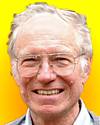
Died 31 Jul 2023 at age 87 (born 10 Oct 1935).
William Jason Morgan was an American geophysicist who significantly advanced plate tectonics theory, proposing Earth’s surface is made of moving rigid plates atop the molten magma of the underlying asthenosphere. At Georgia Tech and in Navy service, he had learned navigation skills and spherical trigonometry. These gave him insight to think in terms of the “plates” as fragmented three-dimensional sections on a spherical Earth. His groundbreaking papers in the late 1960s described how Earth’s dynamic processes produced plate interactions at their boundaries, that caused earthquakes, volcanic activity, and mountain formation. By linking seafloor spreading with continental drift, Morgan reshaped modern geology and geophysics.«
William Jason Morgan was an American geophysicist who significantly advanced plate tectonics theory, proposing Earth’s surface is made of moving rigid plates atop the molten magma of the underlying asthenosphere. At Georgia Tech and in Navy service, he had learned navigation skills and spherical trigonometry. These gave him insight to think in terms of the “plates” as fragmented three-dimensional sections on a spherical Earth. His groundbreaking papers in the late 1960s described how Earth’s dynamic processes produced plate interactions at their boundaries, that caused earthquakes, volcanic activity, and mountain formation. By linking seafloor spreading with continental drift, Morgan reshaped modern geology and geophysics.«
A Memoir on Jason Morgan's Plate Tectonics and Continental Drifts, by Amanda L. McLennan. - book suggestion.
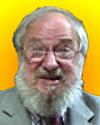
Died 31 Jul 2016 at age 88 (born 1 Mar 1928). quotes
American computer scientist who invented the Logo computer programming language, an educational computer programming language for children. He studied under Piaget, absorbing his educational theories. He has studied ways to use mathematics to understand better how children learn and think, and about the ways in which computers can aid in a child's learning. With Marvin Minsky, he co-founded the Artificial Intelligence Lab at MIT. In the mid-80s he worked in Costa Rica to develop a nationwide program of intensive computer use throughout the public education system. Costa Rica, which now has the highest literacy rate in the Americas, continues to serve as a model for large-scale deployment of computer technology in education.
American computer scientist who invented the Logo computer programming language, an educational computer programming language for children. He studied under Piaget, absorbing his educational theories. He has studied ways to use mathematics to understand better how children learn and think, and about the ways in which computers can aid in a child's learning. With Marvin Minsky, he co-founded the Artificial Intelligence Lab at MIT. In the mid-80s he worked in Costa Rica to develop a nationwide program of intensive computer use throughout the public education system. Costa Rica, which now has the highest literacy rate in the Americas, continues to serve as a model for large-scale deployment of computer technology in education.
Mindstorms: Children, Computers, And Powerful Ideas, by Seymour A. Papert. - book suggestion.
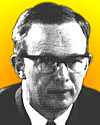
Died 31 Jul 2000 at age 81 (born 19 Nov 1918).
Dutch astronomer who predicted theoretically (1944) that in interstellar space the amount of neutral atomic hydrogen, which in its hyperfine transition radiates and absorbs at a wavelength of 21 cm, might be expected to occur at such high column densities as to provide a spectral line sufficiently strong as to be measurable. Shortly after the end of the war several groups set about to test this prediction. The 21-cm line of atomic hydrogen was detected in 1951, first at Harvard University followed within a few weeks by others. The discovery demonstrated that astronomical research, which at that time was limited to conventional light, could be complemented with observations at radio wavelengths, revealing a range of new physical processes.
Dutch astronomer who predicted theoretically (1944) that in interstellar space the amount of neutral atomic hydrogen, which in its hyperfine transition radiates and absorbs at a wavelength of 21 cm, might be expected to occur at such high column densities as to provide a spectral line sufficiently strong as to be measurable. Shortly after the end of the war several groups set about to test this prediction. The 21-cm line of atomic hydrogen was detected in 1951, first at Harvard University followed within a few weeks by others. The discovery demonstrated that astronomical research, which at that time was limited to conventional light, could be complemented with observations at radio wavelengths, revealing a range of new physical processes.
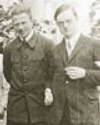
1927
Died 31 Jul 1980 at age 77 (born 18 Oct 1902).
Ernst Pascual Jordan was a German physicist who in the late 1920s co-founded (with Max Born and later Werner Heisenberg) quantum mechanics using matrix methods, showing how light could be interpreted as composed of discrete quanta of energy. Later, (with Wolfgang Pauli and Eugene Wigner), while it was still in its early stages of development, he contributed to the quantum mechancs of electron-photon interactions, now called quantum electrodynamics. He also originated (concurrently with Robert Dicke) a theory of cosmology that proposed to make the universal constants of nature, (such as the universal gravitational constant G), variable over time.[Image: Heisenberg (L) with Jordan (R)]
Ernst Pascual Jordan was a German physicist who in the late 1920s co-founded (with Max Born and later Werner Heisenberg) quantum mechanics using matrix methods, showing how light could be interpreted as composed of discrete quanta of energy. Later, (with Wolfgang Pauli and Eugene Wigner), while it was still in its early stages of development, he contributed to the quantum mechancs of electron-photon interactions, now called quantum electrodynamics. He also originated (concurrently with Robert Dicke) a theory of cosmology that proposed to make the universal constants of nature, (such as the universal gravitational constant G), variable over time.[Image: Heisenberg (L) with Jordan (R)]
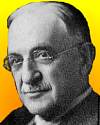
Died 31 Jul 1937 at age 85 (born 19 Aug 1851).
Charles Elmer Hires was an American manufacturer who invented his own brand of root beer, sold by the Hires Co., which then dominated the market. Root beer dates back to colonial settlers. As a Philadelphia pharmacist, after sampling a herb tea while visiting New Jersey, he created a similar drink, “Hires’ Herb Tea,” using sassafras as the main flavoring ingredient. He sold the mixture at the 1876 Philadelphia Centennial Exposition in tiny packets of his dry mixture of various herbs, barks, and berries, for housewives to brew as “root beer.” In 1880, Hires introduced a more convenient, “new and improved” liquid version. He began advertised it in an 1884 issue of Harper’s Weekly. By 1892, he sold almost 3 million bottles a year.«
Charles Elmer Hires was an American manufacturer who invented his own brand of root beer, sold by the Hires Co., which then dominated the market. Root beer dates back to colonial settlers. As a Philadelphia pharmacist, after sampling a herb tea while visiting New Jersey, he created a similar drink, “Hires’ Herb Tea,” using sassafras as the main flavoring ingredient. He sold the mixture at the 1876 Philadelphia Centennial Exposition in tiny packets of his dry mixture of various herbs, barks, and berries, for housewives to brew as “root beer.” In 1880, Hires introduced a more convenient, “new and improved” liquid version. He began advertised it in an 1884 issue of Harper’s Weekly. By 1892, he sold almost 3 million bottles a year.«
Charles E. Hires and the Drink that Wowed a Nation: The Life and Times of a Philadelphia Entrepreneur, by Bill Double. - book suggestion.
Died 31 Jul 1935 at age 85 (born 21 May 1850).
Austrian-born American civil engineer known for designing Hell Gate Bridge across New York City's East River.
Austrian-born American civil engineer known for designing Hell Gate Bridge across New York City's East River.
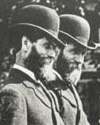
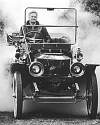
American inventor who, with his twin brother Freeman, were the most famous manufacturers of steam-driven automobiles. Francis previously had invented a photographic dry-plate process (1883), and as the Stanley Dry Plate Company the brothers had engaged in the manufacturing of the plates. They sold the company to Eastman Kodak in 1905, as their interest had turned to steam-powered automobiles. They began working on steam powered cars in 1897, and built thousands of them them until the 1920's as the Stanley Motor Company. At racing events, they often competed successfully against gasoline powered cars (1902-09). They set a world record in 1906 for fastest mile in 28.2 seconds (127 mph or 205 kph).[Image right: 1910 Stanley Model 71]
The Stanley Steamer: America's Legendary Steam Car, by Kit Foster. - book suggestion.
Died 31 Jul 1867 at age 64 (born 31 Oct 1802).
French engineer and inventor of the water turbine. In 1827, age 25, Fourneyron, introduced a reaction turbine that channeled water through an enclosed chamber fitted with an inner ring of fixed guide blades. These guide blades deflected the water outward against the moving vanes of a "runner." The vanes of this outer runner were curved in the opposite direction from the fixed inner guide blades, reversing the direction of water flow within the device and creating a reactive force. Fourneyron's patent described his invention as "a wheel of universal and continuous pressure or hydraulic turbine." He died in Paris, known as " father of the turbine"
French engineer and inventor of the water turbine. In 1827, age 25, Fourneyron, introduced a reaction turbine that channeled water through an enclosed chamber fitted with an inner ring of fixed guide blades. These guide blades deflected the water outward against the moving vanes of a "runner." The vanes of this outer runner were curved in the opposite direction from the fixed inner guide blades, reversing the direction of water flow within the device and creating a reactive force. Fourneyron's patent described his invention as "a wheel of universal and continuous pressure or hydraulic turbine." He died in Paris, known as " father of the turbine"

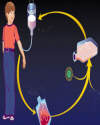
In 1990, experiments in gene therapy by the insertion of new genes into body cells were approved for the first time by the Recombinant DNA Advisory Committee of the National Institutes of Health. These first real gene therapies for humans were for adenosine deaminase deficiency (a genetic disease that destroys the immune system) and for a form of cancer. Dr. McGarrity, chair of the committee noted that the protocols that they had voted upon were the first approvals for true gene therapy rather than simple gene insertion. Garrity added that this is a historic occasion in that now gene therapy can be added to the repertoire of vaccines, antibiotics, drugs, surgery, and radiation to fight disease.*
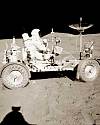
In 1971, Dave Scott became the first person to drive a vehicle on the Moon - the battery-powered Lunar Rover (LRV) - as part of the Apollo 15 mission to the mountainous Hadley-Apennine region. This LRV, the first to be carried on an Apollo mission, built by Boeing, weighed 460 lb (209 kg) and folded into a space 5 ft by 20 in (1.5 m by 0.5 m). Each wheel was independently driven by ¼ horsepower (200 W) electric motor. The astronauts could travel further from their landing site and sample a wider variety of lunar materials. The car travelled 17.4 miles (28 km) and collected about 168 pounds (76 kg) of lunar materials to return to Earth. Shepard and Mitchell of the previous Apollo 14 mission walked about 2.5 miles (4 km), hauling their scientific gear in a two-wheeled cart .«[Image: Lunar Rover Vehicle driven by Dave Scott in the first lunar surface extravehicular activity at the Hadley-Apennine landing site.]
In 1965, the last cigarette commercial appeared on British television.
In 1964, the American space probe Ranger 7 transmitted the first close-up images of the moon's surface ever taken by a U.S. spacecraft, beginning the mapping of the surface in preparation for a future lunar landing. Ranger spacecraft were designed to fly straight down towards the Moon and send images back until the moment of impact. Ranger 7 carried six slow-scan vidicon TV cameras capable of transmitting high-resolution, close-up television pictures of the lunar surface. Seventeen minutes before impact it captured the first image, showing 360-km from top to bottom, including the large crater Alphonsus (108-km diam). The partial scan image taken immediately before impact had a resolution of 0.5 meters. A total of 4308 photographs of excellent quality were returned before Ranger 7 crashed in Mare Cognitum (Sea of Clouds), a mare terrain modified by crater rays.

In 1954, a six year research program found that Los Angeles smog was caused by the chemical reaction of sunlight on auto and industrial emissions. The first eye-irritating “smog” in Los Angeles on 26 Jul 1943 - was a “gas attack”of haze, smoke and exhaust that reduced visibility to under three blocks. The Los Angeles Times launched an anti-smog campaign on 1 Dec 1946, and brought a smog expert to Los Angeles to study the problem. On 14 Oct 1947, the L.A. County Board of Supervisors established the nation's first air pollution control program by creating the L.A. County Air Pollution Control District. Dr Haagen-Smit later reported that ozone was the primary nuisance ingredient in smog. London experienced a killer Great Smog on 5 Dec 1952, which resulted in the Clean Air Act of 1956.«[Image: The first recorded photograph of LA smog, 26 July 1943]
Smogtown: The Lung-Burning History of Pollution in Los Angeles, by Chip Jacobs. - book suggestion.
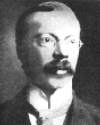
In 1910, a murderer was apprehended, after the first use of Marconi telegraph signals in a murder case. American-born Dr Hawley Crippen and his mistress, Ethel Le Neve, disguised as a boy, were arrested for the murder of his wife in England. Her remains were discovered 13 Jul 1910. She had been poisoned with hyoscine, an extract of the deadly plant henbane. An arrest warrant was issued 16 Jul 1910. Crippen was spotted mid-Atlantic as they sailed from Antwerp to Canada on the SS Montrose, the first ship to be equipped with radio-telegraph. On 22 Jul 1910, Captain Kendall alerted London Police of his “strong suspicions.” Crippen was later hanged in Pentonville Prison, London.
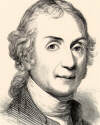
Priestley
In 1874, the Centennial of Chemistry in the U.S. was celebrated by chemists meeting at Northumberland, Pa. where Joseph Priestley was buried after spending the last years of his life in America. The chemists commemorated the 100th anniversary of Priestley's discovery of the element oxygen on 1 Aug 1774, regarded as the most important link in the chain of events which eventually led to the overthrow of the phlogistic hypothesis. The memorial exercises were planned to include an address by Professor Joseph Henry, an Essay on American Contributions to Chemistry by Benjamin Silliman, Jr., and a loan exhibition of Priestley's apparatus, books and manuscripts. The event was initiated by Henry Bolton.«
more
In 1850, a 65-ft-long iron railway bridge near Mast Hope, Pennsylvania, collapsed as a stock train was crossing. The engineer heard a loud cracking, pulled the throttle wide open, and succeeded in getting the engine across in safety. However, the rest of the train fell 25 feet into the deep ravine of the Westcolang Creek along with the wrecked bridge. A brakeman and two stockmen lost their lives. The New York and Erie Railroad had experimented by building three iron bridges, including the one that failed. A subsequent article in the Scientific American magazine reported that the company, having lost confidence in iron bridges, would tear down the remaining shorter two, and replace them with wooden structures.«[On 18 Sep 2022 — Corrected date from 1849 to 1850.]
In 1849, Benjamin Chambers was issued a U.S. patent for the breech loading cannon (No. 6612). The advantage of breech loading was to speed up the reloading process, allowing troops to fire more rounds per minute. Prior to this technology, troops used musket loading guns and had to run to the front of the gun to reload - wasting time and risking lives. Breechloading guns required a mechanism able to withstand the strain of firing and still operate smoothly and quickly to allow the next round to be fired. This required not only a superior material but expert machining. Chambers' design used a breech piece with sectional screws to allow for speedy opening for "swabbing, depositing the load and readily it closing again."
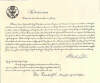
In 1790, the first U.S. patent was granted to Samuel Hopkins of Vermont for a process for making potash and pearl ashes. Potash was important as an ingredient in soap and fertilizer. The patent was granted for a term of 14 years and signed by President George Washington, who had the previous month signed the first U.S. patent statute into law on 10 April 1790. Hopkins did not get Patent with a serial No.1 as thousands of patents were issued before the Patent Office began to number them. Congress had passed the Patent Act on 10 Apr 1790. Two other patents were granted that year - one for a new candle-making process and the third for flour-milling machinery of Oliver Evans (18 Dec 1790). The next year, 1791, Samuel Hopkins also was granted the first Canadian patent.«
The Patent Office Pony: A History of the Early Patent Office, by Kenneth W. Dobyns. - book suggestion.




