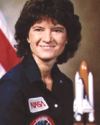
Born 26 May 1951; died 23 Jul 2012 at age 61. quotes
American astronaut who became the first American woman to orbit the earth when she flew aboard Space Shuttle Challenger on 18 Jun 1983. Only two women preceded her in space: Valentina Tereshkova (1963) and Svetlana Savitskaya (1982), both from the former Soviet Union. Ride applied to the astronaut program after reading an ad in a newspaper. Out of 8,000 applicants to the space program that year, 35 individuals were selected including six women. Accepted into the astronaut corps in 1978, she completed her training as a mission specialist in 1979, and flew on two missions with Challenger, the second in 1984. Dr. Ride, a Ph.D. physicist, was a member of the team chosen to investigate the 1986 explosion of Challenger.
American astronaut who became the first American woman to orbit the earth when she flew aboard Space Shuttle Challenger on 18 Jun 1983. Only two women preceded her in space: Valentina Tereshkova (1963) and Svetlana Savitskaya (1982), both from the former Soviet Union. Ride applied to the astronaut program after reading an ad in a newspaper. Out of 8,000 applicants to the space program that year, 35 individuals were selected including six women. Accepted into the astronaut corps in 1978, she completed her training as a mission specialist in 1979, and flew on two missions with Challenger, the second in 1984. Dr. Ride, a Ph.D. physicist, was a member of the team chosen to investigate the 1986 explosion of Challenger.
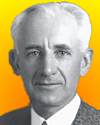
Born 26 May 1876; died 3 Feb 1956 at age 79.
Robert Mearns Yerkes was an American psychologist and a principal developer of comparative (animal) psychology in the U.S. In his book The Dancing Mouse (1908), he helped established the use of mice and rats as standard subjects for experiments in psychology. He also studied primates, publishing his results in 1929 in the classic book The Great Apes.
Robert Mearns Yerkes was an American psychologist and a principal developer of comparative (animal) psychology in the U.S. In his book The Dancing Mouse (1908), he helped established the use of mice and rats as standard subjects for experiments in psychology. He also studied primates, publishing his results in 1929 in the classic book The Great Apes.

c.1907
Born 26 May 1874; died 18 Jul 1958 at age 84.
French aviator and aircraft designer who developed ailerons (1908) to solve the enormously difficult and dangerous problems of lateral control. His an innovation subsequently came into general use on all planes. His first steps in aircraft design began in 1907 when he ordered his own aircraft incorporating his design modifications of a dihedral in the wings and the reduction of the tail to a single plane. These intuitive rather than scientific modifications were the beginning of a long career in which Farman diagnosed and solved a myriad of aircraft control and structural problems. The Farman “Goliath” was the first long-distance passenger airliner, beginning regular Paris–London flights on 8 Feb 1919. His younger brother Maurice Farman was also an aviator. They were born of English parents in Paris.
French aviator and aircraft designer who developed ailerons (1908) to solve the enormously difficult and dangerous problems of lateral control. His an innovation subsequently came into general use on all planes. His first steps in aircraft design began in 1907 when he ordered his own aircraft incorporating his design modifications of a dihedral in the wings and the reduction of the tail to a single plane. These intuitive rather than scientific modifications were the beginning of a long career in which Farman diagnosed and solved a myriad of aircraft control and structural problems. The Farman “Goliath” was the first long-distance passenger airliner, beginning regular Paris–London flights on 8 Feb 1919. His younger brother Maurice Farman was also an aviator. They were born of English parents in Paris.
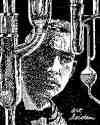
Born 26 May 1867; died 10 Jan 1937 at age 69.
U.S. chemist who interpreted the behaviour and structure of organic compounds in the light of valence theory and applied the methods of physical chemistry to organic chemistry. His research in such fields as molecular rearrangements and stereochemistry helped lay the foundations of physicoorganic chemistry. During World War I, he advised the government on how to overcome shortages of chemicals which had come from Germany. He was very active in World War I developing war gases, dyes, and chemicals for the American military forces. He served as chairman of the committee on synthetic drugs of the National Research Council.
U.S. chemist who interpreted the behaviour and structure of organic compounds in the light of valence theory and applied the methods of physical chemistry to organic chemistry. His research in such fields as molecular rearrangements and stereochemistry helped lay the foundations of physicoorganic chemistry. During World War I, he advised the government on how to overcome shortages of chemicals which had come from Germany. He was very active in World War I developing war gases, dyes, and chemicals for the American military forces. He served as chairman of the committee on synthetic drugs of the National Research Council.
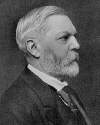
Born 26 May 1837; died 21 Jul 1926 at age 89.
American civil engineer under whose direction the Brooklyn Bridge, New York City, was completed in 1883. The bridge was designed by Roebling with his father, John Augustus Roebling, from whom he had gained experience building wire-rope suspension bridges. Upon his father's death, he superintended the building of the Brooklyn Bridge (1869-83). He was disabled by decompression sickness after entering a caisson in 1872. He was brought out nearly insensible and his life was saved with difficulty. Because of resulting poor health, he directed operations from his home in Brooklyn overlooking the site. Though he continued to head the family's wire-rope manufacturing business for several years, medical problems forced retirement (1888).
American civil engineer under whose direction the Brooklyn Bridge, New York City, was completed in 1883. The bridge was designed by Roebling with his father, John Augustus Roebling, from whom he had gained experience building wire-rope suspension bridges. Upon his father's death, he superintended the building of the Brooklyn Bridge (1869-83). He was disabled by decompression sickness after entering a caisson in 1872. He was brought out nearly insensible and his life was saved with difficulty. Because of resulting poor health, he directed operations from his home in Brooklyn overlooking the site. Though he continued to head the family's wire-rope manufacturing business for several years, medical problems forced retirement (1888).
Builders of the Bridge: The Story of John Roebling and His Son, by David Barnard Steinman. - book suggestion.
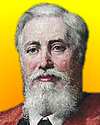
Born 26 May 1832; died 30 Jan 1908 at age 75.
Scottish comparative anatomist who made anatomical, physical, and physiological researches, especially on the flight of insects, birds and bats. He began in 1861 as a house surgeon Royal Infirmary, Edinburgh, and a year later contributed dissections to the collection as assistant in the Hunterian Museum at the Royal College of Surgeons of England. By 1867, he became interested in the mechanical aspects of animal flight, and spent two years in Ireland in its study. In 1870, He published an article on the physiology of wings. Also experimenting on artificial flight, he wrote Animal Locomotion, or, Walking, Swimming, and Flying with a Dissertation on aeronautics (1873). For the last ten years of his life, he produced his magnum opus, the three-volume, Design in Nature (1908), published shortly after his death in 1908.«
Scottish comparative anatomist who made anatomical, physical, and physiological researches, especially on the flight of insects, birds and bats. He began in 1861 as a house surgeon Royal Infirmary, Edinburgh, and a year later contributed dissections to the collection as assistant in the Hunterian Museum at the Royal College of Surgeons of England. By 1867, he became interested in the mechanical aspects of animal flight, and spent two years in Ireland in its study. In 1870, He published an article on the physiology of wings. Also experimenting on artificial flight, he wrote Animal Locomotion, or, Walking, Swimming, and Flying with a Dissertation on aeronautics (1873). For the last ten years of his life, he produced his magnum opus, the three-volume, Design in Nature (1908), published shortly after his death in 1908.«
Born 26 May 1826; died 27 Nov 1875 at age 49.
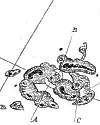
English astronomer who, by observing the motionsp of sunspots, discovered the equatorial acceleration of the Sun; i.e., that it rotates faster at the equator than near the poles. He also discovered the movement of sunspot zones toward the Sun's equator as the solar cycle progresses. Carrington devoted himself to the study of sunspots and his work, extending from 1853 to 1861, was collected in Observation of the Spots of the Sun (1863). Carrington also was the first to observe a sun flare (1859). He was observing a prominent group of sunspots on 1 Sep 1859, when suddenly "two patches of intensely bright and white light broke out." which brightened rapidly and decayed. The flare he had seen was of the rare variety that is visible in white light.(Image: detail of a drawing by R.C. Carrington, showing the location of the flare he observed while making a drawing of an active region. Reproduced from his 1860 paper in Monthly Notices of the Royal Astronomical Society)
English astronomer who, by observing the motionsp of sunspots, discovered the equatorial acceleration of the Sun; i.e., that it rotates faster at the equator than near the poles. He also discovered the movement of sunspot zones toward the Sun's equator as the solar cycle progresses. Carrington devoted himself to the study of sunspots and his work, extending from 1853 to 1861, was collected in Observation of the Spots of the Sun (1863). Carrington also was the first to observe a sun flare (1859). He was observing a prominent group of sunspots on 1 Sep 1859, when suddenly "two patches of intensely bright and white light broke out." which brightened rapidly and decayed. The flare he had seen was of the rare variety that is visible in white light.(Image: detail of a drawing by R.C. Carrington, showing the location of the flare he observed while making a drawing of an active region. Reproduced from his 1860 paper in Monthly Notices of the Royal Astronomical Society)
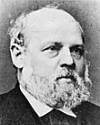
Born 26 May 1815; died 24 Jan 1879 at age 63.
German glassblower for whom the Geissler (mercury) vacuum pump and the Geissler tube are named. With the unprecedented (1/100 mm of mercury) low vacuum he produced in sealed glass tubes, he made available to early physicists a valuable tool to study the effect of electricity on the remaining traces of gases therein. These produced more detailed studies of the structure of matter.[DSB and EB give birth year as 1815, but Chambers Bio. Dict. gives 1814.]
German glassblower for whom the Geissler (mercury) vacuum pump and the Geissler tube are named. With the unprecedented (1/100 mm of mercury) low vacuum he produced in sealed glass tubes, he made available to early physicists a valuable tool to study the effect of electricity on the remaining traces of gases therein. These produced more detailed studies of the structure of matter.[DSB and EB give birth year as 1815, but Chambers Bio. Dict. gives 1814.]
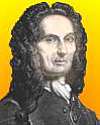
Born c. 26 May 1667; died 27 Nov 1754. quotes
French mathematician who was a pioneer in the development of analytic trigonometry and in the theory of probability. He published The Doctrine of Chance in 1718. The definition of statistical independence appears in this book together with many problems with dice and other games. He also investigated mortality statistics and the foundation of the theory of annuities. He died in poverty, and correctly predicted the day of his own death. He found that he was sleeping 15 minutes longer each night and from this the arithmetic progression, calculated that he would die on the day that he slept for 24 hours.
French mathematician who was a pioneer in the development of analytic trigonometry and in the theory of probability. He published The Doctrine of Chance in 1718. The definition of statistical independence appears in this book together with many problems with dice and other games. He also investigated mortality statistics and the foundation of the theory of annuities. He died in poverty, and correctly predicted the day of his own death. He found that he was sleeping 15 minutes longer each night and from this the arithmetic progression, calculated that he would die on the day that he slept for 24 hours.


Died 26 May 2025 at age 79 (born 11 May 1946).
Robert Koffler Jarvik was an American surgeon and inventor who invented the Jarvik-7, the first artificial heart used as a permanent implant in a human. On 2 Dec 1982, terminally ill cardiac patient Barney Clark, was the first to have his heart replaced with a Jarvik-7. The surgeon was William C. DeVries. The aluminum and plastic device replaced the two lower chambers (ventricles) of his natural heart. Two rubber diaphragms acted to pump blood, powered by hoses to an external compressor. Oxygenation occurred naturally in the patient’s lungs. After 112 days, Clark died from physical complications caused by the implant. Several more patients had no better results. The Jarvik-7 problems remained unsolved and its permanent use was abandoned.«[Image: Jarvik-7 held by its inventor.]
Robert Koffler Jarvik was an American surgeon and inventor who invented the Jarvik-7, the first artificial heart used as a permanent implant in a human. On 2 Dec 1982, terminally ill cardiac patient Barney Clark, was the first to have his heart replaced with a Jarvik-7. The surgeon was William C. DeVries. The aluminum and plastic device replaced the two lower chambers (ventricles) of his natural heart. Two rubber diaphragms acted to pump blood, powered by hoses to an external compressor. Oxygenation occurred naturally in the patient’s lungs. After 112 days, Clark died from physical complications caused by the implant. Several more patients had no better results. The Jarvik-7 problems remained unsolved and its permanent use was abandoned.«[Image: Jarvik-7 held by its inventor.]
After Barney Clark: Reflections on the Utah Artificial Heart Program, by Margery W. Shaw. - book suggestion.
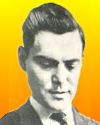
Died 26 May 2003 at age 75 (born 20 Apr 1928).
Gerald Stanley Hawkins was an English-American radio astronomer and mathematician who used a computer to show that Stonehenge was a prehistoric astronomical observatory. In the 18th century, William Stukely had noticed that the horseshoe of trilithons and 19 bluestones opened up in the direction of the midsummer sunrise. Hawkins identified 165 key points that correlated the stones and other archaeological features of the neolithic complex to the rising and setting positions of the sun and moon over an 18.6-year cycle. He first published his findings in an article, Stonehenge Decoded, in the journal Nature (1963), and then in a book with the same title (1965). In Beyond Stonehenge he explored the mysteries of Machu Pichu, the Nasca Lines, Easter Island and the Egyptian Temples of Karnak and Amon-Ra. In the 1990s, he studied the geometry of crop circles.
Gerald Stanley Hawkins was an English-American radio astronomer and mathematician who used a computer to show that Stonehenge was a prehistoric astronomical observatory. In the 18th century, William Stukely had noticed that the horseshoe of trilithons and 19 bluestones opened up in the direction of the midsummer sunrise. Hawkins identified 165 key points that correlated the stones and other archaeological features of the neolithic complex to the rising and setting positions of the sun and moon over an 18.6-year cycle. He first published his findings in an article, Stonehenge Decoded, in the journal Nature (1963), and then in a book with the same title (1965). In Beyond Stonehenge he explored the mysteries of Machu Pichu, the Nasca Lines, Easter Island and the Egyptian Temples of Karnak and Amon-Ra. In the 1990s, he studied the geometry of crop circles.
Stonehenge Decoded, by Gerald S. Hawkins. - book suggestion.
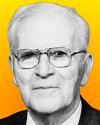
Died 26 May 1999 at age 100 (born 10 Sep 1898).
[bp] who invented plasticized PVC (vinyl), while seeking a synthetic adhesive. In 1926, he discovered how to make hard, unworkable polyvinyl chloride pliable, by heating it in a solvent at high temperature. It is now used in hundreds of products such as floor tile, imitation leather, garden hose, shower curtains, and coatings. It is second only to polyethylene plastic in quantity manufactured. Semon’s other pioneering contributions to polymer science, included new rubber antioxidants. Also, his technical leadership led to discovery of three major new polymer families: thermoplastic polyurethane, synthetic “natural” rubber, and oil-resistant synthetic rubbers. Semon held 116 U.S. patents.« more
[bp] who invented plasticized PVC (vinyl), while seeking a synthetic adhesive. In 1926, he discovered how to make hard, unworkable polyvinyl chloride pliable, by heating it in a solvent at high temperature. It is now used in hundreds of products such as floor tile, imitation leather, garden hose, shower curtains, and coatings. It is second only to polyethylene plastic in quantity manufactured. Semon’s other pioneering contributions to polymer science, included new rubber antioxidants. Also, his technical leadership led to discovery of three major new polymer families: thermoplastic polyurethane, synthetic “natural” rubber, and oil-resistant synthetic rubbers. Semon held 116 U.S. patents.« more
A Man of Ideas: The Biography of Dr. Waldo Lonsbury Semon, by Elizabeth M. Smith. - book suggestion.
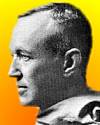
Died 26 May 1951 at age 71 (born 12 May 1880).
American explorer, engineer and scientist (original name William Linn Ellsworth) who led the first trans-Arctic (1926) and trans-Antarctic (1935) air crossings.
American explorer, engineer and scientist (original name William Linn Ellsworth) who led the first trans-Arctic (1926) and trans-Antarctic (1935) air crossings.
Polar Extremes: The World of Lincoln Ellsworth, by Beekman H. Pool. - book suggestion.
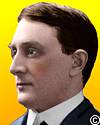
Died 26 May 1939 at age 73 (born 19 Jul 1865). quotes
Charles Horace Mayo was an American surgeon and philanthropist who co-founded the Mayo Clinic and Mayo Foundation. During the frontier practice of their father, Dr. William Worrall Mayo, Charles and his brother, William J. Mayo, began their medical training early, first by observing him, and later by assisting him on patient visits and with autopsies. After medical school, the family practiced together. In 1914 they built a clinic for the integrated group practice of medicine. In 1919, the brothers turned over the clinic, assets, and most of their life savings, to the charitable organization now known as Mayo Foundation.
Charles Horace Mayo was an American surgeon and philanthropist who co-founded the Mayo Clinic and Mayo Foundation. During the frontier practice of their father, Dr. William Worrall Mayo, Charles and his brother, William J. Mayo, began their medical training early, first by observing him, and later by assisting him on patient visits and with autopsies. After medical school, the family practiced together. In 1914 they built a clinic for the integrated group practice of medicine. In 1919, the brothers turned over the clinic, assets, and most of their life savings, to the charitable organization now known as Mayo Foundation.
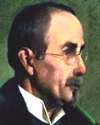
Died 26 May 1938 at age 81 (born 19 May 1857). quotes
American biochemist and pharmacologist who made important contributions to a modern understanding of the ductless, or endocrine, glands. In 1893, he became the first full-time professor of pharmacology in the U.S. at John Hopkins University. Abel encouraged his students to conduct experiments and become active participants in his laboratory research. In 1897 he reported the isolation of a derivative of epinephrine (adrenaline). In 1926, he isolated and crystallized insulin. Abel also investigated the functions of the kidney and devised a vividiffusion apparatus for removing toxins from the blood of living animals, an apparatus that is widely regarded as a forerunner of the artificial kidney.
American biochemist and pharmacologist who made important contributions to a modern understanding of the ductless, or endocrine, glands. In 1893, he became the first full-time professor of pharmacology in the U.S. at John Hopkins University. Abel encouraged his students to conduct experiments and become active participants in his laboratory research. In 1897 he reported the isolation of a derivative of epinephrine (adrenaline). In 1926, he isolated and crystallized insulin. Abel also investigated the functions of the kidney and devised a vividiffusion apparatus for removing toxins from the blood of living animals, an apparatus that is widely regarded as a forerunner of the artificial kidney.
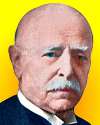
Died 26 May 1933 at age 79 (born 1 Jan 1854). quotes
American pathologist, remembered for his contribution in a monograph on amoebic dysentery (1891) which described detailed observations of it and its parasite. His post-M.D. (1878) work included many autopsies, sparking his interest in pathology. He studied in Europe (1880-83), where pathology was more advanced than in the U.S. In his first significant research, he confirmed Laveran's discovery of the sporozoan parasite that causes malaria, Plasmodium malariae (1893-94), and upon returning home, was the first in the U.S. to describe and picture it. Councilman also did research on diphtheria, cerebrospinal meningitis, nephritis, and smallpox. He was the principal founder of the American Association of Pathologists and Bacteriologists.
American pathologist, remembered for his contribution in a monograph on amoebic dysentery (1891) which described detailed observations of it and its parasite. His post-M.D. (1878) work included many autopsies, sparking his interest in pathology. He studied in Europe (1880-83), where pathology was more advanced than in the U.S. In his first significant research, he confirmed Laveran's discovery of the sporozoan parasite that causes malaria, Plasmodium malariae (1893-94), and upon returning home, was the first in the U.S. to describe and picture it. Councilman also did research on diphtheria, cerebrospinal meningitis, nephritis, and smallpox. He was the principal founder of the American Association of Pathologists and Bacteriologists.
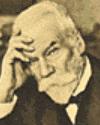
Died 26 May 1922 at age 84 (born 16 Apr 1838).
Belgian industrial chemist who invented the Solvay Process (1863), a commercially viable ammonia-soda process for producing soda ash (sodium carbonate), widely used in the manufacture of such products as glass and soap. Although a half-century before, A.J. Fresnel had shown (1811) that sodium bicarbonate could be precipitated from a salt solution containing ammonium bicarbonate, many engineering obstacles had to be overcome. Solvay's successful design used an 80 foot tall high-efficiency carbonating tower in which ammoniated brine trickled down from above and carbon dioxide rose from the bottom. Plates and bubble caps helped create a larger surface over which the two could react forming sodium bicarbonate.
Belgian industrial chemist who invented the Solvay Process (1863), a commercially viable ammonia-soda process for producing soda ash (sodium carbonate), widely used in the manufacture of such products as glass and soap. Although a half-century before, A.J. Fresnel had shown (1811) that sodium bicarbonate could be precipitated from a salt solution containing ammonium bicarbonate, many engineering obstacles had to be overcome. Solvay's successful design used an 80 foot tall high-efficiency carbonating tower in which ammoniated brine trickled down from above and carbon dioxide rose from the bottom. Plates and bubble caps helped create a larger surface over which the two could react forming sodium bicarbonate.
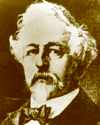
Died 26 May 1888 at age 75 (born 12 Oct 1812). quotes
Italian chemist who discovered the explosive compound nitroglycerin (1847) by adding glycerine slowly to mixture of nitric and sulphuric acids. When he discovered the explosive power of even a single drop in a test tube, he named the new compound pyroglycerin. Sobrero was horrified by the destructive potential of his discovery, and made no effort to develop that power himself, though it became known as nitroglycerin, or blasting oil. Two decades later, Alfred Nobel combined nitroglycerine with diatomaceous earth, making it safer to handle, but just as useful for blasting rock for construction and mining. Nobel made a fortune as the inventor and manufacturer of dynamite.
Italian chemist who discovered the explosive compound nitroglycerin (1847) by adding glycerine slowly to mixture of nitric and sulphuric acids. When he discovered the explosive power of even a single drop in a test tube, he named the new compound pyroglycerin. Sobrero was horrified by the destructive potential of his discovery, and made no effort to develop that power himself, though it became known as nitroglycerin, or blasting oil. Two decades later, Alfred Nobel combined nitroglycerine with diatomaceous earth, making it safer to handle, but just as useful for blasting rock for construction and mining. Nobel made a fortune as the inventor and manufacturer of dynamite.
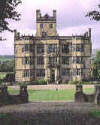
Gawthorpe Hall
Died 26 May 1877 at age 72 (born 20 Jul 1804).
(1st Baronet, original surname Kay) was an English physician, public-health reformer, and chief founder of the English system of publicly financed elementary education. A medical graduate of Edinburgh University, he was also a cholera doctor in Manchester, a pioneer social scientist and town planner, an assistant Poor Law commissioner, the manager of a large landed estate (Gawthorpe Hall), a would-be politician and a novelist. His surname, Kay, changed in 1842 upon marriage to Janet Shuttleworth. His turbulent political, personal and family life is fascinating in itself and, in addition, sheds light on many aspects of nineteenth century social history.
(1st Baronet, original surname Kay) was an English physician, public-health reformer, and chief founder of the English system of publicly financed elementary education. A medical graduate of Edinburgh University, he was also a cholera doctor in Manchester, a pioneer social scientist and town planner, an assistant Poor Law commissioner, the manager of a large landed estate (Gawthorpe Hall), a would-be politician and a novelist. His surname, Kay, changed in 1842 upon marriage to Janet Shuttleworth. His turbulent political, personal and family life is fascinating in itself and, in addition, sheds light on many aspects of nineteenth century social history.
Died 26 May 1862 at age 62 (born 26 Jul 1799).
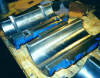
American inventor of an alloy (babbitt's metal: tin 89%, antimony 7%, copper 4%.) widely used for friction reducing babbitt bearings. In 1924, he founded a company that has become Reed & Barton, the nation's oldest independent silversmiths. From 1834, he was superintendent of Alger's Foundry and Ordnance Works (South Boston Iron Works), where he cast the first brass cannon made in the U.S. He patented his successful invention of a journal box for train axles 17 Jul 1739, which suggested the bearings alloy.
American inventor of an alloy (babbitt's metal: tin 89%, antimony 7%, copper 4%.) widely used for friction reducing babbitt bearings. In 1924, he founded a company that has become Reed & Barton, the nation's oldest independent silversmiths. From 1834, he was superintendent of Alger's Foundry and Ordnance Works (South Boston Iron Works), where he cast the first brass cannon made in the U.S. He patented his successful invention of a journal box for train axles 17 Jul 1739, which suggested the bearings alloy.
Died 26 May 1799 at age 84 (born 25 Oct 1714). quotes
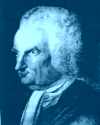
Scottish jurist and pioneer anthropologist who explored the origins of language and society and in some respects anticipated principles of Darwinian evolution. In his theory, he maintains that man was at first a mere animal, that he walked on all fours, and that he possessed a tail, of which we discover the rudiments. There has been a progression in mankind from one stage to higher, they erect themselves, they learn the use of their hands, and they learn to swim. They lived first on natural fruits, and then learned hunting and fishing. He is not so trustworthy as Darwin in his facts: he tells us that there is a whole nation of Esquimaux with only one leg; that in Ethiopia men have only one eye, and this in their foreheads. He also believed in mermaids.[Enc. Brit. gives date of birth Oct or Nov 1714.]
Scottish jurist and pioneer anthropologist who explored the origins of language and society and in some respects anticipated principles of Darwinian evolution. In his theory, he maintains that man was at first a mere animal, that he walked on all fours, and that he possessed a tail, of which we discover the rudiments. There has been a progression in mankind from one stage to higher, they erect themselves, they learn the use of their hands, and they learn to swim. They lived first on natural fruits, and then learned hunting and fishing. He is not so trustworthy as Darwin in his facts: he tells us that there is a whole nation of Esquimaux with only one leg; that in Ethiopia men have only one eye, and this in their foreheads. He also believed in mermaids.[Enc. Brit. gives date of birth Oct or Nov 1714.]
Died 26 May 735 (born 673). quotes
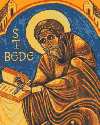
English scholar and theologian whose writings established the use of BC and AD with dates. He applied a knowledge of astronomy for the purpose of calculating the correct date for Easter. He found that due to an imperfection in Sosigenes' Julian calendar, that the vernal equinox had slipped to a point three days before the traditional date of 21 Mar. However, no action was taken to make the necessary adjustment in the number of leap years per millenium until nine centuries later. Bede held that the earth was a sphere. He preserved Pytheas' suggestion relating tides to the phases of the moon, and followed Seleucus' idea that a high tide is a local effect and does not occur everywhere at the same point in time.[DSB gives birth date range 672/673]
English scholar and theologian whose writings established the use of BC and AD with dates. He applied a knowledge of astronomy for the purpose of calculating the correct date for Easter. He found that due to an imperfection in Sosigenes' Julian calendar, that the vernal equinox had slipped to a point three days before the traditional date of 21 Mar. However, no action was taken to make the necessary adjustment in the number of leap years per millenium until nine centuries later. Bede held that the earth was a sphere. He preserved Pytheas' suggestion relating tides to the phases of the moon, and followed Seleucus' idea that a high tide is a local effect and does not occur everywhere at the same point in time.[DSB gives birth date range 672/673]
Innovation and Tradition in the Writings of the Venerable Bede, by Scott DeGregorio. - book suggestion.

In 1981, Satya Pal Asija was the first in the U.S. to receive a patent for computer software for his computer program Swift-Answer (an acronym for "Special Word Indexed Full Text Alpha Numeric Storage With Easy Retrieval") that allows users to retrieve narrative information from computers in a human-like manner. The program responds to a user's questions with the most likely answer - despite the user's errors in syntax, punctuation, spelling, and grammar. The user needs no computer programing skills. His application for the patent took seven years to issue. (U.S. No. 4,270,182). He published a book on his experience, How to Protect Computer Programs - a Case History Of The First Pure Software Patent, in 1986.

In 1969, the Apollo 10 astronauts returned to Earth after a successful eight-day dress rehearsal for the first manned moon landing. Apollo 10 mission, launched 18 May, was a complete staging of the Apollo 11 mission without actually landing on the Moon. The mission was the second to orbit the Moon and the first to travel to the Moon with the entire Apollo spacecraft configuration. Astronauts Thomas Stafford and Eugene Cernan descended inside the Lunar Module to within 14 kilometers of the lunar surface (achieving the closest approach to the Moon before Apollo 11 landed two months later). Apollo 10 splashed down at 12:52 pm on 26 May, less than 4 miles (6.4 km) from the target point and the recovery ship
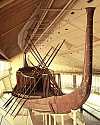
In 1954, a funeral craft was discovered that had been built by the Pharaoh Cheops (aka Khufu) 4,600 years before to carry his soul to heaven. It was built from sacred sycamore and cedar woods, and sealed in a stone-slab covered pit beside his pyramid at Giza, Egypt. A rudder sweep, oars and coils of linen ropes were in place ready to leave. It was found by Kamal el-Malakh, director of archaeological work for Giza and lower Egypt. The find was important as it contained the first furniture and artifacts of Cheops' reign that escaped plundering by tomb robbers. A peep-hole was chiselled through one of the 15-ton limestone blocks that formed the ceiling of the corridor. Its long-sought companion was first viewed 25 Oct 1987.«*
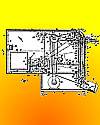
In 1931, a microfilm camera was patented by New York City banker, George L. McCarthy (U.S. No. 1,806,763). He developed the first practical commercial microfilm use in the 1920s and was issued a patent in 1925 for his Checkograph machine, designed to make permanent film copies of all bank records to deter fraud. That device used motion picture film and a conveyor belt to photograph checks before they were returned to bank customers. In 1928 Eastman Kodak bought his invention and began to market it with McCarthy as president of Kodak's Recordak Division. With a perfected 35mm microfilm camera, Recordak in 1935 expanded and began filming and publishing the New York Times on microfilm.«
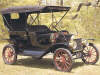
In 1927, the last Ford Model T motor car ceremoniously rolled off the assembly line, watched by its inventor, Henry Ford at his factory in Highland Park, Michigan. Thus ended production of the Model T, after 19 years during which some 15 million vehicles had been built. Henry Ford, with his son, Edsel, then president of the Ford Motor Company drove the final iconic black coupe fourteen miles to the Dearborn Engineering Laboratory. There, it was parked beside two other historic Ford vehicles—the very first automobile built by Henry Ford (road tested on 4 Jun 1896), and the prototype for the Model T car (introduced 1 Oct 1908). Henry Ford celebrated by briefly driving each in turn.«
The Model T: A Centennial History, by Robert Casey/. - book suggestion.
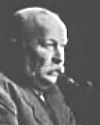
D'Arcy
In 1908, shortly after 4:00 am, the first major Middle East oil strike was made at Masjid-i-Sulaiman, Persia. A gusher of petroleum rose 50-ft above the top of the drilling rig and smothered the drillers. Drilling at this site began in Jan 1908, under chief engineer George B. Reynolds. It was just two days short of 7 years since Shah Muzaffar al-Din had signed the concession agreement with William Knox D'Arcy. From 1905, D'Arcy had financial assistance from the Burmah Oil Company. In 1909, Anglo-Persian Oil was formed to develop the oil field, forerunner of British Petroleum (BP). Oil seepages had been noted for centuries in persia, where the oozings were used for such purposes as the caulking of boats and the binding of bricks.*
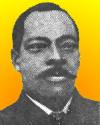
In 1903, Granville T. Woods, a famous black American inventor, received a patent for an "Electric Railway (U.S. No. 729,481). Woods held numerous patents relating to the electric railway, electrical devices, brakes, and telegraphy for railways.
Black Inventors in the Age of Segregation, by Rayvon Fouche. - book suggestion.
(USPTO)
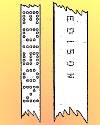
In 1874, Thomas A. Edison was issued a patent for a device concerning “Automatic Telegraphy and in Perforators Therefor” (U.S. No. 151,209). This was just one of many patents on telegraphy he obtained early in his inventing career. He had applied for his first patent on 28 Nov 1868 for an “Electrographic Vote-Recorder.” A couple of months later, his second patent application, on 25 Jan 1869, began a period of nine years of patenting inventions primarily related to printing telegraphs, electromagnetics, switches and circuit for telegraphy. This invention produced a message directly onto a strip of paper such that it was ready to be folded and sent to its destination immediately. Letters were formed by a 5x5 square of 25 punch wires.

(USPTO)
In 1872, a fire extinguisher was patented by its black American inventor, Thomas J. Martin of Dowagiac, Michigan (U.S. No. 125,063). The patent describes installing piping and pumps in dwellings, mills, factories, or cities. The pipes may also be used for warming, ventilating and washing buildings, and for washing pavements and sprinkling streets. The discharge nozzles are designed to be mounted on vertical pipes, and have globe valves seated in them, all enclosed in a cage. The cage is made sufficiently high to allow the rise of the globe valve when pressed up by a jet of water through the nozzle. In use, the water jet would spread by the concave underside of the globe to spray an annular sheet or spray and wet a large surface.[Image: detail of discharge nozzle. Click image for full patent drawing]
The Inventive Spirit of African Americans: Patented Ingenuity, by Patricia Carter Sluby. - book suggestion.
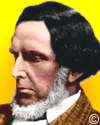
In 1857, Robert Mushet, an English metallurgist, received a U.S. patent for a method of manufacturing steel which improved the Bessemer process for making steel that would be more malleable. (No. 17,389). His process added manganese in the form of spiegeleisen, an alloy of iron and manganese derived from a Prussian iron ore consisting essentially of a double carbonate of iron and manganese. The softness or hardness of the steel could be regulated by diminishing or increasing the proportion of the triple compound of iron, carbon and manganese. He chose to use the alloy of the Prussian ore because it was more free of sulphur, phosphorus and silicon. Mushet also discovered tungsten steel, an alloy with about 8% tungsten.
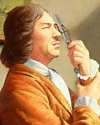
Antonie Van Leeuwenhoek and His "Little Animals", by Antonie Van Leeuwenhoek. - book suggestion.




