Born 18 Jun 1932. quotes
Dudley Robert Herschbach is an American chemist and educator who shared (with Yuan T. Lee and John C. Polanyi) the Nobel Prize for Chemistry in 1986. He pioneered the use of molecular beams to elucidate the processes of chemical reactions. This study of reaction dynamics details the sequence of events and energy states of the atoms and molecules. more
Dudley Robert Herschbach is an American chemist and educator who shared (with Yuan T. Lee and John C. Polanyi) the Nobel Prize for Chemistry in 1986. He pioneered the use of molecular beams to elucidate the processes of chemical reactions. This study of reaction dynamics details the sequence of events and energy states of the atoms and molecules. more
Born 18 Jun 1926; died 13 Nov 2010 at age 84. quotes
American astronomer who (with Thomas A. Matthews) discovered, in 1960, the first optical identification of a quasi-stellar radio source (quasar), a star-like object that is a strong emitter of radio waves. Although a strange source of radio emission, in visible light, it looked like a faint star. Yet this object was emitting more intense radio waves and ultraviolet radiation than a typical star. more
American astronomer who (with Thomas A. Matthews) discovered, in 1960, the first optical identification of a quasi-stellar radio source (quasar), a star-like object that is a strong emitter of radio waves. Although a strange source of radio emission, in visible light, it looked like a faint star. Yet this object was emitting more intense radio waves and ultraviolet radiation than a typical star. more
Born 18 Jun 1918; died 6 Jun 2013 at age 94.
American physical chemist who shared the 1985 Nobel prize in chemistry (with Herbert A. Hauptman) for “for their outstanding achievements in the development of direct methods for the determination of crystal structures.” Their work made possible the determination of such 3D crystal structures as hormone, vitamin and antibiotic molecules. He began his career with a brief time in Chicago in the early 1940s working for the Manhattan Project developing the atomic bomb, then he joined the staff of the Naval Research Laboratory in 1946. He became their chief scientist for the Laboratory for the Structure of Matter in 1968.« more
American physical chemist who shared the 1985 Nobel prize in chemistry (with Herbert A. Hauptman) for “for their outstanding achievements in the development of direct methods for the determination of crystal structures.” Their work made possible the determination of such 3D crystal structures as hormone, vitamin and antibiotic molecules. He began his career with a brief time in Chicago in the early 1940s working for the Manhattan Project developing the atomic bomb, then he joined the staff of the Naval Research Laboratory in 1946. He became their chief scientist for the Laboratory for the Structure of Matter in 1968.« more
Born 18 Jun 1886; died 7 Dec 1978 at age 92.
Frank Alexander Wetmore was an American ornithologist whose lifelong fieldwork and scholarship helped shape modern bird science. He conducted extensive expeditions across North and Central America (especially Panama), documenting avian diversity, behavior, avian paleontology and evolution. He joined the U.S. Bureau of Biological Survey in 1910. By 1925, he was appointed Asst. Secretary, head of the Smithsonian’s U.S. National Museum. He was the sixth Secretary of the Smithsonian Institution (1945-52), and continued research there after retirement for another quarter century. Wetmore published over 600 papers and the landmark multi-volume The Birds of Panama. He advanced museum research, expanded national collections, and promoted rigorous systematic ornithology.« more
Frank Alexander Wetmore was an American ornithologist whose lifelong fieldwork and scholarship helped shape modern bird science. He conducted extensive expeditions across North and Central America (especially Panama), documenting avian diversity, behavior, avian paleontology and evolution. He joined the U.S. Bureau of Biological Survey in 1910. By 1925, he was appointed Asst. Secretary, head of the Smithsonian’s U.S. National Museum. He was the sixth Secretary of the Smithsonian Institution (1945-52), and continued research there after retirement for another quarter century. Wetmore published over 600 papers and the landmark multi-volume The Birds of Panama. He advanced museum research, expanded national collections, and promoted rigorous systematic ornithology.« more
Song and Garden Birds of North America, by Alexander Wetmore. - book suggestion.
Born 18 Jun 1863.
Friedrich August Ferdinand Christian Went, was a Dutch botanist who was director of the Botanical Garden at the University of Utrecht in the Netherlands. He initiated there the study of plant hormones and advanced the study of botany in the Netherlands. With a modern, well-equipped laboratory of botany, he attracted a great many visitors from all over the world, many of them famous in their own right. His son, Frits Warmolt Went followed in his footsteps researching plant hormones, and became well-known for studying and naming auxins. more
Friedrich August Ferdinand Christian Went, was a Dutch botanist who was director of the Botanical Garden at the University of Utrecht in the Netherlands. He initiated there the study of plant hormones and advanced the study of botany in the Netherlands. With a modern, well-equipped laboratory of botany, he attracted a great many visitors from all over the world, many of them famous in their own right. His son, Frits Warmolt Went followed in his footsteps researching plant hormones, and became well-known for studying and naming auxins. more
Born 18 Jun 1845; died 18 May 1922 at age 76. quotes
Charles Louis Alphonse Lavaran was a French physician, pathologist and parasitologist who, as a French military surgeon in Algeria, discovered the parasite that causes human malaria in the red blood cells. He founded the medical field of protozoology, doing important work on other protozoal diseases, including sleeping-sickness and kala-azar. For this he received the 1907 Nobel Prize for medicine. From 1896 he spent the rest of his life as a researcher the Pasteur Institute in Paris. In 1907, Laveran founded the Laboratory of Tropical Diseases at the Pasteur Institute and founded the Société de Pathologie Exotique in 1908.(Photo credit: BBC Hulton Picture Library) more
Charles Louis Alphonse Lavaran was a French physician, pathologist and parasitologist who, as a French military surgeon in Algeria, discovered the parasite that causes human malaria in the red blood cells. He founded the medical field of protozoology, doing important work on other protozoal diseases, including sleeping-sickness and kala-azar. For this he received the 1907 Nobel Prize for medicine. From 1896 he spent the rest of his life as a researcher the Pasteur Institute in Paris. In 1907, Laveran founded the Laboratory of Tropical Diseases at the Pasteur Institute and founded the Société de Pathologie Exotique in 1908.(Photo credit: BBC Hulton Picture Library) more
Born 18 Jun 1838; died 3 Nov 1915 at age 77. quotes
American physician and bacteriologist who was a Surgeon General. He was first accepted into the U.S. Army on 31 May 1861 as an assistant surgeon. As he advanced in his career, he developed an interest in bacteriology and the associated consideration of disinfection. Steinberg was the first in the U.S. to demonstrate the plasmodium of malaria (1885) and the bacilli of tuberculosis and typhoid fever (1886). He was directed by the president to make investigations in Brazil, Mexico, and Cuba (1887-89) relating to the etiology and prevention of yellow fever. By 30 May 1893 he was appointed brigadier-general and surgeon-general. He retired in 1902, and worked to improve general sanitation in Washington, DC.«
American physician and bacteriologist who was a Surgeon General. He was first accepted into the U.S. Army on 31 May 1861 as an assistant surgeon. As he advanced in his career, he developed an interest in bacteriology and the associated consideration of disinfection. Steinberg was the first in the U.S. to demonstrate the plasmodium of malaria (1885) and the bacilli of tuberculosis and typhoid fever (1886). He was directed by the president to make investigations in Brazil, Mexico, and Cuba (1887-89) relating to the etiology and prevention of yellow fever. By 30 May 1893 he was appointed brigadier-general and surgeon-general. He retired in 1902, and worked to improve general sanitation in Washington, DC.«
Born 18 Jun 1818; died 26 Feb 1878 at age 59.
Pietro Angelo Secchi was an Italian priest and astronomer, a Jesuit, who made the first survey of the spectra of over 4000 stars and suggested that stars be classified according to their spectral type. He studied the planets, especially Jupiter, which he discovered was composed of gasses. Secchi studied the dark lines which join the two hemispheres of Mars; he called them canals as if they where the works of living beings. (These studies were later continued by Schiaparelli.) Beyond astronomy, his interests ranged from archaeology to geodesy, from geophysics to meteorology. He also invented a meteorograph, an automated device for recording barometric pressure, temperature, wind direction and velocity, and rainfall.[DSB gives birth date 18 Jun 1818. EB gives 29 Jun 1818.]
Pietro Angelo Secchi was an Italian priest and astronomer, a Jesuit, who made the first survey of the spectra of over 4000 stars and suggested that stars be classified according to their spectral type. He studied the planets, especially Jupiter, which he discovered was composed of gasses. Secchi studied the dark lines which join the two hemispheres of Mars; he called them canals as if they where the works of living beings. (These studies were later continued by Schiaparelli.) Beyond astronomy, his interests ranged from archaeology to geodesy, from geophysics to meteorology. He also invented a meteorograph, an automated device for recording barometric pressure, temperature, wind direction and velocity, and rainfall.[DSB gives birth date 18 Jun 1818. EB gives 29 Jun 1818.]
Born 18 Jun 1799; died 5 Oct 1880 at age 81.
English astronomer who was an amateur with enough wealth to set up an observatory at Starfield, near Liverpool. England, He built his own 24" diameter telescope, and devised steam-driven equipment for grinding an polishing the speculum metal mirror. This telescope was the first of its size to be mounted “equitorially” to allow easy tracking of the stars. He discovered Triton, a moon of Neptune, and Ariel and Umbriel, satellites of Uranus. Later, Lassell built a 48" diameter telescope with the same design and took it to Malta for observations with clearer skies. more
English astronomer who was an amateur with enough wealth to set up an observatory at Starfield, near Liverpool. England, He built his own 24" diameter telescope, and devised steam-driven equipment for grinding an polishing the speculum metal mirror. This telescope was the first of its size to be mounted “equitorially” to allow easy tracking of the stars. He discovered Triton, a moon of Neptune, and Ariel and Umbriel, satellites of Uranus. Later, Lassell built a 48" diameter telescope with the same design and took it to Malta for observations with clearer skies. more

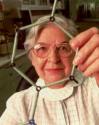
Died 18 Jun 2014 at age 90 (born 31 Jul 1923). quotes
American chemist and inventor of Kevlar. Shortly after graduating with a bachelor's degree in chemistry (1946), she began a career at DuPont's textile fibers department in Buffalo, New York. Kwolek was assigned to search for a new, high-performance fiber that would be acid- and base-resistant and stable at high temperatures, suitable to replace steel in radial tyres. After extensive experimentation, she created a polymer solution which, when spun into a fibre, was five times stronger than steel and had half the density of fiberglass. It was named Kevlar. Today, this fibre is used to make bullet-proof jackets military helmets, aircraft parts, inflatable boats, gloves, rope, and building materials. Kwolek never pursued a Ph.D. degree. She was the fourth woman inducted into the National Inventors Hall of Fame (1995).
American chemist and inventor of Kevlar. Shortly after graduating with a bachelor's degree in chemistry (1946), she began a career at DuPont's textile fibers department in Buffalo, New York. Kwolek was assigned to search for a new, high-performance fiber that would be acid- and base-resistant and stable at high temperatures, suitable to replace steel in radial tyres. After extensive experimentation, she created a polymer solution which, when spun into a fibre, was five times stronger than steel and had half the density of fiberglass. It was named Kevlar. Today, this fibre is used to make bullet-proof jackets military helmets, aircraft parts, inflatable boats, gloves, rope, and building materials. Kwolek never pursued a Ph.D. degree. She was the fourth woman inducted into the National Inventors Hall of Fame (1995).
Women Inventors, by Jean F. Blashfield. - book suggestion.
Died 18 Jun 2010 at age 96 (born 20 Apr 1914).
American physiologist who, with fellow student Donald Griffin, confirmed that bats use echolocation to avoid obstacles while in flight. Their work conclusively proved Jurine's suggestion, of a century and a half before, that bats could hear sounds beyond the human range, and that this ability facilitated night flight. In their experiment (1938), a special microphone in a dark room was used to prove that bats flying in the dark could “see” by emitting ultrasonic vocal sounds and then navigating around obstacles using the echoes as an internal guidance system. Such flight was severely impaired if either a bat's ears were plugged, or its mouth was held closed by a loop of thread. Galambos' subsequent career was devoted to the neurophysiology of hearing and the brain.«
American physiologist who, with fellow student Donald Griffin, confirmed that bats use echolocation to avoid obstacles while in flight. Their work conclusively proved Jurine's suggestion, of a century and a half before, that bats could hear sounds beyond the human range, and that this ability facilitated night flight. In their experiment (1938), a special microphone in a dark room was used to prove that bats flying in the dark could “see” by emitting ultrasonic vocal sounds and then navigating around obstacles using the echoes as an internal guidance system. Such flight was severely impaired if either a bat's ears were plugged, or its mouth was held closed by a loop of thread. Galambos' subsequent career was devoted to the neurophysiology of hearing and the brain.«
Listening in the dark: The Acoustic Orientation of Bats and Men, by Donald R Griffin. - book suggestion.
Kenneth Linn Franklin was an American astronomer who co-discovered that the giant planet Jupiter emits radio waves (1955). Dr. Bernard F. Burke and Franklin, astronomers at the Carnegie Institution in Washington, were scanning the sky for radio waves from galaxies. By chance, they found a radio signal that resembled short bursts of static, similar to interference by lightning on home radios. After weeks of study, finding the signals were periodic, four minutes earlier each day, they pin-pointed Jupiter as the source. Never before had radio sounds from a planet in our solar system been detected. Later study showed the radio waves were circularly polarized, so a magnetic field was involved. The discovery was announced on 6 Apr 1955.«
An Introduction to Radio Astronomy, by Bernard F. Burke and Francis Graham-Smith. - book suggestion.
Died 18 Jun 1971 at age 82 (born 21 Apr 1889). quotes
Swiss chemist who investigated the constitution of carotenoids, flavins, and vitamins A and B2, for which he shared the 1937 Nobel Prize for Chemistry (with Sir Norman Haworth of Great Britain). He studied plant pigments, particularly the yellow carotenoids, which are related to the pigment in carrots. He determined the chemical structure of the carotenoids (1930), showed that some of these substances are transformed into vitamin A in the animal body, then determined the structure of vitamin A itself. He also confirmed the constitution of vitamin C proposed by Albert Szent-Györgyi, showed lactoflavin to be part of the complex originally described as vitamin B2 , and studied vitamin E.
Swiss chemist who investigated the constitution of carotenoids, flavins, and vitamins A and B2, for which he shared the 1937 Nobel Prize for Chemistry (with Sir Norman Haworth of Great Britain). He studied plant pigments, particularly the yellow carotenoids, which are related to the pigment in carrots. He determined the chemical structure of the carotenoids (1930), showed that some of these substances are transformed into vitamin A in the animal body, then determined the structure of vitamin A itself. He also confirmed the constitution of vitamin C proposed by Albert Szent-Györgyi, showed lactoflavin to be part of the complex originally described as vitamin B2 , and studied vitamin E.
Died 18 Jun 1945 at age 82 (born 14 Jul 1862). quotes
American geologist who was the first woman to receive a doctorate from Johns Hopkins University. Two years later she launched the geology department at Bryn Mawr. Bascom was the first woman to work as a geologist for the U.S. Geological Survey and to be made a fellow of the Geological Society of America. Bascom was an expert in crystallography, mineralogy, and petrography. She is known for inventing techniques that used microscopic analysis in the study of the oil-bearing rocks. She died at age 82. more
American geologist who was the first woman to receive a doctorate from Johns Hopkins University. Two years later she launched the geology department at Bryn Mawr. Bascom was the first woman to work as a geologist for the U.S. Geological Survey and to be made a fellow of the Geological Society of America. Bascom was an expert in crystallography, mineralogy, and petrography. She is known for inventing techniques that used microscopic analysis in the study of the oil-bearing rocks. She died at age 82. more
Died 18 Jun 1944 at age 85 (born 18 May 1859).
who introduced the term elastic rebound in a report (1910) on the 1906 San Francisco earthquake. His early career was as a glaciologist, but then the study of earthquakes became his most significant work. Reid was the first to establish that it is the fault that causes an earthquake, rather than a fault results from an earthquake. His elastic rebound theory, said that an earthquake occurs upon the sudden release of a large amount of stored energy after a long gradual accumulation of stress along a fault line. Later, modern science explained that Earth's surface consists of huge tectonic plates slowly moving relative to each other, and stress (elastic strain energy) gradually builds along their edges moving against each other.«
who introduced the term elastic rebound in a report (1910) on the 1906 San Francisco earthquake. His early career was as a glaciologist, but then the study of earthquakes became his most significant work. Reid was the first to establish that it is the fault that causes an earthquake, rather than a fault results from an earthquake. His elastic rebound theory, said that an earthquake occurs upon the sudden release of a large amount of stored energy after a long gradual accumulation of stress along a fault line. Later, modern science explained that Earth's surface consists of huge tectonic plates slowly moving relative to each other, and stress (elastic strain energy) gradually builds along their edges moving against each other.«
After the Earth Quakes: Elastic Rebound on an Urban Planet, by Hough and Bilham. - book suggestion.
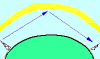
Irish-American electrical engineer who made innovations in analytic methods in electronics, particularly the definitive application of complex-number theory to alternating-current (ac) circuits. For six years he worked for Thomas Edison at West Orange Laboratory, then branched out as a consultant. Upon his co-discovery (with Oliver Heaviside) of the radio reflecting properties of the ionosphere in the upper atmosphere, the stratum was called the Kennelly- Heaviside layer. more
1908
Died 18 Jun 1922 at age 71 (born 19 Jan 1851).
Dutch astronomer who used photography and statistical methods in determining the motions and spatial distribution of stars. Such work was the first major step after the works of William and John Herschel. He tried to solve the questions of space density of stars as a function of distance from the sun, and the distribution of starts according to brightness per unit volume. Some of his results had lasting value, but some were superceded because he had failed to account for the interstellar absorption. In studies using proper motion to determine stellar distances, he discovered stellar motions are not random, as previously thought, but that stars move in two "star streams" (1904). He introduced absolute magnitude and colour index as standard concepts.
Dutch astronomer who used photography and statistical methods in determining the motions and spatial distribution of stars. Such work was the first major step after the works of William and John Herschel. He tried to solve the questions of space density of stars as a function of distance from the sun, and the distribution of starts according to brightness per unit volume. Some of his results had lasting value, but some were superceded because he had failed to account for the interstellar absorption. In studies using proper motion to determine stellar distances, he discovered stellar motions are not random, as previously thought, but that stars move in two "star streams" (1904). He introduced absolute magnitude and colour index as standard concepts.
Died 18 Jun 1905 at age 65 (born 10 Feb 1840).
Swedish chemist and geologist who who discovered the elements holmium and thulium. He was the thirteenth child in his family. In 1874, Cleve concluded that didymium was in fact two elements (this was proved in 1885 and the two elements named neodymium and praseodymium.) In 1879, he showed that scandium (discovered by Lars Nilson), was in fact the eka-boron predicted by Dmitri Mendeleev in his periodic table. Also in 1879, working with a sample of erbia that had all traces of scandia and ytterbia removed, he found two new earths, which he named holmium, after Stockholm, and thulium, after the old name for Scandinavia. (Holmium, too was a mixture. In 1886, Lecoq de Boisbaudran discovered that it contained the new element dysprosium.)
Swedish chemist and geologist who who discovered the elements holmium and thulium. He was the thirteenth child in his family. In 1874, Cleve concluded that didymium was in fact two elements (this was proved in 1885 and the two elements named neodymium and praseodymium.) In 1879, he showed that scandium (discovered by Lars Nilson), was in fact the eka-boron predicted by Dmitri Mendeleev in his periodic table. Also in 1879, working with a sample of erbia that had all traces of scandia and ytterbia removed, he found two new earths, which he named holmium, after Stockholm, and thulium, after the old name for Scandinavia. (Holmium, too was a mixture. In 1886, Lecoq de Boisbaudran discovered that it contained the new element dysprosium.)
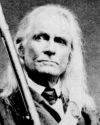
Died 18 Jun 1865 at age 71 (born 5 Jan 1794).
The father of soil chemistry in the U.S., who showed how to restore fertility to depleted soil. Though without formal science education, Ruffin determined that the soil of southeast plantations that had been overused with single-crop production had become more acidic and unable to benefit from fertilizers. The remedy he published (1818) was the spreading of marl to neutralize the acidity. He went further by specifying effective methods of fertilizing, plowing and rotating crops to increase production of grains. He expanded his recommendations in book and journal article form, as well lecturing up to the 1850's. He then became an outspoken secessionist, and took his own life upon the South losing in the U.S. Civil War.
The father of soil chemistry in the U.S., who showed how to restore fertility to depleted soil. Though without formal science education, Ruffin determined that the soil of southeast plantations that had been overused with single-crop production had become more acidic and unable to benefit from fertilizers. The remedy he published (1818) was the spreading of marl to neutralize the acidity. He went further by specifying effective methods of fertilizing, plowing and rotating crops to increase production of grains. He expanded his recommendations in book and journal article form, as well lecturing up to the 1850's. He then became an outspoken secessionist, and took his own life upon the South losing in the U.S. Civil War.
Died 18 Jun 1816 at age 81 (born 9 Sep 1734). quotes
Welsh apothecary, active in Manchester scientific circles, who translated Antoine Lavoisier's Opuscles, and manufactured and sold calcined magnesia for medicinal purposes.
Welsh apothecary, active in Manchester scientific circles, who translated Antoine Lavoisier's Opuscles, and manufactured and sold calcined magnesia for medicinal purposes.
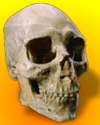
Reconstruction
In 2015, Kennewick Man was confirmed to be Native American in a letter published in Nature. The 8,500-year-old skeleton discovered on 28 July 1996 at first seemed possibly of Caucasian or Asian origin. Native American tribes filed legal challenges to claim the remains as sacred to them. In 2004, a US Circuit Court of Appeals decision permitted scientists to continue their studies since there was at that time no evidence that the remains belonged to any modern tribe. But the new study identified a complete genome sequence found by Eske Willerslev and colleagues at the University of Copenhagen. It was related most closely to modern Native Americans, but didn't identify a particular tribe for repatriation of the remains.«
Kennewick Man: The Scientific Investigation of an Ancient American Skeleton, by Douglas W. Owsley. - book suggestion.
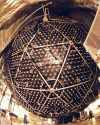
In 2001, the result of experiments counting previously undetected, but theoretically predicted, solar neutrinos was announced by a collaboration of Canadian, American and British scientists led by Arthur McDonald. They detected all three types of solar neutrinos (electron, muon and tau), using the SNO (Solar Neutrino Observatory) consisting of 9,456 photomultiplier tubes lining a stainless steel tank containing 1,000 tons of heavy water (D2O) 6800-ft deep in a nickel mine at Sudbury, Ontario, Canada. The combined results agreed with the total flux calculated using the standard computer model of the Sun, thus finally confirming the long-standing theory accounting for the various nuclear reactions taking place within the Sun.«[Image: external view of the SNO's photomultiplier array during detector construction.]

In 1993, the first lab test was released in Arizona confirming a bee involved in a fatal on attack on a small dog at a Tucson home was an Africanized honey bee. Because of their more intense defensive swarming behaviour, such non-native bees earned the name "killer bee" in the media. Arizona was the second state to be invaded, less than three years after this species spread north into Texas from Mexico. Since the fifties, the bees had extended their range northward through Central America. Their original source was from cross-breeding with tropical African bees imported into Brazil for experimental work.
more
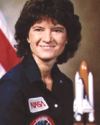
In 1983, at 7:33 am EDT, Space Shuttle Challenger was launched on its own second flight. This was the seventh shuttle mission, and the first to carry a woman crew member. Sally K. Ride, mission specialist, became America's first woman in space. During the mission, two communications satellites deployed (ANIK C-2 for TELESAT Canada and PALAPA-B1 for Indonesia). Canisters in the cargo bay held variety of experiments including ones studying effects of space on social behavior of ant colony in zero gravity. Ten experiments mounted on Shuttle Pallet Satellite (SPAS-01) performed research in forming metal alloys in microgravity and use of remote sensing scanner.
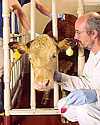
In 1981, the first genetically engineered vaccine was announced: the first effective subunit vaccine for any animal or human disease using gene splicing. It was designed to prevent hoof and mouth disease (FMD). The work was done by the U.S. Dept of Agriculture scientists who by 1975 had discovered that injection of VP3 (a protein derived from a portion of the coating of FMD virus) confers immunity to the disease. In 1980, the USDA team turned to recombinant DNA technology, and collaborated with scientists from Genentech, a private company. They inserted a bioengineered plasmid containing the gene for VP3 into Escherichia coli bacteria which grew obeying orders from the guest DNA, mass-producing the VP3 proteins for the vaccine.
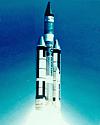
In 1965, the first large solid-fuel rocket - a Titan 3C - was launched into orbit. Better than a liquid-propellant rocket, a solid-propellant rocket has fewer parts, simpler construction, is safer and more reliable. It is more powerful than a liquid-propellant rocket of the same size. The solid boosters were ignited on the ground, each composed of five segments, and was 10 ft (3.0 m) in diameter, 85 ft (26 m) long, and weighed nearly 500,000 lb (230,000 kg). The payload on this launch was a Transtage, the upper stage used on Titan IIIs. Many military and NASA payloads were put into orbit with the generations of this launch vehicle family. It remained the most powerful launcher used by the Air Force until it was replaced by the Titan 34D in 1982.«
more
In 1935, the Rolls Royce trademark was registered in the U.S.
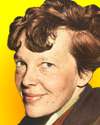
In 1928, aviator Amelia Earhart became the first woman to fly across the Atlantic Ocean, though as a passenger. She had accepted the invitation of the American pilots Wilmer Stultz (1900-29) and Louis Gordon to join them on the transatlantic flight. They had set off on the previous day, 17 Jun 1928, crossing from Newfoundland to Wales in about 21 hours. Amelia Earhart went on to establish herself as a respected role model, tirelessly demonstrating that young women were as capable as men in succeeding in their chosen vocations. Four years later, on 20 May 1932, she gathered fame as the first woman to make a solo flight across the Atlantic.
more
Amelia Earhart: The Truth at Last, by Mike Campbell. - book suggestion.
In 1912, a patent was issued for a mercury vapor lamp to Peter Hewitt (U.S. No. 1,030178).
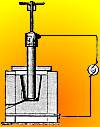
Patent diagram
In 1895, Thomas L. Willson received a U.S. patent on the “Calcium-Carbide Process” (No. 541,137) that he had accidentally discovered on 2 May 1892. The patent describes the use of an electric arc furnace to produce calcium carbide from a mixture of finely divided coke and lime. It is produced in molten form, which is then tapped and allowed to cool into a crystalline mass. On the same day, he was granted a patent for his “Product Existing in Form of Crystalline Calcium Carbide” (No. 541,138). When his priority was changed in court by Wöhler, who had discovered a less practical method to make calcium carbide, it was Willson's patent for the crystalline form than won, on appeal. He assigned the patent to the Electro Gas Co., which eventually became Union Carbide Corp.«
The 100 Most Important Chemical Compounds: A Reference Guide, by Richard L. Myers. - book suggestion.
In 1889, black American inventor W.H. Richardson was issued two patents for a "Child's Carriage" (U.S. Nos. 405,599 - 600) In 1886, he had already also patented a "Cotton Chopper".
The Inventive Spirit of African Americans: Patented Ingenuity, by Patricia Carter Sluby. - book suggestion.
In 1178, about an hour after sunset - as chronicled by the English monk, Gervase of Canterbury - a band of five eyewitnesses watched as the upper horn of the bright, new crescent Moon "suddenly split in two. From the midpoint of this division a flaming torch sprang up, spewing out... fire, hot coals and sparks... The body of the moon, which was below writhed... throbbed like a wounded snake." In 1976, a geologist suggested that this was consistent with the location and age of the 22-km lunar crater Giordano Bruno. However, such asteroid impact would have ejected debris causing an astonishing meteor shower, which was never reported. Now the sighting of 1178 is attributed to perhaps an exploding meteor that just happened to line up with their view of the Moon.




