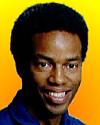
Born 22 Nov 1942. quotes
Guion “Guy” S. Bluford, Jr. is a Black-American astronaut who was the first Black astronaut when he went into space on 30 Aug 1983, aboard the space shuttle Challenger. He next was on the Challenger crew of the German D-1 Spacelab mission (30 Oct to 6 Nov 1985). His third and fourth flighst were on the shuttle Discovery (28 Apr to 6 May 1991 and 2-9 Dec 1992). He became a NASA astronaut in Aug 1979, and spent a total of 688 hours in space. During this time, his NASA biography lists that his technical assignments included “working with Space Station operations, the Remote Manipulator System, Spacelab systems and experiments, Space Shuttle systems, payload safety issues and verifying flight software in the Shuttle Avionics Integration Laboratory and in the Flight Systems Laboratory.”«
Guion “Guy” S. Bluford, Jr. is a Black-American astronaut who was the first Black astronaut when he went into space on 30 Aug 1983, aboard the space shuttle Challenger. He next was on the Challenger crew of the German D-1 Spacelab mission (30 Oct to 6 Nov 1985). His third and fourth flighst were on the shuttle Discovery (28 Apr to 6 May 1991 and 2-9 Dec 1992). He became a NASA astronaut in Aug 1979, and spent a total of 688 hours in space. During this time, his NASA biography lists that his technical assignments included “working with Space Station operations, the Remote Manipulator System, Spacelab systems and experiments, Space Shuttle systems, payload safety issues and verifying flight software in the Shuttle Avionics Integration Laboratory and in the Flight Systems Laboratory.”«
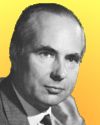
Born 22 Nov 1917; died 30 May 2012 at age 94.
Andrew Fielding Huxley was an English physiologist who shared (with Sir Alan Hodgkin and Sir John Carew Eccles) the 1963 Nobel Prize for Physiology or Medicine. He collaborated with Alan Hodgkin in elucidating the chemical phenomena - the “sodium pump” mechanism—by which nerve impulses are transmitted. He has also done important work on muscular contraction theory and has been involved in the development of the interference microscope and ultramicrotome. He received a knighthood in 1974. He was a grandson of noted biologist T.H. Huxley.
Andrew Fielding Huxley was an English physiologist who shared (with Sir Alan Hodgkin and Sir John Carew Eccles) the 1963 Nobel Prize for Physiology or Medicine. He collaborated with Alan Hodgkin in elucidating the chemical phenomena - the “sodium pump” mechanism—by which nerve impulses are transmitted. He has also done important work on muscular contraction theory and has been involved in the development of the interference microscope and ultramicrotome. He received a knighthood in 1974. He was a grandson of noted biologist T.H. Huxley.
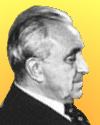
Born 22 Nov 1904; died 17 Nov 2000 at age 95.
Louis-Eugène-Félix Néel was a French physicist who shared, (with the Swedish astrophysicist Hannes Alfvén) the Nobel Prize for Physics in 1970 for his pioneering studies of the magnetic properties of solids. His contributions to solid-state physics have found numerous useful applications, particularly in the development of improved computer memory units. About 1930 he suggested that a new form of magnetic behavior might exist - called antiferromagnetism. Above a certain temperature (the Néel temperature) this behaviour stops. Néel pointed out (1947) that materials could also exist showing ferrimagnetism. Néel has also given an explanation of the weak magnetism of certain rocks, making possible the study of the past history of the Earth's magnetic field.
Louis-Eugène-Félix Néel was a French physicist who shared, (with the Swedish astrophysicist Hannes Alfvén) the Nobel Prize for Physics in 1970 for his pioneering studies of the magnetic properties of solids. His contributions to solid-state physics have found numerous useful applications, particularly in the development of improved computer memory units. About 1930 he suggested that a new form of magnetic behavior might exist - called antiferromagnetism. Above a certain temperature (the Néel temperature) this behaviour stops. Néel pointed out (1947) that materials could also exist showing ferrimagnetism. Néel has also given an explanation of the weak magnetism of certain rocks, making possible the study of the past history of the Earth's magnetic field.
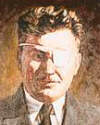
Born 22 Nov 1899; died 15 Aug 1935 at age 35.
American aviator who was one of the most colourful figures of the early years of U.S. aviation, and set many records. Between 15-22 Jul 1933, Wiley Post completed the first round-the-world solo flight (15,596 miles) in his Lockheed Vega 5B single-engine aircraft Winnie Mae, in 7 days 18-hr 49-min. He had made an accompanied flight around the world in 1931. Wiley Post had made his first solo flight in 1926, the year he got his flying license, signed by Orville Wright, despite wearing a patch over his left eye, lost in an oilfield accident. Post invented the first pressurized suit to wear when he flew around the world. Another credit was his research into the jet streams. He died with his passenger, humorist Will Rogers, 15 Aug 1935, in a plane crash in Alaska.
American aviator who was one of the most colourful figures of the early years of U.S. aviation, and set many records. Between 15-22 Jul 1933, Wiley Post completed the first round-the-world solo flight (15,596 miles) in his Lockheed Vega 5B single-engine aircraft Winnie Mae, in 7 days 18-hr 49-min. He had made an accompanied flight around the world in 1931. Wiley Post had made his first solo flight in 1926, the year he got his flying license, signed by Orville Wright, despite wearing a patch over his left eye, lost in an oilfield accident. Post invented the first pressurized suit to wear when he flew around the world. Another credit was his research into the jet streams. He died with his passenger, humorist Will Rogers, 15 Aug 1935, in a plane crash in Alaska.
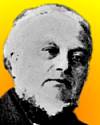
Born 22 Nov 1809; died 30 Mar 1873 at age 63.
Austrian-born French psychologist who introduced the term dementia praecox to refer to a mental and emotional deterioration beginning at the time of puberty. The disorder was renamed schizophrenia in 1908 by the Swiss psychologist Eugen Bleuler. Morel developed a psychiatric theory of causality based on hereditary weakness. In his 700-page magnum opus, Traité des dégenerescences physiques, intellectuelles et morales de l'espèce humaine (1857), Morel developed a detailed method of discovering the great variety of "stigmata of degeneration " to be found among the mentally sick. These were mostly physical signs - various malformations - but also various intellectual and moral deviations from the normal.
Austrian-born French psychologist who introduced the term dementia praecox to refer to a mental and emotional deterioration beginning at the time of puberty. The disorder was renamed schizophrenia in 1908 by the Swiss psychologist Eugen Bleuler. Morel developed a psychiatric theory of causality based on hereditary weakness. In his 700-page magnum opus, Traité des dégenerescences physiques, intellectuelles et morales de l'espèce humaine (1857), Morel developed a detailed method of discovering the great variety of "stigmata of degeneration " to be found among the mentally sick. These were mostly physical signs - various malformations - but also various intellectual and moral deviations from the normal.

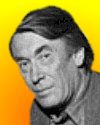
Died 22 Nov 2003 at age 78 (born 8 Dec 1924).
English microbiologist who was a pioneer in the field of nucleic acid research. He helped to establish the structure of RNA and to discover the methylation of the bases in bacterial DNA. The RNA structure information was crucial to the double-stranded model of DNA proposed by Watson and Crick. He contributed to the methodology involved in the unravelling of the secrets of the genome. In the early 1960s, Smith became involved in unravelling the process whereby the sequence of bases in DNA determines the assembly of the different amino acid sequences of proteins which are responsible for all our bodily functions (structural, enzymatic, hormonal, and so on), a process known as protein synthesis.
English microbiologist who was a pioneer in the field of nucleic acid research. He helped to establish the structure of RNA and to discover the methylation of the bases in bacterial DNA. The RNA structure information was crucial to the double-stranded model of DNA proposed by Watson and Crick. He contributed to the methodology involved in the unravelling of the secrets of the genome. In the early 1960s, Smith became involved in unravelling the process whereby the sequence of bases in DNA determines the assembly of the different amino acid sequences of proteins which are responsible for all our bodily functions (structural, enzymatic, hormonal, and so on), a process known as protein synthesis.
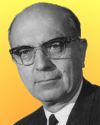
Died 22 Nov 1993 at age 83 (born 12 Sep 1910). quotes
Alexander Duncan Langmuir was an American epidemiologist created and led the Epidemic Intelligence Service (EIS) for the U.S. government and was credited with saving thousands of lives with his revolutionary work. In 1949, he became director of the epidemiology branch of the National Communicable Disease Center in Atlanta, a position he held for over 20 years. His efforts contributed to the virtual elimination of polio in the U.S. and to a better understanding of other infectious disease dilemmas of the last 50 years. He emphasized surveillance with regard to disease wherever it occurred, analyzing it and looking at it, and acting if appropriate. Langmuir wrote extensively on all phases of epidemiology on a global basis and was recognized internationally as a leader. Irving Langmuir was his uncle.
Alexander Duncan Langmuir was an American epidemiologist created and led the Epidemic Intelligence Service (EIS) for the U.S. government and was credited with saving thousands of lives with his revolutionary work. In 1949, he became director of the epidemiology branch of the National Communicable Disease Center in Atlanta, a position he held for over 20 years. His efforts contributed to the virtual elimination of polio in the U.S. and to a better understanding of other infectious disease dilemmas of the last 50 years. He emphasized surveillance with regard to disease wherever it occurred, analyzing it and looking at it, and acting if appropriate. Langmuir wrote extensively on all phases of epidemiology on a global basis and was recognized internationally as a leader. Irving Langmuir was his uncle.
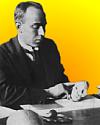
Died 22 Nov 1988 at age 95 (born 4 Feb 1893). quotes
Raymond Arthur Dart was an Australian-South African physical anthropologist, palaeontologist and surgeon whose discoveries of fossil hominins led to significant insights into the evolutionary origins of human beings. In 1924, working with students in the Taung limestone works in Bechuanaland, he found what seemed at first to be just another primate skull. Then it caught his attention when Dart noticed how amazingly close to human it looked. He recognized it as a “missing link” in the evolution from ape to man. Dart had found the Taung child, only three years old at the time of death. He named it Australopithecus africanus, "australis" meaning south and “pithecus” meaning ape. Though his theory is now generally accepted, it was initially quite controversial.«
Raymond Arthur Dart was an Australian-South African physical anthropologist, palaeontologist and surgeon whose discoveries of fossil hominins led to significant insights into the evolutionary origins of human beings. In 1924, working with students in the Taung limestone works in Bechuanaland, he found what seemed at first to be just another primate skull. Then it caught his attention when Dart noticed how amazingly close to human it looked. He recognized it as a “missing link” in the evolution from ape to man. Dart had found the Taung child, only three years old at the time of death. He named it Australopithecus africanus, "australis" meaning south and “pithecus” meaning ape. Though his theory is now generally accepted, it was initially quite controversial.«
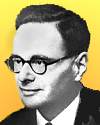
Died 22 Nov 1981 at age 81 (born 25 Aug 1900). quotes
German-British biochemist who shared (with Fritz Lipmann) the 1953 Nobel Prize for Physiology or Medicine for the discovery in living organisms of the series of chemical reactions known as the tricarboxylic acid cycle (also called the citric acid cycle, or Krebs cycle)—the basic system for the essential pathway of oxidation process within the cell. These reactions involve the conversion—in the presence of oxygen—of substances that are formed by the breakdown of sugars, fats, and protein components to carbon dioxide, water, and energy-rich compounds. The Krebs cycle explains two simultaneous processes: the degradation reactions which yield energy, and the building-up processes which use up energy.
German-British biochemist who shared (with Fritz Lipmann) the 1953 Nobel Prize for Physiology or Medicine for the discovery in living organisms of the series of chemical reactions known as the tricarboxylic acid cycle (also called the citric acid cycle, or Krebs cycle)—the basic system for the essential pathway of oxidation process within the cell. These reactions involve the conversion—in the presence of oxygen—of substances that are formed by the breakdown of sugars, fats, and protein components to carbon dioxide, water, and energy-rich compounds. The Krebs cycle explains two simultaneous processes: the degradation reactions which yield energy, and the building-up processes which use up energy.
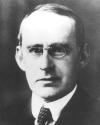
Died 22 Nov 1944 at age 61 (born 28 Dec 1882). quotes
English astrophysicist, and mathematician known for his work on the motion, distribution, evolution and structure of stars. He also interpreted Einstein's general theory of relativity. He was one of the first to suggest (1917) conversion of matter into radiation powered the stars. In 1919, he led a solar eclipse expedition which confirmed the predicted bending of starlight by gravity. He developed an equation for radiation pressure. In 1924, he derived an important mass-luminosity relation. He also studied pulsations in Cepheid variables, and the very high densities of white dwarfs. He sought fundamental relationships between the prinicipal physical constants. Eddington wrote many books for the general reader, including Stars and Atoms.«
English astrophysicist, and mathematician known for his work on the motion, distribution, evolution and structure of stars. He also interpreted Einstein's general theory of relativity. He was one of the first to suggest (1917) conversion of matter into radiation powered the stars. In 1919, he led a solar eclipse expedition which confirmed the predicted bending of starlight by gravity. He developed an equation for radiation pressure. In 1924, he derived an important mass-luminosity relation. He also studied pulsations in Cepheid variables, and the very high densities of white dwarfs. He sought fundamental relationships between the prinicipal physical constants. Eddington wrote many books for the general reader, including Stars and Atoms.«
The Eddington Enigma, by David Evans, David S. Evans. - book suggestion.
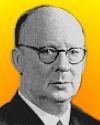
Died 22 Nov 1943 at age 60 (born 27 May 1883).
German chemist who devoted his life as a teacher, researcher, editor and one of the founders of colloid chemistry. He defined colloids as disperse systems that are generally polyphasic and that possess particles 1-100 millimicrons in size. He discovered the rule of colour dispersion in the optics of colloidal systems, explained colloids' irregular flow behaviour, textural viscosity, and textural turbulence, and developed a method of foam analysis. He edited (from 1909) Kolloidchemische Beihefte and other journals and as the founder (1922) and president of the Kolloid Gesellschaft, Ostwald advanced research in colloids. He was the second child of 1909 Nobel Laureate Friedrich Wilhelm Ostwald.
German chemist who devoted his life as a teacher, researcher, editor and one of the founders of colloid chemistry. He defined colloids as disperse systems that are generally polyphasic and that possess particles 1-100 millimicrons in size. He discovered the rule of colour dispersion in the optics of colloidal systems, explained colloids' irregular flow behaviour, textural viscosity, and textural turbulence, and developed a method of foam analysis. He edited (from 1909) Kolloidchemische Beihefte and other journals and as the founder (1922) and president of the Kolloid Gesellschaft, Ostwald advanced research in colloids. He was the second child of 1909 Nobel Laureate Friedrich Wilhelm Ostwald.
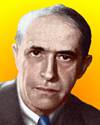
Died 22 Nov 1941 at age 55 (born 18 Mar 1886). quotes
German-American psychologist who co-founded, with Wolfgang Köhler and Max Wertheimer, the Gestalt school of psychology. Koffka became in time their most influential spokesman of Gestalt psychology. He applied it to child development, learning, memory and emotion. The name Gestalt, meaning form or configuration, emphasizes that the whole is more than the sum of its parts. Gestalt psychology grew as reaction against the traditional atomistic approach to the human being where behaviour was analyzed into constituent elements called sensations. He made an influential distinction between the behavioural and the geographical environments - the perceived world of common sense and the world studied by scientists.
German-American psychologist who co-founded, with Wolfgang Köhler and Max Wertheimer, the Gestalt school of psychology. Koffka became in time their most influential spokesman of Gestalt psychology. He applied it to child development, learning, memory and emotion. The name Gestalt, meaning form or configuration, emphasizes that the whole is more than the sum of its parts. Gestalt psychology grew as reaction against the traditional atomistic approach to the human being where behaviour was analyzed into constituent elements called sensations. He made an influential distinction between the behavioural and the geographical environments - the perceived world of common sense and the world studied by scientists.
Kurt Koffka: An Unwitting Self-Portrait, by Molly Harrower. - book suggestion.
Phobos
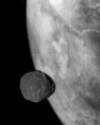
American astronomer, discovered and named the two moons of Mars, Phobos and Deimos, and calculated their orbits.Born in Goshen, Conn. and apprenticed as a carpenter at age 16, he had a passion for geometry and algebra. Hall obtained a position at the Harvard Observatory in Cambridge, Mass. in 1857 and became an expert computer of orbits. In August 1862, he joined the staff of the Naval Observatory in Washington, D.C. where he made his discoveries, in mid- Aug 1877, using the Observatory's 26-inch "Great Equatorial" refracting telescope, then the largest of its kind in the world. He stayed there 30 years until 1891. His son, Asaph Hall, Jr., followed him and worked at the Observatory at various times between 1882-1929.[Image right: Phobos]
Died 22 Nov 1902 at age 59 (born 3 Mar 1843).
English metallurgist whose research on the physical properties of metals and their alloys had many practical and industrial applications. He established methods to determine the composition of an alloy, invented an automatic recording pyrometer to track the temperature changes of furnaces and their molten contents and. researched diffusion between a sheet of gold and a block of lead. He was a professor at the Royal School of Mines, and from 1882 a chemist and assayer at the Mint, becoming a world authority on the technical aspects of minting coins. He was knighted in 1899. Austenite (a non-magnetic solid solution of ferric carbide or carbon in iron, used in making corrosion-resistant steel) was named after him.«
English metallurgist whose research on the physical properties of metals and their alloys had many practical and industrial applications. He established methods to determine the composition of an alloy, invented an automatic recording pyrometer to track the temperature changes of furnaces and their molten contents and. researched diffusion between a sheet of gold and a block of lead. He was a professor at the Royal School of Mines, and from 1882 a chemist and assayer at the Mint, becoming a world authority on the technical aspects of minting coins. He was knighted in 1899. Austenite (a non-magnetic solid solution of ferric carbide or carbon in iron, used in making corrosion-resistant steel) was named after him.«
Introduction to the Study of Metallurgy, by William Chandler Roberts Austen. - book suggestion.
Died 22 Nov 1901 at age 61 (born 19 Nov 1840). quotes
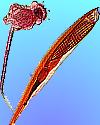
Russian founder of comparative embryology and experimental histology, who first established that there was a common pattern in the embryological development of all multicellular animals. He studied the lancelet, a fish-shaped sea animal; about 2-in. (5-cm) long; then wrote Development of Amphioxus lanceolatus (1865). Then, in 1866, he demonstrated the similarity between Amphioxus and the larval stages of tunicates and established the chordate status of the tunicates. In 1867, Kovalevsky extended the germ layer concept of Christian Heinrich Pander and Karl Ernst von Baer to include the invertebrates, establishing an important embryologic unity in the animal kingdom. This was important evidence of the evolution of living organisms.a.k.a. Alexander Onufrievich Kovalevski. 19 Nov 1849 and 22 Nov 1901 (new style) are 7 Nov 1840 and 9 Nov 1901 (old style). Image: tunicate tadpole larva (L) and lancelet, Amphioxus (R).
Russian founder of comparative embryology and experimental histology, who first established that there was a common pattern in the embryological development of all multicellular animals. He studied the lancelet, a fish-shaped sea animal; about 2-in. (5-cm) long; then wrote Development of Amphioxus lanceolatus (1865). Then, in 1866, he demonstrated the similarity between Amphioxus and the larval stages of tunicates and established the chordate status of the tunicates. In 1867, Kovalevsky extended the germ layer concept of Christian Heinrich Pander and Karl Ernst von Baer to include the invertebrates, establishing an important embryologic unity in the animal kingdom. This was important evidence of the evolution of living organisms.a.k.a. Alexander Onufrievich Kovalevski. 19 Nov 1849 and 22 Nov 1901 (new style) are 7 Nov 1840 and 9 Nov 1901 (old style). Image: tunicate tadpole larva (L) and lancelet, Amphioxus (R).
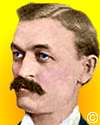
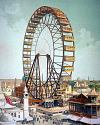
George Washington Gale Ferris, Jr. was an American engineer and inventor who invented the giant observation wheel for the World’s Columbian Exposition, Chicago, Illinois (1893), created to rival the Eiffel Tower, which had been built by Gustave Eiffel for the 1889 World's Fair in Paris. Ferris began as a construction engineer on railroad runnel and bridge projects, and later established his own business as Ferris & Company. His audacious idea for the observation wheel took $400,000 of his own money for its financing, but its construction was delayed so that its opening on 21 Jun 1893 was over a month after the Exposition had opened. His life ended only three years later (perhaps by suicide) at age 37. He was on the edge of bankrupty, unable to claim enough as his share of the profits from his machine to cover his expenses, and shortly after his wife left him.« more
Circles in the Sky the Life and Times of George Ferris, by Richard Weingardt. - book suggestion.
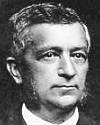
Died 22 Nov 1884 at age 66 (born 1 Jul 1818).
German physician and professor of medicine who invented the sphygmograph (1854), the first instrument to trace a human pulse by a non-invasive measurement of blood pressure. His method of using weights and a mechanical balance was crude, but did establish the principle that blood pressure could be measured by finding the counter pressure needed to balance the arterial pulsation. In 1852, he developed a technical method by which blood cells could be counted (though too tedious to gain widespread use). Vierordt also devised the hemotachometer to monitor the speed of blood flow. He made spectrographic analyses of haemoglobin solutions, bile, and urine and also studied respiration and sound conduction.« more
German physician and professor of medicine who invented the sphygmograph (1854), the first instrument to trace a human pulse by a non-invasive measurement of blood pressure. His method of using weights and a mechanical balance was crude, but did establish the principle that blood pressure could be measured by finding the counter pressure needed to balance the arterial pulsation. In 1852, he developed a technical method by which blood cells could be counted (though too tedious to gain widespread use). Vierordt also devised the hemotachometer to monitor the speed of blood flow. He made spectrographic analyses of haemoglobin solutions, bile, and urine and also studied respiration and sound conduction.« more
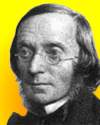
Died 22 Nov 1859 at age 41 (born 21 Feb 1818). quotes
Scottish chemist and physician who, upon being appointed as the first Director of the Industrial Museum of Scotland in Edinburgh, also was made professor of technology at the university there. He gave his inaugural lecture on 7 Nov 1855. His duties included giving lectures to the general public. He wrote The Life of the Honourable Henry Cavendish: Including the Abstracts of his Important Scientific Papers (1851).
Scottish chemist and physician who, upon being appointed as the first Director of the Industrial Museum of Scotland in Edinburgh, also was made professor of technology at the university there. He gave his inaugural lecture on 7 Nov 1855. His duties included giving lectures to the general public. He wrote The Life of the Honourable Henry Cavendish: Including the Abstracts of his Important Scientific Papers (1851).
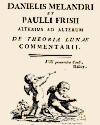
Died 22 Nov 1784 at age 56 (born 13 Apr 1728).
Italian mathematician, astronomer, and physicist who is best known for his work in hydraulics (he designed a canal between Milan and Pavia). He was, however, the first to introduce the lightning conductor into Italy. His most significant contributions to science, however, were in the compilation, interpretation, and dissemination of the work of other scientists, such as Galileo Galilei and Sir Isaac Newton. His work on astronomy was based on Newton's theory of gravitation, studying the motion of the earth (De moto diurno terrae). He also studied the physical causes for the shape and the size of the earth using the theory of gravity (Disquisitio mathematica, 1751) and tackled the difficult problem of the motion of the moon.
Italian mathematician, astronomer, and physicist who is best known for his work in hydraulics (he designed a canal between Milan and Pavia). He was, however, the first to introduce the lightning conductor into Italy. His most significant contributions to science, however, were in the compilation, interpretation, and dissemination of the work of other scientists, such as Galileo Galilei and Sir Isaac Newton. His work on astronomy was based on Newton's theory of gravitation, studying the motion of the earth (De moto diurno terrae). He also studied the physical causes for the shape and the size of the earth using the theory of gravity (Disquisitio mathematica, 1751) and tackled the difficult problem of the motion of the moon.
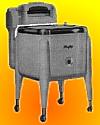
In 1983, the last wringer-washer made in the U.S., a Master Model E was built by the Maytag Company, the last U.S. company to make hand-operated washers. Their Model E was introduced in 1939. Maytag's first washing machine product was the Pastime hand-powered wood tub. It was produced from late 1907 to 1908 under the "Parsons" manufacturer name used until about 1909 when the business adopted the Maytag Company name. In 1893, the founder, Fred L. Maytag, had joined three other men in Newton, Iowa, to manufacture farm implements. The change to domestic appliances solved the seasonal sales slump. On 31 Mar 2006, Whirlpool Corporation, completed acquisition of the Maytag Company.«[Image: Maytag Model E] Note: The date 12 Oct 1983 seen elsewhere on the internet is incorrect.

In 1977, regular passenger service between New York and Europe on the supersonic Concorde began on a trial basis. Whereas scheduled Concorde flights started on 21 Jan 1976 for London-Bahrain and Paris-Rio routes, the U.S. Congress had banned Concorde landings in America, mainly due to citizen protest over sonic booms. When the U.S. ban was lifted in Feb 1976, for over-water supersonic flight, New York banned Concorde locally. Thus, Washington D.C. became the first destination for transatlantic service, beginning 24 May 1976, by Air France and British Airways. When New York later accepted Concorde traffic, daily transatlantic service operated until 24 Oct 2003 with a flight time just under 3.5 hours.«
The Concorde Story: 21 Years in Service, by Christopher Orlebar. - book suggestion.

In 1941, in the Federal Register, the U.S. Food and Drug Administration first specified the minimum recommended daily requirements for vitamins A, B1, B2, C, D; and for minerals: calcium, iron, iodine, phosphorus. Specified amounts for good nutrition for an adult were – vitamin A, 4,000 U.S.P. units; vitamin B1 (thiamine), 1 mg; vitamin B2 (riboflavin), 2 mg; vitamin C, 30 mg; vitamin D, 400 U.S.P. units; calcium, 750 mg; phosphorus, 750 mg; iron, 10 mg; iodine, 0.1 mg. Some of the above amounts were lower for children. Amounts for Ca, P and Fe were higher for a pregnant or lactating woman. Regulations were given for proper labeling of foods with their dietary information.«
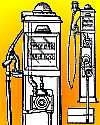
(USPTO)
In 1932, the first U.S. patent for a computer pump was issued to the inventors, Robert J. Jauch, Ivan R. Farnham and Ross H. Arnold for their "Liquid Dispensing Apparatus" (No. 1,888,533). Their motorized pump both metered and displayed the exact gallons of gasoline or other liquid dispensed, and also accurately computed and showed the price in dollars and cents while delivery was made. The internal totalizer could be easily reset for any new price per gallon. It solved the problems of inaccurate delivery of volume from a visible type dispenser, and its necessary ready-reckoning card with quantity and cost tables, which needed a new card when prices changed. The Wayne Co., Fort Wayne, Indiana, marketed it from 1 Nov 1931.«

(USPTO)
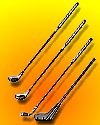
In 1910, the first U.S. patent for a steel-shafted golf club was issued to Arthur F. Knight of Schenectady, N.Y. (No. 976,267). The shaft was formed from tempered high-carbon steel tubing, in which the volume of metal decreases toward the head. The new construction was to provide an elastic, yet non-fibrous shaft, in order that "the line of flight of the ball may truly conform to the direction of the blow delivered by the player." The inventor described how at the time the customary use of an elastic but fibrous wood, such as selected seasoned hickory, would offer small resistance to twisting around the long axis of the shaft that resulted as the head of the club struck the ball. The use of steel solved this torsion problem.«
In 1904, the first direct current, interpole, electric motor to be patented in the U.S. was issued to Mathias Pfatischer of Phildadelphia, Pennsylvania under the title "Variable Speed Motor" (No.775,310). His improvement was to "effect commutation without sparking, with a variable load as well as at variable speed and which is capable of rotation in either direction." The new design added auxiliary-field pole-pieces which were small as compared to the main pole-pieces.«
In 1903, the American Leather Chemists Association was formed by nine founding members. It was the outcome of a decade when a small number of chemists with a commercial interest in the product had worked to establish reliable analytical methods for analyzing the tanning extracts used in the industry, and to introduce scientific methods of tannery plant control. They devised a method of measuring the amount of tanning material absorbed by dried, ground hide. However, these formative years were still characterised by bitter disputes and wrangling among the chemists.«
In 1875, the journal Comptes Rendus published a statement by Dmitry Mendeleev, Remarques à propos de la découverte du gallium. He believed the newly-discovered element, gallium, was identical with the eka-aluminium he had previously predicted and named as a place-holder in his Periodic Table of the elements. It was on 27 Aug 1875, that the French chemist Lecoq de Boisbaudran had first observed new spectral lines in the spark spectrum of a tiny sample prepared from some zinc blende ore from the Pierrefitte mine. He coined the name gallium in honour of France. He published his discovery in the 20 Sep 1875 issue of Comptes Rendus. On 6 Dec 1875, Boisbaudran presented 3.4 mg of gallium to the Academy of Sciences.«
In 1809, the first patent was issued in the U.S. for a metallic writing pen was issued to Peregrine Williamson a jeweller of Baltimore, Maryland. The patent title occurs in summary lists in published books that exist after the fire that consumed all the records at the Patent Office on 15 Dec 1836. Williamson's pens were made of steel rolled from wire, a sort of steel quill that would never need cutting to sharpen the nib. His first attempt did not write well for want of flexibility but that was solved by adding two more slits parallel to the main one. He then had a product that eventually sold so well it kept him and a journeyman employed full-time in a profitable business. There are references to steel pens being used in Britain before this patent.«





