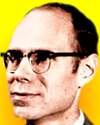
Born 27 Mar 1910; died 2 Apr 2002 at age 92.
John Robinson Pierce was an American communications engineer who is regarded as the father of the communications satellite. Pierce was influential in the development of microwaves and radar during WW II, then began working on the theory of satellite communication in 1954. His writings, which detailed the use of satellites in beaming radio signals around the world, were largely ignored. However, he convinced NASA to convert the Echo balloon satellite into a radio wave reflector. His successful experiments with Echo in 1960 led to the development of Telstar, which initiated modern television and radio communications by amplifying signals from one station on Earth and beaming them to another.
John Robinson Pierce was an American communications engineer who is regarded as the father of the communications satellite. Pierce was influential in the development of microwaves and radar during WW II, then began working on the theory of satellite communication in 1954. His writings, which detailed the use of satellites in beaming radio signals around the world, were largely ignored. However, he convinced NASA to convert the Echo balloon satellite into a radio wave reflector. His successful experiments with Echo in 1960 led to the development of Telstar, which initiated modern television and radio communications by amplifying signals from one station on Earth and beaming them to another.
Signals: The Science of Telecommunications, by John Robinson Pierce and A. Michael Noll. - book suggestion.
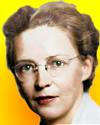
Born 27 Mar 1905; died 4 Nov 1980 at age 75.
Elizabeth Muriel Gregory MacGill was a Canadian aeronautical engineer who was the world’s first female aeronautical engineer, as well as the first female engineer to practice in Canada (Master’s degree in aeronautical engineering, 1929). From her early career she was involved in design, construction and testing of aircraft. By 1938, MacGill became chief aeronautical engineer of Canadian Car & Foundry (Can Car). During World War II, she oversaw Can Car’s production of 1,450 Hawker Hurricane aircraft. Hawker Hurricanes were one of the main fighters flown by Canadian and Allied airmen in the Battle of Britain. Postwar, MacGill founded her own successful consulting engineering company. She also became known as a prominent Canadian feminist.«
Elizabeth Muriel Gregory MacGill was a Canadian aeronautical engineer who was the world’s first female aeronautical engineer, as well as the first female engineer to practice in Canada (Master’s degree in aeronautical engineering, 1929). From her early career she was involved in design, construction and testing of aircraft. By 1938, MacGill became chief aeronautical engineer of Canadian Car & Foundry (Can Car). During World War II, she oversaw Can Car’s production of 1,450 Hawker Hurricane aircraft. Hawker Hurricanes were one of the main fighters flown by Canadian and Allied airmen in the Battle of Britain. Postwar, MacGill founded her own successful consulting engineering company. She also became known as a prominent Canadian feminist.«
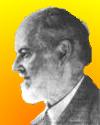
Born 27 Mar 1863; died 22 Apr 1933 at age 70. quotes
English industrialist who, having met Charles Rolls, in May 1904, found they shared a common interest to manufacture and market the finest cars. Together, in 1906 they started the company, Rolls-Royce Ltd. Within a few years, at the onset of WWI, they turned to the production of much-needed reliable engines for aviation. After the war, they continued both as a manufacturer of luxury automobiles and airplane engines. In WWII, it was Rolls-Royce engines powered British aircraft in the “Hurricanes” and “Spitfires.”«
English industrialist who, having met Charles Rolls, in May 1904, found they shared a common interest to manufacture and market the finest cars. Together, in 1906 they started the company, Rolls-Royce Ltd. Within a few years, at the onset of WWI, they turned to the production of much-needed reliable engines for aviation. After the war, they continued both as a manufacturer of luxury automobiles and airplane engines. In WWII, it was Rolls-Royce engines powered British aircraft in the “Hurricanes” and “Spitfires.”«
The Magic of a Name: The Rolls-Royce Story, Part 1, The First Forty Years, by Peter Pugh. - book suggestion.
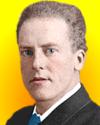
Born 27 Mar 1857; died 27 Apr 1936 at age 79. quotes
English mathematician who was one of the founders of modern statistics. His lectures as professor of geometry evolved into The Grammar of Science (1892), his most widely read book and a classic in the philosophy of science. Stimulated by the evolutionary writings of Francis Galton and a personal friendship with Walter F.R. Weldon, Pearson became immersed in the problem of applying statistics to biological problems of heredity and evolution. The methods he developed are essential to every serious application of statistics. From 1893 to 1912 he wrote a series of 18 papers entitled Mathematical Contributions to the Theory of Evolution, which contained much of his most valuable work, including the chi-square test of statistical significance.
English mathematician who was one of the founders of modern statistics. His lectures as professor of geometry evolved into The Grammar of Science (1892), his most widely read book and a classic in the philosophy of science. Stimulated by the evolutionary writings of Francis Galton and a personal friendship with Walter F.R. Weldon, Pearson became immersed in the problem of applying statistics to biological problems of heredity and evolution. The methods he developed are essential to every serious application of statistics. From 1893 to 1912 he wrote a series of 18 papers entitled Mathematical Contributions to the Theory of Evolution, which contained much of his most valuable work, including the chi-square test of statistical significance.
Karl Pearson: The Scientific Life in a Statistical Age, by Theodore Porter. - book suggestion.
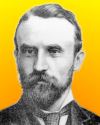
Born 27 Mar 1855; died 7 Jan 1935 at age 79.
Sir James Alfred Ewing was a Scottish physicist who discovered and named hysteresis (1881), the resistance of magnetic materials to change in magnetic force. Ewing was born and educated in Dundee and studied engineering on a scholarship at Edinburgh University. He helped Sir William Thomson, later Lord Kelvin in a cable laying project. In 1878 he became professor of Mechanical Engineering and Physics at Tokyo University, where he devised instruments for measuring earthquakes. In 1903 he moved to the Admiralty as head of education and training, where during WW I, he and his staff took on the task of deciphering coded messages.
Sir James Alfred Ewing was a Scottish physicist who discovered and named hysteresis (1881), the resistance of magnetic materials to change in magnetic force. Ewing was born and educated in Dundee and studied engineering on a scholarship at Edinburgh University. He helped Sir William Thomson, later Lord Kelvin in a cable laying project. In 1878 he became professor of Mechanical Engineering and Physics at Tokyo University, where he devised instruments for measuring earthquakes. In 1903 he moved to the Admiralty as head of education and training, where during WW I, he and his staff took on the task of deciphering coded messages.
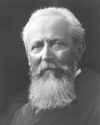
Born 27 Mar 1847; died 26 Feb 1931 at age 83.
German chemist awarded the 1910 Nobel Prize for Chemistry for identifying terpene compounds. His interest began began by analyzing fragrant essential oils - oils removed from plants by steam distillation, with industrial uses - and started research into determining their molecular structure. Wallach succeeded in determining the structure of several terpenes, including limonene, in 1894. He showed that terpenes were derived from isoprene, C5H8 - his isoprene rule (1887) - and therefore had the general formula (C5H8)n. Limonene is thus C10H16. Terpenes were of importance not only in the medicine and perfume industries, but also as a source of camphors. It was also later established that vitamins A and D are related to the terpenes.
German chemist awarded the 1910 Nobel Prize for Chemistry for identifying terpene compounds. His interest began began by analyzing fragrant essential oils - oils removed from plants by steam distillation, with industrial uses - and started research into determining their molecular structure. Wallach succeeded in determining the structure of several terpenes, including limonene, in 1894. He showed that terpenes were derived from isoprene, C5H8 - his isoprene rule (1887) - and therefore had the general formula (C5H8)n. Limonene is thus C10H16. Terpenes were of importance not only in the medicine and perfume industries, but also as a source of camphors. It was also later established that vitamins A and D are related to the terpenes.

Born 27 Mar 1845; died 10 Feb 1923 at age 77. quotes
Wilhelm Conrad Röntgen was a German physicist who discovered the highly penetrating form of radiation that became known as X-rays on 8 Nov 1895. He received the first Nobel Prize for Physics (1901), “in recognition of the extraordinary services he has rendered by the discovery of the remarkable rays subsequently named after him.” This high-energy radiation, though first called Röngen rays, became known as X-rays. His discovery initiated revolutionary improvements in making medical diagnoses and enabled many new advances in modern physics.«[Name also spelled Roentgen.]
Wilhelm Conrad Röntgen was a German physicist who discovered the highly penetrating form of radiation that became known as X-rays on 8 Nov 1895. He received the first Nobel Prize for Physics (1901), “in recognition of the extraordinary services he has rendered by the discovery of the remarkable rays subsequently named after him.” This high-energy radiation, though first called Röngen rays, became known as X-rays. His discovery initiated revolutionary improvements in making medical diagnoses and enabled many new advances in modern physics.«[Name also spelled Roentgen.]
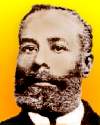
Born 27 Mar 1843; died 10 Oct 1929 at age 86.
Black-American inventor holding many patents for the automatic lubrication of machinery. Born in Canada. While resident in Ypsilanti, Michigan, after two years of development, he received his first U.S. patent, No. 129,843 on 23 Jun 1872, for a lubricator for steam engines. By 1926 he held several dozen patents for devices that enabled a steady supply of oil to machinery, in drops flowing from a reservoir cup while the machine continued to run, thus eliminating the need to stop the machine to oil it. These were used by stationary steam engines in factories, railway locomotives, steam-powered inland waterway and ocean ships. His inventiveness yielded other patents, including an ironing table, scaffold support and rubber heel.«
Black-American inventor holding many patents for the automatic lubrication of machinery. Born in Canada. While resident in Ypsilanti, Michigan, after two years of development, he received his first U.S. patent, No. 129,843 on 23 Jun 1872, for a lubricator for steam engines. By 1926 he held several dozen patents for devices that enabled a steady supply of oil to machinery, in drops flowing from a reservoir cup while the machine continued to run, thus eliminating the need to stop the machine to oil it. These were used by stationary steam engines in factories, railway locomotives, steam-powered inland waterway and ocean ships. His inventiveness yielded other patents, including an ironing table, scaffold support and rubber heel.«
The Real McCoy, by Portia P. James. - book suggestion.
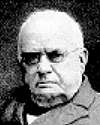
Born 27 Mar 1824; died 28 Nov 1914 at age 90.
German physicist who was a pioneer in electrochemical research. His early investigations were on the allotropes (different physical forms) of phosphorus and selenium. He was the first to compute the electricity- carrying capacity of charged atoms and molecules (ions), an important factor in understanding electrochemical reactions. He investigated the migration of ions during electrolysis (1853-59), developed expressions for and measured transport numbers. In 1869, he published his laws governing the migration of ions. For his studies of electrical phenomena in rarefied gases, the Hittorf tube has been named for him. Hittorf determined a number of properties of cathode rays, including (before Crookes) the deflection of the rays by a magnet.
German physicist who was a pioneer in electrochemical research. His early investigations were on the allotropes (different physical forms) of phosphorus and selenium. He was the first to compute the electricity- carrying capacity of charged atoms and molecules (ions), an important factor in understanding electrochemical reactions. He investigated the migration of ions during electrolysis (1853-59), developed expressions for and measured transport numbers. In 1869, he published his laws governing the migration of ions. For his studies of electrical phenomena in rarefied gases, the Hittorf tube has been named for him. Hittorf determined a number of properties of cathode rays, including (before Crookes) the deflection of the rays by a magnet.
Born 27 Mar 1817; died 10 May 1891 at age 74.
Swiss botanist famous for his work on plant cells. At the age of 25 he wrote a paper on pollen formation of seed and flowering plants and described cell division with great accuracy. He noted what he called transitory cytoblasts, which later were identified as chromosomes.
Swiss botanist famous for his work on plant cells. At the age of 25 he wrote a paper on pollen formation of seed and flowering plants and described cell division with great accuracy. He noted what he called transitory cytoblasts, which later were identified as chromosomes.
Born 27 Mar 1781; died 24 Oct 1870 at age 89.
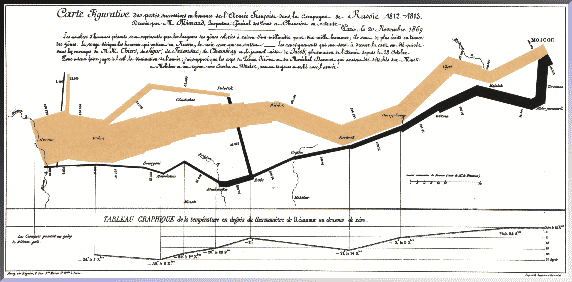
French civil engineer who made significant contributions to the graphical representations of data. His best-known work, Carte figurative des pertes successives en hommes de l'Armee Français dans la campagne de Russe 1812-1813, dramatically displays the number of Napoleon's soldiers by the width of an ever-reducing band drawn across a map from France to Moscow. At its origin, a wide band shows 442,000 soldiers left France, narrowing across several hundred miles to 100,000 men reaching Moscow. With a parallel temperature graph displaying deadly frigid Russian winter temperatures along the way, the band shrinks during the retreat to a pathetic thin trickle of 10,000 survivors returning to their homeland.«
French civil engineer who made significant contributions to the graphical representations of data. His best-known work, Carte figurative des pertes successives en hommes de l'Armee Français dans la campagne de Russe 1812-1813, dramatically displays the number of Napoleon's soldiers by the width of an ever-reducing band drawn across a map from France to Moscow. At its origin, a wide band shows 442,000 soldiers left France, narrowing across several hundred miles to 100,000 men reaching Moscow. With a parallel temperature graph displaying deadly frigid Russian winter temperatures along the way, the band shrinks during the retreat to a pathetic thin trickle of 10,000 survivors returning to their homeland.«
Born 27 Mar 1776; died 12 Sep 1854 at age 78.
French botanist whose book Traité d'anatomie et de physiologie végétale, (2 volumes, 1802, "Treatise on Plant Anatomy and Physiology") was a founding work in plant cytology and plant physiology. He is best-known for his identification of the continuous membrane around each plant cell (1809).
French botanist whose book Traité d'anatomie et de physiologie végétale, (2 volumes, 1802, "Treatise on Plant Anatomy and Physiology") was a founding work in plant cytology and plant physiology. He is best-known for his identification of the continuous membrane around each plant cell (1809).

Died 27 Mar 2007 at age 77 (born 6 May 1929).
Paul Christian Lauterbur was an American chemist who shared (with Sir Peter Mansfield) the 2003 Nobel Prize for Physiology or Medicine “for their discoveries concerning magnetic resonance imaging.”
Paul Christian Lauterbur was an American chemist who shared (with Sir Peter Mansfield) the 2003 Nobel Prize for Physiology or Medicine “for their discoveries concerning magnetic resonance imaging.”
Died 27 Mar 1998 at age 79 (born 5 Apr 1918).
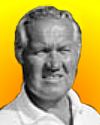
American inventor of racquetball who developed the sport (1950) to play at the Greenwich, Connecticut, YMCA. As a squash and tennis professional for seven years, he invented racquetball as an alternative indoor racquet sport. He drafted rules, drew a racquet design, which was created in 1951 by Magnan Racket Manufacturing Company. To promote his invention, he founded the Paddle Rackets Association with a group of players. He withdrew from active promotion as the sport quickly rose in popularity, as an athletic activity that was easy to learn, and needed no power or strength to enjoy. By the early 70's, there were court clubs in every state. There are now millions of players, and it is an Olympic sport.«
American inventor of racquetball who developed the sport (1950) to play at the Greenwich, Connecticut, YMCA. As a squash and tennis professional for seven years, he invented racquetball as an alternative indoor racquet sport. He drafted rules, drew a racquet design, which was created in 1951 by Magnan Racket Manufacturing Company. To promote his invention, he founded the Paddle Rackets Association with a group of players. He withdrew from active promotion as the sport quickly rose in popularity, as an athletic activity that was easy to learn, and needed no power or strength to enjoy. By the early 70's, there were court clubs in every state. There are now millions of players, and it is an Olympic sport.«
Died 27 Mar 1997 at age 71 (born 5 Oct 1925).
English geologist who won a worldwide reputation for his contributions to petrology and was one of the few scientists outside America to be invited by NASA to work on the samples of lunar rock brought back by the Apollo 11 mission. From 1979 to 1985, he was Director of the Institute of Geological Sciences (which name Brown changed to the British Geological Survey in 1984).
English geologist who won a worldwide reputation for his contributions to petrology and was one of the few scientists outside America to be invited by NASA to work on the samples of lunar rock brought back by the Apollo 11 mission. From 1979 to 1985, he was Director of the Institute of Geological Sciences (which name Brown changed to the British Geological Survey in 1984).

Died 27 Mar 1968 at age 34 (born 9 Mar 1934). quotes
Soviet cosmonaut who on 12 Apr 1961 became the first man to travel into space when he was 27 years old. He graduated from the Soviet Air Force cadet school in 1957. He volunteered to become a cosmonaut and joined a group of test pilots for training. Three days before the launch, he was informed he had been selected to pilot the Vostok 1 spacecraft. He orbited the Earth once in 1 hour 29 minutes at a maximum altitude of 187 miles (301 km). He never went into space again but trained other cosmonauts and toured several other nations. Gagarin was killed with another pilot in the crash of a two-seat jet aircraft while on what was described as a routine training flight. His ashes were placed in a niche in the Kremlin wall.
Soviet cosmonaut who on 12 Apr 1961 became the first man to travel into space when he was 27 years old. He graduated from the Soviet Air Force cadet school in 1957. He volunteered to become a cosmonaut and joined a group of test pilots for training. Three days before the launch, he was informed he had been selected to pilot the Vostok 1 spacecraft. He orbited the Earth once in 1 hour 29 minutes at a maximum altitude of 187 miles (301 km). He never went into space again but trained other cosmonauts and toured several other nations. Gagarin was killed with another pilot in the crash of a two-seat jet aircraft while on what was described as a routine training flight. His ashes were placed in a niche in the Kremlin wall.
Starman: The Truth Behind the Legend of Yuri Gagarin, by Jamie Doran. - book suggestion.
Died 27 Mar 1967 at age 76 (born 20 Dec 1890).
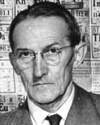
Czech chemist who received the 1959 Nobel Prize for Chemistry "for his discovery and development of the polarographic methods of analysis" (1922), which is one of the most versatile analytical techniques. It applies the principle that in electrolysis the ions are discharged at an electrode and, if the electrode is small, the current may be limited by the rate of movement of ions to the electrode surface. In polarography the cathode is a small drop of mercury (constantly forming and dropping to keep the surface clean). The voltage is increased slowly and the current plotted against voltage. The current increases in steps, each corresponding to a particular type of positive ion in the solution. The height of the steps indicates the concentration of the ion.«
Czech chemist who received the 1959 Nobel Prize for Chemistry "for his discovery and development of the polarographic methods of analysis" (1922), which is one of the most versatile analytical techniques. It applies the principle that in electrolysis the ions are discharged at an electrode and, if the electrode is small, the current may be limited by the rate of movement of ions to the electrode surface. In polarography the cathode is a small drop of mercury (constantly forming and dropping to keep the surface clean). The voltage is increased slowly and the current plotted against voltage. The current increases in steps, each corresponding to a particular type of positive ion in the solution. The height of the steps indicates the concentration of the ion.«
Died 27 Mar 1945 at age 62 (born 12 Aug 1882).
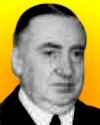
Vincent Hugo Bendix was an American inventor who developed systems for automobiles and aircraft and companies to manufacture them. His first, the short-lived Bendix Company of Chicago (1907-9) made a car called the Bendix Buggy. In 1910, he invented the Bendix drive which made the electric self-starter possible. It used a gear to engage with the engine at low rotational speed then fly back, disengaging automatically at higher speed. The first four-wheel brake system for automobiles was his creation. He entered aviation systems production in 1929 with the Bendix Aviation Corporation (later be renamed Bendix Corporation), and started Bendix Helicopters, Inc. in 1942. During WW II, Bendix was the major source of U.S. aviation electronics.«
Vincent Hugo Bendix was an American inventor who developed systems for automobiles and aircraft and companies to manufacture them. His first, the short-lived Bendix Company of Chicago (1907-9) made a car called the Bendix Buggy. In 1910, he invented the Bendix drive which made the electric self-starter possible. It used a gear to engage with the engine at low rotational speed then fly back, disengaging automatically at higher speed. The first four-wheel brake system for automobiles was his creation. He entered aviation systems production in 1929 with the Bendix Aviation Corporation (later be renamed Bendix Corporation), and started Bendix Helicopters, Inc. in 1942. During WW II, Bendix was the major source of U.S. aviation electronics.«
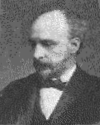
Died 27 Mar 1923 at age 80 (born 20 Sep 1842). quotes
Scottish chemist and physicist who blurred the line between physics and chemistry and advanced the research frontier in several fields at the turn of the century. He gave dazzling lectures and his study of low-temperature phenomena entailed making the Dewar flask, an insulating double-walled flask of his own design by creating a vacuum between the two silvered layers of steel or glass (1892), which led to the domestic Thermos bottle. In Jun 1897, The Scientific American reported that “Dewar has just succeeded in liquefying fluorine gas at a temperature of -185 ºC.” He obtained liquid hydrogen in 1898. Dewar also invented cordite, the first smokeless powder. more
Scottish chemist and physicist who blurred the line between physics and chemistry and advanced the research frontier in several fields at the turn of the century. He gave dazzling lectures and his study of low-temperature phenomena entailed making the Dewar flask, an insulating double-walled flask of his own design by creating a vacuum between the two silvered layers of steel or glass (1892), which led to the domestic Thermos bottle. In Jun 1897, The Scientific American reported that “Dewar has just succeeded in liquefying fluorine gas at a temperature of -185 ºC.” He obtained liquid hydrogen in 1898. Dewar also invented cordite, the first smokeless powder. more
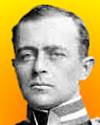
c. 1905
Died c. 27 Mar 1912 (born 6 Jun 1868). quotes
English explorer who is remembered as “Scott of the Antarctic.” He led an ill-fated expedition to the South Pole, reached 17 Jan 1912, only to find Norwegian Roald Amundsen's party had beaten them there, 35 days earlier. Scott's group of five men all died on the return journey. He had previously made a “Discovery Expedition” (1901-1904) for scientific and exploratory work. He led a party to within 480 miles of the South Pole on a 93-day trip from their base. His final voyage to Antarctica left Cardiff, Wales, on 15 Jun 1910 aboard the Terra Nova, with ponies, dogs and three motorized sleds. It reached McMurdo Sound on 4 Jan 1911. The men on the final 1766-mile journey to the Pole set off on 1 Nov 1911, never to return alive. When the bodies were discovered, Scott's sled still had 35-lbs of geological specimens on it.«
English explorer who is remembered as “Scott of the Antarctic.” He led an ill-fated expedition to the South Pole, reached 17 Jan 1912, only to find Norwegian Roald Amundsen's party had beaten them there, 35 days earlier. Scott's group of five men all died on the return journey. He had previously made a “Discovery Expedition” (1901-1904) for scientific and exploratory work. He led a party to within 480 miles of the South Pole on a 93-day trip from their base. His final voyage to Antarctica left Cardiff, Wales, on 15 Jun 1910 aboard the Terra Nova, with ponies, dogs and three motorized sleds. It reached McMurdo Sound on 4 Jan 1911. The men on the final 1766-mile journey to the Pole set off on 1 Nov 1911, never to return alive. When the bodies were discovered, Scott's sled still had 35-lbs of geological specimens on it.«
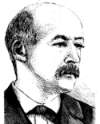
Died 27 Mar 1910 at age 74 (born 17 Dec 1835). quotes
Alexander Emmanuel Rodolphe Agassiz was a Swiss marine zoologist, oceanographer and mining engineer who moved to the U.S. in 1849 to join his father, naturalist Jean Louis Agassiz, and studied at Harvard for degrees both in civil engineering (1857) and zoology (1862). Alexander Agassiz made important contributions to systematic zoology, to the knowledge of ocean beds, and to the development of the copper mines of Lake Superior (1866-9). He was curator of Harvard's Museum of Comparative Zoology (1873-85), founded by his father. He made numerous oceanographic zoological expeditions, wrote many books and examined thousands of coral reefs to refute Charles Darwin's ideas on atoll formation.
Alexander Emmanuel Rodolphe Agassiz was a Swiss marine zoologist, oceanographer and mining engineer who moved to the U.S. in 1849 to join his father, naturalist Jean Louis Agassiz, and studied at Harvard for degrees both in civil engineering (1857) and zoology (1862). Alexander Agassiz made important contributions to systematic zoology, to the knowledge of ocean beds, and to the development of the copper mines of Lake Superior (1866-9). He was curator of Harvard's Museum of Comparative Zoology (1873-85), founded by his father. He made numerous oceanographic zoological expeditions, wrote many books and examined thousands of coral reefs to refute Charles Darwin's ideas on atoll formation.
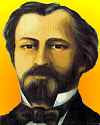
Died 27 Mar 1893 at age 77 (born 9 Apr 1815).
French railway engineer who originated the theoretical principle of the four-stroke internal-combustion engine and provide a theoretical pressure diagram (1862). His achievement lay partly in his emphasizing the previously unappreciated importance of compressing the fuel-air mixture before ignition. (French patent #52,593, 16 Jan 1862). However, he never built such an engine, nor defended his patent when the German Nikolaus August Otto produced a four-stroke engine in 1876. Beau de Rochas proposed other ideas: a rail tunnel beneath the English Channel, a submarine telegraph, a new kind of drive for canal boats, the use of steel for high-pressure boilers, and a method of improving the adhesion of locomotive wheel on Alpine tracks.
French railway engineer who originated the theoretical principle of the four-stroke internal-combustion engine and provide a theoretical pressure diagram (1862). His achievement lay partly in his emphasizing the previously unappreciated importance of compressing the fuel-air mixture before ignition. (French patent #52,593, 16 Jan 1862). However, he never built such an engine, nor defended his patent when the German Nikolaus August Otto produced a four-stroke engine in 1876. Beau de Rochas proposed other ideas: a rail tunnel beneath the English Channel, a submarine telegraph, a new kind of drive for canal boats, the use of steel for high-pressure boilers, and a method of improving the adhesion of locomotive wheel on Alpine tracks.
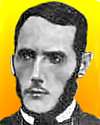
Died 27 Mar 1879 at age 75 (born 29 Feb 1804).
Antoine Hercule Romuald Florence was a French inventor, photographer and printer who coined the word “photographie” in French (before the use of “photography” in English suggested by John Herschel). Florence pioneeried a process of reproducing drawings on paper sensitized with silver salts. He developed his ideas from 1832, before the better known Louis Daguerre. He was then living in Brazil, where he had settled in 1824 after working on board ships. During 1825-30, he had joined a scientific expedition as an illustrator and topographic draftsman. By 1832, his goal was document reproduction (in publications as illustrations) rather than portraits. He never published his discoveries to the larger scientific world in Europe, and his name was forgotten in history. In 1976, a Brazilian historian, Boris Kossoy, uncovered Florence's work, and studied his notes. Kossoy presented the results of his research at a photography symposium in 1976, and in a book published in 1980.
Antoine Hercule Romuald Florence was a French inventor, photographer and printer who coined the word “photographie” in French (before the use of “photography” in English suggested by John Herschel). Florence pioneeried a process of reproducing drawings on paper sensitized with silver salts. He developed his ideas from 1832, before the better known Louis Daguerre. He was then living in Brazil, where he had settled in 1824 after working on board ships. During 1825-30, he had joined a scientific expedition as an illustrator and topographic draftsman. By 1832, his goal was document reproduction (in publications as illustrations) rather than portraits. He never published his discoveries to the larger scientific world in Europe, and his name was forgotten in history. In 1976, a Brazilian historian, Boris Kossoy, uncovered Florence's work, and studied his notes. Kossoy presented the results of his research at a photography symposium in 1976, and in a book published in 1980.
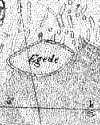
part of the Mappa Selenographica
German banker and amateur astronomer who owned a notable Fraunhofer refractor telescope, using it in his own private observatory. Collaborating with Johann Heinrich von Mädler, they created the first large-scale, micrometrically precise moon map, Mappa Selenographica (1836). This detailed lithograph, dividing the Moon into quadrants, offered the most comprehensive lunar surface depiction in the 19th century’s first half. Drawn at just over 38 inches to the lunar diameter, it minutely charted lunar features. Mädler also established a naming convention for small craters, using Roman letters alongside the name of the nearest major crater (example Egede A, B, C).«
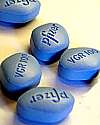
In 1998, Sildenafil citrate (marketed as Viagra) was approved by the U.S. Food and Drug Administration (FDA). Viagra was the first oral pill to treat impotence, a dysfunction affecting millions of men in the U.S. It was patented by, and is manufactured by Pfizer Phamaceuticals, New York, N.Y. Viagra is reported to be its sixth-biggest drug product, with annual sales of about $2 billion. It subsequently lost its monopolu on the treatment when Eli Lilly released the longer acting drug Cialis. In Canada, the patent was invalidated on 8 Nov 2012 by the Canadian Supreme Court for being too vague in its Canadian patent filing, by failing to meet adequate disclosure obligations on the active ingredient. That patent had been challenged by the world’s largest generic drug maker, the Israeli-based Teva Pharmaceutical Industries, Ltd.«

USPTO
In 1968, a patent application was filed for a “Wind-Propelled Apparatus” by Jim Drake and Hoyle Schweitzer. When issued as No. 3,487,800 on 6 Jan 1970, it was the first U.S. patent for the Windsurfer sailboard: a surf-board with a sail on a mast articulated by a universal joint to the board. The rider can thus hold the boom and adjust the angle of the sail to control acceleration, turning and tacking, without need of a rudder or steering mechanism. The rider uses skill to moderate the propulsive power of the wind by manipulating the sail while keeping balanced on the craft. Drake was an aeronautical designer, and Schweitzer was a businessman and surfing enthusiast. Their British patent GB 1258317 was later revoked due to evidence in court of similar prior art presented by earlier innovators who did not patent.«
Windsurfing, by Simon Bornhoft. - book suggestion.
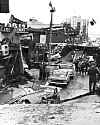
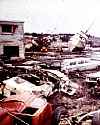
In 1961, the first mobile computer center, a UNIVAC Solid-State 90 computer loaded into a motor van, was used on assignment for the Douglas Aircraft Corporation, Charlotte, N.C. The mobile center was set up by Remington Rand UNIVAC, a division of Sperry Rand.

In 1933, polyethylene was discovered by Reginald Gibson and Eric William Fawcett. It was one of the earliest plastics to come into common use. It was discovered by accident while reacting ethylene and benzaldehyde at high pressure. The demands of war and the need for a better insulator for cables stimulated the development of polyethylene and it played a key role in the development of radar.
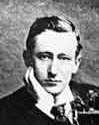
In 1899, Guglielmo Marconi transmitted across the English Channel from Boulogne, France, to Dover, England. The test was requested by the French Government, which was considering purchasing rights to the invention in France. Representatives of the French Government observed operations at both stations. In the same fashion as previous trial transmissions at Marconi's Alum Bay and Poole stations, both transmitter and receiver used a well-insulated copper wire, hung from a 150-ft high mast. Messages were exchanged over the 32 miles, and trials continued for several days, at a speed of up to fifteen words a minute. The success of Marconi's experiments made possible communications without expensive undersea cables.
In 1884, the first long-distance telephone call was made, between Boston and New York City. Branch managers of the American Bell Telephone Company in Boston called their counterparts in New York City. Although they reported the call was perfectly clear, maintaining clarity on long-distance phone calls proved problematic until the early 1900s, when Michael Pupin devised a method to transmit telephone signals over long distances. The Bell Telephone Company bought his long-distance telephone patent in 1901.
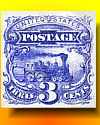
In 1869, a pictorial ultramarine 3-cent stamp was first used*, the first in the U.S. showing a locomotive. The U.S. trans-continental railroad was finished in the same year these stamps were issued, with ceremonies on 10 May 1869. The innovative departure from traditional head portrait stamp designs brought unexpected scorn. Some critics surmised this design was "to represent how Congressmen make money." A few days later, on 1 Apr 1869, a green 12-cent stamp was first used*, the first to show a steamship, the S.S. Adriatic. This theme of fast communication was accompanied by a 2-cent stamp showing postal carrier on horseback. «(*With no formal date of issue in early years, a stamp is dated by its earliest known use.)
(USPO)
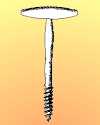
In 1860, M L. Byrn of New York City, N.Y., was issued a patent for an improved corkscrew - a “covered gimlet screw with a ‘T’ handle” (No. 27,615). The inventor claimed the design would provide greater strength and durability and which could be manufactured at less cost than prior construction methods using a spiral twist of steel wire that gradually tapered from the handle to the point. Byrn claimed the gimlet-type screw with wider threads would also be strong enough to “remove a bung of the hardest wood from a barel or hogshead.”
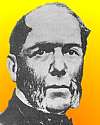
In 1855, Abraham Gesner received the first U.S. patent for a process to obtain oil from bituminous shale and cannel coal for the purpose of illumination (No. 12,612), which he called kerosene. The fuel was extracted by dry distillation at a controlled temperature in large cast-iron retorts set in suitable furnaces for evaporation and metal pipes surrounded by water for the condensation of the vapour. The light volatile liquid obtained is redistilled and treated with acid and peroxide of manganese to precipitate impurities. Freshly calcined lime is then mixed with the distillate to remove water and neutralize the acid. Further distillation yields kerosene. Gesner had previously obtained patents Nos. 11,203-5 on 27 Jun 1854 for a process for obtaining kerosene by heat distillation.
USPTO
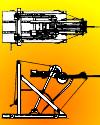
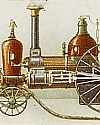
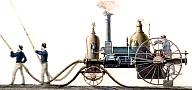
In 1849, Joseph J. Couch received the first U.S. patent for a steam-powered percussion rock drill (No. 6,237) as “improved machinery for drilling rocks”. It was driven by steam power and acted without need of gravity supplying any part of the motion. A sliding drill support frame enabled it to be operated in any desirable position or direction. Power was supplied by the piston of a steam cylinder connected to a suitable steam generator. The machine would be held stationary as the rotating drill was thrown against the rock. The drill rod would disengaged at each stroke, and travel with its own momentum, so that upon striking the rock, the shock was not transmitted back to the rest of the machine, preventing it from damage. After each blow, the tool was seized by means of friction-grips to retract and repeat.«
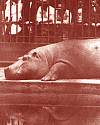
In 1829, the Zoological Society of London received a Royal Charter from George IV. The society was founded in Apr 1826 by Stamford Raffles and other scientists to research into animals kept in comparative freedom. Though Raffles became the society's first president, he died very shortly thereafter. His work was continued by the Marquess of Lansdowne, who obtained the Regent's Park land at a nominal rent from the Crown and supervised the construction of the original animal houses. London Zoological Gardens - Britain's first scientific zoo - was opened on 27 Apr 1828 for members of the society. By 1831, the royal managerie had been presented by King William IV to the society. In 1847, the general public were first admitted as paying visitors to help provide funding for the zoo.«[Image: Visitors viewing Obaysch, photographed in 1852 at the London Zoo, the first hippopotamus seen in England since prehistoric times, and the first in Europe since Ancient Rome.] more
The Zoo: The Story of London Zoo, by J. Barrington-Johnson. - book suggestion.
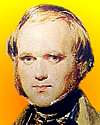
In 1827, Charles Darwin, aged 18, submitted his first report of an original scientific discovery to the Plinian Society in Edinburgh, Scotland. Darwin had discovered several things about the biology of tiny marine organisms found along the Scottish coast.
From So Simple a Beginning: Darwin's Four Great Books, by Charles Darwin, Edward O. Wilson. - book suggestion.





