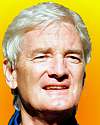
Born 2 May 1947. quotes
English engineer and industrial designer whose inventions include the Dual Cyclone bagless vacuum cleaner and the Airblade hand dryer. He founded Dyson Research Ltd. in 1979. Since 1970, when he re-invented the wheelbarrow as his Ballbarrow, he pursued his passion to create new products that function better than anything before them. He launched a bagless vacuum cleaner made and sold in Japan in 1986. When introduced in Britain in 1993, his vacuum cleaner became the country's best-selling by early 1995. Similarly, when sold in the U.S. from 2002, it captured 20% of the market by early 2005. His company now employs about 1400 people to develop new, more practical inventions.«
English engineer and industrial designer whose inventions include the Dual Cyclone bagless vacuum cleaner and the Airblade hand dryer. He founded Dyson Research Ltd. in 1979. Since 1970, when he re-invented the wheelbarrow as his Ballbarrow, he pursued his passion to create new products that function better than anything before them. He launched a bagless vacuum cleaner made and sold in Japan in 1986. When introduced in Britain in 1993, his vacuum cleaner became the country's best-selling by early 1995. Similarly, when sold in the U.S. from 2002, it captured 20% of the market by early 2005. His company now employs about 1400 people to develop new, more practical inventions.«
Against the Odds: An Autobiography, by James Dyson. - book suggestion.
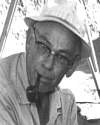
Born 2 May 1904; died 5 Dec 1992 at age 88.
American anthropologist and archaeologist whose investigations of the ancient Indian civilizations of the southwestern United States and South America focussed on the preceramic and ceramic archaeology of the southwestern U.S. and Mexico; the archaeology of the Hohokam, Mogollon, and Anasazi Indians of the southwestern United States; and the archaeology of the Chibcha Indians of the northern Andes. He assembled one of the first prehistoric-to-historic archaeological records of the Southwestern U.S.
American anthropologist and archaeologist whose investigations of the ancient Indian civilizations of the southwestern United States and South America focussed on the preceramic and ceramic archaeology of the southwestern U.S. and Mexico; the archaeology of the Hohokam, Mogollon, and Anasazi Indians of the southwestern United States; and the archaeology of the Chibcha Indians of the northern Andes. He assembled one of the first prehistoric-to-historic archaeological records of the Southwestern U.S.
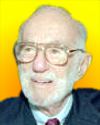
Age 90
Born 2 May 1903; died 15 Mar 1998 at age 94.
Benjamin McLane Spock was an American pediatrician whose books influenced generations of parents worldwide. After earning his medical degree he spent some time as a resident in pediatrics. Then he decided he should add psychological training to improve his skills in that field, which he subsequently regarded as having been important during his life in the development of his ideas. He began writing his first book in 1943, intending to depart from the rigidity of conventional wisdom and empower more common-sense. It was published as Common Sense Book of Baby and Child Care in 1946. It sold more than four million copies in its first six years, and was eventually translated into many languages, including Urdu, Thai and Tamil. Over the years, he made revisions to reflect new insights. He was also known for campaigning for nuclear disarmament and antiwar protests.«
Benjamin McLane Spock was an American pediatrician whose books influenced generations of parents worldwide. After earning his medical degree he spent some time as a resident in pediatrics. Then he decided he should add psychological training to improve his skills in that field, which he subsequently regarded as having been important during his life in the development of his ideas. He began writing his first book in 1943, intending to depart from the rigidity of conventional wisdom and empower more common-sense. It was published as Common Sense Book of Baby and Child Care in 1946. It sold more than four million copies in its first six years, and was eventually translated into many languages, including Urdu, Thai and Tamil. Over the years, he made revisions to reflect new insights. He was also known for campaigning for nuclear disarmament and antiwar protests.«
Spock on Spock: A Memoir of Growing Up with the Century, by Benjamin Spock. - book suggestion.
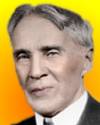
Born 2 May 1868; died 11 Aug 1955 at age 87. quotes
Robert Williams Wood was an American physicist who photographed the reflection of sound waves in air, and investigated the physiological effects of high-frequency sound waves. The zone plate he devised could replace the objective lens of a telescope. He invented an improved diffraction grating, did research in spectroscopy, and extended the technique of Raman spectroscopy (a method to study matter using the light scattered by it.) He made photographs showing both infrared and ultraviolet radiation and was the first to photograph ultraviolet fluorescence. Wood was the first to observe the phenomenon of field emission in which charged particles are emitted from conductors in an electric field.«
Robert Williams Wood was an American physicist who photographed the reflection of sound waves in air, and investigated the physiological effects of high-frequency sound waves. The zone plate he devised could replace the objective lens of a telescope. He invented an improved diffraction grating, did research in spectroscopy, and extended the technique of Raman spectroscopy (a method to study matter using the light scattered by it.) He made photographs showing both infrared and ultraviolet radiation and was the first to photograph ultraviolet fluorescence. Wood was the first to observe the phenomenon of field emission in which charged particles are emitted from conductors in an electric field.«
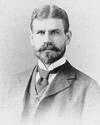
Born 2 May 1866; died 26 Sep 1900 at age 34.
Jesse William Lazear was an American physician and bacteriologist who died of yellow fever in Quemados, Cuba, during his own research into the cause of the disease. He graduated from Columbia's medical school, worked at the Pasteur Institute in Paris, and upon an outbreak of yellow fever in Cuba he was appointed an assistant surgeon in the U.S. Army. As a member of the Yellow Fever Commission with Walter Reed, James Carroll and Aristides Agramonte, he was in Cuba early in 1900. Their investigation yielded proof that the disease was borne by mosquitoes. Unfortunately, Lazear was bitten accidentally by an infected mosquito. Five days later, he developed yellow fever and died on the seventh day of his illness.
Jesse William Lazear was an American physician and bacteriologist who died of yellow fever in Quemados, Cuba, during his own research into the cause of the disease. He graduated from Columbia's medical school, worked at the Pasteur Institute in Paris, and upon an outbreak of yellow fever in Cuba he was appointed an assistant surgeon in the U.S. Army. As a member of the Yellow Fever Commission with Walter Reed, James Carroll and Aristides Agramonte, he was in Cuba early in 1900. Their investigation yielded proof that the disease was borne by mosquitoes. Unfortunately, Lazear was bitten accidentally by an infected mosquito. Five days later, he developed yellow fever and died on the seventh day of his illness.
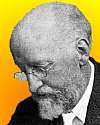
Born 2 May 1860; died 27 Aug 1924 at age 64. quotes
William Maddock Bayliss was an English physiologist who, in 1902 co-discovered the first hormone (with the British physiologist Ernest H. Starling). They found a certain chemical substance is secreted when food comes into contact with part of the small intestine. This chemical substance, which they named secretin, upon being carried by the blood to the pancreas, stimulates the secretion of pancreatic juice, the most important of the digestive juices. They coined the word “hormone” based on a Greek word for “to set in motion.” Bayliss also studied the use of saline injections to counteract shock during surgery. He proposed the use of gum-saline injections for wound shock to saved many lives of wounded soldiers in WW I.«
William Maddock Bayliss was an English physiologist who, in 1902 co-discovered the first hormone (with the British physiologist Ernest H. Starling). They found a certain chemical substance is secreted when food comes into contact with part of the small intestine. This chemical substance, which they named secretin, upon being carried by the blood to the pancreas, stimulates the secretion of pancreatic juice, the most important of the digestive juices. They coined the word “hormone” based on a Greek word for “to set in motion.” Bayliss also studied the use of saline injections to counteract shock during surgery. He proposed the use of gum-saline injections for wound shock to saved many lives of wounded soldiers in WW I.«
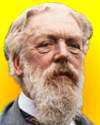
Born 2 May 1860; died 21 Jun 1948 at age 88. quotes
Scottish zoologist and classical scholar, who is noted for his influential workOn Growth and Form (1917, new ed. 1942). It is a profound consideration of the shapes of living things, starting from the simple premise that “everything is the way it is because it got that way.” Hence one must study not only finished forms, but also the forces that moulded them: “the form of an object is a ‘diagram of forces’, in this sense, at least, that from it we can judge of or deduce the forces that are acting or have acted upon it.”' One of his great themes is the tremendous light cast on living things by using mathematics to describe their shapes and fairly simple physics and chemistry to explain them..
Scottish zoologist and classical scholar, who is noted for his influential workOn Growth and Form (1917, new ed. 1942). It is a profound consideration of the shapes of living things, starting from the simple premise that “everything is the way it is because it got that way.” Hence one must study not only finished forms, but also the forces that moulded them: “the form of an object is a ‘diagram of forces’, in this sense, at least, that from it we can judge of or deduce the forces that are acting or have acted upon it.”' One of his great themes is the tremendous light cast on living things by using mathematics to describe their shapes and fairly simple physics and chemistry to explain them..
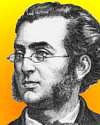
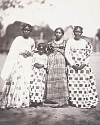
French explorer and archaeologist who pioneered the use of photography to document his expeditions, especially of Pre-Columbian sites in Mexico and Central America. Using the newly invented wet collodion process, he expertly produced many large plates, certainly a remarkable accomplishment in difficult field conditions. He thus created a photographic scientific record of various cultures around the world. With Le Plongeon, Charnay was among the first to publish photographs of Mesoamerican sites. He made early plaster molds of Maya sculptures. In Mexico, much of his work was concentrated in the archeological sites of Chichén-Itza, Uxmal, Palenque and Mitla. He also travelled as far as Australia, Oceania, and Madagascar.«[Image right: Madagascar Women, 1863, from wet collodion-on-glass]
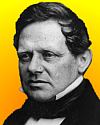
Born 2 May 1802; died 4 Apr 1870 at age 67.
German chemist and physicist who discovered the Magnus effect (the lift force produced by a rotating cylinder, which for example, gives the curve to a curve ball). In chemical research, he discovered the first of the platino-ammonium compounds compounds. Magnus's green salt is [Pt(NH3)4][PtCl4]). With diverse interests in science, he also worked on the absorption of gases by blood, expansion of gases when heated, vapour pressures of water and various solutions, electrolysis, induced and thermoelectric currents, optics, magnetism and hydrodynamics. In 1865, he represented Prussia at a conference called to introduce a uniform metric system of weights and measures into Germany.
German chemist and physicist who discovered the Magnus effect (the lift force produced by a rotating cylinder, which for example, gives the curve to a curve ball). In chemical research, he discovered the first of the platino-ammonium compounds compounds. Magnus's green salt is [Pt(NH3)4][PtCl4]). With diverse interests in science, he also worked on the absorption of gases by blood, expansion of gases when heated, vapour pressures of water and various solutions, electrolysis, induced and thermoelectric currents, optics, magnetism and hydrodynamics. In 1865, he represented Prussia at a conference called to introduce a uniform metric system of weights and measures into Germany.
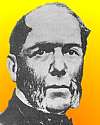
Born 2 May 1797; died 29 Apr 1864 at age 66.
Canadian chemist and geologist who pioneered the extraction of kerosene (which he named) by the dry distillation of asphalt rock. He realized the usefulness of this liquid (known as paraffin in England) as a cleaner-furning fuel in lamps to replace whale oil. He obtained several patents for his processes he invented. U.S. Patent Nos. 11,203-5 (issued 27 Jun 1854) described his process for obtaining kerosene from asphalt rock by heat distillation. His Patent No.12,612 (27 Mar 1855) was the first in the U.S. for a process to obtain oil for illumination from bituminous shale and cannel coal. He also invented a wood preservative, an asphalt highway paving process, compressed coal dust briquettes, and a machine for insulating electric wire.«
Canadian chemist and geologist who pioneered the extraction of kerosene (which he named) by the dry distillation of asphalt rock. He realized the usefulness of this liquid (known as paraffin in England) as a cleaner-furning fuel in lamps to replace whale oil. He obtained several patents for his processes he invented. U.S. Patent Nos. 11,203-5 (issued 27 Jun 1854) described his process for obtaining kerosene from asphalt rock by heat distillation. His Patent No.12,612 (27 Mar 1855) was the first in the U.S. for a process to obtain oil for illumination from bituminous shale and cannel coal. He also invented a wood preservative, an asphalt highway paving process, compressed coal dust briquettes, and a machine for insulating electric wire.«
Abraham Gesner, by Joyce Barkhouse. - book suggestion.
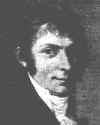
Born 2 May 1773; died 13 Feb 1845 at age 71.
Philosopher and physicist, who combined scientific ideas with German Idealist metaphysics. He was a professor of mineralogy at Halle in 1804 and professor of physics at Breslau in 1811. Though Steffens did much sound scientific work as a physicist, he had the fondness ofs a philosopher for using scientific fact as a basis for the construction of fanciful analogies and quite arbitrary metaphysical conclusions. His exposition of a philosophy of nature in Grundzüge der philosophischen Naturwissenschaft (1806; "Philosophical Characteristics of Natural Science") showed a typical combination of profound scientific knowledge and Schellingian speculation.
Philosopher and physicist, who combined scientific ideas with German Idealist metaphysics. He was a professor of mineralogy at Halle in 1804 and professor of physics at Breslau in 1811. Though Steffens did much sound scientific work as a physicist, he had the fondness ofs a philosopher for using scientific fact as a basis for the construction of fanciful analogies and quite arbitrary metaphysical conclusions. His exposition of a philosophy of nature in Grundzüge der philosophischen Naturwissenschaft (1806; "Philosophical Characteristics of Natural Science") showed a typical combination of profound scientific knowledge and Schellingian speculation.
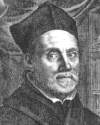
Born 2 May 1601; died 28 Nov 1680 at age 79.
German Jesuit priest and scholar, sometimes called the last Renaissance man. Kircher's prodigious research activity spanned a variety of disciplines including geography, astronomy, physics, mathematics, language, medicine, and music. He made an early, though unsuccessful attempt to decipher hieroglyphics of the Coptic language. During the pursuit of experimental knowledge, he once had himself lowered into the crater of Vesuvius to observe its features soon after an eruption. He made one of the first natural history collections. Kircher studied animal luminescence, writing two chapters of his book Ars Magna Lucis et Umbrae to bioluminescence, and debunked the idea that that an extract made from fireflies could be used to light houses.[DSB gives date of death 28 Nov 1680. EB gives 27 Nov 1680.]
German Jesuit priest and scholar, sometimes called the last Renaissance man. Kircher's prodigious research activity spanned a variety of disciplines including geography, astronomy, physics, mathematics, language, medicine, and music. He made an early, though unsuccessful attempt to decipher hieroglyphics of the Coptic language. During the pursuit of experimental knowledge, he once had himself lowered into the crater of Vesuvius to observe its features soon after an eruption. He made one of the first natural history collections. Kircher studied animal luminescence, writing two chapters of his book Ars Magna Lucis et Umbrae to bioluminescence, and debunked the idea that that an extract made from fireflies could be used to light houses.[DSB gives date of death 28 Nov 1680. EB gives 27 Nov 1680.]

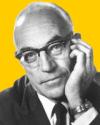
Died 2 May 1997 at age 94 (born 27 Jan 1903). quotes
John Carew Eccles was an Australian physiologist who shared, (with Alan Hodgkin and Andrew Huxley) the 1963 Nobel Prize for Physiology or Medicine for his discovery of the chemical means by which impulses are communicated or repressed by nerve cells. He also showed how signals pass between nerves and muscles. A nerve cell that is switched on by receiving a signal passes a chemical on to the next cell in line. This chemical expands minute openings in cell membranes, allowing ions to flood inside, reversing the electrical charge of the cell. This activity is repeated along the chain of cells, permitting transmission of the original impulse through the body. Eccles observed living cells in action by planting exceptionally tiny electrodes in them.
John Carew Eccles was an Australian physiologist who shared, (with Alan Hodgkin and Andrew Huxley) the 1963 Nobel Prize for Physiology or Medicine for his discovery of the chemical means by which impulses are communicated or repressed by nerve cells. He also showed how signals pass between nerves and muscles. A nerve cell that is switched on by receiving a signal passes a chemical on to the next cell in line. This chemical expands minute openings in cell membranes, allowing ions to flood inside, reversing the electrical charge of the cell. This activity is repeated along the chain of cells, permitting transmission of the original impulse through the body. Eccles observed living cells in action by planting exceptionally tiny electrodes in them.
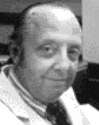
Died 2 May 1997 at age 84 (born 11 Jun 1912).
Canadian-born American cell biologist who developed techniques for electron microscope studies to determine the internal structure and organization of cells and tissues. As a graduate student at Harvard, he developed a method for nuclear transplantation in frog eggs. In 1945, he described the structure of the endoplasmic reticulum. In 1952-53, Porter with George Palade and Fritiof Stig Sjöstrand perfected thin sectioning and fixation methods for electron microscopy of intracellular structures, especially of mitochondria. He used scanning electron microscopy for visualizing the surfaces of cells and tissues and applied it both to tissue culture cells, and to organs and tissues that were dispersed by chemical or mechanical treatment.
Canadian-born American cell biologist who developed techniques for electron microscope studies to determine the internal structure and organization of cells and tissues. As a graduate student at Harvard, he developed a method for nuclear transplantation in frog eggs. In 1945, he described the structure of the endoplasmic reticulum. In 1952-53, Porter with George Palade and Fritiof Stig Sjöstrand perfected thin sectioning and fixation methods for electron microscopy of intracellular structures, especially of mitochondria. He used scanning electron microscopy for visualizing the surfaces of cells and tissues and applied it both to tissue culture cells, and to organs and tissues that were dispersed by chemical or mechanical treatment.
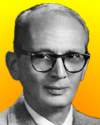
Died 2 May 1982 at age 82 (born 20 Aug 1899). quotes
Salomon Chaim Bochner was a Galician-American mathematician and educator who is remembered for his Bochner theorem of positive-definite functions and the Bochner integral. In the later development of abstract Fourier analysis, the Bochner theorem was basic to the theory of distributions. He started his academic career in Germany. In 1933, as a Jew, with the rise of the Nazism, he fled to the U.S., where he joined the faculty at Princeton. In addition to his life-long interest in harmonic analysis, in his prolific writings, Bochner also contributed significantly to complex analysis, differential geometry, probability and other pioneering work in pure mathematics. In his later years, he turned almost exclusively to the history and philosophy of science. His best-known book, The Role of Mathematics in the Rise of Science (1966), was translated into many languages.«
Salomon Chaim Bochner was a Galician-American mathematician and educator who is remembered for his Bochner theorem of positive-definite functions and the Bochner integral. In the later development of abstract Fourier analysis, the Bochner theorem was basic to the theory of distributions. He started his academic career in Germany. In 1933, as a Jew, with the rise of the Nazism, he fled to the U.S., where he joined the faculty at Princeton. In addition to his life-long interest in harmonic analysis, in his prolific writings, Bochner also contributed significantly to complex analysis, differential geometry, probability and other pioneering work in pure mathematics. In his later years, he turned almost exclusively to the history and philosophy of science. His best-known book, The Role of Mathematics in the Rise of Science (1966), was translated into many languages.«
The Role of Mathematics in the Rise of Science, by Salomon Bochner. - book suggestion.
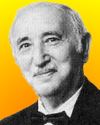
Died 2 May 1981 at age 85 (born 12 Jan 1896).
U.S. psychologist and inventor of several widely used intelligence tests for adults and children. During WW I, while assisting Edwin Garrigues Boring (1886-1968) in testing army recruits, Wechsler realized the inadequacies of the Army Alpha Tests (designed to measure abilities of conscripts and match them to suitable military jobs). He concluded that academically defined "intelligence" did not apply to "real life" situations. After leaving the military and more years of research, he developed the Wechsler Adult Intelligence Scale, and introduced deviation scores in intelligence tests. He developed the Wechsler Memory Scale in 1945, Wechsler Intelligence Scale for Children (1949), and Wechsler Preschool and Primary Scale of Intelligence (1967).
U.S. psychologist and inventor of several widely used intelligence tests for adults and children. During WW I, while assisting Edwin Garrigues Boring (1886-1968) in testing army recruits, Wechsler realized the inadequacies of the Army Alpha Tests (designed to measure abilities of conscripts and match them to suitable military jobs). He concluded that academically defined "intelligence" did not apply to "real life" situations. After leaving the military and more years of research, he developed the Wechsler Adult Intelligence Scale, and introduced deviation scores in intelligence tests. He developed the Wechsler Memory Scale in 1945, Wechsler Intelligence Scale for Children (1949), and Wechsler Preschool and Primary Scale of Intelligence (1967).
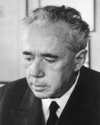
Died 2 May 1979 at age 76 (born 26 Feb 1903).
Italian chemist who contributed to the development of high polymers useful in the manufacture of films, plastics, fibres, and synthetic rubber. Along with Karl Ziegler of Germany, he was honoured in 1963 with the Nobel Prize for Chemistry for the development of Ziegler-Natta catalysts. Natta found that certain types of Ziegler catalysts lead to macromolecules with a spatially uniform structure, called isotactic chains. Whereas ordinary hydrocarbon chains are zigzaged, isotactic chains form helices with the side groups pointing outwards. Such polymers give rise to novel synthetic products. Examples are light but strong fabrics, and ropes which float on the water.
Italian chemist who contributed to the development of high polymers useful in the manufacture of films, plastics, fibres, and synthetic rubber. Along with Karl Ziegler of Germany, he was honoured in 1963 with the Nobel Prize for Chemistry for the development of Ziegler-Natta catalysts. Natta found that certain types of Ziegler catalysts lead to macromolecules with a spatially uniform structure, called isotactic chains. Whereas ordinary hydrocarbon chains are zigzaged, isotactic chains form helices with the side groups pointing outwards. Such polymers give rise to novel synthetic products. Examples are light but strong fabrics, and ropes which float on the water.
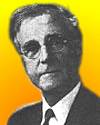
Died 2 May 1958 at age 85 (born 19 Feb 1873).
American anthropologist who is recognized as the greatest authority upon ethnology, including the development of languages and civilization among men. He was a prolific writer, publishing many books pertaining to the languages, myths, religious beliefs and social conditions of numerous tribes of North American Indians. He pioneered ethnohistorical research techniques while working for the Bureau of American Ethnology 1900-44. In addition to his firsthand knowledge from fieldwork, he consulted the documents of French, Spanish, and British explorers to assemble information on the native cultures of the American Southeast so that he was able to describe extinct societies never seen by an anthropologist.«
American anthropologist who is recognized as the greatest authority upon ethnology, including the development of languages and civilization among men. He was a prolific writer, publishing many books pertaining to the languages, myths, religious beliefs and social conditions of numerous tribes of North American Indians. He pioneered ethnohistorical research techniques while working for the Bureau of American Ethnology 1900-44. In addition to his firsthand knowledge from fieldwork, he consulted the documents of French, Spanish, and British explorers to assemble information on the native cultures of the American Southeast so that he was able to describe extinct societies never seen by an anthropologist.«
The Indian Tribes of North America, by John Reed Swanton. - book suggestion.
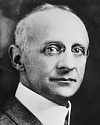
Died 2 May 1946 at age 83 (born 25 Mar 1863). quotes
American pathologist and bacteriologist who isolated (1899) a common strain (Shigella dysenteriae) of dysentery bacillus and developed a curative serum for cerebrospinal meningitis (1907). He directed a research team that identified the poliomyelitis virus. At the Rockefeller Institute of Medical Research, he was director of laboratories (1903-35), and director of the Institute (1920-35). For thirty-five years he cultivated the spirit and guided the work of the institute, while implementing John D. Rockefeller's vision of bringing medicine into the realm of science.
American pathologist and bacteriologist who isolated (1899) a common strain (Shigella dysenteriae) of dysentery bacillus and developed a curative serum for cerebrospinal meningitis (1907). He directed a research team that identified the poliomyelitis virus. At the Rockefeller Institute of Medical Research, he was director of laboratories (1903-35), and director of the Institute (1920-35). For thirty-five years he cultivated the spirit and guided the work of the institute, while implementing John D. Rockefeller's vision of bringing medicine into the realm of science.
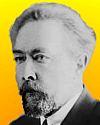
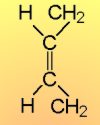
Russian chemist who developed a method for industrial production of synthetic rubber. In 1910, while researching processes by which small molecules combine to form large ones, Lebedev made an elastic rubber by polymerizing butadiene (CH2CH-CHCH2), which he obtained from ethyl alcohol. Production of polybutadiene in the Soviet Union using Lebedev's process was begun in 1932-33, using potatoes and limestone as raw materials. By 1940 the Soviet Union had the largest synthetic rubber industry in the world, producing more than 50,000 tons per year. During WW II his process of obtaining butadiene from ethyl alcohol was also used by the German rubber industry.[Image right: butadiene]
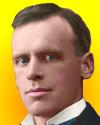
Died 2 May 1927 at age 61 (born 17 Apr 1866). quotes
English physiologist whose prolific contributions to a modern understanding of body functions include Starling’s hypothesis (in which he described the forces that propel fluids through blood vessels) and his discovery of how hormones and nerves control digestion. He coined the term hormone for the body’s chemical messengers from the endocrine glands (1905). His “law of the heart” stated the strength of the heart contraction is proportional to the stretching of the heart muscle. He discovered the functional significance of serum proteins. In 1902 along with William Bayliss he demonstrated that secretin stimulates pancreatic secretion. In 1924, along with Ernest B. Verney, he demonstrated the reabsorption of water by the tubules of the kidney.
English physiologist whose prolific contributions to a modern understanding of body functions include Starling’s hypothesis (in which he described the forces that propel fluids through blood vessels) and his discovery of how hormones and nerves control digestion. He coined the term hormone for the body’s chemical messengers from the endocrine glands (1905). His “law of the heart” stated the strength of the heart contraction is proportional to the stretching of the heart muscle. He discovered the functional significance of serum proteins. In 1902 along with William Bayliss he demonstrated that secretin stimulates pancreatic secretion. In 1924, along with Ernest B. Verney, he demonstrated the reabsorption of water by the tubules of the kidney.
Principles of Human Physiology, by Ernest Henry Starling. - book suggestion.
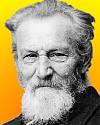
Died 2 May 1925 at age 76 (born 6 Dec 1848).
Austrian astronomer who was a prolific discoverer of asteroids, 122 in all, beginning with Asteroid 136 Austria (on 18 Mar 1874, using a 6" refractor) to Asteroid 1073 Gellivara in 1923 - all by visual observation, without the aid of photography. In 1883, he joined the expedition of the French academy to observe the total solar eclipse on May 6 of that year. During the eclipse, he searched for the putative planet Vulcan, which was supposed to circle the sun within the orbit of Mercury. In addition to observing the eclipse, Palisa collected insects for the Natural History Museum in Vienna. He also prepared two catalogs containing the positions of almost 4,700 stars. He remains the most successful visual discoverer in the history of minor planet research.«
Austrian astronomer who was a prolific discoverer of asteroids, 122 in all, beginning with Asteroid 136 Austria (on 18 Mar 1874, using a 6" refractor) to Asteroid 1073 Gellivara in 1923 - all by visual observation, without the aid of photography. In 1883, he joined the expedition of the French academy to observe the total solar eclipse on May 6 of that year. During the eclipse, he searched for the putative planet Vulcan, which was supposed to circle the sun within the orbit of Mercury. In addition to observing the eclipse, Palisa collected insects for the Natural History Museum in Vienna. He also prepared two catalogs containing the positions of almost 4,700 stars. He remains the most successful visual discoverer in the history of minor planet research.«
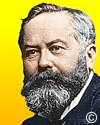
Died 2 May 1908 at age 57 (born 12 Mar 1851).
Charles Edouard Chamberland was a French bacteriologist who developed the first pressure steam sterilizer, called Chamberland’s autoclave. When Henry Bastian (who believed in spontaneous generation) disputed Louis Pasteur’s claim that boiling killed all bacteria, Pasteur asked Chamberland, then his assistant, to study sterilization. Chamberland found there were some heat-resistant spores and killing them required maintaining 115ºC for twenty minutes. This work led to new methods for sterilization and the autoclave that became an indispensable tool in hospitals. He also devised a filtration process to purify liquids with porous unglazed porcelain, used in city water works. In 1888, he became the director supervising the department of the Pasteur Institute which prepared vaccines (from 1888). With Jouan, he studied Pasurella microorganisms.«
Charles Edouard Chamberland was a French bacteriologist who developed the first pressure steam sterilizer, called Chamberland’s autoclave. When Henry Bastian (who believed in spontaneous generation) disputed Louis Pasteur’s claim that boiling killed all bacteria, Pasteur asked Chamberland, then his assistant, to study sterilization. Chamberland found there were some heat-resistant spores and killing them required maintaining 115ºC for twenty minutes. This work led to new methods for sterilization and the autoclave that became an indispensable tool in hospitals. He also devised a filtration process to purify liquids with porous unglazed porcelain, used in city water works. In 1888, he became the director supervising the department of the Pasteur Institute which prepared vaccines (from 1888). With Jouan, he studied Pasurella microorganisms.«
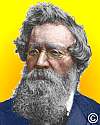
Died 2 May 1892 at age 74 (born 8 Apr 1818). quotes
German chemist whose research on aniline, with that of his former student Sir William Henry Perkin, helped lay the basis of the aniline-dye industry. He was the first to prepare rosaniline and its derivatives and researched many other compounds, including the discovery formaldehyde. In the field of organic chemistry, Hofmann is best known for his studies of the organic derivatives of ammonia and phosphine and for his subsequent discovery of the Hofmann degradation reaction. He also developed the Hofmann method of finding the vapor densities, and from these the molecular weights, of liquids. He also helped to popularize the concept of valence (the word comes from his term quantivalence). He founded the German Chemical Society.
German chemist whose research on aniline, with that of his former student Sir William Henry Perkin, helped lay the basis of the aniline-dye industry. He was the first to prepare rosaniline and its derivatives and researched many other compounds, including the discovery formaldehyde. In the field of organic chemistry, Hofmann is best known for his studies of the organic derivatives of ammonia and phosphine and for his subsequent discovery of the Hofmann degradation reaction. He also developed the Hofmann method of finding the vapor densities, and from these the molecular weights, of liquids. He also helped to popularize the concept of valence (the word comes from his term quantivalence). He founded the German Chemical Society.
The Chemistry of Vat Dyes, by Dianne N. Epp. - book suggestion.
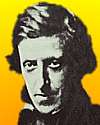
Died 2 May 1857 (born 1813).
English inventor of the wet-collodian process, the first practical photographic process which enabled making additional copies of a picture, that was used from 1851 until about 1880. While serving as a silversmith’s apprentice, he transferred his interest from sculpture and coin design to seeking an improve photographic process. By 1848, he had discovered that collodion, a solution of gun-cotton in ether, could make plates superior to either Henry Talbot’s calotype or the daguerrotype. Although sensitivity required fresh preparation and use while still moist, this new “wet plate” photography was favoured for three decades. Having never patented his process, Archer made no commercial gain for his process, and was in poverty when he died.«
English inventor of the wet-collodian process, the first practical photographic process which enabled making additional copies of a picture, that was used from 1851 until about 1880. While serving as a silversmith’s apprentice, he transferred his interest from sculpture and coin design to seeking an improve photographic process. By 1848, he had discovered that collodion, a solution of gun-cotton in ether, could make plates superior to either Henry Talbot’s calotype or the daguerrotype. Although sensitivity required fresh preparation and use while still moist, this new “wet plate” photography was favoured for three decades. Having never patented his process, Archer made no commercial gain for his process, and was in poverty when he died.«
Photography: Essays & Images; Illustrated Readings in the History of Photography, by Beaumont Newhall (ed.). - book suggestion.
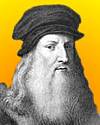
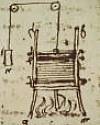
Italian painter, sculptor, draftsman, physicist, engineer and architect who was also a ingenious inventor. DaVinci designed buildings, bridges, canals, forts and war machines. His ideas have been preserved in his huge notebooks with sketches of his insights. Among these, he was fascinated by birds and flying so his sketches include such fantastic designs as flying machines. These drawings demonstrate a genius for mechanical invention. DaVinci’s understanding of scientific inquiry was truly centuries ahead of its time. His greater fame lies in being one of the greatest painters of all times, best known for such paintings as the Mona Lisa and The Last Supper.«[Image: Codex Leicester]
The Science of Leonardo: Inside the Mind of the Great Genius of the Renaissance, by Fritjof Capra. - book suggestion.
In 1941, the commercial operation of television broadcasting stations in the United States was authorized by an order issued by the U.S. Federal Communications Commission. The effective day to begin commercial broadcasting was announced as 1 Jul 1941.«text = 69.195.158.203/Archive-RCA-Review/Pioneering-in-Television-RCA-1946.pdf
Patent diagram
In 1892, an industrial method for the production of calcium carbide was discovered by Thomas L. Wilson. He and business partner John Motley Morehead III, had an electric arc furnace, built of brick with a coal floor, at Spray, North Carolina. Willson was attempting to produce metallic calcium from coal tar and burnt chalk (lime) in the furnace with which he hoped to reduce aluminium oxide to produce aluminium, the goal of their business. Instead, by chance, he found a hard crystalline solid, which gave off a gas when dropped in water. The gas burned with a bright, smoky flame. A sample was tested by Dr. Venable, Morehead's chemistry professor. He identified the calcium carbide and acetylene gas. This discovery eventually led to the formation of Union Carbide Company, which Morehead cofounded.«
In 1887, an application was dated for the first U.S. patent for celluloid photographic film, submitted by the Reverend Hannibal Williston Goodwin desribing his invention of "nitro cellulose transparent flexible photographic film pellicles." The patent was issued 13 Sep 1898 (No. 610,861). He made a sale of one roll at $2.50 to Thomas Alva Edison on 2 Sep 1889.

SteamshipThm.jpg)
/Nicholson_William(1795-1815)Thm.jpg "Electrolysis of water")
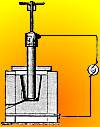
In 1800, English chemist William Nicholson was the first to produce a chemical reaction by electricity. He had been working with Anthony Carlisle, a London surgeon, experimenting with Allesandro Volta's voltaic pile. The new effect was discovered when wires from the poles of the battery being used came into contact with water and bubbles of gas were released as current flowed through the water. Closer examination of the electrolysis showed oxygen was released at the (positive) anode, and hydrogen appeared at the cathode. Electricity had separated the molecules of water. Further, the effect of the amount of hydrogen and oxygen set free by the current was proportional to the amount of current used.«
Franklin
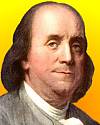
In 1775, Benjamin Franklin completed the first scientific study of the Gulf Stream. His observations began in 1769 when as deputy postmaster of the British Colonies he found ships took two weeks longer to bring mail from England than was required in the opposite direction. Thus, Franklin became the first to chart the Gulf Stream.
Benjamin Franklin: An American Life, by Walter Isaacson. - book suggestion.





