Born 21 May 1955. quotes
American ethnobotanist.
American ethnobotanist.
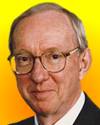
Born 21 May 1934. quotes
Bengt Ingemar Samuelssohn is a Swedish biochemist who shared the 1982 Nobel Prize for Physiology or Medicine with fellow Swede Sune K. Bergström and Englishman John Robert Vane for “their discoveries concerning prostaglandins and related biologically related substances.” They identified, isolated and analysed numerous examples. These are local tissue hormones that defend cells from sudden changes in such conditions as blood pressure, body temperature, allergic reactions, and other physiological phenomena in mammals. From 1965, Samuelsson was credited as the leading scientist in the biochemistry of prostaglandins and for the current knowledge of the prostaglandin tree with all its branches.«
Bengt Ingemar Samuelssohn is a Swedish biochemist who shared the 1982 Nobel Prize for Physiology or Medicine with fellow Swede Sune K. Bergström and Englishman John Robert Vane for “their discoveries concerning prostaglandins and related biologically related substances.” They identified, isolated and analysed numerous examples. These are local tissue hormones that defend cells from sudden changes in such conditions as blood pressure, body temperature, allergic reactions, and other physiological phenomena in mammals. From 1965, Samuelsson was credited as the leading scientist in the biochemistry of prostaglandins and for the current knowledge of the prostaglandin tree with all its branches.«
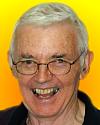
Born 21 May 1929; died 11 Mar 2011 at age 81. quotes
American evolutionary biologist who was a professor of molecular evolution at the University of California. He pioneered in the reconstruction of evolutionary trees (phylogenetic trees) from protein and DNA sequences. He co-authored “Construction of phylogenetic trees” which was published in Science (1967). He was the first president of the Society for Molecular Biology and Evolution and the founding editor-in-chief of its journal Molecular Biology and Evolution. As a long-time member of the National Center for Science Education, he staunchly promoted the teaching of evolution, and vigorously debated the fallacies of Creationism. At the time of his death, he was finishing a book on the creationism/evolution controversy.«
American evolutionary biologist who was a professor of molecular evolution at the University of California. He pioneered in the reconstruction of evolutionary trees (phylogenetic trees) from protein and DNA sequences. He co-authored “Construction of phylogenetic trees” which was published in Science (1967). He was the first president of the Society for Molecular Biology and Evolution and the founding editor-in-chief of its journal Molecular Biology and Evolution. As a long-time member of the National Center for Science Education, he staunchly promoted the teaching of evolution, and vigorously debated the fallacies of Creationism. At the time of his death, he was finishing a book on the creationism/evolution controversy.«
The Three Failures of Creationism: Logic, Rhetoric, and Science, by Walter M. Fitch. - book suggestion.
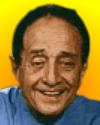
Born 21 May 1922; died 13 Jun 2003 at age 81.
American surgeon, a pioneer of modern immunology who performed the world's first successful human bone marrow transplant (1968) from his sister to a 4-month-old baby boy with an inherited immune disorder. From age 6, Good wished to become a doctor because his father died of cancer. While a junior undergraduate he suffered but recovered from a poliolike disease. He identified the thymus and the tonsils as crucial organs of the immune system in humans. He helped establish that problems with the body's immune response were more common than had been thought and were actually a frequent basis of serious diseases. His research also led to the identification of T-cells and B-cells. In 1987 he helped establish the National Bone Marrow Registry.«
American surgeon, a pioneer of modern immunology who performed the world's first successful human bone marrow transplant (1968) from his sister to a 4-month-old baby boy with an inherited immune disorder. From age 6, Good wished to become a doctor because his father died of cancer. While a junior undergraduate he suffered but recovered from a poliolike disease. He identified the thymus and the tonsils as crucial organs of the immune system in humans. He helped establish that problems with the body's immune response were more common than had been thought and were actually a frequent basis of serious diseases. His research also led to the identification of T-cells and B-cells. In 1987 he helped establish the National Bone Marrow Registry.«
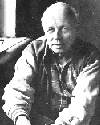
Born 21 May 1921; died 14 Dec 1989 at age 68. quotes
Soviet nuclear physicist, an outspoken advocate of human rights in the Soviet Union. At the end of World War II, Sakharov returned to pure science and the study of cosmic rays. Two years later, he began work with a secret research group on the development of the hydrogen bomb, and he is believed to have been principally responsible for the Soviets' success in exploding their first thermonuclear bomb (1954). With I.E. Tamm, he proposed controlled thermonuclear fusion by confining an extremely hot ionized plasma in a torus-shaped magnetic bottle, known as a tokamak device. He became politically more active in the 1960s, campaigned against nuclear proliferation, and from 1980 to 1986, he was banished from Moscow to Gorky, and kept under police surveillance.
Soviet nuclear physicist, an outspoken advocate of human rights in the Soviet Union. At the end of World War II, Sakharov returned to pure science and the study of cosmic rays. Two years later, he began work with a secret research group on the development of the hydrogen bomb, and he is believed to have been principally responsible for the Soviets' success in exploding their first thermonuclear bomb (1954). With I.E. Tamm, he proposed controlled thermonuclear fusion by confining an extremely hot ionized plasma in a torus-shaped magnetic bottle, known as a tokamak device. He became politically more active in the 1960s, campaigned against nuclear proliferation, and from 1980 to 1986, he was banished from Moscow to Gorky, and kept under police surveillance.
The World of Andrei Sakharov: A Russian Physicist's Path to Freedom, by Gennady Gorelik and Antonina W. Bouis. - book suggestion.
Born 21 May 1902; died 15 Oct 1968 at age 66.
Herbert Faulkner Copeland was an American biologist who delineated four biological kingdoms, instead of just two for plants and animals. A decade after Darwin's Origin of Species, Ernst Haekel had proposed (1866) adding a kingdom, Protista, for microorganisms, but it wasn't accepted. Copeland further discriminated among the microorganisms in a paper in 1938, splitting them into two kingdoms: Monera and Protista. Copeland identified Monera as organisms without nuclei, and Protista as being largely unicellular, with nuclei. By 1956, he published a book, The Classification of Lower Organisms, still trying “to pursuade the community of biologists” to adopt these four kingdoms. Change came slowly, and continues beyond Copeland's ideas to now five or six. He was the son of botanist Edwin B. Copeland, from whom he learned the principles of classification.«
Herbert Faulkner Copeland was an American biologist who delineated four biological kingdoms, instead of just two for plants and animals. A decade after Darwin's Origin of Species, Ernst Haekel had proposed (1866) adding a kingdom, Protista, for microorganisms, but it wasn't accepted. Copeland further discriminated among the microorganisms in a paper in 1938, splitting them into two kingdoms: Monera and Protista. Copeland identified Monera as organisms without nuclei, and Protista as being largely unicellular, with nuclei. By 1956, he published a book, The Classification of Lower Organisms, still trying “to pursuade the community of biologists” to adopt these four kingdoms. Change came slowly, and continues beyond Copeland's ideas to now five or six. He was the son of botanist Edwin B. Copeland, from whom he learned the principles of classification.«
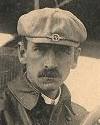
Born 21 May 1878; died 23 Jul 1930 at age 52.
Glenn Hammond Curtiss was an American aircraft manufacturer who was a pioneer in the development of U.S. aviation. His aircraft were widely used during World War I. That the brother Orville and Wilbur Wright made the first powered flights has generally been accepted, but the achievements of Curtiss spanned several decades and took the airplane from its wood, fabric and wire beginnings to the forerunners of modern transport aircraft. Curtiss made his first flight on his 30th birthday, 21 May 1908, in White Wing, a design of the Aerial Experiment Association, a group led by Alexander Graham Bell. White Wing was the first plane in America to be controlled by ailerons instead of the wing-warping used by the Wrights. It was also the first plane on wheels in the U.S.
Glenn Hammond Curtiss was an American aircraft manufacturer who was a pioneer in the development of U.S. aviation. His aircraft were widely used during World War I. That the brother Orville and Wilbur Wright made the first powered flights has generally been accepted, but the achievements of Curtiss spanned several decades and took the airplane from its wood, fabric and wire beginnings to the forerunners of modern transport aircraft. Curtiss made his first flight on his 30th birthday, 21 May 1908, in White Wing, a design of the Aerial Experiment Association, a group led by Alexander Graham Bell. White Wing was the first plane in America to be controlled by ailerons instead of the wing-warping used by the Wrights. It was also the first plane on wheels in the U.S.
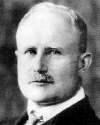
Born 21 May 1873; died 1 Jun 1941 at age 68.
German psychiatrist who recorded the first human electroencephalogram (EEG). In 1929, he devised a system of electrodes which he attached to his son's skull, and connected to an oscillograph. This gave a recording of brain waves - the rhythmic changes in electric potentials. The most prominent of these rhythms he labelled "alpha waves" and "beta waves."
German psychiatrist who recorded the first human electroencephalogram (EEG). In 1929, he devised a system of electrodes which he attached to his son's skull, and connected to an oscillograph. This gave a recording of brain waves - the rhythmic changes in electric potentials. The most prominent of these rhythms he labelled "alpha waves" and "beta waves."

1914
William Coffin Coleman was an American inventor and industrialist widely known for his Coleman lantern, camping stoves and other camping equipment, manufactured by the Coleman Company that he founded. He introduced the first outdoor, all-weather gasoline-fuel lantern in 1914. It was advertised as shining with 300 candlepower, useful in barns, feed-lots or cellars. During World War I, over a million lamps were supplied, with U.S. government financial help, to farmers working well into the night to maintain the food supply. He then introduced a short-lived product line including gasoline powered appliances such as toasters, coffee percolators and clothes irons. Coleman stoves became army issue for World War II. By the time of his death, his company employed more than 2,500 people.«
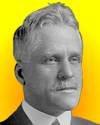
Born 21 May 1866; died 19 Apr 1952 at age 85.
Edward Charles Jeffrey was a Canadian-American botanist who, having received his Ph.D. in botany (1899) from Harvard University, he joined the faculty in 1902, He taught plant morphology and worked on the evolutionary history and sequence in geological time (phylogeny) of vascular plants, noting also their relationships to each another. To this goal he was profoundly influenced by Darwin’s theory of evolution, which he vigorously defended. To assist his microscopic studies, he developed technical methods to slice sufficiently thin sections of wood and fossilized remains. He wrote several books, including The Anatomy of Woody Plants (1917) and Coal and Civilization (1925). In his early life, he lectured in botany at Toronto (1892-1902).
Edward Charles Jeffrey was a Canadian-American botanist who, having received his Ph.D. in botany (1899) from Harvard University, he joined the faculty in 1902, He taught plant morphology and worked on the evolutionary history and sequence in geological time (phylogeny) of vascular plants, noting also their relationships to each another. To this goal he was profoundly influenced by Darwin’s theory of evolution, which he vigorously defended. To assist his microscopic studies, he developed technical methods to slice sufficiently thin sections of wood and fossilized remains. He wrote several books, including The Anatomy of Woody Plants (1917) and Coal and Civilization (1925). In his early life, he lectured in botany at Toronto (1892-1902).
The Anatomy of Woody Plants, by Edward C. Jeffrey. - book suggestion.
Born 21 May 1860; died 28 Sep 1927 at age 67.
Dutch physiologist who introduced a new era in the diagnosis and treatment of diseases of the heart with his invention of the electrocardiograph, for which he was awarded the 1924 Nobel Prize for Physiology or Medicine. This device became an essential clinical instrument for displaying the electrical properties of the heart, and especially useful in the diagnosis of heart disease.«[DSB gives day of death as 28 Sep 1927. EB gives 29 Sep 1927.]
Dutch physiologist who introduced a new era in the diagnosis and treatment of diseases of the heart with his invention of the electrocardiograph, for which he was awarded the 1924 Nobel Prize for Physiology or Medicine. This device became an essential clinical instrument for displaying the electrical properties of the heart, and especially useful in the diagnosis of heart disease.«[DSB gives day of death as 28 Sep 1927. EB gives 29 Sep 1927.]
Willem Einthoven: Father of Electrocardiography: Life and Work..., by H.A. Snellen. - book suggestion.
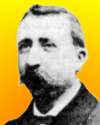
Born 21 May 1858; died 25 Nov 1936 at age 78.
French mathematician and theorist whose contribution to the theory of functions, pseudo- and hyperelliptic integrals, and differential equations influenced the French school of mathematics. The Cauchy-Goursat theorem states the integral of a function round a simple closed contour is zero if the function is analytic inside the contour. Cauchy had established the theorem with the added condition that the derivative of the function was continuous. In 1891, he wrote Leçons sur l'intégration des équations aux dérivées partielles du premier ordre. Goursat's best known work is Cours d'analyse mathématique (1900-10) which introduced many new analysis concepts.
French mathematician and theorist whose contribution to the theory of functions, pseudo- and hyperelliptic integrals, and differential equations influenced the French school of mathematics. The Cauchy-Goursat theorem states the integral of a function round a simple closed contour is zero if the function is analytic inside the contour. Cauchy had established the theorem with the added condition that the derivative of the function was continuous. In 1891, he wrote Leçons sur l'intégration des équations aux dérivées partielles du premier ordre. Goursat's best known work is Cours d'analyse mathématique (1900-10) which introduced many new analysis concepts.
Born 21 May 1850; died 31 Jul 1935 at age 85.
Austrian-born American civil engineer known for designing Hell Gate Bridge across New York City's East River.
Austrian-born American civil engineer known for designing Hell Gate Bridge across New York City's East River.
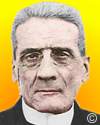
Born 21 May 1850; died 19 Mar 1914 at age 63. quotes
Italian volcanologist, seismologist and clergyman who devised the Mercalli Intensity Scale (1902), as an improvement of the Rossi-Forel Scale. He was ordained as a Roman catholic priest and later became a professor at the seminary of Milan. The intensity on Mercalli's scale is and estimate based on the observations of persons that experienced the earthquake. Using Roman numerals, it ranges from I for imperceptible shaking to XII for catastrophic destruction of structures. The revision produced in 1931 by American seismologists, Harry Wood and Frank Neumann, is known as the Modified Mercalli Intensity Scale, now in use. Whereas “magnitude,” as on the Richter Scale, ranks an earthquake by the energy released at the source, “intensity” describes the local effects as experienced by observers at any given location from the epicenter.«
Italian volcanologist, seismologist and clergyman who devised the Mercalli Intensity Scale (1902), as an improvement of the Rossi-Forel Scale. He was ordained as a Roman catholic priest and later became a professor at the seminary of Milan. The intensity on Mercalli's scale is and estimate based on the observations of persons that experienced the earthquake. Using Roman numerals, it ranges from I for imperceptible shaking to XII for catastrophic destruction of structures. The revision produced in 1931 by American seismologists, Harry Wood and Frank Neumann, is known as the Modified Mercalli Intensity Scale, now in use. Whereas “magnitude,” as on the Richter Scale, ranks an earthquake by the energy released at the source, “intensity” describes the local effects as experienced by observers at any given location from the epicenter.«
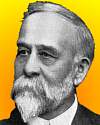
Born 21 May 1845; died 25 Feb 1915 at age 69.
American botanist who created the first U.S. undergraduate botanical experimental laboratory at Iowa State University, where he held several positions (1870-84) and inaugurated the systematic study of plant morphology in the U.S. He devised a classification of angiosperm (flowering plant) taxa based on Candolle's theory of differentiation to emphasize the evolutionary divergence of primitive forms. He moved to become Dean of Agriculture at the University of Nebraska (1884-1915). While in Nebraska, he started a tree planting experiment (1902) that initiated the Nebraska National Forest, the first man-made national forest in the world. He helped influence federal legislation to preserve the giant sequoia trees in California.«
American botanist who created the first U.S. undergraduate botanical experimental laboratory at Iowa State University, where he held several positions (1870-84) and inaugurated the systematic study of plant morphology in the U.S. He devised a classification of angiosperm (flowering plant) taxa based on Candolle's theory of differentiation to emphasize the evolutionary divergence of primitive forms. He moved to become Dean of Agriculture at the University of Nebraska (1884-1915). While in Nebraska, he started a tree planting experiment (1902) that initiated the Nebraska National Forest, the first man-made national forest in the world. He helped influence federal legislation to preserve the giant sequoia trees in California.«
Science With Practice: Charles E. Bessey and the Maturing of American Botany, by Richard A. Overfield. - book suggestion.
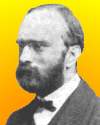
Born 21 May 1839; died 10 Nov 1914 at age 75.
Swedish astronomer who studied the rotational period of the Sun. Although his PhD thesis had been theoretical (the orbit of asteroid Panopea), Dunér mostly worked as an observer. The most outstanding observing astronomer in Swedish 19th century astronomy, he is mostly known for his introduction of new astrophysical techniques. In 1867-75, he made 2679 micrometer measurements of 445 double and multiple stars. After publishing his catalogue of double star measurements in 1876, Dunér turned to spectroscopy, at first specializing in the spectra of red stars. Later, by measuring the Doppler shift of the spectral lines of light from the approaching and receding edges of the sun, he made the significant discovery that the rotational period differs from about 25.5 days near the Sun's equator but up to 38.5 days near the Sun's poles. His career spanned over almost 50 years, from classical astronomy to astrophysics.
Swedish astronomer who studied the rotational period of the Sun. Although his PhD thesis had been theoretical (the orbit of asteroid Panopea), Dunér mostly worked as an observer. The most outstanding observing astronomer in Swedish 19th century astronomy, he is mostly known for his introduction of new astrophysical techniques. In 1867-75, he made 2679 micrometer measurements of 445 double and multiple stars. After publishing his catalogue of double star measurements in 1876, Dunér turned to spectroscopy, at first specializing in the spectra of red stars. Later, by measuring the Doppler shift of the spectral lines of light from the approaching and receding edges of the sun, he made the significant discovery that the rotational period differs from about 25.5 days near the Sun's equator but up to 38.5 days near the Sun's poles. His career spanned over almost 50 years, from classical astronomy to astrophysics.
Born 21 May 1818; died 29 May 1898 at age 80. quotes
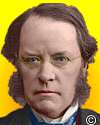
Lyon Playfair, 1st Baron Playfair of St Andrew was a Scottish chemist who studied medicine in Scotland, then turned to chemistry as an ardent student under Justus von Liebig in Gliessen (1839-41). He became a professor of chemistry, took interested in agricultural chemistry, and joined the movement for sanitation reform. For the Great Exhibition of 1851, he was Prince Albert’s chief advisor. By 1867, he ended his academic career to work in politics, was elected a Member of Parliament, led scientific committees, and held various government positions, including Postmaster-General. He promoted science education and urged industry to take up scientific advances. Playfair remained active in scientific societies, and was President of the British Association (1885).« more
Lyon Playfair, 1st Baron Playfair of St Andrew was a Scottish chemist who studied medicine in Scotland, then turned to chemistry as an ardent student under Justus von Liebig in Gliessen (1839-41). He became a professor of chemistry, took interested in agricultural chemistry, and joined the movement for sanitation reform. For the Great Exhibition of 1851, he was Prince Albert’s chief advisor. By 1867, he ended his academic career to work in politics, was elected a Member of Parliament, led scientific committees, and held various government positions, including Postmaster-General. He promoted science education and urged industry to take up scientific advances. Playfair remained active in scientific societies, and was President of the British Association (1885).« more
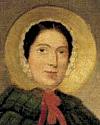
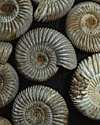
English fossil collector who made her first significant discovery at the age of 11 or 12 (sources differ on the details), when she found a complete skeleton of an Ichthyosaurus, from the Jurassic period. The ten-meter (30 feet) long skeleton created a sensation and made her famous. Anning's determination and keen scientific interest in fossils derived from her father's interest in fossil hunting, and a need for the income derived from them to support her family after his death. in 1810. She sold large fossils to noted paleontologists of the day, and smaller ones to the tourist trade. In 1823, Anning made another great discovery, found the first complete Plesiosaurus. Later in her life, the Geological Society of London granted Anning an honorary membership.
The Fossil Hunter: Dinosaurs, Evolution, and the Woman Whose Discoveries Changed the World, by Shelley Emling. - book suggestion.
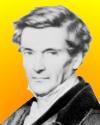
(EB)
Born 21 May 1792; died 19 Sep 1843 at age 51.
French engineer and mathematician who first described the Coriolis force, an effect of motion on a rotating body, of paramount importance to meteorology, ballistics, and oceanography. Whereas pressure differences tend to push winds in straight paths, winds follow curved paths across the Earth. In 1835, Coriolis first gave a mathematical description of the effect, giving his name to the Coriolis force. While air begins flowing from high to low pressure, the Earth rotates under it, thus making the wind appear to follow a curved path. In the Northern Hemisphere, the wind turns to the right of its direction of motion. In the Southern Hemisphere, it turns to the left. The Coriolis force is zero at the equator.
French engineer and mathematician who first described the Coriolis force, an effect of motion on a rotating body, of paramount importance to meteorology, ballistics, and oceanography. Whereas pressure differences tend to push winds in straight paths, winds follow curved paths across the Earth. In 1835, Coriolis first gave a mathematical description of the effect, giving his name to the Coriolis force. While air begins flowing from high to low pressure, the Earth rotates under it, thus making the wind appear to follow a curved path. In the Northern Hemisphere, the wind turns to the right of its direction of motion. In the Southern Hemisphere, it turns to the left. The Coriolis force is zero at the equator.
Born 21 May 1736; died 8 Mar 1803 at age 66.
(Earl) Founder of British inland navigation, whose canal, built from his estates at Worsley to the city of Manchester, is called the Bridgewater canal.
(Earl) Founder of British inland navigation, whose canal, built from his estates at Worsley to the city of Manchester, is called the Bridgewater canal.
Born 21 May 1471; died 6 Apr 1528 at age 56. quotes
German artist who published a book on geometric constructions (1535) using a straight-edge and compass. Although designed to enable artists better represent a natural three-dimensional scene on a canvas, Dürer included careful proofs to establish the validity of the constructions. In this respect, it could be regarded as the oldest surviving text on applied mathematics. He also wrote on the proportions of the human body.
German artist who published a book on geometric constructions (1535) using a straight-edge and compass. Although designed to enable artists better represent a natural three-dimensional scene on a canvas, Dürer included careful proofs to establish the validity of the constructions. In this respect, it could be regarded as the oldest surviving text on applied mathematics. He also wrote on the proportions of the human body.

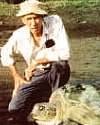
Died 21 May 1987 at age 77 (born 16 Jun 1909).
American biologist who was recognized as the foremost authority on turtles. He was most noted for his pioneering work in studying sea turtles. He classified 79 species and subspecies of turtles. Extensive work at Tortuguero and Ascension Island earned him the title of "Turtle Man." His work also dispelled the myths and folklore about turtles. From his extensive studies of migratory, nesting, mating, and nutritional habits of turtles he was able to locate the optimal areas for turtles to live and breed. His consistent effort for the conservation of turtles helped to increase their population throughout the world. Carr invented the "five dollar tag" to tag turtles. He published several hundred articles and for the Time Life Books series on natural history of Africa.
American biologist who was recognized as the foremost authority on turtles. He was most noted for his pioneering work in studying sea turtles. He classified 79 species and subspecies of turtles. Extensive work at Tortuguero and Ascension Island earned him the title of "Turtle Man." His work also dispelled the myths and folklore about turtles. From his extensive studies of migratory, nesting, mating, and nutritional habits of turtles he was able to locate the optimal areas for turtles to live and breed. His consistent effort for the conservation of turtles helped to increase their population throughout the world. Carr invented the "five dollar tag" to tag turtles. He published several hundred articles and for the Time Life Books series on natural history of Africa.
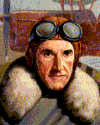
Died 21 May 1965 at age 82 (born 27 Jul 1882).
English aircraft designer, manufacturer, and pioneer in long-distance jet flying. In 1909, he constructed his first machine and through trial and error and taught himself to fly. Since then De Havilland has been carried aloft by more than fifty aircraft. Notable were the DH-2 fighter of World War I, and the DH-4 light bomber. He established the new De Havilland Company at Stag Lane near London in 1920, beginning the long line of DH commercial and sport aircraft. De Havilland's triumph in World War II was the Mosquito light bomber, the fastest aircraft of its time. In 1943, he was one of the first to make jet-propelled aircraft, producing the Vampire jet fighter. De Havilland led the world in entering the era of jet passenger flight with its first turbine powered aircraft, the Comet in 1949.
English aircraft designer, manufacturer, and pioneer in long-distance jet flying. In 1909, he constructed his first machine and through trial and error and taught himself to fly. Since then De Havilland has been carried aloft by more than fifty aircraft. Notable were the DH-2 fighter of World War I, and the DH-4 light bomber. He established the new De Havilland Company at Stag Lane near London in 1920, beginning the long line of DH commercial and sport aircraft. De Havilland's triumph in World War II was the Mosquito light bomber, the fastest aircraft of its time. In 1943, he was one of the first to make jet-propelled aircraft, producing the Vampire jet fighter. De Havilland led the world in entering the era of jet passenger flight with its first turbine powered aircraft, the Comet in 1949.
Died 21 May 1964 at age 81 (born 26 Aug 1882). quotes
German-American physicist who shared the Nobel Prize for Physics in 1925 with Gustav Hertz for research on the excitation and ionization of atoms by electron bombardment that verified the quantized nature of energy transfer.
German-American physicist who shared the Nobel Prize for Physics in 1925 with Gustav Hertz for research on the excitation and ionization of atoms by electron bombardment that verified the quantized nature of energy transfer.
Died 21 May 1935 at age 87 (born 16 Feb 1848). quotes
Dutch botanist and geneticist who introduced the experimental study of organic evolution. His rediscovery in 1900 (simultaneously with the botanists Carl Correns and Erich Tschermak von Seysenegg) of Gregor Mendel's principles of heredity and his theory of biological mutation, though considerably different from a modern understanding of the phenomenon, resolved ambiguous concepts concerning the nature of variation of species that, until then, had precluded the universal acceptance and active investigation of Charles Darwin's system of organic evolution.
Dutch botanist and geneticist who introduced the experimental study of organic evolution. His rediscovery in 1900 (simultaneously with the botanists Carl Correns and Erich Tschermak von Seysenegg) of Gregor Mendel's principles of heredity and his theory of biological mutation, though considerably different from a modern understanding of the phenomenon, resolved ambiguous concepts concerning the nature of variation of species that, until then, had precluded the universal acceptance and active investigation of Charles Darwin's system of organic evolution.
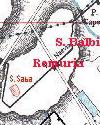
Died 21 May 1929 at age 82 (born 1 Jan 1847).
Rodolfo Amadeo Lanciani was an Italian archaeologist was, from 1878, a professor of ancient topology, the study of the spacial relationships of physical features in an archaeological site. In this, he was an expert for Ostia and Rome. In Forma Urbis Romae he published 46 plates of exquisitely detailed 1:1000 scale maps making a definitive atlas of ancient ruins, streets and structures of ancient and modern (c.1900) Rome coded in different colours. Though present Rome may be different, the maps retain information on ruins no longer visible to the normal visitor. Starting at age 20, Lancini was an assistant at the excavation of Trajan's harbour at Porto, which he carefully described (1868). Later, he was appointed by the University of Rome to head excavations (1875) and discovered many important antiquities at Rome, Tivoli, and Ostia.«[Sources differ on date of birth. EB gives 1 Jan 1947; WWWSci gives 1 Jan 1946.]
Rodolfo Amadeo Lanciani was an Italian archaeologist was, from 1878, a professor of ancient topology, the study of the spacial relationships of physical features in an archaeological site. In this, he was an expert for Ostia and Rome. In Forma Urbis Romae he published 46 plates of exquisitely detailed 1:1000 scale maps making a definitive atlas of ancient ruins, streets and structures of ancient and modern (c.1900) Rome coded in different colours. Though present Rome may be different, the maps retain information on ruins no longer visible to the normal visitor. Starting at age 20, Lancini was an assistant at the excavation of Trajan's harbour at Porto, which he carefully described (1868). Later, he was appointed by the University of Rome to head excavations (1875) and discovered many important antiquities at Rome, Tivoli, and Ostia.«[Sources differ on date of birth. EB gives 1 Jan 1947; WWWSci gives 1 Jan 1946.]
The Ruins and Excavations of Ancient Rome, by Rodolfo Lanciani. - book suggestion.
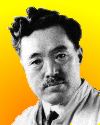
Died 21 May 1928 at age 51 (born 24 Nov 1876).
Japanese bacteriologist who was the first to obtain pure cultures of Trepanema pallidum, the spirochete that causes syphilis, which he found in the brains of persons who had died of paresis. He demonstrated the syphilitic origin of certain forms of general paralysis, developed one of the first tests to diagnose syphilis and proved that both Oroya fever and verruga peruana could be produced by Bartonella bacilliformis, now known to be different phases of Carrion's disease (bartonellosis). He found ways to cultivate microorganisms that had never before been grown in the test tube. Noguchi studied poliomyelitis, and trachoma and worked on a vaccine and serum for yellow fever. He died of yellow fever, while researching the disease in Africa.
Japanese bacteriologist who was the first to obtain pure cultures of Trepanema pallidum, the spirochete that causes syphilis, which he found in the brains of persons who had died of paresis. He demonstrated the syphilitic origin of certain forms of general paralysis, developed one of the first tests to diagnose syphilis and proved that both Oroya fever and verruga peruana could be produced by Bartonella bacilliformis, now known to be different phases of Carrion's disease (bartonellosis). He found ways to cultivate microorganisms that had never before been grown in the test tube. Noguchi studied poliomyelitis, and trachoma and worked on a vaccine and serum for yellow fever. He died of yellow fever, while researching the disease in Africa.
Noguchi and His Patrons, by Isabel Rosanoff Plesset. - book suggestion.
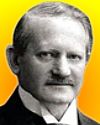
Died 21 May 1923 at age 62 (born 18 Jan 1861).
Johann (Hans) Wilhelm Goldschmidt was a German chemist who invented the thermite (alumino-thermic) process which was adopted worldwide for welding railroad and streetcar rails, and is still in use for on-site welding. The first track so welded was laid in Essen. This method evolved from his Goldschmidt reduction process that he began investigating in 1893 for the preparation of carbon-free metals. He used the reactions of oxides of certain metals with aluminum to yield aluminum oxide and the free metal. It has been applied to separate chromium, manganese, and cobalt from their oxide ores. Goldschmidt was also a co-inventor of sodium amalgam. His father, Theodor Goldschmidt, founded Chemische Fabrik Th. Goldschmidt which became the modern company, Degussa.«[Date of death corrected from 25 May (EB) to 21 May given in journals.] more
Johann (Hans) Wilhelm Goldschmidt was a German chemist who invented the thermite (alumino-thermic) process which was adopted worldwide for welding railroad and streetcar rails, and is still in use for on-site welding. The first track so welded was laid in Essen. This method evolved from his Goldschmidt reduction process that he began investigating in 1893 for the preparation of carbon-free metals. He used the reactions of oxides of certain metals with aluminum to yield aluminum oxide and the free metal. It has been applied to separate chromium, manganese, and cobalt from their oxide ores. Goldschmidt was also a co-inventor of sodium amalgam. His father, Theodor Goldschmidt, founded Chemische Fabrik Th. Goldschmidt which became the modern company, Degussa.«[Date of death corrected from 25 May (EB) to 21 May given in journals.] more
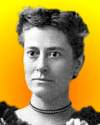
Died 21 May 1911 at age 54 (born 15 May 1857).
Williamina Paton Stevens Fleming was a Scottish-American astronomer (née Stevens) who pioneered in the classification of stellar spectra and the first to discover stars called “white dwarfs.” She emigrated to Boston at age 21. Prof. Edward Pickering, director of the Harvard Observatory first employed Fleming as a maid, but in 1881 hired her to do clerical work and some mathematical calculations at the Observatory. She further proved capable of doing science. After devising her system of classifying stars by their spectra, she cataloged over 10,000 stars within the next nine years. Her duties were expanded and she was put in charge of dozens of young women hired to do mathematical computations (as now done by computers). more
Williamina Paton Stevens Fleming was a Scottish-American astronomer (née Stevens) who pioneered in the classification of stellar spectra and the first to discover stars called “white dwarfs.” She emigrated to Boston at age 21. Prof. Edward Pickering, director of the Harvard Observatory first employed Fleming as a maid, but in 1881 hired her to do clerical work and some mathematical calculations at the Observatory. She further proved capable of doing science. After devising her system of classifying stars by their spectra, she cataloged over 10,000 stars within the next nine years. Her duties were expanded and she was put in charge of dozens of young women hired to do mathematical computations (as now done by computers). more
Died 21 May 1897 at age 75 (born 31 Mar 1822). quotes
Johann Friedrich Theodor Müller was a German entomologist, botanist and zoologist whose important work was done in Brazil. In his field, he was among the most respected scientists of the nineteenth century. In fact, Charles Darwin called him the “prince of observers,” and trusted his opinions. Karl Haeckel was influenced by him. Müller embraced natural selection and contributed greatly to the emerging studies of evolutionary biology. An obituary in Nature asked “whether any other naturalist, save Darwin himself, has given the world so large and original a mass of observations of the kind by which natural selection has been most strongly supported.” He published these prolifically about insects, animals and plants. Today, his name is given in the term Müllerian mimicry whereby natural selection favors a toxic species with similar appearance to another toxic species that predators avoid.«
Johann Friedrich Theodor Müller was a German entomologist, botanist and zoologist whose important work was done in Brazil. In his field, he was among the most respected scientists of the nineteenth century. In fact, Charles Darwin called him the “prince of observers,” and trusted his opinions. Karl Haeckel was influenced by him. Müller embraced natural selection and contributed greatly to the emerging studies of evolutionary biology. An obituary in Nature asked “whether any other naturalist, save Darwin himself, has given the world so large and original a mass of observations of the kind by which natural selection has been most strongly supported.” He published these prolifically about insects, animals and plants. Today, his name is given in the term Müllerian mimicry whereby natural selection favors a toxic species with similar appearance to another toxic species that predators avoid.«
Fritz Muller: A Naturalist in Brazil, by David A. West. - book suggestion.
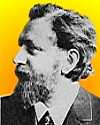

August (Adolph Eduard Eberhard) Kundt was a German physicist who developed a method (1866) to determine the velocity of sound in gases and solids. He used a closed glass tube into which a dry powder (such as lycopodium) has been sprinkled. The source of sound in the original device was a metal rod clamped at its centre with a piston at one end, which is inserted into the tube. When the rod is stroked, sound waves generated by the piston enter the tube. If the position of the piston in the tube is adjusted so that the gas column is a whole number of half wavelengths long, the dust will be disturbed by the resulting stationary waves forming a series of striations, enabling distances between nodes to be measured.
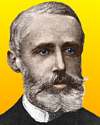
Died 21 May 1889 at age 55 (born 22 Apr 1834).
Raimond Louis Gaston Planté was a French physicist constructed the first storage battery (1859), which was able to provide electricty, and be recharged many times. Until this invention, batteries had existed since Alessandro Volta's discovery, in a form that could be used and discharged just one time. Planté made his accumulator with a lead plate, rolled with a linen cloth separator, immersed in sulphuric acid. He had only a hand-cranked generator. His battery had to wait for the later invention of satisfactory dynamos to become useful. The cell was improved by Camille Faure, Sir Joseph Swan and others. The rechargeable battery had an important use for the telegraph. Since it was first adopted for use in automobiles, the lead-acid battery continues to be used with the same fundamental design. In his later life, he investigated atmospheric electricity.«
Raimond Louis Gaston Planté was a French physicist constructed the first storage battery (1859), which was able to provide electricty, and be recharged many times. Until this invention, batteries had existed since Alessandro Volta's discovery, in a form that could be used and discharged just one time. Planté made his accumulator with a lead plate, rolled with a linen cloth separator, immersed in sulphuric acid. He had only a hand-cranked generator. His battery had to wait for the later invention of satisfactory dynamos to become useful. The cell was improved by Camille Faure, Sir Joseph Swan and others. The rechargeable battery had an important use for the telegraph. Since it was first adopted for use in automobiles, the lead-acid battery continues to be used with the same fundamental design. In his later life, he investigated atmospheric electricity.«
The Storage Of Electrical Energy, by Gaston Planté. - book suggestion.
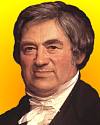
Died 21 May 1865 at age 76 (born 29 Dec 1788).
Danish archaeologist whose designation of the Stone, Iron and Bronze Ages became widely accepted. He was the first curator of the National Museum of Denmark, Copenhagen (1816). He classified the specimens in this tripartite way, on the basis of the material used in making weapons and tools, while he was organising the museum exhibits to show man's progressive cultural and technological development in Europe. It was adopted as the basis of chronological schemes elsewhere in the world by generations of archaeologists. In 1841, he established the first ethnographic museum. In 1849, he became director of the National Museum. He was one of the first to open collections to the public free of charge in the interests of popular education.«
Danish archaeologist whose designation of the Stone, Iron and Bronze Ages became widely accepted. He was the first curator of the National Museum of Denmark, Copenhagen (1816). He classified the specimens in this tripartite way, on the basis of the material used in making weapons and tools, while he was organising the museum exhibits to show man's progressive cultural and technological development in Europe. It was adopted as the basis of chronological schemes elsewhere in the world by generations of archaeologists. In 1841, he established the first ethnographic museum. In 1849, he became director of the National Museum. He was one of the first to open collections to the public free of charge in the interests of popular education.«
Died 21 May 1826 at age 53 (born 24 Aug 1772).
German maker of astronomical instruments who introduced the meridian, or transit, circle, a specially designed telescope for measuring both the time when a celestial body is directly over the meridian (the longitude of the instrument) and the angle of the body at meridian passage. By 1796 he was engaged in the construction of a dividing engine, a machine used to mark off equal intervals accurately, usually on precision instruments.
German maker of astronomical instruments who introduced the meridian, or transit, circle, a specially designed telescope for measuring both the time when a celestial body is directly over the meridian (the longitude of the instrument) and the angle of the body at meridian passage. By 1796 he was engaged in the construction of a dividing engine, a machine used to mark off equal intervals accurately, usually on precision instruments.
/Nicholson_William(1795-1815)Thm.jpg "William Nicholson")
Died 21 May 1815 (born 1753).
English chemist who discovered the electrolysis of water (2 May 1800), the first observation of a chemical reaction caused by electricity. In his life, he was a hydraulic engineer, inventor, translator, and scientific publicist. He invented a hydrometer, an instrument for measuring the density of liquids (1790). In 1800, while he and Anthony Carlisle were investigating Volta's new voltaic pile battery, they stumbled upon the effect of electric current passing through water. Bubbles formed at the submerged ends of the wires. The gases turned out to be oxygen at the positive wire, and hydrogen at the negative. Water was broken down by electricity. This has become an important process with other compounds in the chemical industry.«
English chemist who discovered the electrolysis of water (2 May 1800), the first observation of a chemical reaction caused by electricity. In his life, he was a hydraulic engineer, inventor, translator, and scientific publicist. He invented a hydrometer, an instrument for measuring the density of liquids (1790). In 1800, while he and Anthony Carlisle were investigating Volta's new voltaic pile battery, they stumbled upon the effect of electric current passing through water. Bubbles formed at the submerged ends of the wires. The gases turned out to be oxygen at the positive wire, and hydrogen at the negative. Water was broken down by electricity. This has become an important process with other compounds in the chemical industry.«
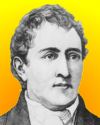
Died 21 May 1786 at age 43 (born 9 Dec 1742). quotes
(also Karl) Swedish chemist who discovered oxygen in 1772. Scheele, a keen experimenter, worked in difficult and often hazardous conditions. In his only book, Chemical Observations and Experiments on Air and Fire (1777), he stated that the atmosphere is composed of two gases, one supporting combustion, which he named "fire air" (oxygen), and the other preventing it, which he named "vitiated air" (nitrogen). Due to delay in his publication, he lost priority to Priestley's discovery of oxygen in 1774. Scheele discovered many substances, such as chlorine (1774), manganese (1774), tungsten (1781), molybdenum (1782), glycerol, hydrocyanic (prussic) acid, citric acid, hydrogen sulphide and hydrogen fluoride. He also discovered a process resembling pasteurization.
(also Karl) Swedish chemist who discovered oxygen in 1772. Scheele, a keen experimenter, worked in difficult and often hazardous conditions. In his only book, Chemical Observations and Experiments on Air and Fire (1777), he stated that the atmosphere is composed of two gases, one supporting combustion, which he named "fire air" (oxygen), and the other preventing it, which he named "vitiated air" (nitrogen). Due to delay in his publication, he lost priority to Priestley's discovery of oxygen in 1774. Scheele discovered many substances, such as chlorine (1774), manganese (1774), tungsten (1781), molybdenum (1782), glycerol, hydrocyanic (prussic) acid, citric acid, hydrogen sulphide and hydrogen fluoride. He also discovered a process resembling pasteurization.
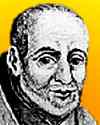
Died 21 May 1670 at age 83 (born 6 Dec 1586).
Italian astronomer who, in approximately 1616, designed one of the earliest reflecting telescopes, antedating those of James Gregory and Sir Isaac Newton. A professor at the Jesuit College in Rome, Zucchi developed an interest in astronomy from a meeting with Johannes Kepler. With this telescope Zucchi discovered the belts of the planet Jupiter (1630) and examined the spots on Mars (1640). He also demonstrated (in 1652) that phosphors generate rather than store light. His book Optica philosophia experimentalis et ratione a fundamentis constituta (1652-56) inspired Gregory and Newton to build improved telescopes.
Italian astronomer who, in approximately 1616, designed one of the earliest reflecting telescopes, antedating those of James Gregory and Sir Isaac Newton. A professor at the Jesuit College in Rome, Zucchi developed an interest in astronomy from a meeting with Johannes Kepler. With this telescope Zucchi discovered the belts of the planet Jupiter (1630) and examined the spots on Mars (1640). He also demonstrated (in 1652) that phosphors generate rather than store light. His book Optica philosophia experimentalis et ratione a fundamentis constituta (1652-56) inspired Gregory and Newton to build improved telescopes.
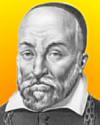
Died 21 May 1619 at age 82 (born 20 May 1537).
Italian physician, surgeon, anatomist and embryologist who was an outstanding Renaissance anatomist and helped found modern embryology. He studied under, and then suceeded, Gabriel Fallopius. In 1600 and 1612, he published his studies of chick embryo development, which promoted embryology as a field of research, though his understanding was flawed. For example, he believed it was the chalaza (spiral threads that hold the yolk in position inside the egg) that produced the chick, while the yolk was merely present to provide nutrition for the devloping embryo. In 1603, he published his most significant book, De venarum ostiolis, describing the veinous system. His pupil, William Harvey, extended this knowledge of blood circulation.«[also known as: Geronimo, or Girolamo Fabrizio, or Fabrici. DSB gives birth as c. 1533.] more
Italian physician, surgeon, anatomist and embryologist who was an outstanding Renaissance anatomist and helped found modern embryology. He studied under, and then suceeded, Gabriel Fallopius. In 1600 and 1612, he published his studies of chick embryo development, which promoted embryology as a field of research, though his understanding was flawed. For example, he believed it was the chalaza (spiral threads that hold the yolk in position inside the egg) that produced the chick, while the yolk was merely present to provide nutrition for the devloping embryo. In 1603, he published his most significant book, De venarum ostiolis, describing the veinous system. His pupil, William Harvey, extended this knowledge of blood circulation.«[also known as: Geronimo, or Girolamo Fabrizio, or Fabrici. DSB gives birth as c. 1533.] more
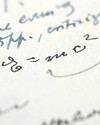
In 2021, the Associated Press reported a letter handwritten by Albert Einstein, containing his famous E=mc² equation, was sold at auction for more than $1.2 million. At the time, only four extant examples were known of Einstein writing E=mc² in communications in his own hand; the auctioned letter was the only one in private hands. Einstein’s message, dated 26 Oct 1946, was handwritten to Polish-American physicist Ludwik Silberstein, a critic of Einstein’s theory. It stated, in German, “Your question can be answered from the E=mc² formula without erudition.” The letter was part of Silberstein’s personal archives, being sold by his descendants. It was bought by an anonymous document collector.«
Dear Professor Einstein: Albert Einstein’s Letters to and from Children, by Alice Calaprice. - book suggestion.

In 1980, President Carter declared a state of emergency at Love Canal in Niagara Falls, New York. The property had been a dumping site for Hooker Chemicals and Plastics. In 1981, plans were made to evacuate 710 families. The evacuation was ordered after a study reported that 30 percent of the residents in the area had suffered chromosome damage caused by the toxic chemicals leaking through the ground into their homes.
Love Canal: Science, Politics, and People, by Adeline Gordon Levine. - book suggestion.
In 1955, George B. Hansburg of Walker Valley, N.Y. was issued a U.S. patent for his invention of an improved pogo stick (No. 2,793,036). The device provides amusement as a person rides a vertical pole while standing on foot-rests, with a spring-loaded assist to enable hopping.«
In 1936, commercial production of Lucite was begun in the U.S. by DuPont in Wilmington, Del. Lucite is their trademark name for the plastic (polymethyl methacrylate) that is crystal clear. Lucite is also highly non-conducting and has low moisture absorption. Other manufacturers in the world now use other names for this plastic, including Perspex and Plexiglass.«*
In 1929, the first automatic electric stock quotation board was put into operation by Sutro and Company of New York City. This was the first major advance in market information since the Edison ticker. The board was able to display the open, high, low and last prices of each stock listed, and automatically shifted the figures as changes were made. It was the first of a network of electrically posted black boards serving the securities industry, activated by a central transmitting station via telegraph lines. The system eventually reached over 700 brokerage offices from coast to coast. It was made that year by the Teleregister Corporation (which changed name in the 1960's due to mergers to become the Bunker Ramo Corp.)«*
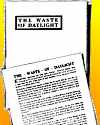
In 1916, Daylight Saving Time was introduced in Britain as a war-time measure to save fuel. The idea began when a London builder, William Willett, presented a scheme of shifting the clock to better use the hours of daylight in summer. He campaigned and published a brochure on the subject in 1907 (in which his proposal was to adjust the clocks in four weekly adjustments of 10-mins). When Parliament did consider a Daylight Saving Bill, to implement a seasonal one-hour change, it failed for lack of support. However, a little more than a year after his death after his death, the idea was finally adopted during WW I for wartime fuel savings. Now most of the countries in the northern hemisphere use a form of daylight saving time.«
Seize the Daylight: The Curious and Contentious Story of Daylight Savings Time, by David Prerau. - book suggestion.
In 1906, Louis Henry Perlman of New York City applied for a patent for his invention of the demountable tyre-carrying rim on this day, similar to those used on today's cars, but wider. The patent was issued 4 Feb 1913 (U.S. No. 1,052,270).«*
In 1901, the first U.S. State motor car legislation was an act to regulate the speed of motor vehicles, passed in Connecticut. A speed limit was established of 12 mph within city limits and 15 mph outside, which were higher than the 8 mph city and 12mph country speeds in the bill as originally presented. Also, the car driver was required to reduce speed upon meeting or passing a horse-drawn vehicle, and if necessary, to stop to avoid frightening the horse.«*
In 1895, black American inventor William B. Purvis was issued a patent for a "Magnetic Car Balancing Device." In his life, Purvis held other patents for electric railway devices (1894, 1897), and he also patented ten paper bag machines (1884-94). Other patents were issued to him for a bag fastener (1882), a hand stamp (1883) and a fountain pen (1890).
The Inventive Spirit of African Americans: Patented Ingenuity, by Patricia Carter Sluby. - book suggestion.
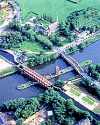
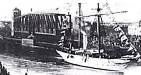
100 Years of the Manchester Ship Canal, by T. Gray. - book suggestion.
In 1894, the first building of the Wistar Institute of Anatomy and Biology was dedicated. The Wistar Institute had been established on 20 Jul 1891, becoming the first research institute in the U.S. with funds provided by General Isaac Jones Wistar in memory of Caspar Wistar. It was incorporated 22 Apr 1892.«*
In 1877, a trial test of a telephone was given in the Pennsylvania Railroad Company shops by associates of Alexander Graham Bell. The company was impressed by the demonstration and became the first to make a permanent installation.«*
In 1873, the idea of a "travelling sidewalk" for rapid transit along Broadway in New York City was printed in the New York Times. Its inventor proposed to build two sidewalks, one in each direction, continually moving at 19 mph. How pedestrians would embark or disembark was not disclosed, although reportedly, the inventor had a satisfactory solution. The article continued with whimsical predictions of a traveller's experience. In fact, it was never built. In 1893, however, a moving sidewalk was successfully installed at the World's Columbian Exposition in Chicago to move people from place to place in the fairgrounds. It had two parallel platforms, the first moved at 3 mph. Riders could then step onto a 6 mph conveyor. There was a moving sidewalk, the trottoir roulant at the 1900 World Fair in Paris.«
more
In 1853, the Aquatic Vivarium, the world's first public aquarium, was opened in Regent's Park, London, the inspiration of an English self-taught naturalist, Philip Henry Gosse, who wrote popular illustrated books on nature, and especially marine biology. He invented the institutional aquarium when he opened the Aquatic Vivarium.*
In 1829, the cornerstone was laid for the a dry dock, at Boston, Mass., on which construction had started in Jun 1827. This project, together with another at Norfolk, Virginia, were authorized by act of Congress on 28 Mar 1827. Their construction used piles as foundations, and were built of stone faced with cut granite. The Boston dry dock was completed in 1833, and the Norfolk dry dock the following year.«*
In 1819, the first bicycle in the U.S. was seen in New York City. Such bicycle velocipedes or "swift walkers" had been imported that same year. Shortly thereafter, on 19 Aug 1819, the city's Common Council passed a law to "prevent the use of velocipedes in the public places and on the sidewalks of the city of New York."*




