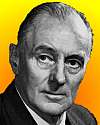

Severn Bridge
British civil engineer who pioneered new designs, construction methods and use of high-tensile steels for several major bridges including the 3,300-foot (1,006-metre) Firth of Forth Road bridge in Scotland, one of the longest in the world. He also designed the Severn Bridge, crossing the River Severn near Bristol, England (1966) 3240-foot span with 400-foot towers. It has an aerodynamic steel box girder, inclined hanger cables to provide added damping and an orthotropic steel deck. His work includes designs for Auckland Harbour (N.Z.), Volta River (Ghana), Bosphorus (Turkey) and Humber bridges; and radio telescopes, goliath cranes and other steel structures. He gained his experience as an engineer during WW II developing all-welded ships.
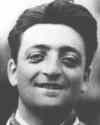
Born 18 Feb 1898; died 14 Aug 1988 at age 90.
Italian automobile manufacturer, designer, and racing-car driver whose Ferrari cars often dominated world racing competition in the second half of the 20th century. In 1947, as a former racecar driver, Ferrari built cars under his own name for the first time. Within five years, his powerful 12-cylinder cars dominated racing. Within a decade, the road models had become status symbols. Individually crafted, their fenders were pounded into shape against tree trunks, their engines were cast like statues.
Italian automobile manufacturer, designer, and racing-car driver whose Ferrari cars often dominated world racing competition in the second half of the 20th century. In 1947, as a former racecar driver, Ferrari built cars under his own name for the first time. Within five years, his powerful 12-cylinder cars dominated racing. Within a decade, the road models had become status symbols. Individually crafted, their fenders were pounded into shape against tree trunks, their engines were cast like statues.
Enzo Ferrari: The Man, The Cars, The Races, The Machine, by Brock Yates. - book suggestion.
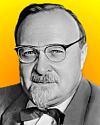
Born 18 Feb 1894; died 21 Apr 1980 at age 86.
Russian biochemist who is noted for his studies on the origin of life from chemical matter. By drawing on the insights of chemistry, he extended the Darwinian theory of evolution backward in time to explain how simple organic and inorganic materials might have combined into complex organic compounds. In 1938, Oparin suggested that organic molecules could be formed in the presence of outside energy sources.First name seen as Alexander. Birth date 18 Feb, O.S. in EB, or 2 Mar, N.S. in DSB.
Russian biochemist who is noted for his studies on the origin of life from chemical matter. By drawing on the insights of chemistry, he extended the Darwinian theory of evolution backward in time to explain how simple organic and inorganic materials might have combined into complex organic compounds. In 1938, Oparin suggested that organic molecules could be formed in the presence of outside energy sources.First name seen as Alexander. Birth date 18 Feb, O.S. in EB, or 2 Mar, N.S. in DSB.
The Origin of Life, by Aleksandr Ivanovich Oparin. - book suggestion.
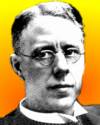
Born 18 Feb 1871; died 12 Aug 1948 at age 77.
English metallurgist who invented stainless steel, which is an alloy of steel with chromium and nickel. In 1912, he was investigating corrosion of rifle barrels because their internal diameter was quickly eroded from the action of heating and discharge gases. His solution was to develop a chrome alloy steel which was much more rust resistant than the steel then in common use. The added metals produce a surface film of metal oxides which resists rusting. Thus it was termed stainless steel. He also realized how it could revolutionize the cutlery industry. Until then, table cutlery was silver or nickel plated, and cutting knives of carbon steel had to be thoroughly washed and dried after use, and even then rust stains would have to be rubbed off.
English metallurgist who invented stainless steel, which is an alloy of steel with chromium and nickel. In 1912, he was investigating corrosion of rifle barrels because their internal diameter was quickly eroded from the action of heating and discharge gases. His solution was to develop a chrome alloy steel which was much more rust resistant than the steel then in common use. The added metals produce a surface film of metal oxides which resists rusting. Thus it was termed stainless steel. He also realized how it could revolutionize the cutlery industry. Until then, table cutlery was silver or nickel plated, and cutting knives of carbon steel had to be thoroughly washed and dried after use, and even then rust stains would have to be rubbed off.
Steelmakers and Knotted String, by Harry Brearley. - book suggestion.
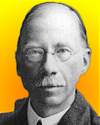
Born 18 Feb 1871; died 26 Jun 1951 at age 80. quotes
George Udny Yule was a Scottish statistician who, with Karl Pearson, studied the statistics of regression and correlation, especially as applied in 2x2 contingency tables, time series, Mendelian genetics and epidemiology. His name is remembered in the Yule distribution (a discrete power law). Yule’s first paper on statistics, On the Correlation of Total Pauperism with Proportion of Out-relief (1895) reflects his early interest in statistics applied to social problems. As one of the pioneers of modern statistics, he laid a foundation on which others later built further. Yule also made some pioneer statements concerning mental tests, how to reduce the error of measurement and thereby improve validity. Developed from his prior series of lectures, he wrote a widely-used textbook, Introduction to Statistics (1911), which went through 14 editions.«
George Udny Yule was a Scottish statistician who, with Karl Pearson, studied the statistics of regression and correlation, especially as applied in 2x2 contingency tables, time series, Mendelian genetics and epidemiology. His name is remembered in the Yule distribution (a discrete power law). Yule’s first paper on statistics, On the Correlation of Total Pauperism with Proportion of Out-relief (1895) reflects his early interest in statistics applied to social problems. As one of the pioneers of modern statistics, he laid a foundation on which others later built further. Yule also made some pioneer statements concerning mental tests, how to reduce the error of measurement and thereby improve validity. Developed from his prior series of lectures, he wrote a widely-used textbook, Introduction to Statistics (1911), which went through 14 editions.«
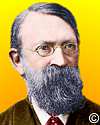
Born 18 Feb 1838; died 19 Feb 1916 at age 78. quotes
Austrian physicist and philosopher who established important principles of optics, mechanics, and wave dynamics. His early physical works were devoted to electric discharge and induction. Between 1860 and 1862 he studied in depth the Doppler Effect by optical and acoustic experiments. He introduced the “Mach number” for the ratio of speed of object to speed of sound is named for him. When supersonic planes travel today, their speed is measured in terms that keep Mach’s name alive. His lifetime interest, however, was in psychology and human perception. He supported the view that all knowledge is a conceptual organization of the data of sensory experience (or observation).
Austrian physicist and philosopher who established important principles of optics, mechanics, and wave dynamics. His early physical works were devoted to electric discharge and induction. Between 1860 and 1862 he studied in depth the Doppler Effect by optical and acoustic experiments. He introduced the “Mach number” for the ratio of speed of object to speed of sound is named for him. When supersonic planes travel today, their speed is measured in terms that keep Mach’s name alive. His lifetime interest, however, was in psychology and human perception. He supported the view that all knowledge is a conceptual organization of the data of sensory experience (or observation).
Space and Geometry: In the Light of Physiological, Psychological and Physical Inquiry, by Ernst Mach. - book suggestion.
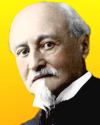
Born 18 Feb 1832; died 23 Nov 1910 at age 78. quotes
American aeronautical engineer whose work and interests profoundly influenced Orville Wright and Wilbur Wright and the invention of the airplane. Chanute was a successful engineer who took up the invention of the airplane as a hobby following his early retirement. Knowing how railroad bridges were strengthened, he experimented with box kites using the same basic strengthening method, which he then incorporated into wing design of gliders. Through thousands of letters, he drew geographically isolated pioneers into an informal international community. He organized sessions of aeronautical papers for the professional engineering societies that he led; attracted fresh talent and new ideas into the field through his lectures; and produced important publications. more
American aeronautical engineer whose work and interests profoundly influenced Orville Wright and Wilbur Wright and the invention of the airplane. Chanute was a successful engineer who took up the invention of the airplane as a hobby following his early retirement. Knowing how railroad bridges were strengthened, he experimented with box kites using the same basic strengthening method, which he then incorporated into wing design of gliders. Through thousands of letters, he drew geographically isolated pioneers into an informal international community. He organized sessions of aeronautical papers for the professional engineering societies that he led; attracted fresh talent and new ideas into the field through his lectures; and produced important publications. more
Progress in Flying Machines, by Octave Chanute. - book suggestion.
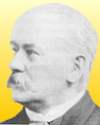
Born 18 Feb 1827; died 9 Sep 1894 at age 67.
German Egyptologist who pioneered in deciphering demotic, the simplified script of the later Egyptian periods. As a boy he visited the Berlin Museum and became fascinated with its Egyptian artifacts, an interest fostered by Guiseppe Passalacqua, the Museum's curator of the Egyptian collection. On visiting Egypt 1853 as consul for the Prussian government, he joined the French archaeologist August Mariette in his excavations at Memphis. He was director of the School of Egyptology in Cairo (1870-79). His greatest strength was the ancient Egyptian language, and a pioneer in the study of demotic. Brugsch recognized the Semitic side of Egyptian grammar, thus enabling a far more comprehensive and systematic understanding of hieroglyphs.
German Egyptologist who pioneered in deciphering demotic, the simplified script of the later Egyptian periods. As a boy he visited the Berlin Museum and became fascinated with its Egyptian artifacts, an interest fostered by Guiseppe Passalacqua, the Museum's curator of the Egyptian collection. On visiting Egypt 1853 as consul for the Prussian government, he joined the French archaeologist August Mariette in his excavations at Memphis. He was director of the School of Egyptology in Cairo (1870-79). His greatest strength was the ancient Egyptian language, and a pioneer in the study of demotic. Brugsch recognized the Semitic side of Egyptian grammar, thus enabling a far more comprehensive and systematic understanding of hieroglyphs.
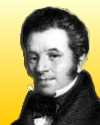
Born 18 Feb 1790; died 11 Aug 1857 at age 67. quotes
English physiologist who was the first to advance a scientific explanation of reflex action. Although Hall earned his living as a practitioner, he was deeply interested in experimentation. A prolific writer, he wrote 19 books and more than 150 papers. Between 1824 and 1830, Hall published several papers and a book on the consequences of blood-letting. Hall published a pioneering book (1817) on diagnosis. In 1833, Hall described the mechanism by which a stimulus can produce a response independently of sensation or volition and coined the term "reflex" in the biological context. For the first time, the concept of the reflex arc was adopted as a basic mechanism of nervous disease, thus Hall may be called "the father of modern neurology."
English physiologist who was the first to advance a scientific explanation of reflex action. Although Hall earned his living as a practitioner, he was deeply interested in experimentation. A prolific writer, he wrote 19 books and more than 150 papers. Between 1824 and 1830, Hall published several papers and a book on the consequences of blood-letting. Hall published a pioneering book (1817) on diagnosis. In 1833, Hall described the mechanism by which a stimulus can produce a response independently of sensation or volition and coined the term "reflex" in the biological context. For the first time, the concept of the reflex arc was adopted as a basic mechanism of nervous disease, thus Hall may be called "the father of modern neurology."
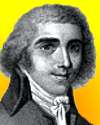
Born 18 Feb 1772; died 25 Sep 1826 at age 54. quotes
Italian geologist who taught natural history at the gymnasium at Brescia (1802-08), then held the post inspector of mines at Milan until 1814. He used his experience organizing the mining industry in Egypt (1822-26). In 1814, he published his major work, Subapennine Fossil Conchology which gave a detailed description of fossil deposits in Italy. Brocchi drew an original analogy that species have births and deaths like individuals. He saw comparisons in the Subapennine fossils with living fauna, but also found contrasts with the extinct fossils described by Lamarck found in the Paris Basin. Though Brocchi’s line of thought was not fully developed, it later influenced Charles Darwin’s conjectures on evolution.«[Also known as Giambattista Brocchi]
Italian geologist who taught natural history at the gymnasium at Brescia (1802-08), then held the post inspector of mines at Milan until 1814. He used his experience organizing the mining industry in Egypt (1822-26). In 1814, he published his major work, Subapennine Fossil Conchology which gave a detailed description of fossil deposits in Italy. Brocchi drew an original analogy that species have births and deaths like individuals. He saw comparisons in the Subapennine fossils with living fauna, but also found contrasts with the extinct fossils described by Lamarck found in the Paris Basin. Though Brocchi’s line of thought was not fully developed, it later influenced Charles Darwin’s conjectures on evolution.«[Also known as Giambattista Brocchi]
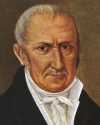
Born 18 Feb 1745; died 5 Mar 1827 at age 82. quotes
Count Alessandro Giuseppe Antonio Anastasio Volta was an Italian physicist who invented the electric battery (1800), the first reliable, sustained supply of current. His voltaic pile used plates of two dissimilar metals and an electrolyte, a number of alternated zinc and silver disks, each separated with porous brine-soaked cardboard. Previously, only discharge of static electricity had been available, so his device enabled new uses of electricity. (Soon, with electrolysis, William Nicholson decomposed water, and Humphry Davy isolated potassium and other metals.) Volta also invented the electrophorus, the condenser and the electroscope. He contributed to meteorology, studied gases and discovered methane. The volt, a unit of electrical measurement, is named after him.« more
Count Alessandro Giuseppe Antonio Anastasio Volta was an Italian physicist who invented the electric battery (1800), the first reliable, sustained supply of current. His voltaic pile used plates of two dissimilar metals and an electrolyte, a number of alternated zinc and silver disks, each separated with porous brine-soaked cardboard. Previously, only discharge of static electricity had been available, so his device enabled new uses of electricity. (Soon, with electrolysis, William Nicholson decomposed water, and Humphry Davy isolated potassium and other metals.) Volta also invented the electrophorus, the condenser and the electroscope. He contributed to meteorology, studied gases and discovered methane. The volt, a unit of electrical measurement, is named after him.« more
Volta: Science and Culture in the Age of Enlightenment, by Giuliano Pancaldi. - book suggestion.
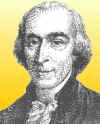
Born 18 Feb 1734; died 15 Nov 1793 at age 59.
French industrial scientist who, largely through his wife's ambition, became a leader of the moderate Girondin faction of bourgeois revolutionaries during the French Revolution. Roland became an inspector general of commerce in 1780, and over the next decade he wrote a number of books on manufacturing and political economy.
French industrial scientist who, largely through his wife's ambition, became a leader of the moderate Girondin faction of bourgeois revolutionaries during the French Revolution. Roland became an inspector general of commerce in 1780, and over the next decade he wrote a number of books on manufacturing and political economy.
Born 18 Feb 1677; died 16 Apr 1756 at age 79.
French astronomer whose direct measurement of the proper motions of the stars (1738) disproved the ancient belief in the unchanging sphere of the stars. He also studied the moons of Jupiter and Saturn and the structure of Saturn's rings. His two major treatises on these subject appeared in 1740: Elements of Astronomy and Astronomical Tables of the Sun, Moon, Planets, Fixed Stars, and Satellites of Jupiter and Saturn. He also wrote about electricity, barometers, the recoil of firearms, and mirrors. He was the son of astronomer, mathematician and engineer Giovanni Cassini (1625-1712) with whom he made numerous geodesic observations. Eventually, he took over his father's duties as head of the Paris Observatory.«[Different sources give different dates of birth and death. See this note.]
French astronomer whose direct measurement of the proper motions of the stars (1738) disproved the ancient belief in the unchanging sphere of the stars. He also studied the moons of Jupiter and Saturn and the structure of Saturn's rings. His two major treatises on these subject appeared in 1740: Elements of Astronomy and Astronomical Tables of the Sun, Moon, Planets, Fixed Stars, and Satellites of Jupiter and Saturn. He also wrote about electricity, barometers, the recoil of firearms, and mirrors. He was the son of astronomer, mathematician and engineer Giovanni Cassini (1625-1712) with whom he made numerous geodesic observations. Eventually, he took over his father's duties as head of the Paris Observatory.«[Different sources give different dates of birth and death. See this note.]
Born 18 Feb 1626; died 1 Mar 1697 at age 71.
Italian physician and poet who demonstrated that the presence of maggots in putrefying meat does not result from spontaneous generation but from eggs laid on the meat by flies. Redi's interest was aroused by a book by William Harvey who proposed that insects, worms and frogs came from seeds or eggs too small to be seen. In 1668, Redi's classic experimental method was one of the first examples of a biological experiment with proper controls. He repeated the same experiments in different ways, modifying only one parameter at a time, and carrying out suitable tests. Redi prepared eight flasks with different kinds of meat; four were left open and four sealed. The meat rotted in all the flasks, but maggots appeared only in the open flasks which flies could freely enter. (To exclude the possibility that maggot's life cycle was affected in sealed jars, he tested further with two other series of jars, allowing air, but no flies, to enter test jars covered with a fine filter.)
Italian physician and poet who demonstrated that the presence of maggots in putrefying meat does not result from spontaneous generation but from eggs laid on the meat by flies. Redi's interest was aroused by a book by William Harvey who proposed that insects, worms and frogs came from seeds or eggs too small to be seen. In 1668, Redi's classic experimental method was one of the first examples of a biological experiment with proper controls. He repeated the same experiments in different ways, modifying only one parameter at a time, and carrying out suitable tests. Redi prepared eight flasks with different kinds of meat; four were left open and four sealed. The meat rotted in all the flasks, but maggots appeared only in the open flasks which flies could freely enter. (To exclude the possibility that maggot's life cycle was affected in sealed jars, he tested further with two other series of jars, allowing air, but no flies, to enter test jars covered with a fine filter.)
Sparks of Life: Darwinism and the Victorian Debates Over Spontaneous Generation, by James E. Strick. - book suggestion.
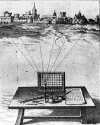
Born 18 Feb 1404; died 25 Apr 1472 at age 68. quotes
Italian artist and geometrist who “wrote the book,” the first general treatise Della Pictura (1434) on the the laws of perspective, establishing the science of projective geometry. Alberti also worked on maps (again involving his skill at geometrical mappings) and he collaborated with Toscanelli who supplied Columbus with the maps for his first voyage. He also wrote the first book on cryptography which contains the first example of a frequency table.
Italian artist and geometrist who “wrote the book,” the first general treatise Della Pictura (1434) on the the laws of perspective, establishing the science of projective geometry. Alberti also worked on maps (again involving his skill at geometrical mappings) and he collaborated with Toscanelli who supplied Columbus with the maps for his first voyage. He also wrote the first book on cryptography which contains the first example of a frequency table.
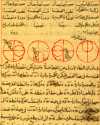
Born 18 Feb 1201; died 26 Jun 1274 at age 73.
Muhammad ibn Muhammad ibn al-Hasan al-Tusi was a Persian philosopher, scientist, mathematician and astronomer who made outstanding contributions in his era. When The Mongol invasion, started by Genghis Khan, reached him in 1256, he escaped likely death by joining the victorious Mongols as a scientific advisor. He used an observatory built at Maragheh (finished 1262), assisted by Chinese astronomers. It had various instruments such as a 4 metre wall quadrant made from copper and an azimuth quadrant which was Tusi's own invention. Using accurately plotted planetary movements, he modified Ptolemy's model of the planetary system based on mechanical principles. The observatory and its library became a centre for a wide range of work in science, mathematics and philosophy. He was known by the title Tusi from his place of birth (Tus).
Muhammad ibn Muhammad ibn al-Hasan al-Tusi was a Persian philosopher, scientist, mathematician and astronomer who made outstanding contributions in his era. When The Mongol invasion, started by Genghis Khan, reached him in 1256, he escaped likely death by joining the victorious Mongols as a scientific advisor. He used an observatory built at Maragheh (finished 1262), assisted by Chinese astronomers. It had various instruments such as a 4 metre wall quadrant made from copper and an azimuth quadrant which was Tusi's own invention. Using accurately plotted planetary movements, he modified Ptolemy's model of the planetary system based on mechanical principles. The observatory and its library became a centre for a wide range of work in science, mathematics and philosophy. He was known by the title Tusi from his place of birth (Tus).

(2010)
Died 18 Feb 2019 at age 87 (born 29 Nov 1931).
geologist.
geologist.
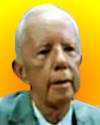
Died 18 Feb 1981 at age 85 (born 10 Nov 1895).
John Knudsen (“Jack”) Northrop was an American aircraft designer who was an early advocate of all-metal construction and the flying wing design. As early as 1923, Jack Northrop had been convinced that the flying wing, in which the aircraft carried all loads and controls within the wing and had neither fuselage nor tail sections, was the next major step forward in aircraft design. He pursued various flying wing aircraft designs during WWII. In the decades following the war, Northrop's name was attached as manufacturer and designer of several other aircraft, culminating in the B-2, which vindicated Jack Northrop's dream of a clean flying machine.
John Knudsen (“Jack”) Northrop was an American aircraft designer who was an early advocate of all-metal construction and the flying wing design. As early as 1923, Jack Northrop had been convinced that the flying wing, in which the aircraft carried all loads and controls within the wing and had neither fuselage nor tail sections, was the next major step forward in aircraft design. He pursued various flying wing aircraft designs during WWII. In the decades following the war, Northrop's name was attached as manufacturer and designer of several other aircraft, culminating in the B-2, which vindicated Jack Northrop's dream of a clean flying machine.
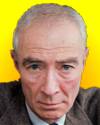
Died 18 Feb 1967 at age 62 (born 22 Apr 1904). quotes
Julius Robert Oppenheimer was an American theoretical physicist and science administrator, noted as director of the Los Alamos laboratory during development of the atomic bomb (1943-45) and as director of the Institute for Advanced Study, Princeton (1947-66). Accusations as to his loyalty and reliability as a security risk led to a government hearing that resulted the loss of his security clearance and of his position as adviser to the highest echelons of the U.S. government. The case became a cause célèbre in the world of science because of its implications concerning political and moral issues relating to the role of scientists in government.
Julius Robert Oppenheimer was an American theoretical physicist and science administrator, noted as director of the Los Alamos laboratory during development of the atomic bomb (1943-45) and as director of the Institute for Advanced Study, Princeton (1947-66). Accusations as to his loyalty and reliability as a security risk led to a government hearing that resulted the loss of his security clearance and of his position as adviser to the highest echelons of the U.S. government. The case became a cause célèbre in the world of science because of its implications concerning political and moral issues relating to the role of scientists in government.
American Prometheus: The Triumph and Tragedy of J. Robert Oppenheimer, by Kai Bird, Martin J. Sherwin. - book suggestion.
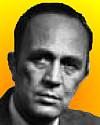
Died 18 Feb 1957 at age 49 (born 11 Nov 1907).
Joseph Gilbert Hamilton was an American medical physicist who pioneered in the medical uses and health effects of radioactive isotopes. On 23 Mar 1936, he injected intraveneously a sodium radioisotope into a leukemia patient. His New York Times obituary stated that he was “believed to be the first ever to inject a radioisotope intravenously in a human being.” He became an M.D. in 1936. He identified the usefulness of radioiodine to study and treat thryroid disease. During WW II, he was involved with the Manhattan Project studying the biological effects of the ingestion of plutonium and other fission products. From 1948, Hamilton was Director of the Crocker Laboratory, which had a 60-inch cyclotron for nuclear research.« more
Joseph Gilbert Hamilton was an American medical physicist who pioneered in the medical uses and health effects of radioactive isotopes. On 23 Mar 1936, he injected intraveneously a sodium radioisotope into a leukemia patient. His New York Times obituary stated that he was “believed to be the first ever to inject a radioisotope intravenously in a human being.” He became an M.D. in 1936. He identified the usefulness of radioiodine to study and treat thryroid disease. During WW II, he was involved with the Manhattan Project studying the biological effects of the ingestion of plutonium and other fission products. From 1948, Hamilton was Director of the Crocker Laboratory, which had a 60-inch cyclotron for nuclear research.« more
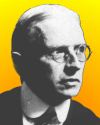

American astronomer and astrophysicist who showed the relationship between a star's brightness and its spectral type, in what is usually called the Hertzsprung-Russell diagram, and who also devised a means of computing the distances of binary stars. As student, professor, observatory director, and active professor emeritus, Russell spent six decades at Princeton University. From 1921, he visited Mt. Wilson Observatory annually. He analyzed light from eclipsing binary stars to determine stellar masses and he measured parallaxes. Russell popularized the distinction between giant stars and “dwarfs” while developing an early theoryof stellar evolution. He applied Meghnad Saha's theory of ionization to stellar atmospheres and determined elemental abundances, confirming Cecilia Payne-Gaposchkin's discovery that the stars are composed mostly of hydrogen. Russell was a dominant force in U.S. astronomy.
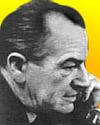
Died 18 Feb 1944 at age 56 (born 26 Oct 1887).
French-American efficiency engineer who developed the Bedaux plan for measuring and compensating industrial labour. Bedaux was born in Paris in 1886 and migrated to the U.S. early in the 20th century. He became one of the pioneering contributors to the field of scientific management. Bedaux worked out various ideas about measuring human energy: these provided the basis for the innovative work study programs that lead to startling improvements in productivity. Bedaux introduced the concept of rating assessment in timing work. He adhered to Gilbreth's introduction of a rest allowance to allow recovery from fatigue. He is also known for extending the range of techniques employed in work study, including value analysis.
French-American efficiency engineer who developed the Bedaux plan for measuring and compensating industrial labour. Bedaux was born in Paris in 1886 and migrated to the U.S. early in the 20th century. He became one of the pioneering contributors to the field of scientific management. Bedaux worked out various ideas about measuring human energy: these provided the basis for the innovative work study programs that lead to startling improvements in productivity. Bedaux introduced the concept of rating assessment in timing work. He adhered to Gilbreth's introduction of a rest allowance to allow recovery from fatigue. He is also known for extending the range of techniques employed in work study, including value analysis.
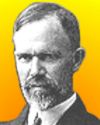
Died 18 Feb 1944 at age 77 (born 1 Jun 1866).
American zoologist who contributed substantially to the study of eugenics (the improvement of populations through breeding) and heredity and who pioneered the use of statistical techniques in biological research. Partly as a result of breeding experiments with chickens and canaries, he was one of the first, soon after 1902, to recognize the validity of the newly discovered Mendelian theory of heredity. In Heredity in Relation to Eugenics (1911), he compiled evidence concerning the inheritance of human traits, on the basis of which he argued that the application of genetic principles would improve the human race. These data were at the heart of his lifelong promotion of eugenics, though he muddled science with social philosophy.
American zoologist who contributed substantially to the study of eugenics (the improvement of populations through breeding) and heredity and who pioneered the use of statistical techniques in biological research. Partly as a result of breeding experiments with chickens and canaries, he was one of the first, soon after 1902, to recognize the validity of the newly discovered Mendelian theory of heredity. In Heredity in Relation to Eugenics (1911), he compiled evidence concerning the inheritance of human traits, on the basis of which he argued that the application of genetic principles would improve the human race. These data were at the heart of his lifelong promotion of eugenics, though he muddled science with social philosophy.
Statistical Methods in Biology, Medicine and Psychology, by Charles Benedict Davenport. - book suggestion.
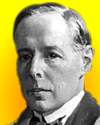
Died 18 Feb 1932 at age 66 (born 15 Jun 1865). quotes
Scottish philosopher, translator and logician best known for his substantial translation of Leibniz’s chief works, to which Latta supplied substantial introductory essays, valuable notes and appendices. It was published in 1898 titled The Monadology and Other Philosophical Writings. Latta was born in Edinburgh, educated there through Ph.D., and became Assistant and Lecturer in Logic and Metaphysics at the University of St Andrews at Fife. His later career was also spent in Scottish universities, at Dundee, Aberdeen and Glasgow. At the latter, he held the Chair of Logic and Metaphysics from 1902 until his early retirement in 1925 due to ill health.«
Scottish philosopher, translator and logician best known for his substantial translation of Leibniz’s chief works, to which Latta supplied substantial introductory essays, valuable notes and appendices. It was published in 1898 titled The Monadology and Other Philosophical Writings. Latta was born in Edinburgh, educated there through Ph.D., and became Assistant and Lecturer in Logic and Metaphysics at the University of St Andrews at Fife. His later career was also spent in Scottish universities, at Dundee, Aberdeen and Glasgow. At the latter, he held the Chair of Logic and Metaphysics from 1902 until his early retirement in 1925 due to ill health.«
The Monadology and Other Philosophical Writings, by Gottfried Leibniz and Robert Latta (trans.). - book suggestion.
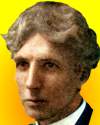
Died 18 Feb 1914 at age 45 (born 1 Nov 1868). quotes
Canadian industrial chemist, teacher and populariser of science who advocated partnering scientific research and industry to create new and better consumer products. He also was a preeminent writer interpreting science, in articles and books including The New Knowledge, The Chemistry of Commerce and Some Chemical Problems of To-day, with the highest scientific accuracy yet with an engaging style. Brothers Andrew W. and Richard B. Mellon founded the Mellon Institute for Industrial Research in 1913, who were aware of Duncan's writings and were enthusiastic about his concept of the industrial fellowship. He became its first director. It was an outgrowth from the success of the department of industrial research the Mellons established in 1911 at University of Pittsburgh, where Duncan taught from 1910 until his death in 1914. Major companies such as Dow Corning and Union Carbide can trace their histories to discoveries at the institute.« more
Canadian industrial chemist, teacher and populariser of science who advocated partnering scientific research and industry to create new and better consumer products. He also was a preeminent writer interpreting science, in articles and books including The New Knowledge, The Chemistry of Commerce and Some Chemical Problems of To-day, with the highest scientific accuracy yet with an engaging style. Brothers Andrew W. and Richard B. Mellon founded the Mellon Institute for Industrial Research in 1913, who were aware of Duncan's writings and were enthusiastic about his concept of the industrial fellowship. He became its first director. It was an outgrowth from the success of the department of industrial research the Mellons established in 1911 at University of Pittsburgh, where Duncan taught from 1910 until his death in 1914. Major companies such as Dow Corning and Union Carbide can trace their histories to discoveries at the institute.« more
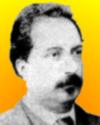
Died 18 Feb 1900 at age 64 (born 16 Nov 1835). quotes
Italian mathematician and mathematical physicist known for his concepts of non-Euclidean geometry. In 1865, he published a paper on how line elements on the surfaces of constant curvature could be represented by linear expressions. His approach offered a new representation of the geometry of constant curvature that was consistent with Euclidean theory. Beltrami studied elasticity, wave theory, optics, thermodynamics, and potential theory, and was among the first to explore the concepts of hyperspace and time as a fourth dimension. His investigations in the conduction of heat led to linear partial differential equations. Some of Beltrami's last work was on a mechanical interpretation of Maxwell's equations.
Italian mathematician and mathematical physicist known for his concepts of non-Euclidean geometry. In 1865, he published a paper on how line elements on the surfaces of constant curvature could be represented by linear expressions. His approach offered a new representation of the geometry of constant curvature that was consistent with Euclidean theory. Beltrami studied elasticity, wave theory, optics, thermodynamics, and potential theory, and was among the first to explore the concepts of hyperspace and time as a fourth dimension. His investigations in the conduction of heat led to linear partial differential equations. Some of Beltrami's last work was on a mechanical interpretation of Maxwell's equations.
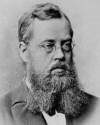
Died 18 Feb 1899 at age 56 (born 17 Dec 1842). quotes
Marius Sophus Lie was a Norwegian mathematician who made significant contributions to the theories of algebraic invariants, continuous groups of transformations and differential equations. Lie groups and Lie algebras are named after him. Lie was in Paris at the outbreak of the French-German war of 1870. Lie left France, deciding to go to Italy. On the way however he was arrested as a German spy and his mathematics notes were assumed to be coded messages. Only after the intervention of French mathematician, Gaston Darboux, was Lie released and he decided to return to Christiania, Norway, where he had originally studied mathematics to continue his work.
Marius Sophus Lie was a Norwegian mathematician who made significant contributions to the theories of algebraic invariants, continuous groups of transformations and differential equations. Lie groups and Lie algebras are named after him. Lie was in Paris at the outbreak of the French-German war of 1870. Lie left France, deciding to go to Italy. On the way however he was arrested as a German spy and his mathematics notes were assumed to be coded messages. Only after the intervention of French mathematician, Gaston Darboux, was Lie released and he decided to return to Christiania, Norway, where he had originally studied mathematics to continue his work.
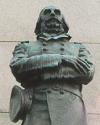
Died 18 Feb 1877 at age 70 (born 16 Jan 1807).
U.S. naval officer and scientist who published several hydrographic studies, was a superintendent of the Naval Observatory (1865–67, 1874–77) and worked to further scientific progress. Between his naval duties at sea, he studied mathematics at Harvard. He made the first comprehensive survey of the coasts of Massachusetts, Rhode Island, and Maine, including the intricate Nantucket shoals area. He helped establish and then supervised the preparation of the American Nautical Almanac (1849) for several years. Davis was a co-founder of the National Academy of Sciences (1863), and wrote several scientific books.«
U.S. naval officer and scientist who published several hydrographic studies, was a superintendent of the Naval Observatory (1865–67, 1874–77) and worked to further scientific progress. Between his naval duties at sea, he studied mathematics at Harvard. He made the first comprehensive survey of the coasts of Massachusetts, Rhode Island, and Maine, including the intricate Nantucket shoals area. He helped establish and then supervised the preparation of the American Nautical Almanac (1849) for several years. Davis was a co-founder of the National Academy of Sciences (1863), and wrote several scientific books.«
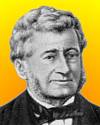
Died 18 Feb 1876 at age 75 (born 14 Jan 1801).
French botanist whose classification of fossil plants, which drew surprisingly accurate relations between extinct and existing forms prior to Charles Darwin's principles of organic evolution, earned him distinction as the founder of modern paleobotany. He was an early proponent of evolutionary theory. Brongniart was a pioneer in the study of plant morphology and physiology and published the first complete account of fossil plants (1828) and of a valuable first account of pollen. His interpretations of the fossil record also contributed to our understanding of historical changes in climates and plant geography. He helped establish the Annales des sciences naturelles and founded the Société botanique de France. He was the son of Alexandre Brogniart.
French botanist whose classification of fossil plants, which drew surprisingly accurate relations between extinct and existing forms prior to Charles Darwin's principles of organic evolution, earned him distinction as the founder of modern paleobotany. He was an early proponent of evolutionary theory. Brongniart was a pioneer in the study of plant morphology and physiology and published the first complete account of fossil plants (1828) and of a valuable first account of pollen. His interpretations of the fossil record also contributed to our understanding of historical changes in climates and plant geography. He helped establish the Annales des sciences naturelles and founded the Société botanique de France. He was the son of Alexandre Brogniart.
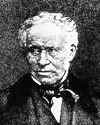
Died 18 Feb 1862 at age 83 (born 3 Apr 1778). quotes
French physician and epidemiologist who performed (1825) the first successful tracheotomy to save a patient with laryngeal diphtheria from suffocating. He incised and opened the trachea through the skin and muscles of the neck. (Earlier attempts by Fabricius of Aquapendente, Sanctorius and Desault failed). Bretonneau first distinguished typhoid from typhus. He was first to clinically describe diphtheria, which name he coined (Traité de la Diphérite ,1826), as a contagious condition characterised by a false membrane in the pharynx or larynx. He derived the word from Greek meaning leather or hide. He enunciated a theory of specific causes of infectious diseases, foreshadowing the germ theory of Louis Pasteur.«
French physician and epidemiologist who performed (1825) the first successful tracheotomy to save a patient with laryngeal diphtheria from suffocating. He incised and opened the trachea through the skin and muscles of the neck. (Earlier attempts by Fabricius of Aquapendente, Sanctorius and Desault failed). Bretonneau first distinguished typhoid from typhus. He was first to clinically describe diphtheria, which name he coined (Traité de la Diphérite ,1826), as a contagious condition characterised by a false membrane in the pharynx or larynx. He derived the word from Greek meaning leather or hide. He enunciated a theory of specific causes of infectious diseases, foreshadowing the germ theory of Louis Pasteur.«
Died 18 Feb 1856 at age 73 (born 19 Mar 1782).
Austrian astronomer who was known for his measurement (1826) of a previously known comet as having an orbital period of 6.6 years. Subsequently, known as Biela's Comet, it was observed to break in two (1846), and in 1852 the fragments returned as widely separated twin comets that were not seen again. However, in 1872 and 1885, bright meteor showers (known as Andromedids, or Bielids) were observed when the Earth crossed the path of the comet's known orbit. This observation provided the first concrete evidence for the idea that some meteors are composed of fragments of disintegrated comets.
Austrian astronomer who was known for his measurement (1826) of a previously known comet as having an orbital period of 6.6 years. Subsequently, known as Biela's Comet, it was observed to break in two (1846), and in 1852 the fragments returned as widely separated twin comets that were not seen again. However, in 1872 and 1885, bright meteor showers (known as Andromedids, or Bielids) were observed when the Earth crossed the path of the comet's known orbit. This observation provided the first concrete evidence for the idea that some meteors are composed of fragments of disintegrated comets.
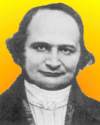
Died 18 Feb 1851 at age 46 (born 10 Dec 1804). quotes
Karl Gustav Jacob Jacobi was a German mathematician who, with the independent work of Niels Henrik Abel of Norway, founded the theory of elliptic functions. He also worked on Abelian functions and discovered the hyperelliptic functions. Jacobi applied his work in elliptic functions to number theory. He also investigated mathematical analysis and geometry. Jacobi carried out important research in partial differential equations of the first order and applied them to the differential equations of dynamics. His work on determinants is important in dynamics and quantum mechanics and he studied the functional determinant now called the Jacobian.[a.k.a Carl Jacobi]
Karl Gustav Jacob Jacobi was a German mathematician who, with the independent work of Niels Henrik Abel of Norway, founded the theory of elliptic functions. He also worked on Abelian functions and discovered the hyperelliptic functions. Jacobi applied his work in elliptic functions to number theory. He also investigated mathematical analysis and geometry. Jacobi carried out important research in partial differential equations of the first order and applied them to the differential equations of dynamics. His work on determinants is important in dynamics and quantum mechanics and he studied the functional determinant now called the Jacobian.[a.k.a Carl Jacobi]
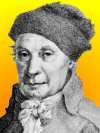
1793 (EB)
Died 18 Feb 1799 at age 68 (born 8 Dec 1730).
German botanist who did more than any other scientist to advance the knowledge of mosses (bryology). He dealt with the anatomy, fertilization, and reproduction of mosses and introduced a new method of classification based on the distribution of spores (reproductive bodies). Hedwig was the first to recognize the true organs of reproduction in mosses. He demonstrated the close relationship between mosses and liverworts. He described the development of the spore capsule (sporogonium) bryophytes, and was one of the first to observe, and the first to illustrate, conjugation in the aglae Spirogyra and Chara. Skilled in the use of the microscope, he identified more mosses than any other botanist of his time and produced a series of well-illustrated, informative books on them, illustrated by accurate and beautiful figures, many of which were drawn from highly magnified images. His posthumous Species Muscorum (1801), based on natural groupings, was a landmark in moss taxonomy and has been adopted as the starting point of moss nomenclature. The moss genus Hedwigia is named for him.
German botanist who did more than any other scientist to advance the knowledge of mosses (bryology). He dealt with the anatomy, fertilization, and reproduction of mosses and introduced a new method of classification based on the distribution of spores (reproductive bodies). Hedwig was the first to recognize the true organs of reproduction in mosses. He demonstrated the close relationship between mosses and liverworts. He described the development of the spore capsule (sporogonium) bryophytes, and was one of the first to observe, and the first to illustrate, conjugation in the aglae Spirogyra and Chara. Skilled in the use of the microscope, he identified more mosses than any other botanist of his time and produced a series of well-illustrated, informative books on them, illustrated by accurate and beautiful figures, many of which were drawn from highly magnified images. His posthumous Species Muscorum (1801), based on natural groupings, was a landmark in moss taxonomy and has been adopted as the starting point of moss nomenclature. The moss genus Hedwigia is named for him.
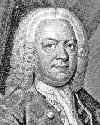
Died 18 Feb 1750 at age 57 (born 23 Jan 1693).
German philosopher, mathematician, statesman, and author of treatises in astronomy, physics, botany, and theology. He is best known for his Leibniz-Wolffian philosophy, a term he coined to refer to his own position midway between those of the philosophers Gottfried Wilhelm Leibniz and Christian Wolff.
German philosopher, mathematician, statesman, and author of treatises in astronomy, physics, botany, and theology. He is best known for his Leibniz-Wolffian philosophy, a term he coined to refer to his own position midway between those of the philosophers Gottfried Wilhelm Leibniz and Christian Wolff.
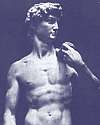
David
Died 18 Feb 1564 at age 88 (born 6 Mar 1475). quotes
Michelangelo Buonarroti was an Italian artist and architect known primarily for his works of art, but he also prepared extremely accurate anatomical drawings of the human body. Michelangelo, too, performed a number of dissections to be able to more accurately depict the physiology of saints and sinners. Thus science was advanced, but in the name of Renaissance art.
Michelangelo Buonarroti was an Italian artist and architect known primarily for his works of art, but he also prepared extremely accurate anatomical drawings of the human body. Michelangelo, too, performed a number of dissections to be able to more accurately depict the physiology of saints and sinners. Thus science was advanced, but in the name of Renaissance art.
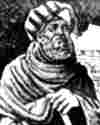
Died 18 Feb 901 (born c. 836).
Al-Sabi Thabit ibn Qurra al-Harrani was a Mesopotamian scholar and mathematician who greatly contributed to preparing the way for such important mathematical discoveries as the extension of the concept of number to (positive) real numbers, integral calculus, theorems in spherical trigonometry, analytic geometry, and non-euclidean geometry. In astronomy he was one of the first reformers of the Ptolemaic system, writing Concerning the Motion of the Eighth Sphere. He believed (wrongly) that the motion of the equinoxes oscillates. Including observations of the Sun, eight complete treatises by Thabit on astronomy have survived. In mechanics he was a founder of statics. He wrote The Book on the Beam Balance in which he finds the conditions for the equilibrium of a heavy beam.*
Al-Sabi Thabit ibn Qurra al-Harrani was a Mesopotamian scholar and mathematician who greatly contributed to preparing the way for such important mathematical discoveries as the extension of the concept of number to (positive) real numbers, integral calculus, theorems in spherical trigonometry, analytic geometry, and non-euclidean geometry. In astronomy he was one of the first reformers of the Ptolemaic system, writing Concerning the Motion of the Eighth Sphere. He believed (wrongly) that the motion of the equinoxes oscillates. Including observations of the Sun, eight complete treatises by Thabit on astronomy have survived. In mechanics he was a founder of statics. He wrote The Book on the Beam Balance in which he finds the conditions for the equilibrium of a heavy beam.*
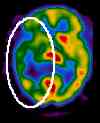
In 1994, the medicine selfotel offering benefits for stroke victims was announced at a conference in San Diego, saying that it appeared to alleviate the brain damage that follows when a blood clot in the brain causes a stroke. However the drug's side effects included hallucinations and agitation that mimic PCP (which binds at a similar site in the brain). By 1996, like many promising new drugs that never make it through clinical trials, the human trial of selfotel was prematurely ended. Ciba-Geigy stated its reason was that the drug was not effective enough to justify further work. Research continues into newer chemical treatments to protect stroke victims from devastating brain damage, the leading cause of adult disability, and third leading cause of death.[Image: scan of brain with stroke damage shown in white circle.]
NASA Space Shuttle Manual: An Insight into the Design, Construction and Operation..., by David Baker. - book suggestion.
In 1930, the planet Pluto was discovered by Clyde Tombaugh, when comparing two photographic plates taken six days apart the previous month. He found a starry speck that changed position between them. The search for Planet X was started three decades earlier (before Tombaugh was born) at Lowell Observatory in Flagstaff, Arizona, by Percival Lowell. Deviations in the positions of Uranus and Neptune were suspected (incorrectly) to be due to the gravity of an undiscovered ninth planet. Locating it meant sifting through the millions of star images for one dim dot that moved. Lowell was unsuccessful, but in his will decreed that the hunt should continue. Clyde Tombaugh was a Kansas farmboy when Lowell Observatory director Vesto Slipher hired him in 1929. Pluto was the only planet found by an American.«
Out of the Darkness, the Planet Pluto, by Clyde William Tombaugh. - book suggestion.
In 1913, chemist Frederick Soddy introduced the term “isotope.” Soddy was an English chemist and physicist who received the Nobel Prize for Chemistry in 1921 for investigating radioactive substances. He suggested that different elements produced in different radioactive transformations were capable of occupying the same place on the Periodic Table, and on 18 Feb 1913 he named such species “isotopes” from Greek words meaning “same place.” He is credited, along with others, with the discovery of the element protactinium in 1917.
In 1908, Thomas A. Edison was issued a U.S. patent for an improvement to "Alkaline Storage Battery" (No. 879,612). Its purpose was to reduce foaming of the electrolyte in such batteries while in operation, which Edison attributed to the presence of even microsopic quantities of organic matter. To correct the problem, the alkaline solution, such as caustic potash, is filtered through bone black that has been first purified by washing in a hot potash solution, then washing in water.Image: plates of Edison's A-type storage battery, date unknown.

(USPTO)
In 1897, a U.S. design patent was issued to Auguste Bartholdi for a monumental statue intended to commemorate the independence of the United States, “Liberty Enlightening the World,” now known as the Statue of Liberty (No. D11,023). The patent described the design as “a female figure standing erect upon a pedestal or block ... The body is clothed in the classical drapery or stola ... The right arm is thrown up and stretched out with a flamboyant torch grasped in the hand ... In the left arn, which is falling against the body, is held a tablet, upon which is inscribed ‘4th July, 1776.’ ... The head is surmounted by a crown or diadem, from which radiate divergingly seven rays tapering from the crown, and representing a halo.... ”«
more
The Statue of Liberty, by Barry Moreno. - book suggestion.
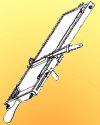
In 1896, a U.S. patent for a "Razor Stropping Device" was issued to black American inventor, Henry Grenon (No. 554,867). The invention combined a frame, a strop within the frame, travellers with horizontal movement along the frame, and a carrier mounted in the travellers to hold the razor blade. The device was designed to handle a razor while stropping it, and providing for the razor to automatically turn on its back when the direction of motion of the travellers is reversed.
The Inventive Spirit of African Americans: Patented Ingenuity, by Patricia Carter Sluby. - book suggestion.

In 1876, a direct telegraph link was established between Britain and New Zealand.




