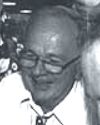
Born 28 Apr 1928; died 18 Jul 1997 at age 69. quotes
Eugene Merle Shoemaker was an American planetary geologist. Shoemaker initiated and vigorously promoted the intensive geologic training of the astronauts that made them able scientific observers and reporters on moon landings. He was a major investigator of the imaging by unmanned Ranger and Surveyor satellites which, before any Apollo landing, revealed the nature of the Moon's cover of soil and broken rock that he named the regolith. He codiscovered Comet P/Shoemaker-Levy 9 which collided with Jupiter (1994), the first observed collision of two solar system bodies. He died in a car crash. In tribute, a small capsule of his ashes were launched in a memorial capsule aboard Lunar Prospector to the moon.
Eugene Merle Shoemaker was an American planetary geologist. Shoemaker initiated and vigorously promoted the intensive geologic training of the astronauts that made them able scientific observers and reporters on moon landings. He was a major investigator of the imaging by unmanned Ranger and Surveyor satellites which, before any Apollo landing, revealed the nature of the Moon's cover of soil and broken rock that he named the regolith. He codiscovered Comet P/Shoemaker-Levy 9 which collided with Jupiter (1994), the first observed collision of two solar system bodies. He died in a car crash. In tribute, a small capsule of his ashes were launched in a memorial capsule aboard Lunar Prospector to the moon.
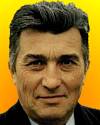
Born 28 Apr 1916; died 20 Feb 1993 at age 76.
Italian industrialist who founded a luxury car company that produced some of the fastest, most expensive, and sought-after sports cars in the world. Lamborghini worked as a mechanic in the Italian army during World War II, and after the war he started a tractor company.
Italian industrialist who founded a luxury car company that produced some of the fastest, most expensive, and sought-after sports cars in the world. Lamborghini worked as a mechanic in the Italian army during World War II, and after the war he started a tractor company.
Lamborghini: Forty Years, by David Jolliffe. - book suggestion.
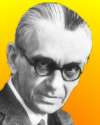
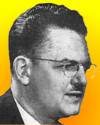
Born 28 Apr 1906; died 14 Jan 1978 at age 71. quotes
Austrian-born U.S. mathematician, logician, and author of Gödel's proof. He is best known for his proof of Gödel's Incompleteness Theorems (1931) He proved fundamental results about axiomatic systems showing in any axiomatic mathematical system there are propositions that cannot be proved or disproved within the axioms of the system. In particular the consistency of the axioms cannot be proved. This ended a hundred years of attempts to establish axioms to put the whole of mathematics on an axiomatic basis.
Austrian-born U.S. mathematician, logician, and author of Gödel's proof. He is best known for his proof of Gödel's Incompleteness Theorems (1931) He proved fundamental results about axiomatic systems showing in any axiomatic mathematical system there are propositions that cannot be proved or disproved within the axioms of the system. In particular the consistency of the axioms cannot be proved. This ended a hundred years of attempts to establish axioms to put the whole of mathematics on an axiomatic basis.
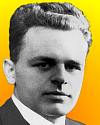
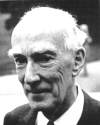
Born 28 Apr 1906; died 7 Aug 1983 at age 77. quotes
Bart Jan Bok was a Dutch-American astronomer whose name remains associated with the "Bok globules" for being the first to investigate these dark clouds of dense gas and dust visible against a background of bright nebulae. Bok globules have a mass of 10 to 50 times the mass of the Sun and are about a light year across. He began their observation in the 1940's and in a 1947 paper with E.F. Reilly proposed that these were sites of new star formation as the gas clouds underwent gravitational collapse. Bok's other important work was on the structure and evolution of the Milky Way Galaxy. His enthusiasm for astronomy began as a young boy. Bok bicycled to Norway to observe the solar eclipse of 1927. He moved to the U.S. in 1929.«
Bart Jan Bok was a Dutch-American astronomer whose name remains associated with the "Bok globules" for being the first to investigate these dark clouds of dense gas and dust visible against a background of bright nebulae. Bok globules have a mass of 10 to 50 times the mass of the Sun and are about a light year across. He began their observation in the 1940's and in a 1947 paper with E.F. Reilly proposed that these were sites of new star formation as the gas clouds underwent gravitational collapse. Bok's other important work was on the structure and evolution of the Milky Way Galaxy. His enthusiasm for astronomy began as a young boy. Bok bicycled to Norway to observe the solar eclipse of 1927. He moved to the U.S. in 1929.«
The Milky Way, by Bart J. Bok. - book suggestion.
1970
Born 28 Apr 1900; died 5 Nov 1992 at age 92.
Jan Hendrik Oort was a Dutch physicist and astronomer, one of the most important figures in 20th-century efforts to understand the nature of the Milky Way Galaxy, who measured the rotation of the earth's galaxy and hypothesized an "Oort Cloud." In 1927 Oort analyzed motions of distant stars, found evidence for differential rotation and founded the mathematical theory of galactic structure. After World War II, he led the Dutch group which used the 21-cm line to map hydrogen gas in the Galaxy. They found the large-scale spiral structure, the galactic center, and gas cloud motions. In 1950 Oort proposed the now generally accepted model for the origin of comets. He continued researching galaxies until shortly before his death at 92.
Jan Hendrik Oort was a Dutch physicist and astronomer, one of the most important figures in 20th-century efforts to understand the nature of the Milky Way Galaxy, who measured the rotation of the earth's galaxy and hypothesized an "Oort Cloud." In 1927 Oort analyzed motions of distant stars, found evidence for differential rotation and founded the mathematical theory of galactic structure. After World War II, he led the Dutch group which used the 21-cm line to map hydrogen gas in the Galaxy. They found the large-scale spiral structure, the galactic center, and gas cloud motions. In 1950 Oort proposed the now generally accepted model for the origin of comets. He continued researching galaxies until shortly before his death at 92.

Born 28 Apr 1854; died 26 Aug 1923 at age 69. quotes
Phoebe Sarah Hertha Marks Ayrton (née Phoebe Sarah Marks) was an English electrical engineer, inventor and mathematician whose aptitude for science and mathematics began in school. She invented a sphygmograph (a device that charts pulse beats, though not the first), a line divider (a drafting instrument to divide a line into any given number of equal parts, 1884) and an anti-gas fan (flapper) used during WWI. She began working with William Ayrton, whom she subsequently married (1884). Taking up her husband’s interest in electric arc experiments, Hertha designed improvements making arc lights quieter and more reliable. She published The Electric Arc (1902). As a woman she was denied a degree from Cambridge, and at first refused membership in the Royal Society (1902).«[EB gives date of death as 26 Aug 1923; some sources state 23 Aug. It was not a birth name, but she became known as “Herta”, which was a nickname originating at age 16.]
Phoebe Sarah Hertha Marks Ayrton (née Phoebe Sarah Marks) was an English electrical engineer, inventor and mathematician whose aptitude for science and mathematics began in school. She invented a sphygmograph (a device that charts pulse beats, though not the first), a line divider (a drafting instrument to divide a line into any given number of equal parts, 1884) and an anti-gas fan (flapper) used during WWI. She began working with William Ayrton, whom she subsequently married (1884). Taking up her husband’s interest in electric arc experiments, Hertha designed improvements making arc lights quieter and more reliable. She published The Electric Arc (1902). As a woman she was denied a degree from Cambridge, and at first refused membership in the Royal Society (1902).«[EB gives date of death as 26 Aug 1923; some sources state 23 Aug. It was not a birth name, but she became known as “Herta”, which was a nickname originating at age 16.]
The Electric Arc (reprint), by Hertha Marks Ayrton. - book suggestion.
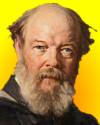
Born 28 Apr 1831; died 4 Jul 1901 at age 70. quotes
Scottish physicist and mathematician who helped develop quaternions, which he strongly promoted, and wrote a standard treatise on the subject. His work helped advance modern mathematical physics. Tait did much experimental work in thermodynamics, and presented a series of papers on the kinetic theory of gases (1886-92). Of his many books on physics, his best known was co-authored with William Thomson (later Lord Kelvin), a mathematical physics textbook, Treatise on Natural Philosophy (1876). As well as investigating ozone, gases and electricity, Tait created an apparatus to emit large stable smoke vortex rings. From other experimental work, he constructed mathematical models of the flight of a golf ball.«
Scottish physicist and mathematician who helped develop quaternions, which he strongly promoted, and wrote a standard treatise on the subject. His work helped advance modern mathematical physics. Tait did much experimental work in thermodynamics, and presented a series of papers on the kinetic theory of gases (1886-92). Of his many books on physics, his best known was co-authored with William Thomson (later Lord Kelvin), a mathematical physics textbook, Treatise on Natural Philosophy (1876). As well as investigating ozone, gases and electricity, Tait created an apparatus to emit large stable smoke vortex rings. From other experimental work, he constructed mathematical models of the flight of a golf ball.«
Life and Scientific Work of Peter Guthrie Tait, by Cargill Gilson Knott. - book suggestion.

Modern photo of Bailey's Beads
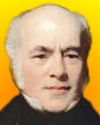
English astronomer who described the striking optical effect of “Baily's Beads” during an annular eclipse of the Sun (15 May 1836). An arc of bright spots is briefly seen during an eclipse of the Sun immediately before and after totality. It is due to the light shining through the Moon's irregular surface features. He retired in 1825 from a successful career as an eminent London stockbroker to turn his interest in astronomy from spare time to full time. Baily repeated Henry Cavendish's experiments to determine the density of the Earth, and measured its elliptical shape. Outraged by inaccuracies in the British Nautical Almanac (tables used by seamen to determine longitude for navigation), he took on the exacting and tedious work of revising them. In tandem, it was necessary to revise several star catalogs to correct errors.«
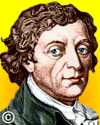
Born 28 Apr 1753; died 20 Apr 1821 at age 67. quotes
German chemist and experimental physicist who invented a process for the large-scale extraction of table sugar (sucrose) from beets, and in 1801, opened the first sugar-beet factory, in Silesia (now Poland). At first, though simple, the method was costly, He improved it using suggestions of the Institute in France, including that the beets be pressed without cooking them, which saved much expense for fuel. He had succeeded Andreas Sigismund Marggrafupon his death (1782) as director of the “Class of Physics” at the Berlin Academy. It was Marggraf that had first discovered the presence of sugar in beet-root, and isolated it on an experimental scale in 1747. Achard also discovered a method for working platinum and was the first to prepare a platinum crucible (1784). more
German chemist and experimental physicist who invented a process for the large-scale extraction of table sugar (sucrose) from beets, and in 1801, opened the first sugar-beet factory, in Silesia (now Poland). At first, though simple, the method was costly, He improved it using suggestions of the Institute in France, including that the beets be pressed without cooking them, which saved much expense for fuel. He had succeeded Andreas Sigismund Marggrafupon his death (1782) as director of the “Class of Physics” at the Berlin Academy. It was Marggraf that had first discovered the presence of sugar in beet-root, and isolated it on an experimental scale in 1747. Achard also discovered a method for working platinum and was the first to prepare a platinum crucible (1784). more

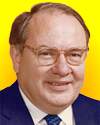
Died 28 Apr 1999 at age 77 (born 5 May 1921). quotes
Arthur Leonard Schawlow was an American physicist who shared (with independent researchers Nicolaas Bloembergen and Kai Siegbahn) the 1981 Nobel Prize for Physics for his work in developing the laser and in laser spectroscopy. With Theodor Hänsch, Schawlow used tunable dye lasers for high resolution spectroscopy. In his early career, Schawlow collaborated with Charles Townes in research of maser principles. Although he did not share in the 1964 Nobel Prize in Physics, which was awarded to Townes and two Russian scientists for their maser and laser research, Schawlow is still thought of as a coinventor of the laser.«
Arthur Leonard Schawlow was an American physicist who shared (with independent researchers Nicolaas Bloembergen and Kai Siegbahn) the 1981 Nobel Prize for Physics for his work in developing the laser and in laser spectroscopy. With Theodor Hänsch, Schawlow used tunable dye lasers for high resolution spectroscopy. In his early career, Schawlow collaborated with Charles Townes in research of maser principles. Although he did not share in the 1964 Nobel Prize in Physics, which was awarded to Townes and two Russian scientists for their maser and laser research, Schawlow is still thought of as a coinventor of the laser.«
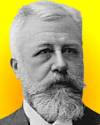
Died 28 Apr 1910 at age 64 (born 5 Mar 1846). quotes
Édouard Joseph Louis-Marie van Beneden was a Belgian embryologist and cytologist best known for his discoveries concerning fertilization in sex cells and chromosome numbers in body cells. From 1883, he experimented with the worm Ascaris megalocephala, an intestinal worm found in horses. His studies showed that sexual fertilization results from the union of two different cell half-nuclei. Thus a new single cell is created with its number of chromosomes derived as one-half from the male sperm and the other half from the female egg. Van Beneden also determined that the chromosome number is constant for every body cell of a species. His theory of embryo formation in mammals became a standard scientific principle.
Édouard Joseph Louis-Marie van Beneden was a Belgian embryologist and cytologist best known for his discoveries concerning fertilization in sex cells and chromosome numbers in body cells. From 1883, he experimented with the worm Ascaris megalocephala, an intestinal worm found in horses. His studies showed that sexual fertilization results from the union of two different cell half-nuclei. Thus a new single cell is created with its number of chromosomes derived as one-half from the male sperm and the other half from the female egg. Van Beneden also determined that the chromosome number is constant for every body cell of a species. His theory of embryo formation in mammals became a standard scientific principle.
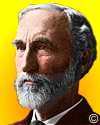
Died 28 Apr 1903 at age 64 (born 11 Feb 1839). quotes
Josiah Willard Gibbs was an American mathematical physicist and chemist known for contributions to vector analysis and as one of the founders of physical chemistry. In 1863, He was awarded Yale University's first engineering doctorate degree. His major work was in developing thermodynamic theory, which brought physical chemistry from an empirical enquiry to a deductive science. In 1873, he published two papers concerning the fundamental nature of entropy of a system, and established the “thermodynamic surface,” a geometrical and graphical method for the analysis of the thermodynamic properties of substances. His famous On the Equilibrium of Homogeneous Substances, published in 1876, established the use of “chemical potential,” now an important concept in physical chemistry.«
Josiah Willard Gibbs was an American mathematical physicist and chemist known for contributions to vector analysis and as one of the founders of physical chemistry. In 1863, He was awarded Yale University's first engineering doctorate degree. His major work was in developing thermodynamic theory, which brought physical chemistry from an empirical enquiry to a deductive science. In 1873, he published two papers concerning the fundamental nature of entropy of a system, and established the “thermodynamic surface,” a geometrical and graphical method for the analysis of the thermodynamic properties of substances. His famous On the Equilibrium of Homogeneous Substances, published in 1876, established the use of “chemical potential,” now an important concept in physical chemistry.«
The Scientific Papers of J. Willard Gibbs, Vol. 1: Thermodynamics, by J. Willard Gibbs. - book suggestion.
1857
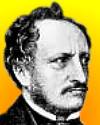
Died 28 Apr 1858 at age 56 (born 14 Jul 1801). quotes
German physiologist and anatomist who was one of the greatest of 19th century. He and Magendie are credited for establishing the science of physiology in its modern form. His famous discovery of the principle of specific nerve energies (1826) when he was able to show that sensory nerves impulses, however stimulated, will be interpreted in the same way. For example, any stimulation of the optic nerve results in a sensation of light, whether light is really involved or not. His major work, Handbuch der Physiologie des Menschen für Vorlesungen, (Elements of Physiology, in 2 vols.) was published in 1833-40. His broad pathology studies included hermaphroditism, embryology, echinoderms, fishes, lmph, chyle, the blood and the voice.«
German physiologist and anatomist who was one of the greatest of 19th century. He and Magendie are credited for establishing the science of physiology in its modern form. His famous discovery of the principle of specific nerve energies (1826) when he was able to show that sensory nerves impulses, however stimulated, will be interpreted in the same way. For example, any stimulation of the optic nerve results in a sensation of light, whether light is really involved or not. His major work, Handbuch der Physiologie des Menschen für Vorlesungen, (Elements of Physiology, in 2 vols.) was published in 1833-40. His broad pathology studies included hermaphroditism, embryology, echinoderms, fishes, lmph, chyle, the blood and the voice.«
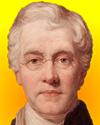
Died 28 Apr 1842 at age 67 (born 12 Nov 1774). quotes
Scottish anatomist and surgeon whose New Idea of Anatomy of the Brain (1811) has been called the “Magna Carta of neurology.” After further research on the anatomy of the brain he published an expanded version, entitled The Nervous System of the Human Body (1830). In these books Bell distinguished between sensory nerves that conduct impulses to the central nervous system and motor nerves that convey impulses from the brain or from other nerve centres to a peripheral organ of response. He announced that the anterior roots of the spinal nerves are motor in function, while the posterior roots are sensory. This observation was confirmed eleven years later and more fully elaborated by François Magendie.
Scottish anatomist and surgeon whose New Idea of Anatomy of the Brain (1811) has been called the “Magna Carta of neurology.” After further research on the anatomy of the brain he published an expanded version, entitled The Nervous System of the Human Body (1830). In these books Bell distinguished between sensory nerves that conduct impulses to the central nervous system and motor nerves that convey impulses from the brain or from other nerve centres to a peripheral organ of response. He announced that the anterior roots of the spinal nerves are motor in function, while the posterior roots are sensory. This observation was confirmed eleven years later and more fully elaborated by François Magendie.
The Life and Labours of Sir Charles Bell, by Amédée Pichot. - book suggestion.
In 1991, the space shuttle Discovery was launched with a crew of seven to perform "Star Wars" defense research.
In 1986, Russia announced the Chernobyl nuclear disaster, two days after it happened, on 26 Apr 1986..
In 1984, this day became Workers' Memorial Day, an annual day of remembrance, by the declaration of the Canadian Union of Public Employees. The day is now recognized internationally to respect persons killed or injured in the workplace. The Canadian Parliament passed an Act in 1991 officially making its National Day of Mourning to be 28 Apr, the anniversary of the comprehensive Workers Compensation Act it passed in 1914. Over the centuries, the pace of invention has created increasingly large-scale manufacturing, chemistry has introduced new toxic chemicals, and new workplace related diseases and illnesses have appeared. Although the public expects safe conditions at work, politicians too often pander to wealthy profiteers, and safeguards still remain inadequate. This Day promotes safety awareness.«
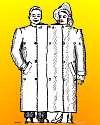
(USPTO)
In 1953, a U.S. patent was issued for an overcoat for two people (or Siamese Twins) to Howard C. Rossin (No. 2,636,176).
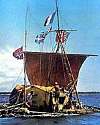
In 1947, a balsa-wood raft, the Kon Tiki and a crew of six left Peru, bound for Polynesia, which was reached 101 days later, captained by anthropologist Thor Heyerdahl. He wished to demonstrate his belief that the voyage was possible using materials and technology of pre-Columbian times, and that thus ancient Polynesians could have originated in South America. The Kon-Tiki raft party reported first sighting land - Pukapuka Island in the Tuamotas - on 30 Jul 1947. It struck a reef at Raroia in the Tuamotu Islands in the Pacific Ocean on 7 Aug 1947. Kon Tiki was an old name of the Inca sun god, Viracocha.
Kon-Tiki: Across the Pacific in a Raft, by Thor Heyerdahl. - book suggestion.
In 1937, the first animated-cartoon electric sign display in the U.S. was shown by Douglas Leigh on the front of a building on Broadway, New York City. It used 2,000 bulbs, and its four-minute show included a cavorting horse a ball tossing cats.
In 1932, a vaccine was announced for yellow fever for human immunization. This first public announcement was made at a meeting of the American Societies for Experimental Biology at Philadelphia, Pennsylvania. It was developed by Drs. Wilbur A. Sawyer, Wray D.M. Lloyd, and Stuart F. Kitchen, who were sponsored by the Rockefeller Foundation.
In 1930, the first U.S. motion picture of the 1.5 minute totality of an eclipse of the sun was taken from an airplane flying about 18,000 feet over at Honey Lake, California. The flight was sponsored by the U.S. Naval Observatory, and carried out by Lt. Leslie E. Gehres amd Chief Photographer J.M.F. Haase of the U.S. Navy. An attempt made during an earlier eclipse had been made by the same photographer on 10 Sep 1923, but was unsuccessful due to cloudy conditions. A U.S. Navy dirigible was first used to make a motion film of an eclipse on 24 Jan 1925. The dirigible was about 4,500 feet above a point almost 19 miles east of Monauk Point, New York, which it filmed the 2-min 5-sec eclipse.
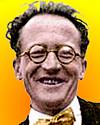
In 1926, the term “wave mechanics” was coined by nuclear physicist Erwin Schrödinger in a letter he sent to Albert Einstein. The term was applied to the newly emerging branch of physics which interprets the behavious of subatomic particles according to a mathematical description in terms of a wave motion.
Schrödinger: Life and Thought, by Walter J. Moore. - book suggestion.
In 1919, the first jump with the Army manually operated army parachute was made by Leslie LeRoy Irvin in Dayton, Ohio. This was the first test of this type, known as the "free parachute," with which the operator jumps before pulling the ripcord. He jumped at an altitude of 1,500-ft from a de Havilland DH-9 biplane while flying at 100-mph over McCook Field, Dayton, Ohio. He broke his ankle upon landing on the ground. Later, he founded the Irving Air Chute, Co., which business name resulted from an spelling error on the incorporation papers.
In 1896, the first U.S. patent for an addressing machine, the Addressograph (No. 558,936) was issued to J.S. Duncan of Sioux City, Iowa developed from the invention he made in 1892. His earlier model consisted of a hexagonal wood block upon which was glued rubber type torn from rubber stamps. While revolving, the block simultaneously inked the next name and address ready for the next impression. The "Baby O" model was put into production 26 Jul 1893 in a small back room of the old Caxton Building in Chicago, Ill.
In 1852, the first municipal electric fire alarm system using call boxes with automatic signaling indicating a fire's location was placed into operation in Boston. It proved very effective in saving lives and avoiding great loss of property resulting from fire. (As recently as 16 Dec 1835, a great fire in New York City had resulted in the demolition of 600 buildings, at a loss of $20 million.) The success of Boston's fire alarm system was soon apparent, and the system spread across the United States and Canada. The inventors, William Channing and Moses Farmer, received a U.S. patent on their system on 19 May 1857 (No. 17,355). Their original 28-page proposal was given to the mayor of Boston on 27 Mar 1851 and construction began 7 Sep 1851.«




