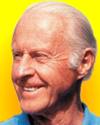
Born 6 Oct 1914; died 18 Apr 2002 at age 87. quotes
Norwegian ethnologist and adventurer who organized and led the famous Kon-Tiki (28 Apr 1947) and Ra (1969-70) transoceanic scientific expeditions. Both expeditions were intended to prove the possibility of ancient transoceanic contacts between distant civilizations and cultures. The Kon Tiki voyage from Peru to Polynesia was a 101-day, 4,300-mile drifting voyage on the 40-sq.ft. raft, a replica of pre-Inca vessels. He wished to show that Polynesia's first settlers could have come from South America. Few scholars at the time, and almost none today, endorsed the idea. They discount the Heyerdahl hypothesis largely on linguistic, genetic and cultural grounds, all of which point to the settlers having come from the west, not the east.
Norwegian ethnologist and adventurer who organized and led the famous Kon-Tiki (28 Apr 1947) and Ra (1969-70) transoceanic scientific expeditions. Both expeditions were intended to prove the possibility of ancient transoceanic contacts between distant civilizations and cultures. The Kon Tiki voyage from Peru to Polynesia was a 101-day, 4,300-mile drifting voyage on the 40-sq.ft. raft, a replica of pre-Inca vessels. He wished to show that Polynesia's first settlers could have come from South America. Few scholars at the time, and almost none today, endorsed the idea. They discount the Heyerdahl hypothesis largely on linguistic, genetic and cultural grounds, all of which point to the settlers having come from the west, not the east.
Kon-Tiki: Across the Pacific in a Raft, by Thor Heyerdahl. - book suggestion.
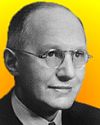
Born 6 Oct 1903; died 25 Jun 1995 at age 91.
Ernest Thomas Sinton Walton was an Irish physicist who was corecipient, with Sir John Douglas Cockcroft of England, of the 1951 Nobel Prize for Physics for the development of the first nuclear particle accelerator, known as the Cockcroft-Walton generator. The accelerator was built in a disused room in the Cavendish Laboratory, and supplied with several hundred kilovolts from a voltage multiplier circuit designed and built by Cockroft and Walton. On 14 Apr 1932 Walton turned the proton beam on to a lithium target. Despite all the odds against them, they succeeded in being the first to split the atom, and Walton was the first to see the reaction taking place. They identified the disintegration products as alpha particles (helium nuclei).
Ernest Thomas Sinton Walton was an Irish physicist who was corecipient, with Sir John Douglas Cockcroft of England, of the 1951 Nobel Prize for Physics for the development of the first nuclear particle accelerator, known as the Cockcroft-Walton generator. The accelerator was built in a disused room in the Cavendish Laboratory, and supplied with several hundred kilovolts from a voltage multiplier circuit designed and built by Cockroft and Walton. On 14 Apr 1932 Walton turned the proton beam on to a lithium target. Despite all the odds against them, they succeeded in being the first to split the atom, and Walton was the first to see the reaction taking place. They identified the disintegration products as alpha particles (helium nuclei).
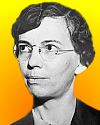
Born 6 Oct 1897; died 23 Aug 1991 at age 93.
American scientist who developed the protein substance used for the tuberculosis skin test, and contributed to safety measures for intravenous drug therapy. In the early 1920s, she discovered that the sudden fevers that sometimes occurred during intravenous injections were caused by bacteria in the distilled water used to make the protein solutions. She invented a distillation apparatus designed to prevent such contamination. In 1941, her improved TB skin test became the standard test in the U.S. and a year later was adopted by the World Health Organization. It is still in use today. Her later research involved the study of bacteria associated with certain cancers.
American scientist who developed the protein substance used for the tuberculosis skin test, and contributed to safety measures for intravenous drug therapy. In the early 1920s, she discovered that the sudden fevers that sometimes occurred during intravenous injections were caused by bacteria in the distilled water used to make the protein solutions. She invented a distillation apparatus designed to prevent such contamination. In 1941, her improved TB skin test became the standard test in the U.S. and a year later was adopted by the World Health Organization. It is still in use today. Her later research involved the study of bacteria associated with certain cancers.
Born 6 Oct 1893; died 16 Feb 1956 at age 62.
Indian astrophysicist noted for his development in 1920 of the thermal ionization equation, which, in the form perfected by the British astrophysicist E. Arthur Milne, has remained fundamental in all work on stellar atmospheres. This equation has been widely applied to the interpretation of stellar spectra, which are characteristic of the chemical composition of the light source.
Indian astrophysicist noted for his development in 1920 of the thermal ionization equation, which, in the form perfected by the British astrophysicist E. Arthur Milne, has remained fundamental in all work on stellar atmospheres. This equation has been widely applied to the interpretation of stellar spectra, which are characteristic of the chemical composition of the light source.
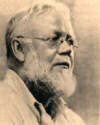
Born 6 Oct 1866; died 22 Jul 1932 at age 65. quotes
Reginald Aubrey Fessenden was a Canadian-American physicist, engineer and inventor with 300 patents. He broadcast the first program of voice and music. In 1893, Fessenden moved to Pittsburgh as the head of electrical engineering at the university, Fessenden read of Marconi's work and began experimenting himself. Marconi could only transmit Morse code. But Fessenden's goal was to transmit the human voice and music. He invented the “continuous wave” AM radio: sound superimposed by amplitude modulation onto a carrier radio wave for transmission. A radio receiver extracts the signal from the carrier wave so the listener hears the original sound. Fessenden made the first long-range transmissions of voice on Christmas Eve 1906 from a station at Brant Rock, Massachusetts, heard hundreds of miles out in the Atlantic.
Reginald Aubrey Fessenden was a Canadian-American physicist, engineer and inventor with 300 patents. He broadcast the first program of voice and music. In 1893, Fessenden moved to Pittsburgh as the head of electrical engineering at the university, Fessenden read of Marconi's work and began experimenting himself. Marconi could only transmit Morse code. But Fessenden's goal was to transmit the human voice and music. He invented the “continuous wave” AM radio: sound superimposed by amplitude modulation onto a carrier radio wave for transmission. A radio receiver extracts the signal from the carrier wave so the listener hears the original sound. Fessenden made the first long-range transmissions of voice on Christmas Eve 1906 from a station at Brant Rock, Massachusetts, heard hundreds of miles out in the Atlantic.
The Cosmic Inventor: Reginald Aubrey Fessenden (1866-1932), by Frederick Seitz. - book suggestion.
Born 6 Oct 1853; died 10 Dec 1923 at age 70.
Thomas George Shaughnessy, 1st Baron Shaughnessy (of Montreal and Ashford) was an American-Canadian railway magnate was a Canadian railway magnate. With some education in business, at age 16, he joined the Milwaukee and St Paul Railroad as a clerk. In Nov 1882, he moved to the Canadian Pacific Railway as its purchasing agent, and initiated rigid accounting and aggressive cost control. By 1885, he became assistant general manager, and assistant president in 1889. As a shrewd administrator, he was elected the railroad company's president in 1899. He extended its track from 7,000 miles to 12,993 miles by the time he resigned in 1918, with failing eyesight. Shaughnessy had also developed steamship service, tugs, barges, and ferries on the Great Lakes, Pacific coast, inland, and Atlantic steamship service. He initiated irrigation and land development for settlers, and built hotels. He was made a baron on 1 Jan 1916.«
Thomas George Shaughnessy, 1st Baron Shaughnessy (of Montreal and Ashford) was an American-Canadian railway magnate was a Canadian railway magnate. With some education in business, at age 16, he joined the Milwaukee and St Paul Railroad as a clerk. In Nov 1882, he moved to the Canadian Pacific Railway as its purchasing agent, and initiated rigid accounting and aggressive cost control. By 1885, he became assistant general manager, and assistant president in 1889. As a shrewd administrator, he was elected the railroad company's president in 1899. He extended its track from 7,000 miles to 12,993 miles by the time he resigned in 1918, with failing eyesight. Shaughnessy had also developed steamship service, tugs, barges, and ferries on the Great Lakes, Pacific coast, inland, and Atlantic steamship service. He initiated irrigation and land development for settlers, and built hotels. He was made a baron on 1 Jan 1916.«
The CPR West: The Iron Road and the Making of a Nation, by Hugh A. Dempsey. - book suggestion.
1884
Born 6 Oct 1846; died 12 Mar 1914 at age 67. quotes
American engineer, inventor and industrialist who founded his own company to manufacturer his invention, the air brake. The son of a New York agricultural machinery maker, he began at age 21 to work on a new tool he invented to guide derailed train cars back onto the track. Before he died 46 years later, he produced safer rail transportation, steam turbines, gas lighting and heating, and electricity. He founded not only namesakes Westinghouse Air Brake and Westinghouse Electric, but also Union Switch & Signal and the forerunners to Duquesne Light, Equitable Gas and Rockwell International. He was also chiefly responsible for the adoption of alternating current for electric power transmission in the United States, and held 400 patents. more
American engineer, inventor and industrialist who founded his own company to manufacturer his invention, the air brake. The son of a New York agricultural machinery maker, he began at age 21 to work on a new tool he invented to guide derailed train cars back onto the track. Before he died 46 years later, he produced safer rail transportation, steam turbines, gas lighting and heating, and electricity. He founded not only namesakes Westinghouse Air Brake and Westinghouse Electric, but also Union Switch & Signal and the forerunners to Duquesne Light, Equitable Gas and Rockwell International. He was also chiefly responsible for the adoption of alternating current for electric power transmission in the United States, and held 400 patents. more
A Life of George Westinghouse, by Henry G. Prout. - book suggestion.
Born 6 Oct 1836; died 23 Jan 1921 at age 84. quotes
Heinrich Wilhelm Gottfried von Waldeyer-Hartz was a German anatomist who coined the terms neuron (1891) and chromosome (1888), and a number of embryological terms (including those to describe the structure of developing teeth). In 1856, he began university studies in natural science, but his interest turned to medicine and anatomy. After completing his doctoral dissertation (published 1862), he began teaching physiology, and thereafter published several papers on pathology. One of these, on the histological changes in muscles following typhoid fever, led at age 29 to appointment as a professor of pathology. He studied the diagnosis of early cancer, and in 1887 was one of the German doctors that diagnosed a tumor of his vocal cords for Emperor Frederick III. For over 30 years of his later career, until age 80, he was director of the anatomy department at the University of Berlin.«
Heinrich Wilhelm Gottfried von Waldeyer-Hartz was a German anatomist who coined the terms neuron (1891) and chromosome (1888), and a number of embryological terms (including those to describe the structure of developing teeth). In 1856, he began university studies in natural science, but his interest turned to medicine and anatomy. After completing his doctoral dissertation (published 1862), he began teaching physiology, and thereafter published several papers on pathology. One of these, on the histological changes in muscles following typhoid fever, led at age 29 to appointment as a professor of pathology. He studied the diagnosis of early cancer, and in 1887 was one of the German doctors that diagnosed a tumor of his vocal cords for Emperor Frederick III. For over 30 years of his later career, until age 80, he was director of the anatomy department at the University of Berlin.«
Born 6 Oct 1831; died 12 Feb 1916 at age 84. quotes
(Julius Wilhelm) Richard Dedekind was a German mathematician who developed a major redefinition of irrational numbers in terms of arithmetic concepts. Although not fully recognized in his lifetime, his treatment of the ideas of the infinite and of what constitutes a real number continues to influence modern mathematics.
(Julius Wilhelm) Richard Dedekind was a German mathematician who developed a major redefinition of irrational numbers in terms of arithmetic concepts. Although not fully recognized in his lifetime, his treatment of the ideas of the infinite and of what constitutes a real number continues to influence modern mathematics.
Essays on the Theory of Numbers, by Richard Dedekind, Wooster W. Beman (trans.). - book suggestion.
Born 6 Oct 1822; died 19 Jun 1915 at age 92.
B(enjamin) F(ranklin) Isherwood was a U.S. naval engineer who, during the American Civil War, greatly augmented the U.S. Navy's steam-powered fleet.
B(enjamin) F(ranklin) Isherwood was a U.S. naval engineer who, during the American Civil War, greatly augmented the U.S. Navy's steam-powered fleet.
Born 6 Oct 1783; died 7 Oct 1855 at age 72. quotes
French physiologist who was the first to prove the functional difference of the spinal nerves. His pioneer studies of the effects of drugs on various parts of the body led to the scientific introduction into medical practice of such compounds as strychnine and morphine. Magendie with Johannes Peter Müller are the founders of the modern science of experimental physiology. Magendie proved Charles Bell's theory on the motor function of anterior roots and the sensory function of dorsal roots of spinal nerves (“the Bell-Magendie law”). He also introduced the effects and uses of morphine, emetine, strychnine, quinine, and other alkaloids. He is sometimes called the founder of experimental pharmacology.
French physiologist who was the first to prove the functional difference of the spinal nerves. His pioneer studies of the effects of drugs on various parts of the body led to the scientific introduction into medical practice of such compounds as strychnine and morphine. Magendie with Johannes Peter Müller are the founders of the modern science of experimental physiology. Magendie proved Charles Bell's theory on the motor function of anterior roots and the sensory function of dorsal roots of spinal nerves (“the Bell-Magendie law”). He also introduced the effects and uses of morphine, emetine, strychnine, quinine, and other alkaloids. He is sometimes called the founder of experimental pharmacology.
Born 6 Oct 1735; died 5 Nov 1800 at age 65.
British pioneer in the design of precision tools. At 23, Ramsden chose to apprentice to a maker of mathematical instruments. By age 27 he had his own business in London and was known as the most skilful designer of mathematical, astronomical, surveying and navigationalinstruments in the 18th Century. He is best known for the design of a telescope and microscope eyepiece (ocular) still commonly used today and bearing his name. The French scientist N. Cassegrain proposed a design of a reflecting telescope in 1672. It was Ramsden, however, 100 years later, who found that this design reduces blurring of the image caused by the sphericity of the lenses or mirrors. He also built lathes, barometers, manometers and assay balances.
British pioneer in the design of precision tools. At 23, Ramsden chose to apprentice to a maker of mathematical instruments. By age 27 he had his own business in London and was known as the most skilful designer of mathematical, astronomical, surveying and navigationalinstruments in the 18th Century. He is best known for the design of a telescope and microscope eyepiece (ocular) still commonly used today and bearing his name. The French scientist N. Cassegrain proposed a design of a reflecting telescope in 1672. It was Ramsden, however, 100 years later, who found that this design reduces blurring of the image caused by the sphericity of the lenses or mirrors. He also built lathes, barometers, manometers and assay balances.
Born 6 Oct 1732; died 9 Feb 1811 at age 78.
English astronomer noted for his contribution to the science of navigation. In 1761 the Royal Society sent Maskelyne to the island of St Helena to make accurate measurements of a transit of Venus. This in turn gives the distance from the Earth to the Sun, and the scale of the solar system. During the voyage he also experimented with the lunar position method of determining longitude. In 1764 he went on a voyage to Barbados to carry out trials of Harrison's timepiece, followed by appointment as Astronomer Royal (1765). In 1774, he carried out an experiment on a Scottish mountain with the use of a plumb line to determine the Earth's density. He found it was approximately 4.5 times that of water.
English astronomer noted for his contribution to the science of navigation. In 1761 the Royal Society sent Maskelyne to the island of St Helena to make accurate measurements of a transit of Venus. This in turn gives the distance from the Earth to the Sun, and the scale of the solar system. During the voyage he also experimented with the lunar position method of determining longitude. In 1764 he went on a voyage to Barbados to carry out trials of Harrison's timepiece, followed by appointment as Astronomer Royal (1765). In 1774, he carried out an experiment on a Scottish mountain with the use of a plumb line to determine the Earth's density. He found it was approximately 4.5 times that of water.
Nevil Maskelyne: The Seaman's Astronomer, by Derek Howse. - book suggestion.
Born 6 Oct 1510; died 29 Jul 1573 at age 62.
Prominent humanist and physician whose classic account of the English sweating sickness is considered one of the earliest histories of an epidemic.
Prominent humanist and physician whose classic account of the English sweating sickness is considered one of the earliest histories of an epidemic.

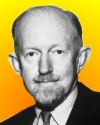
Died 6 Oct 1984 at age 82 (born 16 Jun 1902). quotes
American paleontologist known for his contributions to evolutionary theory and to the understanding of intercontinental migrations of animal species in past geological times. Simpson specialized in early fossil mammals, leading expeditions on four continents and discovering in 1953 the 50-million-year old fossil skulls of dawn horses in Colorado. He helped develop the modern biological theory of evolution, drawing on paleontology, genetics, ecology, and natural selection to show that evolution occurs as a result of natural selection operating in response to shifting environmental conditions. He spent most of his career as a paleontologist at the American Museum of Natural History.
American paleontologist known for his contributions to evolutionary theory and to the understanding of intercontinental migrations of animal species in past geological times. Simpson specialized in early fossil mammals, leading expeditions on four continents and discovering in 1953 the 50-million-year old fossil skulls of dawn horses in Colorado. He helped develop the modern biological theory of evolution, drawing on paleontology, genetics, ecology, and natural selection to show that evolution occurs as a result of natural selection operating in response to shifting environmental conditions. He spent most of his career as a paleontologist at the American Museum of Natural History.
George Gaylord Simpson: Paleontologist and Evolutionist, by Leo F. Laporte. - book suggestion.
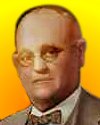
Died 6 Oct 1951 at age 91 (born 7 Apr 1860).
William Keith Kellogg was an American industrialist and philanthropist who founded (1906) the W.K. Kellogg Company to manufacture cereal products as breakfast foods. His cereals have found widespread use throughout the United States.
William Keith Kellogg was an American industrialist and philanthropist who founded (1906) the W.K. Kellogg Company to manufacture cereal products as breakfast foods. His cereals have found widespread use throughout the United States.
The Original Has This Signature: W.K. Kellogg, by Horace B Powell. - book suggestion.
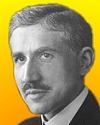
Died 6 Oct 1951 at age 67 (born 12 Apr 1884).
Otto Fritz Meyerhof was a German biochemist and corecipient, with Archibald V. Hill, of the 1922 Nobel Prize for Physiology or Medicine for research on the chemical reactions of metabolism in muscle. In 1940 he emigrated to America. Meyerhof demonstrated that the production of lactic acid in muscle tissue, formed as a result of glycogen breakdown, was effected without the consumption of oxygen (i.e., anaerobically). The lactic acid was reconverted to glycogen through oxidation by molecular oxygen, during muscle rest. This line of research was continued by Gustav Embden and Carl and Gerty Cori who worked out in greater detail the steps by which glycogen is converted to lactic acid - the Embden-Meyerhof pathway.
Otto Fritz Meyerhof was a German biochemist and corecipient, with Archibald V. Hill, of the 1922 Nobel Prize for Physiology or Medicine for research on the chemical reactions of metabolism in muscle. In 1940 he emigrated to America. Meyerhof demonstrated that the production of lactic acid in muscle tissue, formed as a result of glycogen breakdown, was effected without the consumption of oxygen (i.e., anaerobically). The lactic acid was reconverted to glycogen through oxidation by molecular oxygen, during muscle rest. This line of research was continued by Gustav Embden and Carl and Gerty Cori who worked out in greater detail the steps by which glycogen is converted to lactic acid - the Embden-Meyerhof pathway.
Died 6 Oct 1905 at age 72 (born 5 May 1833).
(Baron) German geographer and geologist who produced a major work on China and contributed to the development of geographical methodology. He also helped establish the science of geomorphology, the branch of geology that deals with land and submarine relief features.
(Baron) German geographer and geologist who produced a major work on China and contributed to the development of geographical methodology. He also helped establish the science of geomorphology, the branch of geology that deals with land and submarine relief features.

algae
Died 6 Oct 1894 at age 70 (born 30 Nov 1823).
German botanist who was one of the founders of the science of algology (study of algae). He made important discoveries in the morphology and physiology of plants, especially in the fields of reproduction and evolution. Pringsheim's observation of the formation of plant cells provided support for the belief, opposed by the German botanist Matthias Jakob Schleiden, that cells arise only by division of pre-existing cells. In 1868 Pringsheim and Julius von Sachs were the first to describe the specialized bodies in the cell cytoplasm called plastids. Pringsheim also was the first to demonstrate a case of apospory, (production of a sexual generation from an asexual generation without the intervention of spores), in the Thallophyta (e.g., algae, fungi).
German botanist who was one of the founders of the science of algology (study of algae). He made important discoveries in the morphology and physiology of plants, especially in the fields of reproduction and evolution. Pringsheim's observation of the formation of plant cells provided support for the belief, opposed by the German botanist Matthias Jakob Schleiden, that cells arise only by division of pre-existing cells. In 1868 Pringsheim and Julius von Sachs were the first to describe the specialized bodies in the cell cytoplasm called plastids. Pringsheim also was the first to demonstrate a case of apospory, (production of a sexual generation from an asexual generation without the intervention of spores), in the Thallophyta (e.g., algae, fungi).
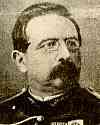
Died 6 Oct 1892 at age 65 (born 28 Jan 1827).
French physician who proved tuberculosis to be an infectious disease, transmitted by a specific microorganism from humans and cows to rabbits. As an army doctor he observed that healthy young men from the country developed tuberculosis while living in the close quarters of the barracks. He was aware that glanders, a similar disease in horses, was transmitted by inoculation. So he inoculated a rabbit with tuberculous material from a deceased human patient, tuberculous lesions were found in the rabbit three months later. Before Villemin, many scientists believed that TB was hereditary. In fact, some stubbornly held on to this belief even after Villemin published his results (1867), until the agent Mycobacterium tuberculosis was identified by Robert Koch (1882).
French physician who proved tuberculosis to be an infectious disease, transmitted by a specific microorganism from humans and cows to rabbits. As an army doctor he observed that healthy young men from the country developed tuberculosis while living in the close quarters of the barracks. He was aware that glanders, a similar disease in horses, was transmitted by inoculation. So he inoculated a rabbit with tuberculous material from a deceased human patient, tuberculous lesions were found in the rabbit three months later. Before Villemin, many scientists believed that TB was hereditary. In fact, some stubbornly held on to this belief even after Villemin published his results (1867), until the agent Mycobacterium tuberculosis was identified by Robert Koch (1882).
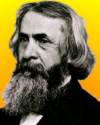
Died 6 Oct 1880 at age 71 (born 4 Apr 1809). quotes
American astronomer, mathematician and educator who computed the general perturbations of the planets Uranus and Neptune. He was Harvard's Perkins Professor of Astronomy and Mathematics for nearly 40 years, and was largely responsible for introducing mathematics as a subject for research in American institutions. He is known especially for his contributions to analytic mechanics and linear associative algebra, but he is also remembered for his early work in astronomy and for playing a role in the discovery of Neptune. His son, Charles Sanders Peirce followed him as a mathematician and logician.
American astronomer, mathematician and educator who computed the general perturbations of the planets Uranus and Neptune. He was Harvard's Perkins Professor of Astronomy and Mathematics for nearly 40 years, and was largely responsible for introducing mathematics as a subject for research in American institutions. He is known especially for his contributions to analytic mechanics and linear associative algebra, but he is also remembered for his early work in astronomy and for playing a role in the discovery of Neptune. His son, Charles Sanders Peirce followed him as a mathematician and logician.
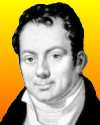
Died 6 Oct 1855 at age 75 (born 11 Mar 1780). quotes
German mathematician and engineer. As a civil engineer in the service of the Prussian Government and worked on the construction and planning of roads and the first railway in Germany (completed in 1838). Crelle advanced the work and careers of many young mathematicians of his day. He founded (1826) the world's oldest mathematical periodical still in existence, Journal für die reine und angewandte Mathematik ("Journal for Pure and Applied Mathematics"), now known as Crelle's Journal,and edited it for the rest of his life.
German mathematician and engineer. As a civil engineer in the service of the Prussian Government and worked on the construction and planning of roads and the first railway in Germany (completed in 1838). Crelle advanced the work and careers of many young mathematicians of his day. He founded (1826) the world's oldest mathematical periodical still in existence, Journal für die reine und angewandte Mathematik ("Journal for Pure and Applied Mathematics"), now known as Crelle's Journal,and edited it for the rest of his life.
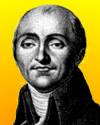
Died 6 Oct 1825 at age 68 (born 26 Dec 1756). quotes
Bernard-Germain-Étienne de La Ville-sur-Illon, comte de (count of) Lacépède was a French naturalist who was interested in herpetology and ichthyology. Buffon secured him a position at the Jardin du Roi (later the Jardin des Plantes) and invited him to continue his work Histoire Naturelle in animal classification. To supplement Buffon's work, Lacépède published several volumes which dealt with the oviparous quadrupeds (1788), reptiles (1789), fishes (1798-1803), and whales (1804). After the French Revolution, he became a politician, which activity prevented him making any further contribution of importance to science.«
Bernard-Germain-Étienne de La Ville-sur-Illon, comte de (count of) Lacépède was a French naturalist who was interested in herpetology and ichthyology. Buffon secured him a position at the Jardin du Roi (later the Jardin des Plantes) and invited him to continue his work Histoire Naturelle in animal classification. To supplement Buffon's work, Lacépède published several volumes which dealt with the oviparous quadrupeds (1788), reptiles (1789), fishes (1798-1803), and whales (1804). After the French Revolution, he became a politician, which activity prevented him making any further contribution of importance to science.«
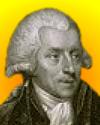
Died 6 Oct 1799 at age 58 (born 17 Mar 1741).
English physician who made a classic study of the medicinal use of digitalis. From his interest in botany, he paid attention to folk remedies used by herb-gatherers, including the foxglove. The leaf extract was efficacious in use for certain cases of "dropsy" (oedema, caused by heart failure). He determined the doses safe to use, and published a careful report of his findings in An Account of the Foxglove (1785). His report gave good case histories, including failures as well as successes. Thus he added digitalis as a very useful drug for physicians to use to steady and strengthen heart action. He was also a mineralogist, and witherite (barium carbonate) is named after him. He suffered greatly for years from chest disease, probably tuberculosis.
English physician who made a classic study of the medicinal use of digitalis. From his interest in botany, he paid attention to folk remedies used by herb-gatherers, including the foxglove. The leaf extract was efficacious in use for certain cases of "dropsy" (oedema, caused by heart failure). He determined the doses safe to use, and published a careful report of his findings in An Account of the Foxglove (1785). His report gave good case histories, including failures as well as successes. Thus he added digitalis as a very useful drug for physicians to use to steady and strengthen heart action. He was also a mineralogist, and witherite (barium carbonate) is named after him. He suffered greatly for years from chest disease, probably tuberculosis.
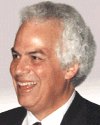
In 1997, American biology professor Stanley B. Prusiner won the Nobel Prize for medicine for discovering “prions,” described as “an entirely new genre of disease-causing agents.” The name means “proteinaceous infectious particle.” Prions cause brain diseases such as BSE (Bovine Spongiform Encephalopathy or “mad cow disease”); the human variant Creutzfeldt–Jakob disease; kuru among some peoples in New Guinea; and scrapie in sheep and goats. Prions are too small to be seen with normal microscopy. They are self-replicating, but contain no nucleic acid. Prions are highly resistant to destruction or denaturation by common chemical and physical agents such as disinfectants, formalin, heat, UV or ionizing radiation. Inceration of infected tissues requires a temperature never below 900ºF for four hours.«
In 1995, the first discovery of a planet around a star similar to the sun was announced (about 160 times the mass of the Earth around the star 51 Pegasus).
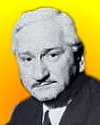
In 1956, Dr. Albert Sabin reported that the oral polio vaccine he had developed was ready for mass testing on an international basis. It was expected to produce long-term, perhaps lifetime, immunity against the dreaded disease. Sabin said a single dose of the new vaccine would produce immunity against all three major strains of polio virus. His vaccine with live polio virus had proven safe in extensive tests on animals and humans. Worldwide tests of the new vaccine were slated to begin in the following year in the U.S. and four foreign countries. Sabin said arrangements had been made for a phamaceutical company to produce the vaccine, which he said would lost less than the cherry syrup it was in when administered by mouth. It brought an alternative to the older hyperdermic method and resulting scars.«
Jonas Salk: Beyond the Microscope, by Victoria Sherrow. - book suggestion.
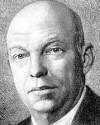
In 1914, a U.S. patent was issued to Edwin H. Armstrong for a “Wireless Receiving System” which described his famous regenerative, or feed-back, circuit (No. 1,113,149). This invention started Armstrong's career of innovation. He went on to become a pioneer in FM radio broadasting.«
In 1908, the Ohio Art company, makers of Etch-A-Sketch, was founded by Henry Simon Winzeler.
In 1893, Cream Of Wheat, a hot cereal, was created by millers in North Dakota. During the economic depression of that year, the Diamond Mill of Grand Forks was looking to revive their business.. The head miller, Thomas S. Amidon, convinced the partners (Emery Mapes, George Bull, and George Clifford, Sr.) to try making a porridge product using farina. George Clifford's brother, Fred Sr., came up with the name Cream of Wheat because the product was so white. Four years later to the then thriving milling city of Minneapolis, where it was produced for a century.
In 1880, Colonel Beaumont's air-engine for propelling railway carriages was successfully tried at Woowich (a little steam is used). His system largely employed in various ways by Paris Compressed Air company was described to the British Association at Newcastle-upon-Tyne (Sep 1889).[* p.30]
In 1868, a patent for nickel plating was awarded to inventor William H. Remington of Boston.
In 1790, Jacob Schweppe showed his process for making artificial mineral water.
In 1783, the self-winding clock was patented by Benjamin Hanks.




