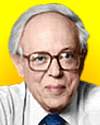
Born 19 May 1918; died 28 Jul 2000 at age 82. quotes
Dutch-American physicist and science historian whose research became the building blocks of the theory of elemental particles. He wrote Subtle Is the Lord: The Science and Life of Albert Einstein, which is considered the definitive Einstein biography. In Holland, his Ph.D. in physics was awarded on 9 Jul 1941, five days before a Nazi deadline banning Jews from receiving degrees. Later, during WW II, while in hiding to evade the Gestapo, he worked out ideas in quantum electrodynamics that he later shared when working with Niels Bohr (Jan - Aug 1946). In Sep 1946, he went to the U.S. to work with Robert Oppenheimer at Princeton, where Pais contributed to the foundations of the modern theory of particle physics.
Dutch-American physicist and science historian whose research became the building blocks of the theory of elemental particles. He wrote Subtle Is the Lord: The Science and Life of Albert Einstein, which is considered the definitive Einstein biography. In Holland, his Ph.D. in physics was awarded on 9 Jul 1941, five days before a Nazi deadline banning Jews from receiving degrees. Later, during WW II, while in hiding to evade the Gestapo, he worked out ideas in quantum electrodynamics that he later shared when working with Niels Bohr (Jan - Aug 1946). In Sep 1946, he went to the U.S. to work with Robert Oppenheimer at Princeton, where Pais contributed to the foundations of the modern theory of particle physics.
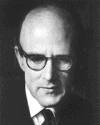
Born 19 May 1914; died 6 Feb 2002 at age 87. quotes
Austrian-British biochemist who shared the 1962 Nobel Prize for Chemistry for his X-ray diffraction analysis of the structure of haemoglobin, the protein that transports oxygen from the lungs to the tissues via blood cells. He identified that haemoglobin is constructed of four protein chains wound together, and that the molecule changes shape when oxygen is added. Perutz was also interested in studying glaciers, making measurements which were the first to show different rates of flow in different parts of the same glacier.
Austrian-British biochemist who shared the 1962 Nobel Prize for Chemistry for his X-ray diffraction analysis of the structure of haemoglobin, the protein that transports oxygen from the lungs to the tissues via blood cells. He identified that haemoglobin is constructed of four protein chains wound together, and that the molecule changes shape when oxygen is added. Perutz was also interested in studying glaciers, making measurements which were the first to show different rates of flow in different parts of the same glacier.
Science Is Not a Quiet Life: Unravelling the Atomic Mechanism of Haemoglobin, by Max F. Perutz. - book suggestion.
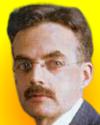
Born 19 May 1876; died 29 Dec 1970 at age 94. quotes
American palaeontologist who specialized in anatomy and particularly in dentition (the development of teeth), in fish and mammals. In 1899, he was invited by Dr. Henry Fairfield Osborn and joined the staff of the American Museum of Natural History, New York. Over the years Dr. Gregory planned and supervised a number of exhibitions for the museum. These included one on men of the Stone Age, completing the Hall of Fishes of the World, and one on anatomy that illustrated the evidence of man's origin from lower members of the order of primates. He published extensively during five decades. His books include Our Face From Fish to Man (1929) and Evolution Emerging (1951).
American palaeontologist who specialized in anatomy and particularly in dentition (the development of teeth), in fish and mammals. In 1899, he was invited by Dr. Henry Fairfield Osborn and joined the staff of the American Museum of Natural History, New York. Over the years Dr. Gregory planned and supervised a number of exhibitions for the museum. These included one on men of the Stone Age, completing the Hall of Fishes of the World, and one on anatomy that illustrated the evidence of man's origin from lower members of the order of primates. He published extensively during five decades. His books include Our Face From Fish to Man (1929) and Evolution Emerging (1951).
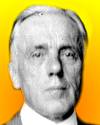
Born 19 May 1871; died 19 Sep 1957 at age 86. quotes
Canadian-American geologist who independently developed the theory of magmatic stoping, a process in which magma moves up through the Earth's crust the earth by shattering (but not melting) the overlying rock. Resulting broken blocks of denser rock sink, leaving space for the rise of the magma. This explained the structure of many igneous rock formations. Daly believed in the importance of field studies to investigate geologic processes. He based his theory of the origin of igneous rocks on an extensive study of hundreds of miles of landforms along the 49th parallel. From another project exploring the geology of the Samoan Islands, he developed theories relating glacial effects on sea level to the formation of coral atolls. His book Igneous Rocks and Their Origin (1914) was a popular instructional text for many years.«
Canadian-American geologist who independently developed the theory of magmatic stoping, a process in which magma moves up through the Earth's crust the earth by shattering (but not melting) the overlying rock. Resulting broken blocks of denser rock sink, leaving space for the rise of the magma. This explained the structure of many igneous rock formations. Daly believed in the importance of field studies to investigate geologic processes. He based his theory of the origin of igneous rocks on an extensive study of hundreds of miles of landforms along the 49th parallel. From another project exploring the geology of the Samoan Islands, he developed theories relating glacial effects on sea level to the formation of coral atolls. His book Igneous Rocks and Their Origin (1914) was a popular instructional text for many years.«
Earth's Most Challenging Mysteries, by Reginald Daly. - book suggestion.
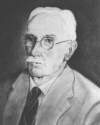
Born 19 May 1869; died 20 Dec 1953 at age 84.
Irish botanist who, with John Joly, investigated plant transpiration and originated the tension theory of sap ascent in trees (1894) building on the work of Eduard Strasburger, François Donny and Berthelot. Dixon's earlier work was in cytology and had developed sterile culture methods for seedlings (1892). After the 1894 publication, he made further transpiration experiments to consolidate his theory which he published in 1909 and 1914. He resolved the debate over the mechanism of xylem transport by proposing a compromise between the pulling power of the leaf and the tensile strength of the water columns. From 1910, he was curator of a new herbarium at Trinity College Dublin.«
Irish botanist who, with John Joly, investigated plant transpiration and originated the tension theory of sap ascent in trees (1894) building on the work of Eduard Strasburger, François Donny and Berthelot. Dixon's earlier work was in cytology and had developed sterile culture methods for seedlings (1892). After the 1894 publication, he made further transpiration experiments to consolidate his theory which he published in 1909 and 1914. He resolved the debate over the mechanism of xylem transport by proposing a compromise between the pulling power of the leaf and the tensile strength of the water columns. From 1910, he was curator of a new herbarium at Trinity College Dublin.«
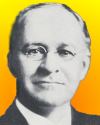
(NOAA)
Born 19 May 1868; died 10 Mar 1925 at age 56.
American civil engineer and geodesist who established the modern science of geodesy, and made a precise determination of the ellipsoidal shape and size of the earth (1909). The International Union of Geodesy and Geophysics adopted Hayford's calculations in 1924. This International ellipsoid has a flattening of exactly 1 part in 297. The Earth's equatorial radius is 6,378,388 m. The radius along the polar axis is then 1/297 less than that or 6,356,912 m. (Surprisingly, the U.S. did not adopt this datum.) Hayford's theory of isostasy gave that the pressure exerted by the earth's crust is approximately the same over the entire globe, regardless of the nature of the surface (for example, lowlands or mountains). With modification, this theory is now used to explain phenomena within the crust. At the time of his death he was investigating the problems connected with evaporation and the water level of the Great Lakes.
American civil engineer and geodesist who established the modern science of geodesy, and made a precise determination of the ellipsoidal shape and size of the earth (1909). The International Union of Geodesy and Geophysics adopted Hayford's calculations in 1924. This International ellipsoid has a flattening of exactly 1 part in 297. The Earth's equatorial radius is 6,378,388 m. The radius along the polar axis is then 1/297 less than that or 6,356,912 m. (Surprisingly, the U.S. did not adopt this datum.) Hayford's theory of isostasy gave that the pressure exerted by the earth's crust is approximately the same over the entire globe, regardless of the nature of the surface (for example, lowlands or mountains). With modification, this theory is now used to explain phenomena within the crust. At the time of his death he was investigating the problems connected with evaporation and the water level of the Great Lakes.
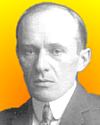
Age 46
Born 19 May 1864; died 17 Nov 1926 at age 62.
Carl Ethan Akeley was an American naturalist and explorer who developed the taxidermic method for mounting museum displays to show animals in their natural surroundings. His method of applying skin on a finely molded replica of the body of the animal gave results of unprecedented realism and elevated taxidermy from a craft to an art. He mounted the skeleton of the famous African elephant Jumbo. He invented the Akeley cement gun (1911) to use while mounting animals, and the Akeley camera which was used to capture the first movies of gorillas. In the 1920s Akeley made a large specimen collection, part of the American Museum's famous African mammal hall. From 1919, using the skills he had acquired making clay models of animals to design taxidermy exhibits, Akeley also created a series of bronze animal casts. more
Carl Ethan Akeley was an American naturalist and explorer who developed the taxidermic method for mounting museum displays to show animals in their natural surroundings. His method of applying skin on a finely molded replica of the body of the animal gave results of unprecedented realism and elevated taxidermy from a craft to an art. He mounted the skeleton of the famous African elephant Jumbo. He invented the Akeley cement gun (1911) to use while mounting animals, and the Akeley camera which was used to capture the first movies of gorillas. In the 1920s Akeley made a large specimen collection, part of the American Museum's famous African mammal hall. From 1919, using the skills he had acquired making clay models of animals to design taxidermy exhibits, Akeley also created a series of bronze animal casts. more
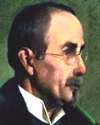
Born 19 May 1857; died 26 May 1938 at age 81. quotes
American biochemist and pharmacologist who made important contributions to a modern understanding of the ductless, or endocrine, glands. In 1893, he became the first full-time professor of pharmacology in the U.S. at John Hopkins University. Abel encouraged his students to conduct experiments and become active participants in his laboratory research. In 1897 he reported the isolation of a derivative of epinephrine (adrenaline). In 1926, he isolated and crystallized insulin. Abel also investigated the functions of the kidney and devised a vividiffusion apparatus for removing toxins from the blood of living animals, an apparatus that is widely regarded as a forerunner of the artificial kidney.
American biochemist and pharmacologist who made important contributions to a modern understanding of the ductless, or endocrine, glands. In 1893, he became the first full-time professor of pharmacology in the U.S. at John Hopkins University. Abel encouraged his students to conduct experiments and become active participants in his laboratory research. In 1897 he reported the isolation of a derivative of epinephrine (adrenaline). In 1926, he isolated and crystallized insulin. Abel also investigated the functions of the kidney and devised a vividiffusion apparatus for removing toxins from the blood of living animals, an apparatus that is widely regarded as a forerunner of the artificial kidney.
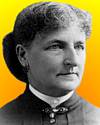
Born 19 May 1834; died 6 Dec 1931 at age 97.
American botanist who spent sixty years meticulously collecting, classifying and drawing the flora of Maine increased the scientific knowledge of the state, and contributed to a number of botanical collections. She began this work in 1870, and extensively traveled the state for 38 years. She enthusiastically explored the depths of wilderness areas to discover new specimens. The exquisite, accurately detailed watercolor drawings she made of the collected specimens were highly regarded by academic botanists. In 1895, she helped found the Josselyn Botanical Society of Maine. She described her fieldwork in American Naturalist in 1881, 1882 and 1901. Her watercolor drawings have been preserved in the 16 folio volumes she gave to Bowdoin College Library in 1908.«
American botanist who spent sixty years meticulously collecting, classifying and drawing the flora of Maine increased the scientific knowledge of the state, and contributed to a number of botanical collections. She began this work in 1870, and extensively traveled the state for 38 years. She enthusiastically explored the depths of wilderness areas to discover new specimens. The exquisite, accurately detailed watercolor drawings she made of the collected specimens were highly regarded by academic botanists. In 1895, she helped found the Josselyn Botanical Society of Maine. She described her fieldwork in American Naturalist in 1881, 1882 and 1901. Her watercolor drawings have been preserved in the 16 folio volumes she gave to Bowdoin College Library in 1908.«

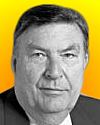
Died 19 May 2009 at age 87 (born 24 Nov 1921). quotes
Herbert Frank York was an American nuclear physicist whose scientific research in support of national defense began in 1943 when he began work at Oak Ridge, Tenn., on the electromagnetic separation of uranium 235 as part of the Manhattan Project during WW II. In 1952, he became the first director of Lawrence Livermore Laboratory. He left in Mar 1958 to join the Department of Defense as chief scientist of the Advanced Research Projects Agency, and shortly became the Department of Defense's director of research and engineering (Dec 1958). He returned to the University of California in 1961 as chancellor and professor of physics. He was chief negotiator for the comprehensive test ban during the Carter administration.«
Herbert Frank York was an American nuclear physicist whose scientific research in support of national defense began in 1943 when he began work at Oak Ridge, Tenn., on the electromagnetic separation of uranium 235 as part of the Manhattan Project during WW II. In 1952, he became the first director of Lawrence Livermore Laboratory. He left in Mar 1958 to join the Department of Defense as chief scientist of the Advanced Research Projects Agency, and shortly became the Department of Defense's director of research and engineering (Dec 1958). He returned to the University of California in 1961 as chancellor and professor of physics. He was chief negotiator for the comprehensive test ban during the Carter administration.«
Arms and the Physicist, by Herbert F. York. - book suggestion.
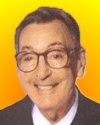
Died 19 May 2009 at age 92 (born 4 Jun 1916).
Robert Francis Furchgott was an American pharmacologist who shared (with Louis J. Ignarro and Ferid Murad) the 1998 Nobel Prize in Physiology or Medicine for the discovery that nitric oxide (NO) acts as a signaling molecule in the cardiovascular system. Their combined work uncovered an entirely new mechanism by which blood vessels in the body relax and widen. Nitric oxide (NO), produced by one cell, acts by penetrating membranes and regulating the function of another cell. Nerves and hormones are well known as signal carriers, but this discovery was a totally new signaling principle in a biological system.
Robert Francis Furchgott was an American pharmacologist who shared (with Louis J. Ignarro and Ferid Murad) the 1998 Nobel Prize in Physiology or Medicine for the discovery that nitric oxide (NO) acts as a signaling molecule in the cardiovascular system. Their combined work uncovered an entirely new mechanism by which blood vessels in the body relax and widen. Nitric oxide (NO), produced by one cell, acts by penetrating membranes and regulating the function of another cell. Nerves and hormones are well known as signal carriers, but this discovery was a totally new signaling principle in a biological system.
Nitric Oxide: Basic Research and Clinical Applications, by Ryszard Gryglewski. - book suggestion.
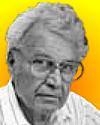
1938
Died 19 May 1995 at age 80 (born 14 Sep 1914).
Robert Sinclair Dietz was an American geophysicist and oceanographer who set forth a theory (1961) of seafloor spreading (a term he coined), in which new crustal material continually upwells from the Earth's depths along the mid-ocean ridges and spreads outward at a rate of several inches per year. While a student Dietz identified the Kentland structure in Indiana as a meteoric impact site. His professors steered him toward marine geology. He became the founder and director of the Sea Floor Studies Section at the Naval Electronics Laboratory (1946-1963). He also achieved prominence by studying meteorite craters, both on Earth and on the moon and arguing that these impact craters were common. He died of a heart attack.
Robert Sinclair Dietz was an American geophysicist and oceanographer who set forth a theory (1961) of seafloor spreading (a term he coined), in which new crustal material continually upwells from the Earth's depths along the mid-ocean ridges and spreads outward at a rate of several inches per year. While a student Dietz identified the Kentland structure in Indiana as a meteoric impact site. His professors steered him toward marine geology. He became the founder and director of the Sea Floor Studies Section at the Naval Electronics Laboratory (1946-1963). He also achieved prominence by studying meteorite craters, both on Earth and on the moon and arguing that these impact craters were common. He died of a heart attack.
Died 19 May 1944 (born 1908).
British anthropologist and analyst of social change in Africa. As first director of the Rhodes-Livingstone Institute in Zambia, he theorized that the social problems in Africa were the products of colonialism and that the processes of industrialization and labor migration encompassed these social problems. His study of the cattle owning Nyakyusa of the Southern Highlands Province of Tanganyika Territory was made in 1936. It is much concerned with an account of marriage customs and sex relations, and described the peculiar traditional chiefdom. He committed suicide, as a conscientious objector in WW II.
British anthropologist and analyst of social change in Africa. As first director of the Rhodes-Livingstone Institute in Zambia, he theorized that the social problems in Africa were the products of colonialism and that the processes of industrialization and labor migration encompassed these social problems. His study of the cattle owning Nyakyusa of the Southern Highlands Province of Tanganyika Territory was made in 1936. It is much concerned with an account of marriage customs and sex relations, and described the peculiar traditional chiefdom. He committed suicide, as a conscientious objector in WW II.
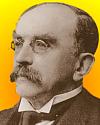
Died 19 May 1942 at age 84 (born 11 Jul 1857).
Irish physicist, the first to calculate the rate at which energy is radiated by an accelerated electron, and the first to explain the splitting of spectrum lines by a magnetic field. His theories were based on the belief that matter consists entirely of electric particles moving in the ether. His elaborate mathematical electrical theory of the late 1890s included the "electron" as a rotational strain (a sort of twist) in the ether. But Larmor's theory did not describe the electron as a part of the atom. Many physicists envisioned both material particles and electromagnetic forces as structures and strains in that hypothetical fluid.
Irish physicist, the first to calculate the rate at which energy is radiated by an accelerated electron, and the first to explain the splitting of spectrum lines by a magnetic field. His theories were based on the belief that matter consists entirely of electric particles moving in the ether. His elaborate mathematical electrical theory of the late 1890s included the "electron" as a rotational strain (a sort of twist) in the ether. But Larmor's theory did not describe the electron as a part of the atom. Many physicists envisioned both material particles and electromagnetic forces as structures and strains in that hypothetical fluid.
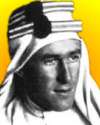
Died 19 May 1935 at age 46 (born 15 Aug 1888). quotes
Thomas Edward (T.E.) Lawrence was a British archaeological scholar, also known as “Lawrence of Arabia,” was a British archaeological scholar, which activity he pursued assiduously from his teens up to the outbreak of WW I. In two of his important projects, he collaborated with Leonard Woolley in the British Museum Expedition excavating Carchemish, (1910-14) a Hittite city on the upper Euphrates; and in the Survey of the Wilderness of Zin. Later he became best known as a military strategist, and author for his legendary war activities in the Middle East during WW I, and for his account of those activities in The Seven Pillars of Wisdom (1926). He died in England from injuries sustained in a motorcycle crash near his home in Dorset.
Thomas Edward (T.E.) Lawrence was a British archaeological scholar, also known as “Lawrence of Arabia,” was a British archaeological scholar, which activity he pursued assiduously from his teens up to the outbreak of WW I. In two of his important projects, he collaborated with Leonard Woolley in the British Museum Expedition excavating Carchemish, (1910-14) a Hittite city on the upper Euphrates; and in the Survey of the Wilderness of Zin. Later he became best known as a military strategist, and author for his legendary war activities in the Middle East during WW I, and for his account of those activities in The Seven Pillars of Wisdom (1926). He died in England from injuries sustained in a motorcycle crash near his home in Dorset.
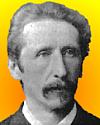
Died 19 May 1912 at age 68 (born 1 Feb 1844). quotes
German botanist and plant cytologist who accurately described the embryonic sac in gymnosperms (such as conifers) and angiosperms (flowering plants), along with demonstrating double-fertilization in angiosperms. He recognized that new cell nuclei can only result from the division of other nuclei and showed that the sperm and the egg have half the number of chromosomes found in body cells. He coined the terms cytoplasm for the fluid found in a cell and nucleoplasm (1882) for the fluid found in the nucleus. The upward movement of sap in trees was demonstrated by his research to be physical, rather than a physiological, process.«[DSB and obituary in Botanical Gazette gives date of death as 19 May 1912. EB gives 18 May 1912.]
German botanist and plant cytologist who accurately described the embryonic sac in gymnosperms (such as conifers) and angiosperms (flowering plants), along with demonstrating double-fertilization in angiosperms. He recognized that new cell nuclei can only result from the division of other nuclei and showed that the sperm and the egg have half the number of chromosomes found in body cells. He coined the terms cytoplasm for the fluid found in a cell and nucleoplasm (1882) for the fluid found in the nucleus. The upward movement of sap in trees was demonstrated by his research to be physical, rather than a physiological, process.«[DSB and obituary in Botanical Gazette gives date of death as 19 May 1912. EB gives 18 May 1912.]
Strasburger's Textbook of Botany, by Eduard Strasburger. - book suggestion.
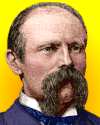
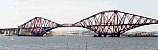
English civil engineer and the chief designer of the railway bridge over the Firth of Forth, Scotland. His education began as an apprentice at the ironworks of Price & Fox, Neath Abbey, South Wales. In 1861, Baker became an assistant to the consulting engineer Sir John Fowler, and by 1875 was his partner. In 1890, he was the lead designer of the Firth of Forth Bridge with John Fowler. His other projects included several parts of the London Underground, transporting from Egypt and installing Cleopatra's Needle by the River Thames in London, the Aswan Dam on the Nile (Egypt; 1902) and the first Hudson River Tunnel (USA).[image right: Firth of Forth Bridge] more
Died 19 May 804 (born c. 732).
English scholar was an influential scholar in the early Middle Ages, a key figure in the Carolingian Renaissance. At the cathedral school of York, he mastered grammar, rhetoric, logic, mathematics, astronomy, and theology. Called by Charlemagne to run the Palace School at Aachen, Alcuin helped reform education throughout the Frankish empire, strengthening disciplined reasoning in the liberal arts. Alcuin required accuracy in manuscript copies, preserving classical scientific and mathematical texts. He promoted clear Latin prose and use of Carolingian minuscule script. His introductory works on arithmetic, geometry, and astronomy, used a structured question-and-answer format. Alcuin was not an experimental scientist, but laid its intellectual foundations.«
English scholar was an influential scholar in the early Middle Ages, a key figure in the Carolingian Renaissance. At the cathedral school of York, he mastered grammar, rhetoric, logic, mathematics, astronomy, and theology. Called by Charlemagne to run the Palace School at Aachen, Alcuin helped reform education throughout the Frankish empire, strengthening disciplined reasoning in the liberal arts. Alcuin required accuracy in manuscript copies, preserving classical scientific and mathematical texts. He promoted clear Latin prose and use of Carolingian minuscule script. His introductory works on arithmetic, geometry, and astronomy, used a structured question-and-answer format. Alcuin was not an experimental scientist, but laid its intellectual foundations.«
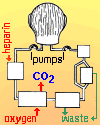
In 1987, a patent for “keeping a head alive” was issued to Chet Fleming (U.S. No. 4,666,425). A cabinet provides physical and biochemical support for an animal’s head severed from its body. Oxygenated blood and nutrients are circulated by means of tubes connected to arteries and veins that emerge from the neck. A series of processing components removes carbon dioxide and add oxygen to the blood. If desired, waste products and other metabolites may be removed from the blood, and nutrients, therapeutic or experimental drugs, anti-coagulants, and other substances may be added to the blood. After being thoroughly tested on research animals, the patent suggests it might also be used on humans suffering from various terminal illnesses.
In 1959, the first submarine with two nuclear reactors was completed. The USS Triton had two water-cooled General Electric nuclear reactors to power electricity generators which powered the propellers. The Triton was 447-ft long, 37-ft wide, manned by 148 officers and crew and had a cruising range of 110,000 miles. After its launch on 19 Aug 1958, The first U.S. atomic powered submarine had been completed four years earlier, on 22 Apr 1955.
In 1910, the Earth passed through the tail of Halley’s Comet, the most intimate contact between the Earth and any comet in recorded history. The event was anticipated with dire predictions. Since a few years earlier, astronomers had found the poisonous gas cyanogen in a comet, it was surmised that if Earth passed through the comet's tail everyone would die. Astronomers explained that the gas molecules within the tail were so tenuous that absolutely no ill effects would be noticed. Nevertheless, ignorance bred opportunists selling “comet pills” to the panicked portion of the public to counter the effects of the cyanogen gas. On 20 May, after Earth had passed through the tail, everyone was still alive—with or without taking pills![Image: Halley's Comet and Venus, 1910]
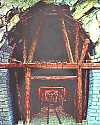
In 1906, the Simplon Tunnel was officially opened as the world's longest railroad tunnel. Cutting through the Alps between Italy and Switzerland, it was officially opened by the King of Italy and the president of the Swiss Republic. The construction of the 12-mile Simplon Tunnel, one of the world's longest rail tunnels was undertaken in the 1890s by Alfred Brandt, head of a German engineering firm, and inventor of an efficient rock drill. The total length of the tunnel is 64,972 feet cut through the solid rock of the Simplon Mountain between the Rhone and the Diveria valley. As a direct route under the mountain, it considerably shortened the surface distance for an important European trade route between Brig, Switzerland and Iselle, Italy.
more
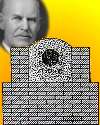
(USPTO)
In 1896, Edward G. Acheson was issued a U.S. patent for an electric furnace used to produce carborundum (silicon carbide), one of the hardest industrial substances (No. 560,291). The furnace used an electric current passed through a core of carbon rods to produce a strong heating effect resulting from their resistance.«
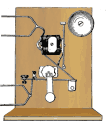
In 1857, the first U.S. patent for an "electromagnetic fire alarm telegraph for cities" was issued to William Francis Channing of Boston, Mass. and Moses Gerrish Farmer, of Salem, Mass. (No. 17,355). The city of Boston adopted the system, having voted in June 1851 to spend $10,000 to test the device. It consisted of a circuit between a signal station, central station and alarm station, designed to give a local or general alarm in a town or city. The central station upon receiving an alarm from a signal station activates the public alarm signal station such as a bell struck mechanically in a belfry. Enough signal stations, each sending its own location signal, were envisaged such that one would be in reach of every house. It began operation 28 Apr 1852.




