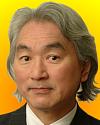
Born 24 Jan 1947. quotes
American theoretical physicist.
American theoretical physicist.
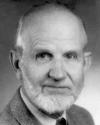
Born 24 Jan 1931.
Swedish mathematician who was awarded the Fields Medal in 1962 for his work on partial differential equations. Spending five years in writing, he produced a text The analysis of linear partial differential operators, in four volumes (1983-85). Between 1987 and 1990 he served as a vice president of the International Mathematical Union. In 1988 Hörmander was awarded the Wolf Prize. Hörmander's text, An Introduction to Complex Analysis in Several Variables, has become a classic dealing with the theory of functions of several complex variables. It developed from lecture notes of a course which he gave in Stanford in 1964 and published in book form two years later, with updates in 1973 and 1990.
Swedish mathematician who was awarded the Fields Medal in 1962 for his work on partial differential equations. Spending five years in writing, he produced a text The analysis of linear partial differential operators, in four volumes (1983-85). Between 1987 and 1990 he served as a vice president of the International Mathematical Union. In 1988 Hörmander was awarded the Wolf Prize. Hörmander's text, An Introduction to Complex Analysis in Several Variables, has become a classic dealing with the theory of functions of several complex variables. It developed from lecture notes of a course which he gave in Stanford in 1964 and published in book form two years later, with updates in 1973 and 1990.
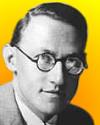
Born 24 Jan 1902; died 26 Jul 1977 at age 75.
German-American economist and mathematician who popularized “game theory” which mathematically analyzes behaviour of man or animals in terms of strategies to maximize gains and minimize losses. He coauthored Theory of Games and Economic Behavior (1944), with John von Neumann, which extended Neumann's 1928 theory of games of strategy to competitive business situations. They suggested that often in a business situation (“game”), the outcome depends on several parties (“players”), each estimating what all of the others will do before determining their own strategy. Morgenstern was a professor at Vienna University, Austria, from 1931 until the Nazi occupation in 1938), when he fled to America and joined the faculty at Princeton University. His later publications included works on economic prediction and aspects of U.S. defence.«
German-American economist and mathematician who popularized “game theory” which mathematically analyzes behaviour of man or animals in terms of strategies to maximize gains and minimize losses. He coauthored Theory of Games and Economic Behavior (1944), with John von Neumann, which extended Neumann's 1928 theory of games of strategy to competitive business situations. They suggested that often in a business situation (“game”), the outcome depends on several parties (“players”), each estimating what all of the others will do before determining their own strategy. Morgenstern was a professor at Vienna University, Austria, from 1931 until the Nazi occupation in 1938), when he fled to America and joined the faculty at Princeton University. His later publications included works on economic prediction and aspects of U.S. defence.«
Theory of Games and Economic Behavior, by John von Neumann and Oskar Morgenstern. - book suggestion.
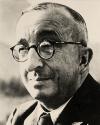
Born 24 Jan 1888; died 30 Jan 1958 at age 70.
German aircraft engineer who built the first rocket-powered aircraft. He was chief designer of the Albatros Aircraft Company in Berlin before World War I. He founded the Heinkel-Flugzeugwerke at Warnemünde (1922), making at first seaplanes, and later bombers and fighters which achieved fame in World War II. He built the first jet plane, the HE-178 (1939), and the first rocket powered aircraft, the HE-176. After Adolf Hitler came to power, Heinkel's designs formed a vital part of the Luffwaffe's growing strength. Heinkel was a critic of Hitler's regime and in 1942 the government took control of his factories. At the end of the war Heinkel was arrested by the Allies but evidence of anti-Hitler activities led to his acquittal.
German aircraft engineer who built the first rocket-powered aircraft. He was chief designer of the Albatros Aircraft Company in Berlin before World War I. He founded the Heinkel-Flugzeugwerke at Warnemünde (1922), making at first seaplanes, and later bombers and fighters which achieved fame in World War II. He built the first jet plane, the HE-178 (1939), and the first rocket powered aircraft, the HE-176. After Adolf Hitler came to power, Heinkel's designs formed a vital part of the Luffwaffe's growing strength. Heinkel was a critic of Hitler's regime and in 1942 the government took control of his factories. At the end of the war Heinkel was arrested by the Allies but evidence of anti-Hitler activities led to his acquittal.
1952
Born 24 Jan 1882; died 8 Apr 1968 at age 86.
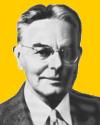
American astronomer who with his son, Horace, invented the solar magnetograph (1951), for detailed observation of the Sun's magnetic field. With their magnetograph the Babcocks measured the distribution of magnetic fields over the solar surface to unprecedented precision and discovered magnetically variable stars. In 1959 Harold Babcock announced that the Sun reverses its magnetic polarity periodically. Babcock's precise laboratory studies of atomic spectra allowed others to identify the first "forbidden" lines in the laboratory and to discover the rare isotopes of oxygen. With C.E. St. John he greatly improved the precision of the wavelengths of some 22,000 lines in the solar spectrum, referring them to newly-determined standards.
American astronomer who with his son, Horace, invented the solar magnetograph (1951), for detailed observation of the Sun's magnetic field. With their magnetograph the Babcocks measured the distribution of magnetic fields over the solar surface to unprecedented precision and discovered magnetically variable stars. In 1959 Harold Babcock announced that the Sun reverses its magnetic polarity periodically. Babcock's precise laboratory studies of atomic spectra allowed others to identify the first "forbidden" lines in the laboratory and to discover the rare isotopes of oxygen. With C.E. St. John he greatly improved the precision of the wavelengths of some 22,000 lines in the solar spectrum, referring them to newly-determined standards.
Born 24 Jan 1872; died 25 Aug 1961 at age 89.
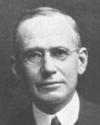
English chemist who, while working with Sir William Ramsay in London, discovered the element krypton (30 May 1898). The name derives from the Greek word for “hidden.” It was a fraction separated from liquified air, which when placed in a Plücker tube connected to an induction coil yielded a spectrum with a bright yellow line with a greener tint than the known helium line and a brilliant green line that corresponded to nothing seen before.
English chemist who, while working with Sir William Ramsay in London, discovered the element krypton (30 May 1898). The name derives from the Greek word for “hidden.” It was a fraction separated from liquified air, which when placed in a Plücker tube connected to an induction coil yielded a spectrum with a bright yellow line with a greener tint than the known helium line and a brilliant green line that corresponded to nothing seen before.
Morris William Travers: A Lifetime of Achievement, by Keith Kostecka. - book suggestion.
Born 24 Jan 1850; died 26 Feb 1909 at age 59. quotes
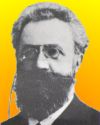
German psychologist who pioneered in the development of experimental methods for the measurement of rote learning and memory. Ebbinghaus's contributions to psychology are numerous. In addition to establishing two psychology laboratories in Germany, he also founded and edited a major journal that did much to advance psychology in its early days. His famous work, Memory: A Contribution to Experimental Psychology (1885) set a precedent for experimental psychology with clear and precise experimental techniques. Ebbinghaus discovered that people forget 90% of what they learn in a class within thirty days, and that there occurs a very rapid forgetting in the first hour. He died in 1909 from pneumonia.
German psychologist who pioneered in the development of experimental methods for the measurement of rote learning and memory. Ebbinghaus's contributions to psychology are numerous. In addition to establishing two psychology laboratories in Germany, he also founded and edited a major journal that did much to advance psychology in its early days. His famous work, Memory: A Contribution to Experimental Psychology (1885) set a precedent for experimental psychology with clear and precise experimental techniques. Ebbinghaus discovered that people forget 90% of what they learn in a class within thirty days, and that there occurs a very rapid forgetting in the first hour. He died in 1909 from pneumonia.
Born 24 Jan 1847; died 6 Aug 1930 at age 83.
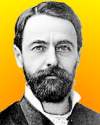
French chemist who was the first to present a theory on the relationship between molecules and how they absorb or reflect light. Born into a family wealthy in petroleum holdings, he was able to build his own laboratory to pursue his work. He theorized (1874) that optical activity - the presence of two forms of the same organic molecule, one a mirror image of the other - is due to an asymmetric carbon atom bound to four different groups. For this contribution he is regarded as the cofounder of stereochemistry, with J. H. van't Hoff. His interests also included petrochemistry, cosmology, and biology.Birth date: DSB gives 24 Jan 1847; Enc. Brit. gives 21 Jan 1847.
French chemist who was the first to present a theory on the relationship between molecules and how they absorb or reflect light. Born into a family wealthy in petroleum holdings, he was able to build his own laboratory to pursue his work. He theorized (1874) that optical activity - the presence of two forms of the same organic molecule, one a mirror image of the other - is due to an asymmetric carbon atom bound to four different groups. For this contribution he is regarded as the cofounder of stereochemistry, with J. H. van't Hoff. His interests also included petrochemistry, cosmology, and biology.Birth date: DSB gives 24 Jan 1847; Enc. Brit. gives 21 Jan 1847.
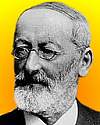
Born 24 Jan 1828; died 25 Jun 1898 at age 70.
Ferdinand (Julius) Cohn was a German naturalist and botanist who is considered one of the founders of bacteriology and known for his studies of algae, bacteria, and fungi, insect epidemics and plant diseases. From his early studies of microscopic life he developed theories of the bacterial causes of infectious disease and recognized bacteria as plants. He showed that the protoplasm was almost identical in plant and animal cells. He founded the science of bacteriology with a three volume treatise published in 1872 which classified bacteria into genera and species. Cohn gave Robert Koch a position in his lab and aided him in preparing Koch's famous work on anthrax.
Ferdinand (Julius) Cohn was a German naturalist and botanist who is considered one of the founders of bacteriology and known for his studies of algae, bacteria, and fungi, insect epidemics and plant diseases. From his early studies of microscopic life he developed theories of the bacterial causes of infectious disease and recognized bacteria as plants. He showed that the protoplasm was almost identical in plant and animal cells. He founded the science of bacteriology with a three volume treatise published in 1872 which classified bacteria into genera and species. Cohn gave Robert Koch a position in his lab and aided him in preparing Koch's famous work on anthrax.
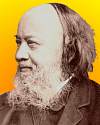
Born 24 Jan 1800; died 6 Jul 1890 at age 90.
English physician and social reformer who devoted his life to sanitary reform in Britain. By 1848 Chadwick had become Sanitary Commissioner of London, and was very influential in the city's approach towards cholera. He believed that filth in rivers was less dangerous than filth in sewers. As Commissioner, he had the power to have sewers regularly flushed into the River Thames. This policy inadvertently contributed to the spread of cholera by water purveyors which had their intakes in the polluted areas of the river. Contrary to Dr. John Snow, he was a strong believer in the theory that epidemics were generated spontaneously from dirt, and that basic sanitation rather than specific avoidance of cholera germs would control the disease.
English physician and social reformer who devoted his life to sanitary reform in Britain. By 1848 Chadwick had become Sanitary Commissioner of London, and was very influential in the city's approach towards cholera. He believed that filth in rivers was less dangerous than filth in sewers. As Commissioner, he had the power to have sewers regularly flushed into the River Thames. This policy inadvertently contributed to the spread of cholera by water purveyors which had their intakes in the polluted areas of the river. Contrary to Dr. John Snow, he was a strong believer in the theory that epidemics were generated spontaneously from dirt, and that basic sanitation rather than specific avoidance of cholera germs would control the disease.
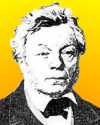
Born 24 Jan 1798; died 1 Jun 1867 at age 69.
German mathematician who developed the first complete theory of imaginary points, lines, and planes in projective geometry. His early work was on determining the orbit of a comet and, based on this work, he received his doctorate. He showed how to construct a regular inscribed polygon of 17 sides using only compasses. He turned to projective geometry and Bernoulli numbers (discovered by Jacob Bernoulli). An important work on projective geometry, Geometrie der Lage was published in 1847. It was the first work to completely free projective geometry from any metrical basis. He also gave a geometric solution to quadratic equations.
German mathematician who developed the first complete theory of imaginary points, lines, and planes in projective geometry. His early work was on determining the orbit of a comet and, based on this work, he received his doctorate. He showed how to construct a regular inscribed polygon of 17 sides using only compasses. He turned to projective geometry and Bernoulli numbers (discovered by Jacob Bernoulli). An important work on projective geometry, Geometrie der Lage was published in 1847. It was the first work to completely free projective geometry from any metrical basis. He also gave a geometric solution to quadratic equations.
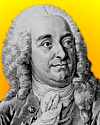
Born 24 Jan 1679; died 9 Apr 1754 at age 75.
(baron) German philosopher, mathematician, and scientist who worked in many subjects but who is best known as the German spokesman of the Enlightenment, the 18th-century philosophical movement characterized by Rationalism. Wolff's first interest was mathematics. Though he made no original contribution to the discipline, he was important in the teaching of mathematics and instrumental in introducing the new mathematics into German universities. Later, as a philosopher, he developed the most impressive coherent system of his century. Thoroughly eclectic, influenced by Leibniz and Descartes, yet he continued fundamental themes of Aristotle. His system was important in making the discoveries of modern science known in Germany.
(baron) German philosopher, mathematician, and scientist who worked in many subjects but who is best known as the German spokesman of the Enlightenment, the 18th-century philosophical movement characterized by Rationalism. Wolff's first interest was mathematics. Though he made no original contribution to the discipline, he was important in the teaching of mathematics and instrumental in introducing the new mathematics into German universities. Later, as a philosopher, he developed the most impressive coherent system of his century. Thoroughly eclectic, influenced by Leibniz and Descartes, yet he continued fundamental themes of Aristotle. His system was important in making the discoveries of modern science known in Germany.

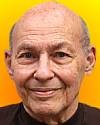
Died 24 Jan 2016 at age 88 (born 9 Aug 1927). quotes
American biochemist and the founder of the MIT Artificial Intelligence Project. Marvin Minsky has made many contributions to AI, cognitive psychology, mathematics, computational linguistics, robotics, and optics. He holds several patents, including those for the first neural-network simulator (SNARC, 1951), the first head-mounted graphical display, the first confocal scanning microscope, and the LOGO "turtle" device. His other inventions include mechanical hands and the "Muse" synthesizer for musical variations (with E. Fredkin). In recent years he has worked chiefly on imparting to machines the human capacity for commonsense reasoning.
American biochemist and the founder of the MIT Artificial Intelligence Project. Marvin Minsky has made many contributions to AI, cognitive psychology, mathematics, computational linguistics, robotics, and optics. He holds several patents, including those for the first neural-network simulator (SNARC, 1951), the first head-mounted graphical display, the first confocal scanning microscope, and the LOGO "turtle" device. His other inventions include mechanical hands and the "Muse" synthesizer for musical variations (with E. Fredkin). In recent years he has worked chiefly on imparting to machines the human capacity for commonsense reasoning.
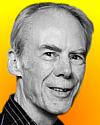
Died 24 Jan 2006 at age 68 (born 23 Jun 1937).
English geologist and paleoclimatologist who helped identify carbon dioxide as a greenhouse gas. He studied the ancient climate changes of the Quaternary period, the last 1.8 million years, during which there were periods building up massive ice sheets and mountain ice caps alternating with warm weather when the ice receded. His data showed Ice Ages occurred roughly every 100,000 years, by analysing an ice sheet in Russia and deep-sea fossil shells. He demonstrated that Ice Ages were linked to decreases in atmospheric carbon dioxide. Conversely, he warned, the present excessive emissions of that gas into the atmosphere can cause global warming. He was a distant relative of Sir Ernest Shackleton, the Arctic explorer.«
English geologist and paleoclimatologist who helped identify carbon dioxide as a greenhouse gas. He studied the ancient climate changes of the Quaternary period, the last 1.8 million years, during which there were periods building up massive ice sheets and mountain ice caps alternating with warm weather when the ice receded. His data showed Ice Ages occurred roughly every 100,000 years, by analysing an ice sheet in Russia and deep-sea fossil shells. He demonstrated that Ice Ages were linked to decreases in atmospheric carbon dioxide. Conversely, he warned, the present excessive emissions of that gas into the atmosphere can cause global warming. He was a distant relative of Sir Ernest Shackleton, the Arctic explorer.«
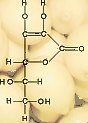
vitamin C
Died 24 Jan 1988 at age 91 (born 22 Oct 1896).
American biochemist who discovered vitamin C, an aid in the prevention of scurvy and malnutrition. After five years of painstaking research extracting components from lemon juice, in 1932, King isolated vitamin C. Its structure was quickly determined and it was synthesized by scientists such as Haworth and Reichstein in 1933. Also known as ascorbic acid, (a- = not, without; scorbus = scurvy), vitamin C is a colourless crystalline water-soluble vitamin found especially in citrus fruits and green vegetables. Most organisms synthesize it from glucose but man and other primates and various other species must obtain it from their diet. It is required for the maintenance of healthy connective tissue; deficiency leads to scurvy. Vitamin C is readily destroyed by heat and light.
American biochemist who discovered vitamin C, an aid in the prevention of scurvy and malnutrition. After five years of painstaking research extracting components from lemon juice, in 1932, King isolated vitamin C. Its structure was quickly determined and it was synthesized by scientists such as Haworth and Reichstein in 1933. Also known as ascorbic acid, (a- = not, without; scorbus = scurvy), vitamin C is a colourless crystalline water-soluble vitamin found especially in citrus fruits and green vegetables. Most organisms synthesize it from glucose but man and other primates and various other species must obtain it from their diet. It is required for the maintenance of healthy connective tissue; deficiency leads to scurvy. Vitamin C is readily destroyed by heat and light.
Died 24 Jan 1966 at age 56 (born 30 Oct 1909). quotes
Homi Jehangir Bhabha was an Indian physicist who is regarded as the father of the Indian nuclear power program. He studied mechanical engineering at Cambridge University, and by 1933 held a PhD in nuclear physics. His teachers included Paul Dirac and Niels Bohr. Bhabha foresaw the need for high quality facilities in India to conduct research on nuclear power. With support from industrialist Dorabji Jamsetji Tata, he established the Tata Institute of Fundamental Research in Bombay (1945) for large scale research in physics, chemistry, electronics and mathematics. He envisioned nuclear power from thorium instead of uranium reserves. He died in the plane crash of Air India 101 near Mont Blanc in the Alps.«
Homi Jehangir Bhabha was an Indian physicist who is regarded as the father of the Indian nuclear power program. He studied mechanical engineering at Cambridge University, and by 1933 held a PhD in nuclear physics. His teachers included Paul Dirac and Niels Bohr. Bhabha foresaw the need for high quality facilities in India to conduct research on nuclear power. With support from industrialist Dorabji Jamsetji Tata, he established the Tata Institute of Fundamental Research in Bombay (1945) for large scale research in physics, chemistry, electronics and mathematics. He envisioned nuclear power from thorium instead of uranium reserves. He died in the plane crash of Air India 101 near Mont Blanc in the Alps.«
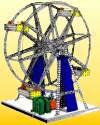
Died 24 Jan 1961 at age 76 (born 15 Feb 1884).
Albert Carlton Gilbert was an American inventor who patented the Erector set after he founded the A.C. Gilbert Co. New Haven, Connecticut (1908) to manufacture boxed magic sets. In 1913, he introduced Erector Sets. Similar construction toys then existed, such as Hornby's Meccano set made in England. Meccano sets included pulleys, gears, and several 1/2" wide strips of varying length with holes evenly spaced on them. Gilbert needed something unique for his Erector sets, so he created the square girder, made using several 1" wide strips with triangles cut in them. These had their edges bent over so 4 strips could be screwed together to form a very sturdy square girder. Over the next 40 years, some 30 million Erector Sets were sold.«
Albert Carlton Gilbert was an American inventor who patented the Erector set after he founded the A.C. Gilbert Co. New Haven, Connecticut (1908) to manufacture boxed magic sets. In 1913, he introduced Erector Sets. Similar construction toys then existed, such as Hornby's Meccano set made in England. Meccano sets included pulleys, gears, and several 1/2" wide strips of varying length with holes evenly spaced on them. Gilbert needed something unique for his Erector sets, so he created the square girder, made using several 1" wide strips with triangles cut in them. These had their edges bent over so 4 strips could be screwed together to form a very sturdy square girder. Over the next 40 years, some 30 million Erector Sets were sold.«
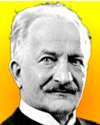
Died 24 Jan 1957 at age 93 (born 26 Jul 1863). quotes
Paul Walden was a Latvian chemist who, while teaching at Riga, discovered the Walden inversion, a reversal of stereochemical configuration that occurs in many reactions of covalent compounds (1896). Due to this discovery, Walden's name is mentioned almost in all textbooks on organic chemistry published throughout the world. Walden revealed autoracemization and put the foundations to electrochemistry of nonaqueous solutions. Walden is also known for Walden's rule, which relates the conductivity and viscosity of nonaqueous solutions.[DSB gives birth date 26 Jul 1863. EB gives birth date: New Style 14 Jul 1863 (Old Style 26 July 1863).]
Paul Walden was a Latvian chemist who, while teaching at Riga, discovered the Walden inversion, a reversal of stereochemical configuration that occurs in many reactions of covalent compounds (1896). Due to this discovery, Walden's name is mentioned almost in all textbooks on organic chemistry published throughout the world. Walden revealed autoracemization and put the foundations to electrochemistry of nonaqueous solutions. Walden is also known for Walden's rule, which relates the conductivity and viscosity of nonaqueous solutions.[DSB gives birth date 26 Jul 1863. EB gives birth date: New Style 14 Jul 1863 (Old Style 26 July 1863).]
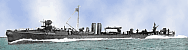
Scottish engineer and inventor (Baronet) who was a shipbuilder of steamboats. Founder, in 1865, of Yarrows shipyard, Isle of Dogs, London, where he built some 350 steam launches before producing, in 1876, their first torpedo boat for the Argentinean Navy. When the Royal Navy's placed a contract for their first torpedo boat destroyers, the first of these, HMS Havock, was launched in 1893. In 1907 the works were transferred to the Clyde, Glasgow. Although Lord Yarrow retired before WW I, he collaborated with Lord Fisher in developing the methods for the rapid construction of destroyers and river gunboats.[Image: HMS Havock]
Alfred Yarrow His Life And Work, by Eleanor C. Barnes. - book suggestion.
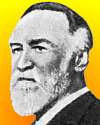
Died 24 Jan 1915 at age 76 (born 12 Sep 1838).
Georg Friedrich Julius Arthur von Auwers was a German astronomer known for his life's work making extremely accurate catalogs of stellar positions and motions. He also researched solar and stellar parallaxes, making a new reduction of James Bradley's 18th century Greenwich observations and measurements of star distances. Auwers also observed double stars, and accurately calculated the orbits of the Sirius and Procyon systems before the faint companions to the bright stars were seen. He redetermined the distance to the sun several times, making use of transits of Venus and an approach of a minor planet.
Georg Friedrich Julius Arthur von Auwers was a German astronomer known for his life's work making extremely accurate catalogs of stellar positions and motions. He also researched solar and stellar parallaxes, making a new reduction of James Bradley's 18th century Greenwich observations and measurements of star distances. Auwers also observed double stars, and accurately calculated the orbits of the Sirius and Procyon systems before the faint companions to the bright stars were seen. He redetermined the distance to the sun several times, making use of transits of Venus and an approach of a minor planet.
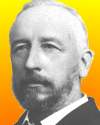
Died 24 Jan 1914 at age 70 (born 12 Jun 1843).
Scottish astronomer known for his measurements of solar and stellar parallax, showing the distances of the Sun and other stars from Earth, and for his early use of photography in mapping the heavens. His early training in timekeeping as a watchmaker led to astronomy and he designed, equipped, and operated a private observatory near Aberdeen. To determine parallaxes, he perfected the use of the heliometer, a telescope that uses a split image to measure the angular separation of celestial bodies. In 1877, Gill and his wife measured the solar parallax by observing Mars from Ascension Island. He was appointed Her Majesty's Astronomer at the Cape of Good Hope (1879-1906). Gill also made geodetic surveys of South Africa. In fact he carried out all of the observations to measure the distances to stars in terms of the standard meter. His precise redetermination of the solar parallax was used for almanacs until 1968.
Scottish astronomer known for his measurements of solar and stellar parallax, showing the distances of the Sun and other stars from Earth, and for his early use of photography in mapping the heavens. His early training in timekeeping as a watchmaker led to astronomy and he designed, equipped, and operated a private observatory near Aberdeen. To determine parallaxes, he perfected the use of the heliometer, a telescope that uses a split image to measure the angular separation of celestial bodies. In 1877, Gill and his wife measured the solar parallax by observing Mars from Ascension Island. He was appointed Her Majesty's Astronomer at the Cape of Good Hope (1879-1906). Gill also made geodetic surveys of South Africa. In fact he carried out all of the observations to measure the distances to stars in terms of the standard meter. His precise redetermination of the solar parallax was used for almanacs until 1968.
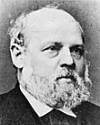
Died 24 Jan 1879 at age 63 (born 26 May 1815).
German glassblower for whom the Geissler (mercury) vacuum pump and the Geissler tube are named. With the unprecedented (1/100 mm of mercury) low vacuum he produced in sealed glass tubes, he made available to early physicists a valuable tool to study the effect of electricity on the remaining traces of gases therein. These produced more detailed studies of the structure of matter.[DSB and EB give birth year as 1815, but Chambers Bio. Dict. gives 1814.]
German glassblower for whom the Geissler (mercury) vacuum pump and the Geissler tube are named. With the unprecedented (1/100 mm of mercury) low vacuum he produced in sealed glass tubes, he made available to early physicists a valuable tool to study the effect of electricity on the remaining traces of gases therein. These produced more detailed studies of the structure of matter.[DSB and EB give birth year as 1815, but Chambers Bio. Dict. gives 1814.]
Died 24 Jan 1868 at age 77 (born 24 May 1790). quotes
English chemist and doctor who first prepared, named and characterised the gas phosgene. He was the younger brother of Humphry Davy. Having finished school in Penzance, in 1808, John went to London to assist his brother in the chemistry laboratory at the Royal Institution. From 1810-1814, John trained as a physician at the University of Edinburgh, during which time he discovered phosgene. He then began a career as an army doctor, including many years abroad, and eventually become inspector general of hospitals. While abroad, he observed and recorded the local culture, studied and dissected animals, and analyzed minerals. He wrote Memoirs of the Life of Sir Humphry Davy (1836) and other works on his brother's scientific career.«
English chemist and doctor who first prepared, named and characterised the gas phosgene. He was the younger brother of Humphry Davy. Having finished school in Penzance, in 1808, John went to London to assist his brother in the chemistry laboratory at the Royal Institution. From 1810-1814, John trained as a physician at the University of Edinburgh, during which time he discovered phosgene. He then began a career as an army doctor, including many years abroad, and eventually become inspector general of hospitals. While abroad, he observed and recorded the local culture, studied and dissected animals, and analyzed minerals. He wrote Memoirs of the Life of Sir Humphry Davy (1836) and other works on his brother's scientific career.«
Died 24 Jan 1860 at age 74 (born 9 May 1785). quotes
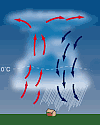
American meteorologist who was one of the first to collect meteorological observations by telegraph. He gave apparently the first essentially correct explanation of the thermodynamics of cloud formation and growth. Every great atmospheric disturbance begins with a rising mass of heated, thus less dense air. While rising, the air mass dilates and cools. Then, as water vapour precipitates as clouds, latent heat is liberated so the dilation and rising continues until the moisture of the air forming the upward current is practically exhausted. The heavier air flows in beneath, and, finding a diminished pressure above it, rushes upward with constantly increasing violence. Water vapour precipitated during this atmospheric disturbance results in heavy rains.[Image: Formation of a thunderstorm, mature stage]
American meteorologist who was one of the first to collect meteorological observations by telegraph. He gave apparently the first essentially correct explanation of the thermodynamics of cloud formation and growth. Every great atmospheric disturbance begins with a rising mass of heated, thus less dense air. While rising, the air mass dilates and cools. Then, as water vapour precipitates as clouds, latent heat is liberated so the dilation and rising continues until the moisture of the air forming the upward current is practically exhausted. The heavier air flows in beneath, and, finding a diminished pressure above it, rushes upward with constantly increasing violence. Water vapour precipitated during this atmospheric disturbance results in heavy rains.[Image: Formation of a thunderstorm, mature stage]
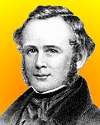
Died 24 Jan 1848 at age 33 (born 21 Jan 1815).
American dentist, a pioneer in the use of surgical anesthesia. On 10 Dec 1844, Wells saw a demonstration of the euphoric effects of inhaling nitrous oxide given by a travelling showman, Gardner Quincy Colton. At the show, he noticed a man under its influence had stumbled, injuring his leg, but who claimed to feel no pain. Next day, Wells had Colton administer nitrous oxide to him while having a tooth extracted by an associate. This experiment was a success, and Wells adopted the gas in his dental practice. In Jan 1845, he presented his procedure to a medical school class at Harvard University, but the gas was removed too soon from the patient, who then complained of pain. Thus the demonstration failed, and he lost his rightful recognition.
American dentist, a pioneer in the use of surgical anesthesia. On 10 Dec 1844, Wells saw a demonstration of the euphoric effects of inhaling nitrous oxide given by a travelling showman, Gardner Quincy Colton. At the show, he noticed a man under its influence had stumbled, injuring his leg, but who claimed to feel no pain. Next day, Wells had Colton administer nitrous oxide to him while having a tooth extracted by an associate. This experiment was a success, and Wells adopted the gas in his dental practice. In Jan 1845, he presented his procedure to a medical school class at Harvard University, but the gas was removed too soon from the patient, who then complained of pain. Thus the demonstration failed, and he lost his rightful recognition.
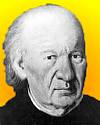
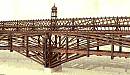
model of third Rhine bridge at Schaffhauser opened 27 Feb 1758
Swiss carpenter, who with his brother Johannes, built a bridge (1758) over the Limmat River at the town of Wettingen, near Zürich, that is believed to be the first timber bridge to employ a true arch in its design. The brothers' ingenious combination of the arch and truss principles made it possible to construct bridges longer and better than ever before. They constructed churches as well as other bridges.

In 1986, the Voyager II space probe made closest approach to Uranus. The spacecraft came within 81,500-km (50,600 miles) of Uranus's cloudtops. The probe radioed thousands of images and great amounts of other scientific data on the planet, its moons, rings, atmosphere, interior and the magnetic environment surrounding Uranus. Its images of the five largest moons around Uranus revealed complex surfaces indicative of varying geologic pasts. The cameras also detected 10 previously unseen moons. It also studied the fine detail of the ring system and newly discovered two more rings. Launched on 20 Aug 1977, Voyager II earlier visited Jupiter and Saturn. After Uranus, it travelled on to Neptune and eventually interstellar space.
In 1950, the original microwave oven patent was issued to its inventor Percy LeBaron Spencer under the title "Method of Treating Foodstuffs." (U.S. No. 2,495,429.)
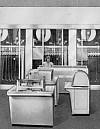
In 1948, IBM dedicated its "SSEC" in New York City. The Selective Sequence Electronic Calculator handled both data and instructions using electronic circuits made with 13,500 vacuum tubes and 21,000 relays. It occupied three sides of a 30-ft x 60-ft room. On the back wall, three punches and thirty readers provided paper-tape storage. Banks of vacuum tube circuits for card reading and sequence control and 36 paper tape readers comprising the table-lookup section occupied the left wall. Most of the right wall was filled by the electronic arithmetic unit and storage. In the center of the room were card readers, card punches, printers, and the operator's console. It was visible to pedestrians on the sidewalk outside.
In 1925, a motion picture of a solar eclipse was taken by the U.S. Navy from the dirigible Los Angeles. The craft was at an elevation of about 4,500-ft and positioned about 19 miles east of Montauk Point, Long Island, NY. This give a view of a total eclipse of the sun that lasted just over 2-min. Four astronomical cameras and a spectrograph were used as well as two moving picture cameras. This was the first time in the U.S. that a dirigible had been used as a platform for observation of a total eclipse of the sun. The first U.S. attempt to photograph one from an aircraft 10 Sep 1923 was unsuccesful due to cloudy conditions, but on 28 Apr 1930, a flight over California sponsored by the U.S. Naval Observatory recorded a total solar eclipse.
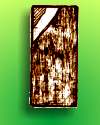
In 1922, the Eskimo Pie "confection", an ice cream centre covered in chocolate, was patented by Christian K. Nelson of Onawa, Iowa. (No. 1,404,539). The patent decribed the article as "in its simplest form, a block or brick or frozen confection within an edible container or shell. The core or center may be an ice cream, sherbet, sorbet, ice, or other material congealed by refrigeration." The shell was described as "like that used in coating chocolate candies, although preferably modified to harden at a lower temperature," and not too brittle.

In 1899, the first U.S. patent for a rubber heel was issued to Humphrey O'Sullivan. His patent described it as a "safety heel" (No. 618,128).
In 1848, gold was discovered at Sutter's Mill, Coloma, California. This initiated the California Gold Rush and during the next few years, thousands of people flocked to the area to search for gold. Some nuggets of gold in native metallic form were simply lying on the ground. More were found by panning streambeds, and later, increasingly technological mining methods were employed. John A. Sutter was building a sawmill at Coloma on the American Fork River, to provide lumber for construction projects. His contractor, James W. Marshall made the first discovery of specimens of gold, which he showed to Sutter, who chemically identified it was gold. Further samples were found in the gravel of the tail-race of the mill. As recently as 2011, the discovery in northern California of a 100-ounce gold nugget was reported.«
The Age of Gold: The California Gold Rush and the New American Dream, by H.W. Brands. - book suggestion.
In 1544, a solar eclipse was viewed at Louvain, which was later depicted in the first published book illustration of the camera obscura in use. Dutch mathematician and astronomer Reinerus Gemma-Frisius viewed a solar eclipse using a hole in one wall of a pavillion to project the sun's image upside down onto the opposite wall. He published the first illustrationof a camera obscura, depicting his method of observation of the eclipse in De Radio Astronomica et Geometrica (1545). Several astronomers made use of such a device in the early part of the 16th century. Both Johannes Kepler and Christopher Scheiner used a camera obscura to study the activity of sunspots. The technique was known to Aristotle (Problems, ca 330 BC).





