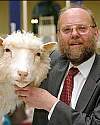
Born 7 Jul 1944. quotes
English embryologist who in 1996 supervised the team of scientists that produced a lamb named Dolly, the first mammal cloned from a cell from an adult. Dolly birth at the Roslin Institute, Edinburgh, Scotland, on 5 Jul 1996, was announced on 23 Feb 1997. The key work was performed by microbiologist Keith Campbell.«[Image: Wilmut with preserved Dolly.]
English embryologist who in 1996 supervised the team of scientists that produced a lamb named Dolly, the first mammal cloned from a cell from an adult. Dolly birth at the Roslin Institute, Edinburgh, Scotland, on 5 Jul 1996, was announced on 23 Feb 1997. The key work was performed by microbiologist Keith Campbell.«[Image: Wilmut with preserved Dolly.]
The Second Creation: Dolly and the Age of Biological Control, by Ian Wilmut, et al. - book suggestion.
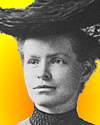
Born 7 Jul 1861; died 4 May 1912 at age 50. quotes
American geneticist who was born in the year that the Civil War began, and despite difficult times and limited women’s educational opportunities, became one of the first American women to achieve recognition for her contributions to scientific research. As a cell biologist and geneticist, her great contribution to science was as one of the first scientists to find that sex is determined by a single difference between two classes of sperm—the presence or absence of an X chromosome. more
American geneticist who was born in the year that the Civil War began, and despite difficult times and limited women’s educational opportunities, became one of the first American women to achieve recognition for her contributions to scientific research. As a cell biologist and geneticist, her great contribution to science was as one of the first scientists to find that sex is determined by a single difference between two classes of sperm—the presence or absence of an X chromosome. more
Born 7 Jul 1858; died 6 Dec 1930 at age 72.
Sidney Abram Weltmer was an American author who founded the Weltmer Institute of Suggestive Therapeutics (19 Feb 1897), offering to gullible patients healing based on thought transference and “magnetic healing.” Medical professionals and theologians denounced him for quackery. He offered instruction in his methods by correspondence courses. When the U.S. Postmaster General identified (1900) Welmer's medical self-help by mail as an outright fraudulent scheme, mail delivery to his institute was blocked. Remarkably, the U.S. Supreme Court decided against the Post Office. He was still publically called a charlatan, and the Missouri State Supreme Court ruled against him in a libel case he pursued to silence his vocal critics. Welmer wrote books, published many pamphlets and Weltner's Magazine promoting his pseudoscience, and managed to keep operating his Institute until his death.«
Sidney Abram Weltmer was an American author who founded the Weltmer Institute of Suggestive Therapeutics (19 Feb 1897), offering to gullible patients healing based on thought transference and “magnetic healing.” Medical professionals and theologians denounced him for quackery. He offered instruction in his methods by correspondence courses. When the U.S. Postmaster General identified (1900) Welmer's medical self-help by mail as an outright fraudulent scheme, mail delivery to his institute was blocked. Remarkably, the U.S. Supreme Court decided against the Post Office. He was still publically called a charlatan, and the Missouri State Supreme Court ruled against him in a libel case he pursued to silence his vocal critics. Welmer wrote books, published many pamphlets and Weltner's Magazine promoting his pseudoscience, and managed to keep operating his Institute until his death.«
Born 7 Jul 1851; died 26 Mar 1943 at age 91.
American psychologist who followed up her academic career with an active second career in gerontological psychology. Martin was determined to work in psychology though as a pioneer woman in psychology, she faced obstacles including age, as well as gender discrimination. Her determination was eventually rewarded with an honorary Ph.D. from a school that originally refused her a degree because of her sex. Martin worked with G.E. Muller in psychophysics, and founded the world's first mental health clinic for normal children and for the elderly. Her accomplishments and enthusiastic eagerness to share knowledge have changed the way applied psychology is viewed in areas of gerontology and mental hygiene for children.
American psychologist who followed up her academic career with an active second career in gerontological psychology. Martin was determined to work in psychology though as a pioneer woman in psychology, she faced obstacles including age, as well as gender discrimination. Her determination was eventually rewarded with an honorary Ph.D. from a school that originally refused her a degree because of her sex. Martin worked with G.E. Muller in psychophysics, and founded the world's first mental health clinic for normal children and for the elderly. Her accomplishments and enthusiastic eagerness to share knowledge have changed the way applied psychology is viewed in areas of gerontology and mental hygiene for children.
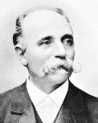
1906 (EB)
Born 7 Jul 1843; died 21 Jan 1926 at age 82. quotes
Italian physician and cytologist who, in 1873, published his key discovery, the use of silver salts to stain samples for microscope slides. Thus new details of cellular structure components were revealed, still known by such names as the Golgi complex. Golgi distinguished different types of nerve cells in the brain (Golgi cells) and described the complex structure of a network of tubules and granules in the cytoplasm of most cells (the Golgi body or apparatus) that is now known to be involved in secretion. Investigations into the fine structure of the nervous system earned him (with the Spanish histologist Santiago Ramón y Cajal) the 1906 Nobel Prize for Physiology or Medicine.
Italian physician and cytologist who, in 1873, published his key discovery, the use of silver salts to stain samples for microscope slides. Thus new details of cellular structure components were revealed, still known by such names as the Golgi complex. Golgi distinguished different types of nerve cells in the brain (Golgi cells) and described the complex structure of a network of tubules and granules in the cytoplasm of most cells (the Golgi body or apparatus) that is now known to be involved in secretion. Investigations into the fine structure of the nervous system earned him (with the Spanish histologist Santiago Ramón y Cajal) the 1906 Nobel Prize for Physiology or Medicine.
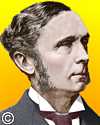
Born 7 Jul 1837; died 3 Feb 1892 at age 54. quotes
English laryngologist, who, as Britain's leading specialist in treatment of diseases of the throat, became embroiled in a bitter international controversy over the death of his patient, German Emperor Frederick III. In his book, The Fatal Illness Of Frederick The Noble (1888), Mackenzie defended his care of the laryngeal cancer of the Crown Prince, later Emperor Frederick the Noble. He had been accused of medical malpractice by jealous attending German physicians following the emperor's death on 15 Jun 1888. The book not only decribes laryngology in the late 19th century, but also offers hidden insight into German history, as well as the soap opera of scheming and attempts at character assassination. more
English laryngologist, who, as Britain's leading specialist in treatment of diseases of the throat, became embroiled in a bitter international controversy over the death of his patient, German Emperor Frederick III. In his book, The Fatal Illness Of Frederick The Noble (1888), Mackenzie defended his care of the laryngeal cancer of the Crown Prince, later Emperor Frederick the Noble. He had been accused of medical malpractice by jealous attending German physicians following the emperor's death on 15 Jun 1888. The book not only decribes laryngology in the late 19th century, but also offers hidden insight into German history, as well as the soap opera of scheming and attempts at character assassination. more
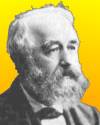
Born 7 Jul 1816; died 6 Dec 1893 at age 77.
Swiss astronomer and astronomical historian. Wolf's main contribution was the discovery of the 11 year sunspot cycle and he was the codiscoverer of its connection with geomagnetic activity on Earth. In 1849 he devised a system now known as Wolf's sunspot numbers. This system is still in use for studying solar activity by counting sunspots and sunspot groups. In mathematics, Wolf wrote on prime number theory and geometry, then later on probability and statistics - a long paper discussed Buffon's needle experiment. He estimated π by Monte Carlo methods.
Swiss astronomer and astronomical historian. Wolf's main contribution was the discovery of the 11 year sunspot cycle and he was the codiscoverer of its connection with geomagnetic activity on Earth. In 1849 he devised a system now known as Wolf's sunspot numbers. This system is still in use for studying solar activity by counting sunspots and sunspot groups. In mathematics, Wolf wrote on prime number theory and geometry, then later on probability and statistics - a long paper discussed Buffon's needle experiment. He estimated π by Monte Carlo methods.
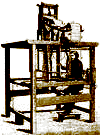
engraving 1874 (EB)
Born 7 Jul 1752; died 7 Aug 1834 at age 82. quotes
French weaver and inventor of the Jacquard programmable power loom for brocaded fabric. His loom would mechanically produce any pattern, controlled by perforated control cards (1805). This served as the impetus for the technological revolution of the textile industry and is the basis of the modern automatic loom. The concept of using punched cards was later applied by Hollerith to keeping track of the 1890 US census data. The idea further evolved to computer input punched cards.
French weaver and inventor of the Jacquard programmable power loom for brocaded fabric. His loom would mechanically produce any pattern, controlled by perforated control cards (1805). This served as the impetus for the technological revolution of the textile industry and is the basis of the modern automatic loom. The concept of using punched cards was later applied by Hollerith to keeping track of the 1890 US census data. The idea further evolved to computer input punched cards.

Died 7 Jul 2007 at age 80 (born 26 Apr 1927).
English geneticist.
English geneticist.
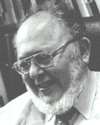
Died 7 Jul 1983 at age 61 (born 15 Feb 1922).
American physicist who worked on nuclear strategy as a military analyst (1948-61). Later, he became known as a futurist making controversial studies of nuclear warfare in his books, including his provocative analysis of nuclear war in On Thermonuclear War (1960) and his predictions of the probability and survivability of nuclear war in Thinking About the Unthinkable (1962). He held that since it might be possible to survive a nuclear war, it was essential to plan to do just that. Kahn founded the influential Hudson Institute in New York in 1961 to study aspects of national security related to narcotics policy, international economics and trade, population, transportation, crime, medicine.«
American physicist who worked on nuclear strategy as a military analyst (1948-61). Later, he became known as a futurist making controversial studies of nuclear warfare in his books, including his provocative analysis of nuclear war in On Thermonuclear War (1960) and his predictions of the probability and survivability of nuclear war in Thinking About the Unthinkable (1962). He held that since it might be possible to survive a nuclear war, it was essential to plan to do just that. Kahn founded the influential Hudson Institute in New York in 1961 to study aspects of national security related to narcotics policy, international economics and trade, population, transportation, crime, medicine.«
The Worlds of Herman Kahn: The Intuitive Science of Thermonuclear War, by Sharon Ghamari-Tabrizi. - book suggestion.
Died 7 Jul 1975 at age 77 (born 2 Nov 1897).
Norwegian-American meteorologist.
Norwegian-American meteorologist.
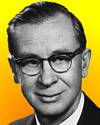
Died 7 Jul 1974 at age 68 (born 12 Jun 1906).
Lyman Creighton Craig was an American chemist who developed the counter-current distribution (CCD) method. Within five years of earning his Ph.D., he had designed and built a microdistillation apparatus (1936). Wartime research on antimarial drugs required identification of microgram amounts of an organic compound in a mixture, for which he devised a laboratory technique based on the distribution coefficient. He soon developed the CCD method for fractionation of complex mixtures with an apparatus that could simultaneously accomplish 20 quantitative extractions in a single step. A notable separation, from a difficult mixture, was the isolation and purified parathormone, the active principle of the parathyroid gland, achieved in 1960 with his colleagues. Craig also designed several other significant instruments, including his rotary evaporator, among others.«
Lyman Creighton Craig was an American chemist who developed the counter-current distribution (CCD) method. Within five years of earning his Ph.D., he had designed and built a microdistillation apparatus (1936). Wartime research on antimarial drugs required identification of microgram amounts of an organic compound in a mixture, for which he devised a laboratory technique based on the distribution coefficient. He soon developed the CCD method for fractionation of complex mixtures with an apparatus that could simultaneously accomplish 20 quantitative extractions in a single step. A notable separation, from a difficult mixture, was the isolation and purified parathormone, the active principle of the parathyroid gland, achieved in 1960 with his colleagues. Craig also designed several other significant instruments, including his rotary evaporator, among others.«
Died 7 Jul 1954 at age 70 (born 12 Jul 1883). quotes
Russian-American physical chemist, a world leader in vacuum science and technology, a GE assistant director of research and author of several standard scientific textbooks. One example is Scientific Foundations of Vacuum Technique (1922). It is very readable and he gets to the hows and whys things work the way they do. One of the true classics, it was completely revised in 1961 by his colleague James Lafferty. Using a formula he derived, Dushman calculated the conductances for cylindrical tubes based on their measured dimensions and produced the table which he included in the book that is still used to design a vacuum system.
Russian-American physical chemist, a world leader in vacuum science and technology, a GE assistant director of research and author of several standard scientific textbooks. One example is Scientific Foundations of Vacuum Technique (1922). It is very readable and he gets to the hows and whys things work the way they do. One of the true classics, it was completely revised in 1961 by his colleague James Lafferty. Using a formula he derived, Dushman calculated the conductances for cylindrical tubes based on their measured dimensions and produced the table which he included in the book that is still used to design a vacuum system.
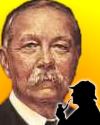
Died 7 Jul 1930 at age 71 (born 22 May 1859). quotes
Scottish author and physician whose fictional detective, Sherlock Holmes, emulates the scientist, diligently searching through data to make sense of it. “It is a capital mistake to theorize before one has data.” His medical degree was awarded at the University of Edinburgh, where he studied under noted surgeon Joseph Bell. After serving as the doctor on an Arctic whaling ship, he practiced in England for a short time as a physician, with little income. So he turned to writing. He was active as a social reformer, and spoke to the Committee on the Daylight Saving Bill in 1908 advocating its adoption. Later in life he was a convert to spiritualism, and requested burial in an upright position in the garden of his home.« more
Scottish author and physician whose fictional detective, Sherlock Holmes, emulates the scientist, diligently searching through data to make sense of it. “It is a capital mistake to theorize before one has data.” His medical degree was awarded at the University of Edinburgh, where he studied under noted surgeon Joseph Bell. After serving as the doctor on an Arctic whaling ship, he practiced in England for a short time as a physician, with little income. So he turned to writing. He was active as a social reformer, and spoke to the Committee on the Daylight Saving Bill in 1908 advocating its adoption. Later in life he was a convert to spiritualism, and requested burial in an upright position in the garden of his home.« more
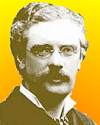
Died 7 Jul 1927 at age 81 (born 16 Mar 1846). quotes
Swedish mathematician who founded the international mathematical journal Acta Mathematica and whose contributions to mathematical research helped advance the Scandinavian school of mathematics. Mittag-Leffler made numerous contributions to mathematical analysis (concerned with limits and including calculus, analytic geometry and probability theory). He worked on the general theory of functions, concerning relationships between independent and dependent variables. His best known work concerned the analytic representation of a one-valued function, this work culminated in the Mittag-Leffler theorem.
Swedish mathematician who founded the international mathematical journal Acta Mathematica and whose contributions to mathematical research helped advance the Scandinavian school of mathematics. Mittag-Leffler made numerous contributions to mathematical analysis (concerned with limits and including calculus, analytic geometry and probability theory). He worked on the general theory of functions, concerning relationships between independent and dependent variables. His best known work concerned the analytic representation of a one-valued function, this work culminated in the Mittag-Leffler theorem.
Died 7 Jul 1831 at age 52 (born 23 May 1779).
American inventor and mechanic of textile machinery, who collaborated with Francis Cabot Lowell, the principal founder of a the Boston Manufacturing Company textile mill at Waltham, Massachusetts. Moody oversaw the factory operations, but also worked with Lowell to develop an efficient power loom, the first constructed in the U.S. (1814), the “dead spindle” spinning apparatus, and other innovations. In 1823, he became an investor and began working at the newly founded Merrimack Company in Lowell, Massacusetts to manufacture calico. By contributing a substantial number of patented improvements in textile machinery, he was important in the development of the textile industry in New England.«
American inventor and mechanic of textile machinery, who collaborated with Francis Cabot Lowell, the principal founder of a the Boston Manufacturing Company textile mill at Waltham, Massachusetts. Moody oversaw the factory operations, but also worked with Lowell to develop an efficient power loom, the first constructed in the U.S. (1814), the “dead spindle” spinning apparatus, and other innovations. In 1823, he became an investor and began working at the newly founded Merrimack Company in Lowell, Massacusetts to manufacture calico. By contributing a substantial number of patented improvements in textile machinery, he was important in the development of the textile industry in New England.«
Died 7 Jul 1740 (born c. 1681).
French-English surgeon whose name is remembered in the term “Amyand's hernia” for an inguinal hernia with an appendix involved. In 1736, Amyand described a surgery for a hernia in an 11-year-old boy with the appendix, perforated by a pin, within the hernia sac. It is regarded as the first recorded successful appendectomy (6 Dec 1735), although removal of the appendix was a procedure secondary to the hernia repair. (The first appendectomy as the planned primary purpose of the procedure is usually credited to Lawson Tait, who performed the operation in May 1880.) Amyand was Surgeon-in-Ordinary to King George II (1683-1760). He published interesting observations on rare surgical cases in the Philosophical Transactions.[Birth date source gives range as the 1680s. Ref. for the hernia surgery: Philos Trans R Soc Lond 1736; 39: 329-336.]
French-English surgeon whose name is remembered in the term “Amyand's hernia” for an inguinal hernia with an appendix involved. In 1736, Amyand described a surgery for a hernia in an 11-year-old boy with the appendix, perforated by a pin, within the hernia sac. It is regarded as the first recorded successful appendectomy (6 Dec 1735), although removal of the appendix was a procedure secondary to the hernia repair. (The first appendectomy as the planned primary purpose of the procedure is usually credited to Lawson Tait, who performed the operation in May 1880.) Amyand was Surgeon-in-Ordinary to King George II (1683-1760). He published interesting observations on rare surgical cases in the Philosophical Transactions.[Birth date source gives range as the 1680s. Ref. for the hernia surgery: Philos Trans R Soc Lond 1736; 39: 329-336.]
In 1981, the first solar-powered aircraft, Solar Challenger, crossed the English Channel.
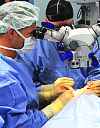
In 1965, the first successful surgery to replant a completely amputated thumb was accomplished by Shigeo Komatsu and Susumi Tamai. They used a surgical microscope to operate on a 28-yr-old man's thumb, which had been severed at the metacarpophalangeal level. They published their work in the Journal of Plastic and Reconstructive Surgery in 1968. The surgeons had been working since 1959, with “many failures.” The way had been paved by Jacobson and Suarez who, in 1960, achieved anastomoses of 1mm diam. vessels under an operating microscope. A medical writer suggested the availability of 8/0 monofilament suture was the key to success by Komatsu and Tamai.. By 1992, they had replanted 331 digits at the Orthopaedic Clinic of Nara Medical University Hospital, Kashihara, Japan.«[Ref: Plast. Reconstr. Surg. (1968); 42:374. Image: a modern operating microscope.]
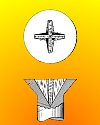
In 1936, several U.S. patents were issued for the Phillips-head screw and screwdriver to its inventor, Henry F. Phillips (Nos. 2,046,343, 2,046,837, -38, -39, -40). They describe a fastening system involving a shallow cruciform recess and a matching driver with a tapering tip that conveniently self-centers in the screw head. Phillips founded the Phillips Screw Company to license his patents. After three years of rejection, he finally persuaded the American Screw Company to spend $500,000 developing a production process and manufacture the screws. General Motors was convinced to use the screws on its 1936 Cadillac. By 1940 virtually every American automaker had switched to Phillips screws.
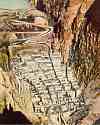
1933
In 1930, construction began on the site infrastructure to build Boulder Dam (Hoover Dam). What had taken decades to come to a political resolution, took only five years more to become a reality. It took the labour of 21,000 men to produce what is now the second-highest dam in the country. The concrete gravity-arch dam on the Colorado River between Nevada and Arizona, impounds Lake Mead, the largest U.S. reservoir. It generates electricity, supplies water to California cities and irrigation to support farming, as well as flood control. Bids for construction were opened on 11 Mar 1931, and awarded to Six Companies, Inc., for $48,890,995. On 6 Jun 1933, the first concrete was poured. It was dedicated on 30 Sep 1935, by President Franklin D. Roosevelt.«[Image: postcard drawing showing construction.]
Colossus: Hoover Dam and the Making of the American Century, by Michael Hiltzik. - book suggestion.
In 1920, a device known as the radio compass was used for the first time on a U.S. Navy airplane near Norfolk, Virginia on this day.
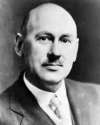
In 1914, Robert Goddard, age 31, was issued a U.S. patent, the first of the 214 he would obtain in his lifetime as a pioneer rocket scientist. This patent was for a “Rocket Apparatus” (U.S. No. 1,102,653) which described the multi-stage rocket concept. A liquid-fueled rocket design was issued a patent the following week, on 14 Jul 1914, also titled “Rocket Apparatus.” It described a combustion chamber, with expander nozzle, into which liquid fuels are pumped. This was his second rocket patent. On 16 Mar 1926, his test launch, the first ever of a liquid-fuelled rocket, managed to propel a 10-ft long projectile to a height of 41-ft (12.5 m). Its 2.5 second flight covered a distance of 184-ft at an average speed of 60-mph. The fuel was a combination of liquid oxygen and gasoline.«
Rocket Man: Robert H. Goddard and the Birth of the Space Age, by David A. Clary. - book suggestion.
In 1891, a patent was granted for the travelers cheque
In 1885, G. Moore Peters of Xenia, OH, patented the cartridge-loading machine.
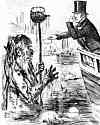
In 1855, a letter from Michael Faraday in The Times newspaper, London, described the polluted state of the River Thames he had observed on a boat trip: “The whole of the river was an opaque pale brown fluid. In order to test the degree of opacity, I ... dropped [pieces of card] into the water at every pier the boat came to; before they had sunk an inch below the surface they were indistinguishable, though the sun shone brightly at the time.” His words, he said, were no exaggeration, they were “the simple truth.” He asserted, “If there be sufficient authority to remove a putrescent pond from the neighbourhood of a few simple dwellings, surely the river which flows for so many miles through London ought not to be allowed to become a fermenting sewer.”[Image: 1855 Punch cartoon of Father Thames greeting Faraday.] more
The Great Stink of London: Sir Joseph Bazalgette and the Cleansing of the Victorian Metropolis, by Stephen Halliday. - book suggestion.
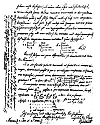
In 1742, the Russian mathematician Christian Goldbach dated a letter to Leonhard Euler in which he presented his famous conjecture. Stated in modern terms, Goldberg's conjecture proposes that “Every even natural number greater than 2 is equal to the sum of two prime numbers.” It has been checked by computer for vast numbers - up to at least 4 x 10¹⁴ - but still remains unproved. Goldbach also studied infinite sums, the theory of curves and the theory of equations.«[Image: Letter to Euler, in which Goldbach presented his conjecture.]
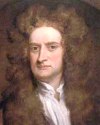
In 1668, Isaac Newton received his M.A. from Trinity College in Cambridge.
In 1550, Europe introduced the first chocolate.




