Born 16 Feb 1901; died 6 Jul 1966 at age 65.
English chemist and inventor who (assisted by James Tennant Dickson) invented a new polyester, polyethylene terephthalate, (1941) from the the condensation reaction of ethylene glycol with terephthalic acid. They were chemists employed by the Calico Printer's Association of Manchester. The patent they filed for in Jul 1941 was delayed by WW II, but eventually registered in 1946. As a textile fibre, it was given the trade name Terylene when marketed in Britain (1947) by Imperial Chemical Industries (ICI), which bought the rights, and for whom Whinfield worked from 1947. When the U.S. rights were purchased and developed by Dupont in America it was known as Dacron. The material remains popular for wash and wear clothing.
English chemist and inventor who (assisted by James Tennant Dickson) invented a new polyester, polyethylene terephthalate, (1941) from the the condensation reaction of ethylene glycol with terephthalic acid. They were chemists employed by the Calico Printer's Association of Manchester. The patent they filed for in Jul 1941 was delayed by WW II, but eventually registered in 1946. As a textile fibre, it was given the trade name Terylene when marketed in Britain (1947) by Imperial Chemical Industries (ICI), which bought the rights, and for whom Whinfield worked from 1947. When the U.S. rights were purchased and developed by Dupont in America it was known as Dacron. The material remains popular for wash and wear clothing.
Born 16 Feb 1886; died 2 Oct 1965 at age 79.
American chemist.
American chemist.
Born 16 Feb 1868; died 10 Feb 1954 at age 85.
German anthropologist was a Roman Catholic priest whose research focussed on the origin of the idea of God and religion within various cultures, trying to link what emerged from ethnological studies with what is stated in the Bible. Schmidt proposed theories on the effect of environment in the evolution of families. He extensively studied ethnography particularly "culture circles," a series of four main stages that the base cultures of this world went through: Primitive (hunter-gatherer), Primary (horticulturists), Secondary (pastoralists) and lastly Tertiary (modern society). Others had proposed such a theory earlier, but Schmidt's work increased its popularity and acceptance. He founded the journal Anthropos (1906).«
German anthropologist was a Roman Catholic priest whose research focussed on the origin of the idea of God and religion within various cultures, trying to link what emerged from ethnological studies with what is stated in the Bible. Schmidt proposed theories on the effect of environment in the evolution of families. He extensively studied ethnography particularly "culture circles," a series of four main stages that the base cultures of this world went through: Primitive (hunter-gatherer), Primary (horticulturists), Secondary (pastoralists) and lastly Tertiary (modern society). Others had proposed such a theory earlier, but Schmidt's work increased its popularity and acceptance. He founded the journal Anthropos (1906).«
Born 16 Feb 1848; died 21 May 1935 at age 87. quotes
Dutch botanist and geneticist who introduced the experimental study of organic evolution. His rediscovery in 1900 (simultaneously with the botanists Carl Correns and Erich Tschermak von Seysenegg) of Gregor Mendel's principles of heredity and his theory of biological mutation, though considerably different from a modern understanding of the phenomenon, resolved ambiguous concepts concerning the nature of variation of species that, until then, had precluded the universal acceptance and active investigation of Charles Darwin's system of organic evolution.
Dutch botanist and geneticist who introduced the experimental study of organic evolution. His rediscovery in 1900 (simultaneously with the botanists Carl Correns and Erich Tschermak von Seysenegg) of Gregor Mendel's principles of heredity and his theory of biological mutation, though considerably different from a modern understanding of the phenomenon, resolved ambiguous concepts concerning the nature of variation of species that, until then, had precluded the universal acceptance and active investigation of Charles Darwin's system of organic evolution.
Born 16 Feb 1843; died 26 Mar 1932 at age 89.
American inventor and industrialist who founded Cadillac Motors (22 Aug 1902) to build the Cadillac, the first automobile with high-precision, fully-interchangable parts. Earlier in his life, he had learned precision toolmaking making rifles during the Civil War, invented the first mechanical barber's clippers, and made engines for Oldsmobiles. When Leland designed an improved engine, but Olds did not want to adopt it, Leland started Cadillac to build his own own brand of automobile. He eventually sold the company to Will Durant's General Motors Co. During WW I, he formed a new company to manufactured aircraft engines, which after the war he produced a new automobile: the Lincoln. That company was bought by Henry Ford.«
American inventor and industrialist who founded Cadillac Motors (22 Aug 1902) to build the Cadillac, the first automobile with high-precision, fully-interchangable parts. Earlier in his life, he had learned precision toolmaking making rifles during the Civil War, invented the first mechanical barber's clippers, and made engines for Oldsmobiles. When Leland designed an improved engine, but Olds did not want to adopt it, Leland started Cadillac to build his own own brand of automobile. He eventually sold the company to Will Durant's General Motors Co. During WW I, he formed a new company to manufactured aircraft engines, which after the war he produced a new automobile: the Lincoln. That company was bought by Henry Ford.«
Master of precision: Henry M. Leland, by Ottilie M Leland. - book suggestion.
Born 16 Feb 1834; died 9 Aug 1919 at age 85. quotes
Ernst Heinrich Haeckel was a German naturalist and biologist who separated the animal kingdom into unicellar and multicellular organisms, and was an enthusiastic supporter of Darwin's theories. He led numerous scientific expedition, and cataloged 4,000 new species of lower marine animals. However, he held an erroneous concept, popularized an expression, "Ontogeny recapitulates phylogeny," (meaning that he supposed any animal embryo progresses through all previous evolutionary stages as it develops) which he based on the striking resemblance of the early embryos of many early vertibrate embryos. Such interpretation may not have lasted, but he nevertheless stimulated enquiry. He coined many words used by biologists today, such as ecology, phylum and phylogeny.« more
Ernst Heinrich Haeckel was a German naturalist and biologist who separated the animal kingdom into unicellar and multicellular organisms, and was an enthusiastic supporter of Darwin's theories. He led numerous scientific expedition, and cataloged 4,000 new species of lower marine animals. However, he held an erroneous concept, popularized an expression, "Ontogeny recapitulates phylogeny," (meaning that he supposed any animal embryo progresses through all previous evolutionary stages as it develops) which he based on the striking resemblance of the early embryos of many early vertibrate embryos. Such interpretation may not have lasted, but he nevertheless stimulated enquiry. He coined many words used by biologists today, such as ecology, phylum and phylogeny.« more
The Tragic Sense of Life: Ernst Haeckel and the Struggle over Evolutionary Thought, by Robert J. Richards. - book suggestion.
Born 16 Feb 1826; died 13 Feb 1909 at age 82.
(Hans Peter Jörgen) Julius Thomsen was a Danish chemist who tabulated the amount of heat released or absorbed in 3,500 chemical reactions. He originated the term acidity and prepared the first table of the relative strengths of acids. He became wealthy from his process (patented in 1853) for the fabrication of soda from the mineral cryolite. In 1878, Thomsen (and independently by Marcellin Berthelot) proposed that every chemical change proceeds in such a direction that it will produce the most heat. However, this statement is incorrect, for many exceptions are known in which chemical reactions are spontaneous even though they absorb heat. Thomsen designed the modern format of groups and periods on the long form of the Periodic Table of the Elements (1895).« more
(Hans Peter Jörgen) Julius Thomsen was a Danish chemist who tabulated the amount of heat released or absorbed in 3,500 chemical reactions. He originated the term acidity and prepared the first table of the relative strengths of acids. He became wealthy from his process (patented in 1853) for the fabrication of soda from the mineral cryolite. In 1878, Thomsen (and independently by Marcellin Berthelot) proposed that every chemical change proceeds in such a direction that it will produce the most heat. However, this statement is incorrect, for many exceptions are known in which chemical reactions are spontaneous even though they absorb heat. Thomsen designed the modern format of groups and periods on the long form of the Periodic Table of the Elements (1895).« more
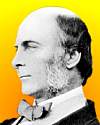
Born 16 Feb 1822; died 17 Jan 1911 at age 88. quotes
English anthropologist, eugenicist and statistician who was an investigator of intellectual ability and the founder of eugenics. He explored in south-western Africa. In meteorology, he was first to recognise and name the anticyclone. He interpreted the theory of evolution of (his cousin) Charles Darwin to imply inheritance of talent could be manipulated. Galton had a long-term interest in eugenics - a word he coined for scientifically selected parenthood to enable inheritance of beneficial characteristics. He coined the phrase “nature versus nurture.” Galton experimentally verified the uniqueness of fingerprints, and suggested the first classification based on grouping the patterns into arches, loops, and whorls. On 1 Apr 1875, he published the first newspaper weather map, in The Times.«[Image: at age about 50]
English anthropologist, eugenicist and statistician who was an investigator of intellectual ability and the founder of eugenics. He explored in south-western Africa. In meteorology, he was first to recognise and name the anticyclone. He interpreted the theory of evolution of (his cousin) Charles Darwin to imply inheritance of talent could be manipulated. Galton had a long-term interest in eugenics - a word he coined for scientifically selected parenthood to enable inheritance of beneficial characteristics. He coined the phrase “nature versus nurture.” Galton experimentally verified the uniqueness of fingerprints, and suggested the first classification based on grouping the patterns into arches, loops, and whorls. On 1 Apr 1875, he published the first newspaper weather map, in The Times.«[Image: at age about 50]
A Life of Sir Francis Galton: From African Exploration to the Birth of Eugenics, by Nicholas Wright Gillham. - book suggestion.
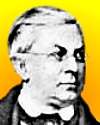
Born 16 Feb 1804; died 7 Apr 1885 at age 81.
German zoologist who studied primarily invertebrates (such as jelly fish, intestinal worms, salamanders and freshwater fish) He also investigated life cycles of parasites and discovered the parthenogenesis of the honeybee (the development of an organism from an unfertilized egg). In 1848, with Koelliker, he created Zeitschrift für wissenschaftliche Zoologie ("Journal of Scientific Zoology"), which he edited until his death.«
German zoologist who studied primarily invertebrates (such as jelly fish, intestinal worms, salamanders and freshwater fish) He also investigated life cycles of parasites and discovered the parthenogenesis of the honeybee (the development of an organism from an unfertilized egg). In 1848, with Koelliker, he created Zeitschrift für wissenschaftliche Zoologie ("Journal of Scientific Zoology"), which he edited until his death.«
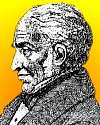
Born 16 Feb 1783; died 15 Jan 1875 at age 91.
Belgian geologist who was an early proponent of evolution. From his youth he pursued geological researches. He was one of the pioneers of modern geology who determined the stratigraphy of the Carboniferous and other rocks in Belgium and the Rhine provinces, and also made detailed studies of the Tertiary deposits of the Paris Basin. As noted by Charles Darwin in the preface of Origin of the Species: "In 1846 the veteran geologist ... Halloy published ... his opinion that it is more probable that new species have been produced by descent with modification than that they have been separately created: the author first promulgated this opinion in 1831." Even in his ninety-first year Halloy made a scientific expedition alone, which exertion contributed to his death.
Belgian geologist who was an early proponent of evolution. From his youth he pursued geological researches. He was one of the pioneers of modern geology who determined the stratigraphy of the Carboniferous and other rocks in Belgium and the Rhine provinces, and also made detailed studies of the Tertiary deposits of the Paris Basin. As noted by Charles Darwin in the preface of Origin of the Species: "In 1846 the veteran geologist ... Halloy published ... his opinion that it is more probable that new species have been produced by descent with modification than that they have been separately created: the author first promulgated this opinion in 1831." Even in his ninety-first year Halloy made a scientific expedition alone, which exertion contributed to his death.
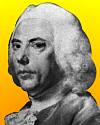
Born 16 Feb 1698; died 15 Aug 1758 at age 60.
French physicist whose work founded photometry, the measurement of light intensity. He was a child prodigy, a professor at age 15, following his father, Jean Bouguer, in hydrography - the study of bodies of water, both salt and fresh. He participated on the expedition to Peru (1735-44) to measure an arc of the meridian near the equator. In 1729, he invented a photometer to compare the intensity of two light sources illuminating separate halves of translucent paper. The eye itself, he determined, could not be used as a meter, but could establish the equality of brightness of adjacent surfaces. He determined the sun was 300 times brighter the moon. Bouguer's law gives the attenuation of a beam of light by an optically homogeneous (transparent) medium.«
French physicist whose work founded photometry, the measurement of light intensity. He was a child prodigy, a professor at age 15, following his father, Jean Bouguer, in hydrography - the study of bodies of water, both salt and fresh. He participated on the expedition to Peru (1735-44) to measure an arc of the meridian near the equator. In 1729, he invented a photometer to compare the intensity of two light sources illuminating separate halves of translucent paper. The eye itself, he determined, could not be used as a meter, but could establish the equality of brightness of adjacent surfaces. He determined the sun was 300 times brighter the moon. Bouguer's law gives the attenuation of a beam of light by an optically homogeneous (transparent) medium.«
Pierre Bouguer's optical treatise on the gradation of light, by Pierre Bouguer. - book suggestion.
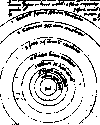
Born 16 Feb 1514; died 4 Dec 1576 at age 62. quotes
German astronomer and mathematician who was among the first to adopt and spread the heliocentric theory of Nicolaus Copernicus. He was first taught by his father, a physician, who was beheaded for sorcery (1528) while Rheticus was still a teenager. He is best known as the first disciple of Copernicus. In 1540, Rheticus published the first account of the heliocentric hypothesis which had been elaborated by Copernicus, entitled Narratio prima, which was explicitly authorised by Copernicus, who also asked for his friend's aid in editing the edition of his De revolutionibus orbium coelestium (“On the revolutions of the heavenly spheres”). Rheticus was the first mathematician to regard the trigonometric functions in terms of angles rather than arcs of a circle.[DSB gives death date 4 Dec 1574. EB gives 5 Dec 1576.]
German astronomer and mathematician who was among the first to adopt and spread the heliocentric theory of Nicolaus Copernicus. He was first taught by his father, a physician, who was beheaded for sorcery (1528) while Rheticus was still a teenager. He is best known as the first disciple of Copernicus. In 1540, Rheticus published the first account of the heliocentric hypothesis which had been elaborated by Copernicus, entitled Narratio prima, which was explicitly authorised by Copernicus, who also asked for his friend's aid in editing the edition of his De revolutionibus orbium coelestium (“On the revolutions of the heavenly spheres”). Rheticus was the first mathematician to regard the trigonometric functions in terms of angles rather than arcs of a circle.[DSB gives death date 4 Dec 1574. EB gives 5 Dec 1576.]

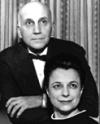
Died 16 Feb 2001 at age 85 (born 27 Dec 1915). quotes
American physician who teamed with his wife in researching the physical aspects of sexuality and produced some of the first reliable data in the field. He began researching sexual function at the Washington University School of Medicine in 1954. Virginia Eshelman Johnson joined him three years later. Human Sexual Response, their first book, was published for the medical community but became a best seller. Masters & Johnson Institute opened in 1964 to provide sex therapy and counseling based on their findings. Their research, books and media activities profoundly affected American society. The Institute closed in 1994 upon his retirement.«
American physician who teamed with his wife in researching the physical aspects of sexuality and produced some of the first reliable data in the field. He began researching sexual function at the Washington University School of Medicine in 1954. Virginia Eshelman Johnson joined him three years later. Human Sexual Response, their first book, was published for the medical community but became a best seller. Masters & Johnson Institute opened in 1964 to provide sex therapy and counseling based on their findings. Their research, books and media activities profoundly affected American society. The Institute closed in 1994 upon his retirement.«
Human Sexual Response, by Masters and Johnson. - book suggestion.

Died 16 Feb 1997 at age 84 (born 29 May 1912). quotes
Chinese-American physicist who provided the first experimental proof (1956) that parity is not conserved in weak subatomic interactions of nuclear beta decay. When two physicists, Tsung-Dao Lee, and Chen Ning Yang proposed that parity was not conserved for weak interactions, Dr. Wu tested the proposal by observing the beta particles given off by cobalt-60. She observed that there is a preferred direction of emission, and that therefore, parity was not conserved for this weak interaction. In other words, Dr. Wu was able to prove that identical nuclear particles do not always act alike, and, thereby, disprove, what was then, a widely accepted “law” of nature.
Chinese-American physicist who provided the first experimental proof (1956) that parity is not conserved in weak subatomic interactions of nuclear beta decay. When two physicists, Tsung-Dao Lee, and Chen Ning Yang proposed that parity was not conserved for weak interactions, Dr. Wu tested the proposal by observing the beta particles given off by cobalt-60. She observed that there is a preferred direction of emission, and that therefore, parity was not conserved for this weak interaction. In other words, Dr. Wu was able to prove that identical nuclear particles do not always act alike, and, thereby, disprove, what was then, a widely accepted “law” of nature.
Madame Wu Chien-Shiung: The First Lady of Physics Research, by Tsai-Chien Chiang and Tang-Fong Wong (trans.). . - book suggestion.
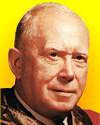
Died 16 Feb 1983 at age 81 (born 30 Mar 1901). quotes
Ralph Edward Gibson was an English-American physical chemist and research director who began his career spending 17 years at the Geophysical Laboratory of Carnegie Institution of Washington. He investigated the physical chemistry of solutions at high pressure. During WW II, he directed research developing solid propellants for rockets, and the factors controlling propellant combustion. Gibson After the war, he joined the Applied Physics Laboratory of the Johns Hopkins University, and two years later became the APL director for the next 20 years. During that time, APL mission was developing technologies for guided missiles, and expanded into problems in transportation, energy, medical diagnosis and space technology. Upon retirement from APL, he remained active in biomedical engineering.«
Ralph Edward Gibson was an English-American physical chemist and research director who began his career spending 17 years at the Geophysical Laboratory of Carnegie Institution of Washington. He investigated the physical chemistry of solutions at high pressure. During WW II, he directed research developing solid propellants for rockets, and the factors controlling propellant combustion. Gibson After the war, he joined the Applied Physics Laboratory of the Johns Hopkins University, and two years later became the APL director for the next 20 years. During that time, APL mission was developing technologies for guided missiles, and expanded into problems in transportation, energy, medical diagnosis and space technology. Upon retirement from APL, he remained active in biomedical engineering.«
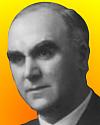
Died 16 Feb 1980 at age 78 (born 21 Aug 1901).
Edward Thomas Copson was an English mathematician known for his studies in classical analysis, differential and integral equations, and their use in mathematical physics. After graduating from Oxford University with a B.A. degree in 1922, he moved to Scotland where he spent the nearly all of his career. His first book, The Theory of Functions of a Complex Variable (1935) was immediately successful. He was a co-author for his next book, The Mathematical Theory of Huygens' Principle (1939). By 1975, he had published four more books, on asymptotic expansions, metric spaces and partial differential equations. Many of the papers he wrote bridged mathematics and physics, of which his last showed his interest in astrophysics, Electrostatics in a Gravitational Field (1978) which was relevant to Black Holes.«
Edward Thomas Copson was an English mathematician known for his studies in classical analysis, differential and integral equations, and their use in mathematical physics. After graduating from Oxford University with a B.A. degree in 1922, he moved to Scotland where he spent the nearly all of his career. His first book, The Theory of Functions of a Complex Variable (1935) was immediately successful. He was a co-author for his next book, The Mathematical Theory of Huygens' Principle (1939). By 1975, he had published four more books, on asymptotic expansions, metric spaces and partial differential equations. Many of the papers he wrote bridged mathematics and physics, of which his last showed his interest in astrophysics, Electrostatics in a Gravitational Field (1978) which was relevant to Black Holes.«
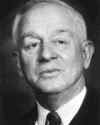
Died 16 Feb 1970 at age 90 (born 5 Oct 1879). quotes
{np] whose discovery of cancer-inducing viruses earned him a share of the Nobel Prize for Physiology or Medicine in 1966. Rous joined the Rockefeller Institute in New York as a pathologist in 1909. The same year, a local farmer brought a chicken with a tumour for testing. Having determined it to be a sarcoma, Rous discovered that it could be "transferred" into a healthy chicken by grafting tumour cells. Surprisingly, injecting cell-free filtrates from the tumour also led to sarcomas in healthy chickens. By 1914, his laboratory had discovered three distinct types of avian sarcomas. Although he did not isolate specific agents, Rous postulated that chicken tumours were due to "filterable agents"-eventually identified as Rous sarcoma virus.
{np] whose discovery of cancer-inducing viruses earned him a share of the Nobel Prize for Physiology or Medicine in 1966. Rous joined the Rockefeller Institute in New York as a pathologist in 1909. The same year, a local farmer brought a chicken with a tumour for testing. Having determined it to be a sarcoma, Rous discovered that it could be "transferred" into a healthy chicken by grafting tumour cells. Surprisingly, injecting cell-free filtrates from the tumour also led to sarcomas in healthy chickens. By 1914, his laboratory had discovered three distinct types of avian sarcomas. Although he did not isolate specific agents, Rous postulated that chicken tumours were due to "filterable agents"-eventually identified as Rous sarcoma virus.
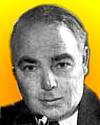

Isaac Leslie Hore-Belisha, 1st Baron Hore-Belisha (of Devonport) was an English statesman and inventor, who originated Belisha beacons, the omni-present flashing orange globe lights at British pedestrian road crossings. During his term as Minister of Transport from 1934, the driving test was introduced, the Highway Code was rewritten, which together with his beacons significantly reduced road accidents. As British secretary of state for war (1937-40), being Jewish, he was particularly motivated to fight Nazi Germany. He instituted military conscription in the spring of 1939, a few months before the outbreak of World War II. However, Prime Minister Neville Chamberlain replaced him in Jan 1940, at a time when he had poor relations with the ministers and the War Cabinet.«[Image right: Belisha beacons at a pedestrian crossing]

Died 16 Feb 1957 at age 88 (born 7 Jun 1868).
British physicist who pioneered in the study of electrical conduction in gases. In 1898 he made the first direct measurement of the unit electrical charge (e). As a postgraduate, he was a research student of J. J. Thomson. In 1897, Townsend developed the falling-drop method for measuring e, using saturated clouds of charged water droplets (extended by Robert Millikan's highly accurate oil-drop method). He was first to explain how electric discharges pass through gases (Electricity in Gases, 1915) whereby motion of electrons in an electric field releases more electrons by collision. These in turn collide releasing even more electrons in a multiplication of charges known as an avalanche.
British physicist who pioneered in the study of electrical conduction in gases. In 1898 he made the first direct measurement of the unit electrical charge (e). As a postgraduate, he was a research student of J. J. Thomson. In 1897, Townsend developed the falling-drop method for measuring e, using saturated clouds of charged water droplets (extended by Robert Millikan's highly accurate oil-drop method). He was first to explain how electric discharges pass through gases (Electricity in Gases, 1915) whereby motion of electrons in an electric field releases more electrons by collision. These in turn collide releasing even more electrons in a multiplication of charges known as an avalanche.
Died 16 Feb 1956 at age 62 (born 6 Oct 1893).
Indian astrophysicist noted for his development in 1920 of the thermal ionization equation, which, in the form perfected by the British astrophysicist E. Arthur Milne, has remained fundamental in all work on stellar atmospheres. This equation has been widely applied to the interpretation of stellar spectra, which are characteristic of the chemical composition of the light source.
Indian astrophysicist noted for his development in 1920 of the thermal ionization equation, which, in the form perfected by the British astrophysicist E. Arthur Milne, has remained fundamental in all work on stellar atmospheres. This equation has been widely applied to the interpretation of stellar spectra, which are characteristic of the chemical composition of the light source.
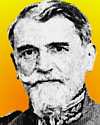
Died 16 Feb 1932 at age 63 (born 19 Nov 1868).
French scientist and army general who contributed to the development of radio communication in France. He participated with Guglielmo Marconi in experimental wireless telegraphy (1899) between Paris, France and England. In 1903, Ferrié directed the installation of a transmitter and antennas on the Eiffel Tower in Paris for long-range radiotelegraphy. Within 5 years, he had improved its effective range from 400 km (250 miles) to 6,000 km (3,700 miles). This led him to develop mobile military transmitters to maintain radio contact with Paris. He also experimented with radio transmissions from aircraft to enable the aerial direction of artillery fire. Early in WW I, (Colonel) Ferrié led a corps of technicians who set up a network of radio direction finders.
French scientist and army general who contributed to the development of radio communication in France. He participated with Guglielmo Marconi in experimental wireless telegraphy (1899) between Paris, France and England. In 1903, Ferrié directed the installation of a transmitter and antennas on the Eiffel Tower in Paris for long-range radiotelegraphy. Within 5 years, he had improved its effective range from 400 km (250 miles) to 6,000 km (3,700 miles). This led him to develop mobile military transmitters to maintain radio contact with Paris. He also experimented with radio transmissions from aircraft to enable the aerial direction of artillery fire. Early in WW I, (Colonel) Ferrié led a corps of technicians who set up a network of radio direction finders.
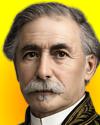
Died 16 Feb 1915 at age 74 (born 2 Jan 1841).
Émile Hilaire Amagat was a French physicist who devoted his research career to the behaviour of fluids, and was noted for pioneering the study of gases at very high pressures. He devised robust experimental apparatus, including thick-walled vessels and precision manometers, to measure compressibility of gases under extreme pressures, far beyond previous limits. His systematic data on real gases provided key benchmarks for developing accurate equations of state. He articulated Amagat’s law of partial volumes, describing how gas mixtures combine under common temperature and pressure. His work underpinned later progress in thermodynamics, physical chemistry, and industrial gas research.«
Émile Hilaire Amagat was a French physicist who devoted his research career to the behaviour of fluids, and was noted for pioneering the study of gases at very high pressures. He devised robust experimental apparatus, including thick-walled vessels and precision manometers, to measure compressibility of gases under extreme pressures, far beyond previous limits. His systematic data on real gases provided key benchmarks for developing accurate equations of state. He articulated Amagat’s law of partial volumes, describing how gas mixtures combine under common temperature and pressure. His work underpinned later progress in thermodynamics, physical chemistry, and industrial gas research.«
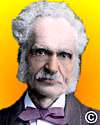
Died 16 Feb 1892 at age 67 (born 8 Feb 1825). quotes
Henry Walter Bates was an English naturalist and explorer whose demonstration of the operation of natural selection in animal mimicry (the imitation by a species of other life forms or inanimate objects), published in 1861, gave firm support to Charles Darwin's theory of evolution. He and Alfred Russel Wallace left England in 1842 to explore and collect insects in the Amazon basin. Bates spent 11 years in Amazonia amassing large collections of insects that were sent back to museums and collectors in Europe. Bates was quick to embrace Darwin's and Wallace's theory of evolution by natural selection. Bates' own theory of mimicry, which now bears his name (Batesian mimicry), provided evidence for evolution by natural selection.
Henry Walter Bates was an English naturalist and explorer whose demonstration of the operation of natural selection in animal mimicry (the imitation by a species of other life forms or inanimate objects), published in 1861, gave firm support to Charles Darwin's theory of evolution. He and Alfred Russel Wallace left England in 1842 to explore and collect insects in the Amazon basin. Bates spent 11 years in Amazonia amassing large collections of insects that were sent back to museums and collectors in Europe. Bates was quick to embrace Darwin's and Wallace's theory of evolution by natural selection. Bates' own theory of mimicry, which now bears his name (Batesian mimicry), provided evidence for evolution by natural selection.
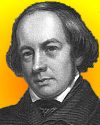
Died 16 Feb 1890 at age 80 (born 24 Sep 1809). quotes
Irish chemist whose book, The Industrial Resources of Ireland (1844), provided a study of the scientific and potential economic value of developing the country’s natural resources. Kane began scientific research in his youth at his father’s industrial chemicals factory. His first papers were published as a teenager. By the age of 22, he had already written a book, Elements of Practical Pharmacy, and was a professor of chemistry at Dublin’s Apothecaries’ Hall. In 1833, age 24, he published a paper in which he was the first to propose the existence of the -C2H5 ethyl radical (Dublin Journal of Medical and Chemical Sciences, which he founded). His research spanned inorganic, organic, physical, biological and applied chemistry.«
Irish chemist whose book, The Industrial Resources of Ireland (1844), provided a study of the scientific and potential economic value of developing the country’s natural resources. Kane began scientific research in his youth at his father’s industrial chemicals factory. His first papers were published as a teenager. By the age of 22, he had already written a book, Elements of Practical Pharmacy, and was a professor of chemistry at Dublin’s Apothecaries’ Hall. In 1833, age 24, he published a paper in which he was the first to propose the existence of the -C2H5 ethyl radical (Dublin Journal of Medical and Chemical Sciences, which he founded). His research spanned inorganic, organic, physical, biological and applied chemistry.«
The Industrial Resources of Ireland, by Robert John Kane. - book suggestion.

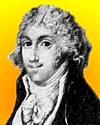
Died 16 Feb 1837 at age 61 (born 4 Feb 1776). quotes
German naturalist who made histological and anatomical studies on invertebrates. Preceding Darwin, he believed in the “descent by modification,” of species. He began his studies in medicine and mathematics, and became a professor in those subjects at the age of 21. While still a student, he contributed an article on neurology to Reil's Archive for Physiology (1796, pt. 1, sec. ii). He produced six volumes of his Biologie; oder die Philosophie der lebenden Natur between 1802 and 1822. Therein, he held that simple forms (Protists), which he termed zoophytes, were “the primitive types from which all the organisms of the higher classes had arisen by gradual development.” He was among the first to regard the cell as the structural unit of life forms. His younger brother, Ludolph Christian Treviranus (1779–1864) was a botanist.«
German naturalist who made histological and anatomical studies on invertebrates. Preceding Darwin, he believed in the “descent by modification,” of species. He began his studies in medicine and mathematics, and became a professor in those subjects at the age of 21. While still a student, he contributed an article on neurology to Reil's Archive for Physiology (1796, pt. 1, sec. ii). He produced six volumes of his Biologie; oder die Philosophie der lebenden Natur between 1802 and 1822. Therein, he held that simple forms (Protists), which he termed zoophytes, were “the primitive types from which all the organisms of the higher classes had arisen by gradual development.” He was among the first to regard the cell as the structural unit of life forms. His younger brother, Ludolph Christian Treviranus (1779–1864) was a botanist.«
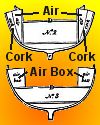
English coach-builder, inventor and pioneer who patented the “unimmergible” (unsinkable) construction of the modern lifeboat (2 Nov 1785, GB No. 1498/1785*). His design used airtight compartments, cork, and other lightweight materials to build small boats that would not sink even when filled with water. Despite the patronage of the Price of Wales, he was unable to attract support for his invention from the Admiralty. Lukin fitted a coble for the the Rev. Dr. Shairp, of Bamborough, who was in charge of a charity for saving life and property at sea, which was reported to have saved several lives within its first year of use. Lukin’s other inventions included a raft for rescuing persons under ice, an adjustable reclining hospital bed, and a rain gauge.«[Image right: Life-boat cross-section drawings from a book published by Lukin in 1790, showing buoyancy compartments.] more
Died 16 Feb 1754 at age 80 (born 11 Aug 1673).
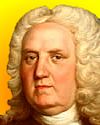
British physician who contributed to preventive medicine and helped establish smallpox inoculation. He wrote works on plague, smallpox, measles and scurvy. His Mechanical Account of Poisons (1702) included observations from his tests of the effects of viper venom on the body. This treatise established his reputation, and he later enlarged and republished the book in 1743. To allay fears of a possible outbreak of plague, he published A Short Discourse Concerning Pestilential Contagion and the Methods to be Used to Prevent It (1720). He became wealthy as the pre-eminent medical practitioner of his day in London, and was physician to Royalty, statesmen and Sir Isaac Newton. Meade built an impressive collection of books, manuscripts, art and natural objects, but it was dispersed after he died.«
British physician who contributed to preventive medicine and helped establish smallpox inoculation. He wrote works on plague, smallpox, measles and scurvy. His Mechanical Account of Poisons (1702) included observations from his tests of the effects of viper venom on the body. This treatise established his reputation, and he later enlarged and republished the book in 1743. To allay fears of a possible outbreak of plague, he published A Short Discourse Concerning Pestilential Contagion and the Methods to be Used to Prevent It (1720). He became wealthy as the pre-eminent medical practitioner of his day in London, and was physician to Royalty, statesmen and Sir Isaac Newton. Meade built an impressive collection of books, manuscripts, art and natural objects, but it was dispersed after he died.«
Died 16 Feb 1636 at age 38 (born 17 Nov 1597).
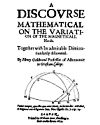
English astronomer and mathematician who co-discovered (with John Marr) the geomagnetic secular variation. This refers to the magentic declination of the earth's magnetic field, the angle between magnetic north and true north, changing on a long-term time scale over years. He detected the direction of a compass needle in London had changed by seven degrees over a period of a half-century. He became professor of astronomy at Gresham College, London on 2 Jan 1627. His navigation textbooks helped improve English navigation at the time.Using manuscripts left unfinished when his friend Henry Briggs died (1630), he completed volume two of Briggs's Trigonometrica Britannica, in 1633. Gellibrand published A Discourse Mathematicall on the Variation of the Magneticall Needle, in 1635. He died the following year, at age 39.«[Image: Title page of Gellibrand's Discourse (1635).]
English astronomer and mathematician who co-discovered (with John Marr) the geomagnetic secular variation. This refers to the magentic declination of the earth's magnetic field, the angle between magnetic north and true north, changing on a long-term time scale over years. He detected the direction of a compass needle in London had changed by seven degrees over a period of a half-century. He became professor of astronomy at Gresham College, London on 2 Jan 1627. His navigation textbooks helped improve English navigation at the time.Using manuscripts left unfinished when his friend Henry Briggs died (1630), he completed volume two of Briggs's Trigonometrica Britannica, in 1633. Gellibrand published A Discourse Mathematicall on the Variation of the Magneticall Needle, in 1635. He died the following year, at age 39.«[Image: Title page of Gellibrand's Discourse (1635).]
In 1994, the first successful operation on a fetus without surgically opening the woman's body was announced by Dr. Ruben Quintero, Wayne State University, Detroit, Mich.

In 1968, the first telephone system in the U.S. to use 911 as the universal emergency services telephone number was inaugurated in Haleyville, Alabama. Before then, dialing a 7-digit number was necessary. A demonstration call was placed by Senator Rankin Fite. U.S. Representative Tom Bevill answered. Nome, Alaska, followed six days later. The system was suggested by the National Fire Chief’s Association in 1957, when major cities often had multiple phone numbers covering different municipal areas. AT&T proposed the 911 phone number in 1968. Congress approved and passed legislation to support its implementation. By 1989, it was available to one-half of the population. Britain adopted the 999 direct emergency number in 1937. Canada began their system in 1959.«
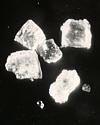
In 1953, diamond crystals, the size of grains of sand, were produced in Sweden in a high pressure press by subjecting graphite to 83,000 atmospheres pressure and about 2000°C for an hour. The research, headed by Erik Lundblad, was funded by the Swedish electrical company ASEA. The idea was conceived by refrigerator inventor, Baltzar von Platen. The press used six pyramidal anvils, set spherically around a graphite pellet. Despite one success, the equipment was unreliable and dangerous. ASEA decided not to publish the results to keep the experiment a commercial secret. Less than a year later, 16 Dec 1954, General Electric in the U.S. also produced man-made diamonds, which is recognised as the first process that was reproducible.«
The Diamond Makers, by Robert M. Hazen. - book suggestion.
In 1948, the first U.S. newsreel telecast to be presented daily was the 20th Century-Fox Movietone News. It was broadcast by the National Broadcast Company (NBC) over its East Coast network broadcast. The program was sponsored by a tobacco company.
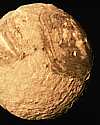
In 1948, Miranda, a famous moon of Uranus, was photographed for first time. It was discovered by Gerard Kuiper, the Dutch astronomer, who also found Neptune's moon Nereid (1949). Miranda is the smallest of the five 5 major satellites of Uranus, and has a diameter of 480 km. When Voyager 2 passed closely by Miranda in 1986, it showed it was one of the most interesting satellites in the solar system, with a complex geological history. The numerous pictures it took of the surface showed a vast and diverse array of fractures, faults, grooves and craters unlike anything ever seen before. The large (318 km diam.) circular region is named the Arden Corona. Miranda is named after a character in Shakespeare's "The Tempest." Arden is the name of a forest, in which his play "As You Like It." is set.«[Image: Composite photo of the southern hemisphere.]

In 1946, the first commercial helicopter, the four-seat Sikorsky S51, single rotor helicopter first flew. It was the first Sikorsky helicopter to be licensed by the U.S. Civil Aviation Administration for commercial operations. The world's first commercial sale was confirmed, with deliveries in Aug 1946, to Helicopter Air Transport of Philadelphia. It marked the end of the first phase of the helicopter's evolution. The design established would be followed by others to this day. It could carry 3 passengers over 250 miles at a speed of 100 miles per hour. The S51 had a 15 m span 15 m, and a length of 12.5 m.
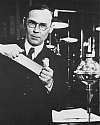
In 1937, Dr. Wallace Carothers, a research chemist for DuPont, who invented nylon, received a patent for the synthetic fiber. The U.S. patent, No. 2,071,250, which was assigned to the E.I. du Pont de Nemours & Co. Inc. The patent covered synthetic linear condensation polymers capable of being drawn into strong pliable fibres, as well as the process for making them. One of the first consumer uses of this new wonder plastic was replacing hog bristles in tooth brushes. Du Pont began production of such bristle filament on 24 Feb 1938, at their Arlington, N.J. factory. Commercial production of yarn for nylon hosiery followed at their Seaford, Delaware factory on 15 Dec 1939.[Image: Carothers stretching sample of nylon fabric.]

In 1932, the first U.S. plant patent for a fruit tree (Plant Patent 7, PP7) was issued for a hybrid peach tree which ripens later than other varieties. James E. Markham assigned his patent to Stark Brothers Nurseries and Orchards of Louisiana, Missouri for $2,500. It was the result of “a cross between the J.H. Hale peach and an unknown yellow variety of a strong and vigorous character.” The cross was said to produce a heavy crop of fruit that “is uniformly large—there being no small peaches appearing on the tree,” and these large peaches “exceeded in size and quality those of its progenitors.” The Markham peach tree, which produced five bushels of fruit, was the result of five years’ effort of serum treatment, pollenization and grafting to produce a fruit with dwarfed seed.«
more
(EB)
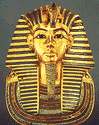
In 1923, archaeologist Howard Carter opened the sealed doorway to the sepulchral chamber of King Tutankhamen's tomb in Thebes, Egypt. A group of invited visitors and officials was present, including Lord Carnarvon, the aristocratic Englishman who had funded the excavation. On 18 Feb 1923, the Queen of the Belgians and numerous visitors attended an official opening. The following day, the press was admitted. The pharoah reigned around 1350 B.C.
In 1909, the first subway car with side doors in the U.S. was put into service in New York City. The Interborough Rapid Transit Company placed an 8-car train in service from Lenox Avenue to 148th Street. The side doors, positioned four feet from each end of the car, were opened and closed by a pneumatic-lever system. The cars cost $12,000 each. These doors were the invention of James McElroy of the Consolidated Car Heating Company. Although there had been prior instances of trains running underground, when the Interborough Rapid Transit Company opened on 27 Oct 1904, it was the first to establish a rapid transit subway in the U.S.
In 1897, black American inventor P. Walker was issued a U.S. patent for his invention of a "Machine for Seeding Cotton" (No. 577,153). The following year, on 8 Mar 1898, he received another patent for his invention of a "Bait Holder" (No. 600,241)
The Inventive Spirit of African Americans: Patented Ingenuity, by Patricia Carter Sluby. - book suggestion.
In 1892, Thomas A. Edison was issued two U.S. patents, for a "Converter System for Electric Railways" and a "Commutator Brush for Electric Motors and Dynamos" (Nos. 468,949-50).
In 1880, the American Society of Mechanical Engineers was founded when 40 engineers from eight states met in New York City in the office of American Machinist. In the same year, an organizational meeting was held on Apr 7, and the first annual meeting took place 4-5 Nov. Robert Henry Thurston was its first president. Thurston had established an engineering school at the new Stevens Institute of Technology in New Jersey and would later create an engineering school at Cornell.
In 1852, Henry and Clement Studebaker founded H. & C. Studebaker, a blacksmith and wagon building business, in South Bend, Indiana. It grew during the Civil War, as The Studebaker Brothers Manufacturing Company, became the world's largest manufacturer of horse-drawn carriages, and they made a fortune. Later, Studebaker converted its business to making automobiles, becoming one of the larger independent automobile manufacturers. During WW II, Studebaker manufactured airplanes for the war effort and cars patriotically called “The President,” “The Champion,” and “The Commander.” Like many of the independents, Studebaker fared well during the war by producing affordable family cars. As its advertisement claimed, “Studebaker is building an unlimited quantity of airplane engines, military trucks and other material for national defense… and a limited number of passenger cars which are the finest Studebaker has ever produced.” However, after the war the Big Three, bolstered by their new government-subsidized production facilities, were too much for many of the independents. Studebaker was no exception. Postwar competition drove Studebaker to its limits, and the company was absorbed by the Packard Corporation in 1954.




