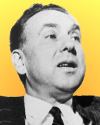
Born 5 Feb 1915; died 17 Nov 1990 at age 75.
American scientist who was a joint recipient of the Nobel Prize for Physics in 1961 for his investigations in which he measured the sizes of the neutron and proton in the nuclei of atoms. He revealed the hitherto unknown structure of these particles and helped create an identifying order for subatomic particles. He also correctly predicted the existence of the omega-meson and rho-meson. He also studied controlled nuclear fission. Hofstadter was one of the driving forces behind the creation of the Stanford Linear Accelerator. He also made substantial contributions to gamma ray spectroscopy, leading to the use of radioactive tracers to locate tumors and other disorders. (He shared the prize with Rudolf Ludwig Mössbauer of Germany.)
American scientist who was a joint recipient of the Nobel Prize for Physics in 1961 for his investigations in which he measured the sizes of the neutron and proton in the nuclei of atoms. He revealed the hitherto unknown structure of these particles and helped create an identifying order for subatomic particles. He also correctly predicted the existence of the omega-meson and rho-meson. He also studied controlled nuclear fission. Hofstadter was one of the driving forces behind the creation of the Stanford Linear Accelerator. He also made substantial contributions to gamma ray spectroscopy, leading to the use of radioactive tracers to locate tumors and other disorders. (He shared the prize with Rudolf Ludwig Mössbauer of Germany.)
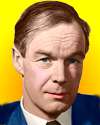
Born 5 Feb 1914; died 20 Dec 1998 at age 84. quotes
Alan Lloyd Hodgkin was an English physiologist and biophysicist who shared (with his countryman Sir Andrew Huxley and Australian scientist Sir John Eccles) the Nobel Prize for Physiology or Medicine in 1963, for the discovery of the chemical processes involved in nerve conduction, more specifically, discoveries concerning the ionic mechanisms involved in excitation and inhibition in the peripheral and central portions of the nerve cell membrane. Hodgkin and Huxley performed their work on the so-called giant axon of Atlantic squid, Loligo pealei, which enabled them to record ionic currents, which would otherwise have not been possible in almost any other neuron, such cells being too small to study by the techniques of the time.«
Alan Lloyd Hodgkin was an English physiologist and biophysicist who shared (with his countryman Sir Andrew Huxley and Australian scientist Sir John Eccles) the Nobel Prize for Physiology or Medicine in 1963, for the discovery of the chemical processes involved in nerve conduction, more specifically, discoveries concerning the ionic mechanisms involved in excitation and inhibition in the peripheral and central portions of the nerve cell membrane. Hodgkin and Huxley performed their work on the so-called giant axon of Atlantic squid, Loligo pealei, which enabled them to record ionic currents, which would otherwise have not been possible in almost any other neuron, such cells being too small to study by the techniques of the time.«
Chance and Design: Reminiscences of Science in Peace and War, by Alan Hodgkin. - book suggestion.
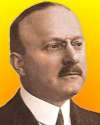
Born 5 Feb 1878; died 3 Jul 1935 at age 57.
French engineer and industrialist who introduced Henry Ford's methods of mass production to the European automobile industry. In 1908 he helped the Mors automobile firm increase its production from 125 cars to 1,200 cars per year. At the outbreak of World War I Citroën persuaded the French army of the need to mass-produce munitions. In 1915 he built a munitions plant whose production of shells reached 55,000 per day. Upon this success he was given the responsibility of organizing the supplying of all French munitions plants with certain vital raw materials. After the war Citroën converted his original arms factory into a plant to mass-produce a small, inexpensive automobile; the first Citroën car came off the assembly line in 1919.
French engineer and industrialist who introduced Henry Ford's methods of mass production to the European automobile industry. In 1908 he helped the Mors automobile firm increase its production from 125 cars to 1,200 cars per year. At the outbreak of World War I Citroën persuaded the French army of the need to mass-produce munitions. In 1915 he built a munitions plant whose production of shells reached 55,000 per day. Upon this success he was given the responsibility of organizing the supplying of all French munitions plants with certain vital raw materials. After the war Citroën converted his original arms factory into a plant to mass-produce a small, inexpensive automobile; the first Citroën car came off the assembly line in 1919.
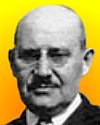
Born 5 Feb 1872; died 9 Dec 1935 at age 63.
American biochemist whose discoveries concerning the value of vitamins and proteins helped establish modern concepts of nutrition. Collaborating with Thomas Osborne, together they published more than 100 papers on various aspects of nutrition (1909-28). In 1913, they showed that rats developed xerophthalmia on diets in which lard supplied the fat. The condition was cured by substitution of butterfat. Thus, they discovered butterfat contained a growth- promoting factor necessary for development, soon known as fat-soluble vitamin A, (co-discovered simultaneously by Elmer McCollum). Mendel also contributed to discovery of B complex vitamins (1915) and linked the nutritive value of proteins to their amino acids.
American biochemist whose discoveries concerning the value of vitamins and proteins helped establish modern concepts of nutrition. Collaborating with Thomas Osborne, together they published more than 100 papers on various aspects of nutrition (1909-28). In 1913, they showed that rats developed xerophthalmia on diets in which lard supplied the fat. The condition was cured by substitution of butterfat. Thus, they discovered butterfat contained a growth- promoting factor necessary for development, soon known as fat-soluble vitamin A, (co-discovered simultaneously by Elmer McCollum). Mendel also contributed to discovery of B complex vitamins (1915) and linked the nutritive value of proteins to their amino acids.
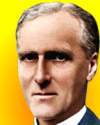
Born 5 Feb 1866; died 7 Jan 1955 at age 88. quotes
Scottish anatomist and physical anthropologist who specialized in the study of fossil humans and who reconstructed early hominid forms, notably fossils from Europe and North Africa. After graduating from university (1888), he travelled as a physician on a gold mining trip to Siam. There, he dissected monkeys and became interested in racial types. In 1892, he returned to Britain and studied anatomy. In 1915, he published The Antiquity of Man, an anatomical survey of all important human fossil remains, at which time he believed that moderns humans are as old as extinct forms of humans. In 1931, New Discoveries was published in which he admitted that modern humans probably arose from types already separate in the early Pleistocene.
Scottish anatomist and physical anthropologist who specialized in the study of fossil humans and who reconstructed early hominid forms, notably fossils from Europe and North Africa. After graduating from university (1888), he travelled as a physician on a gold mining trip to Siam. There, he dissected monkeys and became interested in racial types. In 1892, he returned to Britain and studied anatomy. In 1915, he published The Antiquity of Man, an anatomical survey of all important human fossil remains, at which time he believed that moderns humans are as old as extinct forms of humans. In 1931, New Discoveries was published in which he admitted that modern humans probably arose from types already separate in the early Pleistocene.
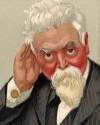
Born 5 Feb 1840; died 24 Nov 1916 at age 76. quotes
Hiram Stevens Maxim was an American-English inventor whose best known innovation is the Maxim machine gun. His first patent was for a hair-curling iron (1866), followed by a device for generating illuminating gas and a locomotive headlight. In 1878, he was hired as chief engineer of the United States Electric Lighting Company, the first such company in the United States. In that post he produced a basic invention, a method of manufacturing carbon filaments. In 1881 he exhibited an electric pressure regulator at the Paris Exposition. Among his hundreds of other patents in the U.S. and Great Britain are a mousetrap, an automatic sprinkling system, an automatic steam-powered water pump, vacuum pumps, engine governors, and gas motors.
Hiram Stevens Maxim was an American-English inventor whose best known innovation is the Maxim machine gun. His first patent was for a hair-curling iron (1866), followed by a device for generating illuminating gas and a locomotive headlight. In 1878, he was hired as chief engineer of the United States Electric Lighting Company, the first such company in the United States. In that post he produced a basic invention, a method of manufacturing carbon filaments. In 1881 he exhibited an electric pressure regulator at the Paris Exposition. Among his hundreds of other patents in the U.S. and Great Britain are a mousetrap, an automatic sprinkling system, an automatic steam-powered water pump, vacuum pumps, engine governors, and gas motors.
Amazing Hiram Maxim, an Intimate Biography, by Arthur Hawkey. - book suggestion.
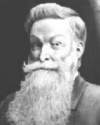
Born 5 Feb 1840; died 23 Oct 1921 at age 81.
Scottish inventor who was a pioneer of the pneumatic tyre. In 1887, when his 9-yr-old son complained of the rough ride he experienced on his tricycle over the cobbled streets of Belfast. Dunlop devised and fitted rubber air tubes held on to a wooden ring by tacking a linen covering fixed around the wheels. Due to the major improvement in riding comfort, Dunlop continued development, until he patented the idea, issued on 7 Dec 1889 (No. 10607) as "An improvement in Tyres of Wheels for Bicycles, Tricycles or other Road Cars".
Scottish inventor who was a pioneer of the pneumatic tyre. In 1887, when his 9-yr-old son complained of the rough ride he experienced on his tricycle over the cobbled streets of Belfast. Dunlop devised and fitted rubber air tubes held on to a wooden ring by tacking a linen covering fixed around the wheels. Due to the major improvement in riding comfort, Dunlop continued development, until he patented the idea, issued on 7 Dec 1889 (No. 10607) as "An improvement in Tyres of Wheels for Bicycles, Tricycles or other Road Cars".
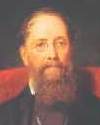
Born 5 Feb 1799; died 1 Nov 1865 at age 66.
British botanist whose attempts to formulate a natural system of plant classification greatly aided the transition from the artificial (considering the characters of single parts) to the natural system (considering all characters of a plant). He made the first definitive orchid classification in 1830.
British botanist whose attempts to formulate a natural system of plant classification greatly aided the transition from the artificial (considering the characters of single parts) to the natural system (considering all characters of a plant). He made the first definitive orchid classification in 1830.
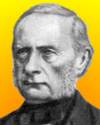
Born 5 Feb 1797; died 29 Apr 1872 at age 75.
French mathematician and physicist who proposed a theory dealing with the transmission of heat in crystal structures based on the work of the French mathematicians Jean-Baptiste-Joseph Fourier and Siméon-Denis Poisson.
French mathematician and physicist who proposed a theory dealing with the transmission of heat in crystal structures based on the work of the French mathematicians Jean-Baptiste-Joseph Fourier and Siméon-Denis Poisson.
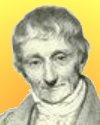
Born 5 Feb 1770; died 7 Oct 1847 at age 77.
French mineralogist, geologist, and naturalist, who first arranged the geologic formations of the Tertiary Period (from 66.4 to 1.6 million years ago) in chronological order and described them. He made the first systematic study of trilobites, an extinct group of arthropods that became important in determining the chronology of Paleozoic strata (from 540 to 245 million years ago). He helped introduce the principle of geologic dating by the identification of distinctive fossils found in each stratum and noted that the Paris formations had been created under alternate freshwater and saltwater conditions. From 1800, he was also director of the Sèvres Porcelain Factory, improving ceramics and enameling, and made Sèvres the leading European factory of its kind.
French mineralogist, geologist, and naturalist, who first arranged the geologic formations of the Tertiary Period (from 66.4 to 1.6 million years ago) in chronological order and described them. He made the first systematic study of trilobites, an extinct group of arthropods that became important in determining the chronology of Paleozoic strata (from 540 to 245 million years ago). He helped introduce the principle of geologic dating by the identification of distinctive fossils found in each stratum and noted that the Paris formations had been created under alternate freshwater and saltwater conditions. From 1800, he was also director of the Sèvres Porcelain Factory, improving ceramics and enameling, and made Sèvres the leading European factory of its kind.
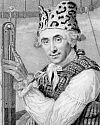
Born 5 Feb 1744; died 16 Sep 1819 at age 75.
American physician and scientist who financed two balloon flights for himself and a Frenchman, Jean Pierre Blanchard, with experience in balloon flight. Jeffries wished to make scientific and meteorological observations. The first flight took place in London on 30 Nov 1784. Jeffries had provided himself with thermometer, barometer, electrometer, hygrometer and timepiece. He took air samples at different elevations for Cavendish, who subsequently made a chemical analysis of the air. The twelve observations of temperature, pressure, and humidity that Jeffries made were the first scientific data for free air, to a height of 9,309 feet. The values agree closely with modern determinations. On 7 Jan 1785, they made the first balloon crossing of the English Channel.Image: Jeffries posed as if in balloon, holding barometer.
American physician and scientist who financed two balloon flights for himself and a Frenchman, Jean Pierre Blanchard, with experience in balloon flight. Jeffries wished to make scientific and meteorological observations. The first flight took place in London on 30 Nov 1784. Jeffries had provided himself with thermometer, barometer, electrometer, hygrometer and timepiece. He took air samples at different elevations for Cavendish, who subsequently made a chemical analysis of the air. The twelve observations of temperature, pressure, and humidity that Jeffries made were the first scientific data for free air, to a height of 9,309 feet. The values agree closely with modern determinations. On 7 Jan 1785, they made the first balloon crossing of the English Channel.Image: Jeffries posed as if in balloon, holding barometer.

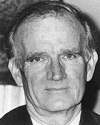
Died 5 Feb 2015 at age 91 (born 10 Mar 1923).
American particle physicist who was corecipient with James Watson Cronin of the Nobel Prize for Physics in 1980 for an experiment conducted in 1964 that disproved the long-held theory that particle interaction should be indifferent to the direction of time. Working with Leo James Rainwater, Fitch had been the first to observe radiation from muonic atoms; i.e., from species in which a muon is orbiting a nucleus rather than an electron. This work indicated that the sizes of atomic nuclei were smaller than had been supposed. He went on to study kaons and in 1964 began his collaboration with James Cronin, James Christenson, and René Turley which led to the discovery of violations of fundamental symmetry principles in the decay of neutral K-mesons.
American particle physicist who was corecipient with James Watson Cronin of the Nobel Prize for Physics in 1980 for an experiment conducted in 1964 that disproved the long-held theory that particle interaction should be indifferent to the direction of time. Working with Leo James Rainwater, Fitch had been the first to observe radiation from muonic atoms; i.e., from species in which a muon is orbiting a nucleus rather than an electron. This work indicated that the sizes of atomic nuclei were smaller than had been supposed. He went on to study kaons and in 1964 began his collaboration with James Cronin, James Christenson, and René Turley which led to the discovery of violations of fundamental symmetry principles in the decay of neutral K-mesons.
Died 5 Feb 1983 at age 83 (born 17 Feb 1899).
American physician who, on 18 May 1935, was appointed Chief of the Physiological Research Laboratory, Wright Field, Ohio, and during a distinguished career there made great contributions to aviation medicine giving last benefits to flying safety and mission effectiveness of pilots.
American physician who, on 18 May 1935, was appointed Chief of the Physiological Research Laboratory, Wright Field, Ohio, and during a distinguished career there made great contributions to aviation medicine giving last benefits to flying safety and mission effectiveness of pilots.
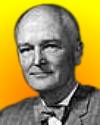
Died 5 Feb 1973 at age 69 (born 29 Sep 1903).
John Heysham Gibbon was an American surgeon who invented the heart-lung machine. He was prompted when in 1930, as a Harvard research fellow in surgery, he saw a patient undergoing heart-lung surgery suffocate on his own blood. On 10 May 1935, he had built his first external pump, and was able to maintain the cardiac and respiratory functions of a cat. In the late 1940s, Gibbon received financial and technical assistance from the IBM Corporation to develop an oxygenator with sufficient capacity for a human. By 6 May 1953, with his improved machine he was able to perform the first successful open-heart operation - the repair of an atrial septal defect on 18-yr-old Cecelia Bavolek - maintaining the patient's heart and lung functions on the machine for 26 minutes.«
John Heysham Gibbon was an American surgeon who invented the heart-lung machine. He was prompted when in 1930, as a Harvard research fellow in surgery, he saw a patient undergoing heart-lung surgery suffocate on his own blood. On 10 May 1935, he had built his first external pump, and was able to maintain the cardiac and respiratory functions of a cat. In the late 1940s, Gibbon received financial and technical assistance from the IBM Corporation to develop an oxygenator with sufficient capacity for a human. By 6 May 1953, with his improved machine he was able to perform the first successful open-heart operation - the repair of an atrial septal defect on 18-yr-old Cecelia Bavolek - maintaining the patient's heart and lung functions on the machine for 26 minutes.«
A Dream of the Heart: The Life of John H. Gibbon, Jr. Father of the Heart-Lung Machine, by Harris B. Shumacker. - book suggestion.
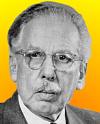
Died 5 Feb 1966 at age 84 (born 13 Apr 1881). quotes
Swiss psychiatrist who founded existential analysis. He was born into a family of noted psychiatrists, including his father Ludwig, his grandfather Robert and his great-uncle Otto. He first met Carl Jung while working at the psychiatric hospital in Zurich. Their visit together with Sigmund Freud in Vienna (1907) led to Binswanger taking up psychoanalysis. He developed an interest in the ideas of Edmund Husserl, Martin Heidegger and Martin Buber, and his perspective evolved more along existential than Freudian lines. He applied the principles of existential phenomenology, especially as expressed by Heidegger, to psychotherapy, and can be said to have been the first truly existential therapist.«
Swiss psychiatrist who founded existential analysis. He was born into a family of noted psychiatrists, including his father Ludwig, his grandfather Robert and his great-uncle Otto. He first met Carl Jung while working at the psychiatric hospital in Zurich. Their visit together with Sigmund Freud in Vienna (1907) led to Binswanger taking up psychoanalysis. He developed an interest in the ideas of Edmund Husserl, Martin Heidegger and Martin Buber, and his perspective evolved more along existential than Freudian lines. He applied the principles of existential phenomenology, especially as expressed by Heidegger, to psychotherapy, and can be said to have been the first truly existential therapist.«
Being in the World, by Ludwig Binswanger. - book suggestion.
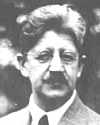
1926
Died 5 Feb 1943 at age 79 (born 23 Feb 1863).
U.S. botanist whose major area of research was the cycad genera, palmlike, cone-bearing plants intermediate in appearance and structural features between tree ferns and palms. Before his work, little was known concerning the life histories, distribution, ecology, and diversity of cycads and other primitive seed plants. Making visits to Mexico, Fiji, New Zealand, Australia, and South Africa and Cuba (1904-22), Chamberlain collected specimens and gained information on critical stages in such plant development. Studying the primitive gymnosperms of the cycad family enabled him to postulate a course of evolutionary development for the spermatophyte (seed plant) ovule and embryo and led to speculation about a cycad origin for angiosperms (flowering plants).
U.S. botanist whose major area of research was the cycad genera, palmlike, cone-bearing plants intermediate in appearance and structural features between tree ferns and palms. Before his work, little was known concerning the life histories, distribution, ecology, and diversity of cycads and other primitive seed plants. Making visits to Mexico, Fiji, New Zealand, Australia, and South Africa and Cuba (1904-22), Chamberlain collected specimens and gained information on critical stages in such plant development. Studying the primitive gymnosperms of the cycad family enabled him to postulate a course of evolutionary development for the spermatophyte (seed plant) ovule and embryo and led to speculation about a cycad origin for angiosperms (flowering plants).
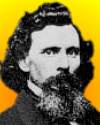
Died 5 Feb 1934 at age 83 (born 12 Feb 1850). quotes
American geomorphologist and geologist who developed, geomorphology as the scientific study of landforms. He is noted for his concept of the “cycle of erosion” (or geomorphic cycle) whereby mountains and other landforms have a pattern of creation, maturation and becoming old. Mountains are formed by uplift and have steep, irregular forms. With time, valleys are carved by streams, which widen, and erosion eventually produces gentler, rolling hills. Though this scheme is not accurate by today's understanding, Davis initiated new ideas to interpret the evolution of landforms. His essay The Rivers of Pennsylvania (1889) first gave a broad statement of his concepts.«
American geomorphologist and geologist who developed, geomorphology as the scientific study of landforms. He is noted for his concept of the “cycle of erosion” (or geomorphic cycle) whereby mountains and other landforms have a pattern of creation, maturation and becoming old. Mountains are formed by uplift and have steep, irregular forms. With time, valleys are carved by streams, which widen, and erosion eventually produces gentler, rolling hills. Though this scheme is not accurate by today's understanding, Davis initiated new ideas to interpret the evolution of landforms. His essay The Rivers of Pennsylvania (1889) first gave a broad statement of his concepts.«
Elementary Physical Geography, by William Morris Davis. - book suggestion.
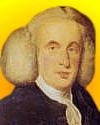
Died 5 Feb 1790 at age 79 (born 15 Apr 1710). quotes
Scottish physician and chemist who held the first independent university lectureship designated for chemistry (founded 1747) in the British Isles at Glasgow University. The university also provided a modest sum for a laboratory. (An earlier chair at Edinburgh was entitled chemistry and medicine.) Cullen extended the subject of chemistry beyond medicine by connecting it to many "arts" including agriculture, bleaching, brewing, mining, and the manufacture of vinegar and alkalies. He moved to the University of Edinburgh in 1755. Cullen was active in the founding of the Royal Society of Edinburgh and the Royal Medical Society (Edinburgh). His sole paper (1756) was on his investigation of the cold produced by the evaporation of various fluids.«*
Scottish physician and chemist who held the first independent university lectureship designated for chemistry (founded 1747) in the British Isles at Glasgow University. The university also provided a modest sum for a laboratory. (An earlier chair at Edinburgh was entitled chemistry and medicine.) Cullen extended the subject of chemistry beyond medicine by connecting it to many "arts" including agriculture, bleaching, brewing, mining, and the manufacture of vinegar and alkalies. He moved to the University of Edinburgh in 1755. Cullen was active in the founding of the Royal Society of Edinburgh and the Royal Medical Society (Edinburgh). His sole paper (1756) was on his investigation of the cold produced by the evaporation of various fluids.«*
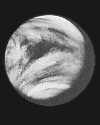
In 1974, the U.S. space probe Mariner 10 returned the first close-up photos of the cloud structure of Venus, at a closest range of 5768-km. It also was the first time a spacecraft used a gravity assist from one planet to help it reach another planet, helping Mariner 10 reach Mercury in Mar 1974. Carbon dioxide and sulphuric acid make up the Venusian atmosphere and clouds, having a greenhouse effect that heats the surface to 485ºC, while obscuring any view of the planet's surface, where the atmospheric pressure is 90 times greater than at sea level on Earth. The Soviet probe Venera 9 which penetrated the clouds and landed on 22 Oct 1975, was briefly able to transmit images of the surface.«[Image: picture of Venus showing clouds taken in ultraviolet spectrum, 10 Feb 1974, by Mariner 10.]
In 1971, Apollo 14, the third US manned Moon expedition, landed with two astronauts in the lunar highlands near the crater Fra Mauro. Commander Alan B. Shepard and Lunar Module pilot Edgar D. Mitchell became the fifth and sixth men to walk on the Moon. During this four-hour activity, they deployed the Apollo Lunar Surface Experiments Package (ALSEP) containing scientific experiments to be left on the lunar surface and other scientific and sample collection apparatus. Before lifting off on the next day (6 Feb 1971), the astronauts went on another moonwalk almost to the rim of nearby Cone crater, collecting 42.9-kg of samples along the traverse. At the end of this 3.45-km walk, Shepard used a contingency sampler with a 6-iron connected to the end to hit two golf balls.«

In 1962, the Sun, the Moon, and the five naked-eye visible planets - Mercury, Venus, Mars, Jupiter, and Saturn - were in conjunction. Though not in a straight line along their orbital paths, as viewed in the sky, they were within 16 degrees of each other (meaning all appeared within a circle just 16 º across). This conjunction coincided with a total solar eclipse, which made viewing Mercury, Venus, Mars, Jupiter, and Saturn possible for a brief period of time from a small stretch of Earth where the eclipse's shadow hit. The five naked-eye visible planets cluster together in the sky within a circle 25 degrees or less in diameter once every 57 years, on average. The next time in the 21st century that this will happen is 8 Sep 2040.[Image: artist's conception of the conjunction within 9º of the moon and three planets (Mars, Jupiter and Saturn) as viewed on 6 Apr 2000.]
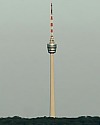
In 1956, the world's first concrete television tower on the Hoher Bopser hill was inaugurated in Stuttgart, Germany, for Süddeutscher Rundfunk (now SWR). Instead of a steel girder transmitter mast, design engineers Fritz Leonhardt, Erwin Heinle and Rolf Gutbrod originated a 217-m steel-topped concrete needle to broadcast TV and FM radio. The observation decks three-fourths to the top provide tourists with views of Stuttgart, the local forests, vineyards and the Alps. It was built in 20 months at a cost of 4.2 million DM. Similar designs have since been used for many television towers around the world. The inauguration was attended by Anastas Iwanowitsch Mikojan, who later became head of state of the Soviet Union.«
In 1952, some sources say - apparently incorrectly - that the first time a pedestrian "Don't Walk" sign was installed in America, it was on this day, in New York City. Others cite the date as 29 Feb 1952. However, much earlier examples have been discussed in an article on the Highway History page of the U.S. Department of Transportation web site. This article has found examples of “Don't Walk” signs dating from the late 1930s.
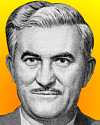
In 1948, Roy K. Marshall premiered The Nature of Things, a general science TV series on Philadelphia station WPTZ-TV. It moved to the NBC network in Dec 1948 as a prime time program until Sep 1950, and then as a summer replacement show and weekend afternoon feature until fall 1953. As director of the Franklin Institute’s Fels Planetarium, before the series, Marshall had gained some experience in radio providing technical explanation to a general audience. After that, he appeared on WPTZ to promote a new exhibition, “A Trip to the Moon”, and then hosted remote telecasts from the museum. He had also experience teaching astronomy at several universities, so he was comfortable on camera.«
The Nature Of Things, by Roy K. Marshall. - book suggestion.
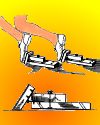
(USPTO)
In 1929, the first U.S. patent for starting blocks, titled "Foot Support," was issued to George T. Bresnahan of Iowa City, Iowa (No.1,701,026). He described his invention as "what might be termed a starting block" to be used on a running track or field. As a University of Iowa coach interested in sports science, he wanted to improve the "get-away" for athletes who were already accustomed to digging holes in the ground to get a firm foot-hold, which varied with the firmness of the soil or cinders. The invention provided an adjustment of tilt to better match an individual's foot, and a cork or rubber surface to provide a firm foot-hold. The device was intended to be connected to the track surface with suitable spikes or nails.«*
In 1918, Thomas A. Edison was issued a U.S. patent for a "Starting and Current-Supplying System for Automobiles" (No. 1,255,517).
In 1901, Thomas A. Edison was issued three U.S. patents.
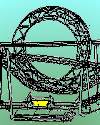
In 1901, an improved loop-the-loop centrifugal railway was patented by Edwin Prescott of Arlington, Mass. (U.S. No. 667,455). He had installed at Coney Island in 1900, named as Boynton's Centrifugal Railway. It had a 75-ft incline and a 20-ft-wide loop. This patent was to improve on his previous patent for a roller coaster with a purely circular loop (16 Aug 1898, No. 609,164), The early constant-radius circular shape resulted in an uncomfortable shock to passengers as the car entered the loop. The new design was made to offer more comfort by varying the radius of the curve of the loop. The entry point of the loop began with a greater radius. The radius decreased toward the horizontal diameter of the loop. The patent also covered other details of coaster construction.
In 1899, Thomas A. Edison was issued a U.S. patent for a "Phonograph Recorder and Reproducer" (No. 397,280).

In 1897, the Indiana State House legislature passed Bill No.246 which in effect gave 3.2 exactly as the value of pi. It stated, in part, "the ratio of the diameter and circumference [pi] is as five-fourths to four." That is (4 divided by 5/4) = 16/5 = 3.2 exactly. It was introduced by Representative Taylor I. Record, a farmer and lumber merchant, on behalf of a mathematical hobbyist, Dr. Edwin J. Goodwin, M.D. Neither they, nor the House politicians, understood it was mathematically incorrect. That was shortly recognized by Clarence A. Waldo, mathematics professor at Purdue University, who advised the Indiana Senators. They indefinitely postponed the bill on 12 Feb 1897. Pi is, in fact, an irrational number, approx. 3.141592.«
more
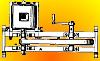
In 1884, black American inventor Willis Johnson of Cincinnati, Ohio, was issued a U.S. patent for an "Egg Beater" (No. 292,821). It was designed so that eggs, batter and similar ingredients used by bakers or confectioners could be mixed intimately efficiently. The image shows a top view, with one cylinder and hopper attached, with suitable mixing paddles (not seen in diagram) contained therein which are rotated by a shaft attached to a pulley and a hand crank. A second cylinder can be attached to the other end of the shaft so that production may be doubled.
The Inventive Spirit of African Americans: Patented Ingenuity, by Patricia Carter Sluby. - book suggestion.
In 1870, for the first time in the U.S. an animated photographic picture projection before a theatre audience was presented by Henry R. Heyl using his Phasmatrope. This was a converted projecting lantern in front of which rotated a disc with 16 openings near the edge, each carrying a photographic plate. The series of plates showed dancers, who appeared to move as the rotating disc showed successive positions. The pictures were a continuous loop that did not change. The event was the Ninth Annual Entertainment of the Young Men's Society of St. Mark's Evangelical Lutheran Church of Philadelphia, held at the Academy of Music, Philadelphia, Pa.
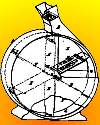
(USPTO)
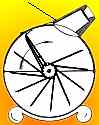
In 1861, a U.S. patent was issued for the kinematoscope - a photographic attempt to show motion - to Coleman Sellers of Philadelphia as an "improvement in exhibiting stereoscopic pictures of moving objects (No. 31,357). A series of still pictures with successive stages of action was mounted on blades of a paddle and viewed through slits passed under the lens of a stereoscope revolved at right angles. The pictures were were visible only in the cabinet. The picture was not seen whole at once, but only by degrees as the cylinder revolved. The inventor wished to show pictures such as human motion or the revolving wheels of machinery. He applied stereoscopic viewing to the existing principle of toy phatasmascopes using rotating discs.«
(USPTO)
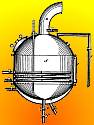
In 1861, a stereoscope design that may be regarded as the first U.S. precursor to the peep show machine was patented by Samuel D. Goodale of Cincinnati (No. 31,310). Stereoscopic pictures were fastened by one edge to an axis in such a way that they stood out like spokes. As it was turned by hand, different scenes appeared to be viewed, each one held steady against a detent projecting from the interior of the case before the lens, until flipped away as the shaft rotated to almost instantly reveal the next scene. The equipment was easily portable, and the lens holder, reflector and diffusing glass could be compactly folded within the case. The case was made in two sections that could be opened to view and replace the scenes.«
more
(USPTO)
In 1850, Gail Borden of Brooklyn, NY, was issued a U.S. patent his process that baked a combination of extracts from meat with flour to produce a meat biscuit capable of long term storage (No. 7,066). This gave a convenient method that a preserved meat-based product could be carried by the military, seamen and other travellers. Because it could be reconstitued with hot water as a soup, the patent title was “Preparation of Portable Soup-Bread.” Six years later, he perfected a process to heat milk in a vacuum to produce condensed milk capable of extended storage. He started a company to distribute the condensed milk in large cities. The Borden company is today one of the largest dairy product concerns in the world.
more
(USPTO)
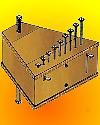
In 1850, the first U.S. patent for push-key operation for an adding machine was patented by Dubois D. Parmelee of New Paltz, N.Y. (No. 7,074). His "Calculating Machine" patent diagram showed 9 keys. The operation of any key would cause a ratchet to raise a graduated indicator rod at the rear by a corresponding number of notches. Key 2 followed by Key 4 would thus reveal a total of 6 graduations. He anticipated another form using dial indicators to count tens and hundreds. Parmelee also invented a suction socket for artificial limbs almost a century before its general use (Patent No. 37,637, 10 Feb 1863). His calculator was unsuccessful. Over 40 years later, the first practical adding machine was invented by William Burroughs.«
more
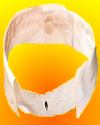
In 1825, housewife Hannah Lord Montague (1794-1878) at 139 Third Street, Troy, N.Y. took her scissors and created the first detachable collar on one of her husband's shirts in order to reduce her laundry load to the collar only. Her husband, Orlando Montague, showed his wife's invention to other men around town. Their wives embraced this new invention. Merchants followed suit, and manufactured collars in mass quantities for sale to the outside world. Woodsheds, garrets and store fronts became collar making places as people were drawn to this new trade by its apparent simplicity: a table, a pair of scissors, a bolt of cloth and a spool of cotton was all that was necessary. Troy, New York, became "Collar City" to the rest of America.
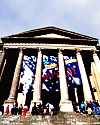
In 1824, Samuel Vaughan Merrick and William H. Keating founded "The Franklin Institute of the State of Pennsylvania for the Promotion of the Mechanic Arts" to honor Ben Franklin and advance the usefulness of his inventions. First located in the Philadelphia County Court House (known today as Independence Hall), it soon was moved in a new location where it remained for its first century. In 1930, funds were raised ($5.1 million in just 12 days) to move again into a new building which opened to the public on 1 Jan 1934. There it is complemented by the Fels Planetarium, the second planetarium in the U.S. Its construction began in 1933, the donation of Samuel S. Fels.
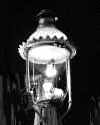
In 1817, the first U.S. gas company was incorporated in Baltimore, Md. Rembrandt Peale with others was permitted by a city ordinance passed in Jun 1816 to manufacture and distribute coal gas “to provide for more effectually lighting in the streets, squares, lanes and alleys of the city of Baltimore.” The incorporators included William Gwynn, who writing as editor of the Baltimore Gazette was able to build public support. The Gas Light Company of Baltimore lighted the first street on 7 Feb 1817. Peale had first used gas to light his Peale’s Museum, from which he envisioned the benefits of a company to make gas lighting to city businesses and residences.«
more




