Born 6 May 1929; died 27 Mar 2007 at age 77.
Paul Christian Lauterbur was an American chemist who shared (with Sir Peter Mansfield) the 2003 Nobel Prize for Physiology or Medicine “for their discoveries concerning magnetic resonance imaging.”
Paul Christian Lauterbur was an American chemist who shared (with Sir Peter Mansfield) the 2003 Nobel Prize for Physiology or Medicine “for their discoveries concerning magnetic resonance imaging.”
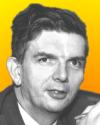
Born 6 May 1916; died 4 Mar 1997 at age 80.
American physicist who worked in such wide-ranging fields as microwave physics, cosmology, and relativity. As an inspired theorist and a successful experimentalist, his unifying theme was the application of powerful and scrupulously controlled experimental methods to issues that really matter. He also made a number of significant contributions to radar technology and to the field of atomic physics. His visualization of an oscillating universe stimulated the discovery of the cosmic microwave background, the most direct evidence that our universe really did expand from a dense state. A key instrument in measurements of this fossil of the Big Bang is the microwave radiometer he invented. His patents ranged from clothes dryers to lasers.
American physicist who worked in such wide-ranging fields as microwave physics, cosmology, and relativity. As an inspired theorist and a successful experimentalist, his unifying theme was the application of powerful and scrupulously controlled experimental methods to issues that really matter. He also made a number of significant contributions to radar technology and to the field of atomic physics. His visualization of an oscillating universe stimulated the discovery of the cosmic microwave background, the most direct evidence that our universe really did expand from a dense state. A key instrument in measurements of this fossil of the Big Bang is the microwave radiometer he invented. His patents ranged from clothes dryers to lasers.
Thm.jpg "Jack Allen")
Born 6 May 1908; died 22 Apr 2001 at age 92.
John Frank (Jack) Allen was a Canadian physicist who codiscovered the superfluidity of liquid helium near absolute zero temperature. Working at the Royal Society Mond Laboratory in Cambridge, with Don Misener he discovered (1930's) that below 2.17 kelvin temperature, liquid helium could flow through very small capillaries with practically zero viscosity. Independently, P. L. Kapitza in Moscow produced similar results at about the same time. Their two articles were published together in the 8 Jan 1938 issue of the journal Nature. Superfluidity is a visible manifestation resulting from the quantum mechanics of Bose- Einstein condensation. By 1945, research in Moscow delved into the microscopic aspect, which Allen did not pursue.«
John Frank (Jack) Allen was a Canadian physicist who codiscovered the superfluidity of liquid helium near absolute zero temperature. Working at the Royal Society Mond Laboratory in Cambridge, with Don Misener he discovered (1930's) that below 2.17 kelvin temperature, liquid helium could flow through very small capillaries with practically zero viscosity. Independently, P. L. Kapitza in Moscow produced similar results at about the same time. Their two articles were published together in the 8 Jan 1938 issue of the journal Nature. Superfluidity is a visible manifestation resulting from the quantum mechanics of Bose- Einstein condensation. By 1945, research in Moscow delved into the microscopic aspect, which Allen did not pursue.«
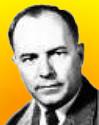
Born 6 May 1907; died 12 Jan 1967 at age 59.
U.S. psychologist who attempted to construct a comprehensive theory of behaviour to encompass conditioning and other simple forms of learning and behaviour modification. He is known for both theoretical and experimental research on learning. Spence was particularly interested in learning and conditioning. He extended the research and theories of Hull, in an attempt to establish a precise, mathematical formulation to describe the acquisition of learned behavior. He tried to measure simple learned behaviors such as salivating in anticipation of eating. Much of his research focused on classically conditioned, easily measured, eye-blinking behavior in relation to anxiety and other factors.
U.S. psychologist who attempted to construct a comprehensive theory of behaviour to encompass conditioning and other simple forms of learning and behaviour modification. He is known for both theoretical and experimental research on learning. Spence was particularly interested in learning and conditioning. He extended the research and theories of Hull, in an attempt to establish a precise, mathematical formulation to describe the acquisition of learned behavior. He tried to measure simple learned behaviors such as salivating in anticipation of eating. Much of his research focused on classically conditioned, easily measured, eye-blinking behavior in relation to anxiety and other factors.
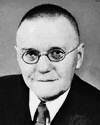
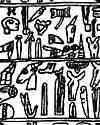
Czech archaeologist and linguist who, working with cuneiform tablets from Hattusas, deciphered the Hittite language. His first archeological fieldwork was in Palestine (1904). In 1913, he collaborated in deciphering the cuneiform languages recorded in Winckler's archives from Boghazkioi, the ancient Hittite capital in central Turkey. Hrozny maintained that Hittite was an Indo-European language, and he published his translations in 1917. His work on the cuneiform documents derived from the Assyrian merchants at Kultepe revealed the political and economic conditions in the Near East prior to 2000 B.C. In 1934, he travelled widely in Asia Minor studying heiroglyphics. He excavated Hittite sites in Turkey, including ancient Kanesh.«[Image right: detail of Cuneiform inscription from Bedrich Hrozny's notes.]
Born 6 May 1872; died 28 Aug 1940 at age 68.
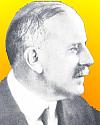
American geodesist who investigated isostasy (a principle that dense crustal rocks to tend cause topographic depressions and light crustal rocks cause topographic elevations). He made measured gravity anomalies on land and obtained gravity surveys in the oceans. These observations correlated the anomalies with topographic features and validated the geological concept of isostasy. With John F. Hayford, his predecessor at the Coast and Geodetic Survey, he computed tables of the depth of isostatic compensation (the surface above which the weight of the crust per unit area is equalized). Bowie felt that this zone would occur at a uniform depth as predicted by John Henry Pratt, rather than at the varying depth predicted by Sir George Airy. He wrote Isostasy (1927).
American geodesist who investigated isostasy (a principle that dense crustal rocks to tend cause topographic depressions and light crustal rocks cause topographic elevations). He made measured gravity anomalies on land and obtained gravity surveys in the oceans. These observations correlated the anomalies with topographic features and validated the geological concept of isostasy. With John F. Hayford, his predecessor at the Coast and Geodetic Survey, he computed tables of the depth of isostatic compensation (the surface above which the weight of the crust per unit area is equalized). Bowie felt that this zone would occur at a uniform depth as predicted by John Henry Pratt, rather than at the varying depth predicted by Sir George Airy. He wrote Isostasy (1927).
Born 6 May 1872; died 20 Nov 1934 at age 62. quotes
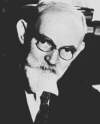
Dutch mathematician, astronomer, and cosmologist who developed theoretical models of the universe based on Albert Einstein's general theory of relativity. He worked extensively on the motions of the satellites of Jupiter, determining their masses and orbits from decades of observations. He redetermined the fundamental constants of astronomy and determined the variation of the rotation of the earth. He also performed statistical studies of the distribution and motions of stars, but today he is best known for his contributions to cosmology. His 1917 solution to Albert Einstein's field equations showed that a near-empty universe would expand. Later, he and Einstein found an expanding universe solution without space curvature.
Dutch mathematician, astronomer, and cosmologist who developed theoretical models of the universe based on Albert Einstein's general theory of relativity. He worked extensively on the motions of the satellites of Jupiter, determining their masses and orbits from decades of observations. He redetermined the fundamental constants of astronomy and determined the variation of the rotation of the earth. He also performed statistical studies of the distribution and motions of stars, but today he is best known for his contributions to cosmology. His 1917 solution to Albert Einstein's field equations showed that a near-empty universe would expand. Later, he and Einstein found an expanding universe solution without space curvature.
Born 6 May 1871; died 13 Dec 1935 at age 64. quotes
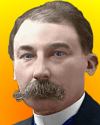
(François-Auguste-)Victor Grignard was a French chemist and corecipient and corecipient (with Paul Sabatier) of the Nobel Prize for Chemistry in 1912, for his development of the Grignard reaction. He discovered the alkyl magnesium halides (1901), which are prepared by reacting magnesium with an organic halide in dry ether, producing compounds of the type RMgX, where X is a halogen (Cl, Br, I) and R an organic group. These Grignard reagents are extremely important in organic syntheses. They are very versatile and permit the synthesis of a large number of different classes of compounds, particularly secondary and tertiary alcohols, hydrocarbons, and carboxylic acids facilitate a number of chemical reactions and Grignard spent much of his life working on them.
(François-Auguste-)Victor Grignard was a French chemist and corecipient and corecipient (with Paul Sabatier) of the Nobel Prize for Chemistry in 1912, for his development of the Grignard reaction. He discovered the alkyl magnesium halides (1901), which are prepared by reacting magnesium with an organic halide in dry ether, producing compounds of the type RMgX, where X is a halogen (Cl, Br, I) and R an organic group. These Grignard reagents are extremely important in organic syntheses. They are very versatile and permit the synthesis of a large number of different classes of compounds, particularly secondary and tertiary alcohols, hydrocarbons, and carboxylic acids facilitate a number of chemical reactions and Grignard spent much of his life working on them.
Born 6 May 1856; died 20 Feb 1920 at age 63.
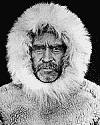
American polar explorer who made the first successful expedition to the North Pole arriving 6 Apr 1909 with his black assistant Matthew Henson and four Inuit eskimo companions. His claim was disputed by Frederick Cook who claimed to have reached the pole in 1908, a controversy which continues to this day, though most geographers have accepted that Peary was in fact the first to arrive there. He spent several prior years, from 1891, exploring northern Greenland. During one of these expeditions, he discovered what is still known as the largest meterorite. It weighed 90 tons, and is now held by the American Museum of Natural History, N.Y.
American polar explorer who made the first successful expedition to the North Pole arriving 6 Apr 1909 with his black assistant Matthew Henson and four Inuit eskimo companions. His claim was disputed by Frederick Cook who claimed to have reached the pole in 1908, a controversy which continues to this day, though most geographers have accepted that Peary was in fact the first to arrive there. He spent several prior years, from 1891, exploring northern Greenland. During one of these expeditions, he discovered what is still known as the largest meterorite. It weighed 90 tons, and is now held by the American Museum of Natural History, N.Y.
1927
Born 6 May 1856; died 23 Sep 1939 at age 83. quotes
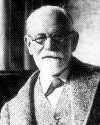
Austrian father of psychoanalysis, best known for such works as Interpretation of Dreams (1900) and the New Introductory Lectures on Psychoanalysis (1933). In the publication of these, and numerous other works, he revolutionized the field of psychotherapy, so much so that often later workers have failed to recognize forebearers prior to him. Throughout his work he emphasized the role of unconscious and nonrational functioning, going against much of contemporary thought by suggesting that dreams and “mistakes” may also have meaning. Freud battled cancer of the jaw from 1923 until his death in 1939 in London - after 16 operations.
Austrian father of psychoanalysis, best known for such works as Interpretation of Dreams (1900) and the New Introductory Lectures on Psychoanalysis (1933). In the publication of these, and numerous other works, he revolutionized the field of psychotherapy, so much so that often later workers have failed to recognize forebearers prior to him. Throughout his work he emphasized the role of unconscious and nonrational functioning, going against much of contemporary thought by suggesting that dreams and “mistakes” may also have meaning. Freud battled cancer of the jaw from 1923 until his death in 1939 in London - after 16 operations.
Born 6 May 1848; died 13 Jul 1937 at age 89. quotes
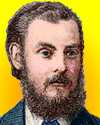
English organic chemist whose major research in substitution reactions of naphthalene was important to the synthetic-dye industry. In early work, he developed a method for sanitary surveys of water supplies by determining the organic impurities (sewage) content, which helped to control typhoid fever. Later, Armstrong also pioneered in organic crystallography, and the understanding of the chemical composition of camphor and related terpene compounds. He also devised a centric formula for benzene. Armstrong challenged Arrhenius's ionic theory, proposing instead that water is a complex saturated with the gas “hydrone.” He maintained that vapor pressure was a measure of the concentration of free hydrone molecules.
English organic chemist whose major research in substitution reactions of naphthalene was important to the synthetic-dye industry. In early work, he developed a method for sanitary surveys of water supplies by determining the organic impurities (sewage) content, which helped to control typhoid fever. Later, Armstrong also pioneered in organic crystallography, and the understanding of the chemical composition of camphor and related terpene compounds. He also devised a centric formula for benzene. Armstrong challenged Arrhenius's ionic theory, proposing instead that water is a complex saturated with the gas “hydrone.” He maintained that vapor pressure was a measure of the concentration of free hydrone molecules.
Born 6 May 1843; died 1 May 1918 at age 74. quotes
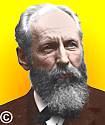
U.S. geologist, one of the founders of modern geomorphology (the study of landforms), structural geologist and map-maker. He worked on many U.S. surveys with the U.S. Geological Survey, studying the ancient lakes (Lake Bonneville) of Utah. He was an early pioneer of isostatic theory, made studies in glacial geology and was a close observer of the processes of transport and deposition. He first recognized the applicability of the concept of dynamic equilibrium in landform configuration and evolution, namely, that landforms reflect a state of balance between the processes that act upon them and the structure and composition of the rocks that compose them. Gilbert clearly expounded this concept in his geological report on the Henry Mountains, Utah.
U.S. geologist, one of the founders of modern geomorphology (the study of landforms), structural geologist and map-maker. He worked on many U.S. surveys with the U.S. Geological Survey, studying the ancient lakes (Lake Bonneville) of Utah. He was an early pioneer of isostatic theory, made studies in glacial geology and was a close observer of the processes of transport and deposition. He first recognized the applicability of the concept of dynamic equilibrium in landform configuration and evolution, namely, that landforms reflect a state of balance between the processes that act upon them and the structure and composition of the rocks that compose them. Gilbert clearly expounded this concept in his geological report on the Henry Mountains, Utah.
Born 6 May 1836; died 25 Aug 1906 at age 70. quotes
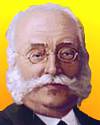
Eduard Friedrich Maximilian von Eyth was a German engineer, inventor and writer who was a pioneer in the mechanization of agriculture. With an education in Germany as a machine engineer, in 1861, he moved to England, the centre of engineering. From 1863, he was employed by John Fowler, manufacturer of a revolutionary new farm implement, the steam plow. Eyth became a global salesman seeking new markets for Fowler's technology. He left the company in 1882 and returned to Germany, where in 1884, he founded the German Agricultural Society, and worked to support the German farmer. He retired in 1896 and moved from Berlin to Ulm to be with his aging mother, and where for the remainder of his life, he became a writer, using his experiences to demythologize and popularize technological progress. In one work, he addressed the engineering aspects of the Tay Bridge collapse.«
Eduard Friedrich Maximilian von Eyth was a German engineer, inventor and writer who was a pioneer in the mechanization of agriculture. With an education in Germany as a machine engineer, in 1861, he moved to England, the centre of engineering. From 1863, he was employed by John Fowler, manufacturer of a revolutionary new farm implement, the steam plow. Eyth became a global salesman seeking new markets for Fowler's technology. He left the company in 1882 and returned to Germany, where in 1884, he founded the German Agricultural Society, and worked to support the German farmer. He retired in 1896 and moved from Berlin to Ulm to be with his aging mother, and where for the remainder of his life, he became a writer, using his experiences to demythologize and popularize technological progress. In one work, he addressed the engineering aspects of the Tay Bridge collapse.«
Born 6 May 1806; died 29 Sep 1860 at age 54.
American dentist who was one of the founders of dentistry as a profession. He began as a partner in his brother's medical practice (1827). The next year, he turned to dentistry fulltime until 1835, during which time he moved to Baltimore and began a prodigious output of scientific articles and several books, including his most influential text, The Dental Art: A Practical Treatise on Dental Surgery (1839). He was a cofounder of the first dental school in the world, Baltimore College of Dental Surgery (1840), and cofounder of the first dental journal in the world, the American Journal of Dental Science (1849), serving as its editor for over 20 years. He is credited for placing dental education, literature, and organization on a permanent basis.
American dentist who was one of the founders of dentistry as a profession. He began as a partner in his brother's medical practice (1827). The next year, he turned to dentistry fulltime until 1835, during which time he moved to Baltimore and began a prodigious output of scientific articles and several books, including his most influential text, The Dental Art: A Practical Treatise on Dental Surgery (1839). He was a cofounder of the first dental school in the world, Baltimore College of Dental Surgery (1840), and cofounder of the first dental journal in the world, the American Journal of Dental Science (1849), serving as its editor for over 20 years. He is credited for placing dental education, literature, and organization on a permanent basis.
Born 6 May 1742; died 22 Jul 1809 at age 67.
Swiss naturalist and botanist who demonstrated that green plants consume carbon dioxide and release oxygen under the influence of light. In 1788, Jean Senebier, in his Expériences sur l'action de la lumière solaire dans la végétation established the relationship between the presence of carbon dioxide in the atmosphere and the production of oxygen by plants. His studies built on the work of Ingenhousz who showed that plants produce oxygen in sunlight and carbon dioxide in darkness. Neither scientist fully understood the puzzle of photosynthesis, but they provided steps to the solution by others after them.
Swiss naturalist and botanist who demonstrated that green plants consume carbon dioxide and release oxygen under the influence of light. In 1788, Jean Senebier, in his Expériences sur l'action de la lumière solaire dans la végétation established the relationship between the presence of carbon dioxide in the atmosphere and the production of oxygen by plants. His studies built on the work of Ingenhousz who showed that plants produce oxygen in sunlight and carbon dioxide in darkness. Neither scientist fully understood the puzzle of photosynthesis, but they provided steps to the solution by others after them.
Born 6 May 1635; died Oct 1682. quotes
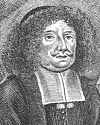
German chemist, physician and adventurer who gave an early theory of combustion (1669) in which all flammable objects were supposed to contain a substance which was released when the object burned. Becher called it terra pinguis (L. fatty or combustible earth). Thus, the conversion of wood to ashes by burning was explained on the assumption that the original wood consisted of ash and terra pinguis, which was released on burning. In the early 18th century Georg Stahl renamed the substance phlogiston. Becher also made practical suggestions, for example, that sugar was necessary for fermentation and that coal could be distilled to yield tar, though he also experimented to obtain gold from sea sand.
German chemist, physician and adventurer who gave an early theory of combustion (1669) in which all flammable objects were supposed to contain a substance which was released when the object burned. Becher called it terra pinguis (L. fatty or combustible earth). Thus, the conversion of wood to ashes by burning was explained on the assumption that the original wood consisted of ash and terra pinguis, which was released on burning. In the early 18th century Georg Stahl renamed the substance phlogiston. Becher also made practical suggestions, for example, that sugar was necessary for fermentation and that coal could be distilled to yield tar, though he also experimented to obtain gold from sea sand.

Died 6 May 2003 at age 82 (born 16 Sep 1920).
French physical geographer and climatic geomorphologist known for his extensive regional studies in numerous countries of Africa (Algeria, Senegal, Mali, the Ivory Coast, Togo, Niger, Nigeria, Liberia, Sudan) and Latin America (Argentina, Brazil, Chile, Colombia, Mexico, Panama, Peru, Venezuela). Tricart was a pioneer in many fields of physical geography including the study of the major dynamic role of climate in landscape evolution; geomorphic cartography; and remote sensing. His extensive research included work on the geomorphology of glaciers; fluvial, Aeolian or marine dynamics; and sedimentology.«
French physical geographer and climatic geomorphologist known for his extensive regional studies in numerous countries of Africa (Algeria, Senegal, Mali, the Ivory Coast, Togo, Niger, Nigeria, Liberia, Sudan) and Latin America (Argentina, Brazil, Chile, Colombia, Mexico, Panama, Peru, Venezuela). Tricart was a pioneer in many fields of physical geography including the study of the major dynamic role of climate in landscape evolution; geomorphic cartography; and remote sensing. His extensive research included work on the geomorphology of glaciers; fluvial, Aeolian or marine dynamics; and sedimentology.«
Died 6 May 1979 at age 87 (born 4 Apr 1892).
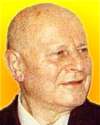
Karl Wilhelm Reinmuth was a German astronomer, the world's foremost asteroid hunter before automated search techniques. His discoveries (1914-1957) of 389 such minor planets include some of the first found outside of the Solar System's asteroid belt. His Ph.D. thesis was 'Photographische Positionsbestimmung von 356 Schultzschen Nebelflecken' (Photographic Location of 356 Schultz's Nebulae, 1916). He had started a few years earlier, in 1912, volunteering his time to assist Maximillian Wolf, director at the Königstuhl Observatory, Heidelberg. He learned how to study photographic plates to find asteroids, from Wolf, the first astronomer to utilize such technique. On 15 Oct 1914, the minor planet (796) Sarita was the first Reinmuth identified. In 1937, he named Hermes, the asteroid which made the closest then known approach to Earth.«
Karl Wilhelm Reinmuth was a German astronomer, the world's foremost asteroid hunter before automated search techniques. His discoveries (1914-1957) of 389 such minor planets include some of the first found outside of the Solar System's asteroid belt. His Ph.D. thesis was 'Photographische Positionsbestimmung von 356 Schultzschen Nebelflecken' (Photographic Location of 356 Schultz's Nebulae, 1916). He had started a few years earlier, in 1912, volunteering his time to assist Maximillian Wolf, director at the Königstuhl Observatory, Heidelberg. He learned how to study photographic plates to find asteroids, from Wolf, the first astronomer to utilize such technique. On 15 Oct 1914, the minor planet (796) Sarita was the first Reinmuth identified. In 1937, he named Hermes, the asteroid which made the closest then known approach to Earth.«
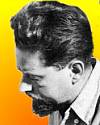
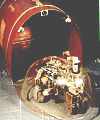
American-British neurologist who linked learning with a particular brain wave as revealed by measurements by electroencephalograph. He had special interests in the study of the neurophysiological correlates of such paranormal states as hypnosis, sleep, trance, and hallucination. He built the most advanced robot of his day. Called a testudo from Latin for "turtle", the automatic device mimicked reactions like a living creature. Using a photoelectric eye, a touch-sensor, and motor-driven steerable wheels, it could negotiate around obstacles. It could approach a light bulb, but back away when it became too bright - unless it was "hungry" for a recharge of its batteries when it approached until it could make contact with a charger placed near the lamp.[Image right: Walter's robot with transparent plastic cover.]
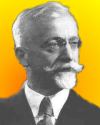
Died 6 May 1951 at age 82 (born 9 Apr 1869). quotes
French mathematician who greatly developed the theory of Lie groups and contributed to the theory of subalgebras. By 1904 Cartan was turning to papers on differential equations and from 1916 on he published mainly on differential geometry. Cartan also published work on relativity and the theory of spinors. He is certainly one of the most important mathematicians of the first half of the 20th century.
French mathematician who greatly developed the theory of Lie groups and contributed to the theory of subalgebras. By 1904 Cartan was turning to papers on differential equations and from 1916 on he published mainly on differential geometry. Cartan also published work on relativity and the theory of spinors. He is certainly one of the most important mathematicians of the first half of the 20th century.
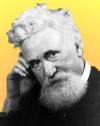
Died 6 May 1927 at age 74 (born 3 Feb 1853). quotes
American inventor of explosives, much used in WW I. In his early career, a printing business at Pittsfield, Mass. (1883) he invented a method of color printing in newspapers. He turned to improving explosives and made the first smokeless powder in the U.S. It was adopted by the U.S. Army. In 1901, he invented maximite, a high explosive bursting powder 50% more powerful than dynamite. When used in torpedoes, maximite resisted both the shock of firing and the greater shock of piercing armour plate without exploding until it was then set off by a delayed-action detonating fuse, another Maxim invention. Later, he perfected a new smokeless powder, called stabillite because of its high stability, and motorite, a self-combustive substance to propel torpedoes. more
American inventor of explosives, much used in WW I. In his early career, a printing business at Pittsfield, Mass. (1883) he invented a method of color printing in newspapers. He turned to improving explosives and made the first smokeless powder in the U.S. It was adopted by the U.S. Army. In 1901, he invented maximite, a high explosive bursting powder 50% more powerful than dynamite. When used in torpedoes, maximite resisted both the shock of firing and the greater shock of piercing armour plate without exploding until it was then set off by a delayed-action detonating fuse, another Maxim invention. Later, he perfected a new smokeless powder, called stabillite because of its high stability, and motorite, a self-combustive substance to propel torpedoes. more
The Rise of an American Inventor: Hudson Maxim’s Life Story, by Hudson Maxim. - book suggestion.
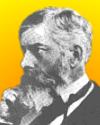
Died 6 May 1904 at age 80 (born 1 May 1824). quotes
English chemist whose research on alcohols and ethers clarified organic molecular structure. He was the first to explain the action of a catalyst in terms of the formation of an intermediate compound. Williamson was the first to make 'mixed' ethers, with two different alkyl groups, by a method still known as the Williamson synthesis in which an alkoxide reacts with with an alkyl halide. In the early 1850's, he first noted and described reversible reactions such as those of alcohols and ethers in which products of a reaction may recombine to form the reactants). He named the "dynamic equilibrium" in the case where the rate of the forward reaction is the same as that of the reverse reaction, and all compounds in the process coexist.
English chemist whose research on alcohols and ethers clarified organic molecular structure. He was the first to explain the action of a catalyst in terms of the formation of an intermediate compound. Williamson was the first to make 'mixed' ethers, with two different alkyl groups, by a method still known as the Williamson synthesis in which an alkoxide reacts with with an alkyl halide. In the early 1850's, he first noted and described reversible reactions such as those of alcohols and ethers in which products of a reaction may recombine to form the reactants). He named the "dynamic equilibrium" in the case where the rate of the forward reaction is the same as that of the reverse reaction, and all compounds in the process coexist.
Died 6 May 1884 at age 78 (born 8 Jul 1805). quotes
Samuel David Gross was an American surgeon, teacher of medicine, and author of an influential textbook on surgery and the widely read Elements of Pathological Anatomy (1839). He was a prominent Philadelphia surgeon who pioneered methods for suturing nerves and tendons. Other specialties included operations for bladder stone and intestinal wounds; he invented new techniques and instruments. Later he served as president of the American Medical Association (1847). Thomas Eakins portrayed him in a famous painting, “The Clinic of Dr. Gross” (1875).
Samuel David Gross was an American surgeon, teacher of medicine, and author of an influential textbook on surgery and the widely read Elements of Pathological Anatomy (1839). He was a prominent Philadelphia surgeon who pioneered methods for suturing nerves and tendons. Other specialties included operations for bladder stone and intestinal wounds; he invented new techniques and instruments. Later he served as president of the American Medical Association (1847). Thomas Eakins portrayed him in a famous painting, “The Clinic of Dr. Gross” (1875).
Died 6 May 1870 at age 58 (born 7 Jun 1811).
(1st baronet) Scottish inventor and obstertrician who was the the father of modern anesthetics. He employed ether for the first time in Britain, and chloroform ("perchloride of formyle") for the first time as an anesthetic in an operation (1847). He was not the first to use chloroform but it was his persistent roversy about the morality of whether women should use such anesthetics in childbirth. Victoria's leadership broke people free from superstition and fear. Simpson was a natural inventor, always eager to experiment in new directions - the fight against puerperal fever, the invention of new types of forceps and the combating of cholera.
(1st baronet) Scottish inventor and obstertrician who was the the father of modern anesthetics. He employed ether for the first time in Britain, and chloroform ("perchloride of formyle") for the first time as an anesthetic in an operation (1847). He was not the first to use chloroform but it was his persistent roversy about the morality of whether women should use such anesthetics in childbirth. Victoria's leadership broke people free from superstition and fear. Simpson was a natural inventor, always eager to experiment in new directions - the fight against puerperal fever, the invention of new types of forceps and the combating of cholera.
Died 6 May 1862 at age 44 (born 12 Jul 1817). quotes
American author, philosopher, poet and naturalist, whose classic Walden; or, Life in the Woods has become a classic on the ecological relationship of man in an industrial society. He was a pacifist, whom Ralph Waldo Emerson would help out of trouble. Thoreau's moniker of the "Hermit of Walden" came from living in the woods around Walden pond for several years. Later in his short life, Thoreau turned his attention to observing and keeping thorough journals recording of the natural history around Concord, New Hampshire, where he was regarded as the town naturalist. Many scholars consider Henry David Thoreau to be the father of the American conservation movements. He died of tuberculosis at age 45.
American author, philosopher, poet and naturalist, whose classic Walden; or, Life in the Woods has become a classic on the ecological relationship of man in an industrial society. He was a pacifist, whom Ralph Waldo Emerson would help out of trouble. Thoreau's moniker of the "Hermit of Walden" came from living in the woods around Walden pond for several years. Later in his short life, Thoreau turned his attention to observing and keeping thorough journals recording of the natural history around Concord, New Hampshire, where he was regarded as the town naturalist. Many scholars consider Henry David Thoreau to be the father of the American conservation movements. He died of tuberculosis at age 45.
Died 6 May 1859 at age 89 (born 14 Sep 1769). quotes
Baron Friedrich Wilhelm Heinrich Alexander von Humboldt was a German natural scientist, archaeologist, explorer and geographer, who made two major expeditions to Latin America (1799-1804) and to Asia (1829). During the first, equipped with the best scientific instruments, he surveyed and collected geological, zoological, botanical, and ethnographic specimens, including over 60,000 rare or new tropical plants. He observed and charted a cold ocean current along the Peruvian coast, now named the Humboldt Current. In geology, he made pioneering observations of stratigraphy, structure and geomorphology; he understood the connections between volcanism and earthquakes. Humboldt named the Jurassic System. more
Baron Friedrich Wilhelm Heinrich Alexander von Humboldt was a German natural scientist, archaeologist, explorer and geographer, who made two major expeditions to Latin America (1799-1804) and to Asia (1829). During the first, equipped with the best scientific instruments, he surveyed and collected geological, zoological, botanical, and ethnographic specimens, including over 60,000 rare or new tropical plants. He observed and charted a cold ocean current along the Peruvian coast, now named the Humboldt Current. In geology, he made pioneering observations of stratigraphy, structure and geomorphology; he understood the connections between volcanism and earthquakes. Humboldt named the Jurassic System. more
Alexander von Humboldt: A Metabiography, by Nicolaas A. Rupke. - book suggestion.

In 1962, the first U.S. nuclear warhead fired from a Polaris submarine was launched. The submerged USS Ethan Allen (SSBN-608) test-fired a Polaris A-2 missile with a live nuclear warhead across the Pacific Ocean toward Christmas Island, 1,700 miles (2,700 km) away. The test, code-named Frigate Bird, was the only one the U.S. ever conducted of any nuclear ballistic missile from launch through detonation. After a 12.5-minute, 1,200-mile (1,900 km) flight, the warhead exploded in the air between 10,000 and 15,000-ft (3,000 and 4,600-m) high with a yield of 600 kilotons. Thirty miles from the air burst at periscope depth, the waiting USS Carbonaro (SS-337) captured the mushroom cloud on film.
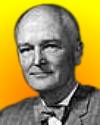
In 1953, a heart-lung machine designed by Dr. John Heysham Gibbon was used to successfully complete the first open-heart surgery, on patient Cecelia Bavolek, demonstrating that an artificial device can temporarily mimic the functions of the heart. Improved versions allow surgeons today to perform bypass surgery and heart transplants. He built the first experimental heart-lung machine or pump oxygenator in 1937 that used two roller pumps and able to replace the heart and lung action of a cat for 25 minutes. By the late 1940s, with financial and technical support from IBM President Thomas J. Watson, Gibbon produced an improved device which cascading the blood down a thin sheet of film for oxygenation to prevent damage blood corpuscles.«
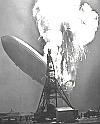
In 1937, at 7:25 pm, the dirigible The Hindenburg burned while landing at the naval air station at Lakehurst, N.J. On board were 6l crew and 36 passengers. The landing approach seemed normal, when suddenly a tongue of flame appeared near the stern. Fire spread rapidly through the 7 million cubic feet of hydrogen that filled the balloon. Within a few seconds the Zeppelin exploded in a huge ball of fire. The ship fell tail first with flames shooting out the nose. It crashed into the ground 32 seconds after the flame was first spotted; 36 people died. Captain Ernst Lehmann survived the crash but died the next day. He muttered "I can't understand it," The cause remains the subject of debate even today.
Zeppelin: The Story of a Great Achievement, by Harry Vissering. - book suggestion.
In 1916, the first U.S. radio telephone ship-to-shore conversation was made, beginning 3 days of tests. The Navy Department was connected by AT&T Co. via telephone and telegraph with all navy yards and radio stations in the U.S. The Secretary of the Navy gave orders for the next day's movement to the captain of the battleship New Hampshire, anchored off Fortress Monroe. These orders were the first occasion that a ship of the Navy was ever operated direct from the department by wireless telephone. The result of these tests was so satisfactory that the department arranged for continuous direct long-distance service by telephone and telegraph circuits between the department and the principal navy yards on the Atlantic coast.
more
In 1896, the Aerodrome No. 5 made the first successful flight of an unpiloted, engine-driven, heavier-than-air craft of substantial size. Its inventor, Samuel Pierpont Langley (1834-1906), launched the craft using a spring-actuated catapult mounted on top of a houseboat on the Potomac River, near Quantico, Virginia. Its first flight travelled 1,005-m (3,300-ft), followed by a second of 700 m (2,300 ft) on the same afternoon. Each travelled at a speed of about 25 mph. A few months later, on Nov 28, his Aerodrome No.6, a similar aircraft, accomplished a distance of about 1,460-m (4,790-ft). Langley's scientific work also included astronomy and, from 1887, he was the third Secretary of the Smithsonian Institution.«
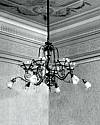
Converted fixture c.1899
In 1891, U.S. President Benjamin Harrison (in office 1889-1893) had the first electric lights installed in the White House. Irwin Hoover arrived from the Edison Company to do the work. He was retained as the White House electrician to operate the lights because the President's family was afraid of getting shocked. Taft made Hoover the chief usher, and he held the post for 25 years, until he died in 1933. The large lanterns on the great white pillars of the front portico remained unchanged, lit by gas. Each night, a man uses a ladder to light each lamp. The society page of the 13 Dec 1891 New York Times declared “Long may it be before the vandal march of progress reaches these quaint old lanterns to destroy their picturesqueness by the introduction of electricity.”
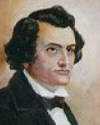
In 1851, a U.S. patent was issued to John Gorrie for his invention of an “Improved Process for the Artificial Production of Ice” (No. 8080). This was the first U.S. patent issued for a mechanical refrigerator. His British patent, No. 13,124, was granted earlier on 22 Aug 1850.
In 1851, a U.S. patent was issued to Linus Yale, Jr. for his invention of his "Self-Detaching and Attaching Key-Lock" (No. 8,071) as "a new and Improved Safety-Lock for Banks, Safes, Vaults, Stores, &c." of a "clock" lock, the first such patent to be issued in the U.S. The design superceded the keyhole lock and the first double locks (two locks within one case).
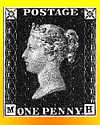
In 1840, official sale began of the world’s first adhesive postal stamp, the “penny black”. Attached to an envelope, it indicated prepayment for up to 1/2 oz. to be delivered anywhere in Britain. The issue date was 1 May 1840, distributed to Post Offices, to be sold from 6 May. Full sheets had 240 stamps, unperforated, intended to be carefully cut apart with scissors. The profile of Queen Victoria was printed in black. It proved unsuitable for a red cancellation ink to show up clearly, so in less than a year, in Feb 1841, it was replaced with the penny red cancelled with black ink. To the present time, a UK stamp is identified by the monarch’s head in the design, with no printed country name.«




