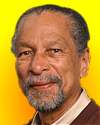
Born 10 Feb 1931. quotes
James Edward Maceo West is a Black-American physicist, acoustical engineer and inventor who developed the electret transducer technology and applied it to co-invent the foil electret microphone. Because of the benefits of its low-cost, high sensitivity and compact form, this type of microphone now predominates in most applications. His career took shape while was still a physics undergraduate. After summers as an intern with Bell Labs Acoustics Research Dept, West was given a full-time position after graduation in 1957. From 1960-62, he worked with Gerhard M. Sessler to perfect the electret microphone and by 1968, it was in mass production. His name is on more than 250 patents. This type of microphone is now widely found in telephones, camcorders and hearing aids.«
James Edward Maceo West is a Black-American physicist, acoustical engineer and inventor who developed the electret transducer technology and applied it to co-invent the foil electret microphone. Because of the benefits of its low-cost, high sensitivity and compact form, this type of microphone now predominates in most applications. His career took shape while was still a physics undergraduate. After summers as an intern with Bell Labs Acoustics Research Dept, West was given a full-time position after graduation in 1957. From 1960-62, he worked with Gerhard M. Sessler to perfect the electret microphone and by 1968, it was in mass production. His name is on more than 250 patents. This type of microphone is now widely found in telephones, camcorders and hearing aids.«
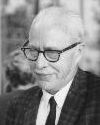
Born 10 Feb 1902; died 13 Oct 1987 at age 85. quotes
Walter Houser Brattain was an American physicist who shared (with John Bardeen and William B. Shockley) the Nobel Prize for Physics in 1956 for investigating semiconductors (materials of which transistors are made) and for the development of the transistor. At college, he said, he majored in physics and math because they were the only subjects he was good at. He became a solid physicist with a good understanding of theory, but his strength was in physically constructing experiments. Working with the ideas of Shockley and Bardeen, Brattain’s hands built the first transistor. Shortly, the transistor replaced the bulkier vacuum tube for many uses and was the forerunner of microminiature electronic parts.
Walter Houser Brattain was an American physicist who shared (with John Bardeen and William B. Shockley) the Nobel Prize for Physics in 1956 for investigating semiconductors (materials of which transistors are made) and for the development of the transistor. At college, he said, he majored in physics and math because they were the only subjects he was good at. He became a solid physicist with a good understanding of theory, but his strength was in physically constructing experiments. Working with the ideas of Shockley and Bardeen, Brattain’s hands built the first transistor. Shortly, the transistor replaced the bulkier vacuum tube for many uses and was the forerunner of microminiature electronic parts.
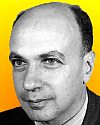
Born 10 Feb 1901; died 17 Apr 1977 at age 76.
German-American mathematician and educator, a pioneer in the development of algebra theory. He worked with Weyl on several projects including a famous joint paper on spinors (published in 1935 in the American Journal of Mathematics). This work provided a background for Paul Dirac's theory of the spinning electron within the framework of quantum mechanics. With Nesbitt, Brauer introduced the theory of blocks (1937). Brauer used this to obtain results on finite groups, particularly finite simple groups, and the theory of blocks would play a big part in much of Brauer's later work. Starting with his group-theoretical characterisation of the simple groups (1951), he spent the rest of his life formulating a method to classify all finite simple groups.
German-American mathematician and educator, a pioneer in the development of algebra theory. He worked with Weyl on several projects including a famous joint paper on spinors (published in 1935 in the American Journal of Mathematics). This work provided a background for Paul Dirac's theory of the spinning electron within the framework of quantum mechanics. With Nesbitt, Brauer introduced the theory of blocks (1937). Brauer used this to obtain results on finite groups, particularly finite simple groups, and the theory of blocks would play a big part in much of Brauer's later work. Starting with his group-theoretical characterisation of the simple groups (1951), he spent the rest of his life formulating a method to classify all finite simple groups.
Richard Brauer Collected Papers, Vol. 1: Theory of Algebras, and Finite Groups, by Richard Brauer. - book suggestion.
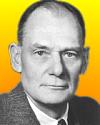
Born 10 Feb 1897; died 8 Sep 1985 at age 88.
American virologist, microbiologist and virologist who (collaborating with Frederick C. Robbins and Thomas H. Weller) was awarded the Nobel Prize for Physiology or Medicine for 1954 for his part in cultivating the poliomyelitis virus in nonnervous-tissue cultures (1949), a preliminary step to the development of the polio vaccine. They had cultivated the polio virus in test tube cultures of human tissue for the first time. They further demonstrated that the virus could be grown on a wide variety of tissue and not just nerve cells. This at last allowed the polio virus to be studied, typed, and produced in quantity. Without such an advance the triumphs of Albert Sabin and Jonas Salk in developing a vaccine against polio in the 1950s would have been impossible.
American virologist, microbiologist and virologist who (collaborating with Frederick C. Robbins and Thomas H. Weller) was awarded the Nobel Prize for Physiology or Medicine for 1954 for his part in cultivating the poliomyelitis virus in nonnervous-tissue cultures (1949), a preliminary step to the development of the polio vaccine. They had cultivated the polio virus in test tube cultures of human tissue for the first time. They further demonstrated that the virus could be grown on a wide variety of tissue and not just nerve cells. This at last allowed the polio virus to be studied, typed, and produced in quantity. Without such an advance the triumphs of Albert Sabin and Jonas Salk in developing a vaccine against polio in the 1950s would have been impossible.
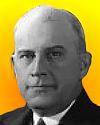
Born 10 Feb 1885; died 11 Feb 1959 at age 74. quotes
U.S. professor of civil and structural engineering whose outstanding contribution was a method of calculating tendencies to produce motion (moments) in the members of a continuous framework, such as the skeleton of a building. By the use of Cross's technique, known as the moment distribution method, or simply the Hardy Cross method, calculation can be carried to any required degree of accuracy by successive approximations, thus avoiding the immense labour of solving simultaneous equations that contain as many variables as there are rigid joints in a frame. He also successfully applied his mathematical methods to the solution of pipe network problems that arise in municipal water supply design; these methods have been extended to gas pipelines.
U.S. professor of civil and structural engineering whose outstanding contribution was a method of calculating tendencies to produce motion (moments) in the members of a continuous framework, such as the skeleton of a building. By the use of Cross's technique, known as the moment distribution method, or simply the Hardy Cross method, calculation can be carried to any required degree of accuracy by successive approximations, thus avoiding the immense labour of solving simultaneous equations that contain as many variables as there are rigid joints in a frame. He also successfully applied his mathematical methods to the solution of pipe network problems that arise in municipal water supply design; these methods have been extended to gas pipelines.
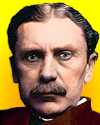
Born 10 Feb 1861; died 22 Dec 1921 at age 60. quotes
American ethnographer who was largely self-taught, becoming a national expert on Native American tribes by diligent field observations. He stayed for long periods with different groups of Southeastern and Great Plains Indians, to document their culture: language, stories, dances, religion, history, and heraldry. Mooney learned about the calendar system of the Kiowa and other pictorial records of Plains tribes, He made Berliner disk recordings (1894), in his own voice, of native songs. These he had practiced while he was taught them, to memorize to render by himself as authentically as possible. (The Library of Congress holds these disks.) In 1885, he joined the Bureau of American Ethnography, remaining there for the rest of his life.«
American ethnographer who was largely self-taught, becoming a national expert on Native American tribes by diligent field observations. He stayed for long periods with different groups of Southeastern and Great Plains Indians, to document their culture: language, stories, dances, religion, history, and heraldry. Mooney learned about the calendar system of the Kiowa and other pictorial records of Plains tribes, He made Berliner disk recordings (1894), in his own voice, of native songs. These he had practiced while he was taught them, to memorize to render by himself as authentically as possible. (The Library of Congress holds these disks.) In 1885, he joined the Bureau of American Ethnography, remaining there for the rest of his life.«
Myths of the Cherokee, by James Mooney. - book suggestion.
Born 10 Feb 1853; died 8 May 1933 at age 80.
German mineralogist who made important studies of crystallography. His first major publication, Index der Kristallformen (3 vol., 1886-91; "Index of Crystal Forms"), was a catalog of the known forms of crystals of all minerals. New tables of crystal angles to meet his new needs were devised and published
German mineralogist who made important studies of crystallography. His first major publication, Index der Kristallformen (3 vol., 1886-91; "Index of Crystal Forms"), was a catalog of the known forms of crystals of all minerals. New tables of crystal angles to meet his new needs were devised and published
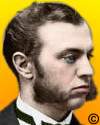
Born 10 Feb 1846; died 4 Mar 1927 at age 81. quotes
American chemist who codiscovered saccharin. He taught chemistry at Johns Hopkins University from 1876 (where he became its second president 1901-13). He introduced advanced laboratory instruction using teaching methods he had learned in Germany under Rudolph Fittig. Remsen specialized in the benzene ring and related groups. With Constantin Fahlberg, a student working under his direction, he first synthesized orthobenzoyl sulfimide (1879). Fahlberg accidentally discovered its intensely sweet taste by touching his fingers to his lips while unknowingly having a few grains on them. The compound was patented and marketed under the trade name “saccharin.” more
American chemist who codiscovered saccharin. He taught chemistry at Johns Hopkins University from 1876 (where he became its second president 1901-13). He introduced advanced laboratory instruction using teaching methods he had learned in Germany under Rudolph Fittig. Remsen specialized in the benzene ring and related groups. With Constantin Fahlberg, a student working under his direction, he first synthesized orthobenzoyl sulfimide (1879). Fahlberg accidentally discovered its intensely sweet taste by touching his fingers to his lips while unknowingly having a few grains on them. The compound was patented and marketed under the trade name “saccharin.” more
The Life of Ira Remsen, by Frederick H. Getman. - book suggestion.
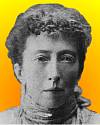
Born 10 Feb 1842; died 20 Jan 1907 at age 64. quotes
Irish astronomical writer who was a diligent compiler of facts rather than a practicing scientist. Nevertheless, by 1885, her exhaustive treatise, A Popular History of Astronomy in the Nineteenth Century gained international recognition as an authoritative work. In 1903, with Lady Huggins, she was elected an honorary member of the Royal Astronomical Society, a rank previously held only by two other women, Caroline Herschel and Mary Somerville. Her publications included several books and 55 pieces in the Edinburgh Review. She contributed some astronomer biographies to the Dictionary of National Biography and some astronomical entries in the Encyclopaedia Britannica.«
Irish astronomical writer who was a diligent compiler of facts rather than a practicing scientist. Nevertheless, by 1885, her exhaustive treatise, A Popular History of Astronomy in the Nineteenth Century gained international recognition as an authoritative work. In 1903, with Lady Huggins, she was elected an honorary member of the Royal Astronomical Society, a rank previously held only by two other women, Caroline Herschel and Mary Somerville. Her publications included several books and 55 pieces in the Edinburgh Review. She contributed some astronomer biographies to the Dictionary of National Biography and some astronomical entries in the Encyclopaedia Britannica.«
Agnes Mary Clerke and the Rise of Astrophysics, by Mary Brück. - book suggestion.
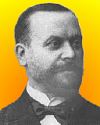
Born 10 Feb 1840; died 18 Jun 1905 at age 65.
Swedish chemist and geologist who who discovered the elements holmium and thulium. He was the thirteenth child in his family. In 1874, Cleve concluded that didymium was in fact two elements (this was proved in 1885 and the two elements named neodymium and praseodymium.) In 1879, he showed that scandium (discovered by Lars Nilson), was in fact the eka-boron predicted by Dmitri Mendeleev in his periodic table. Also in 1879, working with a sample of erbia that had all traces of scandia and ytterbia removed, he found two new earths, which he named holmium, after Stockholm, and thulium, after the old name for Scandinavia. (Holmium, too was a mixture. In 1886, Lecoq de Boisbaudran discovered that it contained the new element dysprosium.)
Swedish chemist and geologist who who discovered the elements holmium and thulium. He was the thirteenth child in his family. In 1874, Cleve concluded that didymium was in fact two elements (this was proved in 1885 and the two elements named neodymium and praseodymium.) In 1879, he showed that scandium (discovered by Lars Nilson), was in fact the eka-boron predicted by Dmitri Mendeleev in his periodic table. Also in 1879, working with a sample of erbia that had all traces of scandia and ytterbia removed, he found two new earths, which he named holmium, after Stockholm, and thulium, after the old name for Scandinavia. (Holmium, too was a mixture. In 1886, Lecoq de Boisbaudran discovered that it contained the new element dysprosium.)
Born 10 Feb 1835; died 5 Apr 1924 at age 89.
Christian Andreas Victor Hensen was a German physiologist and oceanographer who coined the name plankton for the tiny organisms that live suspended in the sea and bodies of freshwater. He discovered the importance of plankton—practically all marine animal life is dependent on them, directly or indirectly. He developed equipment for the study of plankton. Hensen led the first marine biological Plankton Expedition, and four more, including to the Baltic Sea, North Sea, and Atlantic Ocean. What had begun as a hobby, expanded to make him the origination of quantitative marine research. As a professor of physiology at the University of Kiel, his work settled certain open questions on hearing and sight. His name remains known for the Cells of Hensen and the Canal of Hensen in the inner ear.«
Christian Andreas Victor Hensen was a German physiologist and oceanographer who coined the name plankton for the tiny organisms that live suspended in the sea and bodies of freshwater. He discovered the importance of plankton—practically all marine animal life is dependent on them, directly or indirectly. He developed equipment for the study of plankton. Hensen led the first marine biological Plankton Expedition, and four more, including to the Baltic Sea, North Sea, and Atlantic Ocean. What had begun as a hobby, expanded to make him the origination of quantitative marine research. As a professor of physiology at the University of Kiel, his work settled certain open questions on hearing and sight. His name remains known for the Cells of Hensen and the Canal of Hensen in the inner ear.«
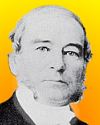
Born 10 Feb 1808; died 27 May 1874 at age 66.
John Edgar Thomson was an American civil engineer and third president of the Pennsylvania Railroad Company who consolidated a network of railroad lines from Philadelphia to various cities in the Midwest and the South, extending as far as Chicago and Norfolk, Va. His principal projects included completing the road across the Alleghenies, double tracking its main line and experimenting with coal-burning locomotives. In an unprecedented expansion program, though leases and purchases, Thomson controlled over six thousand miles of railroad by 1873. Thomson also invested in transcontinental lines as well as coal companies, iron and steel works, lumber operations, and land companies.
John Edgar Thomson was an American civil engineer and third president of the Pennsylvania Railroad Company who consolidated a network of railroad lines from Philadelphia to various cities in the Midwest and the South, extending as far as Chicago and Norfolk, Va. His principal projects included completing the road across the Alleghenies, double tracking its main line and experimenting with coal-burning locomotives. In an unprecedented expansion program, though leases and purchases, Thomson controlled over six thousand miles of railroad by 1873. Thomson also invested in transcontinental lines as well as coal companies, iron and steel works, lumber operations, and land companies.
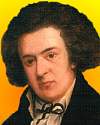
Born 10 Feb 1766; died 19 Dec 1815 at age 49.
American naturalist who wrote the first botanical textbook published in the U.S. His Elements of Botany (1803) which reached a sixth edition, including three after his death. In 1789, aged 23, he became a professor of natural history at the University of Pennsylvania in Philadelphia. He brought together 1,674 specimens of native plants between 1797 and 1807 to form a herbarium that was the largest of the time. The number of books he owned also comprised the largest private natural history library of its time. The Elements textbook was illustrated by William Bartram. Barton died at age 49 leaving incomplete the project entrusted to him to classify the plant specimens brought back from the Lewis and Clark expedition.«
American naturalist who wrote the first botanical textbook published in the U.S. His Elements of Botany (1803) which reached a sixth edition, including three after his death. In 1789, aged 23, he became a professor of natural history at the University of Pennsylvania in Philadelphia. He brought together 1,674 specimens of native plants between 1797 and 1807 to form a herbarium that was the largest of the time. The number of books he owned also comprised the largest private natural history library of its time. The Elements textbook was illustrated by William Bartram. Barton died at age 49 leaving incomplete the project entrusted to him to classify the plant specimens brought back from the Lewis and Clark expedition.«
Born 10 Feb 1720; died 8 Mar 1778 at age 58.
Swedish entomologist. Using Leeuwenhoek's and Swammerdam's techniques of microscopy, and Réamur's method of biological observation, he studied the life and metamorphosis of insects, making morphological observations and drawings of their structures.
Swedish entomologist. Using Leeuwenhoek's and Swammerdam's techniques of microscopy, and Réamur's method of biological observation, he studied the life and metamorphosis of insects, making morphological observations and drawings of their structures.

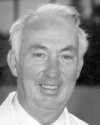
Died 10 Feb 2006 at age 83 (born 9 Feb 1923).
American surgeon who was a pioneer in heart transplant surgery. He began (1967) the heart transplantation program at Stanford Medical Center. On 6 Jan 1968, he performed the first heart transplant in the U.S. on Mike Kasperak, 54, who survived for 15 days afterwards. Shumway spent years researching ways to extend life after a transplant. His team found a way to identify rejection early, so powerful immunosuppressants were used only when needed. From late 1980, using the new anti-rejection drug cyclosporine which didn't destroy the body's defenses against infection, heart transplants became a common procedure. In 1981, with Dr. Bruce Reitz, he performed the world's first combined heart and lung transplant.«
American surgeon who was a pioneer in heart transplant surgery. He began (1967) the heart transplantation program at Stanford Medical Center. On 6 Jan 1968, he performed the first heart transplant in the U.S. on Mike Kasperak, 54, who survived for 15 days afterwards. Shumway spent years researching ways to extend life after a transplant. His team found a way to identify rejection early, so powerful immunosuppressants were used only when needed. From late 1980, using the new anti-rejection drug cyclosporine which didn't destroy the body's defenses against infection, heart transplants became a common procedure. In 1981, with Dr. Bruce Reitz, he performed the world's first combined heart and lung transplant.«
Heart Transplantation, by Norman E. Shumway. - book suggestion.
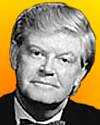
Died 10 Feb 2005 at age 78 (born 4 May 1926). quotes
David Allan Bromley was a Canadian-American physicist who was considered the “father of modern heavy ion science” for his pioneering experiments on both the structure and dynamics of atomic nuclei. He was a leader in developing particle accelerators detection systems and computer-based data acquisition and analysis systems. While at Atomic Energy of Canada (1955-60) he installed the first tandem Van Der Graaff accelerator. He was founder and director (1963-89) of the A.W. Wright Nuclear Structure Laboratory at Yale University, which has produced more experimental nuclear physicists than any other facility. During this time he became active on numerous national and international science policy boards. From 1980-89, he was a member of the White House Science Council.«
David Allan Bromley was a Canadian-American physicist who was considered the “father of modern heavy ion science” for his pioneering experiments on both the structure and dynamics of atomic nuclei. He was a leader in developing particle accelerators detection systems and computer-based data acquisition and analysis systems. While at Atomic Energy of Canada (1955-60) he installed the first tandem Van Der Graaff accelerator. He was founder and director (1963-89) of the A.W. Wright Nuclear Structure Laboratory at Yale University, which has produced more experimental nuclear physicists than any other facility. During this time he became active on numerous national and international science policy boards. From 1980-89, he was a member of the White House Science Council.«
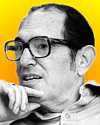
Died 10 Feb 1997 at age 86 (born 19 Mar 1910).
American meteorologist who served as the first chief of the Extended Forecast Division of the U.S. Weather Bureau (1941-1971). His pioneering work extended weather forecasting with five-day predictictions in the 1940s. The forecasts were of value to the rapidly expanding passenger airlines, and to the military in wartime. By the 1960s, Namias expanded the advance forecasts to 30 and 90 days by making inferences from weather patterns, and the interactions of the upper layers of the ocean and the atmosphere. In the 1970s, he began making long-range seasonal forecasts. He also studied the conditions which led to the Dust Bowl of the 1930s and investigated the El Niño phenomenon. From 1968, Namias split his time between the Weather Bureau and as a climate researcher with the Scripps Institue of Oceanography.«
American meteorologist who served as the first chief of the Extended Forecast Division of the U.S. Weather Bureau (1941-1971). His pioneering work extended weather forecasting with five-day predictictions in the 1940s. The forecasts were of value to the rapidly expanding passenger airlines, and to the military in wartime. By the 1960s, Namias expanded the advance forecasts to 30 and 90 days by making inferences from weather patterns, and the interactions of the upper layers of the ocean and the atmosphere. In the 1970s, he began making long-range seasonal forecasts. He also studied the conditions which led to the Dust Bowl of the 1930s and investigated the El Niño phenomenon. From 1968, Namias split his time between the Weather Bureau and as a climate researcher with the Scripps Institue of Oceanography.«
Died 10 Feb 1997 at age 81 (born 15 Aug 1915).
American physicist whose studies in aerial reconnaissance made possible the use of space satellites for collecting military intelligence as well as information to be used in conserving resources and aiding disaster victims.
American physicist whose studies in aerial reconnaissance made possible the use of space satellites for collecting military intelligence as well as information to be used in conserving resources and aiding disaster victims.
Died 10 Feb 1993 at age 63 (born 9 Apr 1929).
New Zealand-born Australian physician, who was a leader in the campaign to combat eye diseases (especially trachoma) among Aboriginal peoples and cofounder of the Aboriginal Medical Service (AMS), which established a system of community clinics.
New Zealand-born Australian physician, who was a leader in the campaign to combat eye diseases (especially trachoma) among Aboriginal peoples and cofounder of the Aboriginal Medical Service (AMS), which established a system of community clinics.
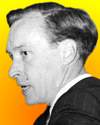
Died 10 Feb 1993 at age 86 (born 2 Nov 1906).
Swedish astrophysicist and spectroscopist who showed that certain emission lines in the solar spectrum were due to transitions in highly ionized atoms. For seventy years, since the first corona line was discovered by Thomas Young (1869), and more later, astrophysicists had puzzled over their origin, for they existed in no known spectrum. Edlén presented his answer to the Royal Swedish Academy of Sciences on 12 Mar 1941. The high degree of ionization (loss of 9 to 15 electrons) in such atoms as iron, and calcium, implied that the temperature of the corona (the rarified outlying gases) was actually higher then the visible surface of the sun. With a large group of spectroscopists he established at Lund, Edlén worked on more elements in other ionization states. Star spectra can now be interpreted to yield composition and temperature information.«
Swedish astrophysicist and spectroscopist who showed that certain emission lines in the solar spectrum were due to transitions in highly ionized atoms. For seventy years, since the first corona line was discovered by Thomas Young (1869), and more later, astrophysicists had puzzled over their origin, for they existed in no known spectrum. Edlén presented his answer to the Royal Swedish Academy of Sciences on 12 Mar 1941. The high degree of ionization (loss of 9 to 15 electrons) in such atoms as iron, and calcium, implied that the temperature of the corona (the rarified outlying gases) was actually higher then the visible surface of the sun. With a large group of spectroscopists he established at Lund, Edlén worked on more elements in other ionization states. Star spectra can now be interpreted to yield composition and temperature information.«
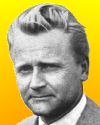
Died 10 Feb 1964 at age 58 (born 22 Sep 1905).
German rocket propulsion engineer whose projected "antipodal bomber," with a range far greater than that made possible by its fuel capacity alone, greatly interested the major Western governments and the Soviet Union at the end of WW II. In 1932 he started to establish a test-bed for rocket engines at the University of Technology Vienna, where he worked as an assistant researcher and developed and experimented on different designs of combustion chambers. His famous book Raketenflugtechnik (Rocket Flight Engineering), published in 1933, was the first book on rocketry from an academic professional. The development of long-range missiles and the difficulties of high-altitude precision bombing with the antipodal craft discouraged the building of Sänger's bomber. He first experimented with a small rocket motor burning light fuel oil, and had successful results. This encouraged Sänger to design a stratosphere rocket aircraft (1933). During WW II he experimented with designs for combustion chambers providing a thrust of up to 100 tons and designs of jet propulsion.
German rocket propulsion engineer whose projected "antipodal bomber," with a range far greater than that made possible by its fuel capacity alone, greatly interested the major Western governments and the Soviet Union at the end of WW II. In 1932 he started to establish a test-bed for rocket engines at the University of Technology Vienna, where he worked as an assistant researcher and developed and experimented on different designs of combustion chambers. His famous book Raketenflugtechnik (Rocket Flight Engineering), published in 1933, was the first book on rocketry from an academic professional. The development of long-range missiles and the difficulties of high-altitude precision bombing with the antipodal craft discouraged the building of Sänger's bomber. He first experimented with a small rocket motor burning light fuel oil, and had successful results. This encouraged Sänger to design a stratosphere rocket aircraft (1933). During WW II he experimented with designs for combustion chambers providing a thrust of up to 100 tons and designs of jet propulsion.
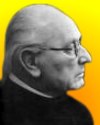
Died 10 Feb 1954 at age 85 (born 16 Feb 1868).
German anthropologist was a Roman Catholic priest whose research focussed on the origin of the idea of God and religion within various cultures, trying to link what emerged from ethnological studies with what is stated in the Bible. Schmidt proposed theories on the effect of environment in the evolution of families. He extensively studied ethnography particularly "culture circles," a series of four main stages that the base cultures of this world went through: Primitive (hunter-gatherer), Primary (horticulturists), Secondary (pastoralists) and lastly Tertiary (modern society). Others had proposed such a theory earlier, but Schmidt's work increased its popularity and acceptance. He founded the journal Anthropos (1906).«
German anthropologist was a Roman Catholic priest whose research focussed on the origin of the idea of God and religion within various cultures, trying to link what emerged from ethnological studies with what is stated in the Bible. Schmidt proposed theories on the effect of environment in the evolution of families. He extensively studied ethnography particularly "culture circles," a series of four main stages that the base cultures of this world went through: Primitive (hunter-gatherer), Primary (horticulturists), Secondary (pastoralists) and lastly Tertiary (modern society). Others had proposed such a theory earlier, but Schmidt's work increased its popularity and acceptance. He founded the journal Anthropos (1906).«
Died 10 Feb 1950 at age 77 (born 10 May 1872). quotes
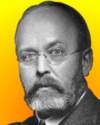
French sociologist and anthropologist whose contributions include a highly original comparative study of the relation between forms of exchange and social structure. His views on the theory and method of ethnology are thought to have influenced many eminent social scientists, including Claude Lévi-Strauss and A.R. Radcliffe-Brown.
French sociologist and anthropologist whose contributions include a highly original comparative study of the relation between forms of exchange and social structure. His views on the theory and method of ethnology are thought to have influenced many eminent social scientists, including Claude Lévi-Strauss and A.R. Radcliffe-Brown.
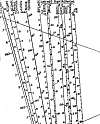
part of Henderson's nomogram of blood
American physiologist and biochemist who discovered the chemical means by which acid-base equilibria are maintained in nature. He concentrated on giving a description of the many chemical variables influencing the neutrality of blood, since its most significant and most conspicuous property was its ability to neutralise large amounts of acids or bases without losing its neutral reaction. Henderson published The Fitness of the Environment (1913) and The Order of Nature (1917). In these books he offered a detailed chemical analysis to support the view that the properties of hydrogen, oxygen, carbon and other elements are so improbably well suited for the evolution of life that no mere “mechanism” can be responsible, and the universe shows the hand of “teleology” or God.
Died 10 Feb 1923 at age 77 (born 27 Mar 1845). quotes
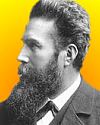
Wilhelm Conrad Röntgen was a German physicist who discovered the highly penetrating form of radiation that became known as X-rays on 8 Nov 1895. He received the first Nobel Prize for Physics (1901), “in recognition of the extraordinary services he has rendered by the discovery of the remarkable rays subsequently named after him.” This high-energy radiation, though first called Röngen rays, became known as X-rays. His discovery initiated revolutionary improvements in making medical diagnoses and enabled many new advances in modern physics.«[Name also spelled Roentgen.]
Wilhelm Conrad Röntgen was a German physicist who discovered the highly penetrating form of radiation that became known as X-rays on 8 Nov 1895. He received the first Nobel Prize for Physics (1901), “in recognition of the extraordinary services he has rendered by the discovery of the remarkable rays subsequently named after him.” This high-energy radiation, though first called Röngen rays, became known as X-rays. His discovery initiated revolutionary improvements in making medical diagnoses and enabled many new advances in modern physics.«[Name also spelled Roentgen.]
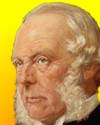
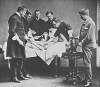
Lord Joseph Lister (Baron Lister, of Lyme Regis) was an English surgeon and medical scientist who was the founder of antiseptic medicine and a pioneer in preventive medicine. Influenced by Louis Pasteur's germ theory, Lister resolved to keep such organisms away from wounds. His book, On the Antiseptic Principle in the Practice of Surgery (1867), was the first treatise on the subject. While at the Royal Infirmary, Glasgow, Scotland, he introduced the use of carbolic acid (phenol) as a disinfectant used on bandages, ligatures, utensils, as well as for direct use on wounds and washing surgeon's hands. His first such surgery was conducted on 12 Aug 1865. Modern medical practice continues to follow Lister's principle that wounds must be kept free of bacteria, though sterilization has replaced most antiseptic use. Lister was the first medical person raised to the peerage.« more
Germ Theory & The Antiseptic Principle, by Louis Pasteur, Joseph Lister. - book suggestion.
Died 10 Feb 1902 at age 74 (born 15 Feb 1827).
American mechanical engineer and manufacturer of machine tools. In 1855 he produced the "Lincoln" milling machine which used a screw drive to improve on F.W. Howe's earlier rack and pinion design. Pratt formed a partnership with Amos Whitney in1860 and together developed the system of interchangeable parts that had been pioneered by Samuel Colt, Elisha Root, Amos' cousin Eli Whitney, and others. This, in turn, led to the need to establish national standards of measurement. The Pratt & Whitney Company was incorporated in 1869, making various types of gauges to enable such standards in manufacturing, making machine tools and tools particularly for the armament industry.«
American mechanical engineer and manufacturer of machine tools. In 1855 he produced the "Lincoln" milling machine which used a screw drive to improve on F.W. Howe's earlier rack and pinion design. Pratt formed a partnership with Amos Whitney in1860 and together developed the system of interchangeable parts that had been pioneered by Samuel Colt, Elisha Root, Amos' cousin Eli Whitney, and others. This, in turn, led to the need to establish national standards of measurement. The Pratt & Whitney Company was incorporated in 1869, making various types of gauges to enable such standards in manufacturing, making machine tools and tools particularly for the armament industry.«
Died 10 Feb 1901 at age 82 (born 3 Dec 1818).
German chemist and physiologist whose in his early career worked on industrial chemical processes and analysis of urine and bile acids. At age 26, he became an assistant at the Royal Mint (1845), and improved methods to separate silver and gold. Yet, he is better remembered as a principle founder of public health medicine or hygiene. He studied the need for adequate nutrition. Carl von Voit, a former student, joined him in the design and construction of a respiration chamber to accuracy measure a person's metabolism of protein, fat and carbohydrate, under various conditions of ambient temperature and amount of exercise, or rest. He also developed standards for adequate ventilation in schools and hospitals. Later in his life, he turned to investigations of the epidemiology of the deadly public diseases of cholera and typhoid. He died by suicide.«
German chemist and physiologist whose in his early career worked on industrial chemical processes and analysis of urine and bile acids. At age 26, he became an assistant at the Royal Mint (1845), and improved methods to separate silver and gold. Yet, he is better remembered as a principle founder of public health medicine or hygiene. He studied the need for adequate nutrition. Carl von Voit, a former student, joined him in the design and construction of a respiration chamber to accuracy measure a person's metabolism of protein, fat and carbohydrate, under various conditions of ambient temperature and amount of exercise, or rest. He also developed standards for adequate ventilation in schools and hospitals. Later in his life, he turned to investigations of the epidemiology of the deadly public diseases of cholera and typhoid. He died by suicide.«
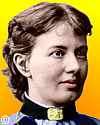
Died 10 Feb 1891 at age 41 (born 15 Jan 1850). quotes
Russian mathematician and novelist who was the first major female Russian educated in the subject. She wrote that she was immersed from an early age: while just age 11, the walls of her nursery were papered with pages of calculus lecture notes, (said to be due to a shortage of wallpaper) from which she learned For university studies, she could only attend lectures unofficially, since women were not allowed to matriculate at Heidelberg. Nevertheless, by 1889, she became the first female full professor in Europe. She made valuable contributions to the theory of differential equations. At the early age of 41, while still at the peak of her mathematical ability and renown, Kovalevskaya died of influenza complicated by pneumonia.«a.k.a. Sofya, Sonya or Sophie, and as Kovalevsky.
Russian mathematician and novelist who was the first major female Russian educated in the subject. She wrote that she was immersed from an early age: while just age 11, the walls of her nursery were papered with pages of calculus lecture notes, (said to be due to a shortage of wallpaper) from which she learned For university studies, she could only attend lectures unofficially, since women were not allowed to matriculate at Heidelberg. Nevertheless, by 1889, she became the first female full professor in Europe. She made valuable contributions to the theory of differential equations. At the early age of 41, while still at the peak of her mathematical ability and renown, Kovalevskaya died of influenza complicated by pneumonia.«a.k.a. Sofya, Sonya or Sophie, and as Kovalevsky.
Beyond the Limit: The Dream of Sofya Kovalevskaya, by Joan Spicci. - book suggestion.
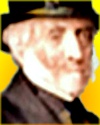
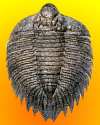
English physician and geologist who spent most of his career in Canada and the United States, studying and writing on the geology and uncovering many new species of ancient life represented in the palaeozoic fossils he found there. His first contribution to American geology appeared in a paper in Silliman's Journal in 1820. Bigsby's best-known works are Thesaurus Siluricus (1868), his “master-roll” of the flora and fauna of the Silurian period and Thesaurus Devonico-Carboniferus (1878). He wrote of his six years travelling throughout Canada in a two-volume book, The Shoe and Canoe (1850), describing the scenery and society he saw in “this romantic and fertile part of North America”.«Image right: Fossil of the trilobite Arctinurus boltoni classified by Bigsby in 1825.
The Shoe and Canoe, by John Jeremiah Bigsby. - book suggestion.
Died 10 Feb 1879 at age 62 (born 26 Sep 1816).
(François-Louis-) Paul Gervais, French paleontologist and zoologist, succeeded Georges Cuvier and Henri de Blainville as principal French contributor to vertebrate paleontology.
(François-Louis-) Paul Gervais, French paleontologist and zoologist, succeeded Georges Cuvier and Henri de Blainville as principal French contributor to vertebrate paleontology.
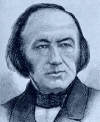
Died 10 Feb 1878 at age 64 (born 12 Jul 1813). quotes
French physiologist who is noted for his discoveries about the role of the pancreas in digestion, the glycogenic function of the liver, and the regulation of the blood supply by the vasomotor nerves. He helped establish the principles of experimentation in the life sciences. His Introduction to the Study of Experimental Medicine (1865) is a scientific classic.
French physiologist who is noted for his discoveries about the role of the pancreas in digestion, the glycogenic function of the liver, and the regulation of the blood supply by the vasomotor nerves. He helped establish the principles of experimentation in the life sciences. His Introduction to the Study of Experimental Medicine (1865) is a scientific classic.
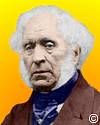
Died 10 Feb 1868 at age 86 (born 11 Dec 1781). quotes
Scottish physicist who is noted for his experimental work in optics and polarized light (light in which all waves lie in the same plane.) He is known for Brewster's Law, which relates the refractive index of a material to its polarizing angle (which is the incident angle at which reflected light becomes completely polarized). At 10 years old, a child prodigy, he constructed a telescope. In middle age, he patented the kaleidoscope (1817). Later, he used lenses to improve three-dimensional images viewed with a stereoscope. Brewster also recommended the use of the lightweight, flat Fresnel lens in lighthouses.
Scottish physicist who is noted for his experimental work in optics and polarized light (light in which all waves lie in the same plane.) He is known for Brewster's Law, which relates the refractive index of a material to its polarizing angle (which is the incident angle at which reflected light becomes completely polarized). At 10 years old, a child prodigy, he constructed a telescope. In middle age, he patented the kaleidoscope (1817). Later, he used lenses to improve three-dimensional images viewed with a stereoscope. Brewster also recommended the use of the lightweight, flat Fresnel lens in lighthouses.
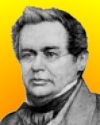
Died 10 Feb 1865 at age 60 (born 24 Feb 1804).
Heinrich Friedrich Emil Lenz was a Russian physicist who devised Lenz's Law to describe the direction of flow of electric current generated by a wire moving through a magnetic field. Lenz worked on electrical conduction and electromagnetism. In 1833 he reported investigations into the way electrical resistance changes with temperature, showing that an increase in temperature increases the resistance (for a metal). He is best-known for Lenz's law, which he discovered in 1834 while investigating magnetic induction. It states that the current induced by a change flows so as to oppose the effect producing the change. Lenz's law is a consequence of the, more general, law of conservation of energy.
Heinrich Friedrich Emil Lenz was a Russian physicist who devised Lenz's Law to describe the direction of flow of electric current generated by a wire moving through a magnetic field. Lenz worked on electrical conduction and electromagnetism. In 1833 he reported investigations into the way electrical resistance changes with temperature, showing that an increase in temperature increases the resistance (for a metal). He is best-known for Lenz's law, which he discovered in 1834 while investigating magnetic induction. It states that the current induced by a change flows so as to oppose the effect producing the change. Lenz's law is a consequence of the, more general, law of conservation of energy.

In 1961, the Niagara Falls hydroelectric project, the largest (at the time) hydroelectric facility in the Western world, was officially opened. The first generator, which had been producing current for some days before while undergoing tests, was officially placed in service to supply salable quantities of electricity. The size comparison was based on its designed 2,190 megawatt installed capacity when all 13 generators were brought online in 1963.«
In 1958, radar signals were bounced off the planet Venus by MIT engineers at Lincoln Laboratories in experiments conducted during an inferior conjuction with Venus. A maser installed at the Millstone Hill radar site, Westford, Mass., was used. The return echoes were distinguished from the background noise using digital signal processing. The results were confirmed by other researchers, and together led to a more precise determination of the value of the astronomical unit (AU), the Earth's mean distance to the sun. A new value of the AU, 149,600,000 km was adopted at a general meeting of the International Astronomical Union in Hamburg (1964). Radar was also bounced off the Sun (7 Apr 1959). Lincoln Laboratories had been set up to conduct military rather than astronomical research.«
In 1925, the first waterless gas storage tank was placed in service in Michigan City, Indiana, by the Northern Indiana Gas and Electric Co. Instead of a water trough design, the gasholder had a piston to adjust pressure as the amount of stored gas varied. The gas-tight joint between the piston and the holder walls was made by a tar seal. Steel plates, each 20 x 32 feet , were used to construct the tank, which was 105-ft diameter and 160-ft height, with a capacity of one million cubic feet of gas. It was erected by Bartlett-Hayward Company, Baltimore.«
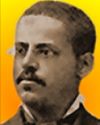
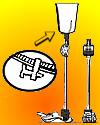
In 1874, Lewis H. Latimer received his first U.S. patent (No. 147,363). This one was for his invention of a water-closed for railroad cars, but he is better known for his patents for improvement in incandescent electric lamps.«
Great Discoveries and Inventions by African-Americans, by David M. Foy. - book suggestion.
(USPTO)
In 1863, Dubois D. Parmelee was issued a U.S. patent for an "Improvement in Artificial Legs" using a custom-moulded suction cup to receive the stump (No. 37,637). Atmospheric pressure held the socket in place such that "straps usually employed for this purpose can be dispended with, and at the same time a perfect fit of the bucket is attained." On the underside of the bucket "a small faucet" was open as the stump was forced into the tightly fitting socket. The faucet was then closed, and atmospheric pressure held the bucket in place until air is readmitted through the faucet. It was 90 years before his idea received general acceptance. Parmelee also invented the first key-operated adding machine (Pat. No. 7,074, 5 Feb 1850).«
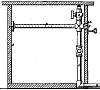
In 1863, the first U.S. patent on a fire extinguishing system for buildings was granted to Alanson Crane of Fortress Monroe, Va. (No. 37,610). The patent drawing [left] shows a longitudinal vertical section of a building, which could be with one or more stories, as a dwelling, storehouse or any other purpose. It shows a water pipe under the foundation of the outside wall, which supplies a vertical pipe leading up the inside of the wall to one or more perforated pipes extending horizontally throughout the building. The principle innovation was to include a stop cock with a locking cover that could be operated outside the wall by an authorized person in the event of a fire when the building is unoccupied. Thus water could flood the floors and quickly extinguish a fire.
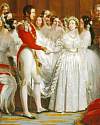
In 1840, Queen Victoria and her cousin, Prince Albert of Saxe Coburg-Gotha, married. Victoria was a carrier of the haemophilia gene, from which the disease appeared among a number of their descendants from their nine children. This family tree provided a famous case history in genetics. Their nine children were four sons and five daughters: Victoria, Bertie, Alice, Alfred, Helena, Louise, Arthur, Leopold, and Beatrice.
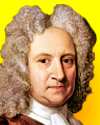
In 1720, Edmond Halley was appointed second Astronomer Royal of England.
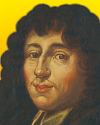
1n 1667, Nicolaus Steno's newly-published book on myology, in which he indicated he believed that “glosopetrae” (tongue stones) were fossils of sharks' teeth, was introduced in an article in the Royal Society Philosophical Transactions, by Henry Oldenburg, Secretary. Although the context in the book was a dissection of a shark's head, Steno (a.k.a. Niels Stensen) was indicating the organic origin of fossils. As a Danish physician, Steno not only made notable contribution to the study of anatomy, but also established some of the most important principles of modern geology. He published in Prodromus (1669) the law of superposition (if a series of sedimentary rocks has not been overturned, upper layers are younger and lower layers are older) and the law of original horizontality.«[Ref: Philosophical Transactions of the Royal Society (10 Feb 1667/8) Vol 2., No. 32, 67-68.]




