Born 10 May 1919.
American sociologist who studied how science, technology and politics interact. The books he has authored include The Coming of Post-Industrial Society
American sociologist who studied how science, technology and politics interact. The books he has authored include The Coming of Post-Industrial Society
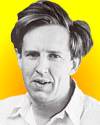
Born 10 May 1901; died 15 Sep 1971 at age 70. quotes
Irish physicist and X-ray crystallographer whose seminal contributions to X-ray crystallography were used to determine the atomic structures of solid compounds. After graduating from Cambridge, he began research in 1923 at the Royal Institution in London for William Henry Bragg, on the structure of graphite. By 1927, he returned to Cambridge as the first lecturer in structural crystallography. The range of his research expanded into molecular biology, the origin of life and the structure and composition of the Earth's crust. Although he never won a Nobel Prize himself, he trained other scientists who did, including Dorothy Hodgkin, Max Perutz, and Aaron Klug. During WWII, he consulted concerning civilian defence, effects of explosions, RAF bombing strategy and post-war rebuilding.«
Irish physicist and X-ray crystallographer whose seminal contributions to X-ray crystallography were used to determine the atomic structures of solid compounds. After graduating from Cambridge, he began research in 1923 at the Royal Institution in London for William Henry Bragg, on the structure of graphite. By 1927, he returned to Cambridge as the first lecturer in structural crystallography. The range of his research expanded into molecular biology, the origin of life and the structure and composition of the Earth's crust. Although he never won a Nobel Prize himself, he trained other scientists who did, including Dorothy Hodgkin, Max Perutz, and Aaron Klug. During WWII, he consulted concerning civilian defence, effects of explosions, RAF bombing strategy and post-war rebuilding.«
J. D. Bernal: The Sage of Science, by Andrew Brown. - book suggestion.
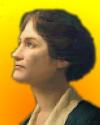
Born 10 May 1900; died 7 Dec 1979 at age 79. quotes
Cecilia Helena Payne-Gaposchkin was an English-American astronomer who was the first to apply laws of atomic physics to the study of the temperature and density of stellar bodies, and the first to conclude that hydrogen and helium are the two most common elements in the universe. During the 1920s, the accepted explanation of the Sun's composition was a calculation of around 65% iron and 35% hydrogen. At Harvard University, in her doctoral thesis (1925), Payne claimed that the sun's spectrum was consistent with another solution: 99% hydrogen with helium, and just 1% iron. She had difficulty persuading her superiors to take her work seriously. It was another 20 years before Payne's original claim was confirmed, by Fred Hoyle.
Cecilia Helena Payne-Gaposchkin was an English-American astronomer who was the first to apply laws of atomic physics to the study of the temperature and density of stellar bodies, and the first to conclude that hydrogen and helium are the two most common elements in the universe. During the 1920s, the accepted explanation of the Sun's composition was a calculation of around 65% iron and 35% hydrogen. At Harvard University, in her doctoral thesis (1925), Payne claimed that the sun's spectrum was consistent with another solution: 99% hydrogen with helium, and just 1% iron. She had difficulty persuading her superiors to take her work seriously. It was another 20 years before Payne's original claim was confirmed, by Fred Hoyle.
Cecilia Payne-Gaposchkin: An Autobiography and Other Recollections, by Cecilia Payne-Gaposchkin. - book suggestion.
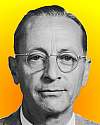
Born 10 May 1897; died 25 Apr 1985 at age 87.
Fraancis Parker Shepard was an American marine geologist who studied submarine canyons, coastal processes and features, submerged deltas, sea-level changes and continental shelves, all of which he preferred rather than deep-ocean geology. His work off the California coast near La Jolla pioneered Pacific marine geology. Although his early career began with the study of structural geology, with field trips in the Rocky Mountains leading to a Ph.D. in 1922. The next year, his father, head of Shepard Steamship Line and an avid sailor, offered the use of his yacht. Thereby, Shepard's lifetime interests shifted to marine geology. When the surface sediment samples he collected from the continental coast off the New England coast did not match what theory predicted, in 1932, he published his observations and offered new interpretations, even challenging existing ideas.«
Fraancis Parker Shepard was an American marine geologist who studied submarine canyons, coastal processes and features, submerged deltas, sea-level changes and continental shelves, all of which he preferred rather than deep-ocean geology. His work off the California coast near La Jolla pioneered Pacific marine geology. Although his early career began with the study of structural geology, with field trips in the Rocky Mountains leading to a Ph.D. in 1922. The next year, his father, head of Shepard Steamship Line and an avid sailor, offered the use of his yacht. Thereby, Shepard's lifetime interests shifted to marine geology. When the surface sediment samples he collected from the continental coast off the New England coast did not match what theory predicted, in 1932, he published his observations and offered new interpretations, even challenging existing ideas.«
Submarine Geology, by Francis Parker Shepard. - book suggestion.
Born 10 May 1880; died 5 Nov 1964 at age 84.
Russell John Reynolds was an English radiologist was the son of Dr. John Reynolds, a family doctor with wide scientific interests that included working, in 1896, with his friend Sir William Crookes, to construct an X-ray apparatus. (It was only at the end of the previous year that X-rays had been discovered by Wilhelm Röntgen.) At that time Russell Reynolds was in his mid-teens, going to Westminster School. His father’s early experiments set his mind to pursue the specialty that became his life’s work. He contributed much in his field. From May 1921, he created cineradiography equipment, to provide motion pictures using X-rays to follow the movements of digestion, internal organs, and skeletal joints preserved on film as loops allowing closer study.«
Russell John Reynolds was an English radiologist was the son of Dr. John Reynolds, a family doctor with wide scientific interests that included working, in 1896, with his friend Sir William Crookes, to construct an X-ray apparatus. (It was only at the end of the previous year that X-rays had been discovered by Wilhelm Röntgen.) At that time Russell Reynolds was in his mid-teens, going to Westminster School. His father’s early experiments set his mind to pursue the specialty that became his life’s work. He contributed much in his field. From May 1921, he created cineradiography equipment, to provide motion pictures using X-rays to follow the movements of digestion, internal organs, and skeletal joints preserved on film as loops allowing closer study.«
Born 10 May 1872; died 10 Feb 1950 at age 77. quotes
French sociologist and anthropologist whose contributions include a highly original comparative study of the relation between forms of exchange and social structure. His views on the theory and method of ethnology are thought to have influenced many eminent social scientists, including Claude Lévi-Strauss and A.R. Radcliffe-Brown.
French sociologist and anthropologist whose contributions include a highly original comparative study of the relation between forms of exchange and social structure. His views on the theory and method of ethnology are thought to have influenced many eminent social scientists, including Claude Lévi-Strauss and A.R. Radcliffe-Brown.
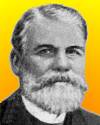
Born 10 May 1826; died 9 Mar 1908 at age 81.
English geologist whose microscopic studies of thin slices of rock earned him the title "father of microscopical petrography."
English geologist whose microscopic studies of thin slices of rock earned him the title "father of microscopical petrography."

Born 10 May 1805; died 29 Mar 1877 at age 71.
German botanist who was the most highly regarded botanist of the “nature philosophy” school, a doctrine which attempted to explain natural phenomena in terms of the speculative theories that dominated early 19th-century German science. Several species of cryptogams he discovered bear his name, such as Chara braunii. With Karl Schimper, he established the theory of spiral phyllotaxy. In his book Betrachtungern über die Erscheinung der Verjüngung in der Natur (1851) he made some significant contributions to the morphology of plants, to the biology of freshwater algae, and especially to cell theory. He opposed Darwinian selection, and remained a believer of “nature philosophy” when the doctrine was falling out of favour.
German botanist who was the most highly regarded botanist of the “nature philosophy” school, a doctrine which attempted to explain natural phenomena in terms of the speculative theories that dominated early 19th-century German science. Several species of cryptogams he discovered bear his name, such as Chara braunii. With Karl Schimper, he established the theory of spiral phyllotaxy. In his book Betrachtungern über die Erscheinung der Verjüngung in der Natur (1851) he made some significant contributions to the morphology of plants, to the biology of freshwater algae, and especially to cell theory. He opposed Darwinian selection, and remained a believer of “nature philosophy” when the doctrine was falling out of favour.
Born 10 May 1800; died 20 Feb 1850 at age 49.
American physician whose popular treatise on birth control, the object of celebrated court actions in the U.S. and England, initiated the widespread use of contraceptives. Anonymously published, his book The Fruits of Philosophy: or The Private Companion of Young Married People was the first on the subject in the U.S. Despite an otherwise appropriate discussion of the medical, social, and economic aspects of birth control, he so offended the public taste of the times that he was prosecuted in the U.S., fined (1832) and imprisoned for three months. In England he was aquitted in what became a famous test case. Subsequently, the book sales rose from 1,000 to 250,000 a year.
American physician whose popular treatise on birth control, the object of celebrated court actions in the U.S. and England, initiated the widespread use of contraceptives. Anonymously published, his book The Fruits of Philosophy: or The Private Companion of Young Married People was the first on the subject in the U.S. Despite an otherwise appropriate discussion of the medical, social, and economic aspects of birth control, he so offended the public taste of the times that he was prosecuted in the U.S., fined (1832) and imprisoned for three months. In England he was aquitted in what became a famous test case. Subsequently, the book sales rose from 1,000 to 250,000 a year.
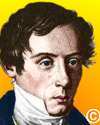
Born 10 May 1788; died 14 Jul 1827 at age 39. quotes
French physicist who first investigated the effect of interference of light, with results known as Fresnel fringes. This decisive work, together with further experiments with polarized light, supported Thomas Young's wave theory of light. Fresnel advanced the wave theory by identifying light as transverse waves rather than the longitudinal waves previously assumed by Young and Christiaan Huygens. His pioneering work in optics included showing that white light is composed of a spectrum of innumerable wavelengths ranging from red to shorter violet wavelenths. In 1819, he improved the optical system of lighthouses by replacing metal reflectors with revolutionary stepped lenses of his design.«
French physicist who first investigated the effect of interference of light, with results known as Fresnel fringes. This decisive work, together with further experiments with polarized light, supported Thomas Young's wave theory of light. Fresnel advanced the wave theory by identifying light as transverse waves rather than the longitudinal waves previously assumed by Young and Christiaan Huygens. His pioneering work in optics included showing that white light is composed of a spectrum of innumerable wavelengths ranging from red to shorter violet wavelenths. In 1819, he improved the optical system of lighthouses by replacing metal reflectors with revolutionary stepped lenses of his design.«
Born 10 May 1754; died 21 Dec 1835 at age 81. quotes
Sir John Sinclair of Ulbster, 1st Baronet was a Scottish politician and writer who was the first to use the word “statistics.” He wrote on finance and agriculture. From 1971, he gathered data using a 160-question survey sent to every Scottish parish minister. The information he collected on natural history, population and production, filled 21 volumes of his work, The Statistical Account of Scotland between 1791 and 1799.
Sir John Sinclair of Ulbster, 1st Baronet was a Scottish politician and writer who was the first to use the word “statistics.” He wrote on finance and agriculture. From 1971, he gathered data using a 160-question survey sent to every Scottish parish minister. The information he collected on natural history, population and production, filled 21 volumes of his work, The Statistical Account of Scotland between 1791 and 1799.
Born 10 May 1671; died 11 Jun 1743 at age 72.
English geologist who was the first to suggest the theory of stratified rock formations. He wrote Observations on the Different Strata of Earths and Minerals (1727) and stated that there was a relation between surface features and the rock structure, an idea that was not commonly accepted until a century later. He studied the stratigraphy of coal mines, and published two geological papers on the subject in the Philosophical Transactions. In them he sketched cross-sections of strata, using fossils to identify one stratum. His 1725 paper contained the first clear indication of an angular unconformity, the importance of which was not realised until much later. He mapped Somerset, showing among other things the sites of coal and metalliferous mines.
English geologist who was the first to suggest the theory of stratified rock formations. He wrote Observations on the Different Strata of Earths and Minerals (1727) and stated that there was a relation between surface features and the rock structure, an idea that was not commonly accepted until a century later. He studied the stratigraphy of coal mines, and published two geological papers on the subject in the Philosophical Transactions. In them he sketched cross-sections of strata, using fossils to identify one stratum. His 1725 paper contained the first clear indication of an angular unconformity, the importance of which was not realised until much later. He mapped Somerset, showing among other things the sites of coal and metalliferous mines.

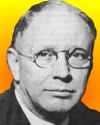
Died 10 May 1952 at age 67 (born 24 May 1884).
Clark Leonard Hull was an American psychologist who developed an influential theory of behaviour in which he identified the variables that intervene between stimulus and response. He made experimental studies on learning, that he presented in his book, Aptitude Testing (1928) and attempted to structure psychological theory following a deductive method of reasoning similar to that used in geometry. He proposed that from a set of postulates about psychology, logical conclusions could be deduced and tested. Hull was the first known psychologist to apply quantitative experimental methods to the investigation of hypnosis. His last books were Essentials of Behavior (1951) and A Behavior System (1952).«
Clark Leonard Hull was an American psychologist who developed an influential theory of behaviour in which he identified the variables that intervene between stimulus and response. He made experimental studies on learning, that he presented in his book, Aptitude Testing (1928) and attempted to structure psychological theory following a deductive method of reasoning similar to that used in geometry. He proposed that from a set of postulates about psychology, logical conclusions could be deduced and tested. Hull was the first known psychologist to apply quantitative experimental methods to the investigation of hypnosis. His last books were Essentials of Behavior (1951) and A Behavior System (1952).«
Hypnosis and Suggestibility: An Experimental Approach, by Clark W. Hull. - book suggestion.
Died 10 May 1936 at age 71 (born 27 Apr 1865).
Russian anthropologist whose study of the Chukchi people of northeastern Siberia ranks among the classic works of ethnography. He published grammars, a dictionary, textbooks for Chukchi children, folklore collections, ethnographic and historical studies, and a novel about the Chukchis.
Russian anthropologist whose study of the Chukchi people of northeastern Siberia ranks among the classic works of ethnography. He published grammars, a dictionary, textbooks for Chukchi children, folklore collections, ethnographic and historical studies, and a novel about the Chukchis.
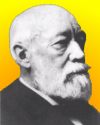
Died 10 May 1920 at age 82 (born 28 Nov 1837).
American inventor and manufacturer who was a pioneer of the plastics industry. He discovered the process for making celluloid. His other inventions included a water-purification system, a sugar-cane mill, a machine for straightening steel rods, a multi-stitch sewing-machine, and a widely used roller bearing. In the 1860s he became interested in finding a substitute for the ivory used to make billiard balls. With his brother Isaac, he improved the techniques of molding pyroxylin (a partially nitrated cellulose) with camphor by dissolving in an alcohol and ether mixture to make it softer and more malleable. This he called "Celluloid," a name trademarked on 14 Jan 1873. It was the first synthetic plastic, for which he took out a patent in 1870. Later in life he had over 200 patents.
American inventor and manufacturer who was a pioneer of the plastics industry. He discovered the process for making celluloid. His other inventions included a water-purification system, a sugar-cane mill, a machine for straightening steel rods, a multi-stitch sewing-machine, and a widely used roller bearing. In the 1860s he became interested in finding a substitute for the ivory used to make billiard balls. With his brother Isaac, he improved the techniques of molding pyroxylin (a partially nitrated cellulose) with camphor by dissolving in an alcohol and ether mixture to make it softer and more malleable. This he called "Celluloid," a name trademarked on 14 Jan 1873. It was the first synthetic plastic, for which he took out a patent in 1870. Later in life he had over 200 patents.
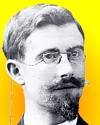
Died 10 May 1910 at age 42 (born 3 Jul 1867).
French geophysicist and physicist who, at the beginning of the 20th century discovered volcanic lava and clay samples that recorded the Earth’s inversion of its magnetic field.
French geophysicist and physicist who, at the beginning of the 20th century discovered volcanic lava and clay samples that recorded the Earth’s inversion of its magnetic field.
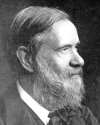
Died 10 May 1910 at age 83 (born 13 Jul 1826). quotes
Italian chemist, teacher, and legislator who recognized the distinction between atomic and molecular weights. He discovered the Cannizzaro reaction in 1853, that treatment of benzaldehyde with a concentrated alcoholic hydroxide produced equal amounts of benzyl alcohol and the salt of benzoic acid. Earlier, in 1851, he helped prepare cyanamide, while at the laboratory of Michel-Eugène Chevreul. In 1858, he showed that the atomic weights of the elements in the molecules of a volatile compound can be calculated using Avogadro's principle. Further, the atomic weights of non-volatile compounds can be calculated by a measurement of specific heat instead of vapour density. Later, 1861-71, he studied aromatic compounds and amines.
Italian chemist, teacher, and legislator who recognized the distinction between atomic and molecular weights. He discovered the Cannizzaro reaction in 1853, that treatment of benzaldehyde with a concentrated alcoholic hydroxide produced equal amounts of benzyl alcohol and the salt of benzoic acid. Earlier, in 1851, he helped prepare cyanamide, while at the laboratory of Michel-Eugène Chevreul. In 1858, he showed that the atomic weights of the elements in the molecules of a volatile compound can be calculated using Avogadro's principle. Further, the atomic weights of non-volatile compounds can be calculated by a measurement of specific heat instead of vapour density. Later, 1861-71, he studied aromatic compounds and amines.
Died 10 May 1891 at age 74 (born 27 Mar 1817).
Swiss botanist famous for his work on plant cells. At the age of 25 he wrote a paper on pollen formation of seed and flowering plants and described cell division with great accuracy. He noted what he called transitory cytoblasts, which later were identified as chromosomes.
Swiss botanist famous for his work on plant cells. At the age of 25 he wrote a paper on pollen formation of seed and flowering plants and described cell division with great accuracy. He noted what he called transitory cytoblasts, which later were identified as chromosomes.
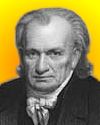
1841
Died 10 May 1842 at age 65 (born 17 May 1776). quotes
American botanist, geologist and lawyer who promoted widespread interest in science through popular public lectures, as an innovative teacher, and his textbooks in chemistry, zoology and geology. His initial legal career (1802-10) ended with conviction for alleged forgery (perhaps unjustly). During his five years in prison, he enriched his knowledge of science. Thereafter, he made a lasting contribution to scientific education by developingd a teaching method in which students learnt by doing, including field trips and performing experiments. Supported by Stephen Van Rensselaer, he founded the Rensselaer School (1824), later renamed Rensselaer Institute. He set up a travelling school on a barge on the Erie Canal to observe geological formations and collect specimens, attended by Asa Fitch in 1826. Eaton taught for the rest of his life.«
American botanist, geologist and lawyer who promoted widespread interest in science through popular public lectures, as an innovative teacher, and his textbooks in chemistry, zoology and geology. His initial legal career (1802-10) ended with conviction for alleged forgery (perhaps unjustly). During his five years in prison, he enriched his knowledge of science. Thereafter, he made a lasting contribution to scientific education by developingd a teaching method in which students learnt by doing, including field trips and performing experiments. Supported by Stephen Van Rensselaer, he founded the Rensselaer School (1824), later renamed Rensselaer Institute. He set up a travelling school on a barge on the Erie Canal to observe geological formations and collect specimens, attended by Asa Fitch in 1826. Eaton taught for the rest of his life.«
Education for a Technological Society: A Sesquicentennial History of Rensselaer Polytechnic Institute, by Samuel Rezneck. - book suggestion.
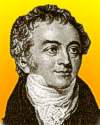
Died 10 May 1829 at age 55 (born 13 Jun 1773). quotes
English physician, physicist and Egyptologist who reinforced the wave theory of light with his study of interference of light. As a medical student, he had discovered the how the shape of the eye's lens changes to focus. In 1801, he recognized the cause of astigmatism. Young demonstrated the wave nature of light, polarization of light, interference fringes, and explained the colours seen in thin films such as soap bubbles. He associated wavelength with colour of light, and the eye's perception of any colour as a mixture of red, blue and green. Young's modulus is named after his work with elasticity. He also worked measuring the size of molecules, liquid surface tension. He was also an Egyptologist who helped decipher the Rosetta Stone. more
English physician, physicist and Egyptologist who reinforced the wave theory of light with his study of interference of light. As a medical student, he had discovered the how the shape of the eye's lens changes to focus. In 1801, he recognized the cause of astigmatism. Young demonstrated the wave nature of light, polarization of light, interference fringes, and explained the colours seen in thin films such as soap bubbles. He associated wavelength with colour of light, and the eye's perception of any colour as a mixture of red, blue and green. Young's modulus is named after his work with elasticity. He also worked measuring the size of molecules, liquid surface tension. He was also an Egyptologist who helped decipher the Rosetta Stone. more
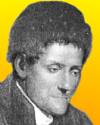
Died 10 May 1822 at age 56 (born 22 Sep 1765).
Italian mathematicianand physician who made studies of equations that anticipated the algebraic theory of groups. He is regarded as the first to make a significant attempt to show that there is no algebraic solution of the general quintic equation (an equation with the variable in one term raised to the fifth power). In 1799 Ruffini published a book on the theory of equations with his claim that quintics could not be solved by radicals, General theory of equations in which it is shown that the algebraic solution of the general equation of degree greater than four is impossible. Ruffini used group theory in his work but he had to invent the subject for himself. He also wrote on probability and the application of probability to evidence in court cases.
Italian mathematicianand physician who made studies of equations that anticipated the algebraic theory of groups. He is regarded as the first to make a significant attempt to show that there is no algebraic solution of the general quintic equation (an equation with the variable in one term raised to the fifth power). In 1799 Ruffini published a book on the theory of equations with his claim that quintics could not be solved by radicals, General theory of equations in which it is shown that the algebraic solution of the general equation of degree greater than four is impossible. Ruffini used group theory in his work but he had to invent the subject for himself. He also wrote on probability and the application of probability to evidence in court cases.
Died 10 May 1566 at age 65 (born 17 Jan 1501).
German botanist who prepared the first important glossary of botanical terms. This made a definite break from Dioscorides, and helped make the transition to modern botany. Although he was at first a private physician, and then professor of medicine, he actively persued an interest in natural history. He wrote books such as History of Plants (1542), in which he described numerous plant species in detail. His name was honored later by the naming of the fuchsia shrub. The distinctive bluish red colour of the flowers is also now known as fuchsia, eternally perpetuating his name.
German botanist who prepared the first important glossary of botanical terms. This made a definite break from Dioscorides, and helped make the transition to modern botany. Although he was at first a private physician, and then professor of medicine, he actively persued an interest in natural history. He wrote books such as History of Plants (1542), in which he described numerous plant species in detail. His name was honored later by the naming of the fuchsia shrub. The distinctive bluish red colour of the flowers is also now known as fuchsia, eternally perpetuating his name.

In 1997, the Maeslant Barrier was inaugurated by Queen Beatrix of the Netherlands. Construction of this storm surge barrier began in 1991, where two waterways meet near Hook of Holland (Het Scheur and Nieuwe Waterweg). It protects the province of Zuid-Holland from flooding by the sea in the event of an exceptionally high storm surge. It is part of Holland’s greater Europoort water defenses, and consists of two enormous barrier gates. Until needed, they remain in a dry dock, one on each embankment. They are hollow, and swing closed, by first floating to (almost) meet across the waterway, then sunk in place by filling with water. Each is a circle segment, 22 metres high and 210 metres long.«
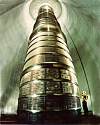
In 1979, a potential difference of 32.0 million volts, the highest ever generated, was produced by the National Electrostatics Corporation at the Oak Ridge National Laboratory (ORNL), Tennessee. Company personnel were testing the newly installed Pelletron accelerator model 25 URC, the largest manufacturered by the company. (The sustained terminal voltage was measured by the current measurement of the column corona voltage grading system to within an uncertainty of +/-5% or +/- 1.5 MV). On 7 May 1979, voltage tests had been conducted on the column structure prior to installation of the acceleration tubes. This 25 MV electrostatic tandem accelerator remains in use at ORNL producing radioactive ion beams for research.«*
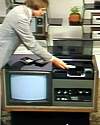
In 1975, the first home videocassette recorder, the Betamax, began sales in Japan. The format made by Sony used one-hour tapes, but a competing system was introduced by JVC in the next year called VHS (Video Home System) capable of two-hour recording. Both companies shortly introduced models with twice those playing times. The Betamax was more complex, making them more expensive to manufacture, and more costly to maintain. Accordingly, within a few years, VHS had strong marketing with a lower price, and was the clear winner in the marketplace. Sony grimly continued design and production for what sales they could, but in 2001, Sony made fewer than 3,000 VCRs, sold only in Japan. By the end of 2002, Sony ceased all Betamax production. DVDs were the upcoming battleground..«[Image: The very first Betamax released in the U.S. was the combination LV-1901 TV/VCR floor model. The recorder and separate tuner below it filled the right half of the console.]
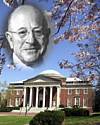
In 1949, the first planetarium in the U.S. owned by a university opened at the University of Chapel Hill, North Carolina. The Morehead Planetarium, one of the largest in the U.S., was the gift of John Motley Morehead III (1870-1965), class of 1891. The Morehead Building, erected at the north end of the campus, included the 68-ft dome, 300-seat Star Theater with a Zeiss Model II Star Projector. Morehead was an industrialist and chemist who commercially developed production of calcium carbide, basic to manufacturing acetylene gas, which led to the founding of Union Carbide Corporation. As the U.S. space program began, the planetarium provided important celestial navigation training for U.S. astronauts in the Mercury program.«
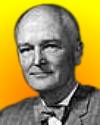
In 1935, American surgeon John Gibbon successfully maintained the cardiac and respiratory function of a cat using his invention, a rotating blood-film oxygenator in the first heart-lung machine. Thus, he had demonstrated that life can be maintained by an external pump acting as an artificial heart during an operation. After 18 years of improvements, on 6 May 1953, Gibbon successfully performed the first open-heart operation on an 18-yr-old patient, Cecelia Bavolek, demonstrating that an artificial device can temporarily mimic the functions of the heart. Modern versions allow surgeons today to perform bypass surgery and heart transplants.«
In 1929, the first submarine "lung" was tested.
Scopes
In 1925, John T. Scopes was given a preliminary hearing before three judges. He had been arrested and charged under a new Tennessee's state law, the Butler Act, which prohibited the teaching of Darwin's theory of evolution in public schools. Scopes had agreed to participate in a challenge to that law, with the support of local leaders in Dayton, Tennessee, and the American Civil Liberties Union. A few weeks later, on 10 Jul 1925, the trial began, which became known as the “Scope's Monkey Trial”. At its end, on 25 Jul 1925, he was found guilty and fined $100. Although upon appeal the fine was ruled excessive and over-ruled, the state law itself was not found unconstitutional. Thereafter, the law was not enforced, but it was not repealed until 42 years later, on 17 May 1967.«
Center of the Storm: Memoirs of John T. Scopes, by John Scopes. - book suggestion.
In 1898, the first vending machine law in the U.S. was enacted in Omaha, Neb.
In 1879, the first national U.S. archaeological society was formed in Boston Mass., the Archaeological Institute of America.
In 1876, the first U.S. centennial exhibition, an International exhibition, opened in Philadelphia, Pennsylvania.
In 1876, the first use of an electric turnstile with ratchet in the U.S. happened in Philadelphia, Pennsylvania.
In 1876, Col. Eli Lilly founded a new drug manufacturing company in Indianapolis, Indiana, USA. Eli was a pharmaceutical chemist and Union army veteran of the US Civil War. The business thrived from being the first large-scale manufacturer of insulin, vital to treat diabetes, by agreement (1922) with its early developers, John Macleod, Frederick Banting, and Charles Best. With research laboratories, its range expanded with many other products such as merthiolate, penicillin, vancomycin, Oraflex, and Prozak. Now known as Eli Lilly and Company and still headquartered in Indianapolis, it has grown with manufacturing plants in 9 countries, and sells in over 100 countries.«
In 1869, the first transcontinental railroad to run West out of Chicago was completed, running to Promontory, Utah. Amidst a crowd of dignitaries and workers, with the engines No. 119 and Jupiter practically touching noses, the Central Pacific and Union Pacific railroads were joined together. Telegraph operators transmitted to both coasts transmit the blows of the hammer as they fall on a golden spike. The nation listened as west and east came together in undivided union.«
In 1860, the discovery of two new elements, caesium and rubidium, was announced by German chemists, Robert Bunsen and Gustav Robert Kirchhoff to the Berlin Academy of Scientists. Their salts were found in tiny amounts in the mineral waters of Dürkheim. They were detected by spectral analysis. Caesium was first noticed by its characteristic sky blue spectral lines, for which colour is was named (from Latin caesius). Likewise rubidium was characterized by deep red lines (named after L. rubidus). They are alkali metals, and have similar chemical properties to potassium.«[Berlin Acad. Ber. (10 May 1860) 221.] more
In 1852, the theory of valence was announced by English chemist Sir Edward Frankland (1825-1899). The theory states that any atom can combine with a certain, limited number of other atoms, which is remains fundamental to the understanding of chemical structure.




