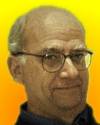
Born 12 Dec 1939.
American neuroscientist and author who studied how the brain enables humans to perform those advanced mental functions that are generally associated with what we call the mind. In over four decades of split-brain research he has advanced understanding of how the brain works, by revealing the separate and highly specialized functions and abilities of each hemisphere. Gazzaniga has focused on how the brain facilitates such higher cognitive functions as remembering, speaking, interpreting, and making judgments. His most recent research uses three-dimensional magnetic resonance images of the brain's surface to compare normal brains with, for example, those having a mental disorders such as schizophrenia.
American neuroscientist and author who studied how the brain enables humans to perform those advanced mental functions that are generally associated with what we call the mind. In over four decades of split-brain research he has advanced understanding of how the brain works, by revealing the separate and highly specialized functions and abilities of each hemisphere. Gazzaniga has focused on how the brain facilitates such higher cognitive functions as remembering, speaking, interpreting, and making judgments. His most recent research uses three-dimensional magnetic resonance images of the brain's surface to compare normal brains with, for example, those having a mental disorders such as schizophrenia.
The Mind's Past, by Michael Gazzaniga. - book suggestion.
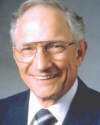
Born 12 Dec 1927; died 3 Jun 1990 at age 62.
Robert Norton Noyce was an American engineer and inventor (1959), with Jack Kilby, of the integrated circuit, a system of interconnected transistors on a single silicon microchip. He held sixteen patents for semiconductor devices, methods, and structures. In 1968, he and colleague Gordon E. Moore cofounded N.M. Electronics, which later was renamed Intel Corporation. Noyce served as Intel's president and chairman (1968-75), then as vice chairman until 1979.
Robert Norton Noyce was an American engineer and inventor (1959), with Jack Kilby, of the integrated circuit, a system of interconnected transistors on a single silicon microchip. He held sixteen patents for semiconductor devices, methods, and structures. In 1968, he and colleague Gordon E. Moore cofounded N.M. Electronics, which later was renamed Intel Corporation. Noyce served as Intel's president and chairman (1968-75), then as vice chairman until 1979.
The Man Behind the Microchip, by Leslie Berlin. - book suggestion.
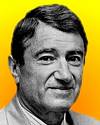
Born 12 Dec 1926.
French biochemist and physician who is best known in the field of steroid hormone biosynthesis, metabolism, and receptors. He promoted use of RU-486 as a steroid that offers an alternative to surgical abortion (invented in 1980 by Georges Teutsch of the Roussel-Uclaf pharmaceutical company). In 1959, Baulieu discovered dehydroepiandrosterone sulfate, a hormone secreted by the adrenal gland whose existence had eluded the many other chemists. Baulieu found for the substance in urine as being water-soluble, instead of looking for it as soluble in fats. This new light on mechanisms of hormone transport. In the 1960s he turned his attention to fertility control because he wanted to stabilize Earth's rapidly growing human population.
French biochemist and physician who is best known in the field of steroid hormone biosynthesis, metabolism, and receptors. He promoted use of RU-486 as a steroid that offers an alternative to surgical abortion (invented in 1980 by Georges Teutsch of the Roussel-Uclaf pharmaceutical company). In 1959, Baulieu discovered dehydroepiandrosterone sulfate, a hormone secreted by the adrenal gland whose existence had eluded the many other chemists. Baulieu found for the substance in urine as being water-soluble, instead of looking for it as soluble in fats. This new light on mechanisms of hormone transport. In the 1960s he turned his attention to fertility control because he wanted to stabilize Earth's rapidly growing human population.
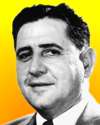
Born 12 Dec 1903; died 4 Oct 1989 at age 85.
Ross Franco Nigrelli was an American marine biologist who was an expert on diseases of sea life, and was first to discover virus-induced tumours in fish. He investigated plankton blooms, such as the red tides of the 1940s along Florida's Gulf Coast that caused a die-off of millions of fish. He studied how the health of marine organisms was affected by, as well as changes in salinity or water temperature. As one of the earliest systematic researchers of venoms released by some marine life, and their uses of their extracts as sources of useful drugs. For example, he discovered that a secretion of Bahamian sea cucumbers that was fatal to fish, even in minute quantities. Yet, it could slow the growth of tumours in mice. He also found that certain secretions of sea sponges had antibacterial properties, and that the blood of horseshoe crabs could detect blood poisoning in humans.«
Ross Franco Nigrelli was an American marine biologist who was an expert on diseases of sea life, and was first to discover virus-induced tumours in fish. He investigated plankton blooms, such as the red tides of the 1940s along Florida's Gulf Coast that caused a die-off of millions of fish. He studied how the health of marine organisms was affected by, as well as changes in salinity or water temperature. As one of the earliest systematic researchers of venoms released by some marine life, and their uses of their extracts as sources of useful drugs. For example, he discovered that a secretion of Bahamian sea cucumbers that was fatal to fish, even in minute quantities. Yet, it could slow the growth of tumours in mice. He also found that certain secretions of sea sponges had antibacterial properties, and that the blood of horseshoe crabs could detect blood poisoning in humans.«
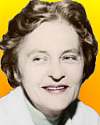
Born 12 Dec 1900; died 2 Dec 1995 at age 94.
Hungarian-American physical chemist who pioneered in the application of solar energy to water distillation and home heating. She immigrated to the U.S. in 1925, worked as a biophysicist (1926-37), and naturalized in 1937. As a civilian adviser to the U.S. Office of Scientific Research and Development during WW II, she worked out a solar heated water distillation system to make sea water potable. In the late 1940's, she designed a system of chemical storage of solar energy for the first solar-heated house, a project of MIT constructed t in Dover, Massachusetts. She developed a solar-powered stove, and in the 1970s, experimented with an air-conditioning system that stored cool night air for use during the heat of the next day.
Hungarian-American physical chemist who pioneered in the application of solar energy to water distillation and home heating. She immigrated to the U.S. in 1925, worked as a biophysicist (1926-37), and naturalized in 1937. As a civilian adviser to the U.S. Office of Scientific Research and Development during WW II, she worked out a solar heated water distillation system to make sea water potable. In the late 1940's, she designed a system of chemical storage of solar energy for the first solar-heated house, a project of MIT constructed t in Dover, Massachusetts. She developed a solar-powered stove, and in the 1970s, experimented with an air-conditioning system that stored cool night air for use during the heat of the next day.
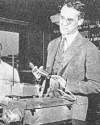
American engineer whose invention of the Iron Lung was a negative pressure ventilator that provided external respiration support. From its first use on 12 Oct 1928 to the 1950's, the iron lung was a vital technology to maintain life especially in cases of muscle paralysis caused by the poliomyelitis disease that was prevalent in that era. Victims of polio partially or totally lost their ability to breathe for themselves. A polio patient's entire body below the neck lay sealed in a metal chamber wherein pressure was increased and decreased by an air pump. Its cycle caused the lungs to expel and inhale air and mimic a normal breathing rate.«[Image right: Philip Drinker experimenting with a cat in a test iron lung, 1928.]
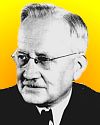
Born 12 Dec 1890; died 12 Apr 1963 at age 72.
Polish logician and semanticist who was the chief contributor to the Warsaw school of philosophy and logic, and is credited with developing in 1920 the first deductive theory for the study of logic based on syntax. The dominant theme of Ajdukiewicz's thought was the problem of the dependence of our knowledge and conception of knowledge on language. His main contributions are in the field of logical syntax (with the theory of semantical categories) and in epistemology, with the so-called “radical conventionalism,” a doctrine where he claimed that there exist conceptual apparatuses which are not intertranslatable and that scientific knowledge grows through the replacement of one such conceptual apparatus by another.
Polish logician and semanticist who was the chief contributor to the Warsaw school of philosophy and logic, and is credited with developing in 1920 the first deductive theory for the study of logic based on syntax. The dominant theme of Ajdukiewicz's thought was the problem of the dependence of our knowledge and conception of knowledge on language. His main contributions are in the field of logical syntax (with the theory of semantical categories) and in epistemology, with the so-called “radical conventionalism,” a doctrine where he claimed that there exist conceptual apparatuses which are not intertranslatable and that scientific knowledge grows through the replacement of one such conceptual apparatus by another.
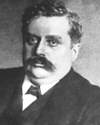
Born 12 Dec 1866; died 15 Nov 1919 at age 52. quotes
Swiss chemist whose founding research into the structure of coordination compounds brought him the 1913 Nobel Prize for Chemistry. He demonstrated that stereochemistry was not just the property of carbon compounds, but was general to the whole of chemistry. His theory of chemical coordination (1893) recognized that many metals appeared to show variable valence and form complex compounds. Certain metals, such as cobalt and platinum, were capable through their secondary valences of joining to themselves a certain number of atoms or molecules. These were termed by Werner “coordination compounds.” and the maximum number of atoms (or “ligands” as he called them) that can be joined to the central metal is its coordination number.
Swiss chemist whose founding research into the structure of coordination compounds brought him the 1913 Nobel Prize for Chemistry. He demonstrated that stereochemistry was not just the property of carbon compounds, but was general to the whole of chemistry. His theory of chemical coordination (1893) recognized that many metals appeared to show variable valence and form complex compounds. Certain metals, such as cobalt and platinum, were capable through their secondary valences of joining to themselves a certain number of atoms or molecules. These were termed by Werner “coordination compounds.” and the maximum number of atoms (or “ligands” as he called them) that can be joined to the central metal is its coordination number.
Alfred Werner Founder of Coordination Chemistry, by George B. Kauffman. - book suggestion.
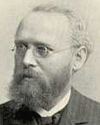
Born 12 Dec 1846; died 3 Nov 1896 at age 49.
German chemist who discovered that the thyroid gland was rich in iodine, an element not known before that to occur naturally in animal tissue, making the thyroid gland unique in being the only tissue to contain iodine. This led to the discovery of the iodine-containing thyroid hormone and to its treatment in thyroid disorders. This, his most important discovery, he made in the last year of his life, 1896.
German chemist who discovered that the thyroid gland was rich in iodine, an element not known before that to occur naturally in animal tissue, making the thyroid gland unique in being the only tissue to contain iodine. This led to the discovery of the iodine-containing thyroid hormone and to its treatment in thyroid disorders. This, his most important discovery, he made in the last year of his life, 1896.
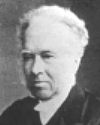
Born 12 Dec 1803; died 3 Dec 1882 at age 78.
English astronomer and clergyman, famous in the history of astronomy for his failure to discover the planet Neptune. Astronomer and mathematician John Couch Adams had studied the known deviations in the orbit of the planet Uranus which indicated a planet even further out. In 1845, Adams gave Astronomer Royal George Airy a calculated orbital path for the unknown planet. But Airy was more interested in the primary job of navigation and timekeeping observations. Airy informed Challis, who did not begin until July 1846, and actually sighted the new planet four times without recognising it. On 23 Sep 1845, the new planet was instead discovered from Berlin Observatory. Challis admitted that Adam's prediction was within 2° of the planet's position.
English astronomer and clergyman, famous in the history of astronomy for his failure to discover the planet Neptune. Astronomer and mathematician John Couch Adams had studied the known deviations in the orbit of the planet Uranus which indicated a planet even further out. In 1845, Adams gave Astronomer Royal George Airy a calculated orbital path for the unknown planet. But Airy was more interested in the primary job of navigation and timekeeping observations. Airy informed Challis, who did not begin until July 1846, and actually sighted the new planet four times without recognising it. On 23 Sep 1845, the new planet was instead discovered from Berlin Observatory. Challis admitted that Adam's prediction was within 2° of the planet's position.
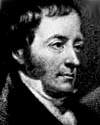
Born 12 Dec 1775; died 2 Sep 1836 at age 60.
English physician and chemist who in 1803 proposed what is now called Henry's law, which states that the mass of a gas dissolved by a given volume of a solvent, at a constant temperature, is directly proportional to the pressure of the gas above the liquid, provided that no chemical action occurs. The law holds well only for slightly soluble gases at low pressure. Henry was a close friend of John Dalton, but despite superior skill and range as an experimenter, lacked Dalton's boldness as a theorist, and Henry never committed himself to the atomic theory. Henry was the third and most successful son of Thomas Henry, an industrial chemist. William was injured by a falling beam at age 10. Those injuries gave him ill health and pain through life; he died by suicide.Do not confuse with physicist, Sir William Henry OF Bragg = William Bragg(1862-1942).
English physician and chemist who in 1803 proposed what is now called Henry's law, which states that the mass of a gas dissolved by a given volume of a solvent, at a constant temperature, is directly proportional to the pressure of the gas above the liquid, provided that no chemical action occurs. The law holds well only for slightly soluble gases at low pressure. Henry was a close friend of John Dalton, but despite superior skill and range as an experimenter, lacked Dalton's boldness as a theorist, and Henry never committed himself to the atomic theory. Henry was the third and most successful son of Thomas Henry, an industrial chemist. William was injured by a falling beam at age 10. Those injuries gave him ill health and pain through life; he died by suicide.Do not confuse with physicist, Sir William Henry OF Bragg = William Bragg(1862-1942).
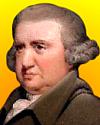
c.1792
Born 12 Dec 1731; died 18 Apr 1802 at age 70. quotes
Prominent English physician, poet , philosopher, botanist, naturalist and the grandfather of naturalist Charles Darwin and the biologist Francis Galton. Erasmus Darwin was one of the leading intellectuals of 18th century England. As a naturalist, he formulated one of the first formal theories on evolution in Zoonomia, or, The Laws of Organic Life (1794-1796). Although he did not come up with natural selection, he did discuss ideas that his grandson elaborated on sixty years later, such as how life evolved from a single common ancestor, forming "one living filament". Although some of his ideas on how evolution might occur are quite close to those of Lamarck, Erasmus Darwin also talked about how competition and sexual selection could cause changes in species.
Prominent English physician, poet , philosopher, botanist, naturalist and the grandfather of naturalist Charles Darwin and the biologist Francis Galton. Erasmus Darwin was one of the leading intellectuals of 18th century England. As a naturalist, he formulated one of the first formal theories on evolution in Zoonomia, or, The Laws of Organic Life (1794-1796). Although he did not come up with natural selection, he did discuss ideas that his grandson elaborated on sixty years later, such as how life evolved from a single common ancestor, forming "one living filament". Although some of his ideas on how evolution might occur are quite close to those of Lamarck, Erasmus Darwin also talked about how competition and sexual selection could cause changes in species.
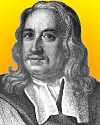
Born 12 Dec 1630; died 17 Sep 1702 at age 71.
Swedish naturalist who discovered the lymphatic vessels (1650). These resemble the veins and capillaries, but have thinner walls and carry the clear, watery fluid portion of the blood (lymph). He demonstrated these to Queen Christina of Sweden in 1653, using a dog for the purpose. Rudbeck was a man of encyclopedic interests, who taught at the medical school at the University of Uppsala, Sweden, and beyond medicine, mathematics, astronomy, architecture, fortification, gunnery, and even more. He founded the tradition of natural history at Uppsala. He established the first botanical garden there in 1654. He provided Uppsala with water pipes and stone paving for the streets, and constructed bridges. He built several greenhouses for tropical plants.
Swedish naturalist who discovered the lymphatic vessels (1650). These resemble the veins and capillaries, but have thinner walls and carry the clear, watery fluid portion of the blood (lymph). He demonstrated these to Queen Christina of Sweden in 1653, using a dog for the purpose. Rudbeck was a man of encyclopedic interests, who taught at the medical school at the University of Uppsala, Sweden, and beyond medicine, mathematics, astronomy, architecture, fortification, gunnery, and even more. He founded the tradition of natural history at Uppsala. He established the first botanical garden there in 1654. He provided Uppsala with water pipes and stone paving for the streets, and constructed bridges. He built several greenhouses for tropical plants.

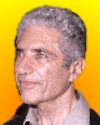
Died 12 Dec 2020 at age 99 (born 25 May 1921).
German-born American physicist who, along with Leon M. Lederman and Melvin Schwartz, was awarded the Nobel Prize for Physics in 1988 for their joint discoveries of the neutrino beam method and the demonstration of the doublet structure of the leptons through the discovery of the muon neutrino. In 1951, he met Lederman at Columbia University and, later, Schwarz who became his student. In 1958, they conducted a neutrino experiment at the new Brookhaven Alternating Gradient Synchrotron. The results emerged in a classic 1962 paper, and neutrino beams went on to become one of the standard tools of particle physics. After receiving the Nobel, Steinberger commented, “to get that prize, do your work early!”
German-born American physicist who, along with Leon M. Lederman and Melvin Schwartz, was awarded the Nobel Prize for Physics in 1988 for their joint discoveries of the neutrino beam method and the demonstration of the doublet structure of the leptons through the discovery of the muon neutrino. In 1951, he met Lederman at Columbia University and, later, Schwarz who became his student. In 1958, they conducted a neutrino experiment at the new Brookhaven Alternating Gradient Synchrotron. The results emerged in a classic 1962 paper, and neutrino beams went on to become one of the standard tools of particle physics. After receiving the Nobel, Steinberger commented, “to get that prize, do your work early!”
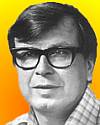
Death reported 12 Dec 2008 at age 85 (born 9 Sep 1923).
Daniel Carleton Gajdusek was an American physician and virologist who shared (with Baruch S. Blumberg) the 1976 Nobel Prize for Physiology or Medicine “for their discoveries concerning new mechanisms for the origin and dissemination of infectious dieases.” He identified the cause of kuru, an unusual fatal disease that resulted in a slow degeneration of the brain. He reported that it was was rife among the isolated Fore tribe in New Guinea, who in a funeral ritual honoured their dead by eating their brains. William Hadlow suggested that kuru (Forean for “trembling with fear”) was similar to scrapie in sheep with a years-long incubation period. Gajdusek confirmed this was the mode for the kuru viral infection to spread. He did further work on this a new viral group—the slow-moving virus. In 1997 he was jailed for one year after pleading guilty to child abuse.«
Daniel Carleton Gajdusek was an American physician and virologist who shared (with Baruch S. Blumberg) the 1976 Nobel Prize for Physiology or Medicine “for their discoveries concerning new mechanisms for the origin and dissemination of infectious dieases.” He identified the cause of kuru, an unusual fatal disease that resulted in a slow degeneration of the brain. He reported that it was was rife among the isolated Fore tribe in New Guinea, who in a funeral ritual honoured their dead by eating their brains. William Hadlow suggested that kuru (Forean for “trembling with fear”) was similar to scrapie in sheep with a years-long incubation period. Gajdusek confirmed this was the mode for the kuru viral infection to spread. He did further work on this a new viral group—the slow-moving virus. In 1997 he was jailed for one year after pleading guilty to child abuse.«
The Virus that Ate Cannibals: Six Great Medical Detective Stories, by Carol Eron. - book suggestion.
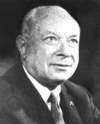
1971 (EB)
Died 12 Dec 1971 at age 80 (born 27 Feb 1891). quotes
American inventor who was a pioneer in the development of both radio and television broadcasting. He was the first general manager of RCA and founded the television network NBC (1926). His first job was that of delivery boy, and his life continued to display a rags-to-riches element. He became a wireless operator and met Marconi in 1906. Foreseeing the multiple possibilities of radio, he became commercial manager of American Marconi in 1917, having already predicted that radio would become “a household utility in the same sense as the piano or phonograph”. RCA succeded the Marconi group (1919), and Sarnoff became its general manager (1921) then its president (1930-50). He steering it into the world of television, first black and white, then colour with NBC.
American inventor who was a pioneer in the development of both radio and television broadcasting. He was the first general manager of RCA and founded the television network NBC (1926). His first job was that of delivery boy, and his life continued to display a rags-to-riches element. He became a wireless operator and met Marconi in 1906. Foreseeing the multiple possibilities of radio, he became commercial manager of American Marconi in 1917, having already predicted that radio would become “a household utility in the same sense as the piano or phonograph”. RCA succeded the Marconi group (1919), and Sarnoff became its general manager (1921) then its president (1930-50). He steering it into the world of television, first black and white, then colour with NBC.
David Sarnoff: A Biography David Sarnoff: A Biography, by Eugene Lyons. - book suggestion.
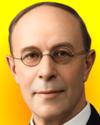
Died 12 Dec 1944 at age 73 (born 28 Dec 1870). quotes
Sir Thomas Percy Nunn was an English educationalist who wrote on developing education for mathematics and science. He believed it was not the purpose of education to mold individuals into predetermined forms, but rather that the goal was to aid their own development of distinctive capabilities. Thus, he recognized human diversity in which different individuals, having different strengths, contributed in varying ways to the collective good of society. He became the first Chairman of the Education Section of the British Psychological Society. His books covered a variety of fundamentally important aspects of education, filtering principles by scientific judgment of data gathered from experience.«
Sir Thomas Percy Nunn was an English educationalist who wrote on developing education for mathematics and science. He believed it was not the purpose of education to mold individuals into predetermined forms, but rather that the goal was to aid their own development of distinctive capabilities. Thus, he recognized human diversity in which different individuals, having different strengths, contributed in varying ways to the collective good of society. He became the first Chairman of the Education Section of the British Psychological Society. His books covered a variety of fundamentally important aspects of education, filtering principles by scientific judgment of data gathered from experience.«
The Aim and Achievements of Scientific Method: An Epistemological Essay, by T. Percy Nunn. - book suggestion.
Died 12 Dec 1923 at age 65 (born 17 Feb 1858).
American biologist, educator, and writer, author of many works for children on nature and biology. and attended public schools in Brooklyn, New York. After postgraduate studies in biology, she taught at several schools. Teaching and working with children led her into an interest in nature and biology, and in developing methods by which it might be better taught. Since there were not good textbooks on the subject, she began to write her own, beginning her true avocation as an author. Her books were considered authoritative though entertaining and became. Many were used as school texts at a time when nature study was beginning to be incorporated into a rapidly growing number of schools' curricula.
American biologist, educator, and writer, author of many works for children on nature and biology. and attended public schools in Brooklyn, New York. After postgraduate studies in biology, she taught at several schools. Teaching and working with children led her into an interest in nature and biology, and in developing methods by which it might be better taught. Since there were not good textbooks on the subject, she began to write her own, beginning her true avocation as an author. Her books were considered authoritative though entertaining and became. Many were used as school texts at a time when nature study was beginning to be incorporated into a rapidly growing number of schools' curricula.
The Insect Folk, by Margaret Warner Morley. - book suggestion.
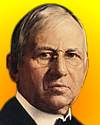
Died 12 Dec 1922 at age 84 (born 11 Jul 1838).
American businessman who founded a department store and adopted new technology in his buildings for publicity. His “Grand Depot” was the first U.S. store to use electric arc lamps (26 Dec 1878) in Philadelphia, Pa. Wanamaker had a major ready-made men's clothing retail clothing business (opened 1861) when he bought (1875) the Pennsylvania Railroad depot for $500,000 and converted it into his innovative Grand Depot department store. The city's Centennial Exposition visitors boosted sales. It became one of the largest U.S. department stores. From 1885, the store was called "Wanamaker's". His stores were a base for experimental wireless from 1910, and in 1922, a radio broadcast station was opened in the store to initiate radio receiver sales.«*
American businessman who founded a department store and adopted new technology in his buildings for publicity. His “Grand Depot” was the first U.S. store to use electric arc lamps (26 Dec 1878) in Philadelphia, Pa. Wanamaker had a major ready-made men's clothing retail clothing business (opened 1861) when he bought (1875) the Pennsylvania Railroad depot for $500,000 and converted it into his innovative Grand Depot department store. The city's Centennial Exposition visitors boosted sales. It became one of the largest U.S. department stores. From 1885, the store was called "Wanamaker's". His stores were a base for experimental wireless from 1910, and in 1922, a radio broadcast station was opened in the store to initiate radio receiver sales.«*
John Wanamaker: Philadelphia Merchant, by Herbert Ershkowitz. - book suggestion.
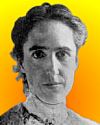
Died 12 Dec 1921 at age 53 (born 4 Jul 1868).
American astronomer who was known for her discovery of the relationship between period and luminosity in Cepheid variables, pulsating stars that vary regularly in brightness in periods ranging from a few days to several months. Leavitt's greatest discovery came from her study of 1777 variable stars in the Magellanic Clouds. She determined the periods of 25 Cepheid variables and in 1912 announced what has since become known as the famous Period-Luminosity relation: “since the variables are probably nearly the same distance from the earth, their periods are apparently associated with their actual emission of light, as determined by their mass, density, and surface brightness.” Today the Period-Luminosity relation is used to calculate the distances of galaxies.
American astronomer who was known for her discovery of the relationship between period and luminosity in Cepheid variables, pulsating stars that vary regularly in brightness in periods ranging from a few days to several months. Leavitt's greatest discovery came from her study of 1777 variable stars in the Magellanic Clouds. She determined the periods of 25 Cepheid variables and in 1912 announced what has since become known as the famous Period-Luminosity relation: “since the variables are probably nearly the same distance from the earth, their periods are apparently associated with their actual emission of light, as determined by their mass, density, and surface brightness.” Today the Period-Luminosity relation is used to calculate the distances of galaxies.
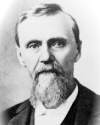
Died 12 Dec 1917 at age 89 (born 6 Aug 1828).
U.S. founder of osteopathy , who believed that remedies for disease are available in the correctly adjusted body, obtained through manipulative techniques and concomitant medical and surgical therapy. He followed his father as a physician, and later served as a surgeon in the Union Army during the Civil War. By the early 1870's Still criticized the misuse by doctors of drugs common to the day. Still supported a different philosophy of medicine: he advocated the use of osteopathic manipulative treatment. Still's philosophy focused on the unity of all body parts. He identified the musculoskeletal system as a key element of health. He recognized the body's ability to heal itself and stressed preventive medicine, eating properly, and keeping fit.
U.S. founder of osteopathy , who believed that remedies for disease are available in the correctly adjusted body, obtained through manipulative techniques and concomitant medical and surgical therapy. He followed his father as a physician, and later served as a surgeon in the Union Army during the Civil War. By the early 1870's Still criticized the misuse by doctors of drugs common to the day. Still supported a different philosophy of medicine: he advocated the use of osteopathic manipulative treatment. Still's philosophy focused on the unity of all body parts. He identified the musculoskeletal system as a key element of health. He recognized the body's ability to heal itself and stressed preventive medicine, eating properly, and keeping fit.
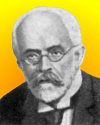
Died 12 Dec 1909 at age 53 (born 23 Sep 1856).
German scholar who developed the modern study of Byzantine culture. His writings and seminars were the basis for the specialized training of Byzantine scholars from all parts of the world. His Geschichte der byzantinischen Literatur (1891; "History of Byzantine Literature") went through several revisions. In 1892 he founded the periodical Byzantinische Zeitschrift ("Byzantine Journal"), which became the central international organ for Byzantine studies.
German scholar who developed the modern study of Byzantine culture. His writings and seminars were the basis for the specialized training of Byzantine scholars from all parts of the world. His Geschichte der byzantinischen Literatur (1891; "History of Byzantine Literature") went through several revisions. In 1892 he founded the periodical Byzantinische Zeitschrift ("Byzantine Journal"), which became the central international organ for Byzantine studies.
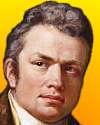
Died 12 Dec 1849 at age 80 (born 25 Apr 1769). quotes
French-English engineer and inventor who solved the historic problem of underwater tunneling. A prolific inventor, Brunel designed machines for sawing and bending timber, boot making, stocking knitting, and printing. As a civil engineer, his designs included the Île de Bourbon suspension bridge and the first floating landing piers at Liverpool. In 1818, however, Brunel patented the tunneling shield, a device that made possible tunneling safely through waterbearing strata. On 2 Mar 1825 operations began for building a tunnel under the Thames River between Rotherhithe and Wapping. The Thames Tunnel was eventually opened on 25 Mar 1843. It has a twin horseshoe cross-section with height of 23-ft (7m), width of 37-ft (11m), and total length 1,506-ft (406m). more
French-English engineer and inventor who solved the historic problem of underwater tunneling. A prolific inventor, Brunel designed machines for sawing and bending timber, boot making, stocking knitting, and printing. As a civil engineer, his designs included the Île de Bourbon suspension bridge and the first floating landing piers at Liverpool. In 1818, however, Brunel patented the tunneling shield, a device that made possible tunneling safely through waterbearing strata. On 2 Mar 1825 operations began for building a tunnel under the Thames River between Rotherhithe and Wapping. The Thames Tunnel was eventually opened on 25 Mar 1843. It has a twin horseshoe cross-section with height of 23-ft (7m), width of 37-ft (11m), and total length 1,506-ft (406m). more
Marc Isambard Brunel, by Paul Clements. - book suggestion.
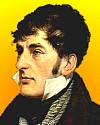
Died 12 Dec 1846 at age 68 (born 1 Jan 1778).
French naturalist and artist who is remembered for high quality natural history illustrations. He travelled to Australia under Nicolas Baudin on a scientific expedition (1800-04) and returned to France with collection of over 100,000 zoological specimens, including some 2,500 new species. In 1815, he began an association with William Maclure on a scientific excursion to the principal islands of the Lesser Antilles to make a study of the geology, followed by further work in the U.S. revising Maclure's geological maps. From 1816-37, while living in the U.S., he explored the Mississippi Valley. Lesueur followed a particular interest in ichthyology. He made the first scientific study of the archaeological prehistoric mounds in vicinity of New Harmony, Indiana.
French naturalist and artist who is remembered for high quality natural history illustrations. He travelled to Australia under Nicolas Baudin on a scientific expedition (1800-04) and returned to France with collection of over 100,000 zoological specimens, including some 2,500 new species. In 1815, he began an association with William Maclure on a scientific excursion to the principal islands of the Lesser Antilles to make a study of the geology, followed by further work in the U.S. revising Maclure's geological maps. From 1816-37, while living in the U.S., he explored the Mississippi Valley. Lesueur followed a particular interest in ichthyology. He made the first scientific study of the archaeological prehistoric mounds in vicinity of New Harmony, Indiana.
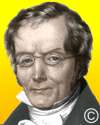
Died 12 Dec 1840 at age 68 (born 3 Feb 1772).
French psychiatrist who was the first to combine precise clinical descriptions with the statistical analysis of mental illnesses. He was a pioneer of the humane treatment of persons considered insane and was appointed resident physician at the Bedlam of Paris in 1811. He was the Chief physician of Charenton asylum (1826). The book he authored, Des maladies mentales (1838), was the first modern textbook of psychiatry. He gave the the first modern description of Obsessive Compulsive Disorder in 1838, which he called the folie de doute, or doubting madness, and suspected it was rooted in a physical problem in the brain. more
French psychiatrist who was the first to combine precise clinical descriptions with the statistical analysis of mental illnesses. He was a pioneer of the humane treatment of persons considered insane and was appointed resident physician at the Bedlam of Paris in 1811. He was the Chief physician of Charenton asylum (1826). The book he authored, Des maladies mentales (1838), was the first modern textbook of psychiatry. He gave the the first modern description of Obsessive Compulsive Disorder in 1838, which he called the folie de doute, or doubting madness, and suspected it was rooted in a physical problem in the brain. more
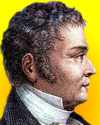
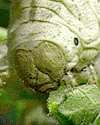
silkworm
Italian chemist, statesman, writer and agriculturalist who was active in political affairs and championed new ideas in science. He wrote books on each of those fields, and did notable work on wool-bearing animals and silkworm farming. Having studied chemistry at University of Padua, he was an early supporter and disseminated the theories of French chemist Antoine-Laurent Lavoisier. In his political activities, he promoted democratic ideas; he was opposed to Venice’s oligarchy, a ruling class of merchants and aristocrats. Later in life, he retired to his large estate in Varese, where he focused on scientific works and writing on agriculture. His book on silkworm farming had several editions, and translations into French and English.«
The Art of Rearing Silk-Worms, by Vincenzo Dandolo. - book suggestion.
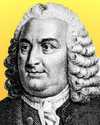
Died 12 Dec 1777 at age 69 (born 16 Oct 1708). quotes
Victor Albrecht von Haller was a Swiss physiologist and biologist is often called the father of experimental physiology. His vast range of work embraced physiology, anatomy, botany, embryology, poetry, and scientific bibliography. Through meticulous experiments, he clarified the mechanism of respiration, the autonomous action of the heart, and the role of bile in fat digestion. He described stages of embryonic growth and summarized anatomy of the brain, genital organs, and circulatory system. His pioneering studies on nerve and muscle irritability—showing that muscles contract independently of nerves—established key principles that became the foundation of modern neurophysiology that became the foundation of modern neurophysiology and medical science.«
Victor Albrecht von Haller was a Swiss physiologist and biologist is often called the father of experimental physiology. His vast range of work embraced physiology, anatomy, botany, embryology, poetry, and scientific bibliography. Through meticulous experiments, he clarified the mechanism of respiration, the autonomous action of the heart, and the role of bile in fat digestion. He described stages of embryonic growth and summarized anatomy of the brain, genital organs, and circulatory system. His pioneering studies on nerve and muscle irritability—showing that muscles contract independently of nerves—established key principles that became the foundation of modern neurophysiology that became the foundation of modern neurophysiology and medical science.«
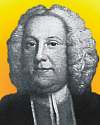
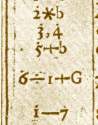
English mathematician who introduced the division sign (obelus,÷) into England. The obelus was first used by Johann Rahn (1622-1676) in 1659 in Teutsche Algebra. Rahn's book was interpreted into English and published, with additions made by John Pell. According to some sources, John Pell was a key influence on Rahn and he may be responsible for the development of the symbol. The word obelus comes from a Greek word meaning a "roasting spit." The symbol wasn't new. It had been used to mark passages in writings that were considered dubious, corrupt or spurious.Image: the division symbol as first used by Rahn in Teutsche Algebraas reproduced by Florian Cajori in A History of Mathematical Notations, (1928-29) vol. 2, page 211.
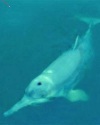
In 2006, the Baiji Yangtze freshwater dolphin was presumed functionally extinct when a search expedition ended an intense six-week search for the animal without any results. Scientists from six nations had travelled along the heavily polluted Yangtze River of China on two research ships almost 3,500-km from Yichang near the Three Gorges Dam to Shanghai into the Yangtze Delta and back. However, their high-performance optical instruments and underwater microphones detected no signs of the creature. The Baiji is the first large mammal brought to extinction due to human destruction of its habitat. From around 400 Baiji known in the early 1980s, numbers declined to 13 sightings in 1997, and none seen since Sep 2004.«
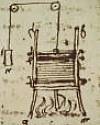
In 1980, Leonardo daVinci's 36-sheet manuscript Codex Leicester was auctioned at Christie's. It was bought by Armand Hammer for $4.5 million. At the time, it was the highest price paid for a complete manuscript. (It has subsequently been resold). The Codex Leicester, written 1506-10, embraces a wide variety of topics, from astronomy to hydrodynamics, and includes Leonardo's observations and theories related to rivers and seas; the properties of water; rocks and fossils; air; and celestial light. All of this is expressed in his signature mirror writing, as well as in more than 300 pen-and-ink sketches, drawings, and diagrams, many of them illustrating imagined or real experiments.

In 1961, the first satellite built by private citizens was put in to orbit. A Thor-Agena rocket, launched to deploy a military Discoverer-36 satellite, also carried the 10-lb OSCAR I . The Orbiting Satellite Carrying Amateur Radio was deployed in low orbit, just above Earth's atmosphere, and it began transmitting "HI" in Morse code,10 times a minute. It was the 60th anniversary of Marconi's first transatlantic radio transmission, and little more than four years since Russia launched Sputnik on 4 Oct 1957. OSCAR 1 was designed and hand-built for $63 by California radio amateurs. The battery powered a 140-mW transmitter on 144.983 MHz, transmitting HI in Morse code for 22 days, for 312 orbits until 1 Jan 1962 when its non-rechargeable battery failed. It burned up in the atmosphere on 31 Jan 1962.«
In 1957, the first total artificial heart implantation in an animal kept a dog alive for 90 minutes in a pioneering experiment at the Cleveland Clinic by Dr. Willem Kolff and Dr. Tetuzo Akutsu. Blood pumps for left and right circulation were implanted in the chest of a 20.7-kg dog, beating at the rate of 100 with an aortic pressure of 70/50 mm Hg. Akutsu was in Kolff's laboratory as a thoracic surgeon interested in cardiopulmonary bypass when Kolff asked him to make the device. The idea was prompted by an address by Dr. Peter F. Salisbury who had made, but not implanted, hydraulically activated twin pumps. Advice was contributed by Dr. Selwyn McCabe at the Mark Company, who had also fabricated an earlier artificial heart. Akutsu molded the four-chamber blood pump from “Tygo-Flex” PVC.
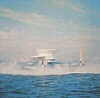
In 1955, Christopher Cockerell, father of the hovercraft air-cushion vehicle, filed his first patent for the hovercraft. The following year he formed a company known as Hovercraft Ltd. to apply this new approach of reducing the problem of hydrodynamic drag on the hull of a boat by using air as lubrication.
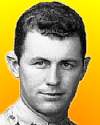

In 1949, a recommendation to establish an all-European Institute of Nuclear Physics was adopted by the European Cultural Conference on its closing day. The original proposal was made in a message sent by Louis de Broglie. Raoul Dautry of the French Atomic Energy Commission said that no single European country was large enough to mobilize enough resources to match U.S. standards in atomic research. The four-day meeting was attended by 150 leaders of European thought. UNESCO supported the idea. The present CERN laboratory (Centre Européenne de Recherche Nucléaire) was ratified on 29 Sep 1954, by twelve founding Member States, but official ground-breaking took place earlier, on 17 May 1954.«* more
History of CERN, vol I, by A. Hermann, et al. - book suggestion.
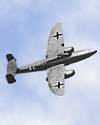
In 1912, the earliest known experiment to produce an airplane ejection seat was conducted by Odolek, an Austrian inventor. The trial took place in Issy-les-Moulineaux. It was not until 1941 that the first successful design was produced by Heinlel, a German company. Made for the He-280, it was powered by compressed air, and accelerated the pilot upwards at between seven-g and nine-g. The He-280 was the first twin-jet engined aircraft and the first jet aircraft to go beyond prototype stage. A test pilot made the first emergency use of the ejection seat on 13 Jan 1943.[Image: Heinkel He280.]
Eject!: The Complete History of U.S. Aircraft Escape Systems, by Jim Tuttle. - book suggestion.
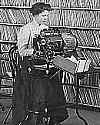

Type in #60 Multigraph Press
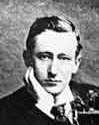
In 1901, Guglielmo Marconi sent the first transatlantic radio signal from Poldhu in Cornwall, which was received by Percy Wright Page in St John's, Newfoundland.
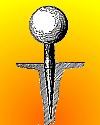
(USPTO)
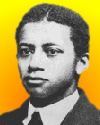
Uneven Lies: The Heroic Story of African-Americans In Golf, by Pete McDaniel. - book suggestion.
In 1896, Guglielmo Marconi gave the first public demonstration of his radio equipment at Toynbee Hall, East London. He was introduced by William Preece, chief electrician of the British Post Office. Preece saw the value of wireless telegraphy to replace the existing post office wire service. The use of the hall had been arranged by Preece, who advertised the event, drawing a considerable audience, and the press. While Marconi tapped the key on the transmitter, Preece carried the receiver box around the room showing that there were no wires yet a bell in the receiver rang each time Marconi closed the key. Through his mother's British society connections, Marconi had met Preece and benefitted from his patronage.«*
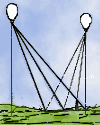
(USPTO)
In 1893, the first U.S. patent for aerial photography was issued to Cornele B. Adams of Augusta, Ga. (No. 510,758). His method of photogrammetry could produce a topographic map by means of photos of the same tract taken from different points. The patent refers to aerial photographs taken automatically at a predetermined height from an unmanned stationary balloon on a tether rope at each end of a measured base line on the land. "The pictures obtained can be converted into topographic maps, to delineate not only the horizontal positions and distances of the objects correctly, but from which the altitude of the objects can be quickly and accurately ascertained, and such results obtained without the aid of other field instruments."
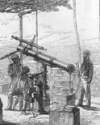
In 1871, spectroscopic observations of an eclipse in India made by French astronomer Jules Janssen led him to propose that the corona, normally only visible during a solar eclipse, is a physical part of the Sun and is composed of both hot gases and cooler particles.Image: Illustrated London News, [60], 20 Jan 1872.
In 1796, the second U.S. patent for a machine that combined the operations of nail cutting and heading was issued to George Chandler of Maryland. A month earlier, Isaac Garretson of Pennsylvania was issued the first U.S. patent for a nail cutting and heading machine on 16 Nov 1796. Records of these patents were lost in the Patent Office fire of 1836. Previously, nails had been cut cold since 1777, in Cumberland, Rhode Island. Decades later, Adolph and Felix Brown built the first successful wire nail machine. Their work was supervised by Major Thomas Norton in New York City, where it was put to use by William Hassall in 1851. The availablility of large quantities of inexpensive wire nails made the building boom possible.«




