Born 17 May 1915.
Swiss glaciologist who investigated the physical properties of snow, which he applied to the development of avalanche warning systems and the mitigation of other problems associated with snowfields. An example of his work is the study of the metamorphism and the hardening of snow relative to the pressure and temperature gradient. He joined the Swiss Federal Snow and Avalanche Research Institute in 1943 as assistant director and became its director in 1950. He retired in 1980.«
Swiss glaciologist who investigated the physical properties of snow, which he applied to the development of avalanche warning systems and the mitigation of other problems associated with snowfields. An example of his work is the study of the metamorphism and the hardening of snow relative to the pressure and temperature gradient. He joined the Swiss Federal Snow and Avalanche Research Institute in 1943 as assistant director and became its director in 1950. He retired in 1980.«
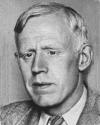
Born 17 May 1897; died 11 May 1981 at age 83.
Norwegian physical chemist who shared (with Sir Derek H.R. Barton of Great Britain) the 1969 Nobel Prize for Chemistry for his work in establishing conformational analysis (the study of the 3-D geometric structure of molecules). A ring of six carbon atoms has two conformations - the chair and boat forms. These easily interchange - about a million times in a second at room temperature. One of the conformations is, however, strongly predominant (about 99%). Hassel carried out fundamental investigations on this system and showed how heavy or bulky groups, attached to the carbon atoms, take up their positions relative to the ring and to each other. Such work is of great importance for predicting the mode of reaction of a certain molecule.
Norwegian physical chemist who shared (with Sir Derek H.R. Barton of Great Britain) the 1969 Nobel Prize for Chemistry for his work in establishing conformational analysis (the study of the 3-D geometric structure of molecules). A ring of six carbon atoms has two conformations - the chair and boat forms. These easily interchange - about a million times in a second at room temperature. One of the conformations is, however, strongly predominant (about 99%). Hassel carried out fundamental investigations on this system and showed how heavy or bulky groups, attached to the carbon atoms, take up their positions relative to the ring and to each other. Such work is of great importance for predicting the mode of reaction of a certain molecule.
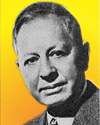
Born 17 May 1885; died 22 Jan 1979 at age 93. quotes
American plant pathologist. As an agricultural specialist, Stakman pioneered methods to identify and combat diseases of important crops. In 1921, he attached Vaseline-coated slides to plane wings to collect evidence of parasitic red spores of crop fungal rusts in the air, and proved that the disease seasonally blew across the nation. After investigating the nature and control of fungal leaf rust in cereals at the University of Minnesota, Stakman's interest expanded to international scientific affairs. He pleaded for a joint U.S.-Mexico station to research crop improvement. Established in 1943, this was the first of a worldwide network of research stations under the International Center for Corn and Wheat Improvement, an organization to increase food production in developing nations. He wrote many scientific papers, and co-authored Campaign Against Hunger (1967).«
American plant pathologist. As an agricultural specialist, Stakman pioneered methods to identify and combat diseases of important crops. In 1921, he attached Vaseline-coated slides to plane wings to collect evidence of parasitic red spores of crop fungal rusts in the air, and proved that the disease seasonally blew across the nation. After investigating the nature and control of fungal leaf rust in cereals at the University of Minnesota, Stakman's interest expanded to international scientific affairs. He pleaded for a joint U.S.-Mexico station to research crop improvement. Established in 1943, this was the first of a worldwide network of research stations under the International Center for Corn and Wheat Improvement, an organization to increase food production in developing nations. He wrote many scientific papers, and co-authored Campaign Against Hunger (1967).«
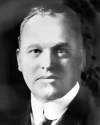
Born 17 May 1868; died 10 Dec 1920 at age 52.
Horace Elgin Dodge was an American automobile manufacturer, with his brother John Francis Dodge, were American automobile manufacturers who invented one of the first all-steel cars in America. They built their first Dodge car in Nov 1914 in Detroit, Mich.
Horace Elgin Dodge was an American automobile manufacturer, with his brother John Francis Dodge, were American automobile manufacturers who invented one of the first all-steel cars in America. They built their first Dodge car in Nov 1914 in Detroit, Mich.
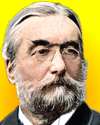
Born 17 May 1836; died 16 Aug 1920 at age 84. quotes
English astronomer who in 1868 discovered and named the element helium that he found in the Sun’s atmosphere before it had been detected on Earth. He also applied the name chromosphere for the sun’s outer layer. Lockyer discovered, together with Pierre J. Janssen, the prominences (red flames) that surround the solar disk. He was also interested in the classification of stellar spectra and developed the meteoric hypothesis of stellar evolution. His many books include Contributions to Solar Physics (1873), The Sun’s Place in Nature (1897) and Inorganic Evolution (1900). He founded the journal Nature in 1869.
English astronomer who in 1868 discovered and named the element helium that he found in the Sun’s atmosphere before it had been detected on Earth. He also applied the name chromosphere for the sun’s outer layer. Lockyer discovered, together with Pierre J. Janssen, the prominences (red flames) that surround the solar disk. He was also interested in the classification of stellar spectra and developed the meteoric hypothesis of stellar evolution. His many books include Contributions to Solar Physics (1873), The Sun’s Place in Nature (1897) and Inorganic Evolution (1900). He founded the journal Nature in 1869.
Science and Controversy: A Biography of Sir Norman Lockyer, by A. J. Meadows. - book suggestion.

Scottish naturalist and paleontologist who became known as an authority on brachiopods, known as "lamp shells" because some varieties resemble a Roman oil lamp, a phylum of bottom-dwelling marine invertebrates (Brachiopoda). Some of these fossils are among the oldest found. His major work, Monograph of British Fossil Brachziopoda, was published by the Palaeontographical Society (1850-1886). Together with supplements, this comprised six quarto volumes with more than 200 plates drawn on stone by the author. Upon his death, he bequeathed his fine collection of recent and fossil brachiopoda to the British Museum.
Born 17 May 1804; died 16 Oct 1877 at age 73.
American conchologist, recognized as an authority on American land and fresh-water mollusca. During a career in business, his interest in natural history led to a collection of freshwater mollusks of the Ohio River. From 1835 on, he corresponded with mollusk researchers and published his findings. Serious eye trouble (1851) forced his retirement from business. In 1853, he toured Kentucky, Tennessee, and Georgia to collect mollusks. His publications attracted the attention of Louis Agassiz, who asked him to lead the conchological department of the Museum of Comparative Zoology, Harvard (1863), where he remained until his death. He accompanied Agassiz on the Thayer expedition to Brazil in 1865.
American conchologist, recognized as an authority on American land and fresh-water mollusca. During a career in business, his interest in natural history led to a collection of freshwater mollusks of the Ohio River. From 1835 on, he corresponded with mollusk researchers and published his findings. Serious eye trouble (1851) forced his retirement from business. In 1853, he toured Kentucky, Tennessee, and Georgia to collect mollusks. His publications attracted the attention of Louis Agassiz, who asked him to lead the conchological department of the Museum of Comparative Zoology, Harvard (1863), where he remained until his death. He accompanied Agassiz on the Thayer expedition to Brazil in 1865.
1841
Born 17 May 1776; died 10 May 1842 at age 65. quotes
American botanist, geologist and lawyer who promoted widespread interest in science through popular public lectures, as an innovative teacher, and his textbooks in chemistry, zoology and geology. His initial legal career (1802-10) ended with conviction for alleged forgery (perhaps unjustly). During his five years in prison, he enriched his knowledge of science. Thereafter, he made a lasting contribution to scientific education by developingd a teaching method in which students learnt by doing, including field trips and performing experiments. Supported by Stephen Van Rensselaer, he founded the Rensselaer School (1824), later renamed Rensselaer Institute. He set up a travelling school on a barge on the Erie Canal to observe geological formations and collect specimens, attended by Asa Fitch in 1826. Eaton taught for the rest of his life.«
American botanist, geologist and lawyer who promoted widespread interest in science through popular public lectures, as an innovative teacher, and his textbooks in chemistry, zoology and geology. His initial legal career (1802-10) ended with conviction for alleged forgery (perhaps unjustly). During his five years in prison, he enriched his knowledge of science. Thereafter, he made a lasting contribution to scientific education by developingd a teaching method in which students learnt by doing, including field trips and performing experiments. Supported by Stephen Van Rensselaer, he founded the Rensselaer School (1824), later renamed Rensselaer Institute. He set up a travelling school on a barge on the Erie Canal to observe geological formations and collect specimens, attended by Asa Fitch in 1826. Eaton taught for the rest of his life.«
Education for a Technological Society: A Sesquicentennial History of Rensselaer Polytechnic Institute, by Samuel Rezneck. - book suggestion.
Born 17 May 1749; died 26 Jan 1823 at age 73. quotes
English physician and surgeon who discovered vaccination for smallpox. There was a common story among farmers that if a person contracted a relatively mild and harmless disease of cattle called cowpox, immunity to smallpox would result. On 14 May 1796 he removed the fluid of a cowpox from dairymaid Sarah Nelmes, and inoculated James Phipps, an eight-year-old boy, who soon came down with cowpox. Six weeks later, he inoculated the boy with smallpox. The boy remained healthy, proving the theory. He called his method vaccination, using the Latin word vacca, meaning cow, and vaccinia, meaning cowpox. Jenner also introduced the word virus.
English physician and surgeon who discovered vaccination for smallpox. There was a common story among farmers that if a person contracted a relatively mild and harmless disease of cattle called cowpox, immunity to smallpox would result. On 14 May 1796 he removed the fluid of a cowpox from dairymaid Sarah Nelmes, and inoculated James Phipps, an eight-year-old boy, who soon came down with cowpox. Six weeks later, he inoculated the boy with smallpox. The boy remained healthy, proving the theory. He called his method vaccination, using the Latin word vacca, meaning cow, and vaccinia, meaning cowpox. Jenner also introduced the word virus.
Vaccination Against Smallpox, by Edward Jenner. - book suggestion.

Died 17 May 1991 at age 88 (born 30 Jan 1903).
George Evelyn Hutchinson was an English-born American zoologist known as the “father of modern limnology” for his ecological studies of freshwater lakes.
George Evelyn Hutchinson was an English-born American zoologist known as the “father of modern limnology” for his ecological studies of freshwater lakes.
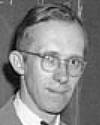
Died 17 May 1977 at age 65 (born 13 Jun 1911).
German-American physicist who invented the field emission microscope (FIM), which provided magnifications in excess of one million. For the first time made it possible to take pictures of individual atoms. Images of the atomic structures of tungsten were first published in 1951 in the journal Zeitschrift für Physik. In FIM, a voltage of about 10kV is applied to a sharp metal tip, cooled to below 50 kelvin in a low-pressure helium gas atmosphere. Gas atoms are ionized by the strong electric field in the vicinity of the tip and repelled perpendicular to the tip surface. A detector images the spatial distribution of these ions giving a magnification of the curvature of the surface. (Also spelled Mueller.)
German-American physicist who invented the field emission microscope (FIM), which provided magnifications in excess of one million. For the first time made it possible to take pictures of individual atoms. Images of the atomic structures of tungsten were first published in 1951 in the journal Zeitschrift für Physik. In FIM, a voltage of about 10kV is applied to a sharp metal tip, cooled to below 50 kelvin in a low-pressure helium gas atmosphere. Gas atoms are ionized by the strong electric field in the vicinity of the tip and repelled perpendicular to the tip surface. A detector images the spatial distribution of these ions giving a magnification of the curvature of the surface. (Also spelled Mueller.)
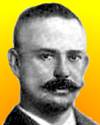
Died 17 May 1916 at age 54 (born 2 Mar 1862).
Prince Boris Borisovich Golitsyn was a Russian physicist and seismologist who developed scientific methods and instruments for earthquake observations and mineral prospecting. His early studies were in molecular physics, mathematical physics and electromagnetism, From 1899 his interests turned to seismology. In 1906, he invented the first effective electromagnetic seismograph and continued to improve it. It had a pendulum carrying a coil of insulated wire around a magnetic core fixed to the ground. The small current generated in the coil by relative motion caused by earth tremors is amplified to operate a pen recorder. The part of the Earth's mantle at a depth of 400-800 km, in which seismic waves travel rapidly, is named the Golitsyn layer in recognition of his work.«[Name also spelled Galizin ot Golicyn. Death given as 17 May in EB, but 16 May in DSB. Old style dates on the Russian calendar of that time: b 18 Feb; d 4 May.]
Prince Boris Borisovich Golitsyn was a Russian physicist and seismologist who developed scientific methods and instruments for earthquake observations and mineral prospecting. His early studies were in molecular physics, mathematical physics and electromagnetism, From 1899 his interests turned to seismology. In 1906, he invented the first effective electromagnetic seismograph and continued to improve it. It had a pendulum carrying a coil of insulated wire around a magnetic core fixed to the ground. The small current generated in the coil by relative motion caused by earth tremors is amplified to operate a pen recorder. The part of the Earth's mantle at a depth of 400-800 km, in which seismic waves travel rapidly, is named the Golitsyn layer in recognition of his work.«[Name also spelled Galizin ot Golicyn. Death given as 17 May in EB, but 16 May in DSB. Old style dates on the Russian calendar of that time: b 18 Feb; d 4 May.]
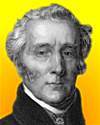
Died 17 May 1895 at age 47 (born 20 Dec 1847). quotes
American civil engineer, writer and editor whose fame was based on writing The Economic Theory of the Location of Railways, which was issued in book form in 1887, but was first published as series of articles in the Railway Gazette beginning in 1876. He had acquired his engineering skills beginning as an apprentice at age 16. His first employment was with the engineering corps of the Brooklyn Park Department under Frederick Law Olmsted. From 1868, he turned to railway work, and over a number of years rose from being a transitman for the Blue Ridge R.R. to engineer-in-charge of the Toledo, Canada Southern and Detroit railroad. He gained futher public recognition from his work and writings on the editorial staff of the Railway Gazette (1884-87) and thereafter an industrious editor-in-chief and part-owner of The Engineering News.«
American civil engineer, writer and editor whose fame was based on writing The Economic Theory of the Location of Railways, which was issued in book form in 1887, but was first published as series of articles in the Railway Gazette beginning in 1876. He had acquired his engineering skills beginning as an apprentice at age 16. His first employment was with the engineering corps of the Brooklyn Park Department under Frederick Law Olmsted. From 1868, he turned to railway work, and over a number of years rose from being a transitman for the Blue Ridge R.R. to engineer-in-charge of the Toledo, Canada Southern and Detroit railroad. He gained futher public recognition from his work and writings on the editorial staff of the Railway Gazette (1884-87) and thereafter an industrious editor-in-chief and part-owner of The Engineering News.«
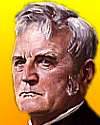
Died 17 May 1886 at age 82 (born 7 Feb 1804).
American agricultural equipment inventor and pioneer manufacturer. As a blacksmith in a U.S. prairie town, he frequently repaired the wood and cast-iron plows of eastern U.S. design because the local soils were heavy and sticky. By 1838 he had produced three more suitable steel plows of his own new design, and more in following years, which expanded into the agricultural machine business he began upon moving to Moline, Ill. (1847). In another ten years, his annual production had increased ten-fold. Originally using imported English steel instead of cast iron, he converted to U.S. made steel when Pittsburgh steel plants could supply a suitable product. The company diversified with production of harrows, drills, cultivators and wagons.«
American agricultural equipment inventor and pioneer manufacturer. As a blacksmith in a U.S. prairie town, he frequently repaired the wood and cast-iron plows of eastern U.S. design because the local soils were heavy and sticky. By 1838 he had produced three more suitable steel plows of his own new design, and more in following years, which expanded into the agricultural machine business he began upon moving to Moline, Ill. (1847). In another ten years, his annual production had increased ten-fold. Originally using imported English steel instead of cast iron, he converted to U.S. made steel when Pittsburgh steel plants could supply a suitable product. The company diversified with production of harrows, drills, cultivators and wagons.«
Genuine Value: The John Deere Journey, by John J. Gerstner. - book suggestion.
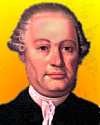
Died 17 May 1809 at age 86 (born 19 Nov 1722). quotes
Austrian physician who devised the diagnostic technique of percussion (the art of striking a surface part of the body with short, sharp taps to diagnose the condition of the parts beneath the sound). With this technique, he could estimate the amount of fluid in a patient's chest and the size of his/her heart. (As a boy he had tapped the wine barrels in his father's cellar to find how full they were.) After seven years of investigation, he published the method in Inventum Novum (1761), though his technique did not gain recognition and acceptance until years after his death. When a translator republished the work in French (1808) the method gained acceptance around the world, and through time to the present as a fundamental diagnostic procedure.
Austrian physician who devised the diagnostic technique of percussion (the art of striking a surface part of the body with short, sharp taps to diagnose the condition of the parts beneath the sound). With this technique, he could estimate the amount of fluid in a patient's chest and the size of his/her heart. (As a boy he had tapped the wine barrels in his father's cellar to find how full they were.) After seven years of investigation, he published the method in Inventum Novum (1761), though his technique did not gain recognition and acceptance until years after his death. When a translator republished the work in French (1808) the method gained acceptance around the world, and through time to the present as a fundamental diagnostic procedure.
Died 17 May 1765 at age 52 (born 7 May 1713). quotes
French mathematician who, as a child prodigy at age ten was studying calculus, tutored by his father. Clairaut read his first paper, Quatre problèmes sur de nouvelles courbes to the Paris Academy (1726) at the age of 13. He accompanied Maupertuis on an expedition to Lapland to measure the length of the meridian. From this experience, he began a book (1743) on the shape of the rotating earth under the influences of gravity and centrifugal forces. Further, he showed how to measure the shape by use of measurements of the effect of gravity at different location on the swing of a pendulum. He also determined the first reasonable value for the mass of Venus, an improved value for the mass of the moon, and predicted the timing of the return of Halley's Comet.
French mathematician who, as a child prodigy at age ten was studying calculus, tutored by his father. Clairaut read his first paper, Quatre problèmes sur de nouvelles courbes to the Paris Academy (1726) at the age of 13. He accompanied Maupertuis on an expedition to Lapland to measure the length of the meridian. From this experience, he began a book (1743) on the shape of the rotating earth under the influences of gravity and centrifugal forces. Further, he showed how to measure the shape by use of measurements of the effect of gravity at different location on the swing of a pendulum. He also determined the first reasonable value for the mass of Venus, an improved value for the mass of the moon, and predicted the timing of the return of Halley's Comet.
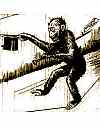
In 1967, the governor of Tennessee signed into law the repeal of the 1925 state law, the Butler Act, prohibiting the teaching of evolution. The law had made it “unlawful for any teacher in any of the Universities, Normals and all other public schools of the State which are supported in whole or in part by the public school funds of the State, to teach any theory that denies the story of the Divine Creation of man as taught in the Bible, and to teach instead that man has descended from a lower order of animals.” The law had been tested at the “Scopes monkey trial,” which began 10 Jul 1925. John Scopes was found guilty on 25 Jul 1925, and fined $100. But the law had been undermined. On appeal, Scopes was acquitted on a technicality. The law itself still remained a Tennessee state statute for 42 years.«[Image: cartoon from the New York Times, 25 Jul 1925. The cane is tagged "Evolution Trial."] more
Summer for the Gods: The Scopes Trial and America's Continuing Debate Over Science and Religion, by Edward J. Larson. - book suggestion.
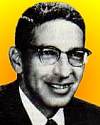
Kline

Ten Years Which Changed the Face of Mental Illness, by Jean Thullier. - book suggestion.
In 1955, the highly classified U.S. patent (No. 2,708,656) for the first atomic pile was finally issued, 11 years after it had been filed on 19 Dec 1944. Work on the initial patent application had started six months before the reactor was completed. The patent was titled “Neutronic Reactor,” listed Fermi and Leo Szilard as co-inventors, had 42 diagrams, and described the method by which a self-sustaining nuclear chain reaction had been accomplished. Enrico Fermi and his team of scientists at the University of Chicago's Metallurgical Laboratory (predecessor to Argonne National Laboratory) ushered in the nuclear age when they achieved the world's first controlled, self-sustaining nuclear chain reaction on 2 Dec 1942. Fermi died on 28 Nov 1954, six months before the patent was issued.«
In 1954, official ground-breaking took place at the Meyrin site of the new CERN Laboratory in Geneva. A recommendation had been adopted 12 Dec 1949 at the European Cultural Conference for a European Institute of Nuclear Physics. By 1952, the third session of its provisional Council decided to locate in Switzerland. In Jun 1953, the host community, the canton of Geneva, gave strong approval in a referendum passing with 16539 votes to 7332. On 29 Sep 1954, twelve founding Member States ratified CERN (Centre Européenne de Recherche Nucléaire): Federal Republic of Germany, Belgium, Denmark, France, Greece, Italy, Norway, Netherlands, United Kingdom, Sweden, Switzerland and Yugoslavia.«
more
History of CERN, vol I, by A. Hermann, et al. - book suggestion.

In 1943, during WW II, RAF 615 squadron dropped “bouncing bombs” (invented by Dr Barnes Wallis) to successfully destroy the Möhne and Eder dams in the industrial area of Ruhr Valley, Germany. Wallace had realized that breaching the dams would destroy vital enemy war factories and hydroelectricity plants. He overcame skepticism from military planners, and designed an innovative bomb to deliver against the inner wall of the dam. Beginning shortly after midnight, very large, cylindrical bombs were targeted at the pre-planned height and place, rotating backwards at high speed, to skip along the surface of the water, right up to the base of the dam. Wallis based his idea on the simple pastime of skipping stones on a pond.«[Image: Dr Barnes Wallis at his drawing board]
The Dam Busters, by Paul Brickhill. - book suggestion.
In 1912, the London newspaper, The Times, reported that new automatic telephone equipment was in place at Epsom, to be tested in the afternoon of the following day. The experiment, the first of its kind in Great Britain, provided 320 Epson telephone subscribers the ability to dial other numbers in the town themselves instead of having to ask the operator to get the number for them. The news article carefully described the operation of the new rotating dial with finger holes, about an inch above a numbered disk, attached to the subscriber's telephone. This marked the beginning of the telephone automation in Britain, which had already arrived in America, Canada, and other countries.
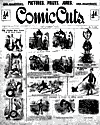
In 1890, Comic Cuts, the first long-running British weekly comic paper, was published in London by Alfred Northcliffe (later Lord Northcliffe, founder of the Daily Mail). Its price was a half-penny, with four pages of cartoons and four of text jokes. (Comic pages had been published earlier, but as a part of another paper. First of those was Funny Folks (Dec 1874), published by James Henderson as a free supplement to The Weekly Budget Christmas Triple Number for 1874.) Early issues of Comic Cuts contained reprinted cartoons from American magazines and elsewhere, but were supplanted with original work when professional artists were recruited. Comic Cuts ran under that title for 3006 issues.«
In 1887, black American inventor D.W. Shorter was issued a patent for a "feed rack" (U.S. No. 363,089)
The Inventive Spirit of African Americans: Patented Ingenuity, by Patricia Carter Sluby. - book suggestion.
In 1883, Svante Arrhenius was struck by the ideas for his dissociation theory during a sleepless night. This theory explains that substances like salt (ex. sodium chloride) when dissolved in water, dissociate (separate) into electrically charged ions (ex. positive sodium ions and negative chloride ions). The idea was controversial at first, but is now a basic fact in understanding the chemistry of ionic compounds.
In 1839, a water wheel was patented by Lorenzo Adkins (U.S. No. 1,154).





